Vending Machine Prayers

As I write this, my mom is dying. We don’t know how much longer she has, but we’ve asked for prayers as she takes this journey toward death and resurrection. These are sometimes difficult prayers to make. We don’t like to see Mom suffering, but we don’t like the thought of separation through death, either. Our initial prayer would be for complete healing. But that’s not realistic, given that Mom has heart failure and is almost 90 years old. That doesn’t mean that God cannot or would not grant total healing. But we aren’t expecting that kind of miracle when we pray today.

Photo by Andrea Piacquadio on Pexels.com

For some people, our prayers seem meaningless. One of my classmates from school reacted to my request for prayer by saying, “I just wish that prayer DID something…” I take this to mean that if we don’t get a miraculous outcome, she believes our prayers are wasted. I hope I’m misinterpreting here, but I know that this is a common criticism of prayer in tough times. It seems that every time there is a natural disaster, or a mass shooting, people who offer “thoughts and prayers” are roundly criticized for praying “instead” of “doing.” As though the two are mutually exclusive. As though prayer is an empty gesture in the face of disaster and distress. As though there is no hope, no comfort, and no help in praying.

There are others who will assert with complete confidence their belief that God will answer any prayer for a miracle, simply because they ask it “in Jesus’ Name” or because many people are praying for the same outcome. I call these kinds of prayers, and attitudes about prayer, “Vending Machine Prayers.” It is the belief that prayer must produce an immediate and positive outcome, or it is “broken” or invalid. If you don’t get what you were expecting, you must have prayed “wrong,” or didn’t have “enough” faith. Or your prayer just didn’t “work.” When someone puts money into a vending machine, and presses a button or punches in a code or pulls a knob, and they don’t get the expected item, some of them will kick the machine, or curse. Or they will try again, carefully trying to get the “right” result. Vending machines are inanimate objects designed to give a satisfactory consumer experience. If the coins or bills “jam,” if the knobs or buttons malfunction, if the product gets “stuck,” or isn’t available, the consumer feels cheated. Sometimes, they can get their money returned, but most often, they go away angry and unfulfilled.

God is not a vending machine. He is not “designed” to serve us or give us satisfaction. There is nothing we can “insert” in our relationship with God –even sincere prayer–that obligates Him to give us what we desire. God chooses to answer prayers in whatever way He knows is best for our eternal and overall well-being. God still gives miracles. I’ve seen it and experienced it. In fact, we could have lost Mom several years ago, when her heart failure put her in a similar state. God provided a miracle in the form of heart valve replacement surgery–and a cancellation that moved her surgery schedule forward before her condition was too far gone. I’ve seen people healed of cancer– and people whose prayers for healing ended in their rapid decline and death. But none of those prayers were wasted. Not one. God was working– sometimes on the sidelines, strengthening family members to deal with grief; sometimes providing testimonies to those with doubts and questions; sometimes planting seeds that would bear fruit years later in the lives of those left behind–sometimes God was working “sideways,” as He did with Mom years ago to give her several more years of life, even though she wasn’t completely healed, to grow and prepare for this next step and testify to God’s sustaining power.

God is not apathetic, and He certainly isn’t “happy” about Mom’s decline and her impending death. He shares our sufferings and our sorrows. But God knows and sees the “rest of the story!” Jesus wept over the death of His friend Lazarus, even though He knew that Lazarus would be raised back to life. Jesus was sharing the deep grief over the loss and sorrow felt by all of His friends, just as He rejoiced with them as Lazarus walked home from the tomb! (See John 11 for the whole story.) God doesn’t delight in death. He is the author of LIFE. But He is very present through every stage of life– even that last bitter taste of death we all must experience. And just as we pray for God’s miraculous presence, we pray for His guiding, comforting, and hopeful presence in ALL situations.

Prayer DOES something! Even if we don’t see immediate changes in situations; prayer changes US. It changes OTHERS. It changes our priorities and perspectives. It draws us close– to each other and to the One whose Love is Eternal and unchanging.

116 I love the Lord, because he hath heard my voice and my supplications.

Because he hath inclined his ear unto me, therefore will I call upon him as long as I live.

The sorrows of death compassed me, and the pains of hell gat hold upon me: I found trouble and sorrow.

Then called I upon the name of the Lord; O Lord, I beseech thee, deliver my soul.

Gracious is the Lord, and righteous; yea, our God is merciful.

The Lord preserveth the simple: I was brought low, and he helped me.

Return unto thy rest, O my soul; for the Lord hath dealt bountifully with thee.

For thou hast delivered my soul from death, mine eyes from tears, and my feet from falling.

I will walk before the Lord in the land of the living.

10 I believed, therefore have I spoken: I was greatly afflicted:

11 I said in my haste, All men are liars.

12 What shall I render unto the Lord for all his benefits toward me?

13 I will take the cup of salvation, and call upon the name of the Lord.

14 I will pay my vows unto the Lord now in the presence of all his people.

15 Precious in the sight of the Lord is the death of his saints.

16 O Lord, truly I am thy servant; I am thy servant, and the son of thine handmaid: thou hast loosed my bonds.

17 I will offer to thee the sacrifice of thanksgiving, and will call upon the name of the Lord.

18 I will pay my vows unto the Lord now in the presence of all his people.

19 In the courts of the Lord’s house, in the midst of thee, O Jerusalem. Praise ye the Lord.

Psalm 116 KJV (emphasis added)
Photo by Tima Miroshnichenko on Pexels.com

There are dozens, if not hundreds, of people praying for my Mom (and all of us who love her so very much). And probably, there are some “vending machine” prayers among them. That’s ok. God hears them all. And I am so very blessed by them all. Because prayers DO SOMETHING AMAZING. They rise to a God who sees, who hears, and who LOVES unconditionally, eternally, and perfectly! We’re actively trying to do what we can do to make Mom comfortable and seeking treatment that will ease her last days, but we depend on God’s touch, His healing, His timing, and His good will to see us all through and keep us in perfect peace.

The Urgency of Death

Just last week, one of my high school classmates died unexpectedly.  I’m getting to “that age” when more and more of my contemporaries are experiencing health issues– diabetes, heart problems, cancer, arthritis, even early-onset dementia– but this friend seemed to be in good health.  She had just been celebrating the birth of a grandson, and other milestones.  Death sometimes comes when (and to whom) we least expect it.  It is shocking, saddening, and frightening all at once.  

Photo by Andrea Piacquadio on Pexels.com

Death has an urgency that pushes other concerns away.  Death is final; permanent.  Death is powerful– we can’t cheat it, defeat it, or comprehend it.  Death frightens us, angers us, and mystifies us.  We begin to look at our own life and ask questions–Who am I?WHY am I?  What makes me “me”– individual and uniquely different from everyone else?  Is there a purpose to my being– to my being “me”, “here” and “now”?  How can I find and fulfill that purpose if it exists?  Do I have an eternal destiny after this life?  If so, how can I know what it might be?  Can I change that eternal destiny?

sunset ship boat sea
Photo by Pixabay on Pexels.com
Photo by Liza Summer on Pexels.com

Some people argue that our origins are accidental; our uniqueness is merely a random generation of genetic code; our purpose non-existent or self-determined; and our destiny no more than dust. They avoid talking about death–and the meaning of life. They want to “live in the moment,” but they don’t want to ask any questions of the past or future. And they mock anyone who does. Many of them hear me or read what I write and dismiss me as intellectually lazy, gullible, or crazy.  I’m all right with that, as long as they will be intellectually honest enough to admit to the questions; and open enough to acknowledge that there may be more than a quick denial as an answer.  Crazy– well crazy is as crazy does, I guess…I’ll let my actions answer that one.

Death is powerful and mysterious, but I believe that God is more powerful, and omniscient– he has already crushed the power of death, and invites us to view death from a different perspective.  When we take everything– including death– to the Lord in Prayer, he takes the weight of it, the fear of it, the pain of it off our shoulders and carries it to the cross.  HIS death overshadows even our own, in its power to overcome. The urgency of death is not that it is the end of all things.  The urgency of death is that it signals the end of our opportunity to recognize and live out the purpose of this short life.

art cathedral christ christian
Photo by Pixabay on Pexels.com

If that isn’t an urgent reason to pray for those you love, I don’t know of a better one…

It’s also an urgent reason to pray for those around you who are grieving the recent loss of a loved one.  And don’t just be someone who prays..be an answer to prayer– reach out with a card, a note or e-mail, or spend some time with them.  Let them know that a) their loved one is not forgotten, and b) neither are they!

A Hope That Does Not Disappoint

Have you ever had your hopes dashed? Have you even been disappointed in something that (or someone who) seemed to promise such hope?

Photo by Andrea Piacquadio on Pexels.com

In Romans 5:5, the Apostle Paul speaks of a “hope that does not disappoint” us– the hope that comes through the Love of God as poured out by the Holy Spirit. Yet, we still have times of disappointment, dashed dreams, and painful grieving. So what is Paul talking about?

Photo by Ketut Subiyanto on Pexels.com

Well, in context, he is speaking about the hope of our eternal salvation– we can have complete confidence in Christ’s finished work in obtaining our salvation and peace with God. While we may have doubts about many things in life, we need never doubt God’s promised salvation. But that does not mean that God has promised us an earthly life without disappointments, struggles, grief, or pain.

Sometimes, when we pray, we bring certain expectations– “hopes”– that God will act in the way we desire. We pray for miraculous healings, or an end to financial struggles, or finding the “perfect” spouse. God never promises any of these things. In fact, Jesus promised His disciples that “in this world, you will have trouble” (John 16:33)! But He goes on to say, “take heart, for I have overcome the world.” When our prayers seem to go unanswered, or God seems deaf to our desires, we can feel disappointed, even resentful. Our loved one dies. Our marriage falls apart. We lose our job, or our home.

It can be difficult in the moment, but we need to take stock of what it means to “hope.” If we put our hope in earthly things– even wonderful things–we WILL be disappointed at some point. People get sick and die. They make mistakes. Houses crumble, or face destruction by fire or storm. Relationships –no matter how much we may work at them–can fall apart. Our own bodies and our own wisdom can betray us. Circumstances cannot provide a secure base for our hopes. That doesn’t mean that we can’t cherish dreams and aspirations, but Hope must be based on something sure and eternal.

Photo by Luis Quintero on Pexels.com

When we pray, we can bring all or our expectations, aspirations, dreams, and more– but our Hope must not be anchored in the circumstantial answers we want. We will face bitterness in our disappointment. But when our Hope is rooted in the God who keeps His promises, we will see beyond the temporary disappointments in our circumstances, and find that Hope will endure and sustain us THROUGH them.

Photo by Ketut Subiyanto on Pexels.com

People will disappoint; circumstances will let us down; expectations will deceive us. But Hope remains and sustains. We can pray, not with fear or doubt, but with confidence that God will hear us, and give us what we need most to face even our worst disappointments. After all, He promises that they are temporary in light of His eternal Love and Care.

And what a wonderful Hope on which to anchor!

Blessed Are Those Who Mourn

I’ve been exploring the Beatitudes (Matthew 5:1-12) and how I think they relate to prayer. Today, I want to look at the second one: “Blessed are those who mourn, for they shall be comforted” (v. 4).

Photo by RODNAE Productions on Pexels.com

I know a lot of people who are mourning. I know people who have lost loved ones to COVID, to suicide, to cancer, etc. I know those who are mourning the loss of a job or a house. I know those who are mourning the loss of health– either their own or that of a loved one. And I have been a mourner. I know those moments when the grief hits unexpectedly– a song comes on the radio, or a certain photo pops up in my Facebook memories; even the smell of freshly cut grass or the taste of popcorn can remind me of loved ones lost, and bring a tear to my eye.

Photo by cottonbro on Pexels.com

I also know the mourning that comes from regret– the painful consequences of ill-chosen words or reckless actions– even missed opportunities. Mourning is painful. It is uncomfortable. The world around us is made uncomfortable by our mourning. People spend billions of dollars and spend countless hours trying to avoid mourning; trying to deny, placate, drown, or forget their grief and sadness. We take pills, we binge watch entertaining programs, we run away, we distract, we seek to mask our feelings, suppress them, or eradicate them.

Photo by Andrew Neel on Pexels.com

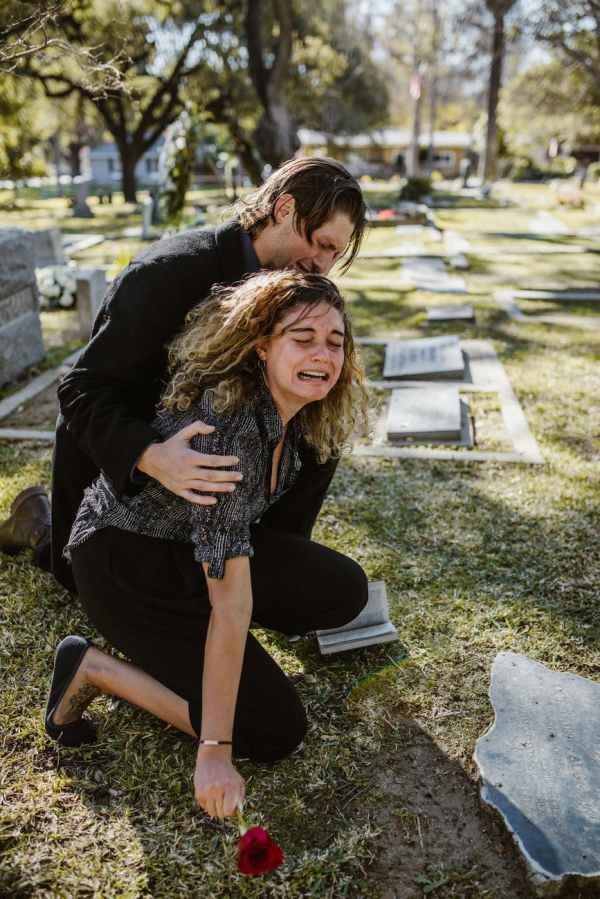
Jesus calls on us to mourn. He wants us to bring all the ugliness of our grief and shame and give it to Him. He will not ask us to cover it up, or hide from it, or “get rid of it.” He will not tell us to “get over it” or “put it behind us.” Instead, He will comfort us. That doesn’t mean we will never again feel grief or shame or sadness in this life. But our mourning will be transformed into Joy. Joy is not the absence of, nor a denial of grief. It is the triumph of life over death; of hope over despair; of purpose over futility. We are not commanded to be “shiny, happy” problem-free people. Nor are we to let mourning and grief overwhelm us or turn us sour and despondent. Instead, we are to share our grief– and to share in the grief of others–just as we can then share in the comfort we have found!

Photo by Pixabay on Pexels.com

In the same way that the “poor in spirit” can embrace all the riches and glory of the Kingdom of Heaven, those who mourn can receive from God the kind of Peace that “passes all understanding” (Philippians 4:7), and the joy the “comes in the morning” (Psalm 30:5) God does not want us to be forever depressed or wallow in our despair–but He also does not want us to pretend that we are invincible, or untouched by sorrow. Jesus wept. Jesus felt sadness and frustration during His earthly ministry. He was tired, He was misunderstood, He was betrayed. He suffered losses. And He grieved over broken relationships and the horrible consequences of Sin in the lives of those around Him.

Photo by Ivan Samkov on Pexels.com

Those who do NOT mourn– who do not feel sorrow or regret or loss– will never know the healing power of God’s consuming comfort. They will never know the full measure of Grace. They will never cry out for it, never be surprised by the light in the darkness, never feel the joy of being held and cradled by compassion. And they miss out on the true Joy that comes from being comforted and being able to comfort others.

Photo by Design Killer on Pexels.com

So the question I have to ask myself today is– what have I mourned lately? When was the last time I collapsed under the weight of my own grief or shame, only to find myself upheld and wrapped in the arms of the Lover of my Soul? When was the last time I extended comfort to someone else by mourning with them?

Receiving Back the Dead

25 Jesus said to her, “I am the resurrection and the life. The one who believes in me, even if he dies, will live. 26 Everyone who lives and believes in me will never die. Do you believe this?”

John 11:25-26 (CSB)
Photo by cottonbro on Pexels.com

Jesus knew Lazarus was already dead when He set out for Bethany. He knew of the illness in time to save His friend. Yet He delayed. By the time He arrived, Lazarus had been dead four days, and was already buried. What comfort could He offer the grieving sisters? What could He say to explain His delay and seeming unconcern?

This year, we lost a lot of friends, neighbors and family members. Many others were suffering. We prayed for them all– we prayed for healing; we prayed for miracles. And God performed some miracles– people who were on life support and people with “incurable” cancer were released from the hospital and pronounced “healed.” But others died, even with all our prayers. And even more died suddenly before we could even seek God’s favor and healing.

Photo by Tima Miroshnichenko on Pexels.com

We mourn the loss of these loved ones. We miss their presence at gatherings; we miss their laughter, their wisdom, their “life” in our midst. But we do not mourn like those without hope. (1 Thessalonians 4:13) Death cannot separate us from God, nor can it separate us from any of His family.

Photo by Andrea Piacquadio on Pexels.com

This is more than just “keeping” someone alive in our memory. There is a sure hope that we will be reunited– that we will “receive back” those who have passed on (and others will receive us after our own deaths). What does this mean? I don’t expect those who have died this past year to be resurrected in their old physical bodies or walk out of the grave as Lazarus did. But I have the assurance that they are “alive” in spirit, and that we are all part of God’s eternal plan to be together with Him forever.

Photo by Suzy Hazelwood on Pexels.com

That’s an amazing promise for the future, but it also impacts the present as I face my current grief. I don’t just remember loved ones “as they were.” I can look forward to knowing them “as they will be.” The many wonderful memories I have of our time here will be eclipsed by the wonderful moments to come! And it gets even better–those who died when I was young; those who died before I was even born–we will be “reunited” as well.

This brings up another question– what about those who are not “saved?” We grieve now for them, but won’t we be missing them for eternity? I can’t give a definitive answer to that question, but I can say that there is a comfort that transcends all that we know in this life. God can redeem our memories and our emotions, including grief. Jesus came to defeat Death and Sin. His work of redemption continues, but the Victory is already won. If you are struggling with grief in this season, I pray that God will help you “receive back” your dead– that your heart would be at peace as you remember and give thanks for the moments you shared. Let God’s promises and His comfort flood your heart. And remember that God’s compassion is to share your grief as well as your joy. Jesus wept when He came to Bethany– even though He knew that Lazarus would live again! He comforted Martha and Mary in their grief BEFORE He raised Lazarus. He can do the same for each of us.

Abide With Me

Often, when I pray for those who are in pain or grief, I will ask, “God, BE WITH…” This is a natural desire, but in one sense, it is also superfluous. God is always with us; always present, no matter our circumstances.

So when I ask God to “be with” someone, I am not really asking that He stop whatever else He is doing and go to that person. He is already there. I’m not asking Him to become aware of their heartache or suffering; He already knows. I’m not asking that He do something new or different from His will or His plan. What I am asking is that His presence would be revealed in and through the situation– that my friend or loved one (or stranger whose needs have been brought to my attention) would have a supernatural sense of God’s abiding, powerful, compassion and grace.

Photo by cottonbro on Pexels.com

Intellectually, I can know that God is omnipresent and omniscient. I “know” that God is always with me. The Bible is filled with God’s promises to “be with” His people. (See https://www.biblestudytools.com/bible-study/topical-studies/beautiful-verses-to-remind-you-that-god-is-with-us.html) But I also know, emotionally and experientially, that I don’t always feel His presence. I have moments of doubt and despair– I think all of us do. That’s part of the curse of Sin–being separated from the awareness of God’s continual presence. Even Jesus, as He was dying, felt the awful anguish of being separated from the Father, crying out, “Eloi, Eloi, lema sabachthani?” which means, “My God, my God, why have you forsaken me?” (Mark 15:34)

Photo by Alem Su00e1nchez on Pexels.com

God promises each believer that He (through His Holy Spirit) will dwell with us. He will “abide” with us. But just like living with a spouse and other members of a family, there are times when His presence seems to be in another room; and we feel alone. There may be many reasons for this– sometimes, it is because we have walked away, or turned our face away. But at other times, we long for that closeness, that awareness that God is right beside us, only to feel that He is far away. As strong as that feeling may be, we need to remember that it is NOT the reality. God still abides with us. He is still present, even if He is silent.

Photo by Liza Summer on Pexels.com

So, when I know that feeling, or when I know someone else is going through that feeling, I pray, not that God will come to us, or come back from being away, but that our awareness of God’s presence and closeness will be deepened or reignited.

Photo by Artem Beliaikin on Pexels.com

Someday, I won’t have to pray that prayer. Someday, and for all eternity, we will be surrounded by God’s Glorious Presence. But in this fallen world, what a privilege and hope to be able to pray to a God that abides with us!

On This Day…

There is a website, On This Day, that can tell you an interesting or important fact about something that happened on any day of the year throughout history.

http://On This Day – Today in History, Film, Music and Sporthttps://www.onthisday.com

Of course, this site only gives you certain facts from certain years and in certain areas of interest. So its focus is limited to one or two events per day from random years. Sometimes, the dates and facts are important events in world history; other times, they are trivial but interesting details about a sporting match, or a film star.

Photo by Pixabay on Pexels.com

I don’t have to consult On This Day today. Something very personal, very important, and very tragic happened on September 1, 1998. My father died. I watched him take his last ragged breath in a hospital bed. I held his hand moments before he died, and I wept with my mother and sister as we tried to take in the great loss. There are many days that are etched into my memory– birth days, death days, graduation days, wedding days–that will never make the pages of history books or web sites. There are other days, “ordinary” days, that pass me by without reference to any memories at all. Many days that mean little to me fill others with joy or pain.

Photo by Andrew Neel on Pexels.com

Yet each day is a gift from God to each one of us. My 24 hours today will be different from yours. Somewhere, this day will be a new beginning of life– elsewhere, it will be someone’s last day. Small things will happen on this day– a cheerful greeting, a burnt slice of toast, shared laughter with a friend, a hug, a stubbed toe–things we won’t remember tomorrow, or things we won’t value in the moments when they happen. Big things will happen, too–joyous occasions and tragic events that may shake families, communities, or even the world. This day may be filled with sunshine or rain, happiness or grief, achievements or disappointments.

God sees them all– He not only sees them, but He shares them with us. Every moment–every place– every person!

Photo by Andrea Piacquadio on Pexels.com

On This Day, you can be assured that God is with you. In joyful moments and tragic circumstances. In fearful situations and quiet moments of routine tasks. In crowds of commuters or in lonely corners. On This Day– and every day– God wants to share all that is on your mind and in your heart. On This Day and in this moment, God is as close as your next breath.

(See Deuteronomy 31:8)

Praying From the Ash Heap

Last week about this time, I was miserable. Feverish, achy, somewhat nauseous, and doubting my own sanity. I had chosen, along with my husband, to get the COVID vaccine– even though we already had the disease earlier this year! We should have a built-up immunity, and medically, there is no compelling reason to get the vaccine and take the risk of suffering all the symptoms I suffered last week.

Photo by Pavel Danilyuk on Pexels.com

Fever and pain have a way of making people cranky, impatient, and rebellious. Especially when they come as a result of trying to do “the right thing.” I was reminded of the Biblical character of Job, who suffered intense pain and suffering through no fault of his own. While my suffering was nothing compared to his– or to many of those who have suffered worse from COVID than I did– it brought some of the same thoughts and complaints. “What did I do to deserve this?” “Why me?” “Don’t you care about my suffering?” “How much longer must I be in pain?” “Wouldn’t it be better if I could just escape this fever and achiness?”

Photo by Klaus Nielsen on Pexels.com

Most of us are not “good patients.” No one likes to suffer, even for a short while. And it can be easy to let our pain determine our prayer life. Our focus narrows to our own circumstances, and how we wish them to change. We tend to go to God with indignation–how could He let us suffer like this?! And yet, even in his indignation and self-centered moaning, Job never lost sight of God’s essential goodness and justice.

Photo by RODNAE Productions on Pexels.com

Job’s friends started out with a sincere desire to offer help and comfort. They heard of his sufferings, left their homes and traveled to visit and comfort their friend. When they arrived, they wept, tore their clothes, and sat, silent and supportive, for seven whole days! (Job 2:11-13) This is in contrast to Job’s embittered wife, who told him to “curse God, and die!” There is no other mention of her throughout all of Job’s suffering–which may have been one of the unheralded mercies of God!

Photo by Tima Miroshnichenko on Pexels.com

Job’s conversation with his friends may not sound much like prayer, but we see into Job’s heart and mind through these conversations. As his friends remind Job that God is Just, and that He punishes those who are wicked and rebellious, Job defends himself. But he also defends God–God IS Just; but He is also merciful and loving. What is happening to Job is not consistent with all that Job has experienced of God. In fact, it seems capricious and unfair. Job’s confusion and his questioning are not only coming from his pain and suffering, but from his surprise at God’s silence and seeming absence. Job’s friends see Job’s circumstances as confirmation of his sin. But though Job is confused by sudden change of circumstances, he is convinced that God will continue to be Just– that He will hear Job’s complaint, even if He has decided against Job for reasons Job may never understand. In fact, Job is still convinced of God’s goodness, declaring that “I know my redeemer lives…I myself will see him with my own eyes…how my heart yearns within me..” (Job 19:25-27), and that “the fear of the Lord–that is wisdom”(Job 28:28)

When we face the “ash heap” of despair, pain, grief, and doubt, whether we are isolated or surrounded by well-meaning friends, we have a choice in our response. We can praise God from the ashes, we can bring Him our doubts and questions. Or we can “curse God and die”– choosing to see only our circumstances and losing sight of who God is (and always has been).

The same God who brought David and I through our bout with COVID brought us through last week’s reaction to the vaccine. He is the same God who has comforted families who lost loved ones to this disease, and who has kept still others healthy throughout this crisis. I don’t know why or how we got sick back in February; I don’t know why I had such a bad reaction last week. I don’t know what the future holds, or what other pains and struggles we may face in the weeks and months ahead. The same God who finally appeared to Job–even though He never answered Job’s questions!–is the same God who holds the universe in His hand. He is the same God who never lost sight of Job. He is the same God who parted the Red Sea, healed lepers and kings, raised the dead, and promises everlasting life with Him.

Photo by Min An on Pexels.com

So I may not know what troubles I will face tomorrow, and I may not have the answers to all my questions. But, like Job, I know that my redeemer lives! I know that whatever happens, God will remain Faithful, Good, Just, and Holy. And one day, “I myself will see him with my own eyes…how my heart yearns within me”!

Praying in Heartbreak

Yesterday was Mother’s Day. And it was a good day. It started out cold and wet, but I got to spend time with my mother, my mother-in-law, several other family members, and some dear friends from childhood. It was a happy day, and it ended with sunshine breaking through the late afternoon clouds, birds singing, and a full heart of memories and gratitude.

Photo by Pixabay on Pexels.com

But Mother’s Day wasn’t always like that for me. For many years, it was one of the worst days of my year. No matter the weather or the company, there was always a shadow of barrenness and emptiness. Yes, I was grateful for my mother; for my grandmothers and aunts and other relatives; for my friends and their adorable children. But I felt shut out– I was not a mother. I would never be a mother. I was always on the outside looking in.

Photo by Andrea Piacquadio on Pexels.com

My circumstances are slightly different now, but I am still not a “natural” mother. No one calls me “mama” or even “grandma.” But Mother’s Day isn’t meant to be a day of sorrow and emptiness, and after years of prayer and letting go of expectations, God is showing me how to enjoy and embrace the circumstances in which He has placed me.

Photo by Design Killer on Pexels.com

I am not alone in this struggle– far from it. For the past few weeks, I have heard from heartbroken people who dread Mother’s Day. Those who have lost their mothers face the reminder of their grief and loss. It is particularly hard on those who were unable to spend precious days with a dying mother due to COVID restrictions, or lost their mother to COVID. Some mothers are reminded of the wrenching loss of a child– still birth, drug overdoses, suicide, auto accidents, childhood cancer– gut-churning emptiness where once there was a promise of joyful life, grandchildren, shared memories, and so much more. Other mothers (and their children) face the pain of separation and severed relationships. Many, like me, face the reminder that they are NOT a mother– not a “real” mother–even if their circumstances or careers are filled with children “not their own.” And some people face multiple circumstances that cause grief, bitterness, alienation, anger, and despair.

Photo by Ken Ozuna on Pexels.com
Photo by rawpixel.com on Pexels.com

These feelings of sadness and loss are natural, but they do not have to weigh us down or control how we face each day. God wants to share these burdens; He wants to carry the weight of our brokenness and free us to experience joy and peace– even in the midst of our pain! And on those days when our circumstances threaten to overwhelm us, God is never more than a prayer away. He doesn’t make our grief disappear; He doesn’t erase our memories. But He can redeem them with a changed perspective and new hope.

Mother’s Day, Father’s Day, Valentine’s Day, birthdays, anniversaries, etc.– each can bring bitterness and heartbreak, as well as joy. We do well to pay attention to those around us who dread such holidays, and offer the comfort, hope, and encouragement of a listening ear, a loving heart, and, most of all, a loving God who longs for us to pray in and through our heartbreak.

Celebrate Life

My husband has celebrated his birthday this week, and it reminded me of some of the many ways we celebrate life. Before a baby is even born, we share special moments of excitement–sonograms, gender reveal parties, baby showers, picking out names, feeling little “kicks” and movements in the womb. We give gifts and blessings when the baby arrives. We take baby photos and commemorate all the “firsts”– first tooth, first steps, first words, etc. And each year, we remember. We send cards and other birthday greetings; we give gifts and have parties with special cakes and songs and party hats. We invite others to celebrate, as well.

Photo by Jonathan Borba on Pexels.com

Not everyone celebrates birthdays, and some people make a mockery of their advancing age, but most of us think birthdays are a big deal, and worth celebrating. LIFE is a big deal. Life is a sacred gift, and we should cherish every moment of it. We celebrate the events of life– achievements, milestones, graduations, new jobs, promotions, relocations, marriages, anniversaries, retirements, and much more. Celebrating life is an industry– cards, balloons, T-shirts, reception halls, catering, special clothing (wedding dresses, tuxes, caps and gowns, etc.), special foods, party favors, confetti, gift items– we spend a lot of time, energy, money, and even “life” celebrating our lives.

Photo by Anna Shvets on Pexels.com

And we also celebrate life at its end. Even as we grieve the loss of loved ones, we seek to memorialize their lives. We hold funerals, publish obituaries and memorials, erect tombstones, build monuments, and write tributes and biographies. We celebrate the achievements, memories, and legacies of those who pass on. Their lives mattered. They don’t cease to matter when death comes. For the Christian, there is a special reason to celebrate the end of life– because it is NOT the end! Imagine the celebration of Life that will never end–the celebration of eternity with the Author, Giver, Redeemer, and Sustainer of Life!

Photo by nappy on Pexels.com

Many people have wished my husband an happy birthday this week, and they’ve offered prayers and good wishes. Today, I will be praying for many people who are celebrating a birthday. I will offer up a thanksgiving for their life, and celebrate the One who created each unique person on today’s list.

We’re going through a journey that has focused on worldwide death– fear of death and disease, despair, anger, desperation, and hopelessness. We shouldn’t ignore the reality of death around us, but we mustn’t let it overwhelm the life that is within us. Life is worth celebrating–ALWAYS!

Blog at WordPress.com.

Up ↑