“Seeing” Answered Prayer

God always hears our prayers. He always has an answer. But it isn’t always the answer we expect. Sometimes, God answers, “No,” or “Not yet.” Sometimes, He answers in ways that seem confusing and mysterious, and even ironic.

I remember as a young teen praying for a woman in the community who had lymphoma. In treating her condition, the doctors, trying a new experimental treatment, did permanent damage to certain muscles, leading to a progressively debilitating condition. She died a slow and painful death, unrelated to her original condition. Where was God? How could He listen to our prayers and give such a cold, cruel answer?

But God sees a bigger picture than we do. This precious woman had incredible faith and grit. She had spent years working diligently to help others and teach God’s Word. She continued her work, even in the midst of her health struggles almost to the end of her life. What might have caused some people to turn their backs on God made her more dependent on His Grace. She faced her pain and weakness with grit, strength, and hope in God’s eternal healing. God’s answer wasn’t to rescue her from the suffering, but to be present in it with her. And her example lives on to this day.

Some people would read about this and be dismissive. What a cop-out! What a delusion! But there is much more to her story than her own condition or even her response. One of the men in our church really struggled with God’s seeming indifference. He wrestled with his own faith for many months while watching her get weaker and weaker. But through his struggle, he grew in his conviction that God was present in every situation. He was inspired to do short-term mission work, partly as a result of this growth. Knowing that God would be with him, he threw himself into loving people from a different culture–different climate, different language, different work ethic– and helped build churches and other facilities for those in need. Many people were helped, inspired, and encouraged because of his dependence on God– a dependence enhanced by facing his own questions and doubts.

Family members and community members, watching her struggles, were inspired to pick up where she left off– working and teaching and reaching out to others with zeal and joy–following her marvelous example. Today, some of her family members are leaders in their churches, raising the next generations of witnesses to God’s mercy and power. Doctors, having failed in her treatment, learned from it– a difficult lesson for all, but a lesson, nonetheless. Her joyful attitude (before and during her struggles) inspired me to direct the Vacation Bible School program at our church for a few years, and to teach Sunday School when I moved to a new location. And those are just a few of the ways I have “seen” God’s answers to our prayers. God did not give our friend the physical healing we wanted. But her struggles– and her response of faith and perseverance–inspired a ripple effect far beyond her own pain and disappointment. And she has received the ultimate healing! Her pain, intense and unjust as it was, was only temporary. Her life, her legacy, her joy– they all live on!

How often do we look at a situation and think we know what is “best?” How often do we feel that God’s answers are “wrong?” Wrong timing, wrong outcome, full of hardship or pain– how can this be God’s “perfect” will for us? There was nothing about this woman’s situation that was comfortable; no reason to see a good outcome for her or her immediate family. She died. She experienced pain, with no earthly justice. Her suffering was undeserved and unmitigated. She refused to sue the hospital or the doctors– she wanted them to be able to continue to learn from her experience so they could help others NOT to suffer in the future. But her life was shortened and made grueling in the process, and she received no payout, no financial compensation, no symbolic reparation for her sacrifice. We received no “miraculous” answer to our prayers. It seemed at the time that the more we prayed for healing, the worse her condition became. We continued to pray anyway, knowing that God DID hear us, and God’s ways were not our ways– they are always better. Even when His ways seem like silence.

This all happened several decades ago, and many of the “answers” from our urgent prayers are still hidden from our eyes. Many of our questions remain unanswered. But God’s will is still active, even in these tragic circumstances. Someday in Heaven, it may be revealed to us exactly how God used this woman’s life and struggles to bring about blessings to hundreds of other people– causing them to grow strong through her weakness, drawing them to His healing and wisdom in a world of pain and confusion.

I have lost many friends to cancer. I pray for each one, and the outcomes are never exactly the same. Some go into remission, only to have the cancer return three or four years later. Others get amazing healing– surgeons are astonished and perplexed by the rapid or miraculous disappearance of cancer cells. Some go into fast decline and die almost immediately after their diagnoses. And each situation impacts people in different ways, showing God’s power and presence for those who are willing to look for them. Prayer isn’t a magic formula for immediate and total healing. Prayer is lifting up a situation that is beyond our control or understanding and trusting that God has a perfect plan beyond what we can see or understand. Cancer cannot take God by surprise. Death cannot outwit or overpower God. We live in a world where Evil can overwhelm us; our bodies can betray us; our future can be lost in the fog of uncertainty and suffering. But God is present– not only IN our suffering, but ABOVE and BEYOND our suffering.

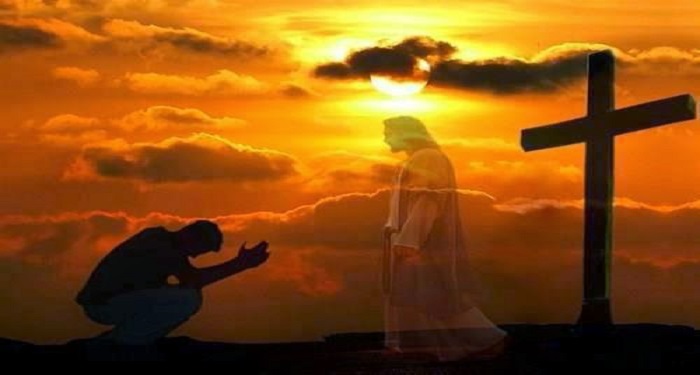
We don’t pray for our friends and loved ones to suffer. We want them to be healed, to be free of pain and grief; to be at ease and blessed with abundance. This is normal; it is good. God wants to bless us. It doesn’t bring Him joy to watch us suffer. But He also wants us to see the blessing of His presence, His wisdom, and His power. Sometimes, we can’t see that as we look around. Sometimes, we need to look up! Even from a hospital bed (see John, chapter 9). Even from the flames of suffering (see Daniel, chapter 3). Or from the belly of a whale (see Jonah, chapter 2). And we will find that God is there.


How Does Your Garden Grow?

I saw an interesting site the other day about “Plant (ing) Your Spiritual Garden.”  Spiritual Gardening

yellow bee on white flower on selective focus photography

I’ve seen different versions– one version had some rows of “P”s, instead of “peace”– Peace, Prayer, Patience, and Positive Thinking.  Another talked about keeping Be’s near your garden– Be Faithful, Be Loving, Be Kind, Be Anxious for Nothing, etc..

I love figurative language– parable and metaphor and such– the Bible uses it generously.  Jesus used parables about gardens, planting, fruit trees, harvest, and vineyards throughout his teachings.  He knew that we can listen on two levels and that we remember concepts better with visual and figurative examples.

girl wearing white floral dress beside grass plant at daytime

Prayer is something we must cultivate–we can grow and produce fruit if we develop the pursuit and practice of prayer.  Remember to pull out the weeds of busyness and doubt.  Plant seeds of praise and trust, dig deep in the fertile soil of faith; allow for the key ingredients of the light of God’s Word and the Living Water of daily fellowship with Him.

There are a lot of other great tips to keep healthy growth happening.  Need some more tips– check out this page.  Proactive Prayer Points

If you have other tips, I’d love to hear them– please leave a comment or suggestion!

agriculture basket beets bokeh

That Voice in Your Head

Most days, I post about Pursuing Prayer from the “praying” end…how do I pray, what attitude do I have about praying, why do I pray, etc.

Today, I want to explore the “responding” end…how do I know when God is answering my prayer, or what he’s asking me to do in response to his will?  While I don’t have a complete answer, I do want to share some wisdom– some from experience and some from Biblical principles and others’ testimony.

Isaiah 55:8-9 English Standard Version (ESV)

For my thoughts are not your thoughts,
    neither are your ways my ways, declares the Lord.
For as the heavens are higher than the earth,
    so are my ways higher than your ways
    and my thoughts than your thoughts.

God moves in a mysterious way, His wonders to perform. He plants his footsteps in the sea, and rides upon the storm. William Cowper

It often surprises people to learn that “God works in mysterious ways” is not actually in the Bible.  God’s ways are NOT our ways, and his thoughts are not our thoughts, but his answers to prayer are not always obscure and unknowable.  God does not delight in vexing us and making us guess and second-guess his will.  It would be easy if God always answered our prayers with a flashing neon sign that gave a simple, one-sentence directive– “Take two aspirin and call me in the morning.”  “Click your heels together and say, ‘There’s no place like home.'” “Hakuna Matata.”  But pithy platitudes and easy answers are not God’s way, either.  God created each of us as a unique reflection of his divine image– his answers will be uniquely designed to fulfill his will and meet our deepest needs, not always in ways we expect or understand.

pexels-photo-942317.jpeg

So how do we discern God’s will when there is no neon sign or simple answer to our prayers?  Here are a few guiding principles:

  • God will NEVER answer your prayer by contradicting himself or compromising his holiness.
    • God will not answer your prayer for money by giving you an opportunity to cheat or steal.  He will not answer your prayer for a husband by throwing you into the arms of someone else’s.
    • Just because God doesn’t send a lightning bolt or physically stop you from doing something doesn’t mean that he has given his OK.  If he ALLOWS you to sin, that doesn’t mean that he APPROVES of your sin or that it is his answer to your prayer.
    • God will never ask you to do harm to yourself or others as an answer to your prayer.  Vengeance, sacrifice, atonement, and retribution are the province of God alone.  I believe that God asks us to be vigilant in defense, and allows us to take up arms in defense, but to initiate a feud, to seek personal vengeance, or to act out vigilante justice is to flout both God’s authority and the authority of the powers God has set in place over us.
  • God MAY use circumstances or people to answer your prayer.  But the same principle above applies– circumstances that lead to sinful actions are NOT God’s answer to your prayer; people who advise you to do what you know is contrary to God’s holiness are not sent from God– no matter how appealing the prospect, no matter how powerful the person or persons.  That being said, God may choose to use the most unlikely of persons or events to bring about a resolution to your need–LET HIM!  Don’t judge a gift by the size, the shape, or the wrapping paper!

gift-made-surprise-loop-39006.jpeg

  • God may use time to answer your prayer.  I prayed for a husband from the time I was a young girl– I married at age 46.  Waiting doesn’t mean that God has forgotten about you; it doesn’t mean that you aren’t worthy of an answer or ready for an answer– sometimes your answer isn’t ready for you!  There are two caveats I want to share from my own experience of waiting for an answer:
    • Don’t give up!  God knows the desires of your heart– but keep praying anyway.  Well-meaning people will say awful, hurtful things– that you aren’t praying enough, or praying the “right” way; that you must be hiding un-confessed sin; that you need to try some other way to get what you want, or to hurry God along.  In my case, I had people trying to fix me up, suggest dating services, remind me that my “clock” was ticking (it was broken, but they didn’t know that), or suggest that it just wasn’t God’s will that I marry, and I should pray for him to take away the desire for a husband.  Listen to folks like this (if you must) with half an ear and less than 10% of your heart– let them cause you to re-examine your heart and your desires, but don’t let them cause you to give up or doubt God.  That was not their intention, but it can often be the result of their ill-considered words.
    • Do the next right thing.  Doing nothing while you wait for the perfect answer gets you nowhere.  Wringing your hands and pacing gets you nowhere.  God wants our trust and our obedience.  As we wait for more specific direction, we need to trust that doing the next right thing IS the RIGHT thing to do.  This was the hardest lesson for me, but the one I most needed to learn.  So while I waited, I moved ahead step-by-step.  I made a lot of friends, gained a lot of experiences, and learned about marriage by watching the examples of others (both good and bad).  I got involved working with children, first as a secondary teacher, and then as a librarian.  I got to spend nearly thirty years of my working life surrounded by young people.  I got to laugh with them, love on them, mentor them, dream with them, discipline them, and cry over them (and send them home).  I didn’t just “settle for” a single lifestyle– I learned to embrace it.  I learned to be grateful for the wonderful opportunities I had as a single woman, and to anticipate the changes that marriage would bring, should it come along.  I learned that marriage should be a means to an end, not the end itself– that marriage done right is not about my growth and fulfillment; not even about his growth and fulfillment; but about OUR growth together and toward Godliness.
  • Trust “that voice in your head”– (not the one that speaks out loud and gets you strange looks!) –but your God-given conscience, and the guidance of the Holy Spirit.  “That still, small voice” is often the most personal way God speaks to us.  In my own life, it was taking the risk to leave a career I loved (teaching) to reach for a deeper dependence on God.  I left the security of my teaching position for three part-time jobs (at one point), no health insurance, and a move to a new community where I knew virtually no one.  I had other choices, other more appealing options, chances to reconsider.  I wasn’t being pushed out of teaching–in fact, I left just as my options at the school were opening up for bigger and better things.  Yet I felt compelled to leave.  I had no safety net waiting– I ended up in libraries, but that wasn’t my original plan.  There were many people counseling me to reconsider– and their reasons were compelling.  But as I stood firm, other voices came along to encourage me.  I believe they were sent by God to confirm that this risk was from him and for my good.
  • Don’t trust “that voice in your head”–No, I’m not trying to confuse you or contradict what I just said.  But this is another caveat (see above).  We are told to “test the spirits”, and sometimes, that voice in your head is NOT the Holy Spirit.  In the case I mentioned above, I had to follow all the other principles of discerning God’s will.  In my case, leaving teaching did not violate God’s holiness or come about because I wasn’t willing to follow God’s leading–I wasn’t leaving teaching to try my hand at a get-rich-quick scheme, or because I had lost my desire to work with students, or had lost faith in God’s sovereignty in my life.  God DID use circumstances and people to confirm my decision and help me grow through the experiences that followed.  God used time to help me transition from schools to libraries, and prepare me for other opportunities, including short-term missions trips and marriage.  I can’t even begin to list all the ways I tested and examined what I felt God was leading me to do before I made the leap.  That much testing may not always be necessary, but we need to be careful not to rely on our own understanding (Proverbs 3:5-6), but to Trust in the Lord with all our hearts.  He WILL direct our paths when we do that.

pexels-photo-618955.jpeg

  • Finally, Pray for it– pray for discernment, for wisdom, for strength to do the right thing!  Won’t God DO IT!

Praying for Rain

Spring has arrived.  In my part of the world, that means many people are hoping for milder temperatures, gentle spring rains, and new growth after the cold and colorless winter.  Most of us love the idea of spring, and the promise it brings.  Those soft days of baby birds chirping outside our window as the gentle raindrops roll down; of newly budded trees and flowers opening to the warmth of the sun; the smell of freshly turned earth in gardens and fields; the bleating of lambs and the down of chicks and ducklings; children squealing in delight as they leap from puddle to puddle in their colorful boots; the world slowly waking up in a thousand shades of green..

rain-boots-umbrella-wet.jpg

Of course, it never seems to go exactly like that– sometimes the weather this time of year can be volatile– tornadoes, freak ice storms, sudden heat waves, flooding, or a mix of all of the above in a matter of hours!  Chirping birds can’t be heard over the roar of traffic and blaring car radios.  The smell of exhaust chokes out the aroma of rich dirt or fresh flowers.  The same rain that brings puddles also brings mud and run-off and potholes in the road.  And, possibly because we have such expectations of spring, it seems to fly by and disappear almost before it comes.  There is a joke that sort of summarizes the unpredictable nature of spring around here– “I love spring in Michigan (or insert another Midwest state)– last year it was on a Wednesday!”

Like the season of spring, prayer holds promise and expectation.  God promises to hear our prayers, but sometimes our expectations are not in line with God’s answers.  Farmers pray for dry days to plow and plant, and rain to come before and after to soften the earth and water the seeds.  Little League players want the rain to come on Monday, and the diamond to be dry by Saturday.  School children want the rain to come overnight, so the playground will be dry for recess.  Commuters want the rain to fall after they drive to work and before they have to drive home.  All may pray for rain, but not in the same way, for the same reasons, or at the same time.

pexels-photo-890600.jpeg

We all want the promise of easy growth, gentle weather, and comfortable routine.  But God’s plan may involve blustery days and muddy driveways.  God will bring rain, and sunshine, in his time.  He will calm the storms and blow away the clouds.  He will send us flowers and rainbows, and perfect days for flying kites and playing baseball.  And maybe, this year, it will be on Wednesday!  But the stormy days remind us of three things:

  • God is with us through the storm.  He is with us when the rains come; and when the clouds roll back to reveal the rainbow.  He knows the pain you feel when you view the storm damage and assess the loss.  Even as the seasons change, he has promised to be with us always
  • God is stronger than our storms.  His ways are wiser than ours, and his plans are better.  We may be drenched and covered in mud when we expected to be dry and comfortable, but the race isn’t finished yet.  We may fall down, but we’re not out!  He can give us the resources and the power to rebuild, renew, and start over.  No matter how short (or long) our season of storms, it is only a season– it will pass.  Just as winter gave way to spring, spring leads to summer–sometimes overnight; sometimes in fits and starts.
  • God is eternal.  Storms and seasons are local and temporary.  I may be experiencing spring in Michigan, but others are experiencing rainy season in India, or “fall” in New Zealand.  It can be sunny here, and snowing in Minnesota, and raining at my cousin’s house in Alabama.  And when I am praying for rain, someone close by is praying for sunshine.  But someday, and for all eternity, God will be our source of light– there will be no need for storms and seasons, no need to pray for rain.

crocus-flower-spring-buhen-53595.jpeg

Where is God When…?

A priest, a Baptist minister and a rabbit go to a pub for lunch. The hostess meets them at the door with a message. “Today, we are helping a local blood bank. Your lunch is free if you donate a pint of blood.” All three agree to donate blood in exchange for a free lunch. The hostess asks each one in turn for his blood type. The priest says, “I believe my blood type is A negative. The minister says, “It’s been a long time, but I seem to remember that I am AB positive.” Finally, she turns to the rabbit. “I was supposed to be a Rabbi, so I must be a Type O!”

I love puns, and like many puns, the humor in this one comes from a grammatical or spelling error. Something in the story is almost, but not quite, as it should be. It is a good thing to be able to laugh at small mistakes. But what happens when things are terribly wrong? It’s not funny at all. It’s devastating, confusing, and frightening. We want answers. We want the situation “fixed.” We want to find out what went wrong, why it went wrong, and who is responsible.

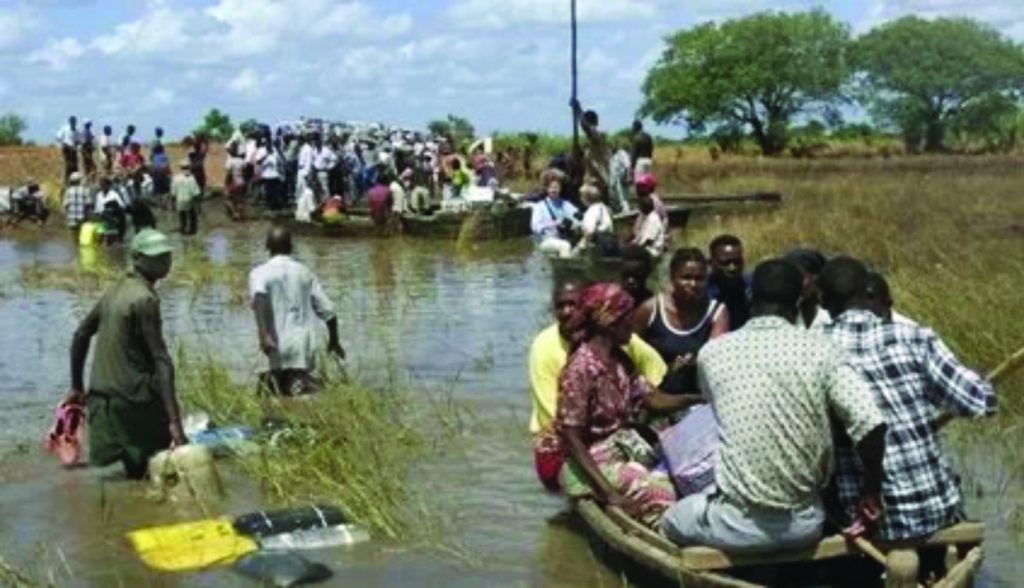
California is burning as I write this. Thousands of acres destroyed; hundreds of homes and businesses reduced to ashes; thousands of people left homeless. Where is God in these fires? When an innocent child is abducted, raped, mutilated and left for dead, where is God? Where is God amid the unrest in Mozambique, where typhoons and political unrest have caused so much havoc? Where was God when the hurricane and storm surge displaced tens of thousands of people in North Carolina, Tennessee, and Georgia less than six months ago? Where is God in the war-torn regions of the world, where innocent families are being terrorized by bombing raids and invading armies? Where was God when millions were dying of COVID just a few short years ago?

I’d love to say that I have an answer. One that is comfortable, unassailable, logical and easy to understand. But I don’t. The “glib” answer is that God is on His Throne, omnipotent and all-wise. And He is. He is not to “blame” for personal tragedies or for sweeping disasters. Sometimes, God intervenes in miraculous ways to “save” us from certain death, “accidents,” or even attacks. But often, He chooses not to do so. And I have no explanation, no all-encompassing, deeply soothing answer for those who are left suffering.

What I do know is this: God is a redeeming God. He is a God who can and often will turn tragedy into triumph. And even if, in such cases, the triumph is often bitter-sweet. This is a God who created mankind, knowing we would reject His goodness and go our own way. This is a God who took a single faithful man (Abraham) and made him the father of many nations– some of whom are still at war to this very day. This is a God who did not spare His Only Begotten Son, but allowed Him to go through a sham trial, be falsely convicted, and die a painful, publicly humiliating death. And then, Christ arose!

What does that mean for someone whose son or daughter is still dead after five (or 25) years of grieving? For someone who lives every day with the trauma of having been raped or abused as a child. It does not give immediate comfort. It does not take away the sting of injustice, pain, and questioning. But it is the promise of redemption– that just as Christ rose victorious, He will cause the pain and grief of the past to disappear in the Joy and Wonder of Eternity with Him. He WILL bring ultimate and complete justice, and it will be perfectly overwhelmed with mercy, grace, and freedom from the past.

It may seem slow and painful, but it WILL happen. Those who have suffered; they will laugh again. Those who are drowning in the senselessness of their own sorrow will experience healing and have answers to their questions. Those areas of the world where suffering is so great in the present– they will recover. Trees and gardens will grow again. Houses will be rebuilt. And yes, there will still be disasters and devastation in our lifetime, and in the years to come– UNTIL THAT DAY. That day when Christ returns to make all things new. Whatever hurts and griefs we carry now, they will be overtaken by joy and healing. No more fires, no more floods, no more war, no more disease, no more “mistakes.”

I don’t know why God allows us to suffer now. I’ve heard some philosophers try to explain, and they have many “good” reasons:

Suffering often leads to growth and necessary change.
Suffering produces resilience and develops character.
Suffering teaches us that there are consequences to our selfish and sinful actions.
Suffering often brings people closer together and brings out the best in us as we offer help and hope and encouragement.
Suffering teaches us to be compassionate toward others in their suffering and grief.
Suffering contrasts with joy, helping us to appreciate what is truly good in our lives.

These are not bad answers. But they are not complete. They are not “enough.” And I think that’s part of God’s plan. God doesn’t want us to live life on autopilot. He doesn’t give us “easy” answers– just like He doesn’t give us a life without any purpose or challenge. He doesn’t want us to focus on having all the answers. He wants us to learn from each other, depend on one another, and ultimately to trust that He knows best. It’s not an easy lesson to learn. But if we stay in pursuit of Prayer, and closeness to God, it’s a lesson well worth struggling through.

And sometimes, we can learn to laugh at life’s “typos” and other little mistakes as we travel this life.

Praying For the Ashes

“Playing for the Ashes” may not be a familiar term to many. It refers to a Cricket Rivalry between England and Australia, dating back over 125 years. The term “the Ashes” was first used by a sports writer lamenting the loss of a Cricket match. The team from Australia had defeated the English team on its home soil, and the writer wrote a tongue-in-cheek “obituary.” Over the years, the two teams now play for a trophy shaped like an urn, which supposedly contains ashes of something related to the famous game. The rivalry is real, and the teams give their all to win each match “for the ashes.” But the trophy itself is little more than a joke. The phrase has come to mean playing all out for something that is already (figuratively) dead or worthless.

“Playing for the Ashes” is also the title of a mystery novel, in which a cricket player is murdered. I am not a Cricket fan, but I am a fan of mysteries, and in reading the book, I learned a little bit about a sport I have never followed. But the book builds on rivalry and the theme of investing one’s energy and dreams for “Ashes.” The main characters of the book have wasted their money, energy, and life force in the pursuit of power, revenge, fame, and status, only to find themselves losing everything they ever worked for. The book is very well written, and it made me think. But it also left me sad and somewhat empty at the end.

I began thinking about how various life pursuits might compared to playing for the ashes. I write about pursuing prayer, but what is my goal and aim? Am I pursuing prayer with the right goals? I may answer that it is part of my pursuit of living like Christ; that I want to grow closer to God; that I want to grow in my walk with Christ…any number of “Spiritual” answers. But is that always true?

How often do I spend my time playing for, and even PRAYING for “the ashes?” How many times do I try to “fix” things first, and only pray as a last resort? How many prayers are spent asking for things I “want” to happen, instead of seeking God’s will first? What dreams am I holding on to when I pray– unwilling to lay them on the altar? Am I praying in line with God’s will, or do I feel like prayer is a rivalry (either with God or with my circumstances)? Prayer IS a pursuit, but it is not a game or a rivalry. The “prize” of prayer is not getting the answers I want, or getting God’s “approval” of my desires. The “prize” is eternal, abundant life from– and with– the Father! It is not getting God “on my side”, but growing closer to the heart of God!

God wants to hear our requests and our desires– but He also wants to hear our desire to follow Him above all. We should be running for the true prize, not playing (or praying) for the ashes!

Our Advocate

I write often about praying for others. I sometime write about others praying. But I don’t often write about Jesus praying– except during His ministry on Earth. But Jesus continues to pray–without ceasing– for us in Heaven. (See Hebrews 7:25 and Romans 8:24). The Bible tells us that Christ is seated at the right hand of the Father and making intercession for us. Not only is He praying; He is praying FOR US.

Jesus didn’t just die to keep us out of Heaven and then move on and leave us to struggle on our own. Nor did He send the Holy Spirit to live with us so that He could sit down and do nothing. Jesus is still passionately advocating on your behalf– every minute!

And that is a great comfort in a world where we sometimes feel abandoned and friendless. Even if the whole world is lined up to do me great harm, Jesus is on my side. If you have trusted Him with your life, He is faithful to advocate for you– for your growth as a Christian; for your protection from the schemes of the Enemy; for abundant and productive LIFE for you, both now and through Eternity.

If you have not trusted Jesus as your LORD and Savior, He is still advocating– for another opportunity, for more time, for circumstances (good or bad) to help you seek (and FIND!) Him. For those who have not heard the Gospel, He is pleading with the Father (and sending the Spirit to urge believers) to open their eyes, ears, and hearts to God’s will and trust Him.

Jesus advocates on our behalf because of His great Love and Compassion. We don’t deserve to have someone else plead our case before the Righteous Throne of God. And we are not qualified to plead our own case– we are guilty in the sight of a perfectly Holy God.

“But God shows His love for us in that while we were still sinners, Christ died for us. Since, therefore, we have now been justified by his blood, much more shall we be saved by him from the wrath of God. For if while we were enemies we were reconciled to God by the death of his Son, much more, now that we are reconciled, shall we be saved by his life. More than that, we also rejoice in God through our Lord Jesus Christ, through whom we have now received reconciliation.” Hebrews 5:8-11 ESV

You will never, NEVER pray alone! And who better to have as a prayer partner than the very Son of God Himself! He is our Savior, our Champion, and our Advocate!

Choices

I like having choices. When I go to a restaurant, I get a menu, with several choices– appetizers, entrees, beverages, desserts. I have choices at the grocery store– brand X cereal or brand Y, different sizes of laundry detergent, which cucumber to put in a produce bag– sometimes even a choice between paper and plastic and reusable bags! I have a choice to buy or rent a house or apartment/condo. I have a choice about the car I drive or the choice not to drive, but to walk or take public transportation. I choose which church to attend, or not to attend at all. I choose when I get up in the morning and when I go to sleep. I choose what to wear each day. I choose to obey the law, including speed limits on the highway and slowing down in school zones, paying whatever taxes are due, and registering for the census, voting, and other civic duties.

Many of these choices seem benign. It doesn’t really matter to anyone else which brand of cereal I buy or when I eat it, or even if I decide not to eat it, but end up throwing it out. It doesn’t matter to most people where I live, or go to church, or what I am wearing. It doesn’t hurt anyone else if I drive a couple of miles faster than the speed limit on a back road somewhere.

But some choices DO matter– they matter a lot. If I choose to drive at high speed through a school zone, I might end up accidentally killing a student or school worker. If I live in a house or apartment I cannot afford, or if I refuse to maintain my house or apartment, I may end up evicted or homeless. If I choose to use drugs– even prescription drugs– in an unwise manner, I may end up in the hospital or in the cemetery! And I may hurt others around me in the process.

I live in a nation that prizes “freedom” and “freedom to choose.” But in the past century, more and more voices are being raised in an effort to make all choices “equal.” And they are not. Many of our “choices” are in direct contradiction to the Word of God, to traditional values, and even to common sense! Our choices have consequences– some benign, and some catastrophic. Voices are shouting about their “right to choose” even as they are also raised in righteous indignation about others’ rights and choices.

I could speak to this for days on end, defending my own choices, and pointing out which “choices” break my heart or offend me. But I feel compelled to point out just three things to consider about individual choices:

  1. How does this choice honor God? I think it is easy to focus on “big” choices when we think of this, but I have been challenged lately to see how even my “easy” and “little” choices honor Him. Does it really matter which brand of cereal I eat in the morning? Probably not. But what about brands and manufacturers that support causes that do not honor God? Most of the time, I am unaware of such considerations. But the money I spend on my favorite sugary breakfast treat may help sponsor evil. And if I am aware of which manufacturers are giving large donations to causes I despise, but I am still buying their products every week, I am helping to sponsor that evil.
  2. How does this choice impact others? We DO have the freedom to choose our actions, but we do NOT have freedom from the consequences of those actions. “My Body, My Choice” looks good on posters and banners, but things like abortion or gender reassignment have an impact beyond a single person. Abortion always ends with the death of a second “body”– one without any choice in the matter. Gender reassignment impacts more than just one person– it impacts their present and future relationships, as well as impacting their future physical health and reproductive system. It is also important to establish whether my choices are made to try to please or influence others. It’s easy to blame others after the fact, citing “peer pressure” or claiming “I didn’t have another choice,” but is that really true, or was one choice just a lot easier or more popular than another? That same group that pressured you make certain choices– will they be there for you afterward? No matter the consequences? Will they still be your friends if you make a different choice?
  3. Does this choice help me grow into a better person? Many of our choices come from wanting to be a happier, wealthier, or more popular person– NOT a healthier, more mature, or wiser person. And most of our choices focus on immediate gratification, rather than long-term growth. Doing something because you have the “right to choose” is not the same as “doing the right thing.” Doing the right thing often involves sacrifice and even a season of suffering. Our present choices–even the small ones– will impact our future circumstances, and our development as an individual. Eating a donut today may be tasty, but eating donuts every day may lead to obesity, diabetes or heart disease, and even a lessening of enjoyment for donuts– they’re no longer a tasty treat, but a habitual threat to my health!
  4. Am I angry and defensive about my “choice?” Years ago, I was stopped for speeding on my way to work. Of course, I had been running a little late, and being stopped made me even later. I had to explain my tardiness to my boss, who dismissed the whole incident with a sly “next time, don’t get caught..” But one of my co-workers self-righteously handed me a two-page pamphlet on the evils of driving over the speed limit. At that time, I was indignant and offended. (I still would be a bit miffed– I don’t agree with either of the reactions I got that day, but that’s another post…) As I have grown older, however, I have come to value the three questions above– and it changes my perspective. I KNOW it’s “wrong” to drive over the speed limit. I know many people do it anyway and get away with it. But the bottom line is this–speeding does not honor God. It does not help anyone else, and could potentially harm someone. And it does not grow my character. I don’t automatically become a “good” person if I DON’T speed– let me be clear about that. But I do grow in character when my choices are made out of a heart that prioritizes God and others over my own selfishness (and procrastination!) When I find myself getting angry and defensive, I need to consider whether or not it is really guilt. If I wasn’t speeding that day, I wouldn’t have had any reason to be angry with my co-worker or ashamed of being “caught.” If someone is angry and defensive about his or her behavior, it is often brought about by guilt, shame, and a rebellious spirit, tired of defending what everyone else (and sometimes their own conscience) tells them is “wrong.”

We make choices every day– some benign, some “good,” some “bad.” Let’s pray for wisdom to make the best choices, confess the “wrong” choices, and offer encouragement and truth, rather than judgment, to those around us.

Today, I’m praying about the “choice” of abortion and its impact on my nation (as well as worldwide). In the 50+ years since Roe v. Wade attempted to make abortion “legal” in all 50 of the United States, over 60 million abortions have been reported in the U.S. during those years.* This figure does not include other nations, unreported (back alley or non-clinical) abortions, or natural miscarriages. Not only does this represent the “choice” to end the lives of over 60 million precious individuals, it represents millions of women (along with men and other family members) who have been impacted by the deceptive offer of “freedom” and the increasing pressure to make this “choice” seem both normal and healthy. For my friends, family, and others who have made this choice– my heart aches for what you have been through, and I rejoice with those of you who have found Grace and renewed hope through Jesus. God loves you– YOU, not your past choices– and welcomes you to choose Him today and every day. For those who have not been in a position to be tempted by this “choice”– I pray that we live with compassion, and that we stand up for and speak up for TRUTH and LIFE– not self-righteousness and fear.
* A more conservative estimate still places the number at well over 40 million
https://www.pewresearch.org/short-reads/2024/03/25/what-the-data-says-about-abortion-in-the-us/
https://www.statista.com/statistics/185274/number-of-legal-abortions-in-the-us-since-2000/

The Offer of Life or Death

11 Now what I am commanding you today is not too difficult for you or beyond your reach. 12 It is not up in heaven, so that you have to ask, “Who will ascend into heaven to get it and proclaim it to us so we may obey it?” 13 Nor is it beyond the sea, so that you have to ask, “Who will cross the sea to get it and proclaim it to us so we may obey it?” 14 No, the word is very near you; it is in your mouth and in your heart so you may obey it. 15 See, I set before you today life and prosperity, death and destruction. 16 For I command you today to love the Lord your God, to walk in obedience to him, and to keep his commands, decrees and laws; then you will live and increase, and the Lord your God will bless you in the land you are entering to possess. 17 But if your heart turns away and you are not obedient, and if you are drawn away to bow down to other gods and worship them, 18 I declare to you this day that you will certainly be destroyed. You will not live long in the land you are crossing the Jordan to enter and possess. 19 This day I call the heavens and the earth as witnesses against you that I have set before you life and death, blessings and curses. Now choose life, so that you and your children may live 20 and that you may love the Lord your God, listen to his voice, and hold fast to him. For the Lord is your life, and he will give you many years in the land he swore to give to your fathers, Abraham, Isaac and Jacob.
Deuteronomy 30: 11-20 (NIV)

At dawn he appeared again in the temple courts, where all the people gathered around him, and he sat down to teach them. The teachers of the law and the Pharisees brought in a woman caught in adultery. They made her stand before the group and said to Jesus, “Teacher, this woman was caught in the act of adultery. In the Law Moses commanded us to stone such women. Now what do you say?” They were using this question as a trap, in order to have a basis for accusing him.
But Jesus bent down and started to write on the ground with his finger. When they kept on questioning him, he straightened up and said to them, “Let any one of you who is without sin be the first to throw a stone at her.” Again he stooped down and wrote on the ground.
At this, those who heard began to go away one at a time, the older ones first, until only Jesus was left, with the woman still standing there. 10 Jesus straightened up and asked her, “Woman, where are they? Has no one condemned you?”|
11 “No one, sir,” she said.
“Then neither do I condemn you,” Jesus declared. “Go now and leave your life of sin.”
St. John 8:2-11

Comfort or Courage?

My husband and I recently sat in the comfort of our apartment, and watched the movie trilogy of The Lord of the Rings. I’ve read the books several times, and enjoyed the movie several times, as well. The story is a classic tale of good v. evil, where it looks almost impossible for good to triumph. But, through the courageous acts of a few unlikely heroes (with the help of many others), evil is destroyed at last, and peace–eventually– returns to Middle Earth. It is one of my favorite stories, but it is not always “comfortable.”

The books and movies can be almost torture to watch, sometimes. There are battles, and betrayals, tragedies, and frustrations galore. From the midges that attack the party near the beginning of their journey, to the Ring Wraiths who relentlessly haunt Frodo as he carries the ring of power to its final end; from the unnatural armies of the Uruk-Hai, created by the betrayer Saruman, to the betrayal of Boromir from within their own fellowship; from the fall of Gandalf in the mines of Moria to the madness of Denethor in Gondor–there are plenty of times that the reader/viewer is tempted to turn away from such agony and despair. How could there be a “happy” ending? How could Frodo and Sam possibly survive long enough to finish the task, let alone return from it?

And yet, Sam himself provides an answer:

Yes, that’s so,’ said Sam. ‘And we shouldn’t be here at all, if we’d known more about it before we started. But I suppose it’s often that way. The brave things in the old tales and songs, Mr. Frodo: adventures, as I used to call them. I used to think that they were things the wonderful folk of the stories went out and looked for, because they wanted them, because they were exciting and life was a bit dull, a kind of a sport, as you might say. But that’s not the way of it with the tales that really mattered, or the ones that stay in the mind. Folk seem to have been just landed in them, usually – their paths were laid that way, as you put it. But I expect they had lots of chances, like us, of turning back, only they didn’t. And if they had, we shouldn’t know, because they’d have been forgotten. We hear about those as just went on – and not all to a good end, mind you; at least not to what folk inside a story and not outside it call a good end. You know, coming home, and finding things all right, though not quite the same – like old Mr Bilbo. But those aren’t always the best tales to hear, though they may be the best tales to get landed in! I wonder what sort of a tale we’ve fallen into?’ ‘I wonder,’ said Frodo. ‘But I don’t know. And that’s the way of a real tale. Take any one that you’re fond of. You may know, or guess, what kind of a tale it is, happy-ending or sad-ending, but the people in it don’t know. And you don’t want them to.’
https://thetolkien.forum/wiki/Sams-Speech

Movie version:

Often, when I am facing “an adventure,” I am praying for God to take away the circumstances; to change the world around me, so I can be comfortable. I love to read stories, but I don’t want to live through what it might take to make a great one! And yet, God calls us to “be strong and courageous” (Joshua 1:9). Jesus calls us to be courageous as well, “In the world you have tribulation, but take courage; I have overcome the world” (John 16:33b). And Paul reminds his protege, Timothy, that “God has not given us a spirit of timidity, but of power and love and discipline.” (2 Timothy 1:7)

Source: https://bible.knowing-jesus.com/topics/Courage

In the movie version of Lord of the Rings, the four courageous hobbits return to the Shire after all the fighting to find things almost exactly as they had left them– hobbits comfortably going about their business, oblivious to the grand and terrible adventures of their neighbors and the rest of the world. Hobbits, we are told early on, do not concern themselves with the “adventures” of the wider world. They like comfort. And the Shire, in some ways, represents a haven from the evils of the world of men and orcs and other creatures. In the books, however, evil spills over into the Shire, and the hobbits must face battles even when they expect to return to comfort.

Comfort is a wonderful feeling– ease and peace, no reason to worry or fret. Everything is familiar and good, expected, and desired. But comfort doesn’t build character. Courage does. Frodo and Sam, Merry and Pippin, all return to the Shire changed by their adventures. They are no longer “comfortable” living in ignorance of the wider world, no longer afraid of what might happen if they step beyond the borders of the Shire.

The same is true for us as Christ followers. Jesus commands us to Go into all the world. He does not promise comfort, in fact, He promises that we WILL have trouble. But He also promises that we will not face danger alone; and that we will see victory– His final victory. We DO know the end of the story! We do not know what tomorrow may bring, but we DO know that it won’t end in futility. Even our disasters will be redeemed! Even if tomorrow brings tragedy, grief, pain, or torture, we know it is not the way our story ends. But we must face tomorrow with courage. We must continue on THROUGH the story, even when it looks like we can’t go on. Courage, not comfort, will lead us to the victory.

Today, I pray that God will forgive me for the times I have asked for comfort and not for courage. For the times I have stayed in the Shire, instead of going forth to face the battles beyond. For the times I have been too afraid, or just too lazy, to obey His call to GO and be a light in this dark world.

O, Christmas Tree

As I look out my window today, the sun is shining on hundreds of bare branches. The sky is blue-gray, and the branches are brown and mostly lifeless. Occasionally, a breeze will stir the thin upper branches, or the very last of the dead-looking leaves. When the snows come, the branches and twigs will glisten and stand out against the white-covered ground and slate-gray skies above.

But elsewhere in town, and in the forests and woods just outside of town, there are evergreens! Their green needles and sturdy, squat shapes may go unnoticed in spring and fall, when the other trees show off their glorious changing colors and elegant branches. Soon it will be their time to stand out. Their low branches help break the snow drifts, and increase visibility. Their greenery reminds us that life endures and continues.

I hesitated to write about Christmas Trees. There are no Christmas Trees in the Bible story of the Nativity. Decorated trees have a connection with pagan rituals from long ago. It wasn’t until the first half of the 19th century that Christmas Trees really became a tradition throughout most of Europe and spread to America. What connection do they really have with pursuing a Christian Walk? Only the ones we choose to apply…

  • Evergreen trees are a symbol of eternal faithfulness. They stay green year-round. They do not lose “leaves” like other trees (though they drop needles and cones). This can be a reminder to us of God’s faithfulness and His unchanging nature.
  • Evergreen trees are generally the “newest” trees. After a fire, for instance, pine and fir trees will be the first trees to spring up. Hardwoods take longer to recover and regenerate after a disaster. Just as the birth of Jesus represented the coming of new life and hope, an evergreen tree can symbolize new, fresh growth.
  • While there is no “Christmas” Tree in the birth of Christ, there is a tree in His death on a wooden cross. Hidden in the greenery and lushness of a Christmas Tree is the solid trunk that symbolizes the Cross that Jesus bore, and the Cross that bore Him. Even the needles on the tree call to mind the crown of thorns– sharp, painful, prickly. Jesus came to serve; He came to bear the shame and humiliation, the pain and suffering that WE deserve.
  • Christmas Trees “point” upwards. Unlike many other trees, they get narrower as you look up, and are broad near the bottom. This is a reminder that here on earth, we are to spread out–spread the Gospel, spread the Love of Christ to as many as we can. And our focus should be drawn up to God in Heaven. That is why we traditionally “crown” our trees with stars or angels– to remind us that Heaven should be our “top” focus.

This year, if you are putting up a Christmas Tree, I pray that your focus would not be on the tree itself. It may be real or artificial; green or white or some other metallic color. It may be decorated with glass bulbs, funky home-made crafts, expensive, individualized ornaments, chains of cranberries or popcorn, bright ribbons or twinkle-lights, paper chains, or even photos of loved ones. But all that can be distracting from the true meaning of a Christmas Tree and WHO it represents. And I pray that your focus would not be on the gifts placed in or around the tree, but that those gifts would truly remind us of the greatest Gift of all– Jesus! I pray that the tree would be another wonderful reminder of the one who created trees, knowing He would one day die on one! I pray that you would be encouraged to share new and enduring life and growth to others. I pray that you would be encouraged that God’s plans are eternal, and His Promises faithful and sure.

Blog at WordPress.com.

Up ↑