Just for Pun

I love puns. And while some puns can make you groan; most make you smile– at least a little. It’s good to laugh. It’s also good to step back once in a while and not take everything so seriously. Laughter is good medicine (Proverbs 17.22), and a wise person will not be afraid of a little levity. In fact, some lessons are better taught through gentle laughter than through harsh condemnation. So with that, I am sharing a few bits of “church humor.”

Bulletin notes:
“Next week, our pastor will be out of town. The following week, he will speak on ‘Just a vacation by faith.'”
“Please remember in prayer the many who are sick of our church and community!”
“‘What is Hell?’ Find out during our new sermon series.”
“For those who have children and don’t know it, there is a nursery downstairs.”

Fresh “interpretations”:
Lettuce pray…”
Luke 2: 14…Peas on earth; gourd will to men…
Genesis 2:7… and Adam became a living bean
A-maize-ing Grace…

What happens when children mishear the Sunday School lesson:
“Lot was told to take his wife and flee (Sodom). But his wife looked back and turned into a pillar of salt.”
“But what happened to the flea?”

And the Lord fed the five thousand with five loaves and tuna fish.

“Zacchaeus was a weird little man, and a weird little man was he…”

“We shall come rejoicing, bringing in the sleeves.”

I am so grateful for the gift of joy and laughter! I hope you are able to share a smile or a laugh with someone today. And know that even though “Jesus wept” (John11:35) over the death of His friend, Lazarus, He also shared times of laughter with His family and friends. He LOVES to see you smile! He rejoices in your chuckles and grins. May today be filled with joy, even as you face whatever lies ahead.

Happy New Year!

Today is New Year’s Day. And for most of us, nothing is really that much different than yesterday. Some of us have the day off from work; others don’t. Some of us will begin new ventures this year; others won’t. But we face January first with expectation and hope. Why?

There is something about looking forward. Sometimes, it can fill us with dread– especially if we imagine the worst or have some reason to expect a dire outcome or consequence for one of our past actions. But most of the time, we look forward to a new year with some level of confidence and even eagerness. We make plans, promises, and resolutions. We fill in calendar pages and make appointments in our planners. We dream about goals and accomplishments we hope to fulfill by this time “next” year. And hope makes us happy.

What makes you happy and gives you hope today? Is it your career? Your family? The savings you have in the bank? Is it your ability to make things happen? Or your past success in planning for the future?

What if 2025 brings disaster– to you personally, or to the world around you? What if the economy fails? What if war comes to your town (if it hasn’t already!) What if this is the year you face Cancer? Can you still have hope? Can I still wish you a “Happy New Year?”

We don’t know what this year will bring. But we CAN know the timeless and eternal Hope that is in Jesus Christ. Even if we face uncertainty, grief, struggles, pain, loss, injustice, or misery. We may not find “happiness” in this year, but we can find joy and peace that surpass all understanding (see Philippians 4:7).

How can we do this? The Apostle Paul tells us in the very same passage to “be careful for nothing.” (see v. 6) That doesn’t mean to be careless, but rather not to try to control all the variables and circumstances in our life. Instead, we are to take everything–EVERYTHING– to God in prayer. So every day of 2025, we can offer up the day, the night, and all that happens within them to a loving God who KNOWS our future. He not only knows what will happen TO us; He knows what can happen THROUGH us, AROUND us, FOR us, and WITHIN us! He knows what resources we will need, and how those resources can be made available. He knows what is truly best for our growth, fulfillment, and joy. That doesn’t mean that we won’t have to suffer or that we won’t have questions and even some doubts. And it doesn’t mean that we sit back and do nothing. But we can do our best to step out in Faith, knowing that God can redeem even our mistakes– if we let Him.

There is one other part of the Apostle Paul’s directive–Gratitude. We can be thankful, even in the midst of pain and suffering, frustration and grief. Not because we are suffering, but because we are NEVER alone, and NEVER forgotten. God’s plans may involve suffering, but they never end there. Just as we turned the page on 2024, God will one day make ALL THINGS NEW.

Someday– and it could happen in 2025 for all we know– we will be ushered into something completely new. Not a new year, a new decade, a new millennium, a new epoch, a new age, or a new phase, but a completely new Heaven and Earth.

And THAT’S a Happy New worth hoping for, waiting for, and being thankful for. Right now, and every day of 2025!

Arguing With the Almighty

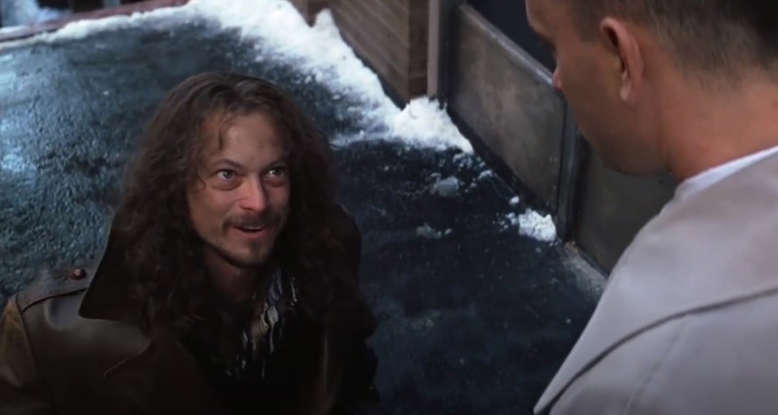
Our country has recently weathered (pun intended!) two major hurricanes which caused devastation and chaos. It seems like an unlikely connection, but I was thinking the other day about the movie, “Forrest Gump.” In it, a bitter, beaten, and angry character begins arguing with God– in the midst of a hurricane!

“Lieutenant Dan” was an able soldier, fighting in Vietnam and in charge of a small unit, which included the simple-minded Forrest Gump. When their unit was ambushed, Dan was badly injured and lost the use of his legs. Meanwhile, Forrest Gump received only a small flesh wound, and managed to save several of his fellow soldiers, receiving a medal for bravery. One of the soldiers rescued by Forrest, Dan resented his situation– disabled and ignored– while Forrest went on to become successful and celebrated.

Worse, in the years after the war, Forrest found Dan, homeless and dejected, and offered him a job and a home– on his shrimping boat. Forrest knew next to nothing about shrimping, and Dan, torn between bitterness and gratitude, gave Forrest a hard time. Dan’s life had gone nowhere, and Forrest seemed to dodge every bullet (literally), finding success in spite of his naivete and seemingly stupid choices.

It is a very relatable situation. We all know someone who seems to sail through life, while others seem to have nothing but bad luck and hardship. The class clown who ends up “making it big”– they spend money like it’s going out of style, and yet it keeps flooding in, seemingly without any effort. The neighbor who loses his job, and then his house catches on fire. And that person whose entire life seems to be lived under a cloud of misery and bitterness.

Gary Sinise as “Lieutenant Dan” in the movie Forrest Gump.

When the two men find themselves in the middle of a hurricane, Dan can take it no longer. He lashes out– not at Forrest this time, but at God. How could a loving God allow Dan to go through trial after trial– the loss of his legs and so many of the men under his command, the loss of his dignity and productivity, the loss of his independence, and now, another deadly situation beyond his control. He yells at God–“Come and get me!” He challenges God to just kill him; just finish him off–or leave him alone.

But God is silent– and soon, so is the hurricane. Forrest and Dan have survived. In fact, Forrest’s decision to be out of the harbor means their boat is the only one to survive–suddenly, they can’t catch the shrimp fast enough! Forrest becomes a millionaire and hires a fleet of fishing boats. But what about Dan?

Somewhere in the middle of the storm, Dan’s heart is pierced by a simple and life-changing thought. God has not been the one “ruining” Dan’s life– He is the one who has been preserving it! God brought him through war, disability, injustice, loneliness, frustration, and the raging sea. God was not a cosmic bully. God was not singling out Dan for punishment– after all, thousands of others had been wounded and killed in the war; millions of people knew what it was like to be hungry, homeless, and lonely; and hundreds had been devastated by the hurricane– even while they were safely evacuated or hunkered down on land. Forrest had not dodged every “bullet.” He had lost his best friend in battle; he had been rejected (time after time) by the woman he loved; he had been teased, bullied, and cheated dozens of times, and he had been tossed about by the same waves and winds Dan had survived. Dan ends up leaving Forrest, and setting off on his own, having found a peace that transcends his pain and bitterness. He swims off with a smile, leaving behind the opportunity to remain with Forrest and make millions.

Arguing with the Almighty is very tempting when we face difficult circumstances– and when we focus on our own lot, and not on the bigger picture. God is bigger than any of the troubles we face. And He is not unaware or unconcerned about whatever we are going through. Just as Lieutenant Dan challenged God, the biblical character of Job challenged God to vindicate him as he went through trials and pain. God finally answered, and Job realized that God was far bigger than anything Job had ever known or experienced. And in the end, God restored Job– giving him a new family, and even more material wealth than he had before!

Sometimes, God allows us to go through periods of pain and struggle– not because He is punishing us or because He is a tyrant, but because He is more interested in our ultimate salvation than He is in our immediate comfort. We moan and complain that God “doesn’t want us to be happy,” as if our momentary happiness is more important than our character development, than the happiness of those around us, or than God’s design for the world.

Near the end of the movie, Lieutenant Dan visits Forrest. He is transformed. No longer angry and bitter, he is quiet, self-assured, and standing! He has “new legs” made of titanium, and he has found joy, love, and success of his own.

Of course, many of us, regardless of our situations, have tried arguing with God at certain times of our lives. The loss of a loved one; the breakup of a marriage; a diagnosis of cancer; a miscarriage of justice and the loss of a reputation– it is natural to be angry, hurt, and confused. And God is more than big enough to “take it” when we ask “WHY?!!” But we will never “win” such arguments– not because God is a tyrant who won’t let us have what we want– but because God is GOD, and we are not. He alone knows how our story ends, and what trials– and blessings– await us. He alone knows what is “right” in the scope of eternity– not just for us, but for our loved ones, our neighbors, our nation, and our times. God can see that we get, not just “new legs,” but a new heart, and a new mind!

Hurricanes happen– so do hurts and hurdles. We can choose to see God’s hand–and believe that it is raised in anger, or reaching out to hold us. That choice is yours. That choice is mine. Every day.

Choices

I like having choices. When I go to a restaurant, I get a menu, with several choices– appetizers, entrees, beverages, desserts. I have choices at the grocery store– brand X cereal or brand Y, different sizes of laundry detergent, which cucumber to put in a produce bag– sometimes even a choice between paper and plastic and reusable bags! I have a choice to buy or rent a house or apartment/condo. I have a choice about the car I drive or the choice not to drive, but to walk or take public transportation. I choose which church to attend, or not to attend at all. I choose when I get up in the morning and when I go to sleep. I choose what to wear each day. I choose to obey the law, including speed limits on the highway and slowing down in school zones, paying whatever taxes are due, and registering for the census, voting, and other civic duties.

Many of these choices seem benign. It doesn’t really matter to anyone else which brand of cereal I buy or when I eat it, or even if I decide not to eat it, but end up throwing it out. It doesn’t matter to most people where I live, or go to church, or what I am wearing. It doesn’t hurt anyone else if I drive a couple of miles faster than the speed limit on a back road somewhere.

But some choices DO matter– they matter a lot. If I choose to drive at high speed through a school zone, I might end up accidentally killing a student or school worker. If I live in a house or apartment I cannot afford, or if I refuse to maintain my house or apartment, I may end up evicted or homeless. If I choose to use drugs– even prescription drugs– in an unwise manner, I may end up in the hospital or in the cemetery! And I may hurt others around me in the process.

I live in a nation that prizes “freedom” and “freedom to choose.” But in the past century, more and more voices are being raised in an effort to make all choices “equal.” And they are not. Many of our “choices” are in direct contradiction to the Word of God, to traditional values, and even to common sense! Our choices have consequences– some benign, and some catastrophic. Voices are shouting about their “right to choose” even as they are also raised in righteous indignation about others’ rights and choices.

I could speak to this for days on end, defending my own choices, and pointing out which “choices” break my heart or offend me. But I feel compelled to point out just three things to consider about individual choices:

  1. How does this choice honor God? I think it is easy to focus on “big” choices when we think of this, but I have been challenged lately to see how even my “easy” and “little” choices honor Him. Does it really matter which brand of cereal I eat in the morning? Probably not. But what about brands and manufacturers that support causes that do not honor God? Most of the time, I am unaware of such considerations. But the money I spend on my favorite sugary breakfast treat may help sponsor evil. And if I am aware of which manufacturers are giving large donations to causes I despise, but I am still buying their products every week, I am helping to sponsor that evil.
  2. How does this choice impact others? We DO have the freedom to choose our actions, but we do NOT have freedom from the consequences of those actions. “My Body, My Choice” looks good on posters and banners, but things like abortion or gender reassignment have an impact beyond a single person. Abortion always ends with the death of a second “body”– one without any choice in the matter. Gender reassignment impacts more than just one person– it impacts their present and future relationships, as well as impacting their future physical health and reproductive system. It is also important to establish whether my choices are made to try to please or influence others. It’s easy to blame others after the fact, citing “peer pressure” or claiming “I didn’t have another choice,” but is that really true, or was one choice just a lot easier or more popular than another? That same group that pressured you make certain choices– will they be there for you afterward? No matter the consequences? Will they still be your friends if you make a different choice?
  3. Does this choice help me grow into a better person? Many of our choices come from wanting to be a happier, wealthier, or more popular person– NOT a healthier, more mature, or wiser person. And most of our choices focus on immediate gratification, rather than long-term growth. Doing something because you have the “right to choose” is not the same as “doing the right thing.” Doing the right thing often involves sacrifice and even a season of suffering. Our present choices–even the small ones– will impact our future circumstances, and our development as an individual. Eating a donut today may be tasty, but eating donuts every day may lead to obesity, diabetes or heart disease, and even a lessening of enjoyment for donuts– they’re no longer a tasty treat, but a habitual threat to my health!
  4. Am I angry and defensive about my “choice?” Years ago, I was stopped for speeding on my way to work. Of course, I had been running a little late, and being stopped made me even later. I had to explain my tardiness to my boss, who dismissed the whole incident with a sly “next time, don’t get caught..” But one of my co-workers self-righteously handed me a two-page pamphlet on the evils of driving over the speed limit. At that time, I was indignant and offended. (I still would be a bit miffed– I don’t agree with either of the reactions I got that day, but that’s another post…) As I have grown older, however, I have come to value the three questions above– and it changes my perspective. I KNOW it’s “wrong” to drive over the speed limit. I know many people do it anyway and get away with it. But the bottom line is this–speeding does not honor God. It does not help anyone else, and could potentially harm someone. And it does not grow my character. I don’t automatically become a “good” person if I DON’T speed– let me be clear about that. But I do grow in character when my choices are made out of a heart that prioritizes God and others over my own selfishness (and procrastination!) When I find myself getting angry and defensive, I need to consider whether or not it is really guilt. If I wasn’t speeding that day, I wouldn’t have had any reason to be angry with my co-worker or ashamed of being “caught.” If someone is angry and defensive about his or her behavior, it is often brought about by guilt, shame, and a rebellious spirit, tired of defending what everyone else (and sometimes their own conscience) tells them is “wrong.”

We make choices every day– some benign, some “good,” some “bad.” Let’s pray for wisdom to make the best choices, confess the “wrong” choices, and offer encouragement and truth, rather than judgment, to those around us.

Today, I’m praying about the “choice” of abortion and its impact on my nation (as well as worldwide). In the 50+ years since Roe v. Wade attempted to make abortion “legal” in all 50 of the United States, over 60 million abortions have been reported in the U.S. during those years.* This figure does not include other nations, unreported (back alley or non-clinical) abortions, or natural miscarriages. Not only does this represent the “choice” to end the lives of over 60 million precious individuals, it represents millions of women (along with men and other family members) who have been impacted by the deceptive offer of “freedom” and the increasing pressure to make this “choice” seem both normal and healthy. For my friends, family, and others who have made this choice– my heart aches for what you have been through, and I rejoice with those of you who have found Grace and renewed hope through Jesus. God loves you– YOU, not your past choices– and welcomes you to choose Him today and every day. For those who have not been in a position to be tempted by this “choice”– I pray that we live with compassion, and that we stand up for and speak up for TRUTH and LIFE– not self-righteousness and fear.
* A more conservative estimate still places the number at well over 40 million
https://www.pewresearch.org/short-reads/2024/03/25/what-the-data-says-about-abortion-in-the-us/
https://www.statista.com/statistics/185274/number-of-legal-abortions-in-the-us-since-2000/

The Offer of Life or Death

11 Now what I am commanding you today is not too difficult for you or beyond your reach. 12 It is not up in heaven, so that you have to ask, “Who will ascend into heaven to get it and proclaim it to us so we may obey it?” 13 Nor is it beyond the sea, so that you have to ask, “Who will cross the sea to get it and proclaim it to us so we may obey it?” 14 No, the word is very near you; it is in your mouth and in your heart so you may obey it. 15 See, I set before you today life and prosperity, death and destruction. 16 For I command you today to love the Lord your God, to walk in obedience to him, and to keep his commands, decrees and laws; then you will live and increase, and the Lord your God will bless you in the land you are entering to possess. 17 But if your heart turns away and you are not obedient, and if you are drawn away to bow down to other gods and worship them, 18 I declare to you this day that you will certainly be destroyed. You will not live long in the land you are crossing the Jordan to enter and possess. 19 This day I call the heavens and the earth as witnesses against you that I have set before you life and death, blessings and curses. Now choose life, so that you and your children may live 20 and that you may love the Lord your God, listen to his voice, and hold fast to him. For the Lord is your life, and he will give you many years in the land he swore to give to your fathers, Abraham, Isaac and Jacob.
Deuteronomy 30: 11-20 (NIV)

At dawn he appeared again in the temple courts, where all the people gathered around him, and he sat down to teach them. The teachers of the law and the Pharisees brought in a woman caught in adultery. They made her stand before the group and said to Jesus, “Teacher, this woman was caught in the act of adultery. In the Law Moses commanded us to stone such women. Now what do you say?” They were using this question as a trap, in order to have a basis for accusing him.
But Jesus bent down and started to write on the ground with his finger. When they kept on questioning him, he straightened up and said to them, “Let any one of you who is without sin be the first to throw a stone at her.” Again he stooped down and wrote on the ground.
At this, those who heard began to go away one at a time, the older ones first, until only Jesus was left, with the woman still standing there. 10 Jesus straightened up and asked her, “Woman, where are they? Has no one condemned you?”|
11 “No one, sir,” she said.
“Then neither do I condemn you,” Jesus declared. “Go now and leave your life of sin.”
St. John 8:2-11

Finding the Lost

The other day, God answered a prayer I had been praying for about a month. I had lost a letter. Such a small thing, and yet it was priceless to me. It was old, yellowed, and crumbling. I was a letter from a law office, sent in 1933, informing my great-grandmother that her long-lost great-granduncle had died in California. He had not made a will, so his fortune was to be divided between any of his surviving relatives. The law office had found 36 such relatives, one of whom was Lila Green, for whom I am named. The “fortune” had been greatly reduced by the Great Depression– his stocks were worthless, and his properties greatly reduced in value. Still, the share that came to my great-grandparents allowed them to pay off debts, keep their farm, and even invest at a time when others were destitute.

I had intended to scan the letter and include it in a book I am writing about the lives, times, and families of my great-grandparents. But I had put it aside and misplaced it.

Such a dingy, yellowed, fragile letter– just a single sheet in an equally yellowed and fragile envelope with a three-cent stamp still clinging to one corner. I could not remember where I had placed it for “later.” I looked everywhere, or so I thought. And I had prayed that God would show me where it was. It seemed as though God might be telling me to “just let go” of the letter. That it wasn’t necessary for the book, and I was wasting my time looking for it. Still, it hurt to think that my great-grandmother, grandmother, and mother had preserved the letter, just to have me lose it when it could be useful again.

And then, my husband asked me to look for some paperwork to finish our taxes. Oh NO! Surely I could find important papers from the past year– I was pretty certain I knew where they would be. Still, I prayed that God would help me find them quickly. And I did! But as I was putting the financial papers away in the aftermath, I found a book bag behind the box of receipts and tax papers. It looked empty– no books inside– but it wasn’t. There, waiting patiently, was the letter, along with some other old papers I wanted to keep in my family history files!

I was so thrilled! I danced around, thanking God for His answer to my prayer. I was far more thrilled, in fact, over finding that letter, than I was about finding the tax papers!

But what about the “lost” people I encounter each day? When was the last time I put aside my other tasks and spent time “searching” for ways to share the gospel? How much time have I spent reaching out to “find” the hurting, the needy, the hopeless? Have I done more than just say a quick prayer, or shed a couple of tears? Have I even prayed consistently for weeks or even years?

Of course I pray for family members I know and love; for old friends and classmates who are struggling; even for people groups or nations where Christians are being persecuted, and the Gospel is being hindered. But that’s not the same.

This letter reminds me that there are people– many of whom “look” rather worn or worthless– people for whom Christ gave His life to save. People who need someone to listen, and offer hope. They need to be “found.” Even so, not all of them will accept the Gospel message. I can’t force them to see God for who He really is; I can’t make them choose to follow Christ. But I can do a better job of letting them know how very much God loves them, and wants a relationship with them. Yes, even those who feel yellowed and used; even those who have been sitting, forgotten, lost in the shuffle.

15 1-3 By this time a lot of men and women of questionable reputation were hanging around Jesus, listening intently. The Pharisees and religion scholars were not pleased, not at all pleased. They growled, “He takes in sinners and eats meals with them, treating them like old friends.” Their grumbling triggered this story. 4-7 “Suppose one of you had a hundred sheep and lost one. Wouldn’t you leave the ninety-nine in the wilderness and go after the lost one until you found it? When found, you can be sure you would put it across your shoulders, rejoicing, and when you got home call in your friends and neighbors, saying, ‘Celebrate with me! I’ve found my lost sheep!’ Count on it—there’s more joy in heaven over one sinner’s rescued life than over ninety-nine good people in no need of rescue. 8-10 “Or imagine a woman who has ten coins and loses one. Won’t she light a lamp and scour the house, looking in every nook and cranny until she finds it? And when she finds it you can be sure she’ll call her friends and neighbors: ‘Celebrate with me! I found my lost coin!’ Count on it—that’s the kind of party God’s angels throw every time one lost soul turns to God.”

Luke 15:1-10 (The Message)

I thank God that He helped me find the old letter. But I am eternally grateful that He seeks out and saves people like me, and like you. I pray that today, I will have eyes that see, and a heart that reaches out to the “lost.”

More Jesus, Less Me?

Last week, I saw numerous posts with New Year’s resolutions, promises, and goals. One that I saw repeated often was the phrase, “This year, I need more of Jesus and Less of Me.” And, while I can see the appeal of such a phrase, I’d like to take a closer look at what that really means in a practical sense.

It’s easy enough to say a phrase like this and then proceed to live exactly the same as last year– struggling to be a “better” person, a more Christ-like person–and wondering why it isn’t working. But what if we’re missing the real transformation we need this year by misunderstanding what this phrase really means?

“More Jesus.” Actually, there is no “more” Jesus to be had than there already is. We can’t “get” more Jesus. We already have access to all the Grace, Power, and Peace that Jesus can offer. We have His Spirit to guide us, His example to follow, His indescribable sacrifice to motivate us, His promises to sustain us…what “more” are we looking for?

What we really mean by this phrase isn’t more of Jesus, but more TO Jesus and more FOR Jesus– more of our devotion, more of our obedience, more of our submission, more of our learning to lean on Him. We need to make more room for Him, more time for Him, more energy.

“Less Me.” In today’s world that revolves around identity and self-expression, this is where we lose non-believers, and many Christians, as well. The language of the New Testament– Jesus’ own words in fact! — call for us to die to ourselves and be raised to new life in Him. To many people, this seems like a very bad bargain. Matthew 16:25 puts it this way: “ For anyone who keeps his life for himself shall lose it; and anyone who loses his life for me shall find it again.” (The Living Bible) But look closely at this statement. Jesus is not promising death, but LIFE. (See also John 10:10) Jesus isn’t proposing to take away our life, but to help us find our best life. The word “life” in this passage can be translated as “life” or “soul.” When we think of “dying” to ourselves, or “losing” our life, we see only the negative. And death IS the ultimate negative. We don’t want to “die.” We don’t want to let go of this precious gift of life that we have been given. And it seems as though Jesus asks us to make a ridiculous trade– our life for His; our will for His; our self-control and determination for His mastery and domination.

Except that is Satan’s oldest and greatest lie! When Jesus says, “anyone who loses his life for me shall find it again,” He’s not promising a shadow life of slavery or degradation. God doesn’t want Holy zombies or robots, mindlessly and grudgingly following orders. He wants to bring us into the BEST and most abundant LIFE we can experience! But in order to experience any of it, we have to “get out of the way!” We have been given the ability to choose between right and wrong, between following God’s way or rebelling against it. It is when we believe the lie that God doesn’t love us, that He doesn’t have our best interests at heart, that He is withholding “something” from us– power, “fun,” happiness, achievement, etc.–that we lose our true life. We lose perspective, we lose joy, we lose peace, we lose our true purpose, we lost trust, and we lose hope. We get so worried that God will “cheat” us out of what we want in life, that we become enslaved to our own limitations and fears. I have hopes and dreams, but on my own, I will scheme, connive, compromise, and fall short of what I could become. I will let circumstances and bitterness determine my limits. I will betray all the promises of God for all the lies of the world. i may “win” the game of life, but in the end, I will still die. And I will die never knowing what I might have achieved WITH God, instead of in my own strength and wisdom.

So when we say, “Less Me,” what we really mean is less of my grasping, less of my whining, less of my demanding my own way, less of me shutting out others, less of me standing in opposition to God’s best for my life. ”More Jesus”– more trust in Him, more humbly walking WITH Him, instead of shaking my fists AT Him, actually results in “More Me”– not the ME that wants the world to revolve around only myself, but the Me that God created me to be! The Me that can only be shaped by a Master’s Hand. The created me bringing glory to and through the Creator!

So this year, instead of saying “More Jesus, Less Me,” maybe we should say, “Me Less, Jesus More!” Me less and less in the driver’s seat. Me less prideful and isolated. Me less prone to anger and bitterness. Me less in the center of my thoughts and plans for today. Jesus more in my daily talk. Jesus more in control of my emotions and reactions. Jesus more of my focus. Jesus more of my best and most trusted friend! And in the end, Me, More like Jesus made me!

Driven to Pray?

I met up with an old schoolmate last week, and he asked a question that made me think a lot. He wondered whether our generation– specifically our classmates and friends, were “driven.” His observation was that many of his nieces and nephews seem to have a lot of drive and ambition that he doesn’t remember seeing (or experiencing) in our youth. He noted that few of our friends have gone on to become lawyers or doctors, engineers or CEOs.

I wasn’t sure how to answer his observation. I started, but didn’t complete, a master’s degree. I know several of our friends who are teachers, paralegals, and business owners. Many have what most people would consider at least moderately “successful” lives– happy families, rewarding careers, the respect of others in their communities. And yet very few have distinguished themselves on the national or international front– aside, perhaps, from him! He is a tenured professor, with several published books, and has studied and/or taught at several universities around the world. If HE can’t remember being driven or ambitious, how does he explain his own “success?”

But the observation struck a nerve with me on a personal level. I know that many of my former classmates and long-time friends may find it odd that I have “settled” for the life I live. I own a business, but it is a modest one. I have taught and worked in libraries, but I could have chosen to become a professor or administrator or library director; I could have taken any of a number of more “important” or lucrative positions over the years. But I wasn’t driven to “succeed” in that way. Did I waste my potential? Was I lazy or fearful of success? Did I not have the potential, or did I not have the drive to become “more” than what I am?

Ultimately, I am driven (I hope) by the Holy Spirit. Not to become a “successful” person by the world’s standards, or even by my own ambitions, but to become the person God made me to be– a person who reflects His character and His priorities. I hope that I am becoming a “successful” follower of Christ– no matter what that looks like on the surface to classmates, neighbors, or family. I don’t need to be rich, famous, popular, or “important.” I DO need to be developing Love, Joy, Peace, Patience, Kindness, Goodness, Faithfulness, Gentleness, and Self-Control (Galatians 5:22-23)

This week, as I have been meditating on the idea of “drive” and ambition and “success,” I started thinking about how it relates to prayer. I am driven to become more like Christ, and that includes being driven to live a life of prayer. But what really drives my prayer life? Because my pursuit of prayer and my practice of prayer may be “driven” by something other than pure motives:

  • Am I driven to pray because I believe that I am “ticking a box?” Have I read the Bible today? Check. Have I prayed some kind of prayer at some point? Check. Have I done a random act of kindness? Check. This is not really a spiritual pursuit of prayer. In fact, it can become idolatry– I can pray because I believe the act of praying makes me “better” or “good enough” to deserve God’s forgiveness or mercy. This drive comes from my own desire to control my growth and behavior. It is not “wrong” to set goals or make lists and stick to them. (After all, we are to be developing discipline and self-control!) But we must be careful not to shift our priorities from God’s discipline to our own lists and habits.
  • Am I driven to pray when/because others are watching? Am I seeking their approval more than I am seeking God’s face? Am I seeking to be “important” or pious, when God is asking me to be humble and obedient?
  • Perhaps I am praying out of fear, worry, or doubt. I am driven to pray in the same way that others are driven to consult a horoscope or carry a “lucky charm.” God wants me to trust Him. He knows that I will not always be perfect in Faith, but my prayers should not be double-minded (see James chapter one). I should not be using prayer to “hedge my bets” when faced with adversity. It is good to call out to God if we are frightened or uncertain, but we must develop Faith over fear. And in the end, God also wants us to be joyful in remembering and trusting in His promises
  • Am I driven by guilt or shame? It is good to confess our sins. But we also have to remember that IF we confess our sins, He is faithful and just to forgive us, and to cleanse us (1 John 1:9). If I am still confessing the same sins over and over, is it because I didn’t really trust God to forgive me, or because I didn’t really want to repent and change my ways– I just wanted a “free pass” to keep sinning, but not feel guilty for the consequences?
  • Maybe I am driven to pray for others because I think MY prayers can save them, or influence their life. Again, this can become idolatry. We have been given the amazing opportunity to pray for others. God already knows their needs– better than we can! And God can do miracles without any input from us. Yet He chooses to give us the privilege of praying and participating in His work! Again, it is commanded that we pray for one another, but we must remember to Whom we are praying. Our prayers for others are part of a circle– God’s Spirit moves us to compassion and concern– we take that compassion and lift up others before His throne. He knows what is best; He will do what is best. He wants us to participate, not to dictate!
  • Sometimes, I may be driven to “dictate” a particular outcome in my own life. My own ambition may be to become what I want, rather than what God wants for me. This can be a tricky concept. There are ambitions that God lays on our hearts– they are not wrong, but God’s timing may not match ours. I prayed for years to be married; to “find” the “right” mate, and to “be” the right mate. I even prayed that God would change my heart if my ambition was “wrong.” God’s timing was certainly not my timing. The ambition was not wrong, but my patience and trust needed to be developed.
  • Perhaps I am NOT driven to pray…maybe I lack the focus or lack the drive in my walk with Christ because I am drifting away from my first Love. I am driven to seek after something other than intimacy with my Creator. Maybe I am so content with my life “as it is” that I am not seeking direction and correction from the Holy Spirit. Perhaps I do not have the compassion and drive to pray for others because I do not see them fully as God sees them. Perhaps I do not trust God fully with the “little” things in my life because I do not see my need for His guidance.

I think it is not a bad thing to wrestle periodically with questions like this. Maybe today is the right time to ask, “Am I driven to pray? What drives me to my knees? What should be driving me there?”

Joy(?) to The World

Photo by zeno ferenczi on Pexels.com

I don’t know about you, but I sometimes have problems with Advent Season. On the one hand, it’s a season of joy and wonder; a season of anticipation and expectation. But I find myself contemplating…and as the days get darker, earlier, and the snow falls, then melts, leaving everything brown and gray, I can’t seem to hang on to the joy. It slips through my fingers, leaving me thoughtful and even a little depressed.

I also find myself looking at the glitter and listening to the peppy music of the season and feeling as though all the “Merry” in Christmas is just a soap bubble, waiting to burst. I don’t watch much television, but it seems that every year the “holiday” specials and TV ads get more artificial and shallow. “Buy this!” “Turn up the Tunes!” “Wear THIS to the Holiday party!” “Eat this– Drink that!” “Get away from it all!” It’s more about escaping the ordinary, rather than celebrating the extraordinary gift of God’s Son. The more I try to get “into the Spirit” of the season, the more I seem to miss it…

Photo by Henlynn on Pexels.com

It is important to remember that this extraordinary Joy came INTO and THROUGH the ordinary. The angels didn’t announce to the shepherds that they could escape their duties and run off to a vacation cruise; Mary and Joseph didn’t celebrate their first Christmas surrounded by lights and mugs of hot cocoa. The wise men didn’t have a brand new GPS device to help them find their destination, or tasty cookies and fruit baskets to make the journey more “fun.” This “good news of great joy” was the birth of a child– an ordinary event–except that THIS birth was the fulfillment of God’s Promise and the Way, the Truth, and the Life!

Photo by Levent on Pexels.com

Many millions of people today will not have joyful circumstances to make the season “Merry and Bright.” But they can experience true Joy– the kind that comes from Knowing Jesus–and not just for a day or a season, but forever, in spite of difficulties, pain, and struggle. There IS joy in the journey, but it doesn’t always manifest as mirth and comfort.

Photo by Kampus Production on Pexels.com

This season, it is our privilege as Christians to offer a different level of Joy to the World–the Joy of forgiveness; the joy of belonging; the joy of eternal Hope and Peace. It may not be in laughter or singing. It may be in holding a hand at the side of a hospital bed. It may be in sharing tears with those who are suffering. It may be sharing a crust of bread with real thankfulness, instead of a feast with stress. Joy doesn’t have to be complicated. It doesn’t require wrapping paper sugar sprinkles. The best gifts we can give this season don’t have to be filled with merriment and laughter. They don’t have to be expensive or even filled with thoughtful intent. They should be the spontaneous response of love and compassion for those around us. Let’s give lots of hugs, smiles, and small tokens of respect and appreciation this year. After all, God’s great gift– the greatest of all– began as a tiny, wailing infant, hidden away in a spare stable, wrapped in rags. But “Behold!” It is still bringing great joy all over the world. (Luke 2:10)

Photo by Burkay Canatar on Pexels.com

Let’s not trade certain Joy for temporary mirth this season. Reflect on the Reason, and not just the Season!

It Came Without Ribbons…

In the Dr. Seuss classic, “How the Grinch Stole Christmas!,” the bitter and devious Grinch tries to “steal” Christmas from the village of Whoville. He steals all the things the Whos of the village seem to need in order to celebrate a holiday he hates. He hates their gift exchanges, their feasting, their singing, and their general happiness, all of which serve to remind him of his own loneliness and gloom.

With mounting glee, the Grinch proceeds to pile up his hoard of goodies– presents, decorations, food, anything that could serve to make the holiday cheery and bright. He loads up all his stolen loot and takes it to the top of a mountain, where he plans to dump it. But first, he stops to savor the shock and pain he expects to hear as the Whos discover that their holiday has been ruined. He waits in the cold of a clear dawn to hear wailing and lamenting, but the sound he hears instead is singing…the Whos have come together to sing a hymn of gratitude and peace. There is no lamenting; there is no distress. Instead there is a peaceful acceptance that the new day has brought joy and goodwill that has nothing to do with all the trappings of celebration.

He hadn’t stopped Christmas from coming. It came!
Somehow or other it came just the same.
And the Grinch, with his Grinch-feet ice cold in the snow,
Stood puzzling and puzzling, how could it be so?
It came without ribbons. It came without tags.
It came without packages, boxes or bags.
And he puzzled and puzzled ’till his puzzler was sore.
Then the Grinch thought of something he hadn’t before.
What if Christmas, he thought, doesn’t come from a store.
What if Christmas, perhaps, means a little bit more.

How the Grinch Stole Christmas!–Dr. Seuss
Photo by Susanne Jutzeler on Pexels.com

The first Christmas came without any of the festive trappings we’ve added over the years. There were no groups of cheery carolers; no jingle bells and tinsel; no greeting cards or candy canes. Jesus came in the dead of night, in the midst of chaos and terror, as people were groaning under the oppression of an invading empire, being forced to travel long distances to be counted and taxed by their oppressors. There were no Christmas parties, no brightly decorated trees, no stockings filled with treats, no cookies and cocoa on a cold night. The gifts would come later– and they would be followed by death threats and exile! But Jesus came! He came just the same!

Photo by Jeswin Thomas on Pexels.com

This year, Christmas will come– with or without ribbons or tags. Christmas will come to those who are homeless, and those who are lonely in palaces and mansions. Christmas will come in spite of efforts to erase the holiday from our culture. It will come just like the dawn of each new day– quiet in its wonder and glorious in its simplicity. Christmas doesn’t come wrapped in shiny paper or announced with blaring horns and neon lights. Christmas comes just as Christ came so many years ago–wrapped in rags, laid in a straw bed on a cold, dark night; announced to simple people going about their business, signaled by a single star ignored by most, wondered at by others. Christmas will seep into the hearts and eyes of those with child-like faith and willing to sing when things are darkest.

God chooses to come in simplicity– He creeps like the dawning day; He sighs like a gentle breeze; He comes as a harmless infant, or a wandering teacher and healer. And when our Christmas Day comes without ribbons and boxes or feasting and lights– it will come just the same. Christ will enter darkened hotel rooms and alleys, He will sit beside hospital beds and in makeshift refugee shelters. He will sneak into homes where Christians huddle in secret, and He will knock gently on the doors of the lonely and the lost. Because Christmas DOESN’T come from a store. It doesn’t come from our bounty and our glittering decorations. It comes from the heart– the heart of God, who SO loved the world, that He came! And He will come this year, just the same!

Photo by Josh Willink on Pexels.com

I Just Want Them to Be Happy…

..but we rejoice in our sufferings, knowing that suffering produces endurance, and endurance produces character, and character produces hope, and hope does not put us to shame, because God’s love has been poured into our hearts through the Holy Spirit who has been given to us.

Romans 5:3b-5 ESV via biblegateway.com
Photo by CDC on Pexels.com

I once had to drop out of a thread on social media. (Actually, I’ve had to drop out of a number of threads, but that is neither here nor there…) The thread was about parenting, and priorities. The main thrust was that, as a parent, one’s top priority was to make one’s children “happy.” If your child wanted a particular toy for her/his birthday, you would certainly do whatever you could to get “that” toy. If your child wanted the latest fashion in shoes, you would certainly try to buy them. If your child wanted to be successful, you would do whatever you could to see that he/she got into the “best” schools and had the “best” opportunities in life. And if they wanted to do something of which you disapproved, you would still encourage them to follow their dream– if it would make them happy. Of course, this didn’t include letting your child abuse drugs or become a criminal. But in general, it meant sacrificing and taking a back seat to your child’s emotional well-being.

Photo by Kampus Production on Pexels.com

On the surface, this seems like good parenting. Of course, I don’t “want” my child to be miserable, or unsuccessful, or “left out.” And I don’t want to impose my dreams and wishes onto my child, or live my life through him/her. I would not wish hardship and suffering to come to anyone, especially those I love. Except…I want them to develop endurance, and character, and hope, and compassion, and wisdom, and humility, and faith. And all these things come from suffering, losing, and learning from difficult experiences.

Photo by Polina Zimmerman on Pexels.com

I dropped out of the thread for a couple of reasons: I have learned that whenever the subject of parenting comes up, my experience (or lack thereof) makes my opinion “invalid” to those who disagree. “You’ve never had children. You don’t know what it’s like.” But I know what it was like to BE a child, and to have parents. I’ve observed the results of parenting by others, both good and bad. I know that even good parenting can’t guarantee “happy” teenagers! And even “bad” parenting can produce children who break the cycle and become adults of integrity and joy. The other reason I held back was that, in my experience, those who post such threads only want their own opinions confirmed. The people posting on this thread were not “bad” parents–in fact, they probably would agree with me if we had the time to sit down and talk through the issue. But one of the downfalls of social media is that we want short, pithy advice, instead of long and serious discussions. We don’t want nuances; we want comfortable “likes.”

Photo by Denise Duplinski on Pexels.com

I don’t want my family members– my step-children, grandchildren, nieces and nephews, and cousins, etc.–to be defeated by suffering. I don’t want them to be overwhelmed by depression and anxiety. I don’t pray for them to be hurt or frustrated, because “it’s for their own good.” But I do pray that they will learn strength and courage, faith and trust, hope and joy as they overcome struggles, conquer fears, fight life’s battles, and walk in obedience to the One who has won the final victory. I don’t “just” want them to be happy. I want them to find the lasting joy that comes from developing a Godly character. That may bring me to tears when I see them fighting illness and hardship, persecution, depression, and other setbacks. But it also keeps me on my knees and reaching out as they understand that I’m there whether they’re sad, or angry, or hurting– and so is the God who loves them forever!

Photo by August de Richelieu on Pexels.com

Blog at WordPress.com.

Up ↑