When God Doesn’t (Seem to) Answer…

Prayer is a conversation with God. But sometimes it can seem like a one-sided conversation. We have pressing needs for healing, or strength to bear up under stress or oppression. Sometimes, we pray for our loved ones’ struggles against addiction or wrong choices. And God seems silent.

Sometimes, it’s better to get an answer we don’t like than no answer at all. When I was younger, I prayed for a family– a dream family with a handsome husband (preferably wealthy), three adorable and well-behaved children (I already had names picked out..), and maybe a beloved family pet, all living in a beautiful house with a big back yard, and maybe a small woods. I waited and prayed; prayed and waited. When I was in my thirties, still waiting and praying, I found out that I have several health problems– none of them life-threatening, but they mean that the chances that I would ever have had children are slim to none. I would never have the pleasure of watching my own children grow up; never know the joy of having a little voice calling me “mommy.”

But God had not abandoned me. In my careers as a teacher and a children’s librarian (careers I had begun before I knew I couldn’t have children of my own), I had the joy of working with hundreds of children across a spectrum of ages, from nearly newborn through college! My memories are filled with a choir of voices calling me Miss Toney or Miss Lila (as I was known then). God had not closed the door on my dream– he had opened a window.

It wasn’t the answer I had hoped for, but it was an answer. However, I was still single. I didn’t want to be single. I didn’t feel it was what God wanted for my life, yet He didn’t seem to be listening or giving me any sign that He heard or understood. There was only silence. No promising relationships– only a few scattered dates over the long years–a few budding friendships, and many lonely days and nights.

There were many helpful friends and family with suggestions, ideas, advice, comforting thoughts, or “explanations.” “God is waiting for you to become more mature in your walk with Him.” “God is saving the best for last.” “You’re too picky (I was never quite sure what that meant in light of the scarcity of dates, but…)” “You need to ‘get out there’ more–have you tried on-line dating? (I did. It was ‘meh’..).” “You should change jobs– single men are not hanging out at the library.” “You should change churches– find one with more single men.” But God stayed silent through my thirties and into my forties.

I did take some of the very good advice I received. I signed up to do short term missions trips. I traveled when I could, with family and friends, and even on my own. I read and went back to college. I spent time in the woods and at the beach, meditating, singing, or just enjoying God’s nature. I got “involved” in various volunteer opportunities. I joined the church choir. And I continued to pray.

By the time I was squarely in my forties, I had decided to stop praying for a husband, to stop hoping, and praying, and seeking, and dreaming. And God said nothing. But I began getting phone calls from an old friend– someone I had known in childhood–in fact, the very first boy I had ever dated, nearly 30 years before! At first, I listened to his voice-mail messages, but didn’t return his calls. I was annoyed, and even a bit angry. After all this time, was God laughing at me? Did He really expect me to go all the way back to the very beginning and start over?

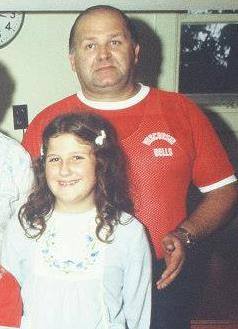
David and I on our wedding day.

Finally, I let go of my pride, and my ancient dream– I decided to give David a chance. Maybe it would lead to another (renewed) friendship. Maybe it would be another disappointment. But it led to a new dream. It led to marriage, and a huge extended family, including David’s wonderful children, and three adorable (and mostly well-behaved) grandchildren. My husband is kind, and honorable, and Godly. He is a treasure. And God’s timing is perfect, even as it is mysterious. God didn’t withhold marriage as a bargaining chip to get me to “grow up,” or grant it as a “reward” for going on a couple of mission trips. God was silent–but He wasn’t absent. He saw every teardrop, rejoiced in every busy child-filled day at work, smiled at every snapshot of every natural wonder, every Teddy Bear picnic, every Bible School. He want along on every date, kept track of all the hundreds of books I read over the years, and hovered over the dinner table set for one every night. I committed my life to serving Him– whether I was single or married, alone, or surrounded by children. His ways are higher, and better, and wiser than mine.

I may never understand why God allowed me to travel the roads that have been set before me. And my roads could have looked much different. I could have married young, unaware of my barrenness, and ended up bitter and feeling guilty about my body for years before I was diagnosed. I might have had a child (or children), and become proud and controlling and fearful. I might have made idols of my “dream” husband and family.

I know many dozens of people who are praying into the “silence” and waiting for God’s answer. Some are praying for healing. They may pray for days in the hospital, only to lose their loved one. They may pray for weeks or months, as their child battles chronic illness. They may pray for years as they battle depression and loneliness. God may seem silent. But He is never absent. His ways sometimes lead to a happy ending in this life. Sometimes, they lead us to have greater understanding and compassion for others. Sometimes, they lead us to unexpected purposes and goals– adventures beyond what we have ever dreamed of. Sometimes, they lead to a legacy that we cannot see this side of death. He does not promise us the answer we want, when or how we want it. He doesn’t promise us an easy or “happy” answer on the road ahead of us in this life. What He does promise is that He will never forsake us. Long after we have been tempted to give up, to doubt, to turn away, God will still be waiting– sometimes in the silence– for the perfect moment, the perfect justice, the perfect word, the perfect solution.

Of Gingerbread, Christmas Trees, and Frankincense…

As the Christmas season approaches, people are decorating their homes– wreaths, Christmas Trees, lights, gingerbread houses, manger scenes, elves and reindeer, candles and more. And along with the sights and sounds and tastes, the air is redolent with the scents of the season.

Scents evoke memories and emotions deeper than any of our other senses. We can close our eyes or ears to unwanted stimuli, but it’s difficult not to breathe in the spicy air filled with cinnamon or cloves, or ignore the scent of pine or scented candles filling the room.

There was no gingerbread, or evergreen tree, or clove orange in the stable where Jesus was born so long ago– no candles or air fresheners to cover the other scents of animals and afterbirth. But when the wise men arrived to worship the infant King (which may have been a couple of weeks or even months later), they brought gifts, and two of the three were spices– Frankincense and Myrrh. They were precious spices, with medicinal and healing properties, and were also used in embalming– symbolic of Jesus’s future life and death. Oddly enough, their fragrances are reminiscent of citrus and pine, two scents we commonly associate with the Christmas season. https://www.history.com/news/a-wise-mans-cure-frankincense-and-myrrh

Photo by Jonathan Meyer on Pexels.com

God never wastes details. The Bible is full of them– lists of names, detailed instructions for the construction of the Tabernacle and Temple, references to various places, animals, trees, events– seemingly unimportant, sometimes even distracting–but all of them have a purpose. The gifts of the Wise Men (or Kings) were costly, prophetic, and worthy of a newborn king. But they were also physical gifts. The Bible never tells us how the gifts were eventually used– Did Joseph and Mary use the gold to help pay for their flight to Egypt? Did Mary save the frankincense and myrrh to use for Jesus’s burial? We don’t know. But the spices would have kept their scent for a long time, releasing their fragrance whenever the jars or containers were opened. And they reveal something about both the recipient and the givers.

God reveals Himself to us in many ways– and He appeals to all of our senses. Our worship of and fellowship with Him should do the same. We may not have access to frankincense or myrrh (though they have increased in popularity and are readily available from dealers in essential oils), but the Bible tells us that WE are a fragrance– our worship, our obedience, our sharing of the Gospel with others.

14 But thanks be to God, who in Christ always leads us in triumphal procession, and through us spreads the fragrance of the knowledge of him everywhere. 15 For we are the aroma of Christ to God among those who are being saved and among those who are perishing, 16 to one a fragrance from death to death, to the other a fragrance from life to life. Who is sufficient for these things?

2 Corinthians 2:14-16 (ESV) via http://www.biblegateway.com

Above all, our prayers are said to be incense– a pleasing aroma before the throne of heaven:

The Lamb Takes the Scroll (Revelation 5:1-10 CSB)

Then I saw in the right hand of the one seated on the throne a scroll with writing on both sides, sealed with seven seals. I also saw a mighty angel proclaiming with a loud voice, “Who is worthy to open the scroll and break its seals?” But no one in heaven or on earth or under the earth was able to open the scroll or even to look in it. I wept and wept because no one was found worthy to open the scroll or even to look in it. Then one of the elders said to me, “Do not weep. Look, the Lion from the tribe of Judah, the Root of David, has conquered so that he is able to open the scroll and its seven seals.”

Then I saw one like a slaughtered lamb standing in the midst of the throne and the four living creatures and among the elders. He had seven horns and seven eyes, which are the seven spirits of God sent into all the earth. He went and took the scroll out of the right hand of the one seated on the throne.

The Lamb Is Worthy

When he took the scroll, the four living creatures and the twenty-four elders fell down before the Lamb. Each one had a harp and golden bowls filled with incense, which are the prayers of the saints. And they sang a new song:

Photo by Josh Sorenson on Pexels.com

You are worthy to take the scroll
and to open its seals,
because you were slaughtered,
and you purchased people
for God by your blood
from every tribe and language
and people and nation.
10 You made them a kingdom
and priests to our God,
and they will reign on the earth.

Photo by Jeswin Thomas on Pexels.com

This season, as we revel in the scents of the season and remember the gifts given to the infant Emmanuel, let us present Him with the gift of fervent prayer and enthusiastic praise. He is Worthy!

Great Things He Hath Done

2 Corinthians 9:15 Christian Standard Bible (CSB)
15 Thanks be to God for his indescribable gift!

via biblegateway.com

I love this season of the year–as we approach Thanksgiving and prepare for Advent and Christmas, it is a good time to reflect and celebrate all the wonderful things God has done, and all the ways He has blessed us. But there is also a danger in this season. We are tempted to look around and compare our blessings (and our struggles) with others around us. We are tempted to be envious, depressed, and stressed about our circumstances. Or we look at our blessings and feel smug and self-satisfied, instead of grateful and humble.

What “Great” things am I thankful for? Sometimes I make a list of all “my” blessings–my health, my family, my home or car, my freedom (as though I had done anything to earn such blessings)–and I stop. Sometimes I make another list of all the “Great” things God has done in nature–beautiful sunsets and majestic forests, glistening snowflakes and spring blossoms–and I stop. Sometimes, I even thank Him for the trials and struggles and difficult relationships that He has allowed to refine me and build my character to be more like His– and I stop. Sometimes, I thank Him for the great things he has done for others–miracles of provision, safety, or healing.

But there is a deeper level of thankfulness– one that takes my breath away and causes me to fall to my knees– one that thanks God for WHO HE IS– truth, righteousness, salvation, mercy, wisdom, power, and boundless, unconditional love. Every great work of God has its origin in God’s Character. Every sunrise shows His faithfulness, every snowflake His infinite creativity. Even tragedy can reveal His tenderness and healing and precious promise that NOTHING can separate us from His love. In giving His greatest gift, God spared no expense; he held nothing back. Jesus defeated sin and death by becoming sin and experiencing death–FOR YOU and for ME! For anyone, for everyone, who will accept His gift and trust in His character. How often do I list all the great things God has done and stop before I let the amazement of the Great I AM to overwhelm me? How often to I celebrate Thanksgiving without ever reaching this level of true Thanks-giving?

Whether we celebrate Thanksgiving with turkey and pumpkin pie, or with beans and wienies; whether we celebrate with family, friends, strangers or alone; even if we celebrate on a different day, or in a different way, may we always find ourselves amazed by the Greatness of God. May we truly give God more than just thanksgiving this year. May we give Him all the Glory–Great things He hath done!

Jesus Wept

It is the shortest verse in the entire Bible– St. John 11:35:  “Jesus wept.”  Only two words.  They are easily memorized; they are also easily overlooked or misrepresented.  Jesus wept over the death of his good friend Lazarus.

Read the story of Lazarus here.

Jesus wept–Emmanuel felt deep emotion and showed it.  God shed tears over the pain and sadness of a death; Messiah cried for the loss of his good friend.  Jesus was no stranger to sadness and loss– God understands the sharp sting of death.  God is compassionate, not heartless or cruel.  If we are in emotional turmoil, it is not because God doesn’t know our pain or doesn’t care.  He hurts WITH us in our times of deepest need.

girl in pink jacket on wooden bridge in the forest

Jesus wept–People often ask the rhetorical question, “What would Jesus do?” when faced with a situation.  Here is an example of what Jesus did– he wept.  Sometimes, the “thing to do” is to acknowledge the reality of our situation–death hurts.  It brings out feelings of anger and even fear.  Death is scary.  It’s ugly, and it fills us with a sense of injustice, and a desire to wake up and find that death is just a very bad dream.  Aching loss, wracking sobs, feeling punched in the gut by circumstances– these are valid feelings and reactions.  To pretend otherwise or to deny ourselves or others the right to express those feelings does great harm, just as wallowing in sadness and remaining isolated in our grief can drag us into hopeless depression.

Jesus wept– period.  He didn’t punch a wall or point fingers at Mary and Martha for “letting” their brother die.  He didn’t try to justify his extra-long stay that kept him from arriving before his friend died.  Neither did he justify returning to a region where he was not “safe” from the authorities in order to comfort the sisters (and ultimately raise Lazarus back to life).  People often criticize Christians for “not doing enough” to erase hunger, cure diseases, or end poverty in the world.  Some even point out that Jesus, being God incarnate, had the power to do all of this during his earthly ministry.  But he didn’t.  As he was dying, he said, “It is finished.”  He wasn’t referring to some social revolution or economic program, or political movement that would abolish the oppression of the Roman Empire, or the corruption of the Pharisees, or end the slave trade.  That doesn’t mean that God approves of evil, corruption, and injustice.

But it means that Jesus’s mission was accomplished through what he did in life and through his sacrificial death.  He loved freely, healed those who were willing, and taught about the true character of his Heavenly Father.  He ate, and laughed, and slept; he burped and sweat, and cried.  He prayed and worshiped and worked and gave.  Jesus didn’t weep because he had no power to keep Lazarus from dying.  He proved that just minutes later.

person holding hand

Jesus wept because he was showing us the very heart of God.  God’s heart is not to flex his sovereign muscles and demand our instant and abject obedience– though he has the perfect authority and right to do so.  His heart is to walk intimately with us, even when that walk goes through the very valley of the shadow of death!  God’s love isn’t flinty and cold.  It isn’t pushy and arrogant and selfish.  It is extravagant and gracious beyond all imagination.  It is raw agony and pure joy. It doesn’t immediately “fix” our hurts or answer all our questions, but it wraps around us even IN our pain, and it give us hope to endure and carry on.

man hugging a woman wearing black tank top

What in your life causes you to weep?  What burdens and aches and frustrations and questions drive you to tears?  Jesus may not take away what hurts us, but he will never turn us away because we are scarred or scared or broken.  He will share our burdens, wipe our eyes, and hold us as we pour out our tears.

Guard Your Heart

Photo by Engin Akyurt on Pexels.com

Above all else, guard your heart, for everything you do flows from it.

Proverbs 4:23 NIV https://www.biblestudytools.com/proverbs/4-23.html

The world has a lot to say about hearts. We can be heartsick, heartbroken, half-hearted, all heart, hard-hearted, tender-hearted; we can lead with our heart or follow our heart, wear our heart on our sleeve, or have a change of heart. We can have a heart of gold, or a heart of stone. Our heart can be in the right place, or it can wander.

The Bible has a lot to say about our hearts as well. In Proverbs, we are told to guard our hearts above all else.

Our hearts are precious, but they are also fragile and fickle. Our hearts can be led astray, bruised, crushed, and hardened by sin– not just our own sin, but sins that are committed against us. And hardened hearts are not immune to damage– they don’t become stronger, just more rigid and brittle. We live in a world of damaged hearts. And damaged hearts are prone to damage other hearts.

God does not want us to lock up our hearts or wrap them in barbed wire, but He does want us to be watchful and active in protecting our hearts from the enemy. God created us with emotions, but not every emotion should be indulged or shared with others. We are told to rejoice with those who rejoice and mourn with those who mourn. But we are never told to encourage jealousy, anger, depression, envy, apathy, rage, boastfulness, or hatred. Letting these emotions control our actions can only lead to further pain, destruction, sorrow, and heartache.

We need to guard our hearts, not only from external threats, but from internal deception. We think we know our own hearts– we tend to trust them more than we trust God, or His Word, or the godly advice of friends or family. We act at the prompting of our emotions– sometimes in direct conflict with God’s Word and Wisdom, and to our shame and pain.

When we pray, God’s spirit can heal our heartache, and give us the strength of heart to reach out and heal others. But we must be careful not to attempt healing others in our own power and wisdom. Our heart may seem to be “in the right place,” but often, that’s how we got hurt in the first place!

Tender hearts, broken hearts, even hard hearts– God can heal them all and use them to heal others. That’s because God’s heart is perfect–and on Calvary, He poured it out to rescue you, redeem you, and restore you. In return, you can safely and confidently pour out your heart before God. He is your loving Father. He created your heart, and He can be trusted to protect it.

No More Goodbyes

Today marks 25 years since I said “goodbye” to my father. My mother, sister, and I stood by his bedside at the hospital. The doctors had tried numerous times to re-start his heart. In the process, they had broken his sternum, and each new effort was causing additional pain and putting his lungs in danger of being punctured by bone fragments. His time was running out. We were allowed to come in and say our last words to him, before his worn-out heart finally stopped for good. I held his hand one last time, whispered that I loved him and that I would help take care of Mom. I kissed his forehead, and said a prayer. Mom and my sister did the same.

Earlier this year, I had to say goodbye to Mom as well. My sister and I were with her, and had read her mail aloud to her, as she had fallen into a coma. I was preparing to return home. I said, “goodbye;” I held her hand, kissed her cheek and turned to my sister. When I turned back around, Mom was gone–her oxygen machine was still running, but her heart had stopped beating, and she was peaceful and still. In that moment, I became an orphan.


Death is part of the curse of a fallen world. God is the source of all Life. In a fallen world, we are cut off from our life-source. Our mortal bodies must taste death. It is the consequence of Sin– our sin, and the sins of others. Disease, violence, aging, disasters, grieving, work, abuse– all conspire to drain the life out of our bodies. Life is a gift– we can’t “earn” it, and we can’t “hold on” to it indefinitely. Nor can we hold on to the lives of others–even those we love. Some day, I will lose my sister. Or she will lose me. Some day, I will lose, or be lost to my husband, my brother, my step-children, mother-in-law, grandchildren, cousins, friends, and neighbors.


And, just like leaves on the trees later this month, all of us will grow old, be changed, and fall into decay. Some will fall gently; others will be torn away by the winds of war, or crime, or cancer, or accidents. Some will fall early; others will cling to life until the last moment, but all will eventually die. More goodbyes. More grieving. More death.


But. God is the author of Life, not Death.


Death is not the end for those who have trusted their souls to God. Our bodies must still taste death. We must still say, “Goodbye” to those we love on earth. But our goodbyes are tempered with the promise that the One who conquered Death did so for US. Because Jesus was willing to die and able to rise again, we will also live again. And THIS life will be untainted and eternal. No more goodbyes. No more grieving and separation. No more fear of an unknown future that includes death. No more waiting. No more living without a father. Our Heavenly Father will never leave, never die, never suffer the ravages of age or disease, never fall. In fact, Jesus never said “Goodbye” to His disciples– it wasn’t in His vocabulary! He said that He would “Go to prepare a place…(John 14:2-3)”, and He charged His disciples to “Go into all the world…(Mark 16:15)” But He never said, “Goodbye!”

I had to say, “Goodbye,” to my wonderful parents. And I have the joy of knowing that our “goodbyes” are temporary. That I will see them again, even as I will see my Heavenly Father someday. So, while today holds in it the sadness of watching my Dad suffer in his last minutes of earthly life, it also holds the promise of reunion and restoration. My Dad will never again have to suffer; neither will my Mom. My future probably holds a few more “goodbyes.” But it also holds “Hello!” “Welcome Home!” and “I’m so happy to see you again!”

Photo by Polina Zimmerman on Pexels.com

I thank God for the lives of both my parents– for their testimonies of faith, for their good examples, and for the wisdom, laughter, and love they shared. And I thank God that their deaths were not the end of that love and joy. In fact, it will be even better to share someday what we could never have here on earth–eternal peace and freedom from grief and loss.

Twenty-five years seems like a long time, but it is a drop in the bucket of time, and nothing in light of eternity. That truth brings me great comfort as I face today. I hope you will be encouraged and comforted as well. Heaven is a place with no more “goodbyes.” And that radically changes the way I say “Goodbye” here on earth!

Evidence of Things Not Seen

*Note: This was originally posted in August of 2021.

Now faith is the substance of things hoped for, the evidence of things not seen. For by it the elders obtained a good testimony.

Hebrews 11:1-2 NKJV via Biblia.com

And without faith it is impossible to please him, for whoever would draw near to God must believe that he exists and that he rewards those who seek him.

Hebrews 11:6 ESV via biblegateway.com
Photo by Aaron Burden on Pexels.com

Prayer is an act of faith. Whether a prayer of confession, adoration, thanksgiving, supplication, or a combination of all these types, we pray to an invisible God. We do not see Him, but we acknowledge that He exists, and that He hears us when we pray. We also acknowledge that He forgives sins, is worthy of our adoration and thanksgiving, and that He cares about our needs and desires.

Photo by Luis Quintero on Pexels.com

Faith is defined by the writer of Hebrews as “the substance of things hoped for, the evidence of things not seen.” There are many who scoff at this type of faith, claiming it is “blind faith.” Because we cannot see God, because we do not hear Him audibly, because we cannot touch Him–they claim that our faith is nothing more than wishful thinking or delusion. But our faith is actually “evidence” of God’s existence– not because we make a claim to believe, but because we act on and live out our belief. One brief prayer whispered in panic is not compelling, but a lifetime of praying and faithfully acting on the belief that God listens and responds–that is evidence that commands attention.

Photo by 3Motional Studio on Pexels.com

Sometimes, we become so familiar with the ancient stories of the Bible, that we discount the very real faith shown by the “elders.” Noah didn’t build a rowboat or even a trading ship– he built an Ark to withstand a flood he could not have imagined. Abraham left his home to go to a land God would show him– he had no map, or any way of knowing what awaited him. He lived as a nomad in tents the rest of his life. But what about his life before? He didn’t begin as a nomad and a wanderer. And there was nothing to suggest that he would ever become the patriarch of an entire nation/many nations. The shepherd boy, David, was told that he would someday be king. Yet he put himself in mortal danger several times, and refused to challenge King Saul in order to claim the crown. Daniel was certainly aware of the danger he was in over the course of his service to foreign kings, yet he stood firm in his convictions, when common sense would have had him compromise to keep his position (and his life!).

Faith (and praying in faith) doesn’t always some easily. We are bombarded with images and sounds that suggest that God does NOT exist, or that He does not listen or respond. I have prayed many times for people to be healed of cancer, only to see them die. I have days filled with stress or frustration, when my prayers seem to go unheard. Does this mean that my faith is void, or based on nothing more than a vapor?

Photo by Merlin lightpainting on Pexels.com

No, because faith is the evidence, not of the things I am seeing or experiencing now, but of things unseen. My perspective is narrow and distorted. I may see my friends’ deaths as the “end.” I may see my temporary trials as impossible obstacles and heavy burdens. I may see my past as a prison, trapping me in the bad choices I have made, or the hurts I have suffered. Faith is the evidence that such things, while they are real, and devastating, are not the entire picture, or the final word. Faith is the evidence that life is worth celebrating, even on the “bad” days. Faith is the evidence that God is bigger than injustice, or disease, or heartbreak, or death.

Photo by Anna Tarazevich on Pexels.com

Faith isn’t “proof” of God’s existence for those who will not believe. But it is strong and solid evidence for those who are searching. When I pray for someone else’s health, I am not ordering God to do what I want. If He doesn’t answer with immediate or total healing, it is not because I don’t have enough faith or because He just doesn’t listen to me. Buy when I lift others up in prayer, I am acting on the promise that God will listen and act according to His perfect and sovereign character. I have seen miracles of healing; I have also seen miracles in suffering and even death. “Things not seen” often includes things outside of my knowledge or perspective– things that I can only see after I take steps of faith that take me out of my limited vision.

Photo by ZaetaFlow Sec on Pexels.com

As I write this post, I’m having one of those “bad” days– frustrating, filled with stress and pain. And not just my own– I’ve had several friends and family members who are dealing with death, disease, job loss, broken family issues, and more. Two of my childhood classmates died within a week of each other earlier this month, while three families in our church are dealing with hospitalizations and a death. And that isn’t even covering the crises in Afghanistan, Haiti, Tennessee, and elsewhere– floods, persecution, earthquakes and hurricanes, upheaval, and more. Those are the things we see. Faith is not blinding ourselves to those realities. It is choosing to believe that there is much more that we do not see–that God is in control, and that He is capable of redeeming and restoring even the mess that surrounds us.

I sat down to write this post, and had to stop–my faith was taking a beating. But I prayed. I listened for that still, small voice that led me to revisit Hebrews 11. I phoned a friend. Small steps of faith, but God is faithful. He gave my faith a booster shot. He can do the same for anyone who comes to Him in faith.

A Prayer For Fathers

Photo by Pixabay on Pexels.com

We are approaching Father’s Day. It is a day of celebration for many people, but it can also be a day of sadness for others. This year will be a milestone for our family, as my father passed away 25 years ago; and yet–we are preparing to celebrate the birth of my grand-nephew’s first child. This will make him a father, my nephew will become a grandfather, and my brother will become a great-grandfather! My husband is a father and grandfather, and so are three of his brothers. We also have brothers, brothers-in-law, nephews and cousins who are great dads. So we really have a lot to celebrate!

Fatherhood– the kind we celebrate– is more than just contributing genetic material to a new life, or claiming a child on an income tax statement, or showing up once in awhile for major events. Fatherhood involves sacrifice. It requires wisdom and patience. It involves ongoing commitments, and the tough love that says, “No” because it’s the right thing, rather than the easy thing to say. Fatherhood requires a man to be a teacher, provider, protector, defender, coach, and disciplinarian. It also requires humility, and grace, encouragement and sometimes tears. In addition, fatherhood requires prayer. No father is perfect, and no father can do all that he needs to in his own power. Fathers need our support and encouragement, our grace, and our prayers.

Photo by Kaysha on Pexels.com

It is tempting to label our fathers. I have known “good” fathers. And I have known fathers who have abandoned or even abused their responsibilities, causing trauma, anguish, and hurt to their families, lasting for generations. My own father wasn’t perfect, but he was a “good” father. He was a man of humor and integrity, faithful, honest, loving and humble; a man of faith, and a man of honor. My father-in-law was the same. They left wonderful legacies of wisdom, hard work, and quiet strength. But I know of other fathers who have ruined the lives of their children (as well as their own lives) through fear, selfishness, addictions, abuse, anger, greed, and pride. Father’s Day can cause regret, envy, and bitterness in the hearts of many fathers and children alike. Many people would like to forget about their fathers on Father’s Day. Some don’t even know how to celebrate– they’ve never seen or heard from their father; some don’t even know his name!

Photo by Ketut Subiyanto on Pexels.com

But Father’s Day is not only for “good” fathers. It is a time to honor those who have been faithful, but it is also a time to reach out to those who need help. Good fathers are needed! And “bad” fathers need to be called out– not indulged or ignored, but held, guided, rehabilitated, or even incarcerated, for the good of their children. Hurting boys often grow up to be hurtful fathers. Hurting girls often end up in hurtful relationships. Hurtful fathers often struggle with their own baggage of hurt and disappointment from past generations, without knowing how to change. Fathers need more than a “day”, a cook-out, or another tie. They need a mission and a purpose; they need respect and forgiveness; they need encouragement and accountability.

My prayer today is that this Father’s Day can be a day of honor AND of healing for fathers and their children. I pray that struggling fathers will be encouraged and strengthened; that hard-working, faithful fathers will see the rewards of their efforts and find hope to keep going; that absent and apathetic fathers will wake up to the challenge and the gift of fatherhood; that broken fathers will find help and healing for themselves AND for their families; that hurting sons and daughters will find the grace to move beyond the pain of unmet expectations and abuse to become better men and women.

Photo by Anna Shvets on Pexels.com

All that I pray for is made possible because we have a Heavenly Father– a perfect, loving, eternally wise Father– who loves us through our struggles and our pain. He knows our every need, sees our every tear, and hears our every prayer. He is ready to be our coach, our provider, our healer, our disciplinarian, and our protector. No matter our experiences or how we feel about our earthly fathers, or about being a father, we can trust Him to be all that we need. Our Heavenly Father will never abandon us, reject us, abuse us, or despise us. He will comfort, encourage, uplift, and guide us– now and forever. All we need to do is pray and accept Him for all that He is!

Everyone is Asking For You

I went to a weekly prayer meeting the other day. We started with a reading from scripture. It was just a short passage from Mark (chapter 1, verses 29-39) about Jesus’ early ministry. But I was so excited about the insight we got, that I want to share it here.

Photo by Tima Miroshnichenko on Pexels.com

29-30 Then, leaving the synagogue, he and his disciples went over to Simon and Andrew’s home, where they found Simon’s mother-in-law sick in bed with a high fever. They told Jesus about her right away. 31 He went to her bedside, and as he took her by the hand and helped her to sit up, the fever suddenly left, and she got up and prepared dinner for them!

32-33 By sunset the courtyard was filled with the sick and demon-possessed, brought to him for healing; and a huge crowd of people from all over the city of Capernaum gathered outside the door to watch. 34 So Jesus healed great numbers of sick folk that evening and ordered many demons to come out of their victims. (But he refused to allow the demons to speak, because they knew who he was.)

35 The next morning he was up long before daybreak and went out alone into the wilderness to pray.

36-37 Later, Simon and the others went out to find him, and told him, “Everyone is asking for you.”

38 But he replied, “We must go on to other towns as well, and give my message to them too, for that is why I came.”

39 So he traveled throughout the province of Galilee, preaching in the synagogues and releasing many from the power of demons.

Mark 1:29-39 The Living Bible

The first thing we noticed was the timing. Jesus had just been at the Synagogue, so this was likely on the Sabbath– the day of rest! Jesus and the disciples walked to the house where Simon Peter and Andrew lived. This would be close to the Synagogue, since travel was curtailed on the Sabbath. But instead of being able to rest, Jesus ended up healing Simon’s mother-in-law. Then people start flooding in, before and after sunset, begging to be healed. After sunset, even more people could come from a farther distance, and many were there just to watch. Jesus worked far into the night, healing and casting out demons.

Photo by Ivan Samkov on Pexels.com

But look what happens in verse 35. “The next morning, he was up before daybreak and went out alone into the wilderness to pray.” Jesus might have been tempted to sleep in. He might have decided to wake up and find a quiet corner of the house to say a quick prayer for the morning. He might have done many things. But He chose to wake up before dawn, even after an eventful evening, and go off into a solitary place to spend time with His Father.

Prayer was a priority with Jesus. Not sleep. Not comfort. Not convenience.

But later, Simon and the others tracked Him down and asked Him to come back. The response to His healing of the day before had been phenomenal. People were asking for Him, waiting to see more of His miracles and hear more of His teaching! Surely this was success!

But Jesus didn’t come to have a popular ministry. He didn’t come to do command performances and His miracles were not meant primarily to impress and astonish people, or to draw vast crowds. Jesus came to do His Father’s Will. And so He dismissed the opportunity to do an “encore.” Instead, He was focused on His true mission– to preach the Kingdom to the other towns as well. Some of these towns would be eager to hear the message and receive the blessings and healings that Jesus brought. Others would mock Him and urge Him to leave their village or city. But His mission was clear– He would travel where the Father led Him, and preach the message the Father gave Him. Even at the expense of His own popularity; even at the expense of the temporary success of his ministry.

What did Jesus and His Father speak of during that early morning encounter? Did Jesus talk about how tired He was from the day (and night) before? Did He share with the Father the success of His healing, and the great need in that village? What advice did He seek from the Father?

We know only that Jesus got up from Prayer and was immediately obedient to the Father’s Will. Though His trusted friends and companions were encouraging Him to return and repeat the success of yesterday, Jesus walked into the unknown, following the Voice of His Father. “For that is why I came.” Jesus could have done much good by staying put and continuing the success He had on the Sabbath. But that wasn’t why He had come. He didn’t just come to do “good.” He came for much more! Sometimes “good” can be the enemy of the “best.” It takes discipline, humility, and obedience to follow God into the unknown– especially when we are tempted to continue in our own power to do what others deem as “important” and “good.”

Photo by Ian Panelo on Pexels.com

What voices are speaking to us today? Have you taken the time today to speak to the Father and seek His direction? Have you submitted yourself to His Will? Are there people “looking for you” to do good; to replicate a good performance from yesterday? What if God is calling you to move on? What if He has something better in mind? Maybe He is calling you to go out into a solitary place, where you can better hear His voice over the noise of the crowds or even the pleas of your friends.

Photo by Michelle Leman on Pexels.com

My prayer today is that I will find the discipline to meet with God early, listen intently to His voice above the others, and obey! May I do not just what is “good” in the short-term, but what is “best” in the long-term. Even if “everyone” is looking for me– I want to be looking for God first and foremost! Don’t you?!

I Already Prayed About That…

Have you ever been in a season where you felt like you were praying about the same situation over and over with no results? No answers, and no indication that God has even heard? And you feel frustrated and even guilty about praying AGAIN about it?

Photo by SHVETS production on Pexels.com

We live in an “instant” culture. Instant banking, instant coffee, drive-through fast food, and 24-hour news cycles give us the expectation that we can get whatever we want or need with the push of a button or flip of a switch. Just yesterday, I pulled into the grocery store parking lot, and, seeing how full the parking lot was, I drove two miles away to a different store, because I anticipated long lines at the checkout! I don’t like waiting. I don’t like “wasting” time.

Photo by RODNAE Productions on Pexels.com

But God often puts us in a “holding pattern.” He may seem silent or distant, non-responsive or even absent. And in our impatience, we may stop bringing our burden to God, and seek elsewhere for answers or relief. Even when we know that God has promised to hear us, and never leave us alone, we long for instant gratification. And when we don’t get it, we start to wonder and doubt.

Photo by Liza Summer on Pexels.com

Sometimes, I feel angry in my impatience. I want answers! I want to know the next step forward! Other times, I feel hurt. Does God not hear me? Does He not understand my need? Sometimes, I even feel guilty. I know that God “knows” everything. Why do I keep bothering Him with the same thing? Am I asking for the wrong thing? Am I asking in the wrong way?

Photo by Nathan Cowley on Pexels.com

It is okay to have questions. It is normal to wonder. And I don’t have a “quick fix” answer for times like this. I think most of us experience these questions at some point. And the Bible has many examples throughout history of others who waited– some patiently, and others not so much…

Abraham and Sarah waited years for a family. In their impatience, they tried to do it in their own wisdom with heart-breaking results that echo down through thousands of years. Hannah prayed for years while enduring the taunts of her rival, Peninnah, before God gave her a son. A woman who touched Jesus’s robe had prayed and waited years for healing from her constant bleeding and pain. I know of parents who prayed for years that their wayward son or daughter would return home– some kept praying until they died, never seeing an answer.

But one comforting takeaway from all these Biblical and real-life examples– God DOES see and hear us. He left all those stories for us to read, knowing that we, too, would face trying and overwhelming circumstances. God doesn’t always give us an immediate or conclusive answer in our struggles. If He did, we would never develop a real and solid faith. God is less interested in answering our questions than He is in sharing our struggles. He does not want to walk ahead of us and smooth out our every path. Instead, He wants to walk beside us in the hills and the valleys of life.

Photo by Ivan Samkov on Pexels.com

So even if “I already prayed about that..” I can keep praying with confidence. God hears. He knows. And He cares enough to slog it out right by my side. And yours.

Blog at WordPress.com.

Up ↑