Promises, Promises…

God keeps His promises.  Not just small promises, not just some of them, or some of the time.  God Keeps His Promises!  Every single one.  Every single time.

In this world of failed promises, assumed promises, “campaign” promises, and broken promises, it is almost impossible to believe.  Surely there must be some promise that God has not fulfilled– some promise that he has taken back or “modified” somehow…

photo of wireless microphones on top of the table

Isn’t there?  There are people who claim to have examples– proof that God cannot be trusted.  They list tragedies that God allowed to happen, or dreams that did not come to fruition.  They list times they could not feel God’s presence, or understand His ways; times He seemed silent or harsh.  Didn’t God promise His unfailing presence?  Didn’t He promise peace and love and joy?

adult beautiful casual cute

Good questions–just what DID God promise?  To whom did He promise it?  When?  Were there some promises that were conditional, and, if so, what are the conditions?

  • God’s presence–Jesus said, “And behold, I am with you always, to the end of the age.” (Matthew 28:20 ESV)  There are numerous other passages where God says to Israel, or to one of Israel’s leaders, “I will never leave you or forsake you.”  The writer of Hebrews echoes this in chapter 13 of his letter as he seeks to encourage early Christians.  This is a solid promise, and one that we can trust.  But we won’t always “feel” God’s presence.  That’s one of the reasons for the promise– to give us an anchor for our faith when our feelings are confused.  God will be with us even (and often especially) when we feel alone, frightened, overwhelmed by our circumstances.  What makes the thought of Hell so frightening is that it falls outside of this promise– at the “end of the age”, there will be a time and place where God’s presence cannot be felt– God will not be there, nor will the essence of God be available.  No love, no peace, no light, no life, no joy, no hope.  Even those who utterly reject God in this life still have access to hopes and dreams, love and goodness, because God is still present in His creation.
  • God’s promises to Israel–God made hundreds of specific promises to the nation of Israel.  Some were made for specific circumstances and times.  Some were made to be eternal and never broken, canceled, revoked, or transferred.  Many promises (including those given through prophecies) were given to specific nations, including Israel/Judah/Judea as it existed at that time.  Others were given to a restored Israel– one that has not yet been completely restored.  Other promises were made to those who are the spiritual heirs of Abraham, Isaac, and Jacob– regardless of their genetic heritage.  It is very easy to co-opt a promise that isn’t really ours to claim in the context of when or how it was given.
close up photo of pharaoh figurine
  • “Circumstantial” or “Personal” promises– God fulfilled certain promises to individuals throughout the Bible.  These are recorded to remind us of God’s faithfulness and His power to bring about miracles.  They are not meant to act as personal promises to us because We want the blessings that God gave to someone else in other circumstances.
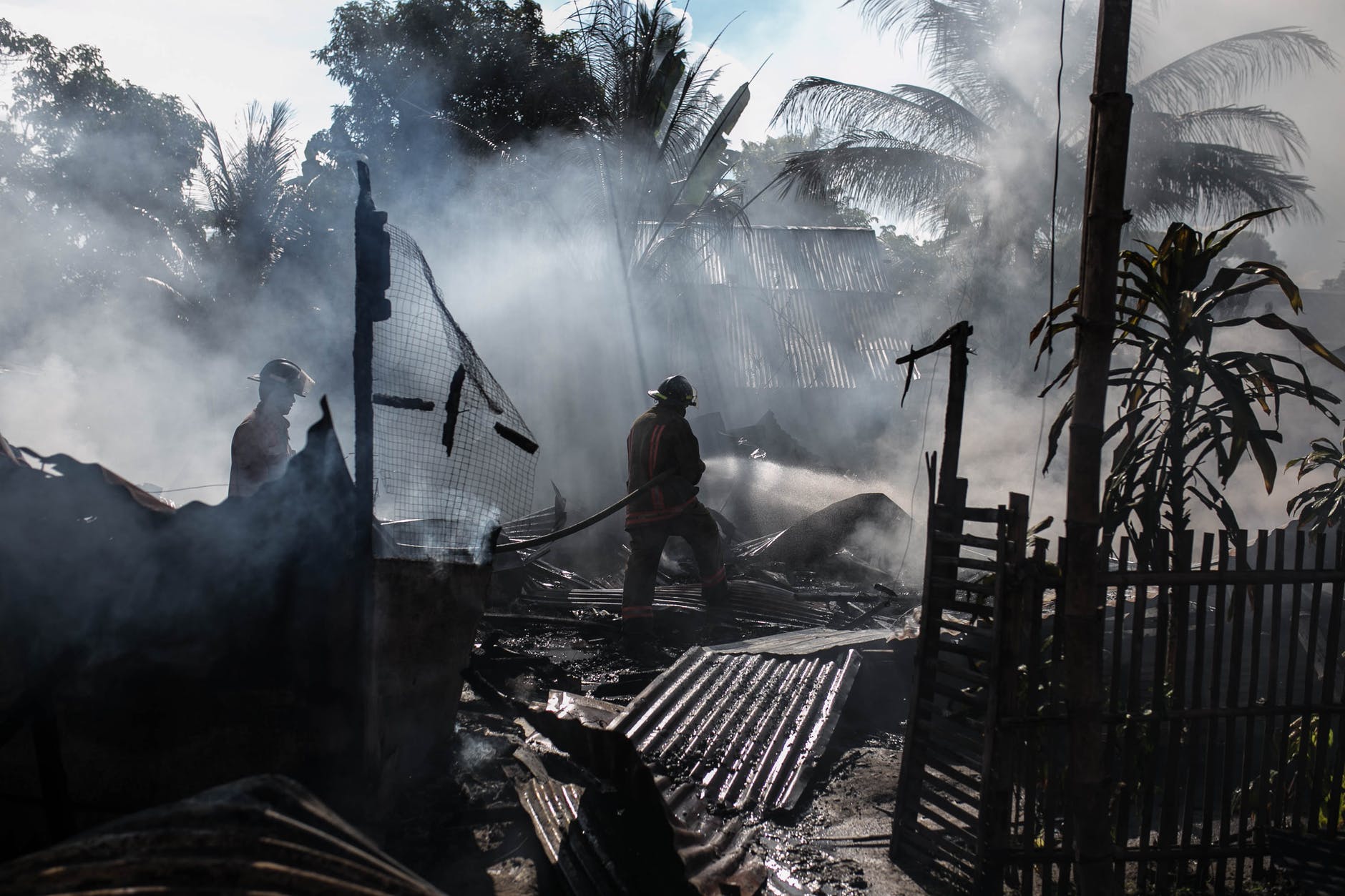
silhouette of fireman holding hose
  • “Difficult” promises– Not all God’s promises are ones we want to remember!  God has promised that we will suffer.  He promises that people will hate us, abandon us,  or persecute us on account of our faith.   Death and judgement are stark realities– God has promised that we will face both– and that we can face both without fear!  Jesus himself foretold of natural disasters, war, poverty, disease, injustice, hunger and other difficult circumstances that will continue until His return.

blonde haired girl wearing pink sweater
  • “Victorious” promises– God has promised future restoration and renewal– eternal life, a new Heaven, and a new earth.  But He hasn’t promised easy victory.  He promises Justification, not “just a vacation” by Faith.  When we face struggles, it is not God breaking His promises.  And it is not always because we aren’t praying enough or don’t have enough faith.  Sometimes, God sends us into the thick of the battle for reasons we don’t understand.  He doesn’t give us the victory we think we deserve or the victory we dream of.  But we can trust that the victory already belongs to Him.

Prayer is more than just a wish or a vague hope– it is trusting my life, my future, my fears, and my heart to the one who can be counted on to listen and to respond.  Always!

The Righteous Will Live By Faith

“Look at the proud! They trust in themselves, and their lives are crooked, but the righteous will live by their faith.”

Habakkuk 2:4

Is it rational to believe in God? About three and a half centuries ago, the French philosopher, Blaise Pascal, drew up what is now known as “Pascal’s Wager.” In it, he gives a “rational” justification for belief in God (theism). In it, he posits that if God doesn’t exist, it doesn’t matter whether or not we believe that He does. But if God is real, the consequences of our belief or denial are crucial. If the God of the Bible exists (along with heaven and hell, sin and salvation), the failure to believe will lead us to lose everything; the decision to believe will lead us to gain everything…there is no in between.

I’m not a big fan of Pascal’s Wager. Not because it’s bad logic, per se, but because it depends on belief, but not faith.

What’s the difference? Belief says that God exists–that He is supreme, that He controls our destiny, and that He must be obeyed. It will produce a life of theistic obedience to God’s Law, including a life of “good” works, moral conduct, and “right” thinking. But it will not produce a Godly character. It will not be a life of righteousness.

Faith, on the other hand, believes that God not only exists, but that He rewards those who earnestly seek Him (Hebrews 11:6) and that He so loved the world, that He gave His only Son (John 3:16) to save us from Sin and Death (1 Corinthians 15:56-7). It is not our belief in God’s existence that saves us and gives us life; rather it is Faith by His Grace! (Ephesians 2:8-9) in the nature and character of God– in the atoning work of Jesus as revelation and proof of His character– that saves us from Sin and Death.

Pascal’s Wager is a way of thinking about God. It can lead someone to believe, which can produce a life of Faith. But it can also produce a kind of life that is ruled by grudging obedience, resentment, and pride in one’s own powers of self-control and understanding. Faith lives in dependence and humility, and joyous gratitude for God’s gifts.

The prophet Habakkuk, who first wrote the phrase, “the righteous will live by faith,” learned this lesson in dramatic fashion. He “believed” in God– in His righteousness and justice. He spoke to God about the wickedness he saw all around him, among his own people. God gave him a difficult answer: Justice was coming in the form of an invasion by the Babylonians– a group known for their wickedness and cruelty and lack of justice! God’s answer was shocking and counter-intuitive. But Habakkuk chose to believe and put his faith in God’s Eternal Character, as God revealed the “rest of the story.” Israel would suffer; justice would be cruel–but God’s glory and His salvation would triumph. Habakkuk’s response was a song of praise. Regardless of his circumstances, Habakkuk would wait and rejoice, knowing that God’s ways are perfect.

It’s not difficult to say we believe in God. But are we living in Faith? I find it easy to let circumstances–especially injustice and wickedness–overwhelm me and rob me of peace and joy. But I find it comforting to know that my momentary doubts cannot stop God’s promises, His Mercy, or His power to help me live by Faith. That’s due to His righteousness, not mine, but through Christ, I can trust in it, walk in it, and live in it!

Close to the Broken Hearted

As I write this, I am keenly aware that one year ago, I was at a graveside, saying farewell to my mother. Grieving comes in waves. I rejoice that she is in heaven, and I rejoice that she had a good, long life, and that she didn’t suffer very long at the end. But there is still an ache– wanting to share a memory or a laugh and knowing she isn’t here; questions I didn’t know I had, but now she can’t answer them; just missing her voice and her smile. My father has been gone for 25 years, and the same ache still hits at odd moments.

Sometimes, grieving brings us closer to God. At other times, we can let our grief drive us away from God. But God doesn’t move. He is ever-present. And He reminds us that He is “close to the broken hearted” (Psalm 34:18). When we are grieving, that is a blessed reminder. Grief tends to isolate us. “No one understands…” “Laugh, and the whole world laughs with you; cry, and you cry alone.” We see the “rest of the world” enjoying life, seemingly untouched by sorrow, and we feel abandoned twice over.

As Christians, we are called to follow Jesus’ example, and be close to the broken hearted. We should be the ones ready with a hug, a listening ear, and a shoulder to cry on. We should be the ones who, like the friends of Job (before they offered ill-advised ‘counsel’) are willing to sit with our suffering friends for days at a time, offering the comfort of solidarity and ‘presence.’

My family was blessed with a host of Christian friends and family who comforted us in the days and weeks after Mom’s passing. They still ask. They still share memories. They still pray for us. And in return, we do the same. God does not want any of us to suffer alone.

And this is also true for those who suffer a broken heart for other reasons– divorce, the loss of a home to fire or flood, the loss of a job, a wayward son or daughter– it is important for us to draw strength from others, and offer strength in our turn. But the source of our strength is Jesus, who suffered on our behalf, and rose victorious over death and separation. When “no one” understands, He DOES. When the world leaves us grieving alone, He is THERE. And when we see someone else grieving and suffering, and we don’t know what to do– He gives us the strength and the compassion to reach beyond our own resources and offer comfort.

On our own, we can be like Job’s friends– after awhile, we try to offer solutions, explanations, even judgment about another’s grief. “It’s time to move on.” “Just get over it.” “Well, if only you had…” None of these are helpful. Jesus never said any of those things to the people He came to comfort. Instead, He encouraged them to look to Him as the “resurrection and the life.” (see John 11:25).

Today, let us do the same. There are hurting people all around us. Let’s be an encouragement to others to embrace life– even when we are broken hearted.

Orphan Train

Across from our shop, there is a mural that tells the story of the first “Orphan Train.” In October of 1854, 45 children– some orphaned, others abandoned–arrived in southwest Michigan from New York City. Conditions for such children in the large cities were dangerous. Floods of immigrants included children who had lost their parents on the voyage to America, or who had been separated from their families upon arrival. There were very few orphanages, and almost no resources dedicated to child welfare. Hunger, disease, crime, and exposure to the elements meant that many children never lived to maturity. Most of them lived on the streets; ignored, preyed upon, or simply forgotten. A group called the Children’s Aid Society, founded in 1853, had tried helping children– especially boys–but their limited resources were overwhelmed within the first year.

Section of the Orphan Train Mural, Dowagiac, Michigan (Ruth Andrews)

It was the idea of a man named Charles Loring Brace that large numbers of these children could escape the dangerous environs of the city and find safety and hope in the expanding “West.” With the help of the new railroads, groups of children could travel west, where kind-hearted families could adopt them. Food, shelter, education, fresh air, opportunity, and a loving family- this was the promise of the orphan train. For some children, it was the start of a wonderful new life. For some, it was trading a hard life in the city for a hard life on the frontier.

I can only imagine how frightening it must have been for the first train-load of orphans to travel here. Few people had ever traveled by train in those days. Some of the children had never traveled more than a few blocks from where they had been born– had never seen a farm or a forest. Part of their journey was on a steamboat. The journey would not have been comfortable, but it would have been exciting and even terrifying at times. They had no guarantee of finding homes or families who would be willing to take care of them– only the hope that someone might.

What does this have to do with prayer? Well, the obvious connection would be that everyone involved with this venture must have prayed diligently. All 45 children were placed with local families in that first journey. And the success of this first placement encouraged future endeavors. The “orphan trains” ran for 75 years, and carried nearly a quarter of a million children to new homes throughout the growing United States. And while not every child found a “happy ending” with their new family, most of them survived to create a new life as adults–an opportunity many other orphans had been denied.

Orphan Train Mural, Dowagiac, Michigan (Ruth Andrews)

But it struck me today, as I was looking at the mural and thinking about the fate of these children, that we are or were all in a similar situation. I am so thankful to be able to pray to my Loving Father– but there was a time when I was lost and without hope. There was a time when Sin had made me an orphan. I was alone and frightened and helpless to save myself. Like the orphans in first part of the mural, I was sick and sad, my best intentions were no more than tattered rags. Even as they line up to board the train, their faces show fear and pain.

It can be frightening to call out to God– frightening to leave the life we know, even when it is dangerous and unhealthy. God’s way takes us to uncomfortable and unfamiliar places–we can’t see the road ahead, and we don’t know what our “new” life will be like.

As I gaze once again at the mural, the last section shows an idealized version of the “new life” experienced by the riders of the “Orphan Train.” It shows a groups of children in a circle, holding hands and playing in the sunshine among grass and trees, while a bird flutters nearby. It is a heavenly place– the children’s clothes are clean, and they look healthy and happy. And while this is an ideal, rather than the reality for some of the children, it is a reminder of the contrast with the life they left behind.

Thanks be to God for His Grace that rescues us from the ravages of Sin. He offers us an escape to a new life– complete with a new family and a glorious hope of Heaven. He offers full adoption– guaranteed by the blood of His own Son– for those who will choose to leave their old life of Sin behind and travel as an orphan on His own “Orphan Train.”

I mean that the heir, as long as he is a child, is no different from a slave, though he is the owner of everything, but he is under guardians and managers until the date set by his father. In the same way we also, when we were children, were enslaved to the elementary principles of the world. But when the fullness of time had come, God sent forth his Son, born of woman, born under the law, to redeem those who were under the law, so that we might receive adoption as sons. And because you are sons, God has sent the Spirit of his Son into our hearts, crying, “Abba! Father!”

Galatians 4:1-6 ESV (via biblegateway.com)

https://www.desiringgod.org/messages/adoption-the-heart-of-the-gospel

Out of Time

We’re are approaching the end of another year. It’s time to finish old projects, close out budgets, put away the old calendars, and get ready to start writing a new year in our planners and checkbooks. As we prepare for a “new” year, we set new goals, start new projects, and think ahead to what “will be.”

But, if you think about it, New Year’s Day will just be another day in a new week. The week actually begins on Sunday, regardless of when January first falls. We will go to sleep– possibly after midnight–and wake up just as we’ve done all the days of the past year, and all the days to come in the “new” year. Time is cyclical, as well as chronological. Time doesn’t go backward, but neither does it stop and “start over” when we complete a weekly cycle or at the end of a month, or year, or even a millennium. It just keeps repeating the natural cycles of day and night, moon cycles, and yearly orbits around the sun.

Yet, New Year’s Eve and New Year’s Day are important reminders about the nature of Time. God created the cycles of time– days and weeks, months and years–even though He exists outside of the boundaries of time. And God created the world with a beginning, and an “end.” As humans, we exist within these boundaries. Our years have beginnings and ends; our lives here have a beginning and an end, as well, even if the rest of the world keeps cycling around our short time on this planet.

New Year’s Eve reminds us of our own mortality. We need to be aware of the brevity of life, and the value of our time. We will come to an end. We will “run out” of time. Our plans and actions need to be accomplished in the time we have left. We may see the dawn of the new year, and of the year after that– but we do not know the moments and days we have left in our earthly lives.

But New Year’s Day also reminds us that God has NO end! His mercies are new EVERY morning, every week, and every new year! New Year’s Day reminds us that we can break old cycles and start fresh. We can look forward, instead of always looking back at past mistakes and regrets. And we can rely on God to continue to sustain us through days and weeks and years as they come and go.

Someday, we will be enter eternity. Time will no longer limit us. There will be no deadlines or endings for our dreams and activities. We will never “run out” of time. And we will never face an end of our access to God’s goodness and His Presence.

Photo by Bich Tran on Pexels.com

That is true today, at the “end” of this year, and it will be equally true in a few days, in the “new” calendar year. The calendar may change, but God never will! And we will never “run out” of time to spend with Him– if we have trusted Him for Salvation. What a wonderful thought as we “close out” one year and step into the unknown future of another!

Let Heaven And Nature Sing!

Christmas is so much bigger than just us. That struck me afresh as I was listening to Christmas Carols earlier this week. It is more than just preparing our individual hearts, as crucial as that is, to accept the wonder and miracle that the God of the Universe would empty Himself of all His Royal Prerogative; all His Glory, to become, not just a human being, but a baby! To grow up among His flawed and rebellious creation; to know hunger and exhaustion; to wait in lines, to obey His “elders.”

His coming was not just a quiet birth in the night– though it was that, too. Such a paradox. His birth split the heavens, and divided all time into “before” and “after.” And yet, it went unnoticed by so many people crowded into Bethlehem that night. People living outside of Judea had no idea (other than some wise men from the East) that their King and Savior; their Creator and Redeemer, had just burst into history and humanity with a tiny mewling cry and covered in placenta.

But the Heavens knew! Angels marveled and shouted His Praise! Rocks and hills thrummed with the joy of it. The oceans may have danced, mountains skipped, trees cheered, frosty air molecules jumped up and down, and the stars– the suns of millions of galaxies– laughed in delight! For this was Their Savior, too! Jesus came to redeem all of creation–to fulfill God’s perfect plan!

Photo by Felix Mittermeier on Pexels.com

How can this be? After all, we still have earthquakes and tidal waves; we still have forest fires and smog. Nature is still unpredictable and untamed. And yet, Christ’s coming was the sign that the “groaning” of all creation would certainly come to an end. The promise was true! The Hope of Heaven, the Light of the World, the Word of God, was HERE. Living ON the earth. Able to climb a tree, step into (or walk on top of) the water, breathe the scent of flowers, and look up at all the stars He Himself had placed in the reaches of space. Able to enjoy– as He meant for US to enjoy– all the bounty of the Earth. 

And this same Savior has prepared another place– one that is already perfect and needs no redemption, no taming or saving or reclaiming–for those who put their Trust in Him. This tiny Babe, held in the arms of an ordinary girl in a grubby little stable in a tiny corner of the world He holds in His own arms. He is Lord of ALL Nature– that we can see on the Earth, and that which awaits us in a New Heaven and a New Earth!

Christmas is bigger than you and I. It is bigger than our lights and traditions. It is bigger than all of history. Bigger than the night sky; bigger than all we can imagine or dream. Because Christmas is the Advent of Christ– the one who encompasses everything. Let ALL Heaven and Nature Sing! Let the Angels announce His Glory! And let us Repeat the sounding JOY!

Father, I marvel at your Creation. I marvel at your desire to enter into it; to teach us how to have Joy in our journey through it. And I bow in Awe that You would include me in the bigger picture of eternity. Help me to carry this marvel into each moment, as I seek to Honor You and Enjoy the Wonder of Your Nature– both Your Creation, and Your Character! Amen!

“Losing” a Loved One

Our family had a funeral this week. One of my mom’s cousins passed away. We are a close family– distance-wise, as well as emotionally close. So the funeral was huge…hundreds of people coming to pay their last respects. And most of us spouting the same old phrases and platitudes: “So sorry for your loss.” “She will be greatly missed.” “At least she’s not in pain anymore.” “It’s so hard to lose a loved one.”

Except– she’s not lost! She hasn’t gone missing. She died. And, because she is a believer, she is HOME! Yes, WE experience a sense of loss. We grieve and mourn her absence from us. And the pain and grief is very real. I still find myself grieving the “loss” of my dad after 25 years, and the more recent death of my mom earlier this year. But sorrow and grieving for us as Christians is tempered with hope, comfort, peace, and even joy and amazement. Linda, Mom, Dad, Grandma and Grandpa, and so many other precious believers are not Lost. They are not the victims of Death. In fact, as part of the funeral service, we were reminded of the words of the Apostle Paul in 1 Corinthians:

54 When the perishable has been clothed with the imperishable, and the mortal with immortality, then the saying that is written will come true: “Death has been swallowed up in victory.”
55 “Where, O death, is your victory?
    Where, O death, is your sting?”
56 The sting of death is sin, and the power of sin is the law. 57 But thanks be to God! He gives us the victory through our Lord Jesus Christ. 58 Therefore, my dear brothers and sisters, stand firm. Let nothing move you. Always give yourselves fully to the work of the Lord, because you know that your labor in the Lord is not in vain.

1 Corinthians 15:54-58

Yet Death does claim victims, and there are people who are “Lost,” who will be “greatly missed.” They are the ones who have died without hope, without peace, and without eternal life. In fact, many of them are still walking around– the living dead– the unsaved. I shed far more tears over those who are forever lost– those who will not accept the free gift of eternal life– than I will for those loved ones who have died in Christ. God welcomes us to be “found” in Him. He went to great lengths to defeat the power of Death, to bring true justice, and to shower us with Grace beyond our wildest imaginings. It is His gift to anyone who will trust Him. Yes, we will still taste death– and suffer pain and injustice, heartbreak and grief in this life. But these are the shadows. What comes after is the Light!

We shed some tears at the funeral this week, but we also laughed, hugged, sang, and said, “AMEN!” Linda ran the race, and she did not die (or live) in vain. She left a legacy of love and kindness that was celebrated this week. Heaven “gained” a loved one. And, while it hurts us not to be able to see her or laugh or sing with her right now, we know we will be reunited. And she is reunited with loved ones who have passed on before. But most of all, she is united with her Creator, her Redeemer, the Lover of her Soul, and her Lord. And ten thousand years from now, Linda will still be singing His praises!

The Power of Pictures

When my Mom died back in February, she left a house full of memories, and also a house full of papers and empty containers, old clothes and books, and worn furniture and broken appliances. Mom was a hoarder, and it has taken months to begin sorting through all that Mom treasured. Yesterday, I was sorting through a tub of old photos. Mom took thousands of photos over the years, and we gathered up over 25 tubs of them. They are in random order, so one group of photos may be from the late sixties, while the next might have been taken just a few years ago.

It’s been both frustrating and entertaining to go through batches of photos. Seeing my face at age 6 with missing front teeth; seeing my nephew holding his newborn daughter; seeing my Dad in his work uniform; seeing long-lost relatives when they were both alive and younger than I am now! It can be jarring. I found a photo of my favorite pair of sneakers from childhood– they were bright yellow with black stripes and white treads. I loved those sneakers and I finally wore them out. But there they were, staring up at me from an old photo– brand new– and I felt the same sense of excitement I had when I was 10 years old. I also found an old photo of a cousin who recently passed away. There she was, fifty years younger at a family reunion, a young mother with two sons (another son and daughter were yet to be born!) It was a sharp stab to know how much her family is grieving right now. And yet, it was a beautiful reminder that she is NOT gone; she is raised to life, and grief will be turned to joy as we have an eternal “Family Reunion” in heaven!


Mom took a lot of wonderful pictures that mean so much to us now. But Mom also took a lot of “dud” pictures– pictures that were out of focus; pictures of old clothes, or faded flowers. Several pictures of the same thing from different angles. Pictures of people eating–their mouths wide open and gaping angrily. There are no labels telling why such pictures were taken, or what they might mean. Years later, they leave us confused and frustrated– and ready to throw them out!

They say a picture is worth a thousand words. And I have been living that lately, as I sort through old memories. But the pictures are reminding me of other memories– other “pictures” that are even more powerful.

God reveals Himself to us in so many ways– and in so many “pictures.” The Bible is full of parables, metaphors, proverbs, and histories that provide us with word pictures of His character. In Genesis, we read the story of Abraham and Isaac, which illustrates the great sacrifice God would make for our Salvation. Abraham was willing to give his son– the son God had promised– believing that God could raise him from the dead. Isaac didn’t die. He didn’t even know what was coming. But Jesus DID. God’s promises never fail. Unlike Isaac, Jesus KNEW what awaited Him at Calvary. He knew there would be no last-minute, substitute ram. HE was the lamb who would be slain. And He would rise victorious!

In Exodus, God provides another parallel; another word picture to show what He would do. He sent ten plagues on Egypt to prove His power, both to the Egyptians AND to the nation of Israel. But the tenth plague was much more than just a display of power. It was a metaphor for the Cross. In order to escape the Angel of Death, the Israelites were to use hyssop and the blood of the Passover lamb to “paint” the top and sides of their doorframes. Using the hyssop, they “whipped” blood onto the wooden doorframe, causing it to “bleed”– at the top, and on each side. The blood would drip down, creating a similar pattern to the blood on the cross–blood from the wounds on Jesus’ head and outstretched hands. There would even be a pool of blood on the ground, suggesting where His feet would be nailed to a wooden cross. It is a stark picture– a gruesome picture of pain and suffering. But it is a powerful picture that shows us how Jesus’ pain and suffering led to our Salvation. Death holds no power over the Cross! We can rest, knowing that God’s plan is for our rescue, not our destruction.

In the New Testament, Jesus used metaphors and explained how ancient stories foretold His arrival, as well as His death and resurrection. He used the story of Jonah to explain that He would be in the grave for three days. He used the prophets to remind His listeners of God’s many promises. His disciples recorded the stories. The Apostles continued to use the ancient scriptures to “show” that Jesus was the Messiah and that His life and death fulfilled the promises and prophecies.

Time after time, Jesus told parables– stories that were meant to “show” the character of His Father. And WE are also meant to reflect Our Father to the world! WE are to be pictures of God’s Love, His Grace and Mercy, His Faithfulness, and His Holiness. Whatever we do, wherever we go today, we WILL be like a photograph, showing others who we are inside– what we value, what we believe, who we trust, how we love and how we live. We can be powerful witnesses to God’s Love by the way we go about our daily activities. But we can also be “duds”– pictures of people pursuing worthless activities, or looking at the world from a dozen skewed perspectives.

I pray that my “photo” today will reflect God’s character, challenge assumptions, encourage others, and stir powerful reactions for HIS Glory!

Now I Lay Me Down to Sleep..

Now I lay me down to sleep;
I pray the Lord my soul to keep.
If I should die before I wake,
I pray the Lord my soul to take.

I learned this prayer as a child. It seemed very grim, and pessimistic. As a child, I spent very little time (as little as possible) thinking of my own mortality, or the state of my soul after a day of playing with dolls or running around outside. I was blessed with a safe and easy childhood. Of course, I had days of sickness, a bout of chicken pox, the loss of a pet, news of neighbors who had died in war, fallen to cancer, or been killed in accidents–moments that caused me to reflect a bit more. But I didn’t want to think about serious things. I wanted peace and happiness.

As a younger adult, I came to the conclusion that prayers like this were old-fashioned, and designed to scare vulnerable children into a false faith based on fear and gloom. Shouldn’t children learn about the Love of Jesus and the Mercy of the Father, instead of worrying about death and eternal doom of their soul? Prayers like this would be “bad” for young children; traumatic and disturbing. Better to teach them prayers that were sweet and light, and full of only the goodness of God.

Lately, however, I remember things a bit differently. Yes, there is gloom and doom in this old children’s prayer, but there is also comfort, Love, and Mercy. As a child, I could “lay me down” to sleep in peace, knowing that God would, indeed, keep my soul from harm. I didn’t expect to die, but when I woke up dreaming of monsters, or suddenly became aware of mortality, I didn’t have to stay fearful. God is bigger than any monster; bigger then Death. I could not trust anyone better, mightier, or more capable than the Lord to keep my soul, or to “take” it safely to its final destination. I learned about the Goodness of God, but I also learned about stark realities– the persecuted Church, war, famine, injustice–things that God wants me to confront, and endure, and lift to Him in prayer. And for every “gloomy” reality, there are stories of victory and joy, faith and resilience, love and grace– because God is standing by, ready to rescue and reassure and redeem.

Bedtime prayers are a great comfort to me now. And they are also important prayers in my Christian Walk. It is at bedtime that I can reflect on God’s goodness throughout the day. I can be thankful for all the blessings God has given me, and for all the ways He has guided me and protected me– often without my knowledge and in spite of myself! Instead of worrying, tossing and turning, trying to “figure out” tomorrow, I can lift my burdens to God, knowing that I won’t face anything tomorrow alone! I can reflect on all the times I thought I couldn’t make it, but God made a way! And I can confidently rest in the hope that nothing can separate me from God’s loving care. Not yesterday’s guilt, nor today’s failures, nor tomorrow’s unknown (or imagined) trials– not even death!

I am old enough now that mortality plays a bigger role in my thoughts. I have lost my parents, my grandparents, aunts and uncles, classmates, co-workers, neighbors, and friends. I’ve experienced both great joy and great sorrow. But I need not be afraid of disease, dilemmas, or death. I need not worry about the state of my soul. I may have griefs, aches and pains, and worries about tomorrow. But I can “lay me down” in peace and patience, knowing I have a Good, Good Father whose love has surrounded me for over half a century. I can “Hush” all my fears, and sleep like a baby, knowing my God is always standing right by my side.

My Father’s Heart

I can still remember as a small child of 3 or 4, after my Dad came in from mowing the lawn, climbing up and snuggling close to his chest to listen to the beat of his heart. Dad smelled of new-mown grass and honest sweat, and his heart was beating—thumpity, THUMP-Thump, thumpity THUMP-thump–I could almost feel it beating through his chest. It would start out racing, and gradually slow to a steady Thump-thump Thump-thump.

Looking back, I marvel at my Dad’s patience. Here he was, fresh from working on the lawn, hot, sweat-covered, and exhausted, only to be met with a wiggly child, intent on chattering, and interrupting his precious “relaxation” time. But as I wiggled, Dad’s tender arms would come around me, and both of us would become quiet and just enjoy being together, listening to the beat of his heart. They were precious moments.

My dad worked long hours at a mind-numbingly boring job. He worked for a large pharmaceutical company, but he wasn’t a chemist, or an engineer. He was a “bagger.” His company produced anhydrous citric acid for industrial and commercial use. As the name implies, citric acid is caustic, even in powder form, and Dad had to wear special gloves and shoes, plastic glasses with side shields, and other gear to protect his skin, hair, and eyes from the possibility of burns. He worked, sometimes 16-18 hour shifts (overtime, or time-and-a-half) at a station in a small, hot room. His job was to fit a bag to the end of a chute, push a button, and stand there as 50 or 100 pounds of citric acid filled the bag. He then carefully took the bag off the end of the chute and moved it to another machine, where the top edge would be stitched closed. Finally, he would lift and carry the full bag to a conveyer belt, so it could travel to the shipping room to be loaded on to skids and sent all over the world. Sometimes, he would cover someone else’s shift in the shipping room, loading the bags onto the skids or even loading the skids onto trucks or train cars, but most of the time, he was alone in a drab, overheated, powder-filled room.

I once asked my father how he could stand to do what he did every day. It was hot, heavy, boring, and mostly thankless work. Fit the bag, push a button, move the bag, push a button, move the bag again, and start all over. Always on his feet, always lifting his arms. No one to talk to; nothing to watch or listen to but the machinery around him. But my dad was content. He didn’t find his identity in his work, although he was proud to have a good-paying, steady job. He was thankful for his ability to be consistent and productive. He was proud of his good attendance record and his dedication. But he wasn’t married to his work, and he wasn’t working for money or fame or status. He was a Christian first, and a husband and father next. He was as steady as his heartbeat. Always reliable, even-tempered, trustworthy– solid.

My father worked at the same company for over 28 years (in fact, the company changed names twice while my dad worked there!). When he retired, we threw him a surprise birthday party/retirement party. But Dad’s heart was wearing out. All those years of work were taking their toll Dad spent two years of retirement enjoying some travel and relaxation, but his last two years were spent in and out of the hospital with surgeries and complications, physical limitations, and chronic pain.

Finally, the day came when Dad’s heart broke. He had been in the hospital overnight, and the surgeons had done all they could. They had “zapped” dad with the defibrillator. They had done compressions until his breastbone was broken and each compression was pressing shards of bone into his chest and close to his lungs. One last time, I stood, with my mom and sister, watching Dad’s heartbeat on the monitor. It was steady, but so, so weak. Dad’s once-solid arms were too weak to reach up from the bed; his blue eyes were dim, and he struggled to breathe. We said a last prayer and told Dad that all was ready for him to go Home at last. And his heartbeat faded to a straight line on the monitor.

Dad’s heart was huge in life– steady and strong, patient and solid. His faithfulness gave us all a glimpse of our Father’s heart in Heaven. Dad was a humble man. He was a man who sacrificed the life he could have lived to take on a thankless, boring, demanding job so we could have nice things and opportunities as his children. He also took the job so that, after those long hours, he would have time off during the week, so he could come to some of our school programs, and take family day-trips, and just “hang out” with friends and neighbors in the community. He mowed our lawn, but he also mowed lawns all around the neighborhood– for shut-ins, elderly couples, and those who were sick or didn’t have a mower. His heart was not only strong, it was incredibly tender. Dad cared about the little things…he loved children and animals; he cried for the National Anthem, and at prayer meetings. When I read about Jesus welcoming little children, it made perfect sense, because it is exactly what my own father would have done and said.

Dad wasn’t perfect, of course. He was only human. He made mistakes. And he died. But he made a profound impact on those who knew him, and he lived a life that drew people to Faith and Hope in Jesus. The Bible doesn’t make clear whether or not we will have “hearts” like our present human hearts when we are with the Father in eternity. But I know my Father’s Heart. It’s even better than my Dad’s. Some days, even here on earth, I can hear its steadfast, solid rhythm in the greetings of neighbors, in birdsong, or on the wind. And I can stop wiggling, and just be held in His tender arms.

Blog at WordPress.com.

Up ↑