Who Do I Think I Am?

(This post was originally published in March of 2021. I am re-posting it.)

I was struck the other day by the parable of Lazarus and the Rich Man (Luke 16: 19-31). I’ve heard sermons and talks and done Bible studies on this passage, and the focus is always on the rich man. In life, he did nothing to help the poor beggar who was literally on his doorstep. In death, he ends up in torment, and seeing Father Abraham with Lazarus in Heaven, he tries to strike a bargain with Abraham to ease his own tormented soul.

Photo by sergio omassi on Pexels.com

But I was struck by several things I had never considered:

  • Jesus named Lazarus, but not the Rich Man. This is a parable– a metaphorical story– so Jesus did not need to have specific names for any of the characters. He often told such stories with no names. This one contains a specific person, Lazarus, and very specific details about his earthly life. He was not just a beggar, but a beggar covered with sores and starving. Jesus even related that the “dogs came and licked his sores” (v.21). And Jesus makes it clear that the rich man recognized and knew Lazarus by name. Yet he had done nothing to help Lazarus when he had the chance. We never hear in the story whether or not Lazarus was ever cured or helped; we don’t know if he had been a wealthy or prominent man at one time, of if he had always been a diseased beggar. The point is that Jesus, and Abraham, and the rich man all KNEW Lazarus. He mattered enough to call by name. The Rich Man in this story also had a name. He probably was well-known in the town or city where the story took place. And we know that he had five brothers who were likely well-known and highly respected. But NONE of them are named in the story. Only Lazarus.
  • The Rich Man looks up into Heaven. He can see and recognize Lazarus and Father Abraham. But he never looks for, sees, talks to, or wonders about the Heavenly Father. He never asks for comfort from God– he doesn’t even ask a favor of the Patriarch– he only considers that someone like Lazarus should be made to help him and/or his brothers.
Photo by Andrea Piacquadio on Pexels.com
  • Abraham explains that Lazarus cannot and will not be allowed to do as the Rich Man requests– but the parable does not tell us that Lazarus can either see the Rich Man or hear his requests, nor does it say that Lazarus is unwilling to help.
  • Jesus tells this story in a straightforward manner, even though it is a Parable and has hidden meanings. The Rich Man wants help in his hour of torment, even though he was unwilling to help others in their need. But he isn’t without feeling or pity– he loves his brothers enough to try to warn them. Jesus could have used this parable to say much more about Social Justice, and the plight of the poor and the wealthy. He could have said much more about greed or apathy. He could have pressed the point about loving one’s neighbor. He did NOT make some of the connections we add to this story. We often assume that the Rich Man is in hell only because he did not help Lazarus during his lifetime, and that Lazarus is in Heaven solely because he was oppressed and afflicted in life. But is that really what Jesus says?
Photo by Pixabay on Pexels.com

What struck me the most about this story is that I always look at it as an outsider. I don’t relate with either of these characters. Of course I don’t want to think that I am cold and selfish like the Rich Man in this story, but neither do I think I am Lazarus. So who do I think I am when I read this parable? Do I pat myself on the back for sending a check to a charity a couple of times a year, or speaking up for the poor or marginalized in my community? Do I indignantly point out all the “others” who are not doing their part to help? Do I see myself, not as a poor diseased beggar, but as someone who has been “oppressed” by nameless, faceless rich people– someone who deserves to be rescued and comforted while “they” suffer through eternity?

Photo by Charles Nunes on Pexels.com

I don’t have any answers as to how I “should” see myself (or others) in this parable. But I think Jesus wants us to grapple with some of the realities it presents:

  • Our world is filled with situations like that of Lazarus and the Rich Man–situations of injustice, struggle, disease, poverty, inequality, suffering, and luxury. And while it is clear that we should do what we can to help others, and to bring justice and mercy, and to reach out and connect with our neighbors in love, it is also clear that such situations are not for us to make blanket judgments. I know many who see poverty as a judgment– those who are poor are lazy or unworthy. And I know others who see luxury and wealth as a judgment–those who are wealthy are greedy and selfish and unworthy. God will not judge us by our circumstances or the injustices done against us. He WILL judge us by our response to Him– when we look toward Heaven, do we see Him, or do we see the place we think we deserve to be?
  • Our ultimate situation has very little to do with our earthly circumstances. Are we sick, poor, suffering, grieving, or in pain? God is aware, and He offers eternal comfort. We can endure and hope because we know that this is not all there is to life. Are we blessed with comfort and ease right now? We should not take our circumstances for granted, but be willing to share in our abundance, knowing that our future is sure, and that God will care for our needs as we care for others. But wealth or poverty, status or shameful circumstances, do not predict our eternal destiny.
Photo by ding lei on Pexels.com
  • God sees us! He sees our circumstances, and He cares! He sees our heart and our motives. He knows our every thought.
  • We need to look with God’s eyes. The Rich Man in this story thought he was important– in life and even in the afterlife. He thought Lazarus was worthy only to serve him or stay out of his way as he enjoyed life’s luxuries. But he also thought he was more important than Heaven! Sitting in eternal torment, he was not humbled or repentant– he was still trying to see the world through his own self-importance. Lazarus may have spent his life thinking that he was NOT important– a beggar, alone, forgotten, and unwanted. But God knew his name and saw his suffering. Lazarus could have been bitter, cursing God for his circumstances, or spending his days trying to steal or take revenge on the Rich Man.
  • I need to look with God’s eyes, not only at who I am in relation to God and others, but at OTHERS in relation to God and to me. I may see someone like the Rich Man– selfish, pompous, self-important– and dismiss them as unlovable and unworthy of mercy or grace. But God sees someone He created; someone who is needy and lost– someone He loves enough to die for. I may see someone like Lazarus–hurting and forgotten– and think they are a lost cause or fear that they will prove to be “undeserving” of my help. But God sees someone He created; someone He aches with; someone He loves enough to die for!


Commencement Exercises

We’re entering graduation season. I’m already seeing notices of friends and family members who are, or who have family members, graduating from colleges and universities. Others are graduating from local high schools in the coming weeks. It’s an exciting time, when we celebrate achievements, encourage future success, and show support.

Photo by RODNAE Productions on Pexels.com

We often call the graduation ceremony “commencement exercises.” Commencement means “beginning.” But so often, the celebrations seem to focus on the past. We look back on memories and accomplishments, we bid tearful farewells to friends who will go their separate ways, we console parents whose children will be “leaving the nest.”

Photo by Feedyourvision on Pexels.com

Graduation is supposed to be a time of looking forward. But it can be difficult to celebrate things that have not happened yet. We wish all the graduates well, but we cannot guarantee that the road ahead will be filled with success. In fact, we can almost guarantee that the road ahead will hold obstacles, failures, struggles, and suffering along the way! Sometimes, it may be easier to focus on what we already know and have experienced, than to dwell on the unknown. But—

We are also heading into a season that has traditionally been one of many weddings. My parents, one set of grandparents, my brother and sister and their spouses– all were married in the month of June. At weddings, we don’t focus on the past– we look forward and celebrate all the possibilities of the future. It truly IS a time of “commencement”– a beginning of a new family. We don’t console the parents on “losing” their child; instead we congratulate them on adding a new member to the family. We don’t focus on the past achievements (and certainly not the past relationships!) of the new couple– instead, we eagerly anticipate the new life they will forge together.

Photo by Fernanda Latronico on Pexels.com

In light of weddings, graduations, and commencements, it may seem odd that I would be thinking about funerals, but I see a connection. Funerals are not celebrations in the same sense as weddings and graduations. They are solemn times of mourning loss and the end of life. We honor the memory of our loved one– we cherish the memories and achievements and relationships that were in the past, but we don’t decorate with balloons and ribbons; we don’t sing and dance and make joyful noises; we don’t speak of the future…

Photo by Pavel Danilyuk on Pexels.com

This is appropriate and natural. But at some point, as Christians, we should think beyond the end of this life and celebrate the “commencement” of eternal life. This short chapter of life has ended, but our loved one has merely “graduated” to a new and better life. Of course we grieve– we will miss the relationship we have shared in this life; our loved-one’s presence; shared jokes and memories of the past, or in the present; the familiar voice and listening ear; words of wisdom just when we need them– but our grieving is tempered with hope and joy. Not only will we meet again, but we will share a new life and a new relationship. The present may seem bleak, but the future looks very bright, indeed!

Photo by Aaron Burden on Pexels.com

Whatever type of “commencement” exercises await us this season, I hope we will take joy and find peace in the knowledge that God is planning exciting new beginnings at every stage of our lives and in the lives of others. Commencement awaits!

Plenty of Room…

14 1-4 “Don’t let this rattle you. You trust God, don’t you? Trust me. There is plenty of room for you in my Father’s home. If that weren’t so, would I have told you that I’m on my way to get a room ready for you? And if I’m on my way to get your room ready, I’ll come back and get you so you can live where I live. And you already know the road I’m taking.” Thomas said, “Master, we have no idea where you’re going. How do you expect us to know the road?” 6-7 Jesus said, “I am the Road, also the Truth, also the Life. No one gets to the Father apart from me. If you really knew me, you would know my Father as well. From now on, you do know him. You’ve even seen him!”

John 14:1-6 “The Message”

My mother is fast approaching that time in life where she may no longer be able to live independently. Her health issues and failing eyesight mean she can no longer drive, and her house in the country, while familiar to her, causes her anxiety– What if the furnace breaks down in the winter? What if her pipes freeze? What if she can’t get back and forth to her mailbox, or falls down in the bathroom?

Photo by Anna Shvets on Pexels.com

My siblings and I are facing questions, too. Are any of us able to provide room for Mom to stay with us? Can we provide proper care? Can any of us “be there” when she needs us? Where can she go, if she can’t stay in her own home? How will she manage if she has to go “into care” somewhere? Will they provide for her needs?

Photo by cottonbro on Pexels.com

These are questions that plague us during our lifetime. I remember looking for housing after I left college and got my first job. Where would I stay? Could I afford rent? Would it be safe? Noisy? What about maintenance and utilities? When I got another job– Could I find another place close to my new job? How would I get moved? Would I be able to fit my furniture into the new space? Would I need to buy new appliances? Would the neighbors be friendly?

Photo by Nithin PA on Pexels.com

One day, we will “move” to our eternal home. If we have trusted Christ’s promises, we don’t have to worry about any of those questions. Our new and everlasting home has been prepared especially for us by our Loving Father. There is plenty of room, and it is rent-free! We don’t have to worry about the location, the safety, or the utility of our Heavenly home– it comes with an eternal guarantee.

Photo by Pixabay on Pexels.com

Jesus gave this promise to His disciples during the “Last Supper.” Preparations had been made for them to eat the Passover meal in an “upper room.” Jesus didn’t own a house; He had no apartment or condo or even a hut where He could invite His friends or family to join Him for a meal. “Foxes have holes, and birds of the air have nests, but the Son of Man has nowhere to lay his head.” (Matthew 8:20 ESV) This is the same Jesus who was born in a stable “because there was no room in the inn.” (Luke 2:7) This is the same Jesus who was “in the beginning” creating the whole of the universe.

Photo by Pixabay on Pexels.com

We can trust the promise of Jesus– there is “plenty of room” in God’s Kingdom. There is room for all who come to the Father’s house. No one will have to wonder or worry about heat or light or plumbing. No one will have to wonder about food or clothing, mobility issues or health concerns. No one will have to worry about the neighbors or the neighborhood. All we have to do is follow the “road” laid out by Jesus Christ.

Photo by Pixabay on Pexels.com

Jesus came into a world that had “no room” for Him– a world that rejected Him– so that we could have plenty of room with Him, forever.

Even though we may have decisions to make about finding a temporary “place” for Mom, we can be very sure that God’s already prepared a place for her– better than anything we can plan for or imagine! 

Abide With Me

Often, when I pray for those who are in pain or grief, I will ask, “God, BE WITH…” This is a natural desire, but in one sense, it is also superfluous. God is always with us; always present, no matter our circumstances.

So when I ask God to “be with” someone, I am not really asking that He stop whatever else He is doing and go to that person. He is already there. I’m not asking Him to become aware of their heartache or suffering; He already knows. I’m not asking that He do something new or different from His will or His plan. What I am asking is that His presence would be revealed in and through the situation– that my friend or loved one (or stranger whose needs have been brought to my attention) would have a supernatural sense of God’s abiding, powerful, compassion and grace.

Photo by cottonbro on Pexels.com

Intellectually, I can know that God is omnipresent and omniscient. I “know” that God is always with me. The Bible is filled with God’s promises to “be with” His people. (See https://www.biblestudytools.com/bible-study/topical-studies/beautiful-verses-to-remind-you-that-god-is-with-us.html) But I also know, emotionally and experientially, that I don’t always feel His presence. I have moments of doubt and despair– I think all of us do. That’s part of the curse of Sin–being separated from the awareness of God’s continual presence. Even Jesus, as He was dying, felt the awful anguish of being separated from the Father, crying out, “Eloi, Eloi, lema sabachthani?” which means, “My God, my God, why have you forsaken me?” (Mark 15:34)

Photo by Alem Su00e1nchez on Pexels.com

God promises each believer that He (through His Holy Spirit) will dwell with us. He will “abide” with us. But just like living with a spouse and other members of a family, there are times when His presence seems to be in another room; and we feel alone. There may be many reasons for this– sometimes, it is because we have walked away, or turned our face away. But at other times, we long for that closeness, that awareness that God is right beside us, only to feel that He is far away. As strong as that feeling may be, we need to remember that it is NOT the reality. God still abides with us. He is still present, even if He is silent.

Photo by Liza Summer on Pexels.com

So, when I know that feeling, or when I know someone else is going through that feeling, I pray, not that God will come to us, or come back from being away, but that our awareness of God’s presence and closeness will be deepened or reignited.

Photo by Artem Beliaikin on Pexels.com

Someday, I won’t have to pray that prayer. Someday, and for all eternity, we will be surrounded by God’s Glorious Presence. But in this fallen world, what a privilege and hope to be able to pray to a God that abides with us!

When We All Get To Heaven…

Last week, I attended the funeral of my mom’s cousin. It was a joyful funeral–not only was it a celebration of a life well-lived, and an acknowledgement of God’s grace, but it was a reunion of sorts. Not only were there cousins I hadn’t seen in awhile, but I met people I hadn’t known before, but we were connected through my cousin and through the legacy of a tiny country church and the faithful witness of those who have been blessed there.

Photo by Suzy Hazelwood on Pexels.com

Friends and family spoke of my cousin’s generosity, his quiet and steadfast character, his diligence, and his love for Jesus Christ. We sang together, prayed together, and remembered. And some of the stories shared involved a small country church, once pastored by my cousin’s in-laws, and the site of many confessions of faith, prayer meetings, weddings, funerals, evangelistic services, pot-luck fellowships, Bible Schools, Easter services, Christmas programs, and weekly worship services. It was the church where I was introduced to the gospel. It was the church where I met my husband. It still stands, attended by faithful friends. It has, over the years, sent missionaries to Zambia, Nicaragua, Guatemala, Mexico, and the Philippines. It has supported local rescue missions, and local families in need. It is a tiny country church; I can remember when it had hard wooden pews, no fans or air conditioning in the summer, a damp and leaky basement with the occasional toad or salamander on the stairs, and no indoor bathroom.

Bethel Church

After the funeral, Mom and I went to the fellowship meal at another local church. It was beautiful, with a small cafe, a large sanctuary, two sets of bathrooms, a fellowship hall, and all the modern conveniences– located in an old strip mall. A far cry from the church of my youth, but filled with caring and gracious people who were there to provide food and comfort for the family. I don’t know how many local or foreign missions are served by the congregation there, but I suspect it would look similar to the list above.

Photo by Josh Sorenson on Pexels.com

As we found a seat for the meal, we were joined by a woman I had never met. As we made introductions, we realized two things– we were distantly related, and we had both attended Bethel Church as young children (though separated by a couple of decades). We both had fond memories of that small country church, and the wonderful people there.

Photo by SHVETS production on Pexels.com

Over the next few days, I thought about all the amazing people I have known–family members like my cousin, and this distant cousin I was able to meet; the various families who came and went over the years at Bethel Church and other churches I have attended; missionaries and evangelists, pastors, teachers, and their families; the people I have met through mission trips and conferences–and how many more amazing people I have NEVER met, but whose lives are intertwined because we belong to God’s family.

Photo by Maria Orlova on Pexels.com

Someday, we will all be in the same place at the same time–HOME– with our Loving Father! When we all get to Heaven, what a day of rejoicing that will be! Until then, we are scattered by distance and circumstance. We worship in different ways, different languages, in different types of buildings, in small house churches, cathedrals, arenas, and strip malls. We have different outreach opportunities, different social challenges, different budgets, and different worship styles. But we are connected:

Photo by Binti Malu on Pexels.com

There is one body and one Spirit—just as you were called to the one hope that belongs to your call— one Lord, one faith, one baptism, one God and Father of all, who is over all and through all and in all.

Ephesians 4:4-6 ESV

Heaven will be incredibly diverse; and uniquely cohesive– brought together by a Love that transcends differences, disparity, and even death. And we will meet those whose lives paralleled ours, even if we never met on earth. We will meet those whose faithfulness brought about the little country church where I grew up, and those who planted churches in malls, and jungles, caves, hills, forests, and “underground.” All our amazingly diverse stories will be woven into one eternal “Hallelujah” as we praise the author of them all.

Funerals can be anguished events. But I was blessed last week to remember God’s incredible faithfulness. One of the verses quoted during the service was Psalm 116:15–“Precious in the sight of the Lord is the death of His saints.” Earlier in the same Psalm, the writer has this to say, “I love the Lord, because He has heard my voice and my supplications.  Because He has inclined His ear to me, therefore I will call upon Him as long as I live.” I have seen and experienced God’s faithfulness– through the lives of other saints, through the work of His church, and as He has personally “inclined His ear to me.” May I be faithful to all upon Him for as long as I live. As my cousin was blessed and blessed others, may we hold true to our “One faith” as we await that day when we all get to Heaven!

I Can Only Imagine…

I live in the Midwestern United States, in an area known for lots of lakes and streams, woods and forests, and fertile farmland. I don’t have to imagine the smell of pines, or the sound of frogs at night, or the sight of cornfields turning ripe in the summer heat. I don’t have to imagine frost on late autumn mornings, or ice and snow on tree branches in January. But I’m not as familiar with mountains, deserts or the ocean. I have visited such areas, but I have to remember the scent and sting of saltwater coming off the ocean, or the dry heat of the desert, or the thin air of the mountains.

Photo by Pixabay on Pexels.com

Thankfully, there are photographs, and videos that help refresh memories and capture some of the wonder of jungles and plateaus, waterfalls, tundra, and dunes. We live in an awesome world, and our Creator has filled it with beauty, grandeur, and majesty. Even more amazing, God has created solar systems, and galaxies beyond our ability to visit. We cannot experience such places “in person,” but we can see dazzling views through telescopes of stars and worlds millions of miles away.

Photo by Pixabay on Pexels.com

But there are places that are beyond our ability to view– even beyond our imagination.

Heaven is one of those places. We have limited descriptions of Heaven in the Bible– a place of joy and perfection; where God himself is the light and source of life. A place where there is no disease, no death, no sin, and no fear. Several people have tried to depict it, but there is really no way to picture it accurately. Some people imagine a place of boredom, filled with “saints” sitting around playing the harp through all eternity. Others imagine a place filled with all their loved ones– an eternal family reunion, with laughter and singing. But the Bible is clear– Heaven is where God lives and reigns–HE is the focal point of Glory and Dominion and Eternal Praise and Purpose.

Another place we cannot imagine accurately is Hell. Again, we have a few clues in the Bible, and many attempts to depict what Hell might be like– a place of eternal torment and regret, without the presence of God– without light, love, comfort, or hope. We don’t like to imagine going there. We don’t like to imagine anyone being there– not really. Even in anger, we should not want to waste all of eternity watching anyone else suffer the agonies of Hell, and we certainly don’t wish to have a “front row” seat!

The Bible doesn’t give us lengthy descriptions of either of these eternal destinations– and for a reason. We have a life to live here and now! While our eternal destination is of vital importance, it is not for us to spend precious time creating an imaginary set of expectations– pearly gates or fire and brimstone–in our minds. Rather, we are to concentrate on THIS life– THIS gift of God to use and enjoy for His glory.

Photo by Pixabay on Pexels.com

Sometimes, we get a small glimpse of eternity– a transcendent moment of such natural beauty that we are hyper-aware of God’s Sovereignty; or a horrific scene of destruction and Sin that makes us shudder and recoil. But the rest is better left to eternity as we pursue God in this life.

Lord, Lord!

21 Not every one that saith unto me, Lord, Lord, shall enter into the kingdom of heaven; but he that doeth the will of my Father who is in heaven. 22 Many will say to me in that day, Lord, Lord, did we not prophesy by thy name, and by thy name cast out demons, and by thy name do many mighty works? 23 And then will I profess unto them, I never knew you: depart from me, ye that work iniquity.

Matthew 7:21-23
Photo by Pixabay on Pexels.com

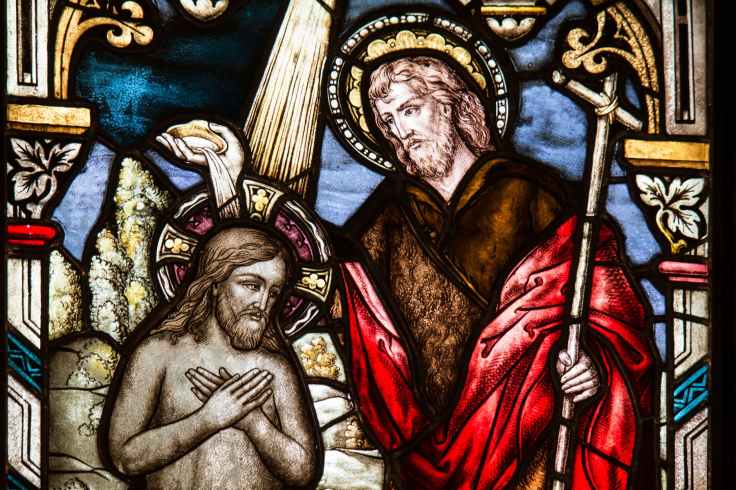
In just the past three weeks, three of my family members and one of my friends have made the decision to be baptized as a public declaration of their decision to live for Christ. All of them (and the others who were baptized at the same times) were baptized by immersion, signifying that they have, spiritually, died to self, been buried, and are raised with Christ to eternal life. This is not a step to be taken lightly, and I have confidence that all four (and more) of those I know are serious in their passion to follow the Lord.

Photo by Ali Arapou011flu on Pexels.com

When I write about prayer as a pursuit, I hope to convey that prayer is part of a larger pursuit of seeking God. And seeking God must include acknowledging Him as Lord above all– especially self. Jesus warned about people who claim to follow Him in word, but do not obey Him. It is, unfortunately, very easy to “speak Christian-ese”: to sound righteous and reverent when we are around others who claim to believe, but justify behaviors that may or may not stem from selfish motives.

There are obvious examples of hypocrisy in our world, but in His famous “Sermon on the Mount,” Jesus warns that many who seem to be doing good deeds, and “talking the talk” will not be part of God’s eternal kingdom. We are not to be seduced into thinking that God will be impressed by charitable giving, memorizing Scripture, or working on the Mission field if we are not willing to repent of our “secret” sins and false attitudes. And it is not for us to point fingers at “other” hypocrites– it is for us to humbly assess whether or not we are truly acting in obedience and submission to our Lord, or satisfying our own selfish desires and hoping for God’s stamp of approval.

Prayer should be a two-way communication. We pray to God, but we also listen for God’s guidance, wisdom, conviction, and encouragement. And we must act in obedience, and confess our disobedience if we want to “keep the slate clean” and keep a close relationship. When we refuse, we are just giving God lip service, and using His name to impress others and deceive ourselves. Others may judge us on appearances, but God sees what is in our heart. And “in that day” (v. 22), He will not let imposters through the gates of Heaven.

Photo by Foss Valentine on Pexels.com

The Good News is that Jesus doesn’t leave us hanging in verse 23. He goes on to say, “Therefore everyone who hears these words of mine and puts them into practice is like a wise man who built his house upon the rock..” (Matthew 7:24) Jesus is our Lord, but also our Savior and our Advocate. When we call on Him AS our true Lord, He is faithful and just to forgive our sins (1 John 1:9), and His divine power has given us everything we need for life and godliness (2 Peter 1:3a)

Photo by Transformation Films on Pexels.com

The act of Baptism alone does not have the power to save us. The practice of prayer alone has no saving power. But the pursuit of a relationship with Christ depends on such acts of obedience, humility, and trust. And the other good deeds that come from that relationship will not only help others, but will please God and strengthen that relationship. Instead of hearing, “I never knew you,” we can hear, “well done!” Not because of what we’ve done, but because of the partnership we’ve developed in God’s work.

Photo by Artem Beliaikin on Pexels.com

May God bless all those who have recently taken the step of Baptism. And may we all continue to pursue that relationship of dying to self, being buried with Him, and rising to new life in Christ!

Laughing With the Sinners

There is a line in a song by Billy Joel (Only the Good Die Young) which reads, “I’d rather laugh with the sinners than cry with the saints. The sinners are much more fun.”

There is a myth about sin– that sin is fun and obedience is drudgery. Sinners laugh and live carefree, happy lives, while “saints” lead gloomy lives filled with tears, worry, and anguish. Heaven will be filled with sour-faced do-gooders playing harps, while Hell will be an eternal party.

Photo by Julia Larson on Pexels.com

Nothing could be further from reality. While sin gives momentary pleasure and temporary laughter, it also leads to devastating pain and haunting regret. Broken families, lost relationships, stress, and guilt are just some of the consequences of sin. The idea that “I’m not hurting anybody– I’m just doing what makes me happy” is a false comfort.

Photo by Victoria Borodinova on Pexels.com

Similarly, while obedience may require us to make sacrifices or suffer momentarily, it also leads to great reward–discipline, wisdom, integrity, and a legacy of hope and help. The idea that “I’m missing out on the fun” is also a false one. “Saints” may cry, but often their tears are for the misfortunes of others!

Unfortunately, the common stereotype of sinners laughing while saints cry or, more often, sit in judgment, is based on observation. I have known some very sour Christians. They may not be crying, but they frequently make others around them cry! They nag, scold, wag their fingers, consign their neighbors and family members to Hell, and act as though they are too good for everyone else. When challenged about their negative attitude, sometimes they suggest that they are just “waiting for Heaven.” Others plead a genuine concern for others, and they worry that the laughter they hear now will turn to mourning in the future.

Photo by Paul Theodor Oja on Pexels.com

But I have also known joyful Christians– laughing, singing, encouraging others, whistling while they work, even laughing in the face of suffering and persecution! They, too, are “waiting for Heaven.” But in the meantime, they are celebrating their new and abundant life in Christ. Their attitude and actions attract others, and reflect the love, joy, peace, and hope that transcends the mere “happiness” of a moment’s sinful pleasure.

Photo by Akshar Dave on Pexels.com

The Bible says much about the value of both laughter and tears; of joyous celebration and sober reflection. In the end, ALL of us are “sinners”–no one is righteous on her/his own. Jesus, when He walked the earth and interacted with people, wept and celebrated with them. The Pharisees reprimanded Jesus and His disciples for their “feasting” and spending time with prostitutes and tax collectors. And yet, Jesus had harsh words about sin and Hell, and often spent time alone and in anguish of heart.

Photo by Andrea Piacquadio on Pexels.com

The crying of saints is not, in itself, of any more value than the laughter of sinners. But laughter and happiness in the moment cannot save us from the sting of death or the yawning emptiness of an eternity without God. And that is no laughing matter! Unfortunately, the song is based on an empty myth. Death comes to all of us, young or old, “good” or “bad,” gloomy or exuberant in life. What makes the difference is not our laughter or tears, or even our efforts to obey or live “good” lives– what makes a difference is GRACE and FAITH. And I’d rather live with the redeemed than die with the defiant!

God and Sinners, Reconciled!

Every year, we celebrate the birth of Emmanuel– God With Us. It is amazing to consider the Love of God that brought Him from His Heavenly throne to a lowly manger stall, the King of Glory contained in the tiny body of a sleepy infant.

Photo by nappy on Pexels.com

But we should be careful not to miss the rest of the story. As wonderful as it is to think that God would love His creation enough to visit among us, to “taste” life as a human, the story gets gloriously magnified as Jesus leaves the manger to enter a ministry. Jesus didn’t just live among us, He healed, taught, laughed, formed friendships, and served among people– many of whom scoffed, scorned, and rejected Him and His message.

And His message was this: God wants– in fact He passionately yearns– to restore the relationship WE have broken. Jesus didn’t come to “taste” human life– He came to GIVE His life as a sacrifice for those who didn’t deserve it, to extend forgiveness to those who had no right to ask for it. The Holy and Perfect God became the guilt and shame of Sin, so that we could be reconciled to Him. He accepted the penalty of Death, so that we could be given eternal life.

Photo by Edu Carvalho on Pexels.com

This miracle of reconciliation can be difficult to understand. I sometimes get “stuck” in the weight of my past–I know that Christ offers forgiveness, but I sometimes act as though the penalty hasn’t been removed; only suspended. But that’s not what Jesus taught. Like a leper cured of leprosy, I am clean–no scars, no stains, no relapse–all traces of my disease removed. In this world, I will still feel the sting of the consequences of Sin– betrayal, sickness, injustice, even death. But death is no longer my destiny; it is a temporary rest stop on my way HOME.

Photo by Anna Shvets on Pexels.com

Jesus didn’t come to “taste” human life; He came to “taste” death– and He came to destroy its power, so that we could know true Life, and live it to the fullest!

Joy! Peace! Reconciliation! Eternity! Emmanuel!

Forever!

Psalm 23:6– And I will dwell in the house of the Lord, forever.

Forever is a concept we acknowledge, but we don’t fully understand. We talk about difficult circumstances, like the current pandemic, lasting “forever.” But they won’t. Such circumstances may last longer than we would like; they may be more difficult than anticipate; they may bring more pain and grief than we think we can bear, but they will pass. Even if they last throughout our lifetime, they will not continue indefinitely.

But God IS forever– He is eternal. And He has created US to be eternal– to live with Him (or apart from Him) FOREVER! Our experience does not prepare us fully for this reality– we only know an existence that is limited by time and space. But deep within, we have an awareness that there is MORE– more than our brief time here; more than the difficulty and disappointment we experience. God has planted this awareness in each of us; this desire to know what comes “after” death; what “forever” really means.

Photo by Pixabay on Pexels.com

David reminds us that forever is not just a desire for those who follow our Good Shepherd– it is the reality He has planned for all of us.

Photo by Pixabay on Pexels.com

And that should give us abundant hope and comfort in times like these. What we face today is temporary. This is the “valley of the shadow of death.” We cannot see what is directly in front of us. It continues to bring anxiety and pain, and even death. But, death is not the end. It is only a shadow hiding the light of Eternity. And “Forever” cannot terrify us; it cannot hold terror for those who belong to the one who holds forever in His hands!

Photo by Sachin C Nair on Pexels.com

Someday, we will not need calendars. We will not need to worry about next week, or our 5-year plan, or deadlines. We will have unlimited opportunities, unlimited possibilities, unlimited life with the source of all good things!

Blog at WordPress.com.

Up ↑