
God’s Mysterious Ways

I write about prayer as a pursuit. Prayer is, at once, both simple and mysteriously complex.

It is a simple thing to pray–to direct one’s thoughts and words toward God. It is no more difficult than having a conversation with another person.

And yet it is not the same as talking to another person. God’s ways are not our ways. He is Holy, Sovereign, and Almighty. We come to God in need, but God has no “needs.” He has no need to confide in us, or ask for our help, or plead with us. Instead, He chooses to share with us His promises and His plans. He allows us to be part of His great work, and asks us to be His hands and feet and voice in this world. He pleads with us to come and spend time with Him and walk in relationship with Him.

I spent some time recently reviewing the life of George Muller. https://www.georgemuller.org/ George Muller was born over 200 years ago. He was, by his own admission, a liar and a thief in his early years. But when we came to Christ, his life changed dramatically. His life was a series of miracles that attested to his great faith and active practice of prayer. Muller founded several orphanages in England, and he did all of it through prayer. He never did traditional fund-raising: he never asked anyone for money or donations, he didn’t take out loans, he didn’t find “partners” or “sponsors” to pay for any of the needs. He simply prayed. He prayed for money to buy buildings. He prayed that God would send workers. He prayed for food and clothing and furniture that the children would need. And he vowed to take in any (and as many) children who came.
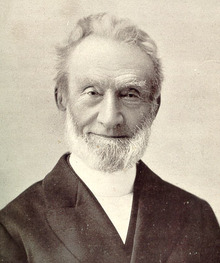
The stories of George Muller’s faith are legendary. He prayed for money to start one orphanage– he ended up with enough for several! He prayed for supplies– people came and gave furniture. Milk wagons broke down and the milk was donated to the orphanage. One story states that there was no food one morning. Muller prayed. Shortly afterward, he went to the door, and there, on the doorstep, lay a 50-lb. bag of rice. No one knows who left it or how it got there. God showed up in miracle after miracle in Muller’s life. And that doesn’t mean that his life was without struggle or heartache. He agonized over friends who were unsaved; he prayed for them over a period of years. One close friend remained unsaved until after Muller’s death. He experienced the heartbreak of losing his wife. But he was consistent in his witness about the power of prayer.

Muller prayed about everything– as we all should, all the time. (Philippians 4:6, 1Thessalonians 5:17) Little, seemingly unimportant things; huge, seemingly impossible things. God cares about them all. He is the Almighty– there is nothing so big (or so tiny) that He cannot do it! There is no heartache or struggle that He doesn’t want to hear about! Nothing can separate us from His Love (Romans 8:38). No matter what we’re going through, we can bring it to God.

But God’s ways– powerful, compassionate, miraculous– remain mysterious. We can trust that God will hear our prayers. But we cannot predict how, or when, or if He will let us see the answers we seek. Nor can we predict how God will use our simple prayers to impact the world around us! George Muller’s orphanages helped more than 2,000 homeless children survive, grow, and in many cases thrive and contribute to the lives of countless others. And the stories of his faith and the hundreds of small but significant miracles he experienced have inspired generations of people for more than a century and a half! And his story is not unique–we have an amazing “cloud of witnesses” (Hebrews 12:1) throughout history testifying to the power of God to hear and answer prayer in mysterious, miraculous, even mischievous ways! From finding lost keys to feeding multitudes; from protecting kittens to rescuing captives; from stretching budgets to saving souls– God’s ways are mysterious, Holy, and wholly good.

Prayer can be such a simple thing– and it can have eternal impact!

Why Confess?

One of the prayer models I like to use often is based on the acronym ACTS. ACTS stands for Adoration, Confession, Thanksgiving, and Supplication. I like this model because it is well-rounded. It works like this:


ADORATION–I love to begin prayer by remembering and acknowledging God’s worth, His supremacy, His Holiness, and His majesty. It sharpens my focus on the WHO of prayer, rather than the WHAT of my worries or doubts. And it puts everything in the proper perspective. Sometimes, I come to God by praying a Hymn, or praying a Psalm, or remembering the many names of God.

CONFESSION–Confession is important in prayer, and since I want to concentrate on it, I’ll come back to this element below.

THANKSGIVING– Thanksgiving returns me to remembering what God has already done– for me, for others, throughout history, and just yesterday in my life. Instead of prayer being all about my needs, wants, or concerns, prayer should be an honest conversation with God. And that must include gratitude, because God is truly GOOD! If you ever doubt that, think about the first five minutes of your morning. If you awoke, you are alive (thank you, God!). If you heard your alarm, opened your eyes and saw anything, if you were lying on a bed, in a shelter with a roof, if you were able to sleep through the night without the terrors of war, slavery, starvation, torture, or chronic agonizing pain, you have much for which to be grateful. If you were able to get out of bed on your own, able to eat breakfast, get dressed, and you have a job to go to or a purpose to fulfill in this day, you are among the blessed. To withhold praise and thanksgiving is to miss one of the privileges of life.

Photo by Tima Miroshnichenko on Pexels.com

SUPPLICATION–Yes, we bring requests to God. And He already knows what we need, what we desire, and what He has planned for us. So supplication is not about making God aware of our needs. But it is another act of acknowledging that God hears and responds to us. Because that’s the kind of God He IS! And because we have spent time Adoring, Confessing (to), and Thanking God, we know that we can present our requests without fear or doubt.

Most of us are fine with Adoring, Thanking, and Saying our requests, but Confession can be tricky– especially in our culture. What are the elements of Confession that trip us up? Mostly, I think, it’s a misunderstanding of what confession is (within the element of prayer) and what it is NOT.

Confession is defined as admitting to guilt, or to a crime or sin or wrongful act. But, even more basically, confession is an admission that we are not the ultimate authority over our lives or the lives of others. As such, we must confess before we can accept God’s atonement for our Sin. If we do not confess our need for God, we cannot accept, understand, or appreciate the depth and nature of His sacrificial Love for us. So when we pray, we must confess, not only God’s Glory in the heavens and the Earth, but His Sovereignty in our lives; His authority over our emotions, our thoughts, and our actions. King David gave us many great examples of confession in his Psalms– and they can be terrific models to use in our own prayers. (See Psalm 6, Psalm 32, Psalm 38, Psalm 51, and others.)

Confession in prayer is not primarily a list of our petty missteps– though we should be willing and able to name them, rather than denying what we’ve said and done–but a daily admission of God’s right to determine how we conduct our thoughts, our habits, our priorities, and our relationships, and acknowledging that God is Merciful, Gracious and Loving– beyond all our failures, mistakes, and even past rebellion. Confession shouldn’t focus so much on what we’ve done, as on how God is able to free us from guilt and shame, and how we intend to move on away from the past. We confess that our ways are not Holy, and in doing so, we underscore that God’s ways ARE Holy, perfect, wise, and good. God already knows our thoughts and actions, but WE need to be reminded of our goal– to run the good race (see Hebrews 12:1, and 1 Timothy 6:12) to follow Christ; to become more like God each day!

Confession is primary to the Christian Life– we confess that ONLY by the work of Jesus (the cross and resurrection) can we be reconciled to God. We cannot pray openly to God if we don’t believe–and confess– that this is true. God is not fooled by sweet talk or glib arguments. We cannot believe that Jesus’ atoning death and resurrection saved us if we don’t believe that it was necessary and good for Him to do so. And besides, confession is good for the soul!

“If we confess our sins, he is faithful and just to forgive us our sins and to cleanse us from all unrighteousness.”

1 John 1:9 (KJV)

Confession has a negative reputation in many Christian circles, and it is misunderstood in others. Just listing our sins or admitting we did something wrong doesn’t have any value without the positive confession that Jesus is “the way, the truth, and the life.” (see John 14:6) In fact, a better definition of Christian confession is this– agreeing with God about who I am (a sinner/imperfect/unable to attain Holiness on my own), and who HE is (perfect/Holy/Sovereign/the One who Loves me absolutely)

When we pray today, I hope we will confess– positively, profoundly, willingly, and whole-heartedly. I hope we will humbly and honestly confess any actions or habits that are interfering with our Christian walk. And I hope we will joyfully confess that Jesus is LORD; that we are trusting in Him to guide us, intercede for us, and give us the power to live more abundantly in this life, and throughout eternity. What a great way to pray!

Blog at WordPress.com.

Up ↑