I Can Only Imagine…

I live in the Midwestern United States, in an area known for lots of lakes and streams, woods and forests, and fertile farmland. I don’t have to imagine the smell of pines, or the sound of frogs at night, or the sight of cornfields turning ripe in the summer heat. I don’t have to imagine frost on late autumn mornings, or ice and snow on tree branches in January. But I’m not as familiar with mountains, deserts or the ocean. I have visited such areas, but I have to remember the scent and sting of saltwater coming off the ocean, or the dry heat of the desert, or the thin air of the mountains.

Photo by Pixabay on Pexels.com

Thankfully, there are photographs, and videos that help refresh memories and capture some of the wonder of jungles and plateaus, waterfalls, tundra, and dunes. We live in an awesome world, and our Creator has filled it with beauty, grandeur, and majesty. Even more amazing, God has created solar systems, and galaxies beyond our ability to visit. We cannot experience such places “in person,” but we can see dazzling views through telescopes of stars and worlds millions of miles away.
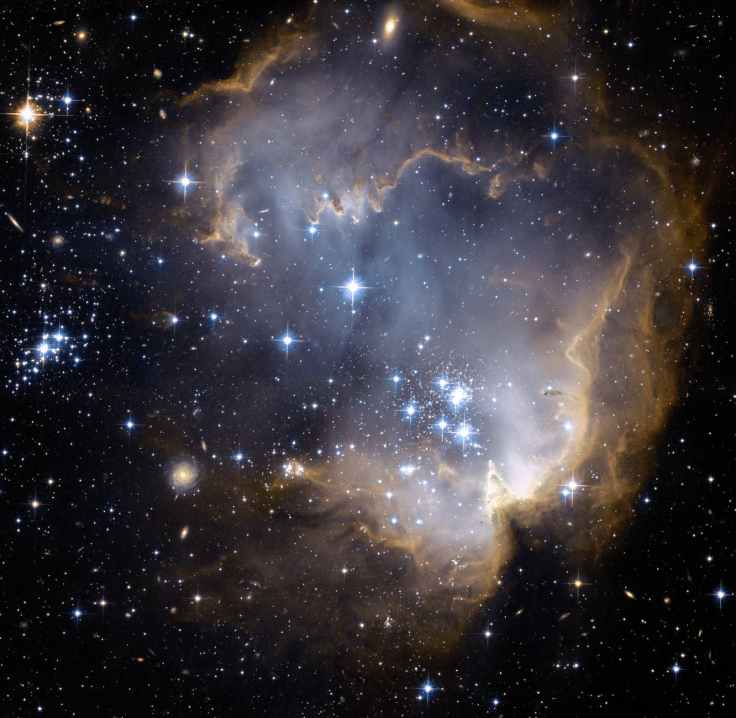
Photo by Pixabay on Pexels.com

But there are places that are beyond our ability to view– even beyond our imagination.

Heaven is one of those places. We have limited descriptions of Heaven in the Bible– a place of joy and perfection; where God himself is the light and source of life. A place where there is no disease, no death, no sin, and no fear. Several people have tried to depict it, but there is really no way to picture it accurately. Some people imagine a place of boredom, filled with “saints” sitting around playing the harp through all eternity. Others imagine a place filled with all their loved ones– an eternal family reunion, with laughter and singing. But the Bible is clear– Heaven is where God lives and reigns–HE is the focal point of Glory and Dominion and Eternal Praise and Purpose.

Another place we cannot imagine accurately is Hell. Again, we have a few clues in the Bible, and many attempts to depict what Hell might be like– a place of eternal torment and regret, without the presence of God– without light, love, comfort, or hope. We don’t like to imagine going there. We don’t like to imagine anyone being there– not really. Even in anger, we should not want to waste all of eternity watching anyone else suffer the agonies of Hell, and we certainly don’t wish to have a “front row” seat!

The Bible doesn’t give us lengthy descriptions of either of these eternal destinations– and for a reason. We have a life to live here and now! While our eternal destination is of vital importance, it is not for us to spend precious time creating an imaginary set of expectations– pearly gates or fire and brimstone–in our minds. Rather, we are to concentrate on THIS life– THIS gift of God to use and enjoy for His glory.

Photo by Pixabay on Pexels.com

Sometimes, we get a small glimpse of eternity– a transcendent moment of such natural beauty that we are hyper-aware of God’s Sovereignty; or a horrific scene of destruction and Sin that makes us shudder and recoil. But the rest is better left to eternity as we pursue God in this life.


Laughing With the Sinners

There is a line in a song by Billy Joel (Only the Good Die Young) which reads, “I’d rather laugh with the sinners than cry with the saints. The sinners are much more fun.”

There is a myth about sin– that sin is fun and obedience is drudgery. Sinners laugh and live carefree, happy lives, while “saints” lead gloomy lives filled with tears, worry, and anguish. Heaven will be filled with sour-faced do-gooders playing harps, while Hell will be an eternal party.

Photo by Julia Larson on Pexels.com

Nothing could be further from reality. While sin gives momentary pleasure and temporary laughter, it also leads to devastating pain and haunting regret. Broken families, lost relationships, stress, and guilt are just some of the consequences of sin. The idea that “I’m not hurting anybody– I’m just doing what makes me happy” is a false comfort.

Photo by Victoria Borodinova on Pexels.com

Similarly, while obedience may require us to make sacrifices or suffer momentarily, it also leads to great reward–discipline, wisdom, integrity, and a legacy of hope and help. The idea that “I’m missing out on the fun” is also a false one. “Saints” may cry, but often their tears are for the misfortunes of others!

Unfortunately, the common stereotype of sinners laughing while saints cry or, more often, sit in judgment, is based on observation. I have known some very sour Christians. They may not be crying, but they frequently make others around them cry! They nag, scold, wag their fingers, consign their neighbors and family members to Hell, and act as though they are too good for everyone else. When challenged about their negative attitude, sometimes they suggest that they are just “waiting for Heaven.” Others plead a genuine concern for others, and they worry that the laughter they hear now will turn to mourning in the future.

Photo by Paul Theodor Oja on Pexels.com

But I have also known joyful Christians– laughing, singing, encouraging others, whistling while they work, even laughing in the face of suffering and persecution! They, too, are “waiting for Heaven.” But in the meantime, they are celebrating their new and abundant life in Christ. Their attitude and actions attract others, and reflect the love, joy, peace, and hope that transcends the mere “happiness” of a moment’s sinful pleasure.

Photo by Akshar Dave on Pexels.com

The Bible says much about the value of both laughter and tears; of joyous celebration and sober reflection. In the end, ALL of us are “sinners”–no one is righteous on her/his own. Jesus, when He walked the earth and interacted with people, wept and celebrated with them. The Pharisees reprimanded Jesus and His disciples for their “feasting” and spending time with prostitutes and tax collectors. And yet, Jesus had harsh words about sin and Hell, and often spent time alone and in anguish of heart.

Photo by Andrea Piacquadio on Pexels.com

The crying of saints is not, in itself, of any more value than the laughter of sinners. But laughter and happiness in the moment cannot save us from the sting of death or the yawning emptiness of an eternity without God. And that is no laughing matter! Unfortunately, the song is based on an empty myth. Death comes to all of us, young or old, “good” or “bad,” gloomy or exuberant in life. What makes the difference is not our laughter or tears, or even our efforts to obey or live “good” lives– what makes a difference is GRACE and FAITH. And I’d rather live with the redeemed than die with the defiant!

Holy Terror

All Hallow’s Eve, or Halloween, brings out the fearsome, garish, gory, scary, and macabre in many people.  Movies, costumes, and stories concentrate on death, mystery, nightmares, ghosts, and terror.

I am not a fan of horror in any of its forms.  I don’t like to be scared, startled, tricked, haunted, or frightened.  I don’t like seeing others being terrorized, tortured, or hurt.

So it is with great interest and some surprise to find that the Bible tells us to fear.  Of course, it also tells us NOT to fear– several times, in fact.  We are told that we need not fear the future (Matthew 6:34), struggles, battles, or long journeys (Joshua 1:9), shame or disgrace (Isaiah 54:4), terror, evil, and the “shadow of death” (Psalm 23:4),  actual death, angels or demons (Romans 8:38), or anyone at all (Psalm 27:1; Psalm 188:6).  But there is one fear the Bible does nothing to dispel.

metal vintage old antique
Photo by Skitterphoto on Pexels.com

There is a Holy terror that comes from the recognition that God is Holy– and we are NOT.  There is a very real, very terrible chasm separating us from an eternally sinless and perfect God.  There is nothing we can do on this side of the chasm to close the gap– no way to escape the eternal. hopeless and horrific state of being separated from all that is good, and noble, and peaceful, and joyous.  In life, we get glimpses of glory–flashes of amazing grace at work in the world around us.  Even though we live in a fallen world, we do not live in a place rejected or abandoned by God.

beautiful blue sky bright cloudiness
Photo by icon0.com on Pexels.com

This should cause us to have a healthy “fear” of God– a soul-deep awe of His “Other-ness”, His Authority, and His Pre-eminence.  And it should give us a terror of remaining in separation from Him– especially as He offers the very restoration and renewal we can never achieve for ourselves.  And He offers it as a free gift to ANYONE who will receive it!

ash background beautiful blaze
Photo by icon0.com on Pexels.com

Far from trying to “scare someone into Heaven,” sermons and admonitions about Hellfire and eternal damnation are meant as very real warnings with real and eternal consequences.  No horror on earth can compare with an existence devoid of all joy, peace, love, light, help, and hope–and filled with the knowledge of “all that might have been.”  Zombies, vampires, ghouls, and monsters can terrorize in the movies for an hour or two, or in books for a week or more, but what makes people willing to entertain such horrors is the latent hope that we will close the book cover, exit the theater, and wake up from the nightmares presented there.  The idea that Good will eventually triumph; that order, peace, and justice can be restored; that love conquers all, and “something” will survive, re-emerge, and carry on into the future.  All of these hopes are possible because God exists and is eternal.  When we reject God’s authority; His sovereign direction and His call to salvation, we reject all that comes with it.  While we live on His earth, we will still see the glimpses of glory– we can pretend that it is enough for now, or choose to settle for false “hope” of emptiness in death.  But we cannot escape the search for meaning and purpose that drives us to build and plan for a future we have never seen; nor can we know the peace that comes from looking forward and seeing more than darkness, doubt,  and destruction.

Blog at WordPress.com.

Up ↑