Head and Shoulders, Knees and Toes

I worked for many years at a public library doing pre-school story time programs. One of the favorite songs among the children was “Head and Shoulders, Knees and Toes.” Children love rhymes, music, and movement, and this song involved all three. Children stood, ready to stretch and bend, point, and sing: “Head and shoulders, knees and toes, knees and toes.” Their hands flew from one body part to another as we sang, faster and faster. “Eyes and ears and mouth and nose; head and shoulders, knees and toes, knees and toes.” Faster and faster, louder and louder, the excitement growing, until the song ended in a breathless shout, “Knees and toes”!

Another favorite was the “Hokey Pokey”, in which we formed a circle and took turns “putting in” and “putting out” various limbs and body parts, “turning (ourselves) about” and clapping. We “put in” our right arms, our left legs, our heads, and “our whole selves.” From the earliest of ages, we become aware of the various parts of our bodies, their names and functions, and how they work together.

As God’s people, we are to be the “Body of Christ” (1 Corinthians 12:12-14) and our bodies are to be His temple(1 Corinthians 6:19). It is important that we recognize how every part of our body needs to be consecrated and ready to serve, to worship, and to reflect God’s Glory.

Photo by nappy on Pexels.com

This is not a new concept. In fact, much of the book of Leviticus is given over to consecrating every aspect of the worship of God by His children. There are detailed instructions for the priests– how and when to enter the Tabernacle; what to wear, what kind of offerings to bring and how to prepare for service. One set of details involves the installation ceremony for the priests. They were to wash from head to toe, before putting on the sacred garments. They were to offer a blood sacrifice, and some of the blood was to be placed or smeared in three places– the lobe of the right ear, the thumb of the right hand, and the big toe of the right foot (Leviticus 14:28).

Scholars through the years have given us many reasons for these detailed instructions (see this link for a terrific overview) https://www.myjewishlearning.com/article/ears-thumbs-and-toes/, and most of them bring out the idea that God wants us to worship and be consecrated “from head to toe.” God has authority over how we choose to use our ears, hands, and feet– He wants purity in our words and deeds. He wants us to listen to Him, obey Him, and follow Him.

The smearing of blood in these three areas also demonstrates a need for atonement– only blood can cover or atone for our lack of attentiveness, our lack of obedience, and our open rebellion against God’s authority. The blood of the ritual sacrifices in Leviticus are a foreshadowing of the ultimate atonement we receive from the sacrifice of the Only True Lamb, Jesus Christ. Christ takes away our sin, and consecrates us to His service and worship– from head to toe!

Photo by Pixabay on Pexels.com

And, unlike the Hokey Pokey, THAT’S what it’s all about! God gives us His life and purity, His Grace and forgiveness, His divine purpose and eternal Glory when we “put our whole selves” in His hands, and He “turns us all about,” to become more than conquerors (Romans 8:37), a royal priesthood (1 Peter 2:9), and the sheep of His pasture. (Psalm 100:3)

Bless the Lord, O My Soul


A Psalm of David.
103 Bless the Lord, O my soul;
And all that is within me, bless His holy name!
2 Bless the Lord, O my soul,
And forget not all His benefits:
3 Who forgives all your iniquities,
Who heals all your diseases,
4 Who redeems your life from destruction,
Who crowns you with lovingkindness and tender mercies,
5 Who satisfies your mouth with good things,
So that your youth is renewed like the eagle’s.
6 The Lord executes righteousness
And justice for all who are oppressed.
7 He made known His ways to Moses,
His acts to the children of Israel.
8 The Lord is merciful and gracious,
Slow to anger, and abounding in mercy.
9 He will not always strive with us,
Nor will He keep His anger forever.
10 He has not dealt with us according to our sins,
Nor punished us according to our iniquities.
11 For as the heavens are high above the earth,
So great is His mercy toward those who fear Him;
12 As far as the east is from the west,
So far has He removed our transgressions from us.
13 As a father pities his children,
So the Lord pities those who fear Him.
14 For He knows our frame;
He remembers that we are dust.
15 As for man, his days are like grass;
As a flower of the field, so he flourishes.
16 For the wind passes over it, and it is gone,
And its place remembers it no more.
17 But the mercy of the Lord is from everlasting to everlasting
On those who fear Him,
And His righteousness to children’s children,
18 To such as keep His covenant,
And to those who remember His commandments to do them.
19 The Lord has established His throne in heaven,
And His kingdom rules over all.
20 Bless the Lord, you His angels,
Who excel in strength, who do His word,
Heeding the voice of His word.
21 Bless the Lord, all you His hosts,
You ministers of His, who do His pleasure.
22 Bless the Lord, all His works,
In all places of His dominion.
Bless the Lord, O my soul!

Photo by Irina Kostenich on Pexels.com

Often in our churches, we focus on two factors of our relationship with Christ– worship and obedience.  Worship focuses on His majesty and worth.  Obedience focuses on His power and authority.  But when the Psalmist speaks here, he is actually focusing on another element.  Blessing isn’t so much about majesty or authority; it isn’t about obedience or worship.  It is about communion.  We bless and are blessed, not just by a word or deed, but by the speaker or doer–they bless us by what they say or do, but they ARE a blessing to us for who they are.

God is worthy of our worship and obedience, but he wants us to be a blessing– to come to him in Love and fellowship, and to be blessed by Who He Is as we meet with him.

Today, worship God.  Obey Him.  But let’s take time to bless Him and be blessed in return as we spend time with the Lover of Our Souls.

Photo by Pixabay on Pexels.com

Holy Terror

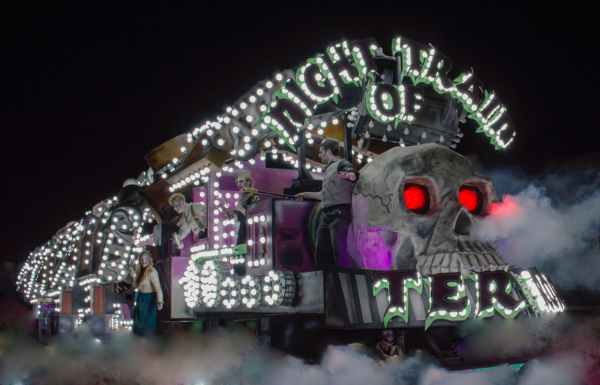
All Hallow’s Eve, or Halloween, brings out the fearsome, garish, gory, scary, and macabre in many people.  Movies, costumes, and stories concentrate on death, mystery, nightmares, ghosts, and terror.

I am not a fan of horror in any of its forms.  I don’t like to be scared, startled, tricked, haunted, or frightened.  I don’t like seeing others being terrorized, tortured, or hurt.

So it is with great interest and some surprise to find that the Bible tells us to fear.  Of course, it also tells us NOT to fear– several times, in fact.  We are told that we need not fear the future (Matthew 6:34), struggles, battles, or long journeys (Joshua 1:9), shame or disgrace (Isaiah 54:4), terror, evil, and the “shadow of death” (Psalm 23:4),  actual death, angels or demons (Romans 8:38), or anyone at all (Psalm 27:1; Psalm 188:6).  But there is one fear the Bible does nothing to dispel.

metal vintage old antique
Photo by Skitterphoto on Pexels.com

There is a Holy terror that comes from the recognition that God is Holy– and we are NOT.  There is a very real, very terrible chasm separating us from an eternally sinless and perfect God.  There is nothing we can do on this side of the chasm to close the gap– no way to escape the eternal. hopeless and horrific state of being separated from all that is good, and noble, and peaceful, and joyous.  In life, we get glimpses of glory–flashes of amazing grace at work in the world around us.  Even though we live in a fallen world, we do not live in a place rejected or abandoned by God.

beautiful blue sky bright cloudiness
Photo by icon0.com on Pexels.com

This should cause us to have a healthy “fear” of God– a soul-deep awe of His “Other-ness”, His Authority, and His Pre-eminence.  And it should give us a terror of remaining in separation from Him– especially as He offers the very restoration and renewal we can never achieve for ourselves.  And He offers it as a free gift to ANYONE who will receive it!

ash background beautiful blaze
Photo by icon0.com on Pexels.com

Far from trying to “scare someone into Heaven,” sermons and admonitions about Hellfire and eternal damnation are meant as very real warnings with real and eternal consequences.  No horror on earth can compare with an existence devoid of all joy, peace, love, light, help, and hope–and filled with the knowledge of “all that might have been.”  Zombies, vampires, ghouls, and monsters can terrorize in the movies for an hour or two, or in books for a week or more, but what makes people willing to entertain such horrors is the latent hope that we will close the book cover, exit the theater, and wake up from the nightmares presented there.  The idea that Good will eventually triumph; that order, peace, and justice can be restored; that love conquers all, and “something” will survive, re-emerge, and carry on into the future.  All of these hopes are possible because God exists and is eternal.  When we reject God’s authority; His sovereign direction and His call to salvation, we reject all that comes with it.  While we live on His earth, we will still see the glimpses of glory– we can pretend that it is enough for now, or choose to settle for false “hope” of emptiness in death.  But we cannot escape the search for meaning and purpose that drives us to build and plan for a future we have never seen; nor can we know the peace that comes from looking forward and seeing more than darkness, doubt,  and destruction.

What? A Privilege?!

“What a Friend we have in Jesus,  all our sins and griefs to bear!  What a privilege to carry everything to God in Prayer!”

The word “privilege” has taken a beating lately.  A privilege used to be considered a good thing.  Merriam-Webster defines it as, “a right or immunity granted as a particular benefit, advantage, or favor.”  A privilege is granted–given as the prerogative of someone in power or authority– to someone else.  It may be given as a reward, or granted for a limited time and under certain conditions.  But a true privilege is a gift–you can’t make your own privilege, and you cannot own or control a privilege– the terms are set by the giver, not the receiver.

In the past generation, the word “privilege” has become charged with political and societal connotations.  Those connotations, and the issues surrounding them, are worthy of discussion and could fill volumes, but I want to talk about a privilege that should be free of undertones and dubious meanings.

Prayer is a pursuit, and a practice.  It is personal, practical, and powerful.  But it is also a privilege.  Often one that we take for granted.

In pursuing prayer, we are not just developing a personal routine or discipline.  We are not just approaching a powerful supernatural entity.  We are fallen creation entering the presence of a Holy Creator; we are rebels entering the throne room of the King of Kings.

We have the right to approach God; to talk to, converse with, ask favors of, plead with, confess to, and expect answers from the One who creates galaxies with a single spoken word, and designs every unique flake of snow.  This same God grants us the right to draw breath, to experience both beauty and wonder, to question and to create.

Prayer in ancient times was almost universally accompanied by sacrifices, and surrounded with ritual– incense, bowing and prostrating oneself, covering or uncovering the head–in recognition of the horrible chasm, the great separation between God and mankind.  Many traditions still use ritual for prayer, and there is nothing wrong in this reminder of God’s Holiness and Sovereignty.  Yet God talks of prayer in intimate terms.  He didn’t impose ritual and sacrifice for his benefit, but for ours.  Several times throughout the Bible, he makes clear that he does not require the blood of bulls and goats–what he wants most is a humble and pure heart.  At the moment Jesus died, the great veil in the Temple was ripped in half from top to bottom–the most holy place laid open to all who might come into God’s presence.  Christ’s death and resurrection were not just means of saving us from Hell, but the means of bringing restoration of the intimacy God designed from the beginning.  God– Almighty, Omnipotent, and completely Holy–wants to give us the privilege to enter his presence and pour out our thoughts, feelings, burdens, and triumphs; to share intimacy with HIM.  We are not just objects of his care (or his wrath), not just creatures in whom he has a certain fond but distant interest.  We are recipients of lavish love and priceless privileges– forgiveness, power over sin, power to become more Christlike, restoration and renewal, and yes,  the pursuit of  prayer.

Blog at WordPress.com.

Up ↑