“‘Holy, holy, holy| is the Lord God Almighty, who was, and is, and is to come.” Revelation 4:8b (NIV)
Not so much a name of God as a description of His Character, the word Holy means “sacred, separate or set apart, morally blameless; complete; whole; lacking nothing; worthy of worship.” God is Holy. There is no force, no person, no entity who can rival God or be a peer of God. Satan is not God’s equal. Sin, death, evil, none of these can successfully oppose God, or cause Him to stumble or challenge Him. God is Supreme– Alone in His Power and Glory and Sovereignty.
I pray to a Holy God. I pray with the guidance of His Holy Spirit. I follow Christ, who demonstrated Holiness in human form during His time on earth. Sinless perfection, He walked among sinful men and women, healing, teaching, and showing perfect Love and Mercy.
We live in a world that constantly questions this aspect of God. How can a Holy God allow people to suffer injustice, doubts and struggles, and even death? Surely, this is a mistake! God must have failed at some point, or we would live in a perfect world.
God doesn’t make mistakes! And sometimes, that is a concept that can be difficult to fully comprehend. Yes, we know God is “good.” And we know He is powerful. But He is so much more than that. He is without guilt, without doubt, without confusion, without failure. When I see and experience injustice or disease, disappointment, misunderstanding, exhaustion, grief–these are not from God. They come from a fallen world in rebellion against our perfect maker.
Except we once did! Adam and Eve lived in the Garden of Eden, and God provided for their every need. They didn’t need clothing– it never got cold, and the insects, animals, and plants posed no threats. They didn’t need the Law, because they walked with God and knew only good. They didn’t need jobs or houses, money or banks, governments, medicine, dictionaries, alarm clocks or Wikipedia. God didn’t sin– they did. And God didn’t get caught by surprise by the Fall– He already had planned for mankind’s redemption. God didn’t fail. He was, is, and will always be Holy.
This also means He is always “wholly” sufficient for our every need. Even the needs to be understood and to be rescued from our own failures. God, who is Holy, sent His Holy Son to live IN our fallen world– to taste OUR failure, and to set things right. Whatever we suffer now is not God’s “fault,” and it has already been made right in His perfect plan. He understands our temporary pain and suffering differently than we do, because He sees the finished product– our renewal, redemption, and “perfection” in Him!
So I am very thankful today for the Holiness of God. It is something I cannot fully understand until I experience it first-hand, but I can trust in it, put my hope in it, and LIVE in the promise of it, even when I stumble, fail, and struggle.
I’m choosing to focus for a few posts on the Names of God– titles, descriptions of His Character–that we can (and should) use in thinking about and praying to God. Today, I want to look at the term LORD, or Adonai, and what it signifies.
In English, we use the word “lord” to refer to someone who has power or authority over something– think “Lord of the Rings” or “lord and master”– someone with the power to control. In Hebrew, the word “Adonai” also means “Lord”, but in the plural form, denoting special respect or reverence. In the Bible, when we see LORD (in all capitals), it refers to the ONE who has power over all things– THE LORD, or MY LORD. (For a more detailed explanation, see https://www.christianity.com/wiki/god/what-does-adonai-mean.html)
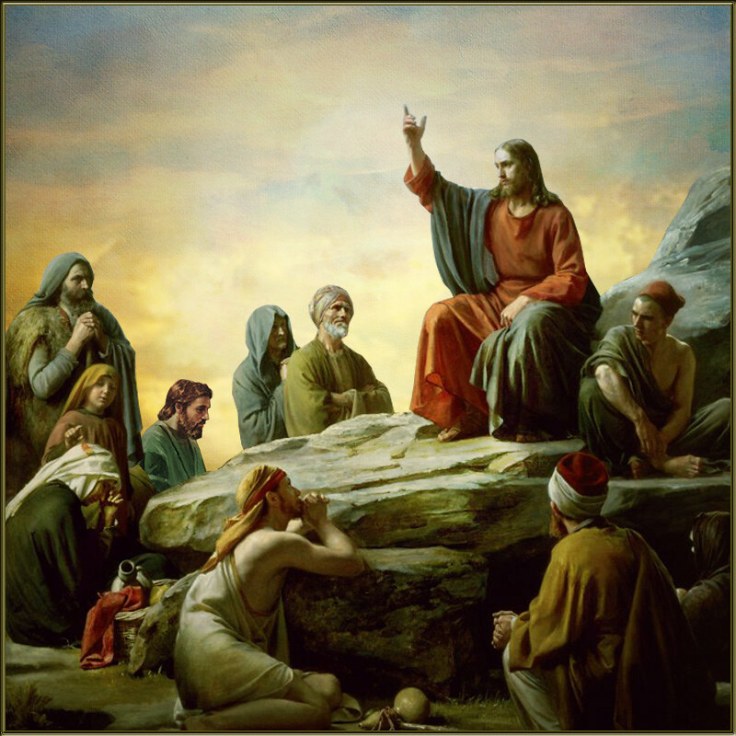
There is an interesting passage in Jesus’ Sermon on the Mount in which Jesus uses the term “Lord.” He warns that not all those who use the phrase, “Lord, Lord” will enter the Kingdom of Heaven.
21 “Not all who sound religious are really godly people. They may refer to me as ‘Lord,’ but still won’t get to heaven. For the decisive question is whether they obey my Father in heaven. 22 At the Judgment many will tell me, ‘Lord, Lord, we told others about you and used your name to cast out demons and to do many other great miracles.’ 23 But I will reply, ‘You have never been mine. Go away, for your deeds are evil.’ (Matthew 7:21-23 The Living Bible)
We can use the name “Lord” and still not understand how fully Sovereign and Holy He is. When we acknowledge Jesus as “Lord”, we may simply mean that we think of Jesus (and the Father) as a “Lord” over certain aspects of our lives– He controls the weather, or we can pray to Him to change our present circumstances or make someone else do what we can’t make them do. But Jesus is not just a “Lord.” He is THE LORD–He is Adonai. This name (when printed in all caps) is often used as a substitute for the given Holy Name of God (Yahweh or YHWH). It IS who He IS– the One LORD over all creation. The One who is the Master of ALL. If we call Him, “Lord,” but ignore what He says, and only turn to Him as a last resort, or use His name only to sound Righteous, we are literally taking His Name in Vain and breaking the third Commandment!
What amazes me is that THE LORD of the universe wants to hear from me! He has no need of a relationship with me; there is absolutely nothing that I can bring to Him– even my obedience is only an acknowledgement of who He already IS, and the power He already has over me. He CAN make me obey Him; He has the power to circumvent my will and impose His will upon it. Yet, He chooses to ask me to follow Him; He not only tells me to obey Him, He tells me why and how! And He gives me the power (through His Holy Spirit) to do it!
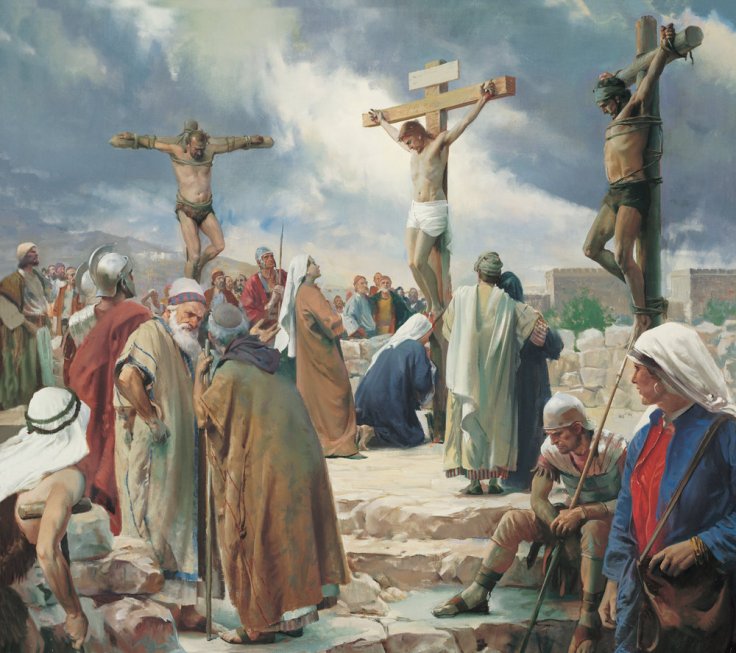
God is ADONAI– He is THE LORD! And He is patient, compassionate, and humble. When Jesus came, lived among us, and died on the cross, it wasn’t because any of us deserved His substitutionary sacrifice for our Sin. It was an extension of His nature AS “LORD.” And isn’t that worth a prayer of worship today!
Earlier this week, we celebrated Constitution Day in the United States. It went largely unheralded. The United States Constitution– the document on which all other laws are supposed to be based in this country– is relatively small. It takes about a half-hour to read it through, including all 27 amendments. It takes much longer to understand and make sense of it. One document that helps define and explain the Constitution is the Declaration of Independence.
One of the key phrases in the Declaration is this: “We hold these truths to be self-evident, that all men are created equal, that they are endowed by their Creator with certain unalienable Rights, that among these are Life, Liberty and the pursuit of Happiness.–That to secure these rights, Governments are instituted among Men, deriving their just powers from the consent of the governed, –That whenever any Form of Government becomes destructive of these ends, it is the Right of the People to alter or to abolish it, and to institute new Government, laying its foundation on such principles and organizing its powers in such form, as to them shall seem most likely to effect their Safety and Happiness.”
But looking around today, it seems that not all American hold ANY truths to be self-evident– indeed, many people don’t hold any truths to be true! We like to pay lip-service to one phrase– “All men are created equal…” but even here, we cringe and rephrase it. “It’s not just ‘men’ who are equal– all genders are equal” “Everybody is equal.” But what do we mean by this new phrase? It is self-evident (I would argue) that everyone is NOT equal in all ways. Some of us are taller than others, or healthier or wealthier than others; some of us live longer than others. Some of us work in offices; others work in the wind and rain and snow. Some of us live in large mansions, while others live in motor homes, apartments, hospital rooms, or even homeless shelters. The “Truth” is that we are CREATED equal– we are equally valued by our Creator, and equally entitled to dignity, life, liberty, and the “pursuit of happiness” under the laws of the land. Our laws are not supposed to create an artificial “equality” of outcome or circumstance, but provide for equal protection and opportunities for everyone to live, experience freedom, and pursue their individual purpose and dignity.
And we are losing the self-evident truth that Government should derive its just powers from the consent of the governed– not the arbitrary will of unelected bureaucrats appointed without public consent and answerable to no one.
We have lost the self-evident Truth, and replaced it with clever and complicated ideals.
None of this is new, however. All the way back in the days of ancient Israel, the people lost the self-evident Truth about their nation and its unique covenant with God. The Covenant was simple. It did not take a long time to read through. There were Ten Commandments and several “amendments” of ceremonial and social rules. God gave Moses a list of promises– blessings and curses–if the nation of Israel would (or would not) uphold their portion of the covenant. God would be their ruler, and they would be His People.
But after the death of Moses and his successor, Joshua, the people abandoned the law and the covenant, until chaos reigned, and God invoked many of the curses against His own people. By the end of the book of Judges, we learn that, “..in those days there was no king in Israel; every man did that which was right in his own sight.” (Judges 21:25)
Such conduct led to Israel being invaded, defeated, and oppressed. Worse, they approached their religious leader, Samuel the Priest/Prophet, and asked for a human king in order to be just like the other nations– nations God had called out for being wicked, violent, and unjust. The reign of kings failed, too, and the nation was again invaded, dragged off to exile, and oppressed.
“We hold these truths..” is more than just a phrase in a national document. It is a guideline for justice, peace, and prosperity.
WE– It doesn’t work for the people of any nation to be divided about what constitutes Truth. “My truth,” “Your truth,” and “their truth” can’t live together in harmony.
HOLD– We must be firm in our commitment to the Truth, or we will be swept away by the latest philosophy, moral standard, or faddish practices of the world around us. That doesn’t mean that we can never admit a need for change– that’s what the amendment process is for– but when we keep letting go of standards which have preserved safety and guaranteed opportunity, replacing them with temporary power grabs and loosely defined concessions to the loudest complainers, we are headed for nationwide injustice, violence, and oppression
THESE– There are other “truths” we could have adopted back at the founding of our nation. We could have set up another monarchy. We could have developed an oligarchy, made up of a ruling class. We could have argued that only land-owners were “equal.” That life was not an “unalienable” right. That representative government was inefficient, and therefore not necessary.
TRUTHS– Not suggestions. Not prevailing opinions of the day. TRUTHS. Immutable, unchanging, solid, objective.
And what goes for the United States should be a warning for Christians everywhere. We are citizens of Heaven. There are truths that we should hold to– truths that should be self-evident in the life of every Christian. Jesus is LORD– not just a pal; not just a guru or a good teacher. He is the LORD. God doesn’t change– What He said a thousand years ago about loving God and loving your neighbor still applies today. He hasn’t changed His mind about life, or liberty, or the pursuit of righteousness… He hasn’t become less powerful or less Holy, that we should just do “whatever is right in our own eyes..” God’s Word hasn’t changed–His promises still hold; His warnings are still meant to be heeded; His will is still evident. God’s grace is sufficient! God is HOLY and JUST. And He is full of Mercy and Love. He will forgive; He will empower us to do His will; He will continue to transform us as we follow Him. God is Greater than Government. Whatever system of Government we live under in this life, God’s Kingdom is greater, more just, and everlasting.
These are truths worth holding! No matter what happens to the United States or its Constitution, I will continue to hold to the Truth of the Bible above all. May God in His Grace give us the strength, wisdom, and will to hold fast to what is true, and not just what is “American.”
When I was in seventh grade, I had a teacher named Miss Whitcomb. She was notorious throughout the school system as the “toughest” teacher we would ever have. She was ruthless. She demanded absolute quiet, she did not grade “on a curve,” and she never smiled. She had an ongoing war with grape-flavored chewing gum and students who were three seconds late for class. She gave impossible assignments and offered little in the way of help, comfort, or guidance. She had a point system for behavior, and most students ended up earning detentions. Everyone dreaded her class. Many normally confident and competent students failed her class. They worried themselves into sleepless nights and second-guessing their own abilities.
I suffered through two years of Miss Whitcomb’s classes. I had her for American History, English, and introductory drafting class. She was exacting and frustrating. But I learned a lot. Her assignments often seemed impossible, but some of them were creative as well as challenging. I never learned to love Miss Whitcomb’s class, but I learned to survive it– and, while I can’t say I learned to like her, I learned to respect her.
Years later, I returned to my home town as a teacher. And Miss Whitcomb was my colleague. A new generation of students were suffering under Miss Whitcomb’s impossible demands, and many were sure they could petition the school administration to get her fired. They came to me seeking support. I wouldn’t give it. I told them I remembered how difficult her classes were, but that I felt that it was important that they experience tough teachers, like Miss Whitcomb, because they would often experience tough bosses or professors, and tough situations as adults; learning to survive Miss Whitcomb’s class would give them practice for tough times in the future. And I suggested that they look at her classes as a challenge to be faced, rather than a punishment to be feared.
I had a difficult time understanding why Miss Whitcomb was so “tough.” But I got an insight from an unexpected event. A group of high school students were going on a field trip to see the hit musical, “Les Miserables” at a local university theater. They needed chaperones, and I agreed to come, as it was a wonderful chance to see a national touring company perform a terrific play. Surprisingly, Miss Whitcomb also came as a chaperone. I never thought of musicals as “her thing,” but she had decided to give it a try. Of course, the students were terrified of her, and she ended up sitting on the far side of the group (but it was a much quieter ride up to the campus!)
The play was magnificent, but Miss Whitcomb was very disturbed by it. The next day, she tackled the teacher who had organized the trip to complain. Her complaint was not with the students or the performers. It was about the story itself! She was somewhat familiar with the novel’s plot, but seeing it “live,” she was bothered by the character of Javert, and his pursuit of the main character, Jean Valjean. In the story, Javert has spent the better part of 25 years tracking Valjean, an escaped convict. When he finally finds him, Valjean ends up saving his life. Javert cannot reconcile that the “criminal” he has been looking for– his enemy– has saved him. Miss Whitcomb so identified with Javert, that she found the story untenable.
Why was she so upset? Because Javert was “righteous.” He represented the law. His quest was legal–his foe, Valjean, HAD escaped from prison. He had every “right” to pursue him and force him to complete his extra sentence (Valjean had completed his original term). But Javert was the one, in the end, who needed to be saved. And Valjean, who had every reason to let Javert die, risked his life to save his arch-enemy. This was not how Miss Whitcomb viewed life. The righteous should be the saviors; the guilty should be punished, not celebrated. Miss Whitcomb understood right and wrong– but she had no room for grace or forgiveness.
There is a Bible verse that has always caused me to be curious. Romans 5:8 is well known– “But God demonstrates His own love for us in this: while we were still sinners, Christ died for us.” But Romans 5:7 says, “Very rarely will anyone die for a righteous person, though for a good person someone might possibly dare to die.” (emphasis added) Paul is making a distinction that Jesus also often made–not everyone who is “righteous” is “good.” In Mark 10, Jesus is asked by a rich young ruler what he must do to inherit eternal life. The young man calls Jesus, “good teacher.” But before Jesus answers the question, he turns it back on the young man. “‘Why do you call me good,’ Jesus asked. ‘Only God is truly good” (v. 18). The rich young ruler does not want to know how to become “good.” He does not want to learn from Jesus. He merely wants to be judged as “good enough” to inherit eternal life. And he believes that he is “righteous” enough to have earned it.
Miss Whitcomb was a dedicated teacher. She was a “righteous” educator. But she never learned (or was able to teach) compassion, humility, or mercy. And that was a lesson her students missed. It is a lesson far greater than knowing U.S. History, or Government, or English grammar. I have heard from some of her adult education students that she was far less harsh with them. I hope this is true. She had a lot to give, and she suffered greatly from her own high standards and lack of compassion in relation to her younger students. I believe she had “good” intentions– that she believed her high standards were “right” and that any show of mercy was a weakness. But she missed out on so much– so many students who might have liked her better, and learned more from her–by putting righteousness ahead of mercy.
We serve a God who is BOTH– completely HOLY and Good, and Righteous, as well as merciful, gracious and compassionate. God forgives us without lowering His standards. He sent His Son to save us– While we were yet sinners! Romans 5 continues, “Since we have now been justified by his blood, how much more shall we be saved from God’s wrath through him! For if, while we were God’s enemies, we were reconciled to him through the death of his Son, how much more, having been reconciled, shall we be saved through his life!” (Romans 5:9-10) We don’t have to be terrified of God. We don’t have to be constantly reminded of our past guilt and shame. We don’t have to fear that we will “fail” to please God if we choose to follow Him.














 Pursuing Prayer