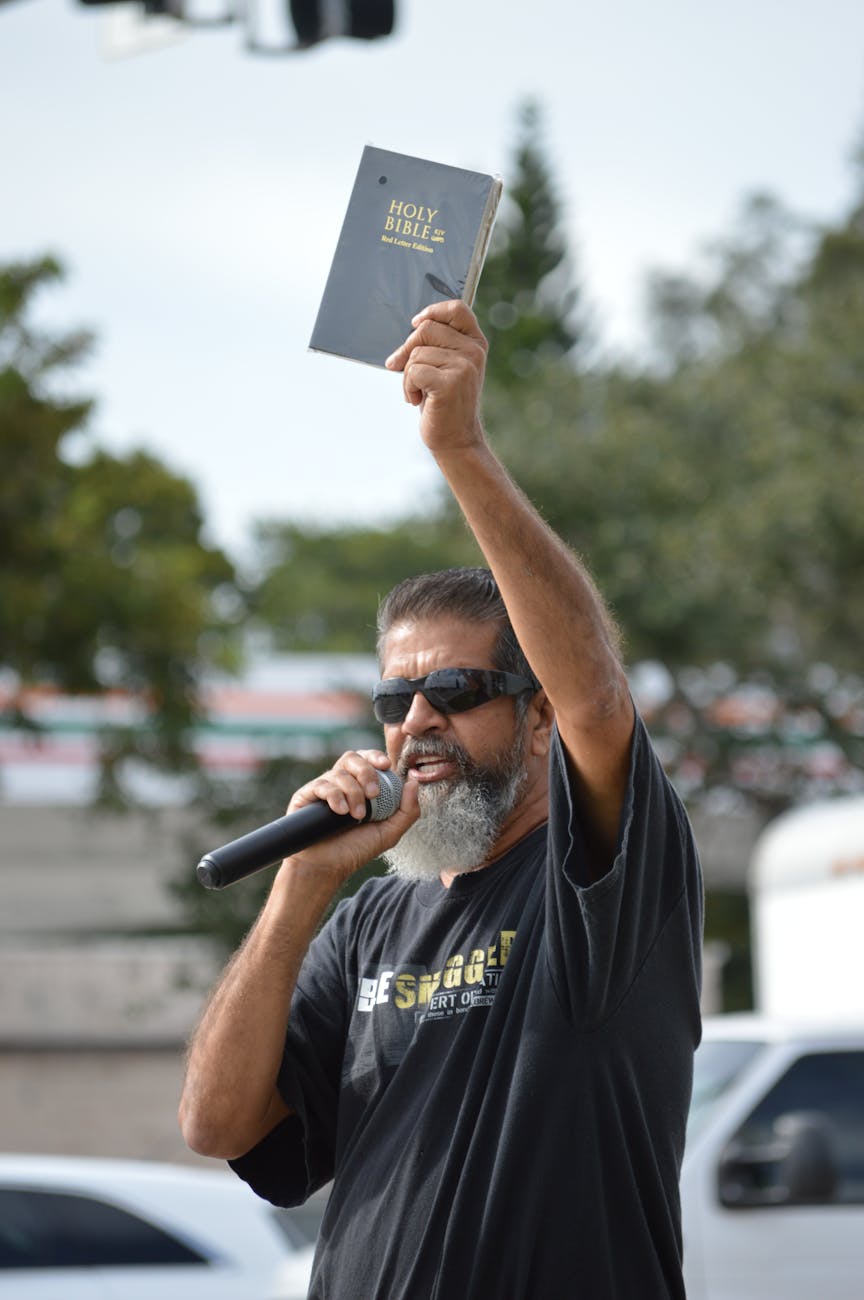
Shibboleth

Beware of false prophets, which come to you in sheep’s clothing, but inwardly they are ravening wolves. (Matthew 7:15 KJV)
Behold, I am sending you out like sheep in the midst of wolves; be wary and wise as serpents, and be innocent (harmless, guileless, and without falsity) as doves. (Matthew 10:16)
Beloved, do not believe every spirit, but test the spirits, whether they are of God; because many false prophets have gone out into the world. By this you know the Spirit of God: Every spirit that confesses that Jesus Christ has come in the flesh is of God, and every spirit that does not confess that Jesus Christ has come in the flesh is not of God. And this is the spirit of the Antichrist, which you have heard was coming, and is now already in the world. You are of God, little children, and have overcome them, because He who is in you is greater than he who is in the world. They are of the world. Therefore they speak as of the world, and the world hears them. We are of God. He who knows God hears us; he who is not of God does not hear us. By this we know the spirit of truth and the spirit of error. (1 John 4:1-6 NKJV)


Hucksters, charlatans, con-artists, false prophets– we’ve all seen or heard them. Some are easy to spot; while others seem sincere. They “talk the talk”–they “Praise the Lord,” they pray, they quote scripture. They speak about Love and compassion; about joy and peace; about caring and service to others. How can we tell if they are “wolves in sheep’s clothing?”

In the Old Testament book of Judges, two tribal groups had a battle. Afterwards, the victors set up a “test” for soldiers trying to cross the Jordan River. The Ephraimites spoke a dialect that did not contain the “sh” sound. When asked to say the word, Shibboleth, they could not pronounce it correctly, and so were unable to hide their identity as enemy soldiers, even though they looked just like the others waiting to cross.

There is an old Irish prayer that says, “May those who love us, love us; and those who don’t love us, may God turn their hearts; and if He doesn’t turn their hearts, may he turn their ankles so we’ll know them by their limping.” God doesn’t always “turn their ankles,” but He will give us the wisdom to discern false prophets– If we ask and listen. Even those who “talk the talk” will speak with a worldly “accent” that gives them away. They will fail the test of “Shibboleth.” Their talk will be filled with spiritual-sounding words and phrases, but it will deflect honor away from the only One truly worthy of our worship. Their teaching is described in 2 Timothy as “having a form of godliness but denying its power. Have nothing to do with such people.” (2 Timothy 3:5 NIV) Beware of teaching that proclaims the power of the Human Spirit over that of God’s Spirit; or speaks of God’s power being demonstrated only in terms of worldly success. They may not “limp,” but they will “lisp.”

When the Gileadites used the “Shibboleth” test, they were looking for a specific mistake in pronunciation to identify their enemies. When we are testing Christian teachers, we should also look for specific “mis-pronouncements.” And just as important, we should look for words that don’t match actions and attitudes. For example, anyone who wants to call themselves a Christian or Christ-follower, but won’t proclaim Jesus Christ– His ministry, life, death, and resurrection– should be suspect. Many people want to proclaim a Jesus who will appeal to the masses– a Jesus who will be your pal, your guru, your cheerleader, or your “life coach,” but NOT your Lord. Others will present Him as a Savior who is distant, whose love is conditional on abject obedience and blind trust. Neither of these are accurate pictures of the biblical Jesus Christ. We must also beware the teachers who present a Jesus whose lifestyle is nothing like the one they practice. None of us is perfect, but we should be living a life that testifies to God’s faithfulness, not our own popularity or power or purse.

The best way to learn to detect imposters and false teachers is to spend time each day with “the real thing.” When I spend time reading scripture each day, it become easier for me to detect a “lisp” when someone misquotes it or takes it out of context. When I spend time asking God to reveal more of his character, I will learn to spot His character (or absence!) in those around me.

Father, may I have ears to discern Your voice and Your power today. May I be wise as I listen to those who speak of You. And may all that I do and say reflect Your Truth and Your Glory. Thank You for Your wise counsel, Your examples throughout Scripture and in those who desire to follow You faithfully, and for Your Spirit, who reveals Truth.

I Don’t Care What You Know..

There is a saying: “I don’t care what you know, until I know that you care.” I went to the bank yesterday, and there was a line. There were only two tellers available (other bank workers were dealing with larger issues in their offices, so there was no back-up, either). Both drive-thru windows had lines, as well. This is a small bank, but a recent closure of a nearby branch means that it is now busier than before, with the same amount of staffing.

The woman ahead of me in line was impatient and angry. She kept repeating the obvious– “They need more tellers! There aren’t enough tellers!” She was rude and demanding, and when she finally got to the front, and a teller (harassed and overworked) patiently and politely asked how she could help, the customer repeated, “You need more tellers here!” The teller explained that corporate policy allows only so many workers per shift, and they were all busy. It was the first of the month– one of their busiest days for cashing checks and dealing with monthly payments. The customer, somewhat abashed, apologized for her rudeness.

The customer “knew” that she would have been served faster if there were more tellers at the front. She knew how SHE would like to have the bank policy play out in her favor. But she didn’t really know the whole story. Her snap judgment wasn’t based on complete knowledge, but on emotion and assumption.

Earlier this week, I was praying about a woman I know slightly. I had heard that she was in a bad housing situation. Her house needed major repairs, and she could not afford them. I prayed that God would act, providing her with “better living conditions.” I assumed that God might provide for her to get a new roof or water heater, or pay down some of her bills. The next day, I heard that her house burned down!

What should I make of God’s response to my prayer? Did He not hear me? Doesn’t God care? Is He laughing at this woman’s misfortune? Is He laughing at my feeble and vague prayer request? Someone reading just the details I have provided (my prayer, and the incident of the fire) might decide they “know” that God is malicious or that He simply doesn’t exist or answer prayer. But are they correct in that conclusion?

NO! God cares. He cares deeply. I was moved out of concern to pray for a woman I barely know. Many others have been praying for her for several weeks, as well as offering her counsel and help in trying to find alternative housing or financial assistance. I don’t know the true extent of her needs– not just housing, but her spiritual, emotional, and other physical needs. God does! We tend to put our hope and trust in our circumstances– even desperate ones– and our ability to control, manipulate, or just survive them. This house had been a burden for a long time, yet the woman steadfastly endured high bills, bad roofing, and poor conditions.

God IS answering my prayer– and the prayers of many others– as help is pouring in for this woman. She was uninjured in the fire, and she has a temporary place to stay. Furthermore, she has people helping her plan ahead for permanent housing, financial needs she will have in the next few weeks and months, and making sure she does not have to face this tragedy alone.

Sometimes, God’s blessings are wrapped in sorrows. Sometimes, we must endure waiting, hardship, and even loss in order to experience growth and peace. Sometimes, we have to deal with impatient customers, long lines, or personal tragedy. God KNOWS. He doesn’t just know our present circumstances and pain. He knows the final outcome, and all that He wants to accomplish THROUGH our present circumstances. And God CARES. He cared about the angry customer in front of me at the bank. He cared about the overworked teller waiting on us. He cared about the woman who lost her house. He cares about each one– no matter what circumstances may suggest. He does not leave us alone in our trials– even when it may feel like He has abandoned us. There are people somewhere in the world praying for you right now. They don’t know what will happen to you today or tomorrow, but they know that God is sovereign. And the Holy Spirit prompts them to pray, even when they don’t know, for God to bless you, protect you, and watch over you.

Two things I have taken away from my experiences the other day: First– God is ALWAYS Trustworthy! I said a quick prayer for the harassed teller and her customer as I waited in line (it’s not like I didn’t have any time to pray!) And sure enough, as she waited on the woman and then on me, the lines at the drive thru windows melted away. She was able to take time to explain her situation to the customer ahead of me, and she was able to take her time waiting on us both. She kept her temper in check and managed to smile through the transactions! And her calm response helped the customer realize her rudeness and apologize. I don’t think that was just coincidence. And I don’t think it was coincidence that several people have been praying for weeks about the other woman’s housing situation. The fire wasn’t an answer to our prayers– our prayers were preparing for an answer to the fire!

The second reminder– Pray without ceasing (1Thessalonians 5:17). While my experience at the bank called for immediate prayer and found an immediate response, my other prayers have been going on for weeks and months. Nothing seemed to be happening. Yet God was preparing for an event I had no way of foreseeing. We want quick answers to prayer. We want easy answers to our prayers. But God’s ways are not our ways. His ways are mysterious to us, but they are for the best, not just the most convenient.

When we pray, God doesn’t care what we KNOW (or think we know). And He doesn’t always give us the knowledge we’re looking for. But He KNOWS! And He CARES! He honors the prayers we lift up because we know Him, and because we care about others.

Father, Forgive Me!

We don’t like to talk about (or write about!) prayers of confession and repentance. And yet, the Bible is full of such prayers. In fact, even the Lord’s Prayer contains the phrase “forgive us..” Even if we pray eloquent prayers of praise and petition, our prayers will be lacking without first evaluating our relationship with Christ and seeking His forgiveness and continued cleansing.

I know there are those who will challenge this statement– after all, once we have “accepted Christ,” aren’t we considered to have His righteousness? Haven’t we BEEN forgiven? If we must keep asking for forgiveness, does that mean that Christ’s death and resurrection are not sufficient to “save” us?

I do not mean to suggest anything of the sort. We ARE forgiven– past, present, and future– our names entered in the Lamb’s Book of Life. God isn’t holding on to a grudge over every future fib, flub, or fall. And nor should we. Confession in the prayer of a Christian shouldn’t be wallowing in guilt and shame, or confessing the same sins over and over, doubting that Christ’s finished work isn’t actually finished. But just as in all close friendships, we sometimes ask, “Are we ok?”, to clear the air and maintain closeness, it is appropriate to “fess up” with God– to clear the air– precisely so that shame and guilt DO NOT build up or slowly seep into our relationship.

God will not withhold His promised salvation from us if we are trusting in Him. We are justified, and our advocate, Jesus Christ, mediates for us constantly, just as the Holy Spirit indwells us to be able to overcome temptation and do what we cannot do on our own. But WE are still living in our fallen world and fallen bodies. We will find it difficult to trust; we will find it tempting to judge others; we will doubt our own decisions– did we really do “right”? And while God is eternally faithful– we are not; nor have we reached perfection in all our daily actions and thoughts. We are “okay” with God– but confession reminds us of that!

In the story of the prodigal son (Luke 15:11-32), the son rehearses a speech of confession. And even as he begins saying his rehearsed words, His father interrupts with complete reassurance of his love. How much more does God delight in reassuring us of His eternal, unfailing love!?

Two thoughts I’d like to add here:

One– It can be very easy for us to fall into confession as a works-based ritual. Confession adds nothing to Christ’s finished work on the Cross. We are saved by God’s Grace– period. Ten thousand prayers of confession will not make us “more” saved.

Two– It can be just as easy to avoid self-evaluation and discipline as we grow “comfortable” with our Christian Walk. Confession is not about “right” and “wrong” as much as it is about humility. The Apostle Paul says, “And I am sure that God who began the good work within you will keep right on helping you grow in his grace until his task within you is finally finished on that day when Jesus Christ returns.” (Philippians 1:6 The Living Bible)

We don’t need to be hampered by guilt, fear, or shame– but we should want to keep our relationship with God pure above all other relationships. And that means being willing to submit to God’s will and God’s discipline on a daily basis. Confession is not an admission of God’s failure to save us; nor of our commitment to follow Him. Rather, it is an admission of how important that relationship is, and how much we need to keep our commitment fresh, pure, and vibrant. God HAS forgiven us; He will continue to forgive– freely, and fully!– as we follow Him.

His Delight!

The sacrifice of the wicked
is an abomination to the Lord,
but the prayer of the upright
is his delight.

Proverbs 15:8

I believe that God listens to prayer. I believe that God answers prayer. But do I really live in the certainty that God DELIGHTS in my prayers?

I think it is important to know that God doesn’t just listen to our prayers out of duty or because He is hoping to hear a particular phrase or request or “type” of prayer. God DELIGHTS in hearing from US! God is thrilled to hear our prayers– whether they are prayers of praise or prayers of agonizing distress, God WANTS to hear from us.

Some may look at the verse above and say, “God may delight in the prayers of perfect people, or people who are righteous, but I am a sinner. He won’t delight in my prayers. I’m not even sure He will listen to my prayers.”

But that’s not what the verse says. It doesn’t say that God only delights in the prayers of people who are perfect, because, let’s face it, NONE of us is perfect. And who is truly righteous, apart from God Himself? No, God delights in the prayers of the “upright.” So what does that mean in relation to you and me?

God looks at the heart. He sees beyond actions and circumstances. So when we pray, God knows our motives and our deepest thoughts. And if they are “upright”– focused on who God really is, who we really are, and how we relate to Him and how He relates to us–our prayers are a delight to Him. He isn’t asking for perfect people or perfect prayers. He’s asking for us to be transparently honest and humbly desirous when we come before Him. We don’t even have to be perfect in our theology or our faith. If we have the desire to be near to God, God is delighted to listen and respond!

That’s why He despises the sacrifices of the wicked. Their actions may look honest and humble, but their hearts are NOT. They may say all the “right” phrases to impress other people; they may do all the “right” actions to look devout. But God sees their pride, their refusal to give up secret sins, or to confess their true needs. They may want “something” from God– an answer, a blessing, a miracle– but on their terms. They don’t want a relationship, they just want a result.

And when God looks at us, what does He see? I can’t count the times I come to God as a complete “mess.” I’m falling apart, exhausted, at the end of my rope. But God sees ME. He looks beyond my appearance, my emotions, my limitations, my past. He sees my heart. He hears my need. And He hears the hope and trust that I can pour out my heart and He will listen in love, mercy, and compassion.

So does that make me “upright?” Maybe not in human understanding. If I look in the mirror, I may still see a messed-up failure. But God sees the finished product– what He can do for me, in me, and through me as I place my trust in him! By faith in the finished work of Christ, I am redeemed, and so, I am “upright.” God sees in me what I can’t see in myself– His Spirit at work; my future with Him; the full extent of His love.

This is how Jesus saw His disciples. When He looked at Peter, He didn’t just see Peter’s impulsiveness, his impending denials and abandonment. He saw Cephas, “The Rock”– He saw what Peter could become. What He looked at John “the Beloved” disciple, He didn’t see John’s youth or ambition, He saw a child of God who would suffer and stand firm in His faith. When He saw Judas, He didn’t just see one who would betray Him. In fact, at the Last Supper, Jesus shared bread and wine with Judas, and washed Judas’ feet! Jesus took delight in spending time with Judas! It was Judas who threw that all away to his own doom.

And the same is true for us. God sees the whole package. The “upright” are those who look up, and seek God with their whole being. If you come to God– if you seek Him and desire to find HIM and know HIM–God delights in you because He delights to shower you with love, compassion, discipline, wisdom, and blessings– in spite of your circumstances and limitations; in spite of the pain you may be feeling in the moment. God wants a relationship with you, not a “result” of outward perfection, or abject obedience. He wants an honest, joyful, even sometimes difficult and painful relationship. With YOU!

God delights to hear from us– our praises, our desperation, our hopes and dreams, and our deepest fears. God delights in His children. He delights in our prayers!

He Already Knows..

Prayer is a wonderful thing; sometimes it’s also a curious thing. Why do we pray to a God who is omniscient? If He already knows our needs, why do we bother to ask? If He already knows everything we’ve done, why do we need to confess? If He already knows about my neighbor’s cancer, why do I start a prayer chain?

Prayer is much more than sharing information with God. It is sharing my heart with God. What I pray, who I pray for, how and when and even where I pray– all come from my heart. God knows the information. He knows my heart, too. But He longs for me to take the time and effort to share it with Him (and to listen to His response!). God doesn’t want to be the one I turn to when I’ve tried all the other options. He is my Father, and He wants me to come to Him at every opportunity.

Moreover, when I pray, God is not surprised by anything I say, but sometimes I am! I find that one confession often leads to another– God already knew all that I had done and all about my attitude, but I lied to myself about my motive or about a small act or comment. Only in prayer does God have my full attention, and His Spirit uses that opportunity to help me see myself better, and clean the slate. Sometimes, I ask God for something I want, and God’s Spirit causes me to see what I really need, instead. Often, when I pray for someone I know, the Spirit will remind me of other ways I can pray for them, or bring another person to my thoughts. I may not know the other person’s need– but God already knows!

Finally, I find it a great comfort to pray to the one who holds everything together– the one who knows the end from the beginning, and everything in between. I don’t pray to a God who is kind, but ineffective. I don’t pray to a God who knows, but doesn’t care. God is the maker and sustainer of the universe; He is the lover of my soul, and the Almighty and Eternal One.

Today may be full of surprises– some good, some disappointing, some even overwhelming. God already knows. He knows our anguish, our hopes, our faults, and our triumphs (even the tiny ones). Many things about my life are difficult to understand or anticipate. I don’t have to know all the answers. I don’t even have to know all the “right” questions. God already knows!

Faith, Faithfulness, and Moving Forward

Now faith is confidence in what we hope for and assurance about what we do not see. This is what the ancients were commended for.By faith we understand that the universe was formed at God’s command, so that what is seen was not made out of what was visible… And without faith it is impossible to please God, because anyone who comes to him must believe that he exists and that he rewards those who earnestly seek him.

Hebrews 11:1-3; 6 (NIV) taken from http://www.biblegateway.com

Faith is essential to prayer. Not only is it essential that we know the truth, we must depend on it. Those who lift up general prayers to some unknown “force” in the universe have no real hope that their prayers will be heard, instead of bouncing around among the planets in silent expectation. We pray to a God who sees, hears, loves, and works among us. And He will answer our prayers– in His way, in His time, and to our ultimate benefit.

That does’t mean that we must blindly believe everything we hear about God, or that we must agree exactly with everyone else who claims to believe. None of us has ever seen God face-to-face, nor can we claim perfect knowledge. But there are certain truths that do not change– God is GOD; creator, ruler, unchanging and Holy. God is who He says He is, not who someone speculates or imagines Him to be. God is mysterious, but He is “Knowable”–we see His character in the natural world, and we can see His reflection in the people around us who are all created in His image. Most of all, we have the testimony of Jesus Christ and of all who have followed Him and been transformed by Him. To all who earnestly seek Him, He has given us His Word, and His Spirit to guide us. And God is Good. Even though nature (and human nature) has been tainted and twisted by sin, God remains true to His own goodness. Even in the hard times, when God seems distant–especially when He seems distant–faith looks beyond our present circumstances, and the taunts of our enemies, to remind us of God’s providence, His Power, and His promises. Our present trials and calamities are not beyond His ability or His willingness to turn to good purpose, and they do not compare to the promises God has given.

Faith is essential to prayer, but so is faithfulness. Prayer is part of a growing relationship with our Maker. And like any relationship, it must be maintained. God is eternally faithful, but we are not–not in our own power or in our own will. And our faith, without faithfulness (in prayer, in devotion, in our everyday thoughts and actions) will wither and die. The same thirst we have for prayer in the valleys of life should be present when we reach the mountaintops. The same need we have to cry out for help should be the need we feel to cry out in praise. This will not happen without discipline, developed by daily seeking His face.

As we approach a new year, we can make many plans and resolutions– let one of them be to strive for faithfulness, especially in our pursuit of prayer. We know it is the right thing to do. And our faithfulness is not just for us. It blesses the heart of the One who was faithful even unto death. And it shines as an example to those around us– inspiring some to faith, and others to renewed faithfulness.

Finally, let’s also resolve to move forward a step each day, remembering that
“The steadfast love of the Lord never ceases;
    his mercies never come to an end;
23 they are new every morning;
    great is your faithfulness. (Lamentations 3:22-23 ESV)

God’s mercies are new every morning. And our resolve should be renewed every morning. It is God’s faithfulness that allows us to work toward greater faithfulness. We will not keep our resolutions in our own power, nor will we keep them by remaining stuck in our past failures.

Let’s embrace the coming new year as an opportunity to stretch our faith muscles, grow in faithfulness, and move forward in mercy!

Who Are We Feeding?

“An old Cherokee man told his grandson, ‘..My boy, there is a great battle between two wolves that live inside us all. One is evil–it is anger, jealousy, greed, lies, resentment, regret, and arrogance. The other is good– it is joy, love, peace, hope, kindness, humility, empathy, and truth.’ The boy thought for awhile, and then he asked, ‘ Grandfather, which wolf wins the great battle?’ The wise old man replied quietly, ‘The one you feed.'”

The Story of the Two Wolves– a Cherokee legend

 “Don’t store up treasures here on earth, where moths eat them and rust destroys them, and where thieves break in and steal. 20 Store your treasures in heaven, where moths and rust cannot destroy, and thieves do not break in and steal. 21 Wherever your treasure is, there the desires of your heart will also be. 22 “Your eye is like a lamp that provides light for your body. When your eye is healthy, your whole body is filled with light. 23 But when your eye is unhealthy, your whole body is filled with darkness. And if the light you think you have is actually darkness, how deep that darkness is! 24 “No one can serve two masters. For you will hate one and love the other; you will be devoted to one and despise the other. You cannot serve God and be enslaved to money. 25 “That is why I tell you not to worry about everyday life—whether you have enough food and drink, or enough clothes to wear. Isn’t life more than food, and your body more than clothing? 26 Look at the birds. They don’t plant or harvest or store food in barns, for your heavenly Father feeds them. And aren’t you far more valuable to him than they are? 27 Can all your worries add a single moment to your life?28 “And why worry about your clothing? Look at the lilies of the field and how they grow. They don’t work or make their clothing, 29 yet Solomon in all his glory was not dressed as beautifully as they are. 30 And if God cares so wonderfully for wildflowers that are here today and thrown into the fire tomorrow, he will certainly care for you. Why do you have so little faith? 31 “So don’t worry about these things, saying, ‘What will we eat? What will we drink? What will we wear?’ 32 These things dominate the thoughts of unbelievers, but your heavenly Father already knows all your needs. 33 Seek the Kingdom of God above all else, and live righteously, and he will give you everything you need.

Matthew 6:19-33 NLT

Just a short while ago, I published a blog entry called, “You Are Not What You Eat.” But sometimes, you DO become what you consume. I’m not talking literally about food, but figuratively you become what you read, and listen to, and spend time and money on– what you consume can end up consuming You!

“Watch your thoughts, they become your words; watch your words, they become your actions; watch your actions, they become your habits; watch your habits, they become your character; watch your character, it becomes your destiny.”

― Lao Tzu

Just like the two wolves in the Cherokee legend, there are two forces at work inside us. The Bible calls them “flesh” and “spirit.” The Apostle Paul also writes about this great battle:

15 For I do not understand my own actions. For I do not do what I want, but I do the very thing I hate. 16 Now if I do what I do not want, I agree with the law, that it is good. 17 So now it is no longer I who do it, but sin that dwells within me. 18 For I know that nothing good dwells in me, that is, in my flesh. For I have the desire to do what is right, but not the ability to carry it out. 19 For I do not do the good I want, but the evil I do not want is what I keep on doing. 20 Now if I do what I do not want, it is no longer I who do it, but sin that dwells within me.

Romans 7:15-20 ESV

We all start with “good intentions.” We want to be known as a “good person.” We want to have healthy relationships. We want the trust and respect of others. But Sin works in us against our own good intentions. We get hurt, so we lash out in anger. We see others achieving success or enjoying benefits we think we should have, and we become envious or resentful. We allow fear, greed, or bitterness to overpower us. We lie, or we isolate ourselves from others. We give up in despair, or reject the help and advice of those who want what’s best for us. We rely on our own resources and “will power” to achieve success, even to lose weight– but we always seem to fall short! We compare ourselves to others– sometimes ending in arrogance and apathy, sometimes ending in shame and humiliation.

But the battleground is not always so obvious as arrogance or despair, hurting others or being victimized. Who are we feeding in those moments of relaxation and ease? Are we scrolling through websites that waste our valuable time or encourage us to devalue others around us? Are we listening to music that encourages us to anger and pleasing ourselves at any expense? Are we reading books or watching movies that honor God? Are we spending money in ways that please Him? Are we spending our “down” time on our knees? Who are we feeding when times are tough? Are we spending time worrying or scurrying around trying to “make things happen” a certain way? Are we grateful, or fearful? Are we terrified or trusting? Our small choices in things that don’t seem to matter can start to change the way we think, and speak, act, and live.

There IS a great battle. But there are also tiny battles in the little moments of our day: opportunities to inch closer to God or to lose ground to the distractions and temptations of the world. And on our own, we will lose the battle, for the “flesh” will conspire to steal even the “good” food we think we are feeding ourselves. Thankfully, Christ came to feed the “good wolf.” In following Christ; in developing a relationship with Him, we allow His Spirit to nourish us. He is the “bread of life.” He is the “living water.” He alone provides the power to win the battle. Paul follows up in Romans by saying:

Likewise the Spirit helps us in our weakness. For we do not know what to pray for as we ought, but the Spirit himself intercedes for us with groanings too deep for words. 27 And he who searches hearts knows what is the mind of the Spirit, because the Spirit intercedes for the saints according to the will of God. 28 And we know that for those who love God all things work together for good, for those who are called according to his purpose. 29 For those whom he foreknew he also predestined to be conformed to the image of his Son, in order that he might be the firstborn among many brothers. 30 And those whom he predestined he also called, and those whom he called he also justified, and those whom he justified he also glorified.

Romans 8 26-30 ESV

So who are we feeding today? Or rather, who is feeding us? What are we consuming, and is it consuming us in turn? I hope we are feeding on God’s Word today, and walking with Him in each moment– whether in quiet reflection or in desperate need. May we be nourished and satisfied as we walk forward with Him!

How Can You?!

14 But even if you should suffer for righteousness’ sake, you will be blessed. Have no fear of them, nor be troubled, 15 but in your hearts honor Christ the Lord as holy, always being prepared to make a defense to anyone who asks you for a reason for the hope that is in you; yet do it with gentleness and respect, 16 having a good conscience, so that, when you are slandered, those who revile your good behavior in Christ may be put to shame.

1 Peter 3:14-16 (ESV) via biblegateway.com

I was approached years ago by an angry non-believer, who asked me in disdainful tones how I could possibly believe in God, Jesus Christ, heaven and hell, and other Biblical tenets. At the time, I was taken aback by the vehemence and anger. I stammered an answer, heart-felt and, I hoped, theologically “correct”–I think I quoted scripture and gave a short version of my personal testimony. The other person was not impressed or convinced. I felt like I had failed. The other person sneered at my belief–and at God!

I spent weeks going over in my mind what else I might have said. I came up with clever arguments, gripping counter-questions, self-deprecating “homey” zingers, I read books on apologetics, and studied the words of great thinkers…I would be ready next time. I would not be left looking or sounding naive and unprepared. I would have the tools to “win” the argument, and God would be proud of me.

But in the years since, I have done more thinking (and reading, and praying!) And this past month, as I’ve been reading through the Old Testament prophets, I have found a new perspective. Prophets like Isaiah, Habakkuk, Amos, and Malachi spoke the very words of God to people around them. They spoke to ordinary people, and to the religious and political leaders of their day. And almost none of them listened! In fact, the prophets were hated, sneered at, smeared, imprisoned– some of them were even killed.

These prophets were prepared. They were not being ambushed with “gotcha” questions, because they were the ones presenting and challenging people with the truth. The truths they spoke were often harsh and offensive. They were truths about coming judgment and destruction, followed by restoration and revival. There was nothing “welcoming” or attractive about their message. But the people remained stubborn, sinful, and unimpressed.

We live in the post-Resurrection age. Our message contains warnings about judgment and destruction– but unlike the prophets of old, we have a message of immediate and eternal Hope and Salvation. We have centuries of prophecies that have been fulfilled; of testimonies to the power of a risen Christ and the Holy Spirit. Yet even Jesus warned us that “..in the world (you) will have tribulation. But take heart; I have overcome the world.” (John 16:33b ESV)

We often feel that if we cannot “win over” those who challenge us–if we cannot prove to their satisfaction that we are “right” in our beliefs–that we have failed. Yet we have so many examples of faithful witnesses who suffered and died without seeing the results of their faithfulness. God does not ask us to “win” every battle in convincing and decisive fashion. That’s HIS job! What He does ask is that we should be prepared to give an answer– and that we do it with gentleness and respect.

I don’t have to silence the critics. I don’t have to have “mic-drop” moments. I don’t have to “win” every debate. God calls me to be faithful, honest, and humble. My words may not change someone else’s mind. But my changed life and God-honoring attitude may plant a seed that someone else’s words and life, and the power of the Holy Spirit will cause to grow into faith– even if I never live to see it!

In answer to the question, “How can you believe?” The answer often lies, not only in what we say about our belief, but how we live it out!

Driven to Pray?

I met up with an old schoolmate last week, and he asked a question that made me think a lot. He wondered whether our generation– specifically our classmates and friends, were “driven.” His observation was that many of his nieces and nephews seem to have a lot of drive and ambition that he doesn’t remember seeing (or experiencing) in our youth. He noted that few of our friends have gone on to become lawyers or doctors, engineers or CEOs.

I wasn’t sure how to answer his observation. I started, but didn’t complete, a master’s degree. I know several of our friends who are teachers, paralegals, and business owners. Many have what most people would consider at least moderately “successful” lives– happy families, rewarding careers, the respect of others in their communities. And yet very few have distinguished themselves on the national or international front– aside, perhaps, from him! He is a tenured professor, with several published books, and has studied and/or taught at several universities around the world. If HE can’t remember being driven or ambitious, how does he explain his own “success?”

But the observation struck a nerve with me on a personal level. I know that many of my former classmates and long-time friends may find it odd that I have “settled” for the life I live. I own a business, but it is a modest one. I have taught and worked in libraries, but I could have chosen to become a professor or administrator or library director; I could have taken any of a number of more “important” or lucrative positions over the years. But I wasn’t driven to “succeed” in that way. Did I waste my potential? Was I lazy or fearful of success? Did I not have the potential, or did I not have the drive to become “more” than what I am?

Ultimately, I am driven (I hope) by the Holy Spirit. Not to become a “successful” person by the world’s standards, or even by my own ambitions, but to become the person God made me to be– a person who reflects His character and His priorities. I hope that I am becoming a “successful” follower of Christ– no matter what that looks like on the surface to classmates, neighbors, or family. I don’t need to be rich, famous, popular, or “important.” I DO need to be developing Love, Joy, Peace, Patience, Kindness, Goodness, Faithfulness, Gentleness, and Self-Control (Galatians 5:22-23)

This week, as I have been meditating on the idea of “drive” and ambition and “success,” I started thinking about how it relates to prayer. I am driven to become more like Christ, and that includes being driven to live a life of prayer. But what really drives my prayer life? Because my pursuit of prayer and my practice of prayer may be “driven” by something other than pure motives:

  • Am I driven to pray because I believe that I am “ticking a box?” Have I read the Bible today? Check. Have I prayed some kind of prayer at some point? Check. Have I done a random act of kindness? Check. This is not really a spiritual pursuit of prayer. In fact, it can become idolatry– I can pray because I believe the act of praying makes me “better” or “good enough” to deserve God’s forgiveness or mercy. This drive comes from my own desire to control my growth and behavior. It is not “wrong” to set goals or make lists and stick to them. (After all, we are to be developing discipline and self-control!) But we must be careful not to shift our priorities from God’s discipline to our own lists and habits.
  • Am I driven to pray when/because others are watching? Am I seeking their approval more than I am seeking God’s face? Am I seeking to be “important” or pious, when God is asking me to be humble and obedient?
  • Perhaps I am praying out of fear, worry, or doubt. I am driven to pray in the same way that others are driven to consult a horoscope or carry a “lucky charm.” God wants me to trust Him. He knows that I will not always be perfect in Faith, but my prayers should not be double-minded (see James chapter one). I should not be using prayer to “hedge my bets” when faced with adversity. It is good to call out to God if we are frightened or uncertain, but we must develop Faith over fear. And in the end, God also wants us to be joyful in remembering and trusting in His promises
  • Am I driven by guilt or shame? It is good to confess our sins. But we also have to remember that IF we confess our sins, He is faithful and just to forgive us, and to cleanse us (1 John 1:9). If I am still confessing the same sins over and over, is it because I didn’t really trust God to forgive me, or because I didn’t really want to repent and change my ways– I just wanted a “free pass” to keep sinning, but not feel guilty for the consequences?
  • Maybe I am driven to pray for others because I think MY prayers can save them, or influence their life. Again, this can become idolatry. We have been given the amazing opportunity to pray for others. God already knows their needs– better than we can! And God can do miracles without any input from us. Yet He chooses to give us the privilege of praying and participating in His work! Again, it is commanded that we pray for one another, but we must remember to Whom we are praying. Our prayers for others are part of a circle– God’s Spirit moves us to compassion and concern– we take that compassion and lift up others before His throne. He knows what is best; He will do what is best. He wants us to participate, not to dictate!
  • Sometimes, I may be driven to “dictate” a particular outcome in my own life. My own ambition may be to become what I want, rather than what God wants for me. This can be a tricky concept. There are ambitions that God lays on our hearts– they are not wrong, but God’s timing may not match ours. I prayed for years to be married; to “find” the “right” mate, and to “be” the right mate. I even prayed that God would change my heart if my ambition was “wrong.” God’s timing was certainly not my timing. The ambition was not wrong, but my patience and trust needed to be developed.
  • Perhaps I am NOT driven to pray…maybe I lack the focus or lack the drive in my walk with Christ because I am drifting away from my first Love. I am driven to seek after something other than intimacy with my Creator. Maybe I am so content with my life “as it is” that I am not seeking direction and correction from the Holy Spirit. Perhaps I do not have the compassion and drive to pray for others because I do not see them fully as God sees them. Perhaps I do not trust God fully with the “little” things in my life because I do not see my need for His guidance.

I think it is not a bad thing to wrestle periodically with questions like this. Maybe today is the right time to ask, “Am I driven to pray? What drives me to my knees? What should be driving me there?”

“Praying” Hide and Seek With God

A strange image popped into my head the other day while praying with our Wednesday morning prayer group from church. I was trying to express the amazing paradox that we are being pursued by a God who is omnipresent, while seeking the same omnipresent God. And the image God gave me was one of playing a game– “Peek-a-boo” or “Hide and Seek.” Of course, prayer is not just a game– it is nothing less than communicating with the Sovereign Lord of the Universe! But God delights in our prayers, and He delights in delighting us as we learn and experience new aspects of His Character.

I love to play “Peek-a-Boo” with babies and toddlers. They love the idea of being “discovered” and “finding” someone. There is a moment of supreme joy in finally seeing oneself in the eyes of the beholder– that moment of recognition and reaction to being the focus of someone’s attention–the joy of intimate connection, “I SEE YOU!” But the game only brings joy if both of us are present and interacting. It brings no joy to a baby to see me staring off into space, or glued to my cell phone. The baby might be intrigued, or even comforted by my nearness, but there is a deeper thrill when she knows that my eyes will shine as they are revealed– looking directly at her! And I get great joy from seeing the baby’s delight.

The same is true of “Hide and Seek.” Yes, the idea is to hide from sight–for awhile. But what fun is it to hide and never be found? What fun to search for someone who has gone away and has no desire to be discovered again? The joy of the game is in that moment of discovery and being discovered– even though we know the other person is somewhere close by, there is that moment of re-connection that brings a jolt of delight. AHA!! I have found you! AHA! You searched for me and found me!

Photo by Nicola Barts on Pexels.com

This is the great tragedy of Sin. Sin causes us to want to hide and NOT be found. (See Genesis 3:8-10). We live in shame and fear, dreading the thought of God finding the “real” us, the secrets we carry, and the ugliness of our hearts. We are frightened by the thought that God is omnipresent– that He sees us; that He sees THROUGH us! We do not want to “Face” God’s justice, and see disappointment and anger in His face. Instead, we want to run away, to cover our eyes, if He will not cover His.

Conversely, this is the great joy of being a Christian. We don’t hide from God’s presence; instead, we turn to Him in delight and recognition. We pray to BE found and to be seen! Finding God, and being found BY Him, involves no fear, no condemnation (Romans 8:1), and no shame. God sees us– all our secrets and shame– through the blood of Christ’s redemption. We are “Born” again– like babies, we can revel in the connection with Our Loving Father. Like a child waiting for the “boo” in Peek-a-Boo, we anticipate the day when we will see Him face-to-face in all His Glory; in the meantime, each glimpse of His Grace, each revelation of His Faithfulness, builds our Hope and our Joy, excites our anticipation, and makes our Heart yearn for the future.

God is omnipresent. His spirit is all around us all the time. As Christians, His Spirit is indwelling– He is not just all around us, but He lives and works IN us and THROUGH us! And yet, God delights in those moments when we turn away from the world around us to focus on just Him. In the same way, even though God is everywhere, He seeks after us and pursues us with a passion and devotion that knows no limits– “Here I am!” “I SEE YOU!” “You are the one who makes my eyes shine!” “I LOVE YOU!”

Today, as you turn away from the world to focus on the Lover of Your Soul, may you find that incredible delight in recognizing His Presence for what it is– Divine, Eternal, Limitless, and Loving.

Blog at WordPress.com.

Up ↑