When I Don’t Know How to Pray

Prayer is both simple and complex. Anyone can pray. There is no single correct “formula” for prayer. God is always listening and hears the prayers of those who sincerely seek Him. I can pray to God in formal words, songs, groans, and scattered thoughts.

Photo by Collis on Pexels.com

But there are times when I don’t know how to pray. More precisely, I don’t know WHAT to pray. When someone is diagnosed with cancer, or a chronic illness, my first instinct is to pray for healing– immediate and total healing. When I hear of a mass shooting, or a blatant injustice, or a natural disaster, I want to pray for all the pain and loss and evil to disappear or be reversed. I want all those things that I know to be “good”– health, happiness, healing, hope, unity, righteousness, and wholeness.

Photo by James Wheeler on Pexels.com

Still, God’s ways are not my ways. God’s “goodness” is not measured in comfort and quick resolutions. I may not understand the goodness of struggle and pain in the short term. I think of disaster as total and irredeemable, and my prayers often come out of my own short-sighted thinking and my own discomfort at the realization of others’ (and my own) weakness and mortality.

There are a few Biblical principles that I find very helpful when I don’t know “how” to pray:

  • God knows –REALLY KNOWS– all my inner thoughts and feelings. Even more, He KNOWS what will happen, what should happen, and what is best in every situation. I can pour out my desire to see my friend restored to health, or a community re-united in hope, knowing that God is a God of healing and restoration; but also knowing that God’s timing and purposes may involve temporary suffering–even for those I love. Moreover, God knows why I am confused. He knows why I struggle to know how to pray. He doesn’t ask me to always know the “right” answer– He does ask that I trust Him to know and act in His sovereign strength and wisdom. No matter the circumstances, God is still on His throne. And I am not!
  • Jesus gave us simple but powerful examples of “how” to pray. In “The Lord’s Prayer,” He prayed for simple, personal things– daily bread, forgiveness, guidance–as well as big and overarching things–“Thy kingdom come, Thy will be done..” His trust in the Father’s ability to accomplish all things was absolute, and His relationship was firmly established– “Father…Hallowed by Thy Name.” In the garden, Jesus was clearly suffering, and asked that the “cup” of suffering– the torture of the cross and the inconceivable horror of being rejected as He bore our sins and carried them through death and the grave– be removed. Yet, He submitted His desire, His fears, His anguish, to His Father– “Not My will, but Thine..”
  • There are other wonderful examples throughout the Psalms, the Gospels, the Epistles, and hundreds of years of Church leaders and saints: their prayers can teach us, encourage us, and embolden us.
  • Jesus promised that we would have an advocate–the Holy Spirit– who would intercede for us. When we don’t know how or what to pray, the Apostle Paul says that the Spirit makes intercession for us with “groanings which cannot be uttered.” (Romans 8:26 KJV). The Spirit also speaks to our own spirit to help us understand more clearly God’s ways and plans.
Photo by Italo Melo on Pexels.com

I may not always know how to pray, or what to pray. But I can be confident that God hears my prayers. I can come before Him with the assurance that my prayers– and all my thoughts and emotions–are precious to Him because I am His child, redeemed by His sacrifice. My heart may not know all things, but as He continues faithfully completing the work He began in me (Philippians 1:6), my prayers will come more fully into alignment with His will.

Praying “Seventy Times Seven”

The Apostle Peter once asked Jesus if he should forgive someone up to seven times. He seemed to feel this was generous and even noble, but Jesus said that Peter should be willing to forgive someone “seventy times seven” times (or seventy-seven times! (for an excellent discussion on this exchange, see https://www.biblestudytools.com/bible-study/topical-studies/why-is-seventy-times-seven-still-so-radical-today.html. For the context, see Matthew 18.)

The same applies to praying for someone. I know many people who ask for prayer almost daily –often for the same “little” problems or complaints. The selfish, human part of me sometimes wants to judge what is “worthy” of my prayer, and what is not. But this is not for me to judge. Other people are too proud to ask for prayer. That does not make them better or stronger people, or less “needy” of my prayers. I need to be willing to pray for everyone as I have the opportunity: that includes when they request my prayers (over and over) or when they refuse to share their needs at all. Someone who is struggling with ongoing issues needs my compassion and wisdom, not my judgment. Someone who resents my prayers needs my compassion and wisdom, too. We are to pray without ceasing, not just when we think it is “worth” doing. (see 1 Thessalonians 5:17)

Photo by Liza Summer on Pexels.com

There is a caveat here. My prayer life should not be determined by others’ expectations. I should gladly pray for the person who asks; however, I should NOT let someone else determine how or what I should pray. In other words, if someone is asking me to pray for “healing,” I will gladly lift up their situation and leave it in God’s hands. I will ask God to heal that person according to His will and in His timing. If they are asking me to pray for total instant healing, I will still pray, but I won’t demand of God what is not His will to do. If they are asking me to pray that they win the lottery because they gambled away their rent money, or avoid prosecution for a crime they committed, I will not pray for things that so clearly contradict God’s will. If someone else is telling me not to pray for them, I will not promise NOT to pray at all, but I will not insist that they listen in; nor will I pray that God “fix” them as I would like. I will pray for their safety, healing, well-being, etc.– again, according to God’s will and timing. Some people are afraid that I will pray for them to be saved against their will. Some people think that because I pursue prayer as a lifestyle, that I have an “in” with God– that He will do what I ask, when I ask, because it is me asking. That is not how God, or prayer, operates. I have seen God do miracles, but I have also asked Him for healing that never came in this lifetime, or for things that turned out very differently than I expected. And I have prayed for the salvation of others, but I don’t have the power or authority to change their will or pierce their conscience– that is the work of the Holy Spirit.

Photo by Dimitry Zub on Pexels.com

Sometimes, it is difficult to keep praying for the same stubborn person, or the same unresolved situation. When God doesn’t answer us how or when we expect, it can seem as though He isn’t listening, doesn’t care, or even taunts us with silence and frustration. It can be tempting to give up– to think that our prayers are “not working.” But, once again, that is not how God, or prayer, “work.” Often, while we are staring at the situation that doesn’t seem to change, we miss seeing the changes happening in other areas of our life, or the obstacles that are being cleared from our path going forward. This is true of prayers we lift up for others, as it is for ourselves. We continue praying anyway. Sometimes, prayer changes our outlook– sometimes prayer even ends up changing how we pray! Prayer isn’t about getting what we want; it’s about getting closer to the heart of God!

Photo by yash bhavsar on Pexels.com

So, if we are willing, we can keep praying–seventy-seven days in a row! Even 490 days! Not because God is counting the days or keeping score of our faithfulness, but because we know that God is faithful in ways we cannot see with out limited vision, or know with our limited understanding.

He Who Began a Good Work…

 And I am sure of this, that he who began a good work in you will bring it to completion at the day of Jesus Christ.

Philippians 1:6 (ESV)
Photo by Karolina Grabowska on Pexels.com

I have a lot of unfinished projects–scrapbook pages, crafts, stories I began writing, closets I started cleaning out..some projects were abandoned due to waning interest; others due to distractions or other more urgent tasks. A few of the projects I can pick up and continue (if I choose). Others must be discarded or started over again. I began each task with good intentions, but some proved to be more complicated than I anticipated. Their very presence reminds me that I bit off more than I could chew.

Sometimes, it feels like I am an unfinished project– because I am! While I still live, I continue learning and (hopefully) growing more like Christ. But every day I am reminded (as with my unfinished projects around the house) that I have a long way to go. And I occasionally wonder if God will get tired of me and set me aside– lose interest or just decide His efforts will be more rewarding somewhere else. And yet, Paul assures me that I will never be abandoned or left “undone”–God always– ALWAYS– finishes what He starts. And His finished project are always perfect.

Photo by Pixabay on Pexels.com

And what is true in my life is true in the lives of others, and in the wider world. We may not see the way forward. It may seem as though things or people around us are falling apart. But God sees the end from the beginning. And He works — sometimes in mysterious ways–to bring all things to their appointed end.

There are two “caveats” to the above statements:

“He who began a good work in you…” God created all of us in His glorious image, but He has not begun a good work in those who have not trusted Him to do so. It is God’s desire that all of us should reach perfection, and that none should perish. However, the Bible is very clear that not all of us will seek to be reborn, reshaped, redeemed, and reconciled to God.

Photo by Nikita Krasnov on Pexels.com

“…at the day of Jesus Christ.” We will not be perfected in “our” time, but in God’s. We will be tested, refined, purified, stretched and shaped, but what we will be “has not yet been revealed” (1 John 3:2) We should pray for continued growth; we should humbly submit to the renewing of our minds and hearts through the work of the Holy Spirit, but we should not consider that we have reached perfection or that we have learned all there is to know.

Photo by cottonbro on Pexels.com

I am so glad that I serve a God who will never tire of me, or find me “too much” to handle. And I am so glad I can fall on His grace and mercy when I fail in my tasks (or fail to complete them). God isn’t finished with me yet– but by His Grace, He will not leave me incomplete or lacking in any good thing!

The Silent Treatment

Have you ever had someone give you “the silent treatment?” Or have you ever been angry or disgusted and refused to talk to someone? It can be very frustrating. You may ask a simple question– even look the other person in the eye–only to face a wall of silence. Silence of this type can be oppressive. It is less an absence of sound than a presence of something heavy and dark.

Photo by Simon Blyberg on Pexels.com

God spoke through His prophets, messengers (angels), and sometimes, in visions throughout the days of the Old Testament. But then, He was silent. For four hundred years! There were no new messages, no prophetic visions– just a gloomy silence. There was still noise in the world– chaos, confusion, war, debates, chattering, gossip– but no word from God. He had spoken for thousands of years, and His laws and the words of the prophets still stood, promising a coming Messiah, a rescue and a redemption for the nation of Israel. But then, nothing.

Photo by Gabriela Palai on Pexels.com

Imagine how much more glorious it must have been when the angel hosts announced the Messiah’s birth to the shepherds! After such a long silence, they must have nearly exploded with the joyous news! The shepherds, already frightened by the sudden appearance, must have been held in thrall to hear voices from the heavenly realms– something that hadn’t been heard or even heard of for over a dozen generations!

And that’s how it often is–after a period of silence, the sound comes spilling out in a mad rush. Feelings, thoughts, announcements, all waiting to rush out in an explosion of sound and excitement. The silence is over! The heaviness is lifted. The dam has burst, and the words pour out in a great flood.

Photo by Avery Nielsen-Webb on Pexels.com

When Jesus– the Word of God– arrived, He spoke to many. He told parables and spoke words of healing and kindness and even warning. But at His trial, He refused to answer many of the questions that were posed. He dared to give “the silent treatment” to Pontius Pilate and the Pharisees. People who had refused to listen to Him during his ministry suddenly wanted answers. But He had already spoken and told them everything they needed to know.

Not so with His disciples. He spoke to them plainly and promised them a “counselor.” The Holy Spirit would speak, and would teach them how to speak. There would be no more “silent treatment” for those who knew the Spirit. No need for angelic messengers or prophetic visions (though God could still choose to use them as well)–God’s Spirit would dwell in the hearts and minds of His people.

Photo by Sora Shimazaki on Pexels.com

And yet, we often feel that God is “silent” in our own time. But is that really the case?

Photo by MART PRODUCTION on Pexels.com

Have you ever given God the “silent treatment?” How long have you held in resentment or doubt over something God did or didn’t do; a prayer He answered in a way that left you feeling hurt or confused? Is there a wall of silence on your part? It may not even be full silence. Is there some issue or topic you refuse to bring to prayer? Some secret desire you won’t discuss with Him? How does it weigh down the rest of your relationship?

Photo by Anete Lusina on Pexels.com

I have found myself holding things back, keeping silent about things in my life. It stunts my growth and hinders my prayers. But when I finally break my silence, pouring out the full measure of my fears, confusion, and deepest desires, it is like a weight sliding away, and light breaking through the clouds. The joy and relief are overwhelming. (See Psalm 32 https://www.biblegateway.com/passage/?search=Psalm+32&version=ESV) What the psalmist says about sin can apply to doubt, anger, or confusion, as well. Unconfessed and unspoken, it will weigh upon us.

Photo by MART PRODUCTION on Pexels.com

Don’t give God the “silent treatment.” He already knows all that you would keep back from Him. Silence doesn’t “treat” anything– real healing comes from open communication with the Great Physician. Don’t wait four hundred years– or even four hundred seconds! Let the words (and maybe the tears) flow…And don’t be surprised if your silence is replaced with singing!

Abide With Me

Often, when I pray for those who are in pain or grief, I will ask, “God, BE WITH…” This is a natural desire, but in one sense, it is also superfluous. God is always with us; always present, no matter our circumstances.

So when I ask God to “be with” someone, I am not really asking that He stop whatever else He is doing and go to that person. He is already there. I’m not asking Him to become aware of their heartache or suffering; He already knows. I’m not asking that He do something new or different from His will or His plan. What I am asking is that His presence would be revealed in and through the situation– that my friend or loved one (or stranger whose needs have been brought to my attention) would have a supernatural sense of God’s abiding, powerful, compassion and grace.

Photo by cottonbro on Pexels.com

Intellectually, I can know that God is omnipresent and omniscient. I “know” that God is always with me. The Bible is filled with God’s promises to “be with” His people. (See https://www.biblestudytools.com/bible-study/topical-studies/beautiful-verses-to-remind-you-that-god-is-with-us.html) But I also know, emotionally and experientially, that I don’t always feel His presence. I have moments of doubt and despair– I think all of us do. That’s part of the curse of Sin–being separated from the awareness of God’s continual presence. Even Jesus, as He was dying, felt the awful anguish of being separated from the Father, crying out, “Eloi, Eloi, lema sabachthani?” which means, “My God, my God, why have you forsaken me?” (Mark 15:34)

Photo by Alem Su00e1nchez on Pexels.com

God promises each believer that He (through His Holy Spirit) will dwell with us. He will “abide” with us. But just like living with a spouse and other members of a family, there are times when His presence seems to be in another room; and we feel alone. There may be many reasons for this– sometimes, it is because we have walked away, or turned our face away. But at other times, we long for that closeness, that awareness that God is right beside us, only to feel that He is far away. As strong as that feeling may be, we need to remember that it is NOT the reality. God still abides with us. He is still present, even if He is silent.

Photo by Liza Summer on Pexels.com

So, when I know that feeling, or when I know someone else is going through that feeling, I pray, not that God will come to us, or come back from being away, but that our awareness of God’s presence and closeness will be deepened or reignited.

Photo by Artem Beliaikin on Pexels.com

Someday, I won’t have to pray that prayer. Someday, and for all eternity, we will be surrounded by God’s Glorious Presence. But in this fallen world, what a privilege and hope to be able to pray to a God that abides with us!

Armchair Olympians

24 Don’t you know that the runners in a stadium all race, but only one receives the prize? Run in such a way to win the prize. 25 Now everyone who competes exercises self-control in everything. They do it to receive a perishable crown, but we an imperishable crown. 26 So I do not run like one who runs aimlessly or box like one beating the air. 27 Instead, I discipline my body and bring it under strict control, so that after preaching to others, I myself will not be disqualified.

1 Corinthians 9:24-27 CSB

I must confess, I haven’t been watching much of the Olympic games currently taking place in Tokyo. Over the years, I’ve spent hours glued to the television, watching the competitions, gobbling up the emotional stories of various athletes and their struggles to qualify and chase their dreams. In fact, I used to get so involved in watching the Olympics, that I would fall behind in my housework, social obligations, and sleep! It can be very inspiring to watch as various athletes from around the world challenge themselves (and their competitors) to go faster, reach farther, and climb higher. And many of the stories and names have stayed with me over the years.

Photo by Guduru Ajay bhargav on Pexels.com

There is nothing wrong with watching sports, and cheering on those who have worked so hard. And I love the pageantry and good will of the Olympic games, where I find myself cheering for athletes and sports I would never know otherwise–those who have overcome tragedy and incredible obstacles just to participate; those whose achievements have set new standards and inspired others to greater heights. But as Christians, we should consider our OWN level of achievement. Not in a competitive sense, and not in the sense of “earning” God’s salvation or approval, but in the sense of growth and development of self-discipline.

Photo by Leon Ardho on Pexels.com

We admire athletes, not only for their natural abilities, but for their discipline and spirit. They train for years, undergoing rigorous drills, keeping tight schedules, pushing their bodies– often to the point of injury–to get a little more speed or distance or strength. They prepare for the stress of competition and the pressure of expectation. They learn to leave behind the failures and the victories of yesterday as they get ready for tomorrow. We watch them, and we talk about being inspired. But inspired to do what? I have never developed the level of self-discipline to rise every day at 6 a.m. to run or stretch, let alone train for a race or a swimming meet. I briefly flirted with becoming a gymnast after watching Nadia Comaneci score a perfect 10.0 in the Montreal Olympics of 1976, but I quit after only one weekend!

Photo by Anastasiya Gepp on Pexels.com

The Apostle Paul calls us to follow his example and “run the race” as we live for Christ–we are to develop our character and practice spiritual discipline in the same way that an athlete develops her body and practices physical and mental discipline. And our motivation is not a gold medal or a world record that will eventually be broken, but eternal victory over Sin and Death!

Photo by RUN 4 FFWPU on Pexels.com

I’m ashamed to say that I have not always followed this example. I’ve been an “armchair Olympian”– content to watch others do the hard work, and enjoy the vicarious feeling of victory when they cross the finish line. I cheer for those Christians who are called to foreign missions–I’ve even traveled on “short term” mission trips– but I don’t always see my everyday life as a “mission.” But that’s exactly what it is. Jesus didn’t watch the disciples heal the sick or preach about the Kingdom of God as He sat on the sidelines. And He certainly didn’t spend time analyzing and dissecting the “performances” of the prophets and patriarchs of old. He didn’t even tell the disciples to analyze His miracles or study His sermons. He simply said, “Follow Me!” “Walk with Me.” Christianity is not passively cultivating a feeling of victory in Jesus. It is living victoriously THROUGH Jesus.

Photo by Andrea Piacquadio on Pexels.com

Our character won’t be changed by sitting on the couch or in an armchair, watching others do the hard training and running their race. Cheering from the sidelines isn’t going to increase our patience, or develop our faith, or make us more Christlike. Listening to Christian Radio or watching sermons on television won’t automatically translate into a life of integrity and peace. Even reading the Bible, or keeping a prayer journal, or writing a blog about spiritual things won’t teach us humility, gentleness, or love for others. We need to make the effort. And we need to seek the wisdom and discipline of the Holy Spirit– our “coach”– as we follow the example of Christ. It starts with small decisions– daily habits–and learning to be consistent. It also takes a willingness to repent and get back on track when we fail. And we will fail in our own efforts!

Photo by Ric Rodrigues on Pexels.com

We can admire earthly athletes. But we shouldn’t worship them. And we shouldn’t let them become idols that substitute for the kind of work WE need to be doing to learn discipline and faithfulness. I want to reach the finish line, knowing that I’ve run my best race for the King!

Photo by Pixabay on Pexels.com

Freedom and Blueberries

My husband and I went blueberry picking earlier this week. The local blueberries are at the peak of their freshness and flavor. Our friends have a farm, complete with a blueberry patch, where you can buy farm fresh blueberries by the box, or you can pick your own and pay by the pound. We went early in the morning, while the dew was still on the berries. The day promised to be hot and muggy, but not until we had finished our labors among the bushes. We saw butterflies and heard the happy chirping of birds nearby; otherwise, it was quiet and we focused on gently rolling dark, sweet berries into our hands and dropping them into our buckets. We picked a little over 12 pounds of berries (enough for several pies!) in a little over an hour–a good harvest at a leisurely pace.

Photo by Markus Spiske on Pexels.com

I love visiting the blueberry patch. It brings back wonderful memories of visits with my mom and grandma, my sister, my husband, and even my oldest nephews. I love the feel of the berries as I gently pull them off the bush and as they roll into the bucket. I love the feel of the bucket pulling as it fills with fruit. I love measuring out the berries for pies or cobbler or just making sure we have several quarts frozen for later use.

Photo by Adrienne Andersen on Pexels.com

I’ve been picking blueberries for years. I’ve picked from several different farms in several different locations all around the area. Some years, the berries are huge. Other years, they are small and tend toward sour (still good for pies and baked goods, but not as tasty to eat by the handfull!) In all those years, I took for granted the wonderful freedom of being able to enjoy this activity. This year was different.

Photo by Pixabay on Pexels.com
Photo by Polina Tankilevitch on Pexels.com

There were two reasons for the difference. First, this was the year after COVID kept many people from enjoying “normal” activities– even outdoors–throughout most of the world. Even the ability to pick berries was limited by social distancing mandates and fears of catching COVID from other pickers or from touching the same bucket or being in the same weighing area as someone else. This year, I knew what it was NOT to be able to do something I considered to routine.

Secondly, we’ve been talking about freedom lately at church– the freedom we enjoy as citizens of America, but more importantly, the Freedom we enjoy as citizens of God’s Kingdom. As citizens of this country, our friends have the freedom to own their farm and grow whatever crops they choose. They also have the freedom and the opportunity to sell their produce as they see fit– commercially to stores or privately at a farm stand, or as U-Pick. They have the freedom to set their own prices and hours. And we have the freedom to choose from many such farms to purchase delicious, fresh fruit–and even to select the fruit ourselves! I had always accepted this as a “given.” But many people have never had this incredible opportunity, and I am so thankful for the many years I have enjoyed it!

Photo by Anna Shvets on Pexels.com

That’s an amazing thing– and I have spent a lifetime taking it for granted. But even more amazing is the Freedom I have through Christ. I am free to choose my attitude and behavior each day. I am empowered by the Holy Spirit to make the kind of choices I would not make in my own selfish mindset. I am free to live without the painful load of guilt and regret over the past– not because it didn’t happen or doesn’t have consequences, but because it no longer defines who I am or who I can be. Just like picking the plump, juicy blueberries from the bush, I can harvest the Fruit of the Spirit; I can have a life filled with Love, Joy, Peace, Patience, Kindness, Goodness, Faithfulness, Gentleness, and Self-control! (Galatians 5:22-23) Just like being able to store up delicious fruit for the coming months, I can do what is required to please God– to act justly, love mercy, and to walk humbly with (my) God (Micah 6:8 paraphrased). Just like choosing which farm I will visit, I can seek out opportunities to reach out to people near and far with the incredible Gospel of Christ– in word AND in action.

Photo by Daria Shevtsova on Pexels.com

Who knew blueberries could be so powerful and so liberating! Thank you, Father, for blueberries. And thank you for the blessing of Freedom through Jesus Christ!

Who’s On First?

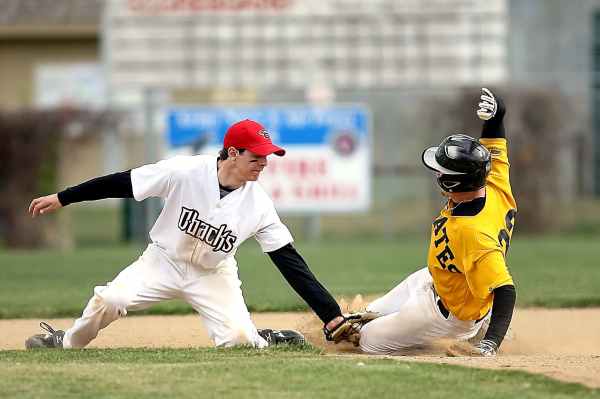
One of the classic comedy routines of the 20th century was a skit by Abbott and Costello, called “Who’s on First?” It’s all about mistaken identities and confusion, when the roster of players on a baseball team contains unusual names and nicknames that sound “question-able”.

I love baseball, and comedy, but the routine should make us do more than laugh. One of the big problems we face is that we often don’t know “who” is on first (or second, or in left field) in the game of life. We tend to become spectators, and fans, but we don’t always know the names of the players, or what position they play. We watch as players–celebrities, government power brokers, athletes, etc.–come and go on the “roster.”

Photo by Andrea Piacquadio on Pexels.com

And it can filter into our prayers. While we look at the line-up of human “players” around us, we can forget that God is in charge of the outcome of the “game.” God knows exactly “who’s on first,” and who will be there at the bottom of the fourth. He knows who will strike out in the third, who will hit a grand slam in the fifth, and who will drop the ball in the sixth. While we watch the players and bite our nails when the bases are loaded and there is a full count, God already knows the next pitch.

Photo by Liza Summer on Pexels.com

We may not understand why “Who” is on first, instead of someone else. Sometimes, we see people rise to a position only to abuse their power and oppress others. We may question “Why?” as well as “Who?” Sometimes, we may ask, “How?” “How could God put them in the line-up?” And the only answer I can offer is, “I don’t know.” God’s ways may not make sense to us in the moment. We may never understand the How or Why of our lives or circumstances. But God sees the whole picture, and His ways are not our ways. His understanding is far greater than ours.

Finally, we need to make sure that we are more than just spectators. Watching from the sidelines may seem safer, but we won’t really learn how to pray if we never learn how to “play.” God loves prayer warriors, but He commands us to be “doers of (His) Word.” (James 1:22-25) If we are just listening from the sidelines, we will continue to be confused and frustrated– in our praying and in our living!

We may not always know “Who’s on First.” But we should take comfort in knowing “Who IS First.” No matter who takes their position as shortstop or who is throwing the pitches, God is always sovereign. No matter who seems to be “winning” the game, God has already determined the outcome of the ultimate “World Series.” We can pray with confidence, knowing that, with God as our manager, Christ as the umpire, and the Holy Spirit as coach, we have the winning team!

Photo by Tima Miroshnichenko on Pexels.com

Prayer Priorities

What’s the most “important” prayer you can pray today? Sometimes, we think it is the prayer we pray in a moment of crisis. Or maybe the one we are asked to lead in front of a congregation. But the setting or the situation doesn’t make one prayer more important than any other.

It’s almost a trick question, really. Jesus never taught that some prayers were more “important” than others. But He did teach the some prayers were more effective than others. And His answers may be surprising to some.

Photo by sergio omassi on Pexels.com

The prayers Jesus praised were prayers of humble confession and needy request. God doesn’t judge our prayers– He judges the heart of the Pray-er. Jesus praised the prayer of the Tax Collector over that of the self-righteous Pharisee (Luke 18:10-14). While others might have been impressed by the Pharisee’s words and confidence, Jesus heard the desperation and the dependence of the Tax Collector. Just before this exchange, Jesus told the parable of a persistent widow, whose constant nagging resulted in getting justice from corrupt judge (Luke 18:1-8). It’s a strange parable–the woman is not meekly accepting of her situation; the judge is corrupt, initially refusing to do the right thing. Yet Jesus prefaces the story by telling his followers to “always pray and not lose heart.” (v. 1) So, the very prayers we dismiss– the nightly prayers for our loved ones, the “unspoken” request we lift up on behalf of a friend, or the seemingly unanswered requests–are no less important than any others.

Finally, Jesus praised (and prayed!) prayers that were “real.” He poured out His heart to His Father in the Garden of Gethsemane; He lifted up His friends’ needs at the Last Supper (John 13-17); He said simple grace before feeding the crowds.

Photo by RODNAE Productions on Pexels.com

So often, we judge our efforts when we pray– did we say the “right” thing? Did we say it the “right” way? Did we leave something out? Forget to say something? But God knows what is on our heart and in our mind. He knows what we “meant to say.” He knows everything we need– and all the needs of everyone else we could mention! He already knows all His names and attributes! And though He loves to hear us speak words of praise, He also listens to our heart, and–26 In the same way, the Spirit helps us in our weakness. We do not know what we ought to pray for, but the Spirit himself intercedes for us through wordless groans. 27 And he who searches our hearts knows the mind of the Spirit, because the Spirit intercedes for God’s people in accordance with the will of God. (Romans 8:26-27 NIV via biblegateway.com)

There is one caveat– because God knows our heart, He also “sees through” prayers that are insincere, proud, self-centered, and thoughtless. Some of the most “important-sounding” prayers fall short of touching God’s ears. He will not listen to the prayers of those who wish to “strike a bargain” with Him, or convince Him of their own self-worth. That doesn’t mean that God doesn’t value each one of us– after all, He became Sin who knew no sin, so that we could become the Righteousness of God (2 Corinthians 5:21). But God’s love is a gift–when we try to bargain for His gifts and earn His Grace with our eloquence, we lose sight of Who He Is.

Photo by Alex Green on Pexels.com

Many centuries before Jesus walked the earth, Hannah poured out her heart in tears, wordless anguish, and groaning. (1 Samuel 1). Her prayer was such a mess, the priest, Eli, accused her of being drunk! But God heard her heart, and answered her prayer, and because of her great faith, her son, Samuel led Israel through some of its most trying times. Hers was a very “important” prayer.

What if our stumbling effort to pour out whatever is on our hearts and lift it up to Almighty God–our praise, our failings, our grief, our desperate need–is be the most important prayer we can pray today?

“God Brought You to Mind..”

How many times have you suddenly felt the desire to lift someone up in prayer? You have no idea why or what to pray about, just that you should lift them up– in concern, in gratitude, in remembrance…It might be that someone mentioned their name; or you’ve just seen someone who reminds you of someone you knew long ago; suddenly, they are in your mind–an old neighbor or friend, a classmate or co-worker, maybe even someone who hurt you or betrayed you. But you feel an urge to pray–urgently.

Photo by ThisIsEngineering on Pexels.com

Maybe you’ve been on the other end– you get a sense that someone has been praying for you– something that you were dreading turned out to be less scary that you thought, or you had a “near miss” on the highway.. you don’t know who or where, but you know that someone, somewhere just prayed for you.

Photo by Leah Kelley on Pexels.com

God works in mysterious ways. Sometimes we ask others to pray for us; sometimes they let us know that they will be praying for us– but other times, we break into spontaneous prayer for someone “God brought to mind.” We may not know the situation; we may not know the particulars. Sometimes, we don’t even know the names or places– we just know we need to pray for a general group– missionaries, police officers, government leaders, teachers, fathers…

Photo by Keira Burton on Pexels.com

Stories abound of people who have obeyed such urgings– praying for people they barely know, or haven’t thought of for years–only to find that in that very moment, those people were in crisis and in need of help. Such stories help us see the heart of God. God is powerful enough to step in and take control of any situation. He doesn’t “need” us to pray for others in such cases. But He wants to include US in His plan! And by “bringing to mind” those who need prayer, and “bringing us to” the minds of others in our time of need, He reminds us of the importance of interconnectedness and dependence on Him.

Photo by Mary Taylor on Pexels.com

Of course, we should be looking for opportunities to pray for those around us–faithfully, consistently, earnestly. But we also need to be open to the promptings of the Holy Spirit, who works to involve us in His ongoing work. Our hearts and minds may wander or waste time in empty thinking, but the urge to pray is one we should be quick to follow.

Blog at WordPress.com.

Up ↑