Praying the Perimeter

I love puzzles–jigsaw puzzles, crossword puzzles, Sudoku, logic puzzles, etc.

This may seem like a strange way to begin a blog on prayer, but stick with me…

Photo by Pixabay on Pexels.com

Puzzles can be fun, but they can also be very frustrating, especially if you approach them with no strategy. If you dump 1,000 pieces of a jigsaw puzzle on a table, and begin by trying to find any two pieces that fit, you may be able to eventually solve the puzzle, but it makes more sense to look for the “edge” and “corner” pieces first, and build a framework. Depending on the puzzle picture, you may also be able to work on colors or patterns that stand out– sky/clouds, a patch of red or blue, a dog in the foreground, etc.

Photo by Magda Ehlers on Pexels.com

The same is true of word and logic puzzles. There is usually a strategy when you approach each puzzle that can help make it easier and more rewarding. Words have patterns of letters– vowels and consonants; logic puzzles depend on deduction– narrowing down the possible by eliminating the impossible. Sudoku, and its cousin, Kakuro, involve simple math and numbers 1-9 in changing patterns. Start with the strategy, and you will find even the most challenging puzzles a little less challenging.

Photo by Dziana Hasanbekava on Pexels.com

Some puzzles seem impossible; and some are beyond my ability to solve, even with the best of strategies. That’s life. We don’t know all the answers, and we can’t always “see” the solution, or make all the pieces fit.

Sometimes, our lives seem like a challenging puzzle. Nothing seems to “fit” a pattern or make sense, and we end up lost and frustrated. Our most basic need is to trust God. But God does not leave us without a strategy. Prayer (along with reading God’s word and keeping in fellowship with other Christians) is part of an excellent strategy. Just like putting the “edge” pieces together in a jigsaw puzzle, praying “the perimeter” of our problems can put them in the proper frame.

What does that mean? Jesus gave us a perfect example in “The Lord’s Prayer.” When His disciples asked Him how they should pray, He started with the “frame.” “Our Father, who art in Heaven, hallowed be Thy Name.” God should be at the center of our life and trust, but He also needs to be the “edge” and framework of our life. There is no problem or worry that is outside of His control and awareness, no need that He cannot meet, and no problem that can take Him by surprise or leave Him frustrated and “stumped.”

Photo by Pixabay on Pexels.com

“Thy Kingdom come, Thy will be done in earth as it is in Heaven.” God already has the right strategy, and solution for our need. We can’t see it; we may not have a clue how to pay our bills, or deal with that devastating diagnosis, or make peace with our enemy–we may never find “the solution” on our own or in our short lifetime. But God sees the entire picture, and He has the power to make all the pieces “fit”– in His time and in His perfect will.

Photo by Levent Simsek on Pexels.com

“Give us this day, our daily bread, and forgive us our trespasses as we forgive those who trespass against us.” Sometimes our “puzzles” seem too big because we try to tackle everything at once, or we try to tackle things from the wrong end. God’s strategy is to rest in Him daily, letting tomorrow’s troubles wait for tomorrow, and letting go of yesterday’s struggles. That doesn’t mean that we don’t make plans or budgets, or that we don’t take responsibility for our health, or the mistakes we’ve made. But it means that we stop focusing on what we can’t control, and focus on the present. Instead of worrying, I can be thankful for what I have right now. Instead of focusing on what others think of me, or the threat they pose, I can concentrate on my own attitude and actions, making sure that I am practicing trust and obedience. Instead of getting angry when things don’t make sense, I can rest, knowing that God knows the end from the beginning.

Photo by Element5 Digital on Pexels.com

“And lead us not into temptation, but deliver us from evil.” God is our “Good Shepherd” (See Psalm 23 and John 10). He “leads us beside the still waters” and “makes us lie down in green pastures.” “He restores my soul.” (Psalm 23:3a) If we let God determine our “edges” and boundaries, we will still have to travel through troubled times and valleys “of the shadow of death.” But we need not fear evil, when we trust that God will deliver us. We need not fear the shadows and uncertainties within the boundaries of God’s will. And even when we have taken the wrong path, and “messed up” the puzzle we are in, God is in the business of redemption and restoration! He will deliver us– if we confess and seek His solution. He will wipe away the “wrong” answers and rearrange the pieces of our life, so that we can find wholeness.

Photo by Miguel u00c1. Padriu00f1u00e1n on Pexels.com

When we develop the pursuit of prayer– daily meeting with God, acknowledging who He is, and seeking His wisdom and grace– we will meet the challenges of life with the right strategy. We will still face the frustration of not knowing all the answers, or not seeing the whole picture. We will still have to deal with struggles, shadows, grief, and pain. But we will have a stronger “framework” and a God-given strategy to help.

Holy Terror

It’s the end of October, and tomorrow will be Halloween. Stores and houses around the neighborhood are decorated with frightening figures of skeletons, witches, ghosts, and gravestones. Some of my friends love this time of year, and they look forward to binge-watching movies about zombies or vampires– anything scary, spooky, or terrifying.

Photo by Toni Cuenca on Pexels.com

I don’t like Halloween. I don’t like scary movies. But I believe in the value of fright. Life is filled with things–natural and supernatural– that fill us with real fear. And that is as it must be in a fallen world. Sin and death, evil and darkness, fires, earthquakes, violence and plague–they are real and should produce both fear and caution. The Bible is not silent or dismissive of such things. God’s laws warn against evil spirits, calling on the dead, consulting with witches, fortune telling, even giving in to anger, envy, and hatred. God’s laws also provide for hygienic practices to ward off disease and plague.

Photo by Mike on Pexels.com

And yet, the Bible also gives hundreds of warnings against giving in to fear and letting it control our lives. We are to be cautious and wise where fear is concerned. Over all, we are to remember that God is bigger and more powerful than our fears. God can calm storms, put out fires, even conquer disease and death! There is no power, no force, no terror, that can overwhelm God, or touch those under His protection.

Photo by Pixabay on Pexels.com

Terror holds no power in God’s presence. Therefore, if we know God, we can experience no true terror. But where there is no God, terror will reign. It’s like the saying: “No God; No Peace–Know God; Know Peace”. Terror comes with darkness, with chaos, with lawlessness and loneliness.

Photo by Skitterphoto on Pexels.com

There is only one other kind of terror– a Holy Terror. We can be terrified by the awesome Holiness of God. It is altogether more powerful and alien than anything we can even imagine. Even for those who know God, there is the knowledge that God is GOD, and we are not worthy to look on His face or enter into His presence on our own. Normally, when we think of terror, we think of things that are very unholy–evil things; supernatural forces of darkness. Yet Holiness can also inspire terror because it causes us to see our own unworthiness; our own sin and failure. I am reminded of the “face-melt” scene from Raiders of the Lost Ark– Nazis, who have been fearlessly and relentlessly pursuing the Ark of the Covenant, believing that it holds supernatural powers they can use to gain power over life and death, are suddenly and horrifically destroyed when they gaze inside–as they come in contact with the very Glory of God, their terror is absolute, and they are destroyed by its presence.

Photo by samer daboul on Pexels.com

This season, may we celebrate that God, in His awesome and mighty power, constantly reminds us that we can “Know” Him without fear; instead of running, cowering, or melting, we can come to Him with confidence and joy! And in doing so, we can face any other terror, knowing that God is with us, and for us, and even filling us with His peace! We need not be filled with Holy Terror– instead, we can be filled with the Holy Spirit!

Photo by Pixabay on Pexels.com

Our Father…

I have known some excellent fathers– including my own father and my husband. Fathers who do their best to provide for, pray for, protect, and prepare their families. Fathers who show patience, perseverance, wisdom, and selflessness.

But I know this isn’t the case for everyone. I have also known some wicked fathers– fathers who are physically, verbally, and mentally abusive toward their wives and children. Fathers who abandon their responsibilities, and leave behind a legacy of need, chaos, anger, and despair.

Photo by Pixabay on Pexels.com

Throughout the Bible, God is portrayed as a Father. Not as a “man”– Jesus took on flesh and became a man– but the Triune God exists as Father, Son, and Spirit. God has all the characteristics of a perfect father. God also embodies all the characteristics of a good mother. But there is something about Fatherhood that God particularly wants us to learn and understand.

Photo by Pixabay on Pexels.com

When God chose Abram for His special covenant, Abram’s name meant “exalted father.” But Abram was childless. God chose someone whose name had no meaning (or an ironic meaning), and changed it– not a lot–he added an “ah”, so that Abraham’s name meant “father of many” or “father of multitudes.” I don’t think it was any accident that God chose a man named “Abram,” or that He changed his name only slightly. God chose Abraham, not because he was a father, but so that he could become a father– to many! It was as a father (to Isaac, but also to Ishmael and all his other sons and descendants) that Abraham was exalted and revered.

Photo by Luis Quintero on Pexels.com

But Abraham was not a perfect father– far from it! God gave us the story of Abraham, and drew attention to Abraham to help us learn the importance of GOD as our Father. Abraham was willing to give up his heir– the son of God’s promise– because Abraham was a “son” of God before he was a father to Isaac. https://www.biblegateway.com/passage/?search=Genesis+22&version=NIV

Even though I have known some excellent fathers, I know of only one who is perfect. And He isn’t someone else’s father, that I should be envious, or discouraged. He isn’t only “my” father, that I should be smug. He isn’t my father by birth, that I should make little of His sacrifices or His promises– they are not given out of duty or a sense of genetic obligation. He is OUR Father– He invites all of us to become His children. He lavishes love and grace, sheds tears and aches, sacrifices and pursues, rejoices and grieves– for and with every soul.

Photo by Josh Willink on Pexels.com

When Jesus taught His disciples to pray, He wasn’t giving them a rote prayer to memorize, but a pattern. https://www.crosswalk.com/faith/prayer/the-lords-prayer-be-encouraged-and-strengthened.html If you look through the Gospels at Jesus’ other prayers you will see it–He always begins by addressing His Father. For the group of disciples, He began with “Our Father.” Jesus, who could have claimed sole son-ship, made it clear that He (as Son with the Father and Spirit) desires this amazing relationship– more than power, more than honor, more than life! And God the Father is not a man or a mere mortal– He is Holy, Perfect, Eternally Loving and Eternally Sovereign!

Photo by Lgh_9 on Pexels.com

What a wonderful thought for Father’s Day this year– no matter what kind of earthly father(s) we have known!

Thou Preparest a Table Before Me

Mighty God,
You could demand…
Anything.
You need nothing.
You are worthy of
Endless adoration.

Photo by Julian Jagtenberg on Pexels.com

Yet You prepare a table–
Lavish with blessings,
Personalized to the last detail–
For me.

Photo by Adhitya Rizky on Pexels.com

You, who could reserve all the
Wonders of nature for your own pleasure;
Cause the sun to rise, the birds to sing
For me.

Photo by Pixabay on Pexels.com

You lay the plates,
Polish the silver,
Serve out the banquet with
Flourishes, garnishes– All the best
For an unworthy beggar–for me.

Photo by sergio omassi on Pexels.com

You pour the wine,
Wash my feet,
Break the bread
(Even give your body and blood),

Photo by Pixabay on Pexels.com

All for me.

Merciful and gracious God,
Humble and victorious Savior,
Mysterious and mighty Spirit–
I am undone by Your invitation to
This eternal banquet.

Photo by Pixabay on Pexels.com

“Do This in Remembrance of ME”
Remember My Creation.
Remember My Life.
Remember My Humble service.
Remember My Death and Resurrection.
Remember My Victory.
Remember I am Coming Soon!

20/20 Vision, Blind Faith, and Prayer

As we approach the arrival of a new year, there is a lot of talk about vision–20/20 vision, that is. For the past few years, I’ve heard of companies, community groups, even churches using the year 2020 as a target date for planning, and using the phrase “2020 Vision” in their mission statements, fund-raising drives, and talking points.

Photo by Christina Morillo on Pexels.com

The phrase comes from 20/20 vision, considered clear or “good” vision. Someone with 20/20 vision has no need of corrective lenses or surgery to improve their reading, or correct their sight. Figuratively, 20/20 vision suggests good planning or foresight. So it is desirable to plan with clear “vision” and forethought, rather than jumping into a project, or from one unmet goal to another.

But, while it’s clever to borrow the idea of 20/20 vision and tie it to the coming year, it doesn’t guarantee that our future plans will be wise or successful just because the calendar says 2020. In the same way, just because we have 20/20 vision, it doesn’t mean that we can see everything around us perfectly. We will see clearly those things on which we focus– those things that are right in front of us and not obstructed. Even with “good” vision, we cannot see things that are hidden from sight or things that are outside our scope of vision.

Photo by malcolm garret on Pexels.com

Even the old phrase, “Hindsight is 20/20 vision,” doesn’t mean that we will always gain clarity with time. Sometimes we understand past experiences in a different light after time has passed. But sometimes, we are still left wondering and asking about events from our past; no wiser or less damaged by setbacks or failures, and no better prepared for future trials and pains.

If vision, even good vision and planning, is no guarantee of future success, perhaps it would be better to trust to “blind faith.” After all, doesn’t the Bible say, “walk by faith, not by sight?” Except the Bible doesn’t exactly say that. Instead it says:

So we are always confident, knowing that while we are at home in the body we are absent from the Lord. For we walk by faith, not by sight. We are confident, yes, well pleased rather to be absent from the body and to be present with the Lord.

2 Corinthians 5:6-8 (NKJV via http://www.biblegateway.com)

This verse often gets taken out of context and twisted to suggest that “faith” is opposed to “sight,” and therefore faith must be “blind” to reason, experience, or reality. Many good articles and sermons have been written to clarify the concept (see one example here:
https://www.biblestudytools.com/blogs/theologically-driven/walk-by-faith-a-misused-verse.html). Faith is not blind–or should not be blind. Rather, it utilizes the ability and practice of seeing what is hidden or indistinct in the present. If our faith is based on empty myth, rumor, conjecture, or cloud dreams, it is not faith at all–it is nothing more than a mirage. Faith is seeing beyond the obvious, the blatantly visible, and trusting more than just what we can immediately see. We don’t walk through life ignoring reality, or dancing across a superhighway full of speeding cars. But we see our circumstances as having hidden elements; our lives have unseen depths, and are lived on both physical and metaphysical spheres. There is more to life than meets the eye– and while faith may not always show us a clear picture of what lies beyond our sight, it causes us to know that something beyond our “20/20 vision” exists and matters.

Photo by Daniel Spase on Pexels.com

The great old hymn, “It Is Well With My Soul,” speaks to this as well. No matter what our circumstances look like, we can have confidence that “It is well, it is well, with my soul!” “And Lord, haste the day when my faith shall be sight..” We look forward, even as we look around, and look back to the finished work of Jesus our Savior. We see the present, but we walk in the knowledge that there is more than what our eyes behold.

Faith doesn’t negate the need to use our senses and common sense to navigate life. And using planning and vision for the future doesn’t negate the need for faith. Rather, they work together. And they work together best in prayer.

When we pray, we are exercising our faith– speaking to the One we do not see, though we know Him and trust Him. And we bring to Him our plans and visions and hopes and dreams. We lay them in His Hands, trusting that where our vision is “good,” He will empower and bless us; where our own vision is lacking, His Spirit will help us to refocus and see enough of what lies beyond to keep walking forward.

Photo by Harrison Haines on Pexels.com

As we walk into a new year, may we have more than just 2020 vision– may we have faith and hope in the One who has perfect vision!

I Surrender All?

I have been revisiting old hymns lately as I write about my pursuit of prayer. This is partly because I believe that prayer is a form of worship, and is closely tied to other forms of worship– meditation, singing, etc.. Sometimes, it can be helpful to pray songs or to sing prayers– look at the entire book of Psalms!

Our church has recently been involved in revival services– two weeks of time set aside to evaluate our daily walk with Christ. We need periods of revival and refreshment, conviction and confession, repentance and reflection. Without them, we will wander; without them we will wither and grow cold, and lose sight of our first love.

Photo by Luis Quintero on Pexels.com

One of the first nights, we explored the idea of surrender. We say that we trust God; that Jesus is Lord, that we are followers of Christ…but do we really demonstrate those truths by the way we live? Have we really surrendered our will, our lives, our futures to God? We claim that He is sovereign over big things– all of creation, world affairs, and such–but is He Lord over the little things? Do I trust Him with my reputation when someone misrepresents me to others? Do I trust Him with my diet when I am tempted to overeat? Do I trust Him with my time when someone asks me to help them on my day off?

One of the keys to this hymn (and to prayer) is in the first verse– “..in His presence daily live.” There are times when I feel the need to surrender; times when I feel wholly surrendered and devoted. But there will be other days when the feeling just isn’t there. My surrender needs to happen daily– in the “good” times and in the “difficult” times. Sometimes, I just need to pray that the Holy Spirit will guide and empower me to recognize and surrender those areas that I have tried to “take back” from Him.

Photo by Creative Vix on Pexels.com

And then, I need to be intentional about letting go–one piece at a time, if necessary–each day saying, “Yes” to God instead of “Yes” to those things that pull me away. It’s not always easy to say, “I surrender all.” It’s even harder to actually follow through. We want to hang on to things that are comfortable, familiar, even “good.” We want to hang on to things that seem to promise safety, success, or fulfillment– even when God offers more.

I’m not writing this because I have mastered the discipline of surrender– I need to learn to let go, to trust God more, to risk what I cannot keep to gain what I cannot lose (paraphrasing from Jim Elliot–https://www.brainyquote.com/quotes/jim_elliot_189244.
That is my prayer today, for myself, and for others.

The Company We Keep

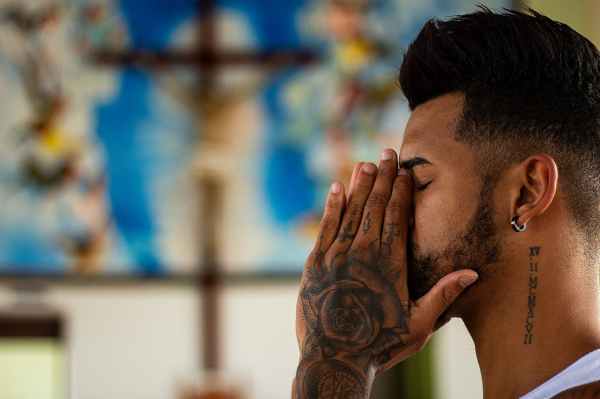
Do your friends pray? Do you pray for your friends and neighbors? Do you pray with your friends? Prayer is often seen as a private and very isolated activity– just you talking to God. But prayer is much more. Prayer can bind people together in a common purpose. It can encourage and embolden others as we pray together, share burdens and blessings, and seek God’s wisdom on their behalf.

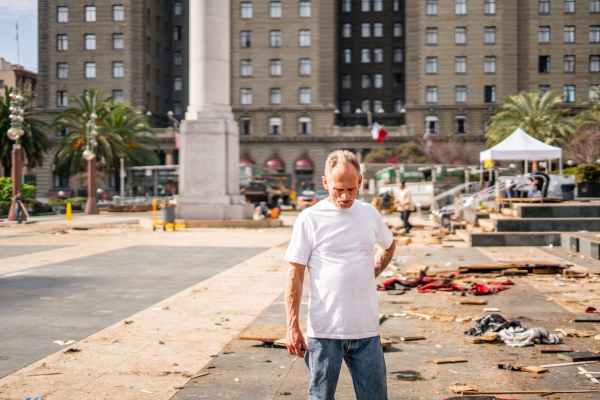
Conversely, when our friends don’t pray, or discourage us from spending time in prayer, we can become weak and lose the fullness of joy that comes from a rich prayer life. When Jesus walked among us, He spent time with people– sinners, self-righteous religious leaders, friends, and strangers alike. And He often went away and alone to spend time in prayer. But He also made a habit of taking a few key friends with Him; friends who would “watch and pray” when others might have distracted Him with their questions or doubts. Throughout the Bible, there are numerous examples of others who sought out friends and companions to join them in prayer.

Photo by Christina Morillo on Pexels.com

There is a lot more I could write about this concept today, but I think it is more important to act on it. I have a journal full of names, places, and situations that require prayerful attention– people battling cancer or depression; cities facing riots and economic upheaval; families in the midst of divorce or other crises. And I have friends who share my concerns and who can join me in praying (even remotely) for them.

Photo by HARSH KUSHWAHA on Pexels.com

If you have friends who pray– connect with them and pray for and/or with them today. If you don’t– pray that you will find companions who will come alongside you as you make this journey to pursue a life of prayer. Look for opportunities to join a group– in person, or on-line–that shares prayer requests (and answers to prayer!) Best of all, pray to and with Our Father, who will never leave us or forsake us, who always listens, and who has given us the constant companion of the Holy Spirit to strengthen and encourage each of us.

Photo by Julian Jagtenberg on Pexels.com

For on-line prayer groups, check here ( https://www.google.com/search?q=online+prayer+groups+free&rlz=1C1GYPO_enUS768US769&oq=online+prayer+groups&aqs=chrome.1.69i57j0l5.7234j0j7&sourceid=chrome&ie=UTF-8 ) and elsewhere.

Time to Renew

It’s that time of year again…my birthday is coming up and I will need to visit the Secretary of State’s office to renew my license plate tag; this year, my driver’s license also expires, so I have to renew that as well.

This is not a pleasant process– I will wait in line, answer questions, and have a photo taken.  I will write out a check or have money debited from my bank account (ouch).  I may have to wait another week or two for the new driver’s license to be sent out, and then I will have to live with the horrible photo for a few years. What a drag!  I often hear people complaining about the process–it’s a time-consuming, costly, bureaucratic nightmare, or it’s just an annoyance.

Except I don’t really “have to” do any of those things.  Being a licensed driver is not a life or death matter.  The law says that I must possess a valid license in order to drive, but thousands of people drive every day with no license, or a suspended or expired license, and “get away with it.”  Others choose not to drive, and do not carry a license or state-issued photo ID.

car side mirror showing heavy traffic
Photo by STANLEY NGUMA on Pexels.com

But I choose to go through the annoying process because of the benefits.  Driving is a privilege– one denied to many who can’t afford, or can’t operate a vehicle.  Renewing my license brings much-needed revenue to the state, so they can (attempt to) maintain the roads, bridges, and traffic-related signs and lights that we use every day.  Renewing shows my commitment to obey the laws and authorities that govern (the roads in and around) my city, county, state, and nation. Renewing my license gives me an opportunity to register (or confirm my status) as a voter.  It even gives me the opportunity to learn patience and people skills!

All this to talk about another kind of renewal…

Therefore, I urge you, brothers and sisters, in view of God’s mercy, to offer your bodies as a living sacrifice, holy and pleasing to God—this is your true and proper worship. 2 Do not conform to the pattern of this world, but be transformed by the renewing of your mind. Then you will be able to test and approve what God’s will is—his good, pleasing and perfect will.  (Romans 12:1-2  NIV)

The Apostle Paul speaks about the “renewing of your mind.”  In renewing my license, I am conforming to the laws of the land.  This passage is not telling me to break the law; it is calling me to transform the way I view the world, the way I process the world, and the way I allow my thoughts to shape my behavior.  Instead of thinking about the license process as an inconvenience– I need to weigh the inconvenience against the benefits I receive from having a valid license.  Instead of focusing on the negatives around me– fear, hatred, selfishness, complaining, greed, lying, etc., I need to focus on how I can respond in hope, love, compassion, encouragement, generosity, and truth.  And I need to depend on the work of the Holy Spirit to transform the way I think about the world, about myself, and about God.

action asphalt automobile automotive
Photo by Taras Makarenko on Pexels.com

There is a lot of ugliness in the world, lately; but there is also a lot of beauty.  There are urgent needs, but there are also abundant resources in Christ Jesus.  There are hardships, but there are also moments of peace, healing, and hope.

It’s time for renewal!

8 Finally, brothers, whatever things are true, whatever things are honest, whatever things are just, whatever things are pure, whatever things are lovely, whatever things are of good report, if there is any virtue, and if there is any praise, think on these things.  (Philippians 4:8 MEV)

I-Bug

It started out small– a glItch, really.
Every tIme I began to type, the same thIng would happen.
At fIrst, I barely notIced.

After all, It wasn’t lIke I couldn’t read my own wrItIng.
It wasn’t In every lIne or word;
It was a sIngle letter.

But then It began to spread.
As tIME passed, It becaME more dIffIcult.
I notIced a theME.  I could stIll read the words,
But theIr MEaning was gettIng lost In
SoME way I couldn’t quIte deterMINE.

It was begInnIng to spIll Into MY speech;
IMpossIble to MEnd; MEldIng Into MY mInd’s
NIches, MErgIng wIth MEdIocre comMEnts
And MYsterIous MEltdowns.

I I I I I,

ME ME ME ME ME.

As I and ME took over, yo_ went mIssIng.
ThIngs were s_ddenly less peacef_l…
Even Jes_s seemed sIlent In the dIn of ME and MINE.
SIn and prIde– I co_ld always be fo_nd there.

It was a fast-spreadIng vIr_s– s_rely leadIng to MY r_In:
_ntIl I lIstened to a stIll, small whIsper…
A Holy breath of fresh, clean, wholesome change.

AAAHHH!

Exhaling the I’s and ME’s, and breathing in YOU–
Brought hope and healing; renewal,
Perspective and life.

Victims and Victors

My husband and I own a small retail business.  Last winter, we were victimized by shoplifters.  They stole several items, worth over $1,000.  The same couple stole items from other businesses in the area.  The police investigated, compared descriptions of the suspects, traced their movements, and got an arrest warrant.  The couple fled, and it took months to find them and bring them into custody.  They have been arrested, and we have been to court for a preliminary hearing, with another potential court date in about a month.

blur close up focus gavel
Photo by Pixabay on Pexels.com

The court sent us a long series of papers to fill out, including a victim impact statement, where we were to describe how the suspect’s alleged actions impacted us personally, as well as how our business was damaged.  Even though this was not a personal crime (we weren’t physically threatened or harmed, or specifically targeted with an intent to ruin our business), there are still scars–distrust, fear, frustration, and loss, to name a few.  Just because a crime isn’t personal, doesn’t mean that no one suffers.  It has been an awkward process to write out the victim statement, and to appear in court and recount all that happened that day, but it has also been a good process.

crime scene do not cross signage
Photo by kat wilcox on Pexels.com

Being a victim is not a pleasant experience.  It is frightening, humiliating, maddening, and bewildering.  “How could this have happened?”  “Why did it happen to me/us?”  “What did I/we do wrong?”  These are honest questions that go unanswered.  But the biggest question may be “Where was God when this happened?”  Didn’t he know?  Didn’t he care?  Why didn’t he act to stop this crime?  Why did he allow it to touch us?

In the months since this happened, I’ve learned to ask some other questions of God–

  • What other “bad” things have you kept from us without our knowledge?  What good things have you showered on us that we took for granted?
  • Who else has suffered the same or worse things– how can I reach out with empathy or understanding?
  • Where are people suffering without justice?  Even though we have had a long wait, we know that the police and court system have been working for us.  Where are people living who suffer without hope, in silence, and in fear of seeking help?
  • What can we learn from this experience?  How can we make our store and our community “safer”?  How can we heal, and bring justice instead of wallowing in hurt or seeking revenge?

green leafed plant on sand
Photo by Engin Akyurt on Pexels.com

God has a plan, even in times of trial and questioning.  We all will be victims at some point in our life–of injustice, of crime, of disease, of poverty, of losses, of disaster, and of sin’s consequences– our own sins and the sins of others.  We can also be victors, through the power of the Holy Spirit.  We can overcome bitterness and addiction; we can triumph through cancer, depression, or heartbreak; we can rise above setbacks and circumstances; we can choose forgiveness and healing over hatred and self-sabotage.  We can move from being perpetual victims to eternal victors, through Jesus Christ our Lord!

Blog at WordPress.com.

Up ↑