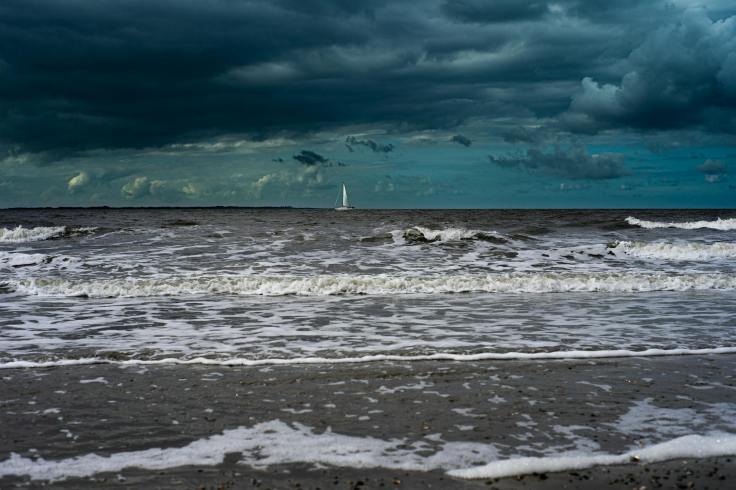
1 My soul in sad exile was out on life’s sea, So burdened with sin, and distressed, Till I heard a sweet voice saying, “Make Me your choice,” And I entered the haven of rest.
Refrain: I’ve anchored my soul in the haven of rest, I’ll sail the wide seas no more; The tempest may sweep o’er the wild stormy deep, In Jesus I’m safe evermore.
2 I yielded myself to His tender embrace, And faith taking hold of the word, My fetters fell off, and I anchored my soul: The haven of rest is my Lord. [Refrain]
3 The song of my soul, since the Lord made me whole, Has been the old story so blessed, Of Jesus who’ll save whosoever will have A home in the haven of rest. [Refrain]
4 How precious the thought that we all may recline, Like John, the beloved and blessed, On Jesus’ strong arm, where no tempest can harm, Secure in the haven of rest. [Refrain]
5 Oh, come to the Savior, He patiently waits To save by His power divine; Come, anchor your soul in the haven of rest, And say, “My Beloved is mine.” [Refrain]
“The Haven of Rest” (hymn) by H.L. Gilmour (1885)
I grew up with this hymn in church, and it always made me think of my grandfather, who had been in the Navy. He didn’t speak much of his time at sea. He wasn’t a great ocean sailor– he preferred lakes and small rowboats to the vast ships on which he had travelled. But he was a good one for storms. He seemed fearless and confident in any weather– blizzards, tornadoes, sleet or hail– and it helped everyone around him find hope and confidence, too.
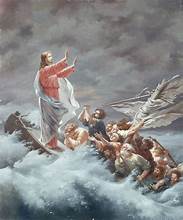
We normally don’t think of rest when we think of storms, but there is one great story in the Gospels about Jesus being caught in a storm on the Sea of Galilee. (See Mark 35-41) There he was, in the back of the tossing boat– asleep! The disciples, screaming in panic, woke Him up. “We’re all going to die! How can you be sleeping? DO something!”
Jesus calmly gets up and rebukes the wind and waves and then chides the disciples for their lack of faith. Suddenly, the frightened disciples are more “afraid” of Jesus, who controls the waves, than they are of the recent (but now powerless) storm. The storm caused panic and restlessness, but Jesus caused a deep and penetrating awe. And part of the lesson of this story is that Jesus “did” nothing. While the disciples were bailing out water, frantically rowing and fighting the storm, Jesus simply spoke, “Peace. Be Still.”
Resting and “doing” are usually at odds with each other. We cannot make a situation restful by doing and fretting. We must be still and trust the One who controls the wind and the waves and all the circumstances of our lives. And that trust doesn’t come through our efforts or our convictions. It comes as we let go of our fears and expectations, our need to see the road ahead or the blue sky above. But while we cannot “do” our way to safety and rest, we can make sure we are anchored.
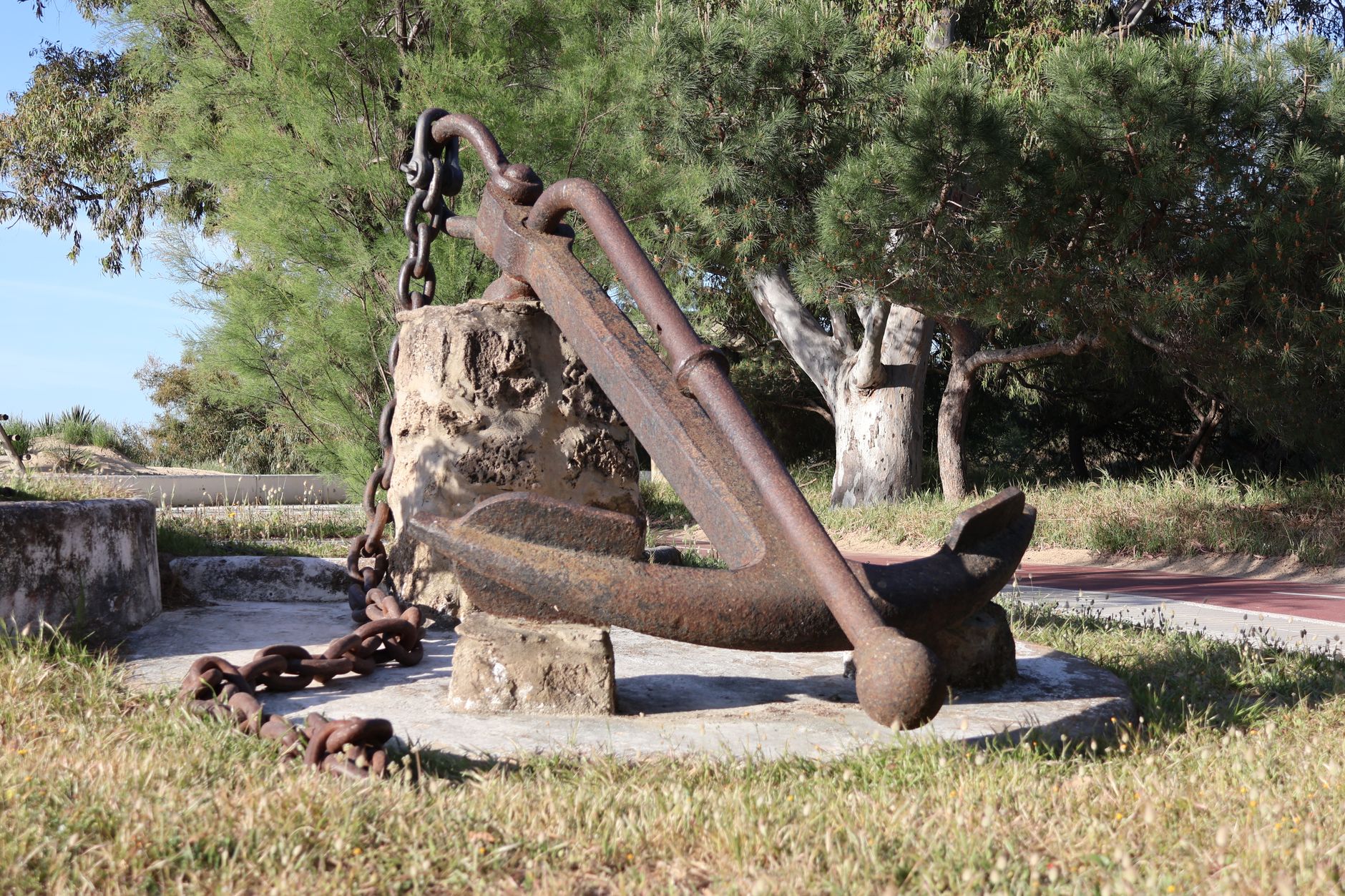
The Bible (especially in the New Testament) uses a lot of maritime and water imagery. Boats, seas, floods, rivers, fishing nets, storms, shipwrecks, journeys, and anchors. Anchors also feature in a lot of old hymns. Anchors are essential in sea travel. They keep the boat or ship from being swept by the wind and waves– either swept into rocks and dangerous coastal waters or swept away from safe harbors. An anchor is also essential for our soul– to keep it from being swept up in dangerous deceptions, emotional storms, and rocky theology.
I have three thoughts about anchors today:
You can’t ignore, forget, or neglect an anchor until you “need” it. An anchor on land, in storage, or unused, can do you no good. You must prepare before the storm hits. In the Christian walk, we must be faithful in the “easy” times if we want to rest in faith in the difficult times. Faith is a muscle that must be exercised. Hope is “built on nothing less than Jesus’ blood and righteousness”– it doesn’t just appear at the last moment.
You can’t see the anchor when it is in use. When you drop anchor, you will feel it take hold– eventually. In life, we cannot always “see” God at work. But we can look back and see what He’s already done. And we can trust in His presence and power– even when the storm continues to rage, and the waves beat against the ship.
An anchor comes with you wherever you go, but it doesn’t keep you confined or isolated. The anchor works by being tied to a rope or cable so the boat or ship can still move or drift in different waters. Sometimes, the anchor needs a longer rope or cable to reach the bottom. But too much rope, and the ship will drift back into danger. Jesus offers us freedom from sin and death. He does not promise that we will never have rough seas, or difficult journeys. He does tell us to GO– into all the world. If we never leave the dock, we will never use the anchor. But we do NOT have to travel alone and hopeless.
I have anchored my Soul on Christ, the Solid Rock. I pursue prayer (and Bible study and fellowship with other believers) as part of that anchoring. My faith and hope are built on that solid foundation– staying strong despite the circumstances that batter and buffet when the storms come. I can’t “see” the way ahead; I can’t always see Christ working in and through the difficulties as I face them. But I can see what He’s done in the past, and I have His promise that He has overcome the world and its circumstances. And I know that Christ is always with me– His presence is a constant, and His Holy Spirit guides me as I travel through life. As another great hymn states, “My anchor holds within the veil”–Jesus is sitting at the right hand of the Father in the Holiest of Holies, holding my soul for all eternity. And I can rest on that truth, “evermore.” I hope if you are reading this that you have found rest and hope as well!
I hope that today will be filled with peace, joy, and blessing for anyone reading this. But I know that today will bring bad news for some, pain for others, and hardship for many. Life is filled with struggle, disappointment, failures, and loss. Our first reaction is often to worry, which can lead to more worry, and a sense of urgency, even panic. In many cases, we have neither the resources nor the wisdom to overcome our struggles–even sustained effort or a “lucky break” may leave us without much hope. And the more we worry, the less we accomplish. But telling ourselves (or others) to simply “stop worrying” doesn’t banish worry; sometimes it increases it! Now we worry about worrying too much, or we find new things to worry about.
But there is a time-honored and proven pattern that can help. Jesus spoke of it in His “Sermon on the Mount.” In Matthew 6, He gives us this advice:
“So do not worry, saying ‘What shall we eat?’ or ‘What shall we drink?’ or “What shall we wear?’ For the pagans run after these things, and your heavenly Father knows that you need them. But seek first his kingdom and his righteousness, and all these things will be given to you as well. Therefore do not worry about tomorrow, for tomorrow will worry about itself. Each day has enough trouble of its own.”
Matthew 6:31-34 (NIV)
The Apostle Paul expanded on this in his letter to the Philippian believers. He told them to be anxious for nothing–that regardless of our situation or circumstances, we should not panic, but pray (seek God’s grace, righteousness, wisdom, and help). But more than that, we should present all of our prayers, petitions, and requests with thanksgiving and praise!
This is not the same as pretending that our struggles don’t exist, or that they are not important, or that we are glad about the pain, uncertainty, or hardship that they bring. Instead it is lifting our eyes to Heaven and finding that God is bigger than it all; that His grace, His strength, His wisdom is sufficient for the next step– for today’s worries–for today’s battles and burdens.
This doesn’t happen naturally or automatically–we must seek, pray, pursue righteousness, ask for help, and continue to stand firm. There are some who point to the words of Jesus, or of Paul as a kind of “magic formula.” If we repeat a few promises from the Bible, or if we pray certain prayers, or convince ourselves and others that we have “enough” faith, God is obligated to change our circumstances and give us the resolution or relief we want. God is not primarily interested in our relief– He is interested in our redemption, our renewal, and our eternal reality. In following this pattern of turning our panic into prayer, and our prayer into praise, He promises that we will experience His peace. Our panic will be transformed–even if our situation stays the same; even if it gets worse before it gets better!
So how do we practice this pattern; how do we train for this transformation?
Here are a couple of suggestions:
Start by seeking God with abandon–pursue Him with your whole heart– thank Him for who He is, and for all He has done. It can be helpful to review some of the names of God–I AM, Almighty, Creator, Lord, King of Kings.. Or read a Psalm or find a song that reminds you of God’s character and power. Think of the times when God has been faithful in your own past.
Find something about your situation for which you can be thankful– genuinely thankful. Years ago, when I was young and single, I was laid off from my first full-time job after nine months. Was I worried? Yes! Where would I find another job? How would I pay my bills? But I resolved to start being thankful about all I had learned on the job– I had met new people, learned new skills, purchased a car…God knew my needs for the future, and even though I had to wait another eight months before I found a full-time job, I was able to find temporary work and interview for other jobs in the meantime. And I had friends and family who offered good advice and encouragement along the way. I know some situations are more painful and perplexing than the loss of a job. When I my father died, nothing made the pain less, but I could thank God for Dad’s life and the time we had with him. This is NOT easy, nor is it meant to be…It may not happen for days, or weeks–don’t give up!
Cry out to God– in praise, but also in petition, pain, confusion, confession, and raw emotion. God wants a real relationship with us, and that includes walking with us in the “valley of the shadow of death.” We don’t have to fear evil, or worry about the future, not because it holds no danger or dread, but because we never have to walk alone and defenseless!
Remember this is a pattern to follow, not a pill to swallow–none of this comes easy, and God’s peace is not an instant “fix.” Instead, it is a growing conviction that God is who He says He is– faithful, loving, victorious, eternal, and sovereign. Such peace defies our panic and erodes our worry, leaving us ready to face the battles before us, and move forward through the struggles.
It is not will power or a change of circumstances that brings incomprehensible peace. From panic to peace requires prayer, praise, and a bit of perspective. It is not magic– it is Majesty!
The air is different.
Cooler
Scented with readiness…
Waiting
The birds are restless of wing;
Apples hang heavy
As people and days
Move a little faster.
Anticipating the season;
Bringing in the harvest
Preparing to face
The cold gray of winter.
This short burst of color–
This cacophony of bird chatter
And swinging scythes–
Will give way to moaning winds
And skeletal branches reaching out
To empty skies.
Autumn is here– you can feel it in the air and see it on the trees here. It’s coming on to “sweater” weather. Football, the smell of vineyards heavy with grapes and orchards filled with apples and pears. Gardeners and farmers are tripping over pumpkins and squash, and preparing to bring in the corn, wheat, and beans. Squirrels are starting to zip about and look for nuts and seeds to store.
There is a sense of urgency about this time of year– the harvest is ready to bring in; it will not wait for a more convenient moment. Preparations for the coming winter must be completed while the good weather holds.
There is also a sense of completion and evaluation. We look back at the summer with longing–did we make the most of sunny days and delayed sunsets? Did we bring in a bumper crop? And we look forward with a little anxiety– are we ready to weather the biting winds and bleak days ahead?
God has given us seasons– where I live, there are dramatic changes from summer to autumn– in other regions, there are changes from rainy season to dry season. Each change gives us time to pause and notice where we have been and where we are headed.
The same is true in our personal lives– we go through seasons of change. Children grow to adulthood; young parents become empty-nesters (eventually); hectic days at the office give way to days at the doctor’s office; bank accounts and circles of friends grow or shrink.
In every season, we should give thanks– for health, youth, and wisdom, as well as trials that refine us, and discipline that shapes us.
In reply Jesus said to the disciples, “If you only have faith in God—this is the absolute truth—you can say to this Mount of Olives, ‘Rise up and fall into the Mediterranean,’ and your command will be obeyed. All that’s required is that you really believe and have no doubt! (Mark 11:22-23– The Living Bible)
Have you ever said to a mountain– “Rise up and fall into the Mediterranean?” I doubt any of us have done so. But is that what Jesus really meant when He gave this instruction to His disciples? What was He really trying to say?
The Bible is crammed full of literary devices– metaphors, parables, hyperbole, personification–and yet people get criticized for reading it too “literally” or too “literarily.” In this passage, Jesus uses hyperbole to show that we can boldly pray about ANYTHING– there is nothing too big or too impossible for God to accomplish. But Jesus is not suggesting that we foolishly ask God for ridiculous things just to demonstrate His power. In fact, Satan tempted Jesus in this very way in the desert (see Matthew 4:1-11 and Luke 4:1-13). He asked Jesus to throw Himself off the highest point of the Temple, to prove that angels would come to His rescue and He wouldn’t be hurt. But Jesus rebuked him, saying, “it is also written, ‘Do not put the LORD your God to the test.'” So, it seems that Jesus is not “literally” asking His disciples to move physical mountains just to prove it can be done.
To put this scene in context, Jesus had passed by the same road just a day before, and looking for a snack, He had passed a fig tree, but the tree had no fruit. Jesus casually made a pronouncement– “You shall never bear fruit again!” When He and the disciples pass that way again just a day later, the tree has withered, and the disciples are astonished. But the lesson here is not about trees and mountains– it is about Faith and about the power of our Words.
We may never have cause to move an actual mountain, but there are many metaphorical “mountains” that we must climb or go around in life. And many people will sneer at Jesus’s assurance that if we have faith, such mountains can be told to “Rise up and fall into the Mediterranean.” That cancer diagnosis; the horrible boss at work; those medical bills that seem impossible to pay off; the pain of abandonment when your spouse demands a divorce– we can pray fervently, tearfully, desperately, only to see the mountain seem just as immovable as ever.
So, what DOES Jesus really mean? Is He lying about the power of faith? Is He setting us up to pray for disappointment? What can we learn from the mountain analogy? What can we learn from the fig tree?
I don’t have a complete or definitive answer. But I can share a couple of insights. As I said above, I don’t believe the lesson here is about the tree or the mountain. It’s about Faith, the power of words, and ultimately, about perspective.
Let’s start with the tree. Jesus is hungry. He goes to a tree, where he hopes to find a fig. But the tree offers nothing. Jesus could walk away, grumbling about the tree. “Stupid tree! I wanted a fig, but NOOOO!” What a childish outburst that would have been. And I have been guilty of this very kind of silly complaining and grumbling over a car that doesn’t start, or a weed that pops up in my garden, or a co-worker who said something that hurt my feelings. Notice what Jesus DID– He addressed the tree. He did not complain to the gardener or punch the tree trunk or rant in the street or spend the rest of the day nursing His disappointment. By the next day He had completely forgotten the incident– it was His disciples who were still interested in the tree. Jesus had moved on.
How often do I wallow in hurt, frustration, or guilt? How often do I replay conversations in my head, or waste time trying to assign blame for my circumstances? How often do I go behind someone’s back to complain, instead of asking for clarification or confronting a misunderstanding? How long do I chase down an apology or an explanation from someone else for my own hurt feelings and bruised ego? Jesus asks us to be proactive–to speak up in prayer, in conversation, and yes, sometimes even in confrontation.
A final thought about the withered fig tree. The same Jesus who used His words to heal lepers and forgive sins, used His words to wither the fig tree that had not served Him. He did not scorch the fig tree or take and ax to it and chop it down, but in judgment, He caused the tree to wither. Jesus had the power to judge the Pharisees, the demons who tormented people, the tax collectors with whom He dined, and the prostitutes He forgave. With a single breath, He could have destroyed the Roman oppressors, wiped out the corrupt priests, and cleaned up the masses of beggars and thieves of Jerusalem. But instead, He told stories. He fed the hungry. He gave sight to the blind. And He warned the hypocrites of the judgment to come if they did not repent. Words are so very powerful. What we say, (and what we listen to) we will come to believe. The Bible tells us that “Nothing is impossible with God.” (Luke 1:37; Matthew 19:26)
The disciples were focused on the fig tree when Jesus dropped a bombshell pronouncement. “Say to this mountain…” But it wasn’t about the mountain. It was about the “impossible” power of God. It was about looking beyond the mountain and addressing the real obstacle– lack of faith and perspective.
The Apostle Paul spoke of a “thorn in the flesh” (see 2 Corinthians 12:7-10). Three times he prayed that God would remove it, and God said, “No.” But God also gave Paul a different perspective– it wasn’t about the “thorn,” it was about pride. Paul’s continuing struggle with his “thorn” meant that he had to rely on God’s power to overcome his physical weakness. Paul’s “mountain” of pain could have stopped him from doing God’s work. But God moved the real “mountain”– Paul’s reliance on his own passion and drive– and threw it into the sea, so that Paul could move on in his real purpose.
In a very small way, I had a “mountain moving” lesson years ago at work. I clashed with my “new” boss. I found her verbally harsh toward my fellow co-workers, and I disagreed with her vision for the future of our workplace. I campaigned and complained, and I prayed that God would expose her corruption and remove her from our workplace. But it wasn’t about the “mountain” I saw in my boss. God moved me (and later her) out of that job and into new opportunities. And He showed me how my own attitude had contributed to the problem and not the solution. I had to track her down and apologize for MY actions and forgive her. And suddenly, the “mountain” I had made of the situation was gone! But I had to come to the point of believing that God would remove the actual “mountain” and not the one I had created.
In larger ways, I have seen cancer patients who have thrived in spite of their condition; I have seen others pronounced cancer-free. I have seen lost family members restored to Faith and relationships healed. I have seen God’s provision and protection in seemingly impossible situations. God CAN move mountains! And God WILL make a way, where there seems to be no way! But I have to ask, and believe, instead of complaining and isolating, or hiding in the shadow of my own “mountains.”
Will I believe that today, even when I can’t see how He will do it? Will I ASK Him to move my mountains– both large and small? Will I ask God to show me all that is possible through His power? In His way and in His time? Will I ask Him, not just for what I think I want or need, but for ANYTHING that HE wants for me? Because when I do, when I turn my focus from the mountain to the Mover of Mountains– Amazing things WILL happen!
Everything I thought I wanted
Was more important than
Spending time in prayer that day.
The noise of the radio in the background;
The daydreams and worries in my head-
Drowned out
That still small voice.
As the day passed by
My thoughts and actions
Turned…
Your presence
Nowhere to be found.
My worries and fears
Cancelling out
Faith.
UNTIL– I saw Your power in someone else’s life, giving ever increasing
Faith;
Cancelling out
My worries and fears–
(Nowhere to be found).
Your presence
Turned
My thoughts and actions
As the day passed by.
That still small voice
Drowned out
The daydreams and worries in my head;
The noise of the radio in the background.
Spending time in prayer that day
Was more important than
Everything I thought I wanted.
I’m not talking about English v Spanish or French or Urdu, but our ‘language’ very much matters. The words we choose to say make a difference. They reveal much more than just what we’re thinking or feeling. They reveal character.
When I was in college, I lived in a dorm that was co-ed by suite. That meant that two freshmen boys lived across the hall from my roommate and me (both seniors). They were nice guys, but their language was often crude. Once, I spoke to one of them about his use of the “F” word. He responded by digging up a typed-up sheet singing the praises of that word. It was versatile– it could be a noun, a verb, an adjective, or an exclamation! It had a long history, tracing back to Medieval English usage. It carried power and shock value. People like me were prudes, afraid of using powerful words and intimidated by traditional moral codes and “language snobs” who judged others. After all, we lived in America, d*** it! The land of free speech. Who was I to try to make him feel bad about his words?!
On the surface, he wasn’t wrong. The word is not “illegal”; it poses no immediate threat or danger. It is not a word meant to belittle or “cancel” its hearers, like an ethnic or racial epithet. What was the harm? Who was I to lecture him? His roommate stood by and said nothing, but his own language hadn’t been much better. Was I wrong to say anything? I was only a few years older, and a fellow college student? Was I just being prudish? It wasn’t as if he had told racist jokes or called me a crude name? What was the big deal? It was one four-letter word.
But it reveals something about the character of the person who makes a habit of sprinkling such words in their conversations. It says that their “freedom” to use such words is of greater value than their respect for their listeners. It says that the speaker chooses not to practice self-control over their speech (and likely over other parts of their life). It may reveal sloppy or lazy thinking and a weak vocabulary. And, whether we like it or not, it labels us; people will judge us based on how we speak, and on the words we choose. Even though celebrities and professors use such language. Even if such language is considered popular and even “cool.” And it encompasses all of our word choices–blasphemy and crude language, negativity in our speech, bragging and boasting, a propensity for gossip and smearing the reputations of others, lying and ‘stretching the truth’– the list goes on. Just because we CAN say something doesn’t make it wise or helpful or powerful or “right.”
3-5 A bit in the mouth of a horse controls the whole horse. A small rudder on a huge ship in the hands of a skilled captain sets a course in the face of the strongest winds. A word out of your mouth may seem of no account, but it can accomplish nearly anything—or destroy it! 5-6 It only takes a spark, remember, to set off a forest fire. A careless or wrongly placed word out of your mouth can do that. By our speech we can ruin the world, turn harmony to chaos, throw mud on a reputation, send the whole world up in smoke and go up in smoke with it, smoke right from the pit of hell. 7-10 This is scary: You can tame a tiger, but you can’t tame a tongue—it’s never been done. The tongue runs wild, a wanton killer. With our tongues we bless God our Father; with the same tongues we curse the very men and women he made in his image. Curses and blessings out of the same mouth!10-12 My friends, this can’t go on. A spring doesn’t gush fresh water one day and brackish the next, does it? Apple trees don’t bear strawberries, do they? Raspberry bushes don’t bear apples, do they? You’re not going to dip into a polluted mud hole and get a cup of clear, cool water, are you? 13-16 Do you want to be counted wise, to build a reputation for wisdom? Here’s what you do: Live well, live wisely, live humbly. It’s the way you live, not the way you talk, that counts. Mean-spirited ambition isn’t wisdom. Boasting that you are wise isn’t wisdom. Twisting the truth to make yourselves sound wise isn’t wisdom. It’s the furthest thing from wisdom—it’s animal cunning, devilish plotting. Whenever you’re trying to look better than others or get the better of others, things fall apart and everyone ends up at the others’ throats. 17-18 Real wisdom, God’s wisdom, begins with a holy life and is characterized by getting along with others. It is gentle and reasonable, overflowing with mercy and blessings, not hot one day and cold the next, not two-faced. You can develop a healthy, robust community that lives right with God and enjoy its results only if you do the hard work of getting along with each other, treating each other with dignity and honor. (James 3:3-18 –The Message)
This “taming of the tongue” is especially problematic for the one who wishes to pursue Holiness and Christlikeness. The Apostle James, in his epistle, spends almost an entire chapter discussing the issue of purity in speech (or lack thereof)! He compares it to taming a wild beast or trying to put out a raging fire. Because careless language can do as much damage as deliberate malicious or violent action. Passing along gossip may seem fun in the moment, but it can ruin an innocent reputation, AND cause people to lose trust in your ability to keep privacy, or respect others. Crude language may seem empowering and brave the first few times you use it, but it becomes habitual and attaches to your character. Snide remarks about others– social or ethnic groups, people who vote differently than you, annoying neighbors with a different ‘accent’– may seem offhand and innocuous, but they reveal your pride, lack of respect, and inability to live in peace and harmony. You become known for your ‘salty’ dialogue or your sarcastic “zingers”. You use certain words more and more often until they lose all the ‘power’ they once had to shock or intimidate. Opportunities to speak up on important matters may be given to others who can control their professional and responsible use of language. Not because your thoughts lack purpose or power, but because you show everyone that you lack the power to choose words wisely for maximum influence, peacefulness, and persuasion. And for the Christian who has developed the habit of taking the Lord’s name ‘loosely’, it lessens the impact of your witness that Christ is really your beloved Lord and King. He’s just another character whose name and reputation you toss around carelessly.
James makes a very real point in his letter– NO ONE can tame the tongue. It is natural and human to repeat words we hear, words that seem so convenient, so simple. Only with the help of the Holy Spirit can we ‘re-wire’ our brains and our tongues to speak words that give honor to others, Glory to God, and reflect wisdom and discipline that we are receiving from God Himself. We won’t always get it right– especially if we do not develop discipline in our speech. And we can’t do it at all without deliberate effort and dependence on the Spirit’s help
But language DOES matter. The guy across the hall in the memory above– we never saw eye to eye about this issue, though we remained friends. But his roommate surprised me many weeks after the above interaction. He was introducing me to one of his classmates, and the other young man started telling a story laced with profanity. My young friend stopped his buddy mid-sentence and challenged him to mind his language. “She’s a lady. She doesn’t appreciate that kind of language.” His friend seemed surprised, but he immediately cleaned up his words. And I’m almost positive it wasn’t because I gave off “Lady” vibes of any kind. I don’t even think it related directly to the incident above with the other roommate. My friend had listened to my roommate and I– he had taken note of the way we spoke, and the way we DIDN’T speak. He knew we were Christians, and that we didn’t just “talk the talk”– our lives and our language showed that we wanted to honor God above all. And when he heard his friend speaking in my presence– there was a huge mismatch. He could hear the difference immediately. He didn’t demand the “right” to use (or force me to listen to) foul language. Instead, he started to see (and hear) the wisdom and even the power of self-control.
This holds true for prayer, as well. Not that most of us use profanity in our prayer life. But how often do we use words that are negative, doubtful, selfish, or envious? Do we pay careful attention to the very words we bring before the King of Kings and our Loving Savior? Do we try to wheedle and plead instead of presenting our requests to God with thanksgiving (Philippians 4:6-7)? Do we approach God as “the man upstairs” or my “Father, who are in Heaven” (Matthew 6:9)? Is He my heavenly honcho, or the Eternally Holy One and the Victorious Lamb of God?
Today I pray that my speech would reflect the Love, Wisdom, and Power of God. We are to be “salt and light” (see Matthew 5:13-16), not “salty.” Our words can bring encouragement, hope, joy, peace, empowerment, and yes, even conviction to others! But we must tame the tendency to use careless words that bring destruction, conflict, arrogance, or insult. And we must reflect on how our words reflect our heart for God– especially when we use them to pray!
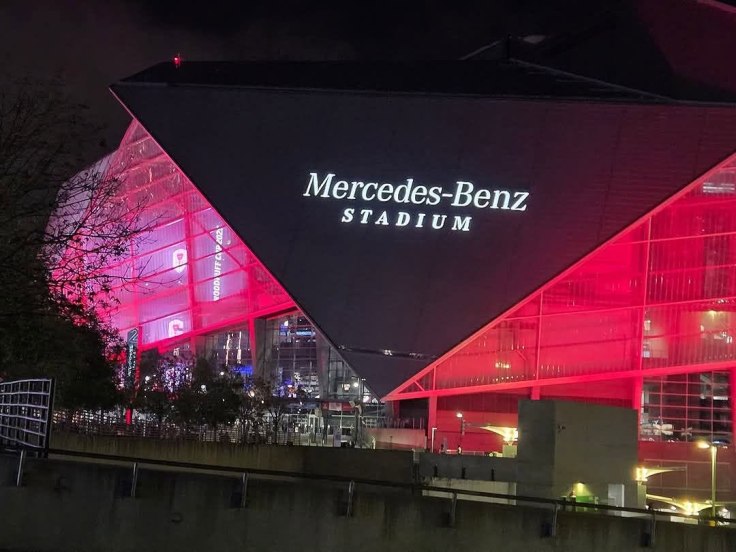
My sister works for a multi-national corporation. Her division won a competition, and she invited me to the celebration event last weekend. It was a fabulous opportunity to spend time with my sister, meet many of her colleagues, and enjoy being “spoiled” as a guest. We flew to the world headquarters in Atlanta, took a tour, got dressed up and attended the “event.” They had prime rib, chicken wings with peach barbecue sauce, shrimp, a variety of pasta dishes and vegetable sides, desserts, beverages, and tons of “bling.” They gave out hats, patches, pins, bandanas, light-up bracelets, rings, and glasses, leather bookmarks, robot-drawn caricatures, photos, bags, and more. There was a private concert with a major musical artist, as well as a drum corps, trampoline artists, people walking around on stilts, and ladies in LED costumes dancing. It was like a Circus and a visit to Disneyworld all wrapped up together.
What does any of this have to do with prayer (or bruised kneecaps)? I’m getting to that…
My description of this weekend may not seem to include God, but He was definitely there every step of the way. We made it to the airport with plenty of time on Friday. This was important because my sister had mobility issues and cannot walk quickly through the airport. Right at the entrance, there was a lady from our airline who confirmed that a porter would be able to take my sister in a wheelchair directly to our gate, saving us both time and stress. He was amazing, helping us feel comfortable and even festive as we waited to board. At our gate, we were informed that our seat assignments had changed– we were right behind first class and had extra leg room!
The flight was terrific. I had not flown in a few years, and I always like to fly– to see clouds from the top, to see whole farms and villages rolling out below; to see rivers and hills and mountains from a distance and to realize just how big the world really is. It also reminds me that I am incredibly small and weak, but that God is bigger, more powerful, and more wonderful than anything I can see (or even imagine) from the airplane. Mary and I were able to chat, “catch up,” and reminisce as we sailed through cloudy skies and bumped pleasantly along with minor turbulence.
Then, mid-flight, we were told that our plane might have to divert to Montgomery or Birmingham due to a storm front in Atlanta. All or our arrangements had been carefully planned, and while we might not miss the event entirely, a delay for refueling or worse, having to change planes, would make us late and leave us with no time to check in at the hotel or change into our dress clothes! Yet, minutes later, our pilot informed us that all the details “had been worked out” so that we would land in Atlanta on time! Coincidence? I don’t think so!
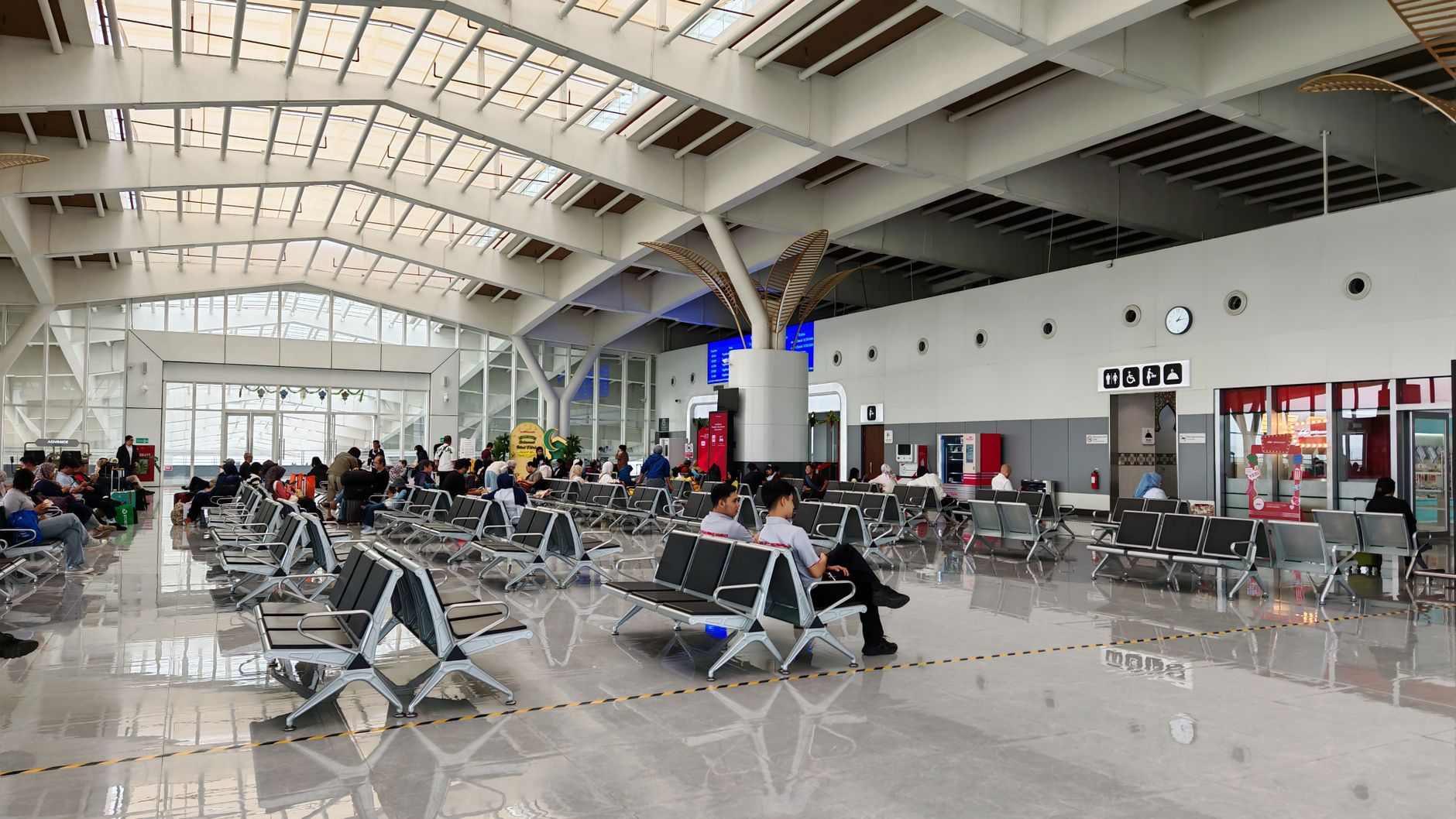
We arrived at the Atlanta airport and were immediately surprised to learn that the wheelchair my sister requested was not only not there, all her information about the flight we just deboarded had been lost– they had no record that she had ordered a wheelchair, or even that she had been on the plane! But within less than ten minutes, all those details had been worked out, and we were escorted through the airport and taken directly and safely (by a very pleasant man from Senegal) to the area where we got an Uber to our hotel. The hotel had snacks and an event station where we were welcomed and made comfortable, and we were warmly greeted, not only by the hotel staff, but by many of my sister’s co-workers, including her boss’s boss’s boss! We had plenty of time, not only to change, but to take the tour we had planned earlier!
Returning to our hotel from the afternoon’s activities, we changed and went down to the lobby, where we were informed that, in spite of a last-minute cancellation, someone had been found to drive us (and another pair of sisters with mobility issues) to the event, instead of having to walk two or three blocks and several hundred yards through the gates and walkways at the stadium. More wheelchairs were provided for my sister and the other woman once we arrived at the venue, and my sister was warmly greeted (as was I) by more of her colleagues. This event could have been a nightmare of people pushing and shoving, jockeying for the best seats or the best food based on their seniority or title, chugging down free alcoholic drinks and becoming obnoxious, and generally behaving at their worst. Instead, it was civil, friendly, celebratory, and filled with people from all over North America, from all stations and positions within the corporation, enjoying a night of being together in one place and enjoying a well-earned celebration. One of the special guests of the night was the chairman of another large corporation– one known for His Christian values, which he spoke of freely!
We went back to the hotel, exhausted but strangely energized by the whole thing, and eager to enjoy the luxury of our hotel room. We had to wait several minutes for an elevator (due to the crowds returning from the event), which allowed us to meet yet another wonderful couple who were enjoying their anniversary. It has sometimes been my experience that when strangers have to wait in lines or ride through busy city streets, they can either get on one another’s last nerve, or they can become new friends. We made a lot of new friends in less than 24 hours!
The next day, we went to the Atlanta airport to get our flight home. Once again, we had a great porter who got us through security and even helped another couple who were struggling with her motorized wheelchair. The porter made sure we all stayed together until we had to split up at Concourse D. More new friends! We had plenty of time, so we walked down the long concourse (our gate was nearly the last one!) And that’s when disaster struck!
Have you ever had one of those moments when you know you are going to fall– you try to regain your balance, but you see yourself falling in a series of awkward stumbles and jerks, and the floor is rising rapidly to meet your face? Well, I ended up falling on my purse, which did a great job of protecting my rib cage. And I landed at such an angle that I did not hit my head or shoulder. I did not break or dislocate any of my bones. I did, however, land on my left knee and my right hand. Several people immediately came to see if I was ok. My knee and leg were throbbing, as was my hand near my thumb. But I was able to get up and walk, albeit painfully. I limped the rest of the way to our gate, waiting to see if I could hobble onto the plane and into my seat. We still had over an hour before our plane left, so I managed to hobble as far as a restroom and a snack bar (both within a few yards, thankfully) and back to the gate area, proving I could do so.
Yet God was there, too! My tumble could have been so very much worse. I could have required hospitalization in Atlanta (or even when I got home). I might have been concussed or suffered a sprain that would have kept us from making our final flight. Instead, I am sore, but able to recuperate at home, and write about my experience from the comfort of my own chair. And I have a much greater understanding of what my sister goes through each time she has to travel. My injuries are temporary and sharp– her pain is deep and chronic. I got to see how many wonderful people work to make it possible and even enjoyable for people with mobility issues to travel safely, and I was humbled to experience what it means to rely on the goodness of strangers.
They say that “the devil is in the details.” But this weekend, I was reminded over and over again that it is really God who shows up in the details. When God says, “I will never leave you nor forsake you” (Deuteronomy 31:6), it covers everything and everywhere from 35,000 feet in the air, to staring at the parquet flooring of an airport concourse– from being in a long line waiting for an elevator to being guided through a tunnel underneath a huge stadium–from help with reservations and transportation to meeting needs for companionship and connection, and yes, even recuperation. God was there in every (even painful) step of the way!
This weekend saw blessings– from prime rib at dinner, to bruised kneecaps (not normally considered a blessing), and I’m grateful, knowing God saw all of this in advance and provided just the right help in His time!
We may not always see God’s hand at work in the moment, but rest assured that He is in control, that He is right by our side every moment, and that we can trust Him to work out the details!
I can do all things through Christ which strengtheneth me. (Philippians 4:13 KJV)
I remember memorizing this Bible verse (in the King James version above) as a child. It is one of the most quoted (and, I think, misunderstood) verses I know. Taken out of context, it seems to promise unlimited potential for the Christian. I can… perform miracles, do six impossible things before breakfast, leap over a tall building, bring about world peace, and finish folding the laundry from last week!
The reality is that I can’t do ALL things. There are many things I simply cannot do– even as a Christian. I cannot grow six inches taller or shed 45 pounds overnight. I cannot cure cancer. I cannot bring about world peace. Christ CAN do any of that and more; and He can work through me to accomplish great things– more than I can do in my own power. But if I expect to do whatever I imagine or aspire to– I will be disappointed. Even with God’s Power working in my life.
But God is not only a source of power– He is the source of wisdom and love. And in His wisdom and love, he often limits what He will allow me to do. So, there are supernatural things I cannot do without God’s help and power, and there are seemingly ordinary things I cannot do without God’s permission and grace, because doing those things will go against God’s perfect plan.
I was speaking recently with a friend of mine from church. We were speaking of infertility– a problem we have both experienced. Most of the women I know who experience infertility, barrenness, multiple miscarriages, etc., have to come to terms with the ache of being “abnormal.” We assume that “normal” women can become pregnant and have children. We accept that sometimes a woman will lose a child in the womb. But when it happens over and over again, or when a woman can’t seem to get pregnant, it causes a woman to question her identity and worth. “Am I even a ‘real’ woman?” “What kind of woman can’t do the most basic “womanly” thing– give life?” We also have to come to terms with the fact that God has chosen to allow this in our lives. Does God still love me, or is He angry with me or punishing me for being “not enough”? How can God love me and let me suffer such emptiness?
And we’ve all heard stories– amazing stories in the Bible and elsewhere– of women who DID get pregnant through a miracle. Sarah, Mary, Elizabeth, Rachel, Hannah…In fact, we hear nothing of women who are barren in the old Bible stories…or do we? Anna in Luke chapter 2 is an old widow who lives in the temple. There is no mention of any children, only of her devotion to the Temple and to her God. Dorcas, who was raised from the dead by the Apostle Peter in Acts 9, is praised, not for her motherhood, but for her charitable deeds among her neighbors. Deborah, the prophetess and judge who led the Israelites into battle along with their general Barak, is mentioned as a wife, but not a mother. In ancient societies, very few women were singled out for praise outside of their roles as wives and mothers.
As women, we may question many aspects of our “role” in society. Some of us chafe at the traditional roles we are expected to perform, while others question why their traditional roles seem to be denied. I spent decades questioning why I remained “on the sidelines”– unmarried, lackluster dating opportunities, out of step with other women my age. When I first was diagnosed with Stein-Levinthal syndrome and told that it would almost eliminate any chance that I could become a mother, it was almost a relief. At least I could “congratulate” myself for not disappointing a husband I didn’t have, or go through the pain of watching him question his manhood when no children came, not knowing if the “problem” was his or mine. Other friends of mine question their role as “the weaker sex,” going to great lengths to prove that they don’t need a man in their life, or that they can compete with men for jobs, status, wealth, and power.
But God didn’t just create me to “DO” things. God created me to BE. And He created me to be in relationship with Him. And my experience gives me the opportunity to speak into the lives of other women who are hurting. I have found purpose and comfort, love and abundant joy, challenge and opportunity in the midst of infertility. And now that I’m in my sixties, I find it easier to reconnect with women my age who are empty-nesters, grandmas, widows, and “maiden aunts.” God has allowed us to DO many things.
I am struck by the fact that Philippians 4:13 was written by the Apostle Paul. Paul was in prison when he wrote this letter. “I can do all things” did not mean that Paul was able to escape prison walls or the sentence he was under. It didn’t mean that he could compel his friends to stay and attend to his needs. It didn’t mean that he could escape this “thorn in the flesh” that he wrote about in 2 Corinthians or defy the aging process. Paul didn’t mean that he could literally do “all” things. But he was reminding the Philippian believers of all the amazing things that he could and did do in his work as a missionary. He didn’t cheat death altogether, but he cheated it several times, living through beatings and shipwrecks and snakebites. He didn’t escape the thorn in the flesh, but he persevered in spite of it. And remarkably, though Paul never married or had biological children, he built relationships with people like Timothy, whom he considered a son. And He accomplished amazing things for the Kingdom of God!
So, no, I cannot do ALL things– I cannot do some of the miraculous things I want to do. Sometimes, it is even God’s will that I should be prevented from doing such things– even good and “normal” things– in order that God can mold me into a shape and for a purpose that is just right for HIS perfect plan. I may not see it in my lifetime or understand it perfectly. I will still grieve for what “might have been” in my life. But I will continue to experience joy in the journey the God has mapped out for me. And whatever He asks– well, I CAN do that! Not on my own, but beyond what I can imagine!
Have you ever been puzzled by prayer? Prayer is very mysterious. It’s difficult to explain how it “works.” I ask God to do something– sometimes I ask for very specific things. And if God chooses, He sends me exactly what I have asked for. But what if He doesn’t? Does that mean that He didn’t hear? Or does it mean that I am “out of favor” with Him? If God answers a very specific prayer, is it because I prayed for that specific answer or would He have done it anyway? Does my prayer change God’s plans, or does God cause me to pray what He wanted to do from the start? I can’t give a definite answer, because God’s ways are NOT my ways. I don’t fully understand how prayer operates.
But I don’t have to puzzle about prayer. I don’t have to analyze and dissect the various elements of prayer or of God’s Sovereign will in order to pursue prayer. Prayer has very little to do with any of the variables I can understand or control. Prayer is communicating (hopefully in an intimate and worshipful way) with a Sovereign and Holy God. If I could figure out the “how” I would not so treasure the WHO!
There are some guidelines, however, that make prayer a bit less puzzling and more practical:
Prayer isn’t about ME. I don’t have to be perfect, or eloquent, or righteous in order to call out to God. His answers don’t depend on who I am (status) or what I’ve done (performance). He doesn’t “grade on a curve,” and He doesn’t have favorites. “Whosoever” is a word that comes up often in Christ’s teachings, and I need to remember that NOTHING can separate me from the Love of Christ (see Romans 8:38-39), and ONLY Christ has made that possible (see John 15:5 and Acts 4:12)
Prayer isn’t about me, but it is FOR me. God already knows my thoughts, feelings, and attitudes. But He invites me to pray, so that WE can enjoy a relationship. God can survive and thrive without me, but I can’t live an abundant (and certainly not an eternal) life without Him. We were created to live in relationship– with others and with Him– and you can’t have a relationship without communication. And you can’t have a fulfilling relationship if the communication is only one-sided! God communicates with us in many ways– He’s given us His Word, He sends us the Holy Spirit, and He sends wisdom and encouragement through other people. But prayer is our way of responding! Browse through the Psalms and see how deeply personal prayer can be!
Prayer ISN’T transactional. Because prayer is meant to be relational, it is deep and personal– not shallow and transactional. In other words, it isn’t about WHAT I’m praying for or WHAT God gives in response. It is about sharing WHO we are– prayer may or may not answer my immediate circumstances, but it WILL answer (eventually and satisfactorily) the cry of my heart and allow me to know God more fully. While I can keep a record of how and when God has provided answers to my prayers, to remind me of His tender care or to encourage me as I face new challenges, I do not need to keep a “scorecard” of God’s answers– it is not a competition or a power play.
Because prayer is not transactional, it’s not really about the results. Of course, that is what we, in our lack of knowledge and understanding, can point to and keep track of, but Faith causes us to “see” the results that don’t yet exist (see Hebrews 11:1 and 6), and have confidence that God WILL act according to His Holy character and perfect will (see Hebrews 11:39-40). We pray BEYOND what we can see and know, because God is greater than our circumstances!
Prayer isn’t a procedure; it is a process and a pursuit. Because prayer is part of an ongoing and deepening relationship with God, it is never finished. We may say “Amen” at the end of each prayer, but really, prayer is a continuing conversation, not a task to complete. God may not answer a single “chat” when He wants to develop a conversational thread or an ongoing discussion.
God’s ways and plans are mysterious and majestic in ways my mind cannot grasp. I can puzzle and protest and whine about what God chooses to do, and when and how He chooses to do it, but I cannot tell Him how or when or why He MUST do anything. Because I can only guess at outcomes and results. God KNOWS. And even when His ways don’t seem to make sense, I can trust Him, not because I know the answers, but because I know HIM!
“When peace, like a river, attendeth my soul;
When sorrows, like sea-billows roll–
Whatever my lot, Thou hast taught me to say,
‘It is well–it is well– with my soul.'”
As I write this, all is not well with my life. I have bills looming, a leaky roof, and I’m grieving a recent family loss. I worry about my husband as he travels and faces danger on the job, about my aging relatives, and our kids and grandkids. All is not well with our nation– we have anger, division, violence, and strife; a breakdown of families, moral decay, and corruption. All is not well with our world–nations are at war, we are destroying our environment, and all the progress that was supposed to make our lives easier seems to have made life more complicated and frantic, instead.
But all is well with my soul–not because of anything I have done or anything I do– peace and assurance are mine solely through the grace of God, which he gives in abundance.
Prayer does not bring peace automatically, nor does its haphazard and occasional practice guarantee instant or lasting peace. Meditation, solitude, and other prayer-like exercises may bring a temporary calm, a respite, and a relief. Closing our eyes and laying our burdens at his feet can bring the same feeling. But prayer is more than just an exercise in making us feel better. It isn’t meant to take us away from our circumstances, or to hand them off to God while we waltz away from our burdens. Jesus said in Matthew 11:28-30, “Come to me, all who labor and are heavy laden, and I will give you rest. Take my yoke upon you, and learn from me, for I am gentle and lowly in heart, and you will find rest for your souls. For my yoke is easy, and my burden is light.” Coming to God in prayer doesn’t make burdens disappear. But it does mean that we no longer carry them alone, and that gives us rest for our souls. God is not in the business of making our lives easy, carefree, and comfortable. But he promises that as we share our lives with him, trusting that his ways are good and righteous, he will not only come alongside and share our burden, he will teach us and give us rest.
This is why the pursuit of prayer is so important. The discipline of daily and personal prayer teaches us how and where to find peace that lasts– peace that “passes all understanding” (Philippians 4:6-7). Like the cool, refreshing water of a river soothes and gives life, so God’s grace flows into our lives as we walk and talk with him every day.
I wrote last time about that peace, and how it comes from having our hearts and minds “stayed” or fixed on Jehovah. It was modeled for us by Christ, who spent hours in prayer– in private prayer and praying with, for, and in front of others. Jesus often went into the wilderness to spent time alone with God– praying, meditating, and listening to His Father’s voice. As Peter encouraged the early believers, we are to be “..casting all (our) anxieties on Him, because He cares for you” (1 Peter 5:7 ESV)
We don’t pray because we are already at peace. We pray because that is where we FIND peace!