As I edit this, the sun is shining and melting the last of an early spring snow. It’s been a mostly pleasant day, and I’m writing this in anticipation of a pleasant week ahead. This will post on Monday morning– a brand new week, hopefully filled with new opportunities and adventures. Of course, not every day is like this. Some days are dreary, full of stress and anxiety, and filled with challenges and even tragedies. But I have been thinking about a song I learned in childhood, one that has blessed me over the years and helped me on many a dreary day, as well as on days like today.
“I have a song that Jesus gave me, It was sent from heav’n above; There never was a sweeter melody, ‘Tis a melody of love.
I love the Christ who died on Calv’ry, For He washed my sins away; He put within my heart a melody, And I know it’s there to stay.
In my heart there rings a melody, There rings a melody with heaven’s harmony; In my heart there rings a melody, There rings a melody of love.
‘Twill be my endless theme in glory, With the angels I will sing; ‘Twill be a song with glorious harmony, When the courts of heaven ring.
On days like today, it is easy to sing a happy tune– sunlight, shimmering snow and icicles, viewed from my nice cozy perch by the window–but the joyful song that Jesus brings rings through good days and bad; sorrow and stress; triumphs and failures. It is eternal and filled with the limitless Love of God. It is a song of peace that passes all understanding, and a confidence that sees beyond circumstances.
Sometimes, when life seems devoid of light and peace, it has less to do with our actual circumstances, and more to do with our unwillingness to look up from them. Throughout the Old Testament (and even in the New Testament) people would create songs as part of their worship–some songs celebrated God’s provision and protection; others spoke of His character and His faithfulness. But these songs weren’t just for celebration and services of worship– they were used to remind us in good times and bad, that God’s love never changes. The same God who brings victory and miracles will be with us in times of despair. The same God who sees us in our most desperate hour of need is there with us when we are enjoying a beautiful sunset.
Today, I pray that we would take a few moments, find a song or a Psalm, and just sing a prayer to our maker. It doesn’t have to be a peppy song of praise– it may even be a song of yearning or anguish– but let it be a song that rises above our day and finds the ear of the One who loves us better than anyone else. It doesn’t matter if you can’t carry a tune; God listens to the heart! Sing the song that Jesus gives to you today. Your heart will be blessed. And it will bless the very heart of your Maker, as well.
“Look at the proud! They trust in themselves, and their lives are crooked, but the righteous will live by their faith.”
Habakkuk 2:4
Is it rational to believe in God? About three and a half centuries ago, the French philosopher, Blaise Pascal, drew up what is now known as “Pascal’s Wager.” In it, he gives a “rational” justification for belief in God (theism). In it, he posits that if God doesn’t exist, it doesn’t matter whether or not we believe that He does. But if God is real, the consequences of our belief or denial are crucial. If the God of the Bible exists (along with heaven and hell, sin and salvation), the failure to believe will lead us to lose everything; the decision to believe will lead us to gain everything…there is no in between.
I’m not a big fan of Pascal’s Wager. Not because it’s bad logic, per se, but because it depends on belief, but not faith.
What’s the difference? Belief says that God exists–that He is supreme, that He controls our destiny, and that He must be obeyed. It will produce a life of theistic obedience to God’s Law, including a life of “good” works, moral conduct, and “right” thinking. But it will not produce a Godly character. It will not be a life of righteousness.
Faith, on the other hand, believes that God not only exists, but that He rewards those who earnestly seek Him (Hebrews 11:6) and that He so loved the world, that He gave His only Son (John 3:16) to save us from Sin and Death (1 Corinthians 15:56-7). It is not our belief in God’s existence that saves us and gives us life; rather it is Faith by His Grace! (Ephesians 2:8-9) in the nature and character of God– in the atoning work of Jesus as revelation and proof of His character– that saves us from Sin and Death.
Pascal’s Wager is a way of thinking about God. It can lead someone to believe, which can produce a life of Faith. But it can also produce a kind of life that is ruled by grudging obedience, resentment, and pride in one’s own powers of self-control and understanding. Faith lives in dependence and humility, and joyous gratitude for God’s gifts.
The prophet Habakkuk, who first wrote the phrase, “the righteous will live by faith,” learned this lesson in dramatic fashion. He “believed” in God– in His righteousness and justice. He spoke to God about the wickedness he saw all around him, among his own people. God gave him a difficult answer: Justice was coming in the form of an invasion by the Babylonians– a group known for their wickedness and cruelty and lack of justice! God’s answer was shocking and counter-intuitive. But Habakkuk chose to believe and put his faith in God’s Eternal Character, as God revealed the “rest of the story.” Israel would suffer; justice would be cruel–but God’s glory and His salvation would triumph. Habakkuk’s response was a song of praise. Regardless of his circumstances, Habakkuk would wait and rejoice, knowing that God’s ways are perfect.
It’s not difficult to say we believe in God. But are we living in Faith? I find it easy to let circumstances–especially injustice and wickedness–overwhelm me and rob me of peace and joy. But I find it comforting to know that my momentary doubts cannot stop God’s promises, His Mercy, or His power to help me live by Faith. That’s due to His righteousness, not mine, but through Christ, I can trust in it, walk in it, and live in it!
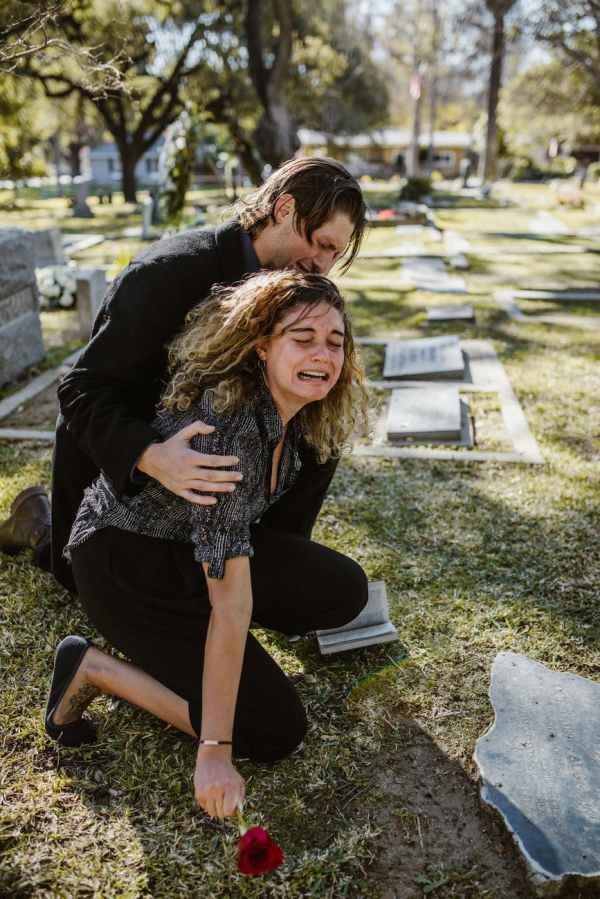
As I write this, I am keenly aware that one year ago, I was at a graveside, saying farewell to my mother. Grieving comes in waves. I rejoice that she is in heaven, and I rejoice that she had a good, long life, and that she didn’t suffer very long at the end. But there is still an ache– wanting to share a memory or a laugh and knowing she isn’t here; questions I didn’t know I had, but now she can’t answer them; just missing her voice and her smile. My father has been gone for 25 years, and the same ache still hits at odd moments.
Sometimes, grieving brings us closer to God. At other times, we can let our grief drive us away from God. But God doesn’t move. He is ever-present. And He reminds us that He is “close to the broken hearted” (Psalm 34:18). When we are grieving, that is a blessed reminder. Grief tends to isolate us. “No one understands…” “Laugh, and the whole world laughs with you; cry, and you cry alone.” We see the “rest of the world” enjoying life, seemingly untouched by sorrow, and we feel abandoned twice over.
As Christians, we are called to follow Jesus’ example, and be close to the broken hearted. We should be the ones ready with a hug, a listening ear, and a shoulder to cry on. We should be the ones who, like the friends of Job (before they offered ill-advised ‘counsel’) are willing to sit with our suffering friends for days at a time, offering the comfort of solidarity and ‘presence.’
My family was blessed with a host of Christian friends and family who comforted us in the days and weeks after Mom’s passing. They still ask. They still share memories. They still pray for us. And in return, we do the same. God does not want any of us to suffer alone.
And this is also true for those who suffer a broken heart for other reasons– divorce, the loss of a home to fire or flood, the loss of a job, a wayward son or daughter– it is important for us to draw strength from others, and offer strength in our turn. But the source of our strength is Jesus, who suffered on our behalf, and rose victorious over death and separation. When “no one” understands, He DOES. When the world leaves us grieving alone, He is THERE. And when we see someone else grieving and suffering, and we don’t know what to do– He gives us the strength and the compassion to reach beyond our own resources and offer comfort.
On our own, we can be like Job’s friends– after awhile, we try to offer solutions, explanations, even judgment about another’s grief. “It’s time to move on.” “Just get over it.” “Well, if only you had…” None of these are helpful. Jesus never said any of those things to the people He came to comfort. Instead, He encouraged them to look to Him as the “resurrection and the life.” (see John 11:25).
Today, let us do the same. There are hurting people all around us. Let’s be an encouragement to others to embrace life– even when we are broken hearted.
I’ve been reading in the book of Numbers this week. Numbers is not the most exciting book of the Bible. Many of the chapters are about the census, or about further rules and regulations concerning sacrificial offerings, etc.. But the chapters from 11-15 detail a series of rebellions– grumblings against Moses and efforts to return to Egypt. These rebellions happen after over two years after God had led the people out of Egypt. For two years, they have been protected, fed, sustained, and instructed by God himself. His spirit has appeared as a pillar of cloud by day and a pillar of fire by night throughout their journey. They have had manna and quail to eat, water from the rock to drink, and they have seen the vast army of Egypt drowned in a matter of minutes, while they were led through the sea on dry land!
And now, they are so close to the “finish line.” They are on the very doorstep of the land of Canaan; the land God had promised to GIVE them. All that is left is for Moses to send out some scouts to bring back a report about the land– its cities and farmland, its people and its produce. Those two years must have seemed like a lifetime, but now it would be coming to an end. God would provide a homeland; a place to build houses, raise crops, rear their children, and settle into lives of peace and prosperity.
So what happened? The scouts brought back a factual report. The land had fortified cities, and lush farmland. It was already planted with plenty of fruit trees and vineyards. And there were ancient people groups with mighty warriors. Israel had just taken a census. They also had mighty warriors, and a lot of them! Moreover, they had God’s promise that the land would be GIVEN to them as their inheritance.
They were so close! Victory, rest, and prosperity were so close they should have been able to taste them. Instead, their warriors moaned and wailed like infants. The same people who had vowed to follow the Lord at Mount Sinai, now planned to walk away from His promised prize. They decided to turn around and go back to slavery in Egypt–the same Egypt that God had decimated two years earlier by sending plagues and destroying its army.
Two years of camping and living “on the road,” lost in two hours of grumbling and fear-mongering. And the punishment? Forty years of needless wandering–time to realize what had been thrown away in petty worrying and imagining the worst. Time to regret their reaction and their failure to trust God. Time for God to show them, once again, His ability to keep them safe and sound in the desert places.
And the learning curve would be a steep one. Almost immediately, a group decided that they would “prove” to God that they were ready to conquer Canaan– on their own. But it didn’t work. Then a group decided that Moses was to blame for their misfortune. But they were “swallowed up.” In the forty extra years of wandering, group after group would challenge Moses (and God) and be destroyed from within. Moses, who had already lived forty years in the wilderness tending sheep, would have to repeat the task, shepherding the entire nation of Israel for forty long and difficult years. And even he would fall victim to his own frustrations, calling water from another rock, but doing it “his” way. Even Moses would fall in the wilderness, never getting to enter the promised land.
How many times have you noticed that the closer we get to a goal, the more likely we are to fall short. We sabotage our own efforts, or we rebel against good instruction. Sometimes we just give up a few yards short of the finish. We are just over half-way through the month of February. What goals or resolutions did you make for this year? How many of them have you stuck with?
Here are three things I take away from the lessons of Numbers 11-15:
Look Beyond. Don’t take your eyes off the prize! The scouts’ report was not all bad. Yes, the cities were walled and the warriors were big and fierce. But the walls of Jericho were eventually brought down without a single battering ram, siege ramp, or arrow! Don’t ignore the trials ahead, but don’t let them blind you to the blessings beyond them!
Look ahead, not behind. Don’t waste time living in past comforts or running from past mistakes. God has something better than whatever we’re going through now. But God isn’t waiting on the other side. He is beside us, around us, WITH us right now. He is patient with us. It may take us two years (or forty-two!) to reach a goal, but if we learn to follow God, we will never be forsaken.
Look UP! God’s spirit didn’t appear on the ground around the Israelite camp. He appeared as a pillar. God called Moses UP on Mount Sinai. We need to stop looking back at our past, or around, comparing ourselves to others, and look at God’s promises. In relation to our goals and dreams, we need to LIFT them up in prayer! Daily!
We are so close! Let’s keep going in the right direction towards God’s promises.
Across from our shop, there is a mural that tells the story of the first “Orphan Train.” In October of 1854, 45 children– some orphaned, others abandoned–arrived in southwest Michigan from New York City. Conditions for such children in the large cities were dangerous. Floods of immigrants included children who had lost their parents on the voyage to America, or who had been separated from their families upon arrival. There were very few orphanages, and almost no resources dedicated to child welfare. Hunger, disease, crime, and exposure to the elements meant that many children never lived to maturity. Most of them lived on the streets; ignored, preyed upon, or simply forgotten. A group called the Children’s Aid Society, founded in 1853, had tried helping children– especially boys–but their limited resources were overwhelmed within the first year.
Section of the Orphan Train Mural, Dowagiac, Michigan (Ruth Andrews)
It was the idea of a man named Charles Loring Brace that large numbers of these children could escape the dangerous environs of the city and find safety and hope in the expanding “West.” With the help of the new railroads, groups of children could travel west, where kind-hearted families could adopt them. Food, shelter, education, fresh air, opportunity, and a loving family- this was the promise of the orphan train. For some children, it was the start of a wonderful new life. For some, it was trading a hard life in the city for a hard life on the frontier.
I can only imagine how frightening it must have been for the first train-load of orphans to travel here. Few people had ever traveled by train in those days. Some of the children had never traveled more than a few blocks from where they had been born– had never seen a farm or a forest. Part of their journey was on a steamboat. The journey would not have been comfortable, but it would have been exciting and even terrifying at times. They had no guarantee of finding homes or families who would be willing to take care of them– only the hope that someone might.
What does this have to do with prayer? Well, the obvious connection would be that everyone involved with this venture must have prayed diligently. All 45 children were placed with local families in that first journey. And the success of this first placement encouraged future endeavors. The “orphan trains” ran for 75 years, and carried nearly a quarter of a million children to new homes throughout the growing United States. And while not every child found a “happy ending” with their new family, most of them survived to create a new life as adults–an opportunity many other orphans had been denied.
But it struck me today, as I was looking at the mural and thinking about the fate of these children, that we are or were all in a similar situation. I am so thankful to be able to pray to my Loving Father– but there was a time when I was lost and without hope. There was a time when Sin had made me an orphan. I was alone and frightened and helpless to save myself. Like the orphans in first part of the mural, I was sick and sad, my best intentions were no more than tattered rags. Even as they line up to board the train, their faces show fear and pain.
It can be frightening to call out to God– frightening to leave the life we know, even when it is dangerous and unhealthy. God’s way takes us to uncomfortable and unfamiliar places–we can’t see the road ahead, and we don’t know what our “new” life will be like.
As I gaze once again at the mural, the last section shows an idealized version of the “new life” experienced by the riders of the “Orphan Train.” It shows a groups of children in a circle, holding hands and playing in the sunshine among grass and trees, while a bird flutters nearby. It is a heavenly place– the children’s clothes are clean, and they look healthy and happy. And while this is an ideal, rather than the reality for some of the children, it is a reminder of the contrast with the life they left behind.
Thanks be to God for His Grace that rescues us from the ravages of Sin. He offers us an escape to a new life– complete with a new family and a glorious hope of Heaven. He offers full adoption– guaranteed by the blood of His own Son– for those who will choose to leave their old life of Sin behind and travel as an orphan on His own “Orphan Train.”
4 I mean that the heir, as long as he is a child, is no different from a slave, though he is the owner of everything, 2 but he is under guardians and managers until the date set by his father. 3 In the same way we also, when we were children, were enslaved to the elementary principles of the world. 4 But when the fullness of time had come, God sent forth his Son, born of woman, born under the law, 5 to redeem those who were under the law, so that we might receive adoption as sons. 6 And because you are sons, God has sent the Spirit of his Son into our hearts, crying, “Abba! Father!”
I learned a “lot” studying the character of Abraham’s nephew, Lot. (Read Genesis 13, 14, and 19) Today, I want to summarize…
Our lives depend on choices, rather than chances…Lot experienced many opportunities and some tragedies beyond his control. But even when God gave Lot some amazing opportunities– even when He offered miraculous rescue–Lot continued to make bad decisions or no decision at all. When have I done the same? Do I wait for chance and circumstance to find me? Do I drift along without making wise choices, allowing life to carry me to my next destination? Or do I seek God–His wisdom, His Word, His provision–and choose to obey Him?
Not making a choice IS making a choice…Lot chose to live outside of Sodom– but he ended up in the city. Lot spent much of his time NOT making decisions or plans. He chose inactivity, chose to be vulnerable to attack, chose to live in a city so wicked it was doomed to destruction, chose to compromise and bargain with his wicked neighbors, chose to drag his feet (literally) about leaving, chose to let his daughters control his destiny and legacy. How often do I pray for God to direct my steps and guide my life, and then sit on the couch doing nothing? Lot’s story doesn’t include a single instance of Lot taking initiative. He simple reacts to, takes advantage of, or accepts whatever opportunities or misfortunes befall him. And he doesn’t see his inactivity as a sin or rebellion against God. But he never CHOOSES to follow God; to seek Him or obey him. He assumes that not choosing active rebellion and evil is enough. Have I done the same? Do I think that because I am not actively involved in wickedness that I am honoring God with my inaction and apathy?
You cannot live surrounded by evil and not be hurt by it. Ignoring the warning signs, tolerating evil because it becomes familiar, turning a blind eye to the ways others are being hurt–if we are not part of a solution, we are part of the problem. Lot had options– he could have moved away from Sodom; he could have stayed outside the city; he could have spoken up about the evil all around him–he did none of those things. He lived a compromised life; a life in denial. What have I done to flee evil? To speak out against injustice and oppression? To stand up for what is right? When have I winked at evil, or turned a blind eye to wickedness? How often have I sat in uncomfortable silence while someone else suffered? Because “it’s not my problem.” “One voice won’t make a difference.” “It’s just the way they are.” “I don’t want to offend anyone by getting involved. It’s none of my business, anyway.” Lot and his family suffered greatly, even as they tried to “coexist” with their wicked neighbors.
That’s a lot to consider in the life of one man. But more importantly, there are a “lot” of things to learn about the character of God in this story:
God sees us. God included Lot in the larger story of Abraham– He gave an orphaned boy a family, a fortune, and a future. Lot had done nothing to “earn” God’s protection or favor. He certainly did nothing to deserve being rescued– twice– and he did nothing to show gratitude for either rescue. But God didn’t make a mistake in showing Lot mercy. God wasn’t surprised by Lot’s life choices– He didn’t “fail” Lot, and He didn’t forget about Him– even after generations.
God is a judge. We like to concentrate on God’s mercy and blessings, but God’s goodness requires that sin, wickedness, and evil be punished. God doesn’t delight in punishment, but He will not forget the cries of the oppressed. Those who practice evil and seem to “get away with it” will face judgment. If they do not seek God’s forgiveness, they will be destroyed. The cities of Sodom and Gomorrah were destroyed by supernatural fire; Lot was destroyed by his own fears and compromises.
God is merciful. God destroyed Sodom and Gomorrah, but He was willing to save the cities for the sake of as few as ten “righteous” people. We know that “There is no one righteous, not even one..” (Romans 3:10), but God thoughtfully listened to Abraham, and promised to seek for anyone who could be considered worthy of saving. That He saved only Lot and his small family was for Abraham’s sake, not Lot’s– yet save them He did. God doesn’t save the “deserving”– He saves the lost!
God’s plans are perfect, detailed, and eternal. God saved the unworthy Lot, and even when his family repaid God’s mercy with incest, violence, and wickedness against Israel, God orchestrated the story of Ruth– a story of love, faithfulness, and redemption pulled from the ashes of this tragic story in Genesis. God has a plan for each of us– He already knows if we will participate eagerly in a story of beauty and blessing, or be dragged through a story of compromise and tragedy. But ultimately, our story will be woven into a tapestry of God’s faithfulness, righteousness, and restoration. How we respond will change our life, and potentially, the lives of generations to come. And God will give us opportunities to choose lives of obedience, wisdom, and faith. No matter if we live in Sodom, or wasted earlier chances, we can choose rescue and redemption because of God’s great love and mercy!
The Bible never records a prayer by Lot– whether he DID pray is a matter of speculation. But it seems clear that Lot did not seek God in any meaningful way– he didn’t obey God, he didn’t honor God, he didn’t walk with God as his uncle did. Abraham’s life wasn’t perfect– he lied about his wife, became impatient for God’s promised son and took matters into his own hands– but Abraham learned from his mistakes. He humbled himself, looked to God for wisdom, and trusted Him for the next step. He honored God, built altars, and called on the Name of the Lord. May we call out to the same God of Abraham for guidance and wisdom today.
When I was a late teen, and into my early twenties, I loved English pop music, including the duo, Wham! Their music was bubbly, upbeat (mostly), and easy to sing along to. I listened along, sang along, watched their videos, and danced along. When the duo broke up, I was eager to follow the rise of singer/songwriter George Michael, whose first two solo albums I bought and listened to, as well. But the tone of his solo music was different. There were danceable, singable tunes, but they were darker and more cynical. And many of the songs were less about enjoying life and more about social commentary, confusion, and even despair. The songs were well-crafted, but they were haunting, rather than enjoyable or uplifting. They spoke of sadness, depression, and world-weariness.
One of the songs that has haunted me for years was from his second album, “Listen Without Prejudice.” In it, he talks about greed, poverty, apathy, and a loss of innocence. It’s called “Praying for Time,” but the tone of the song suggests that time has all but run out.
And yet…
One of the ideas that still shines through the words of the song is that prayer–specifically praying for time–may be the only hope that we can still cling to. And in a time of darkness and hopelessness, prayer can reach beyond “wounded skies” to a God whose Grace extends even to His children who have “slipped out the back door.”
There is something about the idea of time as a gift from God that stays in the soul, long after most hope is gone. I think it is why we are so driven by the concept of time and time “running out” as we hustle through our busy lives. I think it is why we spend time avoiding “down time” and “alone time” and the quiet time we should take to reflect, meditate, and yes, even time to pray. And I think, too, that it is why we recognize that wasted time is a sin– that there is a purpose in our time on Earth that transcends having “fun” or living for our own selfish aims. George Michael often used “spiritual” words and phrases for his songs– often with a cynical twist, pointing out some of the hypocrisy he saw around him (and occasionally, within himself).
These are the days of the open hand They will not be the last Look around now These are the days of the beggars and the choosers
This is the year of the hungry man Whose place is in the past Hand in hand with ignorance And legitimate excuses
The rich declare themselves poor And most of us are not sure If we have too much But we’ll take our chances ‘Cause God’s stopped keeping score
I guess somewhere along the way He must have let us all out to play Turned his back and all God’s children Crept out the back door
And it’s hard to love, there’s so much to hate Hanging on to hope When there is no hope to speak of And the wounded skies above say it’s much, much too late Well, maybe we should all be praying for time
These are the days of the empty hand Oh, you hold on to what you can And charity is a coat you wear twice a year
This is the year of the guilty man Your television takes a stand And you find that what was over there is over here
So you scream from behind your door Say, “What’s mine is mine and not yours” I may have too much but I’ll take my chances ‘Cause God’s stopped keeping score
And you cling to the things they sold you Did you cover your eyes when they told you That he can’t come back ‘Cause he has no children to come back for
It’s hard to love, there’s so much to hate Hanging on to hope when there is no hope to speak of And the wounded skies above say it’s much too late So maybe we should all be praying for time
“Praying for Time” George Michael, Listen Without Prejudice, 1990 (lyrics taken from Lyrics.com)
In an interview, George Michael analyzes his own lyrics:
While he mentions “He” and “God,” it is clearly humanity he blames for the apathy and selfishness, greed and scandal, the “empty hand” and “wounded skies” mentioned in the song. And his repetition of “all God’s Children” and its counterpart, “no children to come back for,” is aimed at US– people who “slipped out the back door,” moving away from God and embracing our own wickedness. WE have entered this time of hopelessness and despair. WE have crafted it in our own ignorance, and then in our own pride and stubbornness. But we can still pray for time– time to repent, time to return, time to reach out to others with compassion and hope. What the song just barely misses is that prayer can open so much more than just time. Prayer can bring renewal, justice, redemption, and eternal hope! God hasn’t stopped “keeping score,” by any means. But He is holding back the wrath and judgment we all deserve, giving us time to seek Him! Most of all, we can pray, not with desperation, but with confidence– even in times of confusion and distress, because we have an Advocate, Jesus Christ, who hears all our prayers– desperate, confused, ashamed, angry, hopeful, offered with no more than a mustard seed’s faith.
George Michael, like all of us, lived in a fallen world. He was looking at the world, and seeing injustice, greed, apathy, corruption, violence, and the ravages of Sin. His own life was plagued with sorrow, tragedy, pain, injustice, drug addiction, betrayal, and the effects of Sin– both his own and others’. I don’t know if he ever found peace and hope in this life. I hope so. His gifted life ended early and tragically. But his song lives on with a warning, and a hint of promise, too.
We SHOULD all be praying for time– time to change. Time to repent, and seek God’s wisdom. Time to reach out to a darkened world with more than despair and dark analysis. To reach out with the Hope of Christ, who brings Redemption, Justice, and MERCY! We should be praying for time to meditate on the Goodness of God, as well as time to see the needs of others. We should be praying for wisdom to share our resources, and to multiply the good we can do– things that only God’s power can really accomplish. We should be praying for connection– restored relationships, and renewed fellowship with the Father. We should be praying for time to pray! Not just a desperate kind of prayer that this song suggests, but a lifelong pursuit of prayer that connects us to the Source of Hope, Joy, Peace, Power, and Love.
This year, while I don’t often listen to George Michael’s music anymore, I will be “praying for time.” And I will be investing more time in prayer! I hope you will join me in the time God has gifted us with this year!
For more analysis of the song and its relation to prayer see the following:
Every year, I try to read the Bible from cover to cover…a little each day, beginning with Genesis on January 1, and ending with the last of Revelation on December 31. So yesterday, I finished the last verse of Revelation 22– AMEN! And today’s reading begins with “In the beginning…”
Once again, I will read the Bible as a cycle– “beginning” to “AMEN.” But the Bible, like most other books doesn’t really have a beginning and an end. Things happen “before” the beginning, and things happen after “the end.” The Bible tells us of the beginning and the end of our created earth. But where Genesis begins with darkness and void, Revelation ends with light and joy and victory! ”They all lived happily ever after…”
And I am reminded that God’s character shines through every page of His Word. He makes all things new! He creates! He redeems! He Blesses!
As we go into a new year, we can take great encouragement from the message of the Bible. Every year– every day, and even every moment–is filled with God’s presence and His promise of eventual renewal and redemption. We face an uncertain year in terms of human achievement and “progress.” War, famine, economic collapse, natural disasters, disease, heartbreak, and death– all are possibilities and even probabilities in our fallen world. But the Bible teaches that our problems, as enormous as they seem to us, are not outside of God’s power to redeem and redress.
His plan is to recreate, rejuvenate, and replenish. All our relationships; all our ambitions; all the landscapes of all our dreams– will one day be reshaped. All the terrors and tribulations of Sin and Death will be vanquished. There will be no more need for fear or distrust or even cautious optimism. It will be NEW– not just “new and improved”, but new and perfected! Whatever we pray for in the coming year, we can know that God will bring situations full circle from tragedy to eventual triumph. It may not happen today; it may not happen this year or even in this lifetime. But God keeps His promises from “the beginning” to the Final “AMEN!”
And on this first day of a New Year–let’s rejoice that God is the God of all New Things; the Maker of All Good and Perfect Gifts; the God who is able to do exceedingly abundantly above all that we ask or imagine (see Ephesians 3:20-21)!
Now faith is confidence in what we hope for and assurance about what we do not see. 2 This is what the ancients were commended for.3 By faith we understand that the universe was formed at God’s command, so that what is seen was not made out of what was visible… 6 And without faith it is impossible to please God, because anyone who comes to him must believe that he exists and that he rewards those who earnestly seek him.
Faith is essential to prayer. Not only is it essential that we know the truth, we must depend on it. Those who lift up general prayers to some unknown “force” in the universe have no real hope that their prayers will be heard, instead of bouncing around among the planets in silent expectation. We pray to a God who sees, hears, loves, and works among us. And He will answer our prayers– in His way, in His time, and to our ultimate benefit.
That does’t mean that we must blindly believe everything we hear about God, or that we must agree exactly with everyone else who claims to believe. None of us has ever seen God face-to-face, nor can we claim perfect knowledge. But there are certain truths that do not change– God is GOD; creator, ruler, unchanging and Holy. God is who He says He is, not who someone speculates or imagines Him to be. God is mysterious, but He is “Knowable”–we see His character in the natural world, and we can see His reflection in the people around us who are all created in His image. Most of all, we have the testimony of Jesus Christ and of all who have followed Him and been transformed by Him. To all who earnestly seek Him, He has given us His Word, and His Spirit to guide us. And God is Good. Even though nature (and human nature) has been tainted and twisted by sin, God remains true to His own goodness. Even in the hard times, when God seems distant–especially when He seems distant–faith looks beyond our present circumstances, and the taunts of our enemies, to remind us of God’s providence, His Power, and His promises. Our present trials and calamities are not beyond His ability or His willingness to turn to good purpose, and they do not compare to the promises God has given.
Faith is essential to prayer, but so is faithfulness. Prayer is part of a growing relationship with our Maker. And like any relationship, it must be maintained. God is eternally faithful, but we are not–not in our own power or in our own will. And our faith, without faithfulness (in prayer, in devotion, in our everyday thoughts and actions) will wither and die. The same thirst we have for prayer in the valleys of life should be present when we reach the mountaintops. The same need we have to cry out for help should be the need we feel to cry out in praise. This will not happen without discipline, developed by daily seeking His face.
As we approach a new year, we can make many plans and resolutions– let one of them be to strive for faithfulness, especially in our pursuit of prayer. We know it is the right thing to do. And our faithfulness is not just for us. It blesses the heart of the One who was faithful even unto death. And it shines as an example to those around us– inspiring some to faith, and others to renewed faithfulness.
Finally, let’s also resolve to move forward a step each day, remembering that “The steadfast love of the Lord never ceases; his mercies never come to an end; 23 they are new every morning; great is your faithfulness. (Lamentations 3:22-23 ESV)
God’s mercies are new every morning. And our resolve should be renewed every morning. It is God’s faithfulness that allows us to work toward greater faithfulness. We will not keep our resolutions in our own power, nor will we keep them by remaining stuck in our past failures.
Let’s embrace the coming new year as an opportunity to stretch our faith muscles, grow in faithfulness, and move forward in mercy!
It’s that season of the year, when several companies have their annual “Christmas Parties.” Some companies, in an effort not to offend any of their employees, investors, etc., have stopped calling them “Christmas” parties– they are “holiday” parties or “year-end” celebrations. In fact, at one place I worked, they stopped having any parties for the employees, claiming it was a “bad look” to “waste” money on such nonsense! Bah, Humbug!
But company Christmas/Holiday parties have a tendency toward the silliest and least meaningful ways of celebrating what this season and its holidays are all about. Often, the festivities involve a cash (or open) bar, some sort of anonymous gift exchange– white elephant or “secret Santa” with a spending limit of $5 or $10 dollars, and an ugly sweater contest.
And there is an entire industry predicated on the modern tradition of the “ugly” holiday sweater. Garish, loud, often bedecked with pom-poms, tinsel, or even battery-operated flashing lights, such sweaters can cost a minor fortune. They get worn once a year (twice if you have to go to a second party with a spouse, friend, or as a chaperone). And, while I don’t want them banned, I think they represent some of the worst excesses of our modern first world. They serve no higher purpose than to draw attention to bad taste and mock the core values of Christmas, Hanukkah, and other seasonal holidays. They are about tacky and fleeting entertainment, at the expense of higher virtues.
I’m not trying to be a Scrooge or a Grinch. The holidays should be a time of joy and laughter. But is a tacky sweater really the best we can come up with? Is it in the top ten best ways to enjoy a season of miracles, love, light, giving, and hope? (I feel the same way about the focus on drinking– waking up hungover and sick; not being able to remember the end of the party– how is this “fun?”)
In our effort to have “Christmas” without “Christ” or Hanukkah without miracles; in our efforts to erase God from the celebrations of HIS goodness, we have created a level of fake celebration that echoes the story of “The Emperor’s New Clothes.” We’re walking around with ugly sweaters, each more elaborately ugly than the one before, considering it a triumph to be the biggest fool in a forest of foolishness.
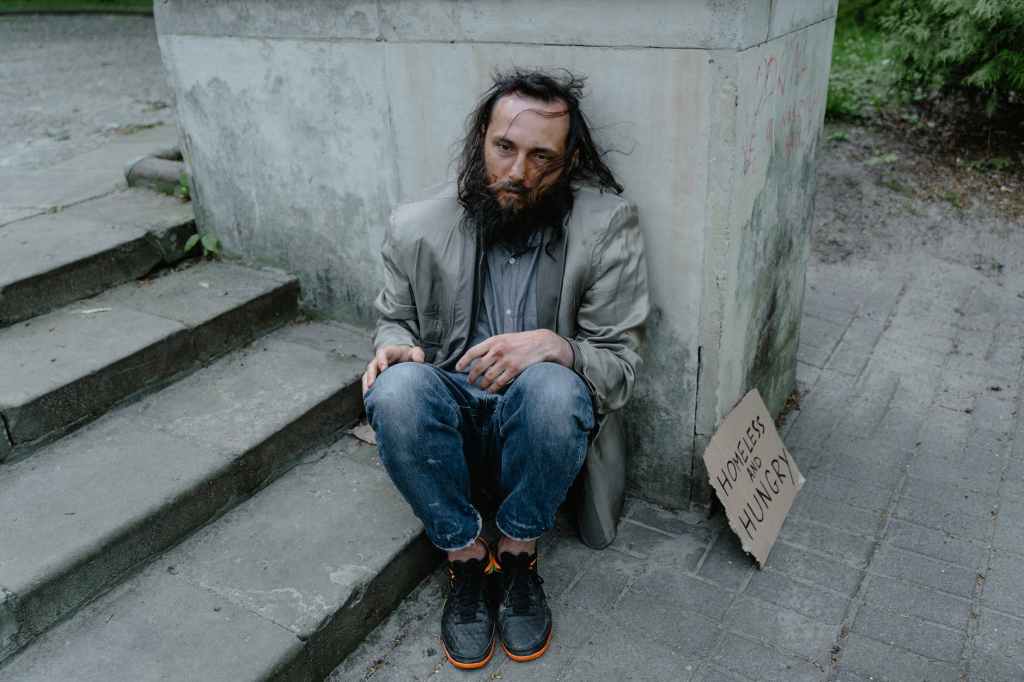
Imagine giving that ugly Christmas sweater to someone who was homeless and had no warm clothes. Would it make you laugh to see someone in those circumstances wearing your once-a-year indulgence? Would your ugly sweater bring hope and healing to those who are refugees this season? Do you wear it when no one else can see it? The sweater isn’t about the season. It really has nothing to do with the meaning of the Holidays. It’s about impressing people with your willingness to stand out; your ingenuity in finding an uglier sweater than anyone else; it’s about YOU.
What would happen if, instead of an ugly sweater contest, seeing who can drink the most before passing out, or a white elephant exchange of worthless gifts, companies celebrated with worthwhile activities– building community ties, honoring achievements, or maybe even reflecting on miracles in our midst? What if our celebrations were less about empty amusements and more about reflecting on what is genuinely worth celebrating–health, friendships, family, hope, and purpose? They might be less amusing, but they might also be more memorable and meaningful.
There’s nothing “wicked” about ugly sweaters or white elephants– but they are becoming symbols of the kind of “Christ-less” Christmas that offers mild entertainment, but no hope for the dark days of a long winter. They are some of the symbols of excessive economic wealth in the midst of emotional and moral poverty. Naked and empty entertainment, pretending to offer light and satisfaction, but settling for glitter and gluttony.
Today, I’m going to wear a sweatshirt to keep warm, and I’m going to spend some time with my family– building memories that will last much longer than last season’s ugly sweater! And I will spend some time thanking God for the sweatshirt, my grandkids, and for the incredible gift of His Son–the real meaning of this season of love, gifts, miracles and hope–our real reason for celebrating Christ-mas!









































 Pursuing Prayer