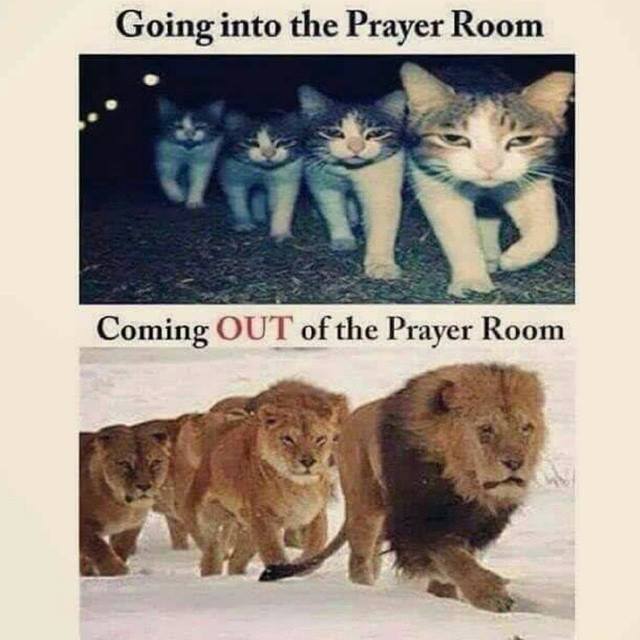
Panic, Prayer, Praise, Peace!

Philippians 4:6 New International Version (NIV)

Do not be anxious about anything, but in every situation, by prayer and petition, with thanksgiving, present your requests to God.

https://www.biblegateway.com/passage/?search=Philippians+4%3A6&version=NIV

I hope that today will be filled with peace, joy, and blessing for anyone reading this. But I know that today will bring bad news for some, pain for others, and hardship for many. Life is filled with struggle, disappointment, failures, and loss. Our first reaction is often to worry, which can lead to more worry, and a sense of urgency, even panic. In many cases, we have neither the resources nor the wisdom to overcome our struggles–even sustained effort or a “lucky break” may leave us without much hope. And the more we worry, the less we accomplish. But telling ourselves (or others) to simply “stop worrying” doesn’t banish worry; sometimes it increases it! Now we worry about worrying too much, or we find new things to worry about.

Photo by bruce mars on Pexels.com

But there is a time-honored and proven pattern that can help. Jesus spoke of it in His “Sermon on the Mount.” In Matthew 6, He gives us this advice:

“So do not worry, saying ‘What shall we eat?’ or ‘What shall we drink?’ or “What shall we wear?’ For the pagans run after these things, and your heavenly Father knows that you need them. But seek first his kingdom and his righteousness, and all these things will be given to you as well. Therefore do not worry about tomorrow, for tomorrow will worry about itself. Each day has enough trouble of its own.”

Matthew 6:31-34 (NIV)
Photo by Úrsula Madariaga on Pexels.com

The Apostle Paul expanded on this in his letter to the Philippian believers. He told them to be anxious for nothing–that regardless of our situation or circumstances, we should not panic, but pray (seek God’s grace, righteousness, wisdom, and help). But more than that, we should present all of our prayers, petitions, and requests with thanksgiving and praise!

This is not the same as pretending that our struggles don’t exist, or that they are not important, or that we are glad about the pain, uncertainty, or hardship that they bring. Instead it is lifting our eyes to Heaven and finding that God is bigger than it all; that His grace, His strength, His wisdom is sufficient for the next step– for today’s worries–for today’s battles and burdens.

Photo by Pixabay on Pexels.com

This doesn’t happen naturally or automatically–we must seek, pray, pursue righteousness, ask for help, and continue to stand firm. There are some who point to the words of Jesus, or of Paul as a kind of “magic formula.” If we repeat a few promises from the Bible, or if we pray certain prayers, or convince ourselves and others that we have “enough” faith, God is obligated to change our circumstances and give us the resolution or relief we want. God is not primarily interested in our relief– He is interested in our redemption, our renewal, and our eternal reality. In following this pattern of turning our panic into prayer, and our prayer into praise, He promises that we will experience His peace. Our panic will be transformed–even if our situation stays the same; even if it gets worse before it gets better!

So how do we practice this pattern; how do we train for this transformation?

Photo by Reafon Gates on Pexels.com

Here are a couple of suggestions:

  • Start by seeking God with abandon–pursue Him with your whole heart– thank Him for who He is, and for all He has done. It can be helpful to review some of the names of God–I AM, Almighty, Creator, Lord, King of Kings.. Or read a Psalm or find a song that reminds you of God’s character and power. Think of the times when God has been faithful in your own past.
  • Find something about your situation for which you can be thankful– genuinely thankful. Years ago, when I was young and single, I was laid off from my first full-time job after nine months. Was I worried? Yes! Where would I find another job? How would I pay my bills? But I resolved to start being thankful about all I had learned on the job– I had met new people, learned new skills, purchased a car…God knew my needs for the future, and even though I had to wait another eight months before I found a full-time job, I was able to find temporary work and interview for other jobs in the meantime. And I had friends and family who offered good advice and encouragement along the way. I know some situations are more painful and perplexing than the loss of a job. When I my father died, nothing made the pain less, but I could thank God for Dad’s life and the time we had with him. This is NOT easy, nor is it meant to be…It may not happen for days, or weeks–don’t give up!
  • Cry out to God– in praise, but also in petition, pain, confusion, confession, and raw emotion. God wants a real relationship with us, and that includes walking with us in the “valley of the shadow of death.” We don’t have to fear evil, or worry about the future, not because it holds no danger or dread, but because we never have to walk alone and defenseless!
  • Remember this is a pattern to follow, not a pill to swallow–none of this comes easy, and God’s peace is not an instant “fix.” Instead, it is a growing conviction that God is who He says He is– faithful, loving, victorious, eternal, and sovereign. Such peace defies our panic and erodes our worry, leaving us ready to face the battles before us, and move forward through the struggles.
Photo by Pixabay on Pexels.com

It is not will power or a change of circumstances that brings incomprehensible peace. It is not magic– it is Majesty!

…And Grace My Fears Relieved…

Amazing grace! How sweet the sound
That saved a wretch like me!
I once was lost, but now am found;
Was blind, but now I see.

’Twas grace that taught my heart to fear,
And grace my fears relieved;
How precious did that grace appear
The hour I first believed.

Through many dangers, toils, and snares,
I have already come;
’Tis grace hath brought me safe thus far,
And grace will lead me home.
The Lord has promised good to me,
His Word my hope secures;
He will my Shield and Portion be,
As long as life endures.
Yea, when this flesh and heart shall fail,
And mortal life shall cease,
I shall possess, within the veil,
A life of joy and peace.
The earth shall soon dissolve like snow,
The sun forbear to shine;
But God, who called me here below,
Will be forever mine.
When we’ve been there ten thousand years,
Bright shining as the sun,
We’ve no less days to sing God’s praise
Than when we’d first begun.

timelesstruths.org
Amazing Grace, lyrics by John Newton

As I write this, a massive hurricane looms in the Atlantic Ocean, devastating the Bahamas, and threatening several major cities along the southeastern coast of the United States. There is much fear, danger, and distress for people living in these areas, for their families, and for compassionate people watching helplessly from a distance. What can anyone DO in the face of such raw power and destruction? What hope or comfort can we offer?

Photo by Denniz Futalan on Pexels.com

There are many questions we cannot answer in times like this– we can offer no definitive explanation why hurricanes form, how they behave, why they change courses, grow, shrink, or when or where they will make landfall. There are many actions we cannot take– we can’t stop a hurricane, or shift its course, weaken it or make it go away (though scientists and others have been trying for decades). We cannot provide immediate “fixes” for the damage that hurricanes (or other weather emergencies) leave behind.. roads and houses take time to rebuild; fields and forests must be replanted; families must heal and grieve.

What we can offer seems, on the surface, to be insufficient and condescending– we offer prayers, reassurance that God sees and knows and cares, we say, “trust in God and His promises.” And many sneer at such “gifts. God doesn’t promise to steer the hurricanes away from our loved ones, or our own villages or cities or islands. God doesn’t promise that we won’t experience disaster, fear, pain, or grief. God doesn’t promise us days of sunshine with never a cloud, or storm or loss.

Photo by Johannes Plenio on Pexels.com

What God DOES promise is Grace– not comfort, not ease, not happiness– something mysterious, undeserved, and unexpected. God’s grace is sufficient– it is enough– through ANY and EVERY circumstance when we ask for it. ENOUGH–never lacking, never too much for us to use, but just right for His good purpose and our best interest in learning to know Him.

Grace doesn’t take away the storms of life; it allows us to experience victory in, through, and in spite of the storms. Grace makes us strong enough, brave enough, wise enough, healthy enough, kind enough, rich enough, and “good enough” to get to the next step in our journey. It may fall short of what we expect, or envy, or dream of for ourselves, but it is never too little to be useful. God’s economy is not about bigger and better, grander or “more.” Because “More” is never “enough”– there is never enough money to buy a longer life; there is never enough strength to defeat heartache and loneliness; never enough goodness to eradicate the injustices of a hundred wicked generations. Bad things will happen. Loved ones will be wounded or killed. Homes and roads and villages will be destroyed. But God is faithful to comfort us, strengthen us, sustain us, and give us a new vision, a new hope, and a new life. Only God is big enough, rich enough, strong enough, and wise enough to do “exceedingly abundantly above all that we ask or think” https://www.biblegateway.com/passage/?search=Ephesians+3%3A20-21&version=NKJV. The amazing part is that He sends us the Grace we need to be part of the unfolding story–just what we need, just when we need it most– not because of anything we have done, but because of His great compassion.

Photo by Edward Eyer on Pexels.com

Grace doesn’t take away the storms of life– this may seem unfair and cruel. God, even a loving God– allows us to weather storms, even to be broken and crushed by them. But God also brings blessing, renewal, healing, comfort, hope, and a renewed sense of purpose, compassion, and vision. These things often come only after the storm. Storms can bring us to a point of fear and despair, or to faith and dependence. Grace is a gift–God won’t force us to acknowledge or accept His Grace. We can choose to tremble at the storm’s approach, or rage, or try to run away. But God’s offer means we never have to face the storm alone.

Grace won’t take away the storms in our lives– and it won’t make us foolishly fearless in the face of hurricanes. But it can relieve our fears and give us the courage and wisdom to face even the fiercest trials in life; even the fiercest storms that rage. And isn’t that an Amazing hope?! Our prayers may seem small; our hope may seem insignificant– because we are not “enough” . But we serve a God and pray to a God who holds the future in His hand. Our prayers are held in the same hands– our faith is in the one who is more than “enough” to face the storm and relieve our fears.

Photo by Brett Sayles on Pexels.com

Let Nothing You Dismay

God rest ye merry, gentlemen,

Let nothing you dismay,

Remember Christ our Saviour

Was born on Christmas Day;

To save us all from Satan’s power

When we were gone astray.

O tidings of comfort and joy, Comfort and joy;

O tidings of comfort and joy!

Photo by Nguyen Nguyen on Pexels.com

We celebrate Christmas–we play music, dance, laugh, hang up festive decorations, feast, and exchange gifts.  But for many years, Christmas was a holiday overshadowed by Advent.  Advent is all about preparing for the coming of Messiah, much as Lent is about preparing for the crucifixion and resurrection of Good Friday and Easter.  Advent can be a joyful time, but it can also be a time of fear, darkness, and atonement.  Added to that, Advent comes during the darkest months of the year for the northern hemisphere; the farther north, the darker it gets in December.

Photo by Flickr on Pexels.com

The early Protestants, especially the Puritans, feared the admixture of Christian teachings with pagan rituals associated with the Winter Solstice, and in doing so, they smothered much of the joy and celebration that had come to be associated with Christmas.  However, certain songs and carols survived.  Among these was “God Rest Ye Merry, Gentlemen.”  The title and many of the lyrics seem strange to our modern ears, but the title simply means, “may God keep you merry (or happy, blessed, joyful, even hearty or healthy), Gentlemen (and Gentle Ladies).”  It was a blessing sung by peasants (or the local watchman) to their local lords and ladies, but it was also an excellent and joyful summation of all that the season really means.  (See more explanation of the origins and meaning of the song here..   https://www.carols.org.uk/god_rest_ye_merry_gentlemen.htm     www.acecollins.com/books/storiesbehindchr.html  )

Photo by Skitterphoto on Pexels.com

Advent IS a good time for reflection and preparation, but it should also be full of joyful anticipation.  Christmas, and all that follows, is all that the angels heralded– good news of great tidings.  And the Gospel is news of comfort and joy!  Not the temporary comfort of a warm fire or the fleeting joy of a delicious feast in the company of merry men and women.  Christmas offers the comfort of knowing that Christ has fulfilled the ancient promises– He has come; he has lived among his own; he has defeated death and the grave; he has risen and ascended!  There is nothing left to fill the Christian with dismay or terror.  It is fear and pain that are temporary–life and peace are eternally promised for those who accept the good tidings!

Photo by Krunal Parmar on Pexels.com

This life will still hold pain, grief, injustice, and darkness– but it is not inevitable and it will not prevail!  God is greater than our most pressing problem, deeper than our grief, wider than our capacity to stray, and more powerful than Satan’s thorniest snares.  Christmas Day reminds us of these truths, and allows us to live in true love and brotherhood with those around us, no matter our current circumstances.

Holy Terror

All Hallow’s Eve, or Halloween, brings out the fearsome, garish, gory, scary, and macabre in many people.  Movies, costumes, and stories concentrate on death, mystery, nightmares, ghosts, and terror.

I am not a fan of horror in any of its forms.  I don’t like to be scared, startled, tricked, haunted, or frightened.  I don’t like seeing others being terrorized, tortured, or hurt.

So it is with great interest and some surprise to find that the Bible tells us to fear.  Of course, it also tells us NOT to fear– several times, in fact.  We are told that we need not fear the future (Matthew 6:34), struggles, battles, or long journeys (Joshua 1:9), shame or disgrace (Isaiah 54:4), terror, evil, and the “shadow of death” (Psalm 23:4),  actual death, angels or demons (Romans 8:38), or anyone at all (Psalm 27:1; Psalm 188:6).  But there is one fear the Bible does nothing to dispel.

metal vintage old antique
Photo by Skitterphoto on Pexels.com

There is a Holy terror that comes from the recognition that God is Holy– and we are NOT.  There is a very real, very terrible chasm separating us from an eternally sinless and perfect God.  There is nothing we can do on this side of the chasm to close the gap– no way to escape the eternal. hopeless and horrific state of being separated from all that is good, and noble, and peaceful, and joyous.  In life, we get glimpses of glory–flashes of amazing grace at work in the world around us.  Even though we live in a fallen world, we do not live in a place rejected or abandoned by God.

beautiful blue sky bright cloudiness
Photo by icon0.com on Pexels.com

This should cause us to have a healthy “fear” of God– a soul-deep awe of His “Other-ness”, His Authority, and His Pre-eminence.  And it should give us a terror of remaining in separation from Him– especially as He offers the very restoration and renewal we can never achieve for ourselves.  And He offers it as a free gift to ANYONE who will receive it!

ash background beautiful blaze
Photo by icon0.com on Pexels.com

Far from trying to “scare someone into Heaven,” sermons and admonitions about Hellfire and eternal damnation are meant as very real warnings with real and eternal consequences.  No horror on earth can compare with an existence devoid of all joy, peace, love, light, help, and hope–and filled with the knowledge of “all that might have been.”  Zombies, vampires, ghouls, and monsters can terrorize in the movies for an hour or two, or in books for a week or more, but what makes people willing to entertain such horrors is the latent hope that we will close the book cover, exit the theater, and wake up from the nightmares presented there.  The idea that Good will eventually triumph; that order, peace, and justice can be restored; that love conquers all, and “something” will survive, re-emerge, and carry on into the future.  All of these hopes are possible because God exists and is eternal.  When we reject God’s authority; His sovereign direction and His call to salvation, we reject all that comes with it.  While we live on His earth, we will still see the glimpses of glory– we can pretend that it is enough for now, or choose to settle for false “hope” of emptiness in death.  But we cannot escape the search for meaning and purpose that drives us to build and plan for a future we have never seen; nor can we know the peace that comes from looking forward and seeing more than darkness, doubt,  and destruction.

Great Expectations

Earlier this week, the Duke and Duchess of Cambridge (otherwise known as Prince William  and Kate Middleton), welcomed their third child.  As with most royal births, there was a lot of fanfare and speculation well in advance of the actual delivery.  Early tabloid reports hinted at twins; bookmakers were figuring odds for delivery dates, names– even what the Duchess would be wearing as she brought the newborn outside for his first “sighting”.  As of the writing of this blog, the name has yet to be announced, which is cause for more speculation and anticipation.

pexels-photo-50632.jpeg

Preparing for a newborn is exciting, and filled with certain expectations.   We imagine what the baby will look like, what kind of personality s/he will have, all the wonderful discoveries to be made. But we need to be careful not to let our expectations become idols.  There’s nothing wrong with hoping for good outcomes, but it can be dangerous to get locked into a particular expected outcome.  Children surprise us (in good ways and other ways) be being themselves, and not who or what we expect them to be.

pexels-photo-185934.jpeg

When we pray, we sometimes come with certain expectations–that God will answer in a certain way or on a certain timeline.  This is not the same as having faith.  Faith says that God will hear our prayer; that he knows best, and that he will act in accordance with his own love and mercy.  It doesn’t mean that he will give us what we want when we want it, or that he will give us what makes us comfortable and happy.  His answers may seem difficult or even painful to accept– certainly not what we were expecting.  When he chooses to answer in ways that don’t meet our expectations, we wonder why.  When he chooses to say “wait,” or even, “no,” we may feel cheated and even resentful, instead of thankful that our prayers are heard by a loving God.  Often, we have built up such expectations of what “the best” should look like that we miss the real miracle God is giving us instead.

pexels-photo-236287.jpeg

Worse, there are times when our expectations reveal a lack of faith or a lack of understanding of God’s ways.  We pray for peace, but what we really want is ease and comfort.  Peace– real peace– is often revealed in times of stress, hardship and loss!  We don’t want stress; we don’t pray for stress, but stress and hardship are going to come into our lives at some point.  Praying for peace won’t bring stress, any more than not praying will keep it away!  We expect the peace to come without the battle; we expect the growth to come without the growth pains; we expect to win the race without having to run!

Sometimes we won’t even pray for what we really want or need because we expect that God will “test” us or give us difficult circumstances if we ask for certain things (like patience or peace).  We see God as some sort of cosmic con artist, who teases us with the promise of good things, only to laugh as we suffer.  But this is a wrong view of God.  God doesn’t play games or “trick” us by giving us hardship when we ask for healing, though it may feel like it at the time. Suffering and hardship are not the gifts of God– his amazing gift is the ability to redeem even the worst of circumstances and bring joy and rest and peace that passes any expectation, any dread, or any understanding we have.  Often, our very desire for extra patience, peace, and joy are opportunities for us to learn more about God’s grace–and more about ourselves.

Life seldom meets our expectations–God is waiting to exceed even our wildest dreams!  Don’t just pray expecting something good might happen.  Pray expecting God to SHOW UP!


Blog at WordPress.com.

Up ↑