God Is Not Color-blind

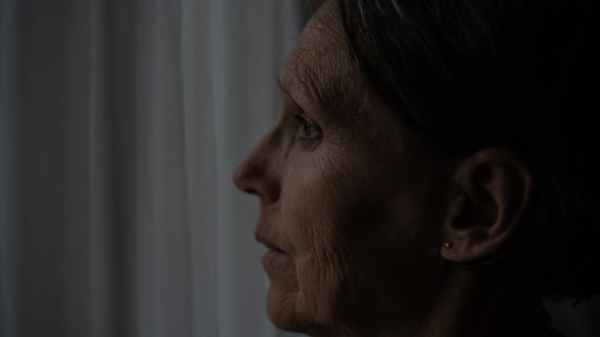
My father was color-blind. He could distinguish the color red, but all other colors registered as shades of gray. Certain forms of colorblindness are treatable today, but Dad went through his whole life not seeing most colors. He knew the sky as light or dark, not piercing blue or deep blue or sunset indigo. He even told people his eyes were brown, because he couldn’t see how startlingly, wonderfully blue they were. He was cautious about getting dressed for events and such, worried that he would “clash.” He generally preferred neutrals. He liked that his company provided uniforms– it was much easier that way.

As I write this, I am looking out the window at a cornucopia of colors on the autumn trees– glowing shades of orange, deep reds, bright yellows, a few dark browns, and even some leaves still vibrant green. Autumn has come late this year, and the cold weather will bleed all the colors and cause the leaves to fall into a single great carpet (except where rakes gather them up into piles). It is marvelous to see so much variety in the individual trees; so much color and life, and beauty. God loves color! He loves to dazzle with surprising touches of unique shades, designs, and combinations. Towering trees with golden leaves, shorter, squat bushes with fiery reds, evergreens providing contrast. And in a few weeks, it will all be a memory, as leaves give way to snow-covered branches, and ice-trimmed bushes.

It made me think of the marvelous variety of people in our world. Each one unique, beautiful, and precious in God’s eyes. We tend to waste so much of our time comparing ourselves to others. Sometimes we wish we were like “them”– taller or darker, blue-eyed, or thinner, with hair that is curlier or blonder or just different from what God created. We feel that our bodies are “not good enough,” or not “right.” We long to be something else; someone else. At other times, we judge others by similarly narrow standards. “They” don’t look like us; they are “not good enough,” or “inferior” in some way. Of course, we don’t like to admit to any hint of bigotry or prejudice. We like to say that we are “color-blind” when it comes to people.

But God is not color-blind. He is deeply away of all the genetic differences in our skin and eyes and hair; all the high cheekbones and stubby fingers and freckles that are passed from generation to generation in some of our families. And God approves! God loves us all the same– lavishly, intimately, eternally! Just like the colors on the trees, God delights in our variety and differences– our “crooked” teeth; our “large” noses, our “mousey” brown hair, our “wide” hips. After all– He planned each one! He designed each of us to be who we are–from our bodies to our talents to our personalities. And someday, in Heaven, we will all be as one–not divided or obsessed with our “deficiencies” or differences, but united in our love and worship as never before– a great carpet of redeemed souls, spread around the Throne of God!

God isn’t color-blind; and neither should we be. We should celebrate each other, encourage each other, and love each other for who God made us to be. Sometimes, that can be difficult in our fallen world. Hurting people, fearful people, angry people– they may not be easy to love. They may judge us, reject us, even persecute us unfairly. But that’s not God’s original intention or purpose. We were meant to add our own unique beauty to an equally beautiful world.

Let’s pray that God would teach us how to show our “true colors” to the world, and reflect the beauty He planted in each one of us today!

Guard Your Heart

Photo by Engin Akyurt on Pexels.com

Above all else, guard your heart, for everything you do flows from it.

Proverbs 4:23 NIV https://www.biblestudytools.com/proverbs/4-23.html

The world has a lot to say about hearts. We can be heartsick, heartbroken, half-hearted, all heart, hard-hearted, tender-hearted; we can lead with our heart or follow our heart, wear our heart on our sleeve, or have a change of heart. We can have a heart of gold, or a heart of stone. Our heart can be in the right place, or it can wander.

The Bible has a lot to say about our hearts as well. In Proverbs, we are told to guard our hearts above all else.

Our hearts are precious, but they are also fragile and fickle. Our hearts can be led astray, bruised, crushed, and hardened by sin– not just our own sin, but sins that are committed against us. And hardened hearts are not immune to damage– they don’t become stronger, just more rigid and brittle. We live in a world of damaged hearts. And damaged hearts are prone to damage other hearts.

God does not want us to lock up our hearts or wrap them in barbed wire, but He does want us to be watchful and active in protecting our hearts from the enemy. God created us with emotions, but not every emotion should be indulged or shared with others. We are told to rejoice with those who rejoice and mourn with those who mourn. But we are never told to encourage jealousy, anger, depression, envy, apathy, rage, boastfulness, or hatred. Letting these emotions control our actions can only lead to further pain, destruction, sorrow, and heartache.

We need to guard our hearts, not only from external threats, but from internal deception. We think we know our own hearts– we tend to trust them more than we trust God, or His Word, or the godly advice of friends or family. We act at the prompting of our emotions– sometimes in direct conflict with God’s Word and Wisdom, and to our shame and pain.

When we pray, God’s spirit can heal our heartache, and give us the strength of heart to reach out and heal others. But we must be careful not to attempt healing others in our own power and wisdom. Our heart may seem to be “in the right place,” but often, that’s how we got hurt in the first place!

Tender hearts, broken hearts, even hard hearts– God can heal them all and use them to heal others. That’s because God’s heart is perfect–and on Calvary, He poured it out to rescue you, redeem you, and restore you. In return, you can safely and confidently pour out your heart before God. He is your loving Father. He created your heart, and He can be trusted to protect it.

A Prayer For Fathers

Photo by Pixabay on Pexels.com

We are approaching Father’s Day. It is a day of celebration for many people, but it can also be a day of sadness for others. This year will be a milestone for our family, as my father passed away 25 years ago; and yet–we are preparing to celebrate the birth of my grand-nephew’s first child. This will make him a father, my nephew will become a grandfather, and my brother will become a great-grandfather! My husband is a father and grandfather, and so are three of his brothers. We also have brothers, brothers-in-law, nephews and cousins who are great dads. So we really have a lot to celebrate!

Fatherhood– the kind we celebrate– is more than just contributing genetic material to a new life, or claiming a child on an income tax statement, or showing up once in awhile for major events. Fatherhood involves sacrifice. It requires wisdom and patience. It involves ongoing commitments, and the tough love that says, “No” because it’s the right thing, rather than the easy thing to say. Fatherhood requires a man to be a teacher, provider, protector, defender, coach, and disciplinarian. It also requires humility, and grace, encouragement and sometimes tears. In addition, fatherhood requires prayer. No father is perfect, and no father can do all that he needs to in his own power. Fathers need our support and encouragement, our grace, and our prayers.

Photo by Kaysha on Pexels.com

It is tempting to label our fathers. I have known “good” fathers. And I have known fathers who have abandoned or even abused their responsibilities, causing trauma, anguish, and hurt to their families, lasting for generations. My own father wasn’t perfect, but he was a “good” father. He was a man of humor and integrity, faithful, honest, loving and humble; a man of faith, and a man of honor. My father-in-law was the same. They left wonderful legacies of wisdom, hard work, and quiet strength. But I know of other fathers who have ruined the lives of their children (as well as their own lives) through fear, selfishness, addictions, abuse, anger, greed, and pride. Father’s Day can cause regret, envy, and bitterness in the hearts of many fathers and children alike. Many people would like to forget about their fathers on Father’s Day. Some don’t even know how to celebrate– they’ve never seen or heard from their father; some don’t even know his name!

Photo by Ketut Subiyanto on Pexels.com

But Father’s Day is not only for “good” fathers. It is a time to honor those who have been faithful, but it is also a time to reach out to those who need help. Good fathers are needed! And “bad” fathers need to be called out– not indulged or ignored, but held, guided, rehabilitated, or even incarcerated, for the good of their children. Hurting boys often grow up to be hurtful fathers. Hurting girls often end up in hurtful relationships. Hurtful fathers often struggle with their own baggage of hurt and disappointment from past generations, without knowing how to change. Fathers need more than a “day”, a cook-out, or another tie. They need a mission and a purpose; they need respect and forgiveness; they need encouragement and accountability.

My prayer today is that this Father’s Day can be a day of honor AND of healing for fathers and their children. I pray that struggling fathers will be encouraged and strengthened; that hard-working, faithful fathers will see the rewards of their efforts and find hope to keep going; that absent and apathetic fathers will wake up to the challenge and the gift of fatherhood; that broken fathers will find help and healing for themselves AND for their families; that hurting sons and daughters will find the grace to move beyond the pain of unmet expectations and abuse to become better men and women.

Photo by Anna Shvets on Pexels.com

All that I pray for is made possible because we have a Heavenly Father– a perfect, loving, eternally wise Father– who loves us through our struggles and our pain. He knows our every need, sees our every tear, and hears our every prayer. He is ready to be our coach, our provider, our healer, our disciplinarian, and our protector. No matter our experiences or how we feel about our earthly fathers, or about being a father, we can trust Him to be all that we need. Our Heavenly Father will never abandon us, reject us, abuse us, or despise us. He will comfort, encourage, uplift, and guide us– now and forever. All we need to do is pray and accept Him for all that He is!

Debt Free!

7“Blessed are those

    whose transgressions are forgiven,

    whose sins are covered.

Blessed is the one

    whose sin the Lord will never count against them.”

Romans 4:7-8 (NIV) via biblegateway.com (See also Psalm 32:1-2)

Ask me about my most embarrassing moment, or my greatest failure..better yet, ask one of my friends or relatives! We tend to hang on to our past, especially our mistakes, our hurts, our missed opportunities, and our shortcomings. When I taught public speaking in a local high school, I heard horror stories about why “I can’t get in front of people and talk.” The fear of public speaking rates higher in some studies than the fear of Death! And often, the fear is based on an incident from early childhood of people laughing at a small, but very public mistake. Such moments haunt us.

Photo by Alex Green on Pexels.com

As we grow older, we let our regrets live large– those things we “would have, should have, could have” done, or the things we shouldn’t have said, but can never un-say. And even if we try to move on or forget the past, there always seems to be someone who cannot let go, cannot forgive, or cannot forgive. Lives have been stunted and ruined by the ghosts of “what happened” when…

Photo by Wildan Zainul Faki on Pexels.com

God is all-knowing. There is nothing we’ve ever done, said, or even thought, that He “missed,” ignored, or “lost track of.” God has total recall over all the centuries and eons of time– past, present, and even future! And yet, God offers to forgive ALL our sins, and to “remember them no more.” God will never bring up “that time when you disappointed me…” God will never look at you with condemnation over anything you have confessed and repented over. It’s not that God will never be able to recall what happened; but He will no longer “charge it to your account.” He has chosen to pay the consequences in His own Blood, so that you can be debt free.

Photo by Ric Rodrigues on Pexels.com

Imagine if you had no bills. If all your mortgages, utility payments, credit card debt, medical bills–everything that you were responsible to pay– all were stamped “Paid in full.” You never had to worry about interest payments, late fees, repossession, evening phone calls from bill collectors, credit scores, etc. What a weight off your shoulders! Imagine if you had no reason to fear getting in front of a room full of people to speak or sing or give a presentation– no fear that others would judge your every hesitation, or whether your tie was straight, or your hair was mussed, or you stumbled over a word or phrase or tripped on the steps leading up to the podium. Imagine being accepted and embraced by the very one who, by rights, should be your most severe critic.

Sometimes, when we see God as our critic, our judge, or our opponent, we’re not seeing God as He really is– we’re seeing a reflection of ourselves– harsh, judgmental, unwilling to forgive others; unwilling to forgive ourselves. The very first deception of the Enemy was to distort God’s image from Creator and Sustainer to Judge and Tyrant. Yet Satan is called “The Accuser,” not God. God’s Holy Spirit may convict us of Sin– causing us to see that we have done wrong– but His purpose is always to correct and restore us, not to haunt and condemn us. Even the “worst” sins are not beyond God’s ability or willingness to forgive. Jesus forgave His accusers, His betrayers, and His executioners from the Cross!

Photo by Alem Su00e1nchez on Pexels.com

Forgiveness is not easy. Sin is real; it has real and terrible consequences. Sin hurts, humiliates, victimizes, and traumatizes. And its effects do not simply vanish if we say, “I forgive.” But hanging on to the pain and anger keeps us from finding and experiencing the healing and wholeness that Jesus offers. Forgiveness does not mean that the sin, or the pain, never happened– God will not “forget” injustice just because we forgive the unjust. Forgiveness means that we no longer need to try to collect the debt from someone else– because God has already promised to pay it back with interest! And forgiving yourself doesn’t mean that your past actions didn’t happen or didn’t cause pain. In fact, whenever there are opportunities to atone for past actions, or ask forgiveness from those we have wronged, we should take them. But where such opportunities are impossible for us, even when we cannot see how such pain could be redeemed or relationships restored, God has promised that we can move beyond our past mistakes and live a new , blessed, and debt-free life.

Photo by Pixabay on Pexels.com

When we approach God in prayer, we come as we are– people with past mistakes, very human emotions, including doubt and fear, and unworthy to stand on our own before a perfect God. But it is God who invites us to come to Him– debt free and embraced by His limitless Grace!

Photo by Joseph Ruwa on Pexels.com

I Already Prayed About That…

Have you ever been in a season where you felt like you were praying about the same situation over and over with no results? No answers, and no indication that God has even heard? And you feel frustrated and even guilty about praying AGAIN about it?

Photo by SHVETS production on Pexels.com

We live in an “instant” culture. Instant banking, instant coffee, drive-through fast food, and 24-hour news cycles give us the expectation that we can get whatever we want or need with the push of a button or flip of a switch. Just yesterday, I pulled into the grocery store parking lot, and, seeing how full the parking lot was, I drove two miles away to a different store, because I anticipated long lines at the checkout! I don’t like waiting. I don’t like “wasting” time.

Photo by RODNAE Productions on Pexels.com

But God often puts us in a “holding pattern.” He may seem silent or distant, non-responsive or even absent. And in our impatience, we may stop bringing our burden to God, and seek elsewhere for answers or relief. Even when we know that God has promised to hear us, and never leave us alone, we long for instant gratification. And when we don’t get it, we start to wonder and doubt.

Photo by Liza Summer on Pexels.com

Sometimes, I feel angry in my impatience. I want answers! I want to know the next step forward! Other times, I feel hurt. Does God not hear me? Does He not understand my need? Sometimes, I even feel guilty. I know that God “knows” everything. Why do I keep bothering Him with the same thing? Am I asking for the wrong thing? Am I asking in the wrong way?

Photo by Nathan Cowley on Pexels.com

It is okay to have questions. It is normal to wonder. And I don’t have a “quick fix” answer for times like this. I think most of us experience these questions at some point. And the Bible has many examples throughout history of others who waited– some patiently, and others not so much…

Abraham and Sarah waited years for a family. In their impatience, they tried to do it in their own wisdom with heart-breaking results that echo down through thousands of years. Hannah prayed for years while enduring the taunts of her rival, Peninnah, before God gave her a son. A woman who touched Jesus’s robe had prayed and waited years for healing from her constant bleeding and pain. I know of parents who prayed for years that their wayward son or daughter would return home– some kept praying until they died, never seeing an answer.

But one comforting takeaway from all these Biblical and real-life examples– God DOES see and hear us. He left all those stories for us to read, knowing that we, too, would face trying and overwhelming circumstances. God doesn’t always give us an immediate or conclusive answer in our struggles. If He did, we would never develop a real and solid faith. God is less interested in answering our questions than He is in sharing our struggles. He does not want to walk ahead of us and smooth out our every path. Instead, He wants to walk beside us in the hills and the valleys of life.

Photo by Ivan Samkov on Pexels.com

So even if “I already prayed about that..” I can keep praying with confidence. God hears. He knows. And He cares enough to slog it out right by my side. And yours.

How Will You Be Remembered?

Today would have been my paternal grandmother’s 118th birthday. I have many memories of my grandmother, and I wish more of them were pleasant.

I remember dreading time spent at Grandma’s house. She wasn’t a horrible woman, but she was not peaceful or kind or warm. Her house was small and dark, with cobwebs and dust bunnies in the corners and under furniture. There were very few toys, and most of them broken. Grandma always wanted my sister and I to be still and silent, and I always had the feeling that she dreaded our visits as much as we did. I had a cousin who loved it when we came over, because she was just a bit older and an only child. If the weather was nice, Grandma would send us all outside, and my cousin would dare us to climb trees, or jump over a pit or some other physical (usually dirty and dangerous, too) activity. When we came in, Grandma would frown and comment on how dirty and sweaty and noisy and un-ladylike we all were.

Photo by Anna Shvets on Pexels.com

Growing up, I didn’t think of Grandma as someone who had ever been young, and noisy, or happy and excitable, or awkward and easily hurt. She seemed to have been perpetually old and cranky and bitter. In hindsight, I can see how circumstances– being the middle child of seven living on a farm; starting her married life living in with a bossy sister-in-law and verbally abusive father-in-law; losing her husband when he was only 50–had been allowed to shape her character in negative ways.

Photo by Karolina Grabowska on Pexels.com

There are some pleasant memories, and I cherish them. Grandma was a good cook. She made wonderful chicken dinners, and a strange candy out of mashed potatoes and peanut butter. She always had cold tea on a hot day. I knew that she loved my dad, and that she could be proud of us, in her own way. I was sorry when she died. Sorry that I hadn’t made more of an effort to know her better. Sorry that she had chosen bitterness, and that I had chosen to stay distant from her.

I write all this, difficult as it is, to say that Grandma–both her good and bad qualities–lives on in my memory as someone I would not choose to be. I don’t want to grow old like her. I don’t want my family members to dread spending time with me while I live, and dig deep to remember something good about me when I’m gone, or justify my bitterness and negativity.

Photo by Nishant Aneja on Pexels.com

My grandmother claimed to be a woman of faith. And it is not my place to be her judge. But I saw very little evidence of faith in her daily life. I cannot remember ever hearing her pray. She did not attend church. She had a Bible, but I never saw her reading it. Her better qualities, and her walk with Christ were overshadowed by rancor, bitterness, anger, hurt, and pettiness. I do not want that to be my legacy. I want people to know, not just from my words, but in my actions and choices, that God’s love lives in me, brighter and stronger than memories of Grandma.

Photo by Andrea Piacquadio on Pexels.com

Shortly before her death, I ended up spending an afternoon with Grandma– just the two of us. She had moved into a small apartment in town, and somehow, it transpired that I had to be in town on Saturday morning for a school event, and no one could pick me up until that evening. We were forced to keep company. It began awkwardly, but as we talked, Grandma opened up about her childhood, her love of music, and more; she asked about my time at school and my love of history. It is the single most pleasant memory I have of her, and I wish there had been more afternoons like it; more afternoons to bond; more afternoons to cherish, rather than dread.

After her death, I learned a couple of things about my grandmother– things I wish I had known earlier. I found an old copy of her high school yearbook, which contained a story she had written. Grandma’s story was full of wonderful details and imaginative characters. She was a writer– and I never knew! I also found out that Grandma not only loved music, she was a singer– an alto, just like me. At some point in her life, she stopped writing, and she stopped singing. I hope that, even if I never saw it or heard it, that she never stopped praying. And I hope that when I’m gone, those who remember me will never have to wonder if I sang, or wrote, or prayed.

Photo by Edu Carvalho on Pexels.com

Salty Talk

With it we bless the Lord and Father, and with it we curse those who are made in God’s likeness. 10 From the same mouth come blessing and cursing. It should not be like this, my brothers! 11 A spring cannot pour both fresh and brackish water from the same opening, can it? 12 My brothers, a fig tree cannot produce olives, nor a grapevine figs, can it? Neither can a salt spring produce fresh water.

James 3:9-12 (International Standard Version) via biblegateway.com
Photo by Keira Burton on Pexels.com

We live in a culture of complaint and condescension. We pass judgment on people we’ve never met, based on stories we read second- or third-hand on Facebook or in a magazine, or hear on a gossipy talk show. We complain about situations we’ve never been in, on behalf of yet more people we’ve never met. We take pleasure in tearing down the reputation and character of people who don’t even know we exist.

Photo by Emre Kuzu on Pexels.com

And then we pray…

Our Father, who art in Heaven…”

I have caught myself in the middle of criticizing someone, as the Holy Spirit reminds me that God LOVES that person. Jesus DIED for that person, just as He died for me. Even if my criticism seems “valid,” it is not for me to pass judgment– especially to others and behind their back.

James (the brother of Jesus) wrote about our words coming out of our mouths like water pouring forth from a spring. We cannot pour forth pure, fresh water and brackish, salty water from the same spring. Similarly, we cannot pour forth praise and wholesome words, and turn around and trash-talk our neighbor–people will “taste” what pours out, and judge the whole spring.

This seems like such a small thing in our culture–surely a sarcastic comment about someone “everyone” dislikes can do no lasting harm, right? Yet an old proverb my parents taught me still rings true: “If you can’t say anything nice about a person, say nothing at all.” Imagine the difference it would make in the world if we all followed that advice. The silence would be deafening!

Photo by Bess Hamiti on Pexels.com

Yes, it’s tempting to add our “two cents” to a conversation that is filled with criticism and complaint– but the price we pay in the long run is just not worth it! When we give in to temptation, snarling and sniping and slandering others, we ruin our own reputation. We become known for gossip and sarcasm, and ill-will. Like saltwater flowing from a spring, we bring a bad taste– and bad results to everything we touch. God wants us to bring forth pure water– encouragement, truth, and justice– when we speak. God knows each person — there is no hiding from HIS judgment. But He will not be snide, or clever, or nasty. He will be righteous and Holy in His judgment, not petty or vindictive. As followers of Christ, we should strive to do the same.

Photo by Keira Burton on Pexels.com

Father, guide my tongue. Purify it, so that I speak words of life and healing; words that honor you AND those you have created in your image. Help me to remember that words matter. Words hurt, and words heal– words give life and hope, or they bring darkness and dissension. May my words reflect the True Word–Christ– in me. Amen.

Photo by Sunshine Caro on Pexels.com

Lament

Oh Lord!
I am weak, helpless, empty..
I have nothing to offer,
Nothing to show for my straining.
I lift up hands that are empty and trembling.

People are sick.
People are dying–
Alone, afraid, apart.
People are living–
Alone, afraid, apart.

I cannot reach out far enough,
Cannot speak loud enough,
Cannot run fast enough,
Cannot close the gap…

Photo by Mugurel Photo on Pexels.com

There is a distance–
A yawning, gaping separation
Between me and my loved ones,
Between families and friends,
Between us and each other,
Between us and YOU.

And yet, You are here,
Waiting, whispering…
Words of hope and comfort,
Words of healing and peace,
Words of love and unity.

You are life.
You are truth–
Brighter than fear,
More powerful than death,
Closer than our next precious breath.

Photo by Min An on Pexels.com

Banish the distance, Lord.
Banish the fear and loneliness;
Banish the chaos and darkness;
Bring us –all of US–together–
In peace
In health
In hope,
In Your eternal Love.

WWJD–Coronavirus edition

What Would Jesus Do? This question, shortened to the acronym WWJD, appeared as a fad on bracelets, t-shirts, billboards, etc., a few years ago. The idea was to ask oneself how Jesus Christ would act or react in various situations.

While I don’t disagree with the premise, I have never been a fan of this trend– mostly because it calls for people to speculate or imagine what Jesus would or might have done in their place. There is nothing wrong with wanting to act like Jesus– that’s what we’re supposed to do–to be disciples of Christ, and be His ambassadors. But our minds and hearts are not perfect; in fact they can be deceitful and arrogant, self-righteous and self-justifying. It is more common for us to justify how Jesus would act like us, than for us to adjust our thoughts and actions to those we know Jesus took during His time on earth. Would Jesus be angry about injustice– of course! Would He want us to have empathy for others– undoubtedly! But what would He actually DO? There are some pretty clear examples in the Bible– both examples of what Jesus DID, and what He DID NOT do:

  • Jesus drank wine; He visited and ate with known sinners; healed on the Sabbath (in direct violation of the church leaders of His day); interacted with the Romans (soldiers and leaders, etc.)who were oppressing the Jews– without protesting their rule or joining rebel groups; healed and performed miracles for some, but not for others; forgave sins for some, but not for others; paid His taxes without complaint; challenged religious leaders and spoke harshly against their practices; refused to get drawn into condemning and stoning a guilty adultress….
  • Jesus prayed. He want to temple regularly; read and studied God’s word; He rested, meditated, and spent time alone; He listened to strangers and treated those He met with compassion and respect; He honored His mother, but did not put her above His work; He loved his friends, even those who did not understand Him and the one who betrayed Him; He did not flatter those in power or disdain those in lowly positions; He cared deeply, wept unashamedly, and laughed heartily…
  • Jesus did not own a home. He didn’t have a “regular” job; He had no savings account or retirement fund; He had no donkey or horse for transportation; He wasn’t a member of a particular congregation or church council, like the Pharisees. Jesus didn’t have a university education; He didn’t run for public office; He never got “employee of the month;” He never married or had kids; We have no evidence that He ever gave to a particular charity, or joined any activist group. Jesus never hosted a barbecue, or led an evangelistic gathering, like His cousin, John the Baptist…
  • Jesus never addressed many of the issues we deal with today– civil rights, gay rights, abortion, health care, income inequality, democracy/socialism, smoking, drug use, pornography, violence in the media, global climate change, speed limits on highways, income tax structure, campaign finance reform, gender dysphoria, unisex bathrooms, vegans vs. meat eaters…

But the point of Jesus’ ministry on earth was to preach the coming of the “Kingdom of God,” and to fulfill His promise to go to the cross, die for our sins, and to rise again on the third day. He spent time teaching and discipling twelve very different individuals, who saw and did things very differently from each other, and differently from Jesus himself. Peter was fiery, John was a quiet observer, James was stern and concerned about actions, Matthew was concerned with history and prophecy. And all of them were loved by and commissioned by Jesus to spread the Gospel.

In these days of COVID-19, faced with fear and panic, many Christians (myself included) are struggling with the “right” response–we all want to show the love of God, and honor Him above all. In doing so, however, I find myself spending a lot of time justifying my own actions, and condemning the words and actions of others. And I find myself getting hurt and angry when someone I know and love reacts differently, uses different words or tones, or gets caught up in arguments about what “we must do.”

Photo by Korhan Erdol on Pexels.com

We MUST seek God’s wisdom in these times. And we MUST listen to and obey His word. But beyond that, I believe that God wants us to be very different “parts of the body” (see 1 Corinthians 12) https://www.biblegateway.com/passage/?search=1+Corinthians+12&version=ESV And I believe that God wants us to work together, honoring the various gifts and personalities that we have been given. Some of us are going to be fiery in our defense of health care workers, and advocating for the best and fastest medical care and treatments available. Some of us are going to be spreading small words and acts of encouragement wherever we see the opportunity. Some of us are going to be standing up against threats of corruption and injustice lurking among the actions of those in power. Some of us are going to speak boldly about our Hope in Christ, evangelizing and calling people to repentance. Some are going to be “standing in the gap” in prayer and counseling. Some are going to be providing money, food, PPE (personal protective equipment), and other services. And we must honor the other members of the body– in whatever role they take on– and seek unity, rather than division.

Photo by Pixabay on Pexels.com

Instead of blasting each other on Facebook or angry e-mails, we need to bring our initial reactions– anger, disappointment, hurt, confusion– to God. HE is the one who will judge our actions and motives in the end. Unless we see Christians who are flagrantly violating God’s laws– looting, cheating, spreading malicious lies and causing division, cursing God and/or misrepresenting Him in heretical fashion–we should ask, not just what Jesus would/might do in my situation, but what DID Jesus do in my place.

Photo by Francesco Paggiaro on Pexels.com

Because He died for me when I was still a sinner. He sacrificed His life. Not because I had done anything “right,” or “good enough.” He didn’t keep a list of all the things I got “wrong.” He did not bring condemnation– He brought forgiveness, mercy, and hope! And His mercies are new every morning. If I “get it wrong,” if I do something, or don’t do something–because I am still human and I don’t know everything about COVID-19 or the global economy or what tomorrow will bring–God will still love me. God will forgive me.

My prayer is that I will do the same for others– that I will extend Grace, and true encouragement (rather than flattery or mutual congratulation), and Love, because I know without a shadow of doubt or speculation, that this is What Jesus Would Do.

Forgiveness is Free: It Isn’t a Free Pass

Yesterday, I posted about praying for our enemies– those who have hurt us.  We are commanded to forgive those who have wronged us, to do good to them, and to pray for them.  But I want to make sure I don’t give the wrong impression about offering forgiveness.

Forgiveness doesn’t ask us to excuse the inexcusable, or trust the untrustworthy.  Forgiveness is trusting that God, in His wisdom, His Holiness, and His timing, will bring justice, healing, and peace, when nothing else can.  This is important to remember, both as someone who asks for forgiveness, and as someone who gives it.

Jesus offers forgiveness–full, and free, and perfect– he died to make that offer.  He gave it to whoever believes on His Name.  But here’s the catch…he didn’t make that offer so you can temporarily wipe the slate clean and go on sinning without consequence.

Oscar Wilde wrote a chilling novel, “The Picture of Dorian Gray”, Dorian Gray/Wikipedia    in which the title character finds a way to trap his soul, with all its ugliness, hatred, anger, and sin, inside a portrait.  No matter what Dorian does, no matter how twisted or evil, he continues to look fresh, young, innocent, and handsome.  The effects of his dissipated lifestyle–drug addiction, sleepless nights, years of hard living, even murder–are all trapped in the portrait.  Over the years, the portrait haunts Dorian with its monstrous transformation from young man to gnarled wraith.  In desperation, he “kills” the portrait– and himself– in disgust and anguish.

dorian_gray_by_pti_spb-d6f1lmr

We live in an age of appearances– if all appears well on the surface, we ignore the deeper, long-term consequences of our sin.  If we “get away with” small sins, we run the risk of sinking deeper into a sham lifestyle.  We go through the motions of asking forgiveness, when what we really seek is escape from the consequences of our own actions.  We begin to see sin as a valid alternative to obedience–I can obey God if it is convenient, but when it’s not, I can just ask forgiveness.  This is a road strewn with lies, excuses, evasions, and it ends in death.  It is a lifestyle that makes a mockery of God, of his Holiness, His Sacrifice on the cross, and His loving offer of restoration.

God doesn’t just want to transfer your ugliness and rebellion into a painting to hide it away.  He wants to remove it “as far as the east is from the west.”  We don’t become perfect in an instant, but our past is expunged so that we can be free to choose obedience and live more abundantly in fellowship with a Holy God.  When we are truly sorry for our sins and seek true forgiveness, we want to make better decisions, we want to right wrongs– we want to redeem the past rather than merely escape from it.

pexels-photo-1018478.jpeg

When we, as imperfect people, offer forgiveness to someone else, we are not able to do what God does.  Our forgiveness is imperfect; like love, or discipline, or a new habit, it needs to develop and grow.  Forgiveness is not about freeing the offender, or wiping the slate clean for the other person.  It’s about freeing yourself to heal, to move away from slavery to the pain of the past, and to learn to trust God to bring justice.

Forgiveness isn’t natural or easy.  No one deserves forgiveness– that’s what makes it a miracle that God offers it to anyone who asks.  But God doesn’t undo our sin.  He doesn’t erase our actions, or clean up the messes we have made.  If I commit murder, God can forgive me, wash away the guilt of what I’ve done, and give me the power to live a life that seeks to do good, rather than evil.  But he’s not going to bring my victim back to life, or cause a judge and jury and the family of my victim to say, “Aw, that’s alright– you’ve probably learned your lesson.  No hard feelings.”  He can (and has) caused amazing healing to happen in such situations, but that’s the exception, not the expectation.

Similarly, if you have been hurt and you offer forgiveness, it doesn’t mean that the other person is no longer responsible for his/her actions.  It doesn’t mean that you were never hurt or betrayed, and it doesn’t mean that you trust them immediately and without reservation. It is not hateful, intolerant, or unforgiving to allow justice to catch up with someone who has hurt you– it IS unforgiving to seek beyond justice to vengeance and self-defined retribution.

pexels-photo-133170.jpeg

This is particularly important in cases of abuse.  If someone has abused you, physically, emotionally, or mentally, they are likely to make you feel the guilt they don’t want to deal with.  “You drove me to it.”  “You are the only one who understands my anger.”  Forgiving this person does not mean– it NEVER means– that you agree with their tactics and false accusations, or that you are giving them a pass.  But it DOES mean that you are giving them, and the damage they caused, over to the God of all justice.  Your case is closed; your final judgment is in his hands, and you are free to begin again– begin to heal, begin to see how God can bring something important and good and eternal out of something broken.  Forgiveness is impossible, but God will give you the power to do it– it may take several attempts, and several years, but when it comes, it will be the miracle of God working through you to glory!

Blog at WordPress.com.

Up ↑