Forgetting the Names of God

My given name is Lila June. I was named after my great-grandmother, Lila, and my aunt, Ila June. I have never used a nickname or my middle name, but my Aunt June rarely used her given name of Ila. In fact, she used it so seldom that she forgot it. Not literally forgot that it was her name but forgot that anyone might use it to refer to her. She and her husband lived on a series of Army bases, and when she went to the doctor’s office, they used the name on her official paperwork. A nurse would come out and call for Ila to come back to see the doctor. Startled at first, she looked around the waiting room to see who else could possibly have the same unusual name– only to hear the nurse call for Ila Mellinger! SHE was the Ila being called. But it took her a few moments to respond.

I was reminded of my aunt, and her name, this week. On my Facebook feed, there was a short video by a pastor. In the video he was lamenting that, in his view, the modern Christian church is so focused on practical Christian living– on good deeds and kind words; on outreach programs and building projects– that we have lost sight of WHO GOD IS! We serve the church; we serve the community; we serve our own notion of what makes us “good people,” but we do not serve God, because we don’t really know Him.

He was placing much of the blame for this on other pastors and institutional leaders– saying that they were at fault for not teaching the names of God. I’m not sure I totally agree with him. I think there is some merit in what he said, but ultimately, when I stand before the throne of judgment, I’m not going to be asked whether my pastor taught me the names of God. I will not be asked how much I knew ABOUT God. I won’t even be asked whether or not I know God–I will either hear that my name is in the Lamb’s Book of Life, or it isn’t! My pastors might face judgment for how true they were in teaching the Gospel, but my mission is to know God experientially. It is MY job to learn who God is, and to follow Him— to trust and obey Him.

But I DO agree that modern churches spend less time on this subject than I remember in my church growing up. Not because we spent so much time on the list of individual “names” of God, but we spent more time in worshipping God for WHO HE IS, and not for what he’s done for me, or what I can be doing for Him, saying about Him, or “identifying” as a Christian, a Christ-follower, or a Believer (and all the tiny differences in meaning that those terms might have).

Part of that comes from the habit of studying the Bible as a narrative. We used to study the “patriarchs” of the Old Testament, the “red letter” words of Jesus Christ, and the letters and “acts” of the Apostles. In fact, it is no longer politically correct to even use words like “patriarchs,” and out of fashion to teach the Bible as historical fact. But there is a value in studying this way– not because the characters are mostly men, or even because they are “heroes of the Faith.” It is important to study them precisely because they are so flawed and broken and in need of a Savior– just as we are! And as they encountered God or walked with Jesus, they saw Him– and NAMED Him– for all of His attributes.
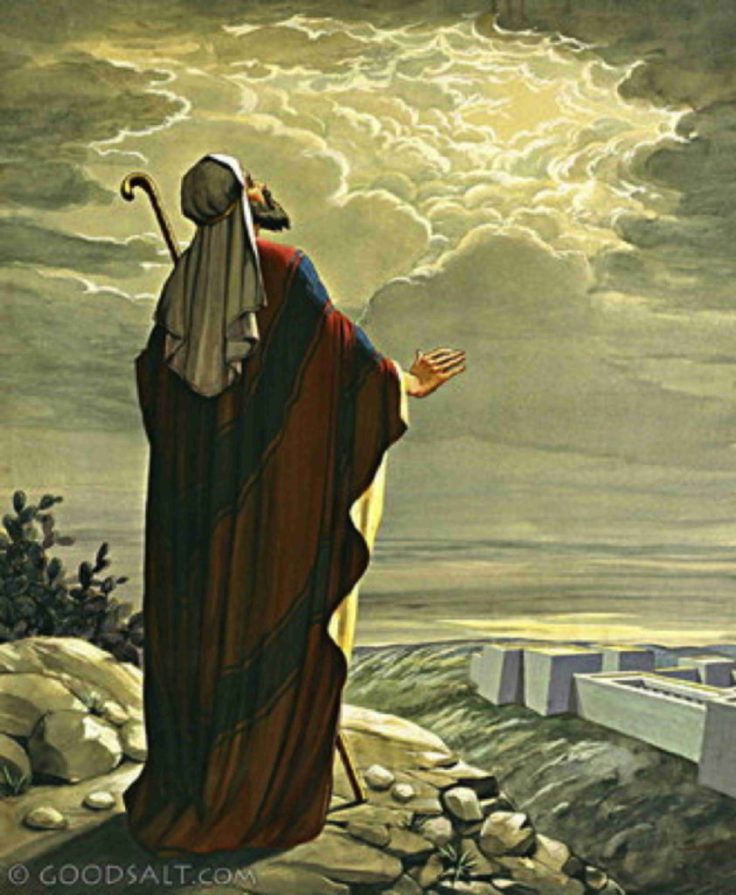
In the Old Testament, He is Yahweh, Jehovah, the LORD. He is Almighty. He is the God who sees, the God who hears, the God who saves, the God who provides, the God who saves, the All-sufficient One, the Lord (who) is my Shepherd, the Most High God, the One whose name is a Strong Tower, the Everlasting God and the Lord of Hosts, among others. Jesus, the promised Messiah, also has a host of names, including Wonderful Counselor, Mighty God, Everlasting Father, Prince of Peace, Lion of Judah, Son of God, Son of Man, Emmanuel, Light of the World, the Living Word of God, Savior, Master, Redeemer, Rabboni, the Bread of Life, the Living Water, the Lamb of God, the Risen Lord, the Alpha and Omega, and many more. What a rich picture of God we get from His Names!

I also remember the old hymns and worship songs doing a better job of helping us to see the God of the Bible. I know we have modern worship songs that include God’s many names and attributes, but others seem to concentrate, not on who GOD is, but who I AM because of God–I’m forgiven, I’m a Child of God, etc. I miss the old hymns that remind me that God is a Mighty Fortress, He is my Vision, my Blessed Redeemer, the Rock of Ages, whose grace is Amazing, and whose Love is “greater far than tongue or pen could ever tell!”

I don’t want to “forget” any of the many titles and attributes of my Father, His Son, or the Holy Spirit. When I lose track of them, I am less likely to worship, less likely to obey, and less likely to turn to Him first in every situation. As we close in on Easter this year, I want to spend some time looking at some of His many Names. But for today, I want to take a deep breath, and worship the one who is “worthy, O LORD, to receive Glory and Honor and Power” (Revelation 4:11).

You-nique!

Have you ever read through a passage in the Bible and been astonished, or even annoyed, at the long lists of names? Genesis, Chronicles, Ezra, even some of Paul’s letters contain genealogies and long strings of names– people whose life stories and deeds we will never know. Yet they are included in the greatest story of all time! God knows each name. He knows who they were, what they did, their hopes and dreams, their fears and disappointments– even the number of hairs on each of their heads!

“And the very hairs on your head are all numbered…”– Jesus Christ in Luke 12:7a (New Living Translation)

God knows you in the same intimate way. In the entire history of the universe, and in all the future years to come, there has only ever been, and only ever will be ONE of YOU. Your fingerprints, your retinas, your DNA are all unique to YOU. Even if you are a twin or triplet– even if you are the “spitting image” of one of your ancestors or relatives, NO ONE else can ever share your life story. Even if you were cloned, and there was another person who shared your exact physical nature, they would not share your soul– your thoughts, emotions, ambitions, griefs, and experiences.

And you are uniquely qualified in prayer. No one else can share your thoughts and feelings, your praises and confessions, your requests or petitions. Thirty people can pray for the same situation, the same person; there will be thirty different prayers! Even if you say the same words, or stand in agreement with another’s spoken words, you will not pray with the same exact thoughts. Your heart-cry is different from everyone else’s.. and God hears and understands each unique prayer. Out of all the prayers rising to heaven every second of every day, God can distinguish and delight in YOURS!

Some days it is frustrating to feel like “just another number” or “lost in the shuffle” of other people waiting in line, or trying to conduct business over the phone, or scrolling though social media. But you are never just a number to God. He knows your name– he has known it from eternity past! Your prayers are not put “on hold,” or filed away for later review, or answered with a form letter. God is personal– eight billion times over! He doesn’t just celebrate your uniqueness– He designed it!

What unique and amazing prayer will you pray today? How can you live out your unique personality and purpose this week? Who might be encouraged by your unique smile, your prayers, or your personal touch as you go through your day? Just remember, no one else can be you– no one else can show God’s character and His love exactly like you can! God didn’t send someone else to do what only you can. But He will be there each moment to help you do it– in your own YOU-nique way.

Why Confess?

One of the prayer models I like to use often is based on the acronym ACTS. ACTS stands for Adoration, Confession, Thanksgiving, and Supplication. I like this model because it is well-rounded. It works like this:


ADORATION–I love to begin prayer by remembering and acknowledging God’s worth, His supremacy, His Holiness, and His majesty. It sharpens my focus on the WHO of prayer, rather than the WHAT of my worries or doubts. And it puts everything in the proper perspective. Sometimes, I come to God by praying a Hymn, or praying a Psalm, or remembering the many names of God.

CONFESSION–Confession is important in prayer, and since I want to concentrate on it, I’ll come back to this element below.

THANKSGIVING– Thanksgiving returns me to remembering what God has already done– for me, for others, throughout history, and just yesterday in my life. Instead of prayer being all about my needs, wants, or concerns, prayer should be an honest conversation with God. And that must include gratitude, because God is truly GOOD! If you ever doubt that, think about the first five minutes of your morning. If you awoke, you are alive (thank you, God!). If you heard your alarm, opened your eyes and saw anything, if you were lying on a bed, in a shelter with a roof, if you were able to sleep through the night without the terrors of war, slavery, starvation, torture, or chronic agonizing pain, you have much for which to be grateful. If you were able to get out of bed on your own, able to eat breakfast, get dressed, and you have a job to go to or a purpose to fulfill in this day, you are among the blessed. To withhold praise and thanksgiving is to miss one of the privileges of life.

Photo by Tima Miroshnichenko on Pexels.com

SUPPLICATION–Yes, we bring requests to God. And He already knows what we need, what we desire, and what He has planned for us. So supplication is not about making God aware of our needs. But it is another act of acknowledging that God hears and responds to us. Because that’s the kind of God He IS! And because we have spent time Adoring, Confessing (to), and Thanking God, we know that we can present our requests without fear or doubt.

Most of us are fine with Adoring, Thanking, and Saying our requests, but Confession can be tricky– especially in our culture. What are the elements of Confession that trip us up? Mostly, I think, it’s a misunderstanding of what confession is (within the element of prayer) and what it is NOT.

Confession is defined as admitting to guilt, or to a crime or sin or wrongful act. But, even more basically, confession is an admission that we are not the ultimate authority over our lives or the lives of others. As such, we must confess before we can accept God’s atonement for our Sin. If we do not confess our need for God, we cannot accept, understand, or appreciate the depth and nature of His sacrificial Love for us. So when we pray, we must confess, not only God’s Glory in the heavens and the Earth, but His Sovereignty in our lives; His authority over our emotions, our thoughts, and our actions. King David gave us many great examples of confession in his Psalms– and they can be terrific models to use in our own prayers. (See Psalm 6, Psalm 32, Psalm 38, Psalm 51, and others.)

Confession in prayer is not primarily a list of our petty missteps– though we should be willing and able to name them, rather than denying what we’ve said and done–but a daily admission of God’s right to determine how we conduct our thoughts, our habits, our priorities, and our relationships, and acknowledging that God is Merciful, Gracious and Loving– beyond all our failures, mistakes, and even past rebellion. Confession shouldn’t focus so much on what we’ve done, as on how God is able to free us from guilt and shame, and how we intend to move on away from the past. We confess that our ways are not Holy, and in doing so, we underscore that God’s ways ARE Holy, perfect, wise, and good. God already knows our thoughts and actions, but WE need to be reminded of our goal– to run the good race (see Hebrews 12:1, and 1 Timothy 6:12) to follow Christ; to become more like God each day!

Confession is primary to the Christian Life– we confess that ONLY by the work of Jesus (the cross and resurrection) can we be reconciled to God. We cannot pray openly to God if we don’t believe–and confess– that this is true. God is not fooled by sweet talk or glib arguments. We cannot believe that Jesus’ atoning death and resurrection saved us if we don’t believe that it was necessary and good for Him to do so. And besides, confession is good for the soul!

“If we confess our sins, he is faithful and just to forgive us our sins and to cleanse us from all unrighteousness.”

1 John 1:9 (KJV)

Confession has a negative reputation in many Christian circles, and it is misunderstood in others. Just listing our sins or admitting we did something wrong doesn’t have any value without the positive confession that Jesus is “the way, the truth, and the life.” (see John 14:6) In fact, a better definition of Christian confession is this– agreeing with God about who I am (a sinner/imperfect/unable to attain Holiness on my own), and who HE is (perfect/Holy/Sovereign/the One who Loves me absolutely)

When we pray today, I hope we will confess– positively, profoundly, willingly, and whole-heartedly. I hope we will humbly and honestly confess any actions or habits that are interfering with our Christian walk. And I hope we will joyfully confess that Jesus is LORD; that we are trusting in Him to guide us, intercede for us, and give us the power to live more abundantly in this life, and throughout eternity. What a great way to pray!

Prayers That God Will Not Hear

We like to point out scripture that assures us that God will hear (and answer) our prayers. We like to remember God’s promises of blessing and peace and grace. And we tend to ignore or forget that there are some prayers that God has said He will not hear or answer.

God will not answer prayers that are selfish, or hypocritical. He will not answer prayers offered in pride, self-righteousness, or unbelief (see Luke 18:9-14, and Hebrews 11:6). He will not listen to prayers offered by those who oppress the poor, those who worship idols, or those who practice violence. And He will not listen to the prayers of those who reject Him, and remain in sin. https://www.gty.org/library/questions/QA160/does-god-answer-the-prayers-of-unbelievers (Please note: I don’t totally agree with the general conclusion here, but there are several great references for the individual points..)

Please note that God does not say that He will not answer prayer based on WHO a person is–God does not refuse to answer prayers based on a person’s age, nationality, gender, physical health, mental health, height, weight, social status, or any other label, including their past religious affiliation! This means that a sincere prayer of a person who is seeking God may be heard ahead of (or instead of) a prideful prayer of someone who claims to be a Christ-follower.

God is sovereign and omniscient– He knows what is in each heart, and He answers, not according to who we are, but according to who HE is. And just as He can separate our sins “as far as the east is from the west” (Psalm 103:12), and “remember (our) sins no more”(Hebrews 8:12), He can choose not to hear prayers that are offered with wrong motives or offered in defiance of His sovereignty and holiness.

None of this takes away from the fact that God DOES hear and answer prayer…God LOVES to hear from anyone and everyone who seeks His face. Nothing external can separate you from His love. Come with your anger, questions, sorrows, pains, gratitude, hope; bring your failures, your fears, and your triumphs. But God, like a wise father, doesn’t suffer fools and fakers. Even if you can fool your neighbors, friends, family, or yourself, you cannot fool God. He doesn’t want a false narrative– He wants you as you really are. He wants you to acknowledge who He REALLY is. And He will listen with an everlasting love and compassion to all such prayers!

More Jesus, Less Me?

Last week, I saw numerous posts with New Year’s resolutions, promises, and goals. One that I saw repeated often was the phrase, “This year, I need more of Jesus and Less of Me.” And, while I can see the appeal of such a phrase, I’d like to take a closer look at what that really means in a practical sense.

It’s easy enough to say a phrase like this and then proceed to live exactly the same as last year– struggling to be a “better” person, a more Christ-like person–and wondering why it isn’t working. But what if we’re missing the real transformation we need this year by misunderstanding what this phrase really means?

“More Jesus.” Actually, there is no “more” Jesus to be had than there already is. We can’t “get” more Jesus. We already have access to all the Grace, Power, and Peace that Jesus can offer. We have His Spirit to guide us, His example to follow, His indescribable sacrifice to motivate us, His promises to sustain us…what “more” are we looking for?

What we really mean by this phrase isn’t more of Jesus, but more TO Jesus and more FOR Jesus– more of our devotion, more of our obedience, more of our submission, more of our learning to lean on Him. We need to make more room for Him, more time for Him, more energy.

“Less Me.” In today’s world that revolves around identity and self-expression, this is where we lose non-believers, and many Christians, as well. The language of the New Testament– Jesus’ own words in fact! — call for us to die to ourselves and be raised to new life in Him. To many people, this seems like a very bad bargain. Matthew 16:25 puts it this way: “ For anyone who keeps his life for himself shall lose it; and anyone who loses his life for me shall find it again.” (The Living Bible) But look closely at this statement. Jesus is not promising death, but LIFE. (See also John 10:10) Jesus isn’t proposing to take away our life, but to help us find our best life. The word “life” in this passage can be translated as “life” or “soul.” When we think of “dying” to ourselves, or “losing” our life, we see only the negative. And death IS the ultimate negative. We don’t want to “die.” We don’t want to let go of this precious gift of life that we have been given. And it seems as though Jesus asks us to make a ridiculous trade– our life for His; our will for His; our self-control and determination for His mastery and domination.

Except that is Satan’s oldest and greatest lie! When Jesus says, “anyone who loses his life for me shall find it again,” He’s not promising a shadow life of slavery or degradation. God doesn’t want Holy zombies or robots, mindlessly and grudgingly following orders. He wants to bring us into the BEST and most abundant LIFE we can experience! But in order to experience any of it, we have to “get out of the way!” We have been given the ability to choose between right and wrong, between following God’s way or rebelling against it. It is when we believe the lie that God doesn’t love us, that He doesn’t have our best interests at heart, that He is withholding “something” from us– power, “fun,” happiness, achievement, etc.–that we lose our true life. We lose perspective, we lose joy, we lose peace, we lose our true purpose, we lost trust, and we lose hope. We get so worried that God will “cheat” us out of what we want in life, that we become enslaved to our own limitations and fears. I have hopes and dreams, but on my own, I will scheme, connive, compromise, and fall short of what I could become. I will let circumstances and bitterness determine my limits. I will betray all the promises of God for all the lies of the world. i may “win” the game of life, but in the end, I will still die. And I will die never knowing what I might have achieved WITH God, instead of in my own strength and wisdom.

So when we say, “Less Me,” what we really mean is less of my grasping, less of my whining, less of my demanding my own way, less of me shutting out others, less of me standing in opposition to God’s best for my life. ”More Jesus”– more trust in Him, more humbly walking WITH Him, instead of shaking my fists AT Him, actually results in “More Me”– not the ME that wants the world to revolve around only myself, but the Me that God created me to be! The Me that can only be shaped by a Master’s Hand. The created me bringing glory to and through the Creator!

So this year, instead of saying “More Jesus, Less Me,” maybe we should say, “Me Less, Jesus More!” Me less and less in the driver’s seat. Me less prideful and isolated. Me less prone to anger and bitterness. Me less in the center of my thoughts and plans for today. Jesus more in my daily talk. Jesus more in control of my emotions and reactions. Jesus more of my focus. Jesus more of my best and most trusted friend! And in the end, Me, More like Jesus made me!

Got Jesus?

In the beginning was the Word, and the Word was with God, and the Word was God. He was in the beginning with God. All things were made through him, and without him was not any thing made that was made. In him was life, and the life was the light of men. The light shines in the darkness, and the darkness has not overcome it, 10 He was in the world, and the world was made through him, yet the world did not know him. 11 He came to his own, and his own people did not receive him. 12 But to all who did receive him, who believed in his name, he gave the right to become children of God, 13 who were born, not of blood nor of the will of the flesh nor of the will of man, but of God.14 And the Word became flesh and dwelt among us, and we have seen his glory, glory as of the only Son from the Father, full of grace and truth.

John 1:1-5; 10-14 (ESV)
Photo by James Wheeler on Pexels.com

I memorized this passage as a child. And one part of this passage stands out to me today, because the wording of the verse has not changed, but our cultural reading of it has changed a bit. I remember churches, and evangelists, using the phrases like, “Have you accepted Jesus Christ as your personal Savior (or Lord, or Lord and Savior)?” “Are you ‘born again?'” “Have you asked Jesus into your heart?”

I know in certain circles these phrases are considered “old fashioned”, “evangelical”, and even offensive. Some of us don’t identify as Christians anymore– many of us prefer the term, “Christ-followers.” “Born-again” Christians are seen as hypocritical, overbearing, judgmental, and intolerant– even violent! And there are individuals and groups who give evangelical Christianity a “bad name” by their behavior.

Photo by Alex Green on Pexels.com

Evangelicals have a reputation for putting people’s backs up, and putting people “on the spot.” They want to know, “have you GOT Jesus?” As though Jesus is a product and you either own Him or you’re missing Him. Can you get Jesus at the corner store? Do you “get” Him the same way someone “gets” a virus? Is He infectious? Can you sell Him? Lose Him? Trade Him away?

The Apostle and Gospel writer, John, was an evangelical. He was keenly concerned that His readers, friends, listeners– basically everyone he met, GOT Jesus. He wasn’t trying to sell a product, force a certain doctrine down others’ throats at the end of a sword, or offend those he met. But he DID want to make sure that people didn’t miss out on the GLORY, the incredible WONDER, the eternal GIFT of LIFE that had lived and walked and dwelt among us.

Photo by Kyle Karbowski on Pexels.com

Today, there are many who claim to “follow” Christ– they have great respect for His teachings; they want to live a “good” and even “righteous” life just as Jesus did; they believe He was a great role model. But they haven’t “received” Him. They believe what they have heard about Him; they believe “in” Him, but they don’t believe “in His Name.” Truly becoming a “follower” of Christ is to become a “Christian”– willing to be called by His name and identified with Him. Not just as a wise teacher or a gentle soul, but as a sacrifice–despised and rejected, misunderstood– and obedient even unto death. Not just the physical death of a martyr, but the social death of an outcast, the death of selfish dreams and worldly success through compromise, the loss of relationships, property, status, freedom… John knew all of this first-hand. He was standing by during the trial and crucifixion of Jesus Christ. He watched as his brother and friends were beheaded, tortured, crucified upside-down, and driven into hiding. He spent the end of his life in exile for the privilege of being a “Christian.”

Photo by Gabriela Palai on Pexels.com

Calling oneself a Christian, or a Christ-follower, or “born again,” doesn’t mean anything in and of itself. I can call myself a doctor, or an artist, or a prophet. I may have studied medicine, or created a painting, or made a prediction and be completely hypocritical. I may end up giving a bad name to myself, and causing people to be cautious about other doctors, artists, or prophets. That doesn’t make THEM hypocritical, and it shouldn’t cause them to stop doing what they do well. What matters is not what I say I am, or even what others say about me, but what and who I demonstrate that I am. I want to let my words and actions declare my relationship to Christ. At times, I would like to avoid the ridicule and misunderstandings. I’d like to be able to distance myself from the “bad examples,” but, like John, I long to testify to the GLORY of the one I follow and trust, more than I want to justify my own self at the expense of others. Yes, there are some “fake” Christians, and some who are sincerely wrong in how they attempt to live– and if someone were to catch me in a bad moment on a bad day, and show only that moment to the world, I would be counted among them– but my goal is not to ask if others have a perfect track record, or if they know all the right Bible verses or even if they have the “right” answers. My goal is to ask, ” Have you GOT Jesus?” “Do you KNOW Him– not just about Him?” When you pray, are you praying to an aloof idea or to a personal Savior? If He called you, would you answer, or let it go to voice mail? Would you scroll through and “like” His social media posts, or would you actually DO what He said?

Jesus came. He walked among ordinary people. Crowds “followed” Him, hanging on His parables, excited about His healings, and impressed by His miracles. But very few of them actually became His disciples and “received” Him. But to those who did, like John, He gave them the privilege to be called Children of God– not because they were smarter or wiser or more righteous in their own knowledge or efforts, but because they were made new, “born” again, and transformed by their relationship with Him. May that be so for all of us!

Christians, Christ-followers, and Jesus Freaks

I see a lot of articles, posts, and religious sites as I wander around the internet. And there has been a lot written and shared lately about the word Christian getting a “bad rap.” Many writers and church goers are no longer comfortable calling themselves Christians. They don’t want to be identified with “bad” Christians– hypocrites, political extremists, etc., who loudly and proudly use the label while treating others with contempt, and generally acting like bullies and/or clowns. The growing trend is to use the term “Christ-follower” to describe a lifestyle that seeks to mirror that of Jesus Christ during His life on earth.

Photo by Pixabay on Pexels.com

Proponents of this practice point out that Jesus never called His followers “Christians.” Instead, He consistently invited people to “Follow me.” The term “Christian” is associated with the earliest Gentile churches and with the scattering of the persecuted church across Judea, Samaria, and Asia Minor. The term originated in Antioch a few years after Jesus’ resurrection:

19 Now those who were scattered after the persecution that arose over Stephen traveled as far as Phoenicia, Cyprus, and Antioch, preaching the word to no one but the Jews only. 20 But some of them were men from Cyprus and Cyrene, who, when they had come to Antioch, spoke to the Hellenists, preaching the Lord Jesus. 21 And the hand of the Lord was with them, and a great number believed and turned to the Lord. 22 Then news of these things came to the ears of the church in Jerusalem, and they sent out Barnabas to go as far as Antioch. 23 When he came and had seen the grace of God, he was glad, and encouraged them all that with purpose of heart they should continue with the Lord. 24 For he was a good man, full of the Holy Spirit and of faith. And a great many people were added to the Lord. 25 Then Barnabas departed for Tarsus to seek Saul. 26 And when he had found him, he brought him to Antioch. So it was that for a whole year they assembled with the church and taught a great many people. And the disciples were first called Christians in Antioch. (emphasis added)

Acts 11:19-26 (NKJV via biblegateway.com)

For a more detailed look, check out this link: http://www.bible.ca/ef/expository-acts-11-19-26.htm

Photo by Paul Theodor Oja on Pexels.com

Christian was not a positive or honorable label for the early followers of Jesus Christ. There are still many places in the world where the label “Christian” invites arrests, beatings, and death threats. There are places where the name “Christian” invites scorn and derision. What has changed (or seems to have changed) in the intervening years is that we see and hear of more and more places in the world where the label “Christian” brings up images of sneering protesters condemning gays or smug white faces spouting self-righteous phrases to justify greed, racism, and/or injustice. “Christians” are not just unwanted or misunderstood by others–Christians are unwanted by their own; misunderstood and misrepresented, at odds and at war with one another.

So what can be gained by followers of Jesus Christ in re-branding themselves as “Christ-followers?” After all, it’s just a name. In the 1960s, many Christians were condescendingly labeled “Jesus Freaks.” Jesus Freaks were viewed much like Hippies. They spoke of Peace and Love and Acceptance. They taught about kindness and unity. They were often young, and generally disillusioned with the older generation and its way of life. They acted a lot like Hippies; they just didn’t do as much experimenting with drugs and free sex. Much like the early Christians, they were labeled by those who dismissed their message and their way of life. They rejected traditional or mainstream Christianity, and were dismissed by many who called themselves Christians. Some were openly critical of previous generations of Christians. Many of those who wish to be called “Christ-followers” now are the descendants (or remnants) of the Jesus Freaks of the 60s. The mind set is very similar– disillusionment with others who have misused or abused the name of Christ, and a desire to “rescue” the reputation of the church.

Photo by Matthew T Rader on Pexels.com

There have been other groups across the centuries who have tried to re-brand and re-label their devotion to Jesus– God-fearers, Disciples, Reformers, Witnesses, Saints, Fellowships, etc.. And there is no command in Scripture that we must all call ourselves by a particular label.

But is seems odd to me that the very label, “Christian,” that came about because of persecution, that came about as a derisive, sneering, condescending term, was embraced by those it sought to shame and intimidate. Why didn’t the original “Christians” re-brand themselves to make their cause less offensive? Why has this term, “Christian,” endured over the centuries?

Photo by Francesco Paggiaro on Pexels.com

I think there are a few very good reasons:

  1. “Christians” bear the name of Christ, whatever other name they give themselves. When I say I am a Christian, I know that there are people who will compare me to others who make this claim. But I am not just a member of a group that likes the idea of Christ; I’m not just a Facebook follower of Christ, or a fan of Christ, or a student of Christ. Christ is my Lord; my life; my identity. Christ– Jesus the Christ, the Messiah. Not Joe Smith down the road who also attends my church, or a famous evangelist or Bible teacher, or even one of the Apostles, or Saints. Jesus– son of Mary and Joseph; Son of God and Son of Man. This same Christ was arrested, given a sham trial, condemned to be crucified like a common criminal, and hung, naked and tortured before a mocking crowd. He was humiliated, misunderstood, and abandoned by those who claimed to care the most. THAT is the name I willingly bear.
  2. “Christian” is a label. I can label myself in any number of different ways– “Woman,” “American,” “Caucasian,” “College graduate.” But there are many others who can use those same labels. They may define what I am, but they don’t define who I am. I may be appalled (and I am, sometimes) at things other women do, at things other Americans say, at the history of Caucasians and their interactions with indigenous peoples in other parts of the world, at the snobbery of other college graduates…But I don’t say, “I’m no longer going be an American; I want to be known as a resident of the United States, but I have my own system of government and culture and language independent of those living in Missouri or Idaho or Chicago– they don’t represent who I am.” Of course they don’t represent who I am–they never did. We all, collectively, are Americans AND residents of the United States. I can’t decline to be a woman because I don’t like the way other women behave or speak. And I can’t choose to be “other than” a Christian…all I can do is give it another label.
  3. Finally, who I am is not found in a name or title or label. It is the sum total of my character and the way I live my life. Jesus didn’t tell His disciples that they would be known by any particular name, but He did say they would be known and identified by their love: 34 A new commandment I give to you, that you love one another; as I have loved you, that you also love one another. 35 By this all will know that you are My disciples, if you have love for one another.” (John 13:34-35 NKJV). That doesn’t mean I have to approve of everything other “Christians” do– in fact, if they use the name Christian and do not have love for others, they prove they are liars– but it means that I must do everything in the name of Christ.
    I am a Christian first, before I am a woman or an American or any other label. That means that I am the co-heir and sister to a young man in India who has been rejected by his family and expelled from his school for being a Christian. I am an ambassador of Christ to the woman I meet in the grocery store whose children are taxing her patience and whose cart is blocking the aisle I want to enter. I am an example of Christ’s love to the young couple who have been victimized by other “Christians” because they are “different.” And I am a Christian in a world of “fake” Christians, and confused Christians, and faulty and very human Christians just like me, who need correction, mercy, justice, and wisdom to follow Christ, to die to self, and to bear the honor of His name. Ultimately, I can call myself a Christian, a Christ-follower, a Jesus Freak–any other label I want. Whether I AM a Christian or not will be determined by how I live, not what I call myself.
Photo by Pixabay on Pexels.com

If you are a Christian reading this– how are you bearing His name today?

I Am..

There are many ways to describe who I am (or who you are). I can describe myself in terms of my appearance, my social status, my occupation, age, familial role, or any number of other labels. These labels help distinguish me from other people around me, while also grouping me in with still others. Even my name functions in this way. My surname connects me with my current family; my maiden name with my birth family–my first name distinguishes me from my siblings within the family. However, there are many others in the world with either the same first name, surname, or both!

Photo by Craig Adderley on Pexels.com

I know that I am a unique person, but I am not singular. That is to say that while I am a unique combination of genetic materials, with unique hopes and dreams, I still belong to the human race, to my family group, and to the culture and time in which I live.

Only God can say “I AM!” and not have to add any modifier. God is..God. There is no one like God–no label that can be applied to Him and to anyone or anything else. We use words like “King”, “Father”, “Lord”, “He” even “God”, but none of them convey the fullness, the enormity, the eternity of the great “I AM.” Many ancient cultures worshiped gods; supernatural beings who ate and drank, married and had families, ruled the skies or waters or land or underworld, fought, loved– some even died. But none of them could say they were “I AM”. I AM stands in the face of doubt and unbelief; I AM remains unchanged and unchanging in the face of progress and technology; I AM defeats our attempts to shrink Him into our own limited understanding and our own limited lifespan; I AM is ever present, ever aware, everlasting.

Photo by Pok Rie on Pexels.com

And this I AM created each of us to BE. Because of I AM, I can say that I am, too! And my purpose is to be, and to become more like He is, to the glory of I AM, and the fulfillment of what I am in Him.

Photo by Pixabay on Pexels.com

Lord, Father, and the great I AM– help me to see you more clearly for who you are. Help me to become more like you, and more like the person you created me to be. Help me to reflect your glory in the words I speak and the actions I take today.

Identity Crisis

Who are you? If someone were to ask me such a question, how would I respond? Where would I begin? Name? Gender? Race or Ethnicity? Nationality? Marital Status? Age? Profession? Social or Economic Status? Religious Affiliation?

While I can be “identified” by such labels and descriptors, none of them get to the essence of who I “am.” More than just “identification”, there are four important ways to think of “identity.” Jesus dealt with two of them (and hinted at a third) in a discussion with His disciples:

Photo by Ismael Sanchez on Pexels.com

1When Jesus came to the region of Caesarea Philippi, he asked his disciples, “Who do people say the Son of Man is?” 14 They replied, “Some say John the Baptist; others say Elijah; and still others, Jeremiah or one of the prophets.” 15 “But what about you?” he asked. “Who do you say I am?” 16 Simon Peter answered, “You are the Messiah, the Son of the living God.” 17 Jesus replied, “Blessed are you, Simon son of Jonah, for this was not revealed to you by flesh and blood, but by my Father in heaven. 18 And I tell you that you are Peter, and on this rock I will build my church, and the gates of Hades will not overcome it. 
Matthew 16: 13-18 (NIV)

“Who do people say (I am)?”–Those who label us are usually those who are most removed from us– “people” who don’t know our personality, our life story–people who can only identify us by faint impressions and simple observations. Unfortunately, our world has become a place where we can feel trapped in this sort of surface identity. Others see that I am young or old, short or tall, Christian, Muslim, Black or Asian, American or Brazilian, Hispanic, female, blind, etc. Or they judge me to be rich or poor, native or foreigner, educated, clean, socially adept…or someone who thinks or speaks like them..or not. Others can shape our social identity, but we must resist the trap of letting them define it.

Photo by Pixabay on Pexels.com

Through the ages, people have tried to define Jesus– to identify, label, and dismiss Him, just as the people of His own time did. Some have seen in Him a “great teacher”, a “prophet”, a madman; some even question the reality of His physical existence. Jesus was aware of this when He asked for feedback from His disciples. But He wanted more.

Photo by Pixabay on Pexels.com

“Who do YOU say that I am?”– Those who are close to us can give us a more accurate reflection of who we really are. They know more of the complex nature of our personalities, our backgrounds, the events and experiences that shape our thoughts and emotions. Close friends will often give us a “reality check”, as well–drowning out the voices of other people who may give us a false sense of our worth and identity, and reminding us of where we’ve come from and where we are headed. Our friends and family can remind us that we are maturing (or not), that we have value far beyond our labels. When Jesus asked His disciples to answer the first question, they gave vague answers– “some say…others say”–the second question required a more personal, deeper answer.

Why did Jesus ask the question in the first place? Was He having an identity crisis? Did He not know who He was? Of course not. But He knew what it was like to be misunderstood, mislabeled, mis-identified. And He knew that sometimes, we need to stop and ask the question; we need to reevaluate where our identity comes from and not let others decide for us.

Photo by Jennifer Murray on Pexels.com

God created us as individuals with unique identities–no two alike, and each one infinitely precious. We, by our thoughts, feelings, actions, experiences and beliefs, become who we are. We can change our identity– not necessarily those parts that people tend to label; we can’t become taller or younger, for instance–but we CAN change our outlook, attitude, beliefs, and choices. Others can give us their observations, advice, encouragement or criticism, but we choose which voices to listen to, and which roads to follow in our life’s journey.

None of the other disciples had a ready answer for Jesus on this occasion, but Peter jumped in with an announcement, “You are the Messiah, the Son of the living God.” This was more than the question demanded. Peter could have said “I think you are the Messiah,” or even “You are my master, my teacher, and my friend.” But Peter cut to the chase–“You ARE the Messiah..” To which, Jesus replied that “this was not revealed to you by flesh and blood, but by my Father in Heaven…” Ultimately, our identity will be declared and confirmed by our Creator. Our identities, unique as they are, were created for purposes– we live and move and have our being within the scope of God’s creation, and within His plan for all of humankind.

Photo by Jonas Ferlin on Pexels.com

Father, who do YOU say that I am? Help me to become the person you created me to be, to fulfill the purposes you have for me, and to honor your Son, who came to reconcile us to Yourself. Amen!

Blog at WordPress.com.

Up ↑