
“I Hate Waiting…”

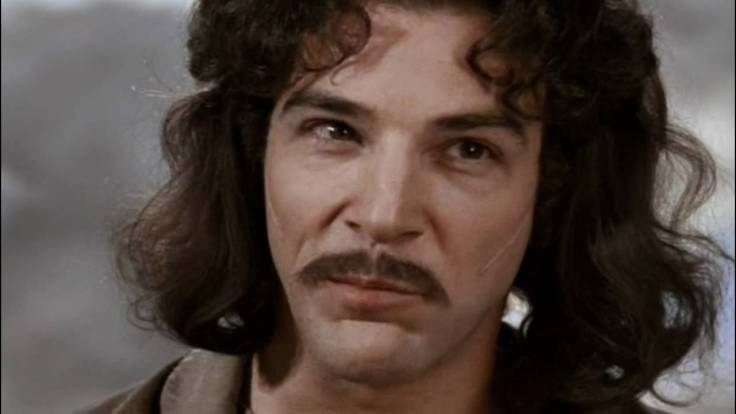
One of my favorite characters from “The Princess Bride” is Inigo Montoya. He has a few redeeming qualities– he is a loyal friend; he is intensely (obsessively) loyal to his father’s memory; he is basically honest; and he has a soft spot for lost causes, including a tender-hearted giant and a (mostly) dead pirate/rival/would-be hero.

But Inigo has many failings, as well. He is a drunkard, he lacks the skills to plan great achievements, and he has an over-developed sense of revenge that gets him in a lot of trouble. Also, he hates waiting. And he has done a lot of it– he’s waited over 20 years to track down his father’s killer and challenge him to a duel (the above-mentioned revenge).

When he first meets Westley (the above-mentioned pirate/rival/would-be hero), Westley is climbing a treacherous cliff. Inigo waits at the top as Westley struggles up the rocky crag, trying not to fall to his death. Inigo, ever concerned, calls down to ask how it’s going. He wants to know if Westley can “a-speed things up.” He REALLY hates waiting. Later, as he seeks to rescue Westley, he is told that he must wait at least 15 minutes for the magic potion to work and for Westley to regain consciousness. Inigo is delighted when Westley can talk and move his head a little, but he cannot wait for Westley to regain the use of his arms or legs before “storming the castle!”

Not many of us enjoy waiting. Some of us are better at it than others. And it is a character quality that God asks us to develop. Several times in the Bible, God asks us to “wait” or “wait on the LORD.”

When we pray, it is tempting to expect or even demand an immediate, clear answer. If we don’t get it, we fall into two temptations. The first is to despair and/or lose faith. If God doesn’t “show up” right away, we are tempted to believe that He just isn’t listening or doesn’t care about our situation. As time goes by, we may become bitter, angry, sullen, and depressed. We stop calling out to God; we turn away and seek answers (or escape) elsewhere.

The second temptation, the one I believe Inigo falls into, is to stop depending on God and carry the burden of our pain, our grief, or our situation all by ourselves. Inigo’s father was killed when he was eleven years old–his entire adult life has been wasted on a quest to avenge his father’s death. He hasn’t developed a life of his own– he has no career (he does odd jobs for crooks like Vizzini), no family, no plans for a sustained future– only his anger and bitterness over a twenty-year-old tragedy. And only when, in desperation, Inigo pauses for a moment and prays, does he find any real help in achieving his goals. In fact, at the end of the story, when Inigo finally achieves his revenge on Count Rugen, he is left with a dilemma. He admits to Westley that he has no idea what to do with the rest of his life! He has allowed the past to consume both his present and his future.

Another story that illustrates this temptation is the story of King Saul. In 1 Samuel 13, Saul has begun to attack the enemies surrounding Israel. He and his troops are hiding in caves and waiting for the prophet Samuel to offer a sacrifice and seek God’s counsel. The enemy is camped nearby with thousands of troops and chariots, and Saul’s men are beginning to panic and desert him. When Samuel doesn’t come at the appointed time, Saul disobeys God’s law by offering the sacrifices himself, even though he is not of the priestly line. Instead of standing firm, and encouraging his men, Saul gives in to the general panic and takes matters into his own hands. He takes a visible action — offering the sacrifice– without taking the right attitude of seeking God’s counsel.

Waiting can be difficult– especially when we are faced with fear, anxiety, danger, and lack of plan or purpose. But learning to wait for God’s ways and timing will teach us how to grow in Faith and confidence. Today, instead of asking God to “a-speed things up,” may we thank Him for all the times He has been faithful in the past, and trust that He will “arrive” at just the right time!


I Don’t Care What You Know..

There is a saying: “I don’t care what you know, until I know that you care.” I went to the bank yesterday, and there was a line. There were only two tellers available (other bank workers were dealing with larger issues in their offices, so there was no back-up, either). Both drive-thru windows had lines, as well. This is a small bank, but a recent closure of a nearby branch means that it is now busier than before, with the same amount of staffing.

The woman ahead of me in line was impatient and angry. She kept repeating the obvious– “They need more tellers! There aren’t enough tellers!” She was rude and demanding, and when she finally got to the front, and a teller (harassed and overworked) patiently and politely asked how she could help, the customer repeated, “You need more tellers here!” The teller explained that corporate policy allows only so many workers per shift, and they were all busy. It was the first of the month– one of their busiest days for cashing checks and dealing with monthly payments. The customer, somewhat abashed, apologized for her rudeness.

The customer “knew” that she would have been served faster if there were more tellers at the front. She knew how SHE would like to have the bank policy play out in her favor. But she didn’t really know the whole story. Her snap judgment wasn’t based on complete knowledge, but on emotion and assumption.

Earlier this week, I was praying about a woman I know slightly. I had heard that she was in a bad housing situation. Her house needed major repairs, and she could not afford them. I prayed that God would act, providing her with “better living conditions.” I assumed that God might provide for her to get a new roof or water heater, or pay down some of her bills. The next day, I heard that her house burned down!

What should I make of God’s response to my prayer? Did He not hear me? Doesn’t God care? Is He laughing at this woman’s misfortune? Is He laughing at my feeble and vague prayer request? Someone reading just the details I have provided (my prayer, and the incident of the fire) might decide they “know” that God is malicious or that He simply doesn’t exist or answer prayer. But are they correct in that conclusion?

NO! God cares. He cares deeply. I was moved out of concern to pray for a woman I barely know. Many others have been praying for her for several weeks, as well as offering her counsel and help in trying to find alternative housing or financial assistance. I don’t know the true extent of her needs– not just housing, but her spiritual, emotional, and other physical needs. God does! We tend to put our hope and trust in our circumstances– even desperate ones– and our ability to control, manipulate, or just survive them. This house had been a burden for a long time, yet the woman steadfastly endured high bills, bad roofing, and poor conditions.

God IS answering my prayer– and the prayers of many others– as help is pouring in for this woman. She was uninjured in the fire, and she has a temporary place to stay. Furthermore, she has people helping her plan ahead for permanent housing, financial needs she will have in the next few weeks and months, and making sure she does not have to face this tragedy alone.

Sometimes, God’s blessings are wrapped in sorrows. Sometimes, we must endure waiting, hardship, and even loss in order to experience growth and peace. Sometimes, we have to deal with impatient customers, long lines, or personal tragedy. God KNOWS. He doesn’t just know our present circumstances and pain. He knows the final outcome, and all that He wants to accomplish THROUGH our present circumstances. And God CARES. He cared about the angry customer in front of me at the bank. He cared about the overworked teller waiting on us. He cared about the woman who lost her house. He cares about each one– no matter what circumstances may suggest. He does not leave us alone in our trials– even when it may feel like He has abandoned us. There are people somewhere in the world praying for you right now. They don’t know what will happen to you today or tomorrow, but they know that God is sovereign. And the Holy Spirit prompts them to pray, even when they don’t know, for God to bless you, protect you, and watch over you.

Two things I have taken away from my experiences the other day: First– God is ALWAYS Trustworthy! I said a quick prayer for the harassed teller and her customer as I waited in line (it’s not like I didn’t have any time to pray!) And sure enough, as she waited on the woman and then on me, the lines at the drive thru windows melted away. She was able to take time to explain her situation to the customer ahead of me, and she was able to take her time waiting on us both. She kept her temper in check and managed to smile through the transactions! And her calm response helped the customer realize her rudeness and apologize. I don’t think that was just coincidence. And I don’t think it was coincidence that several people have been praying for weeks about the other woman’s housing situation. The fire wasn’t an answer to our prayers– our prayers were preparing for an answer to the fire!

The second reminder– Pray without ceasing (1Thessalonians 5:17). While my experience at the bank called for immediate prayer and found an immediate response, my other prayers have been going on for weeks and months. Nothing seemed to be happening. Yet God was preparing for an event I had no way of foreseeing. We want quick answers to prayer. We want easy answers to our prayers. But God’s ways are not our ways. His ways are mysterious to us, but they are for the best, not just the most convenient.

When we pray, God doesn’t care what we KNOW (or think we know). And He doesn’t always give us the knowledge we’re looking for. But He KNOWS! And He CARES! He honors the prayers we lift up because we know Him, and because we care about others.

Fixing the Snarls

A few years ago, I got really ambitious and decided I would take up crocheting. My grandmother taught me the basics many years ago, and I thought I would be able to pick it back up and make delightful scarves and mittens and maybe even afghans… Except, when I started a scarf, I ended up with a nice start attached to a horribly snarled up ball of yarn. No problem. I would simply work at the snarl until it melted away, and continue with my scarf. Except it didn’t melt away. I was able to “move” the snarl a foot or so down from where it was, but I couldn’t work it all the way out.

I struggled with that snarl far longer than I should have, and eventually gave up the project and moved on to making candles (another story for another time). But I learned a painful lesson. I would love to say that I prayed about the snarl and God unraveled it for me, but that didn’t happen. I prayed– yes; but God allowed me to continue in my stubbornness and self-confidence to do battle with a few yards of green yarn for days, when I could have been doing more productive things.

I have a great need to try to “fix” things– I think most of us do at some level. We live in a broken world, and we know that there are things that are “snarled” all around us–relationships, situations, circumstances–that need fixing. And God has given us opportunities to do good works that can make the world around us better. But it is not our job to “fix” the brokenness in the world. Only God can really “fix” it–even though He may give us work to do along the way.

And that brings me back to prayer. No, God didn’t “fix” the snarl in my yarn. And He didn’t “fix” my stubborn attitude or my willingness to finish the project another way or ask for help from someone else. God isn’t interested in making our lives (or our projects) easier for us by removing our problems. And God isn’t impressed by our stubborn efforts to “fix” the situations in our lives. God’s ways are not our ways (see Isaiah 55:8-9; and check out https://blackaby.org/gods-ways-are-not-our-ways/.

So many times, we think of prayer as a last resort, as a crutch to fall back on when our efforts seem to be failing, or when we think a situation is “too big” for us to handle on our own. Even in the things of Christ, we tend to plan first, and pray later. Prayer becomes our Plan B. But what if, in the grand scale, prayer was always our Plan A? What if we started the morning, not looking at our planners and calendars, but listening for God’s direction? Even if it meant scrapping our own plans and leaving the “snarls” to God? What if, as our churches planned for programming and outreach, we resolved to do nothing until we had prayed for a month about our goals for the coming year? What if our churches had more people coming to prayer meetings than coming to Family Game Nights or Teen Overnight Parties? In my own life, what if I spent less time writing in my prayer journal than actually asking God to inhabit my prayers?

In the book of 1 Samuel, King Saul undertook a mission for God– God had chosen him to be King over all Israel, and to lead the nation against the wicked peoples in their midst. Saul led his warriors in battle, and even had success, but God rejected Saul because of his disobedience. Saul wanted victory to confirm his status as a warrior and a king. He listened to God’s instructions– superficially. He even insisted that he had followed God’s instructions– after all, he defeated the enemy! But he didn’t do it God’s way or for God’s glory. God gave him victory in many battles, but Saul was impatient, imprudent, and impudent. Saul ended his reign in shameful defeat because he wanted to “fix the snarls”– his way.

I’m not saying that my prayer blog and prayer journal are wrong, or that churches shouldn’t do programming– not at all. But it is something to think about, before the next yarn snarl comes along… Am I busy trying to “fix” a situation that I can’t (or shouldn’t) fix, when I should be watching for God’s next assignment? Am I trying to win a battle to prove myself worthy, or am I letting God set the terms and take the Glory that is rightfully His? Am I busy asking God to unsnarl yarn, when He wants to move mountains?

Jesus Wept

It is the shortest verse in the entire Bible– St. John 11:35:  “Jesus wept.”  Only two words.  They are easily memorized; they are also easily overlooked or misrepresented.  Jesus wept over the death of his good friend Lazarus.

Read the story of Lazarus here.

Jesus wept–Emmanuel felt deep emotion and showed it.  God shed tears over the pain and sadness of a death; Messiah cried for the loss of his good friend.  Jesus was no stranger to sadness and loss– God understands the sharp sting of death.  God is compassionate, not heartless or cruel.  If we are in emotional turmoil, it is not because God doesn’t know our pain or doesn’t care.  He hurts WITH us in our times of deepest need.

girl in pink jacket on wooden bridge in the forest

Jesus wept–People often ask the rhetorical question, “What would Jesus do?” when faced with a situation.  Here is an example of what Jesus did– he wept.  Sometimes, the “thing to do” is to acknowledge the reality of our situation–death hurts.  It brings out feelings of anger and even fear.  Death is scary.  It’s ugly, and it fills us with a sense of injustice, and a desire to wake up and find that death is just a very bad dream.  Aching loss, wracking sobs, feeling punched in the gut by circumstances– these are valid feelings and reactions.  To pretend otherwise or to deny ourselves or others the right to express those feelings does great harm, just as wallowing in sadness and remaining isolated in our grief can drag us into hopeless depression.

Jesus wept– period.  He didn’t punch a wall or point fingers at Mary and Martha for “letting” their brother die.  He didn’t try to justify his extra-long stay that kept him from arriving before his friend died.  Neither did he justify returning to a region where he was not “safe” from the authorities in order to comfort the sisters (and ultimately raise Lazarus back to life).  People often criticize Christians for “not doing enough” to erase hunger, cure diseases, or end poverty in the world.  Some even point out that Jesus, being God incarnate, had the power to do all of this during his earthly ministry.  But he didn’t.  As he was dying, he said, “It is finished.”  He wasn’t referring to some social revolution or economic program, or political movement that would abolish the oppression of the Roman Empire, or the corruption of the Pharisees, or end the slave trade.  That doesn’t mean that God approves of evil, corruption, and injustice.

But it means that Jesus’s mission was accomplished through what he did in life and through his sacrificial death.  He loved freely, healed those who were willing, and taught about the true character of his Heavenly Father.  He ate, and laughed, and slept; he burped and sweat, and cried.  He prayed and worshiped and worked and gave.  Jesus didn’t weep because he had no power to keep Lazarus from dying.  He proved that just minutes later.

person holding hand

Jesus wept because he was showing us the very heart of God.  God’s heart is not to flex his sovereign muscles and demand our instant and abject obedience– though he has the perfect authority and right to do so.  His heart is to walk intimately with us, even when that walk goes through the very valley of the shadow of death!  God’s love isn’t flinty and cold.  It isn’t pushy and arrogant and selfish.  It is extravagant and gracious beyond all imagination.  It is raw agony and pure joy. It doesn’t immediately “fix” our hurts or answer all our questions, but it wraps around us even IN our pain, and it give us hope to endure and carry on.

man hugging a woman wearing black tank top

What in your life causes you to weep?  What burdens and aches and frustrations and questions drive you to tears?  Jesus may not take away what hurts us, but he will never turn us away because we are scarred or scared or broken.  He will share our burdens, wipe our eyes, and hold us as we pour out our tears.

But Did I Pray?

I cried a bit.
I threw a fit.
Made a fuss;
Kicked up some dust…
But did I pray?

I made a plan.
I took a stand.
I marched around;
Made some sound.
But did I pray?

Photo by Andrea Piacquadio on Pexels.com

I went on-line;
Looked for a sign.
I read a book;
Took another look.
But did I pray?

I hit a wall.
I made some calls.
I spoke to friends.
I followed trends.
But did I pray?

I shook my head
And then I said
A hasty word.
I felt unheard.

I wondered why;
Had another cry.
I drove my car
And searched the stars.
But did I pray?

Prayers are simple.
Prayers are quiet.
I wanted answers.
I wanted a riot.

My heart was proud.
My voice was loud.

But what can I say?
I didn’t pray.

“Be still, and know that I am God..” Psalm 46:10

I Already Prayed About That…

Have you ever been in a season where you felt like you were praying about the same situation over and over with no results? No answers, and no indication that God has even heard? And you feel frustrated and even guilty about praying AGAIN about it?

Photo by SHVETS production on Pexels.com

We live in an “instant” culture. Instant banking, instant coffee, drive-through fast food, and 24-hour news cycles give us the expectation that we can get whatever we want or need with the push of a button or flip of a switch. Just yesterday, I pulled into the grocery store parking lot, and, seeing how full the parking lot was, I drove two miles away to a different store, because I anticipated long lines at the checkout! I don’t like waiting. I don’t like “wasting” time.

Photo by RODNAE Productions on Pexels.com

But God often puts us in a “holding pattern.” He may seem silent or distant, non-responsive or even absent. And in our impatience, we may stop bringing our burden to God, and seek elsewhere for answers or relief. Even when we know that God has promised to hear us, and never leave us alone, we long for instant gratification. And when we don’t get it, we start to wonder and doubt.

Photo by Liza Summer on Pexels.com

Sometimes, I feel angry in my impatience. I want answers! I want to know the next step forward! Other times, I feel hurt. Does God not hear me? Does He not understand my need? Sometimes, I even feel guilty. I know that God “knows” everything. Why do I keep bothering Him with the same thing? Am I asking for the wrong thing? Am I asking in the wrong way?

Photo by Nathan Cowley on Pexels.com

It is okay to have questions. It is normal to wonder. And I don’t have a “quick fix” answer for times like this. I think most of us experience these questions at some point. And the Bible has many examples throughout history of others who waited– some patiently, and others not so much…

Abraham and Sarah waited years for a family. In their impatience, they tried to do it in their own wisdom with heart-breaking results that echo down through thousands of years. Hannah prayed for years while enduring the taunts of her rival, Peninnah, before God gave her a son. A woman who touched Jesus’s robe had prayed and waited years for healing from her constant bleeding and pain. I know of parents who prayed for years that their wayward son or daughter would return home– some kept praying until they died, never seeing an answer.

But one comforting takeaway from all these Biblical and real-life examples– God DOES see and hear us. He left all those stories for us to read, knowing that we, too, would face trying and overwhelming circumstances. God doesn’t always give us an immediate or conclusive answer in our struggles. If He did, we would never develop a real and solid faith. God is less interested in answering our questions than He is in sharing our struggles. He does not want to walk ahead of us and smooth out our every path. Instead, He wants to walk beside us in the hills and the valleys of life.

Photo by Ivan Samkov on Pexels.com

So even if “I already prayed about that..” I can keep praying with confidence. God hears. He knows. And He cares enough to slog it out right by my side. And yours.

Sometimes, It’s the Little Things…

The other day started out frustrating. I went to the pharmacy to drop off a medicine container for a refill. There was a line. The man in front of me had a dozen questions, and demanded to speak to a specific staff member. By the time I reached the front of the line, I felt as though I was already running late for the rest of the day. I said I would pick up the refill later in the day as I didn’t have time to wait. Then, I went to buy a birthday card for my nephew. When I went to check out, there was no one at the regular counter– I had to use the self-check machine. It asked if I had a “rewards member” number. I entered it, but the machine didn’t register the number. A staff member (who could have checked me out at the regular counter!) helped me re-enter the number. Instead of discounting the price of the card, the machine ADDED to the amount, “rounding up” for a particular charity. I asked the staff member why this happened, and she said that I must have agreed to round up my total. I said, “No,” I hadn’t done so, but she said I must have done so some time in the past, and the machine automatically rounds up every time I make a purchase.

Photo by Alex Green on Pexels.com

It’s not that I want to be parsimonious–I like to think I am a generous person. But if I hadn’t typed in my “reward member” number, I would have saved a little money. To be more exact, I would have saved three cents! Now I know that sounds really petty, but sometimes, it’s the little things that really sting. After waiting (not all that patiently) at the pharmacy, this hidden consequence of a past act of generosity, coupled with the inconvenience of using the self-check, really made me angry.

I am reminded of a story in the book of 2 Kings 5 about a man called Naaman. Naaman was the commander of the Syrian army under the powerful king Ben-Hadad. But Naaman had a big problem. He had contracted leprosy. Not only would leprosy destroy his skin and extremities, but it would make him an outcast and a pariah, and ruin his legacy. When he heard that there was a prophet from Israel who could heal him, he pulled out all the stops and went to see him. But Elisha did not come to the door. Instead, he sent Naaman instructions through his servant, and told him to wash seven times in the Jordan River.

Naaman felt insulted and infuriated. Why? It was such a simple solution– no drastic diet, no expensive and painful treatments–just take a bath in the river! But the Jordan River was considered dirty. That’s where the poor and destitute bathed, and where animals drank. Naaman almost lost his opportunity to be cured through pride over such a little thing. Thankfully, he was talked into doing what Elisha had asked, and he was completely healed. He was so grateful, that he asked for some dirt (!) so he could build an altar to the God of Israel who had provided his healing!

So often, God uses the little things to point out what really matters. After my less-than-gracious reaction to a couple of minor inconveniences, I had to step back and take a look at my morning from God’s perspective. The line of people at the pharmacy all had needs, and, like the man ahead of me with questions, each one had a right to service. It wasn’t their fault I was impatient or feeling “late”– and, it turned out, I wasn’t really behind schedule after all. I just didn’t like waiting! And my anger over the self-check machine was out of proportion. I still found a birthday card for my nephew, and I had the ability to go to the store, pick out the card, pay for the card, and I got to spend time with my nephew later that day. And some worthy charity got a whopping three cents!

Sometimes we fail to see the importance of the “little” things in life. And we allow “little” problems to grow all out of proportion. We allow petty injustices to fester; we withhold forgiveness; we get angry over perceived slights, and hand on to pride or envy. We forget to lift up “little” burdens and requests; we are blind to the “ordinary” blessings that fill our lives; we lose opportunities to do the simple things that can help others–a smile, a word of encouragement, a helping hand–we miss out on the miracles that hide among the “little” inconveniences of our day.

Photo by Andrea Piacquadio on Pexels.com

My prayer today is that God will open our eyes to the “little” things in our lives– opportunities, mercies, blessings in disguise– and that we, like Naaman, will find healing and joy where we least expect it!

For more on Naaman, you can check out these links: https://www.logos.com/grow/important-detail-forget-story-naaman/ https://www.biblestudytools.com/bible-study/topical-studies/tackling-the-sickness-of-pride-like-naaman.html

I Hate Waiting…

One of my favorite movies is “The Princess Bride.” It’s a quirky movie, based on a novel by William Goldman. It’s part fairy-tale, part satire, part warm and funny love story. In it, one of the characters, Inigo Montoya, is impatiently trying to track down his father’s killer, the vicious Count Rugen. Ironically, to fund his quest for revenge, he takes a job working as a mercenary for Rugen’s mentor, Prince Humperdinck. Part of his job is to kidnap Humperdinck’s fiancee, Princess Buttercup, and kill the mysterious man who is trying to rescue her. When the mysterious masked man climbs the perilous Cliffs of Despair, Inigo waits at the top to challenge him to a duel.

But Inigo is impatient. He calls down to the struggling masked man. “I do not suppose you can hurry things up a bit,” he suggests. He even offers to help the man–“though I do not think you will accept my help, since I am only waiting to kill you..”

Inigo is not cut out to be a vicious mercenary– clearly– because he befriends the masked man before their deadly duel (which doesn’t result in anyone’s death). He even waits–yes, WAITS– for his opponent to get rested and prepared before the duel begins. Inigo may hate to wait, but he has developed the gift of waiting for others when it really counts. (A skill he demonstrates elsewhere in the tale.)

Photo by Ric Rodrigues on Pexels.com

What does any of this have to do with prayer? We are entering a season of Advent. It is a reminder that the whole world waited impatiently for the coming of the Messiah. Centuries of impatience; centuries of expectation, centuries of waiting for a coming Hope.

Photo by Pixabay on Pexels.com

We will spend a few weeks waiting– and it may be made more anxious because of COVID–waiting for presents, or to reunite with family. And we all hate waiting. We are uncomfortable with delayed expectations, and uncertainty in our immediate future. Even with the joyous anticipation that Christmas brings, the period of Advent can be nerve-wracking.

Inigo Montoya spent years anticipating and “waiting” to exact revenge for his father’s death. He hated waiting. But he used that time wisely. In the waiting, he prepared. He studied the art of sword-fighting. He searched far and wide for his quarry. His life revolved around this less-than-holy goal. And, though he “hated” waiting, he waited for decades, never giving up, and finally, achieving his goal. Along the way, he made many mistakes, but he also made friends, and avenged his father’s honor.

Photo by Jeswin Thomas on Pexels.com

This Advent, we “await” the coming of the Christ child. And, as followers of that same Christ, we await His victorious second coming. This is so much better than waiting for revenge. We wait for reconciliation, for restoration, and for renewed life! We have a great hope– the anticipation of Eternal Victory and Joy! How are we preparing? Do we spend our time complaining? Do we give up? Or do we seek diligently, not for a six-fingered man to kill, but for opportunities to spread the Joy and Hope we have found?!

Photo by August de Richelieu on Pexels.com

Blog at WordPress.com.

Up ↑