No Two Alike

Snow has been falling in earnest lately in our area– sometimes wet and heavy blobs, unsure of their status as liquid or solid; other times cold and wispy flakes, hovering and swirling in the frosty air, shimmering as they catch the light of street lamps, headlights, and even moonlight.  Snow has coated limbs and branches of trees, and painted iron fences and rooftops white against the leaden skies.

We learn as children that each flake of snow is unique– no two are alike among all the hundreds of millions of flakes that fall.  And just so, we are also taught, no two people are exactly alike.  Each of us is unique.

God himself underscores this analogy in the book of Job, when He describes rain, dew, frost, and ice:


28 “Has the rain a father,
    or who has begotten the drops of dew?
29 From whose womb did the ice come forth,
    and who has given birth to the frost of heaven?
30 The waters become hard like stone,
    and the face of the deep is frozen.

Job 38:28-30 (ESV)

Just as each drop of water, each snow flake, each bit of frost is unique, so are we.  And so should be our prayers–millions of voices and hearts raised to our Father in praise, petition, repentance, supplication, worship, adoration–trembling or triumphant– each as unique in our needs and utterances as the beautiful snowflakes dancing and skittering around in the moonlight.  No two of us are alike, yet together we fill the empty night with wonder and give honor to our creator by being who we were created to be.

As we pray today, let us remember to be grateful for our uniqueness– celebrate God’s artistry by being fully ourselves and celebrating the uniqueness of the others around us.

Do Be Do Be Do…

I was reading the other day, and thinking about how often we read the Bible with preconceived notions. We sometimes think the Bible is a guide that tells us what to do or not to do. But a good portion of the Bible tells us, not what to do, but how to be. Even the Ten Commandments don’t tell us what to do— rather they tell us what we should NOT do.

God has given each of us free will, and created us with distinct skills and personalities and sets of circumstances. We will not– indeed we cannot– all do the same things. God doesn’t expect it of us. And He does not expect us to earn our salvation by what we do. What He does expect is that we will do those things that bring us closer to Him and closer to the people we were meant to be. His power will take care of the rest.

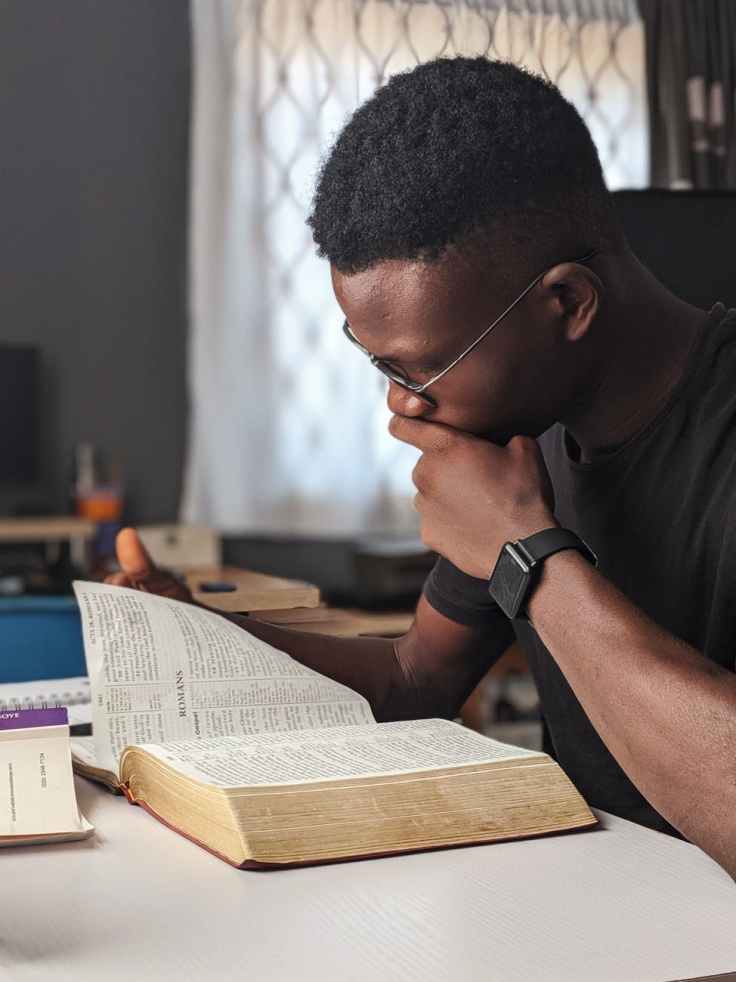
Photo by Klaus Nielsen on Pexels.com

We have a tendency to get caught up in what we (and what others around us) are doing; we tend to judge and compare and criticize. Instead, we should concentrate on who and what we are becoming:

  • We want to learn–but do we want to be teachable?
  • We want to make money– but do we want to be generous?
  • We want to build a reputation– but do we want to be honest and reliable?
  • We want to have friends– do we want to be available?
  • We want a family–do we want to be intimately known and knowable?
  • We want freedom–do we want to be responsible?
  • We want justice– do we want to be just?
  • We want happiness–do we want to be content with what we have?

Jesus didn’t give His disciples a long “to do” list. He didn’t give them detailed lists of things to do. He gave them “Beatitudes”– “Be” “Attitudes”

Blessed are the poor in spirit, for theirs is the kingdom of heaven.

Blessed are those who mourn, for they shall be comforted.

Blessed are the meek, for they shall inherit the earth.

Blessed are those who hunger and thirst for righteousness, for they shall be filled.

Blessed are the merciful, for they shall obtain mercy.

Blessed are the pure in heart, for they shall see God.

Blessed are the peacemakers, for they shall be called sons of God.

Blessed are those who are persecuted for righteousness’ sake, for theirs is the kingdom of heaven.

Matthew 5:3-12

Of course, much of who we are and who we become depends on what we do. And it is important to do what is right and honorable, just and compassionate. But it’s the “being” that is the goal, not merely the “doing.” God knows we cannot “do” what it takes to be perfectly righteous in our own power. But He will give us the guidance, the strength, and the encouragement to “become” more like Him as we live out the above attitudes.

“God Bless…What’s His Name”

In the movie, The Sound of Music, a young woman named Maria is asked to leave her life in a convent to become a governess of seven children belonging to a widowed Navy Captain. After a hectic first day, she settles in for her evening prayers. She lists by name all the people she wants God to bless; but as she goes through the unfamiliar names of the seven children, she realizes she has forgotten the name of the younger, “incorrigible” boy. After a short struggle, she simply asks God to “bless what’s his name.” That evening, a storm comes up and soon three frightened girls come running to Maria’s room, and happen to mention the boy’s name– Kurt. “That’s it. Kurt. God Bless Kurt!” A short time later, Kurt, his brother, Freidrich, and the other girls show up, and they all end up bonding and singing through the storm. It’s a nice movie scene, but it also teaches us a lesson about prayer.

Maria’s lapse reminds us that even when we try to include everyone, we often forget a person’s name, or forget one member of a larger group. Sometimes, we forget that we already mentioned someone else, and count them twice. It happens. When I was a teacher, even with my roll call list, sometimes I would make mistakes as I hurried through the task to get to a lesson. As I get older, I find it’s common for me to see a person’s face, and not be able to remember their name. And, disconcertingly, I often see a name and cannot remember the face! (“God bless Kurt…whoever he is.”)

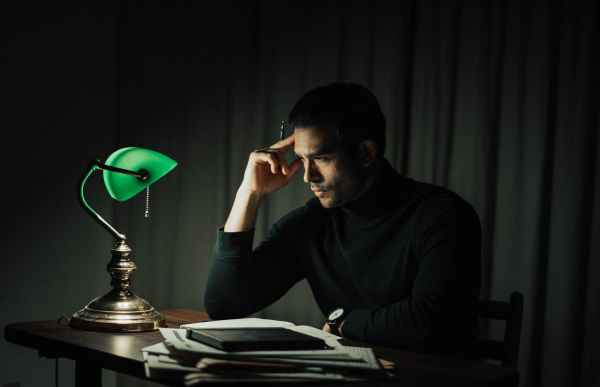
Photo by Katerina Holmes on Pexels.com

God knows the weaknesses and limitations of our minds. While it would be irresponsible to pray “God bless what’s his name” every night, and never try to call Kurt by name, it is important to lift up the “what’s his/her names” in our lives, trusting that God knows their names, their needs, their hearts, and their unique place in His plans. The very fact that we remember some essence of their personality or presence is enough to make them worth lifting up to the one who knows them far better. And perhaps someone else, who has forgotten your name, but not your value to the Father, is lifting you up in this very moment!

Maria’s prayer also reminds us that it is important to pray for individuals BY name (when we remember). We can pray for nations, groups, civil and corporate bodies, and churches, but when we pray for individuals, calling them to mind and heart, we are continuing a prayer that stretches through time and around the globe. This prayer– this list of names and remembrance of faces and spirits– began with Jesus and His disciples, and continues unbroken over centuries. It is a single prayer, tying together brothers and sisters in Christ who are otherwise divided by language and distance, time, and tide. Children saying their bedtime prayers; aged saints at their morning devotions; mothers lifting up their precious children; fathers lifting up their neighbors; missionaries lifting up their persecutors–throughout generations–this prayer is a continuous offering, like incense, rising to the throne of grace.

Photo by Luis Quintero on Pexels.com

God Bless Kurt. God Bless Gretl, and Fabiani, Yayoi and Bruno. God Bless You. And God Bless “What’s-her-name.”

Blog at WordPress.com.

Up ↑