Hannah and Her Rival

Hannah is a Bible heroine. Her story is an inspiration to many women who suffer, whether from infertility, depression, or being misunderstood. Hannah is a popular girl’s name.
Peninnah, on the other hand, is a name you rarely hear today. No one wants to name their child after a bully, and a rival to a Biblical matriarch.

As we read through the story in 1 Samuel, https://www.biblegateway.com/passage/?search=1+Samuel+1&version=NIV it seems hard enough that Hannah is barren. Especially as it is revealed that God is responsible for her condition. It seems unfair and harsh. But her trouble doesn’t end there. She has a rival–Elkanah’s other wife– who provokes, irritates, and taunts her, making her cry and keeping her in a state of anguish and stress. Peninnah has many children. She has reason to be joyful and proud. Yet she spends her time harassing and hurting Hannah, a woman who is already “beneath” her in society.

Rivalries tend to bring out the worst in us. Catfights, gossip, taunting, undermining others–books, movies, and even TV series have been built on such pettiness. Whether rivals at school, rivals in romantic relationships, rivals in business, or rivals in our own inflated egos, we allow our world to be narrowed to focus on two people who don’t even exist! We magnify our rival’s faults, twist her motives, and hold grudges over what she “probably” meant when she said “that.” And we justify our overreactions, our grievances, and our tendency to see ourselves as innocent victims.

In the case of Hannah and Peninnah, their world was already small. They were sharing a husband and a household, and likely somewhat isolated from the kind of society with which we are familiar. We live in societies where polygamy is illegal and wives do not (generally) live together. Our families tend to live in single units of husband, wife, and children. However, we also live in a society where fidelity is becoming more rare. Marriages break down, couple break up, and “sharing” a husband, if not a household, is more common than we might admit. Even in divorce and remarriage, we may find a rival in our husband’s ex-wife, or our ex-husband’s new partner, or our partner’s ex-mother-in-law (or our current mother-in-law) or among our step-children.

Elkanah is not an innocent bystander in all this. We don’t know why he has two wives, and the Bible doesn’t say that Elkanah did NOT love Peninnah, but it makes a point of saying that Elkanah DID love Hannah (suggesting that he might have been indifferent to his other wife). Also, the Bible is silent about whether or not Elkanah was aware of the rivalry going on under his roof. He seems totally oblivious and largely absent. Even though he loves Hannah, he doesn’t take care to protect her from Peninnah’s spite.
Once again, we find parallels in our own situations– husbands who feel overwhelmed or blind-sided by the rivalries going on around them; husbands who ignore the firestorms; even men who revel in being the focus of so much attention.

But, before we label Peninnah the great villain of this story (or turn our anger on Elkanah for letting their rivalry continue), let’s be careful not to rush to judgment. The Bible doesn’t call Peninnah a villain, merely a rival. It says that she provoked Hannah, and taunted her, and even made her cry. However, the story is focused on Hannah. Her reaction to this taunting was to do what so many of us do– to let it heap up on her and push her down into anguish. Hannah doesn’t fight back. But neither does she stand up to her rival. If Peninnah is trying to make Hannah feel worthless and depressed, she succeeds because Hannah allows herself to believe it.

I think there are several key lessons here, and I think God tells us the whole story because He wants us to see these lessons:

  • Rivalries and conflicts WILL arise in our lives. We shouldn’t pretend otherwise or refuse to deal with them. If you have a rival in your life at this moment, stop and think of ways you can seek peace. Pray, reach out, seek help. This is especially important where children are involved. If you have a rivalry with in-laws, ex-spouses, your children’s step-parents, it WILL impact all your relationships. It will be the way your children learn to relate to others. Whether you are the “bully” or the “middle man” or the “doormat”, you have a responsibility to make an effort to restore harmony. You cannot change the other person, but you can (with God’s help) change the way you build your legacy. And God can change everyone involved.
  • While Hannah did well not to react to Peninnah with her own spite and malice, she let her rival “win” by saying and doing nothing. Jesus teaches us that we are not to ignore those who hate or despise us, but to love them and pray for them. Hannah could have offered to reach out to Peninnah and her children, but she remained isolated. Maybe that was because of Peninnah’s actions or bitterness, but the Bible doesn’t say that Hannah made any effort to end this rivalry, either. She didn’t seek help from her loving husband, and she didn’t seek help from her loving God until she was at the end of her rope.
  • Spite, malice, bitterness, or even self-righteousness (or whatever else may have prompted Peninnah’s nastiness) not only hurts others, it hurts us and blinds us to the opportunity to do good. Peninnah had many children and lived in the same household with Hannah. Instead of taunting her and causing her grief, she could have opened up her heart to allow for a happy, unified family. Peninnah’s hurtful actions are her legacy to every generation that reads this story. She may have been a wonderful mom, a talented women, a real beauty– but she will always be known as the rival who made Hannah miserable. Our actions, even in our own household, have eternal consequences. Small acts of pettiness and spite can follow us for the rest of our lives, destroying our reputations, and blotting out all our other “good works”.
  • Our abilities, skills, talents, status, or fertility DO NOT define our worth. God closed Hannah’s womb– he never closed His heart toward her. He gave her a husband who loved her and provided for her. He kept his eyes on her until the time was right to bless her in a supernatural way. God had opened Peninnah’s womb, but she kept her heart closed, and bragged about her children as though she alone were responsible for them. God had provided Peninnah with a husband who provided for her and created a family with her. She had children and a secure home, and reason to sacrifice to God with thanksgiving, yet her focus, even during her visit to the tabernacle, seems to have stayed on destroying her rival.
  • What makes Hannah a heroine in this story is NOT the way she bears up under bullying. Even though she didn’t get sucked into anger and malice, she fell victim to despair and depression. Hannah’s victory comes ONLY after she turns everything over to God in prayer. Peninnah’s pettiness is crushed by God’s miraculous provision.
  • We should also learn from Peninnah’s actions. Peninnah, even though she has been blessed with children, watches as her husband gives a double portion to his “other” wife– because he loves her. The Bible doesn’t say that he loves Hannah more or better than Peninnah, but Peninnah seems to be resentful of whatever love he gives to anyone else. How often am I envious of someone without considering the pain or grief they may be experiencing? How often do I provoke others by “showing off” my blessings or rubbing in what I perceive to be God’s favor? God loved Peninnah. He blessed her with a loving husband and children. But she seems to be ungracious and mean-spirited. Am I a secret “bully” to others, instead of seeing them as precious and loved by our Heavenly Father?

God’s love can change relationships and rivalries. God’s blessings are “enough.” And when we focus on God’s provision, instead of our rivals’ provocation, we will experience peace and productivity. That’s what happened for Hannah. May this be true in our lives, too– That we would turn to God, and replace bitterness, pettiness, pain and rivalry with His joy, fulfillment, and grace.

Hannah and Her Husband

There was a certain man from Ramathaim, a Zuphite from the hill country of Ephraim, whose name was Elkanah son of Jeroham, the son of Elihu, the son of Tohu, the son of Zuph, an Ephraimite. He had two wives; one was called Hannah and the other Peninnah. Peninnah had children, but Hannah had none.

3 Year after year this man went up from his town to worship and sacrifice to the Lord Almighty at Shiloh, where Hophni and Phinehas, the two sons of Eli, were priests of the Lord. Whenever the day came for Elkanah to sacrifice, he would give portions of the meat to his wife Peninnah and to all her sons and daughters. But to Hannah he gave a double portion because he loved her, and the Lord had closed her womb. Because the Lord had closed Hannah’s womb, her rival kept provoking her in order to irritate her. This went on year after year. Whenever Hannah went up to the house of the Lord, her rival provoked her till she wept and would not eat. Her husband Elkanah would say to her, “Hannah, why are you weeping? Why don’t you eat? Why are you downhearted? Don’t I mean more to you than ten sons?”

We don’t normally spend much time studying Samuel’s father, Elkanah. Yet the story of Hannah and Samuel begins with this man. Not only that, but it begins with a lesson in his genealogy and heritage. We learn that Elkanah was from Ramathaim (a town in the hill country of the tribal lands of Ephraim). As a Zuphite, however, Elkanah (and thus his son, Samuel) were also descended from the Kohathites, and were of the Levitical priestly line.

Hannah was one of two wives of Elkanah. We don’t know why Elkanah had two wives, but we know that the other wife, Peninnah, had children; likely several (see verse 4). Hannah, however, was barren– and this was “because the Lord had closed her womb.” There is nothing to indicate that this a result of any sin on the part of Hannah or Elkanah–there is no reason given for God’s decision to keep Hannah from becoming a mother. There is also no reason to believe that Elkanah was angry or disappointed or embarrassed by Hannah’s condition. In the society of that time, a man could divorce his wife for minor offenses; in this society, barrenness would be seen as a major defect, a stigma, and grounds for divorce. Hannah faced the possibility of rejection, abandonment, and condemnation from her husband. Yet Elkanah loved Hannah, and honored her with a double portion for their yearly offering.

Even with a loving and supportive husband, however, Hannah is inconsolable. And it is here that I think many of do a disservice to Elkanah. The Bible tells us that Peninnah taunted Hannah and drove her to tears. When she would not eat, Elkanah asked some basic questions. Why are you weeping? Why don’t you eat? Why are you downhearted? and the one that always makes me cringe– Don’t I mean more to you than ten sons?

These questions always bothered me. It seemed to me that Elkanah was either clueless or in denial about the bitter rivalry going on under his very roof. And his questions seemed to underline his ignorance.

A closer look at the context, however shows that Elkanah may be more a victim of our modern cultural understanding than a victim of any deficiencies as a husband. It says on the day that Elkanah was to sacrifice– an indication that he was inside the tabernacle and on duty –that Peninnah was taunting Hannah. If Elkanah was ignorant of the torment Hannah faced, it may very well be that it was being kept from him by Hannah herself.
As a woman, I’m also guilty of expecting that my husband will “pick up” on non-verbal clues, or otherwise intuitively “understand” why I am depressed, or tired, or angry. Husbands, as loving and attentive as they may be, are not mind readers, and I have been guilty of making mine play a frustrating guessing game as he seeks to offer help. Men are also more likely to start by asking questions to “get to the root” of the problem, when we are seeking comfort and understanding, before we seek a solution. Elkanah and Hannah are no different in this respect than most of us today. Hannah is not a superwoman–she cries at the party and won’t eat. Elkanah is not a superman–he can’t “fix” Hannah’s sadness, nor can he feel the total depth of her despair.
Finally, Elkanah asks a question that gives us a window into his own secret anguish. “Don’t I mean more to you than ten sons?”
I want to rest here for a minute. I think we tend to get caught up in the words, and miss the heart of this plea. What is he really expressing? I don’t think Elkanah is trying to exaggerate his worth, nor is he trying to minimize Hannah’s desperation. But there is a heartfelt cry to be “enough.”
So many times, when we face infertility, miscarriage, or the loss of a child, we focus on the mother’s feelings of loss and emptiness. In this story, we look at Hannah as being an outsider in her own family– the wife who “can’t”–the one who is in distress. Elkanah’s question may even seem insensitive and arrogant. Listen to it again, though, and you can hear the broken heart of a man who loves his wife, even as she is pulling away and allowing her grief to consume her. “Don’t I mean more to you?” “Am I not enough to keep you from despair?” Yes, Elkanah has children with Peninnah, but he longs for happiness and fulfillment in his relationship with Hannah. The Bible never says how many children Peninnah had, but it seems clear that in Elkanah’s eyes, Hannah was worth far more than “ten sons.”


I am broken as I think of times when I have been so consumed in my own grief and “neediness” that I have pushed away those who love me most, shutting them out, and making them question their own worth.

How many times have I done the same to the Lover of My Soul?

How many times do I focus on the one thing I don’t have, or the two annoying people in my life, and ignore the blessings God has poured out? When was the last time I made an extra effort to communicate to my husband how much he DOES mean to me, instead of leaving him to wonder? How many tears have I poured out with my face turned away from my Loving Father?

Hannah’s husband asks some leading questions– they lead Hannah to collapse before the only one who can bring healing and joy. Hannah’s prayer comes from a point of being broken– far more than needing a child, Hannah needs the love and understanding her husband longs to give her, and the joy and blessing her Heavenly Father has been waiting to offer.

Elkanah’s heart is to have joy and oneness with Hannah– with or without children. God’s heart is to have a joyful and trusting relationship with you. And with me. Today, I want to be open with God about whatever is breaking my heart– even though He already knows. Hiding my hurt, wallowing in it, and saying to God, “No. You are NOT enough!” will keep me in a downward spiral. Letting God prove that He IS enough is the way forward into healing, joy, and peace.

We know the end of this story– Hannah pours out her heart to God and God responds with compassion and blessing. He opens Hannah’s womb, giving her and her husband a son who will go on to play a key role in Israel’s history and God’s story of redemption. He continues to bless Hannah and Elkanah with other children, and, hopefully, a renewed relationship of joy and commitment.

May our prayer journey today lead us toward the Love of our Good Father– whether from a place of brokenness, need, confusion, joy, frustration, or victory.

Who was Hannah?

*Note: This is a repost of a series I did seven years ago. I have edited and added details since the first posting.

The Bible is an amazing book. It is a single narrative, but it is made up of several stories– even several different types of literature. There are stories that seem straightforward; others are clearly meant as parables or metaphors; still others are prophetic visions. Hannah’s story fits the first category. Hannah is to be understood as a real person living in a real time and place in history. She is also representative of a particular situation–she is childless in a society where a woman’s value is measured in her ability to bear children. She is loved by her husband but taunted and harassed by her husband’s other wife. She is consumed by grief and frustration. In our own time, she would likely have been diagnosed as clinically depressed.

I don’t know about anyone else, but I have a tendency to see Hannah through the rosy lenses of her eventual triumph. I know the end of the story. God answers her prayer, and her son, Samuel, becomes the last great judge of Israel. She makes an amazing sacrifice, sending her son away to live and learn at God’s temple, where she visits him once a year. But God gives her other children to comfort her. Her tormentor and rival, Peninnah, is silenced as Hannah’s grief and struggle turn to joy. I indulge her grief, because she “prays her way through it”, and gets the happy ending I think we all long for.

But Hannah’s story isn’t just about the outcome, and it isn’t a parable meant to show that earnest prayer will always result in getting what we desire. Hannah’s happy ending is not a guarantee or a promise for anyone else who suffers from grief or infertility (or both). I know this from experience, as I was barren. I wanted children; I prayed for the chance to have children. And while I now have stepchildren, they were adults before I married their father. I have step-grandchildren, but they just call me by my first name– they have other “grandmas” and “nanas”. I never had the opportunity to rock a little one to sleep or hear my own toddler call me “Mama.” And while our society doesn’t place the same value on childbearing as Hannah’s, nor use motherhood as a determiner of a woman’s worth, I know the sorrow of watching other women enjoy (or sometimes endure) the miracle of giving birth and nurturing their own offspring, knowing that it will never happen for me.

So, I’d like to take a closer look at Hannah– not as one of the “heroines” of the Bible, but as a woman in distress. And I’d like to focus on the others in her story. God doesn’t waste details, even if we don’t always understand why they are included. I think there are several hidden lessons in this story, and they reside in details we often skim or throw aside in the pursuit of the very real truth that God answers prayer.

To prepare for this journey, here is the text of Hannah’s tale:


1 Samuel 1 New International Version (NIV)
The Birth of Samuel
There was a certain man from Ramathaim, a Zuphite from the hill country of Ephraim, whose name was Elkanah son of Jeroham, the son of Elihu, the son of Tohu, the son of Zuph, an Ephraimite. He had two wives; one was called Hannah and the other Peninnah. Peninnah had children, but Hannah had none.
Year after year this man went up from his town to worship and sacrifice to the Lord Almighty at Shiloh, where Hophni and Phinehas, the two sons of Eli, were priests of the Lord. Whenever the day came for Elkanah to sacrifice, he would give portions of the meat to his wife Peninnah and to all her sons and daughters. But to Hannah he gave a double portion because he loved her, and the Lord had closed her womb. Because the Lord had closed Hannah’s womb, her rival kept provoking her in order to irritate her. This went on year after year. Whenever Hannah went up to the house of the Lord, her rival provoked her till she wept and would not eat. Her husband Elkanah would say to her, “Hannah, why are you weeping? Why don’t you eat? Why are you downhearted? Don’t I mean more to you than ten sons?”
Once when they had finished eating and drinking in Shiloh, Hannah stood up. Now Eli the priest was sitting on his chair by the doorpost of the Lord’s house. 10 In her deep anguish Hannah prayed to the Lord, weeping bitterly. 11 And she made a vow, saying, “Lord Almighty, if you will only look on your servant’s misery and remember me, and not forget your servant but give her a son, then I will give him to the Lord for all the days of his life, and no razor will ever be used on his head.”
12 As she kept on praying to the Lord, Eli observed her mouth. 13 Hannah was praying in her heart, and her lips were moving but her voice was not heard. Eli thought she was drunk 14 and said to her, “How long are you going to stay drunk? Put away your wine.”
15 “Not so, my lord,” Hannah replied, “I am a woman who is deeply troubled. I have not been drinking wine or beer; I was pouring out my soul to the Lord. 16 Do not take your servant for a wicked woman; I have been praying here out of my great anguish and grief.”
17 Eli answered, “Go in peace, and may the God of Israel grant you what you have asked of him.”
18 She said, “May your servant find favor in your eyes.” Then she went her way and ate something, and her face was no longer downcast.
19 Early the next morning they arose and worshiped before the Lord and then went back to their home at Ramah. Elkanah made love to his wife Hannah, and the Lord remembered her. 20 So in the course of time Hannah became pregnant and gave birth to a son. She named him Samuel, saying, “Because I asked the Lord for him.”

Taken from biblegateway.com

Lord, help us to read this story with new eyes. Help us to see how you work even in difficult circumstances and with imperfect people to bring hope and wisdom and salvation to a fallen world.

Next time: Hannah and Her Husband

When “Mother’s Day” Hurts

baby-boy-child-cute-40998.jpeg

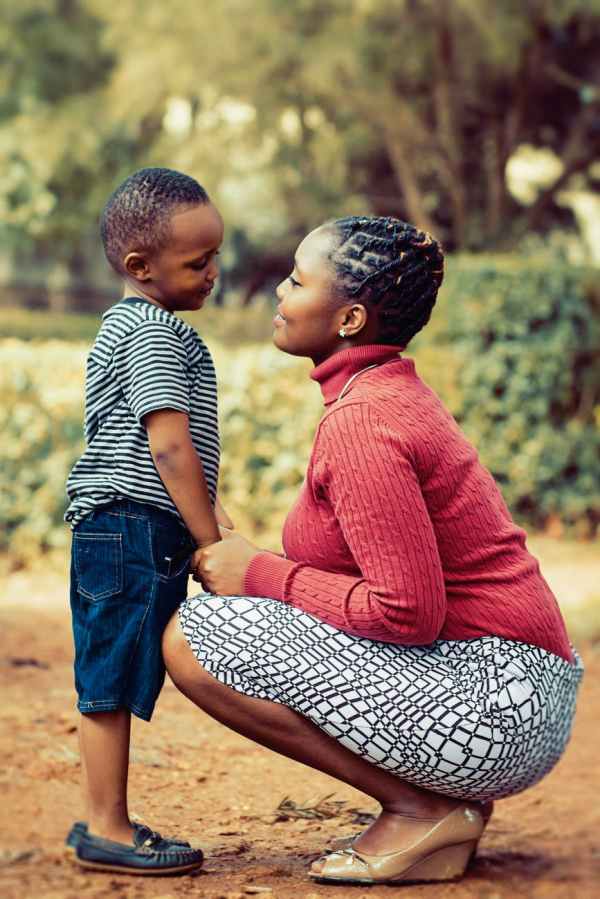
Yesterday was Mother’s Day here, celebrating and honoring the mothers in our lives. Mother’s Day can be a wonderful day of celebration.  But it can also be one of the most painful days of the year.  Millions of women each year face acute heartbreak on this day– instead of celebration, they face the haunting memories of abandonment or separation, infertility, miscarriage, infant deaths, broken relationships, missed opportunities, regrets, suicide, and the loss of their own mothers.  There are no cheery greeting cards or perky flower baskets that can erase that kind of gut-wrenching pain– no pithy words or consolation gift that makes this day easy or comfortable.

I have an awesome mother-in-law, the world’s best sister, world-class sisters-in-law, a remarkable step-daughter, daughter-in-law, granddaughter, and a host of other wonderful women in my life.   I love being an auntie, step-mom, daughter-in-law, (step) grandma, great-aunt, and great-grand-aunt! I love that I am still in touch with former students and story hour kids, Sunday School and Bible School attendees, and others I have had the honor to mentor.  So I celebrate Mother’s Day and honor those people and all the ways their lives have impacted mine, and (hopefully) my life has connected with theirs.

But none of that chases away the ache of never having a child of my own– never knowing the joy of tucking my own child into bed; never being able to kiss away a boo-boo or a bad dream and say the words, “Mommy loves you.”  None of that will bring back my beloved mom or grandma my favorite aunts, mentors and friends who are gone.  I miss them more each year; I miss their wisdom, their strength, their comfort.

Maybe because of my own experience, I’m more attuned to it, but I see and hear a lot of pain around this time each year.  My heart goes out to all of the women with empty arms– the women who had to bury a huge chunk of their heart along with a child they can never hold; the women who had to say goodbye to the only one who could ever reassure them that, “Mommy loves you.”

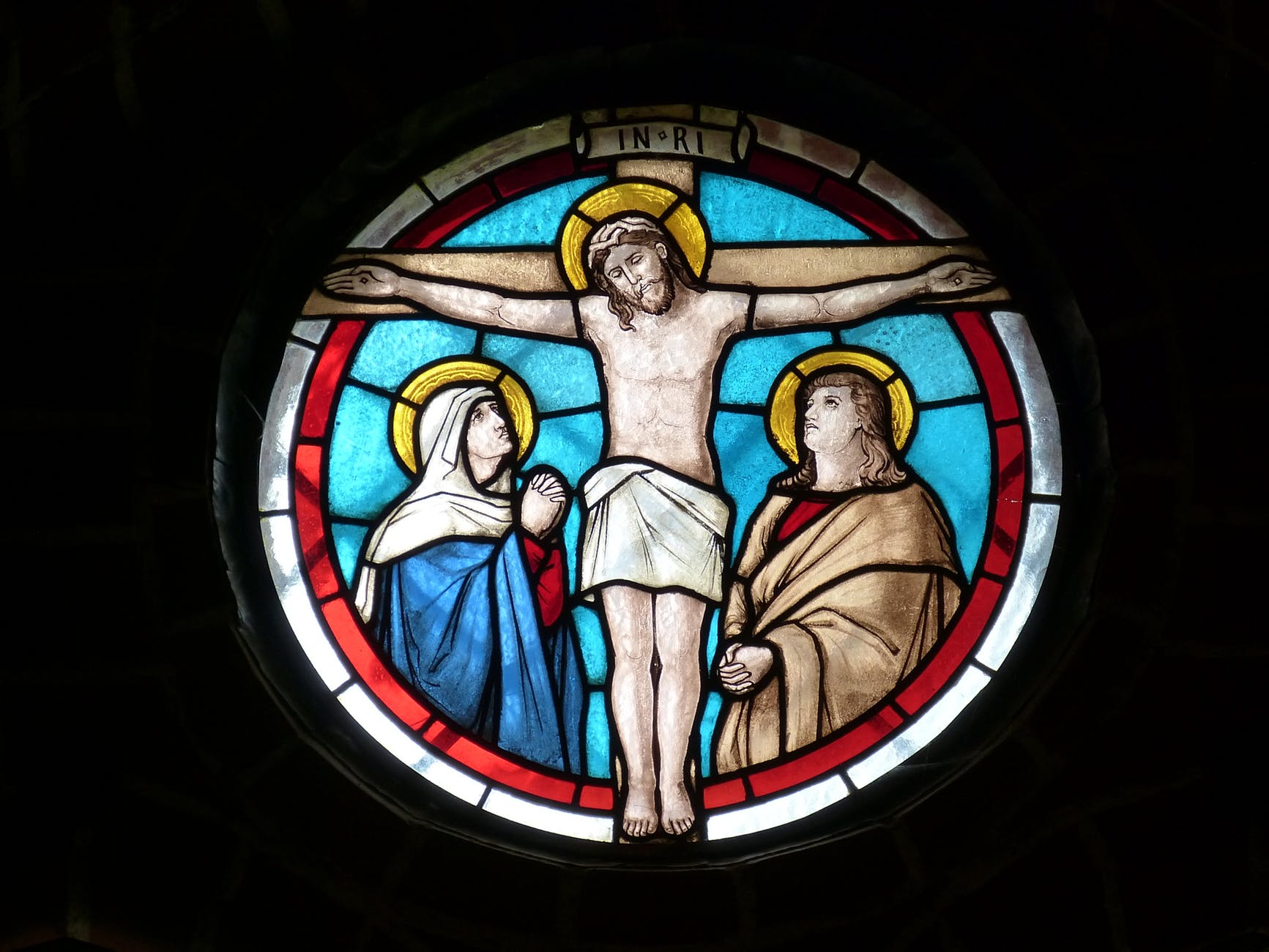
My prayer today is that you would know that even in those moments when your heart is crushed, and your arms ache to hold or be held, that you are not alone; you are not forgotten.  God knows the aching loss of seeing his only son on the cross as he took his last gasping breath before he died.  Jesus experienced the sting of rejection from the people who should have called him brother, and “Father.”  Throughout the Bible, God gave us examples of women (Eve, Sarah, Hagar, Rebecca, Leah, Rachel, Hannah, Elizabeth, Mary and others) who knew the ache of barrenness, rejection, strife, and loss of children.  God saw their pain; he heard their cries of distress and their prayers.  He sees you too.  He hears you.  He loves you beyond anything you can imagine, and beyond where any grief, guilt, or despair can take you.

More than this, he has promised to be close to the poor in spirit, those who mourn, the broken-hearted, and to those who need rest and comfort.  He promises his presence, and he promises to turn our mourning into joy and bring us peace.  He is eager to restore us, to renew our strength, and to reassure us that we are loved with an everlasting love.  God created us in his image– and that includes the image of a mother hen gathering chicks, It includes the image of Mary who wrapped the God of the Universe in swaddling cloths and tucked him into a manger of hay, and who watched as that same God of the Universe died for her.

church-window-church-window-stained-glass-46154.jpeg

God knows the passion, the pain, and the pure love of a woman’s heart– even when “Mother’s Day” hurts.

Blog at WordPress.com.

Up ↑