Language Matters

I’m not talking about English v Spanish or French or Urdu, but our ‘language’ very much matters. The words we choose to say make a difference. They reveal much more than just what we’re thinking or feeling. They reveal character.

When I was in college, I lived in a dorm that was co-ed by suite. That meant that two freshmen boys lived across the hall from my roommate and me (both seniors). They were nice guys, but their language was often crude. Once, I spoke to one of them about his use of the “F” word. He responded by digging up a typed-up sheet singing the praises of that word. It was versatile– it could be a noun, a verb, an adjective, or an exclamation! It had a long history, tracing back to Medieval English usage. It carried power and shock value. People like me were prudes, afraid of using powerful words and intimidated by traditional moral codes and “language snobs” who judged others. After all, we lived in America, d*** it! The land of free speech. Who was I to try to make him feel bad about his words?!

On the surface, he wasn’t wrong. The word is not “illegal”; it poses no immediate threat or danger. It is not a word meant to belittle or “cancel” its hearers, like an ethnic or racial epithet. What was the harm? Who was I to lecture him? His roommate stood by and said nothing, but his own language hadn’t been much better. Was I wrong to say anything? I was only a few years older, and a fellow college student? Was I just being prudish? It wasn’t as if he had told racist jokes or called me a crude name? What was the big deal? It was one four-letter word.

But it reveals something about the character of the person who makes a habit of sprinkling such words in their conversations. It says that their “freedom” to use such words is of greater value than their respect for their listeners. It says that the speaker chooses not to practice self-control over their speech (and likely over other parts of their life). It may reveal sloppy or lazy thinking and a weak vocabulary. And, whether we like it or not, it labels us; people will judge us based on how we speak, and on the words we choose. Even though celebrities and professors use such language. Even if such language is considered popular and even “cool.” And it encompasses all of our word choices–blasphemy and crude language, negativity in our speech, bragging and boasting, a propensity for gossip and smearing the reputations of others, lying and ‘stretching the truth’– the list goes on. Just because we CAN say something doesn’t make it wise or helpful or powerful or “right.”

3-5 A bit in the mouth of a horse controls the whole horse. A small rudder on a huge ship in the hands of a skilled captain sets a course in the face of the strongest winds. A word out of your mouth may seem of no account, but it can accomplish nearly anything—or destroy it! 5-6 It only takes a spark, remember, to set off a forest fire. A careless or wrongly placed word out of your mouth can do that. By our speech we can ruin the world, turn harmony to chaos, throw mud on a reputation, send the whole world up in smoke and go up in smoke with it, smoke right from the pit of hell. 7-10 This is scary: You can tame a tiger, but you can’t tame a tongue—it’s never been done. The tongue runs wild, a wanton killer. With our tongues we bless God our Father; with the same tongues we curse the very men and women he made in his image. Curses and blessings out of the same mouth!10-12 My friends, this can’t go on. A spring doesn’t gush fresh water one day and brackish the next, does it? Apple trees don’t bear strawberries, do they? Raspberry bushes don’t bear apples, do they? You’re not going to dip into a polluted mud hole and get a cup of clear, cool water, are you? 13-16 Do you want to be counted wise, to build a reputation for wisdom? Here’s what you do: Live well, live wisely, live humbly. It’s the way you live, not the way you talk, that counts. Mean-spirited ambition isn’t wisdom. Boasting that you are wise isn’t wisdom. Twisting the truth to make yourselves sound wise isn’t wisdom. It’s the furthest thing from wisdom—it’s animal cunning, devilish plotting. Whenever you’re trying to look better than others or get the better of others, things fall apart and everyone ends up at the others’ throats. 17-18 Real wisdom, God’s wisdom, begins with a holy life and is characterized by getting along with others. It is gentle and reasonable, overflowing with mercy and blessings, not hot one day and cold the next, not two-faced. You can develop a healthy, robust community that lives right with God and enjoy its results only if you do the hard work of getting along with each other, treating each other with dignity and honor. (James 3:3-18 –The Message)

This “taming of the tongue” is especially problematic for the one who wishes to pursue Holiness and Christlikeness. The Apostle James, in his epistle, spends almost an entire chapter discussing the issue of purity in speech (or lack thereof)! He compares it to taming a wild beast or trying to put out a raging fire. Because careless language can do as much damage as deliberate malicious or violent action. Passing along gossip may seem fun in the moment, but it can ruin an innocent reputation, AND cause people to lose trust in your ability to keep privacy, or respect others. Crude language may seem empowering and brave the first few times you use it, but it becomes habitual and attaches to your character. Snide remarks about others– social or ethnic groups, people who vote differently than you, annoying neighbors with a different ‘accent’– may seem offhand and innocuous, but they reveal your pride, lack of respect, and inability to live in peace and harmony. You become known for your ‘salty’ dialogue or your sarcastic “zingers”. You use certain words more and more often until they lose all the ‘power’ they once had to shock or intimidate. Opportunities to speak up on important matters may be given to others who can control their professional and responsible use of language. Not because your thoughts lack purpose or power, but because you show everyone that you lack the power to choose words wisely for maximum influence, peacefulness, and persuasion. And for the Christian who has developed the habit of taking the Lord’s name ‘loosely’, it lessens the impact of your witness that Christ is really your beloved Lord and King. He’s just another character whose name and reputation you toss around carelessly.

James makes a very real point in his letter– NO ONE can tame the tongue. It is natural and human to repeat words we hear, words that seem so convenient, so simple. Only with the help of the Holy Spirit can we ‘re-wire’ our brains and our tongues to speak words that give honor to others, Glory to God, and reflect wisdom and discipline that we are receiving from God Himself. We won’t always get it right– especially if we do not develop discipline in our speech. And we can’t do it at all without deliberate effort and dependence on the Spirit’s help

But language DOES matter. The guy across the hall in the memory above– we never saw eye to eye about this issue, though we remained friends. But his roommate surprised me many weeks after the above interaction. He was introducing me to one of his classmates, and the other young man started telling a story laced with profanity. My young friend stopped his buddy mid-sentence and challenged him to mind his language. “She’s a lady. She doesn’t appreciate that kind of language.” His friend seemed surprised, but he immediately cleaned up his words. And I’m almost positive it wasn’t because I gave off “Lady” vibes of any kind. I don’t even think it related directly to the incident above with the other roommate. My friend had listened to my roommate and I– he had taken note of the way we spoke, and the way we DIDN’T speak. He knew we were Christians, and that we didn’t just “talk the talk”– our lives and our language showed that we wanted to honor God above all. And when he heard his friend speaking in my presence– there was a huge mismatch. He could hear the difference immediately. He didn’t demand the “right” to use (or force me to listen to) foul language. Instead, he started to see (and hear) the wisdom and even the power of self-control.

This holds true for prayer, as well. Not that most of us use profanity in our prayer life. But how often do we use words that are negative, doubtful, selfish, or envious? Do we pay careful attention to the very words we bring before the King of Kings and our Loving Savior? Do we try to wheedle and plead instead of presenting our requests to God with thanksgiving (Philippians 4:6-7)? Do we approach God as “the man upstairs” or my “Father, who are in Heaven” (Matthew 6:9)? Is He my heavenly honcho, or the Eternally Holy One and the Victorious Lamb of God?

Today I pray that my speech would reflect the Love, Wisdom, and Power of God. We are to be “salt and light” (see Matthew 5:13-16), not “salty.” Our words can bring encouragement, hope, joy, peace, empowerment, and yes, even conviction to others! But we must tame the tendency to use careless words that bring destruction, conflict, arrogance, or insult. And we must reflect on how our words reflect our heart for God– especially when we use them to pray!

Influence…


This is how the Lord responds: “If you return to me, I will restore you so you can continue to serve me. If you speak good words rather than worthless ones, you will be my spokesman. You must influence them; do not let them influence you!

Jeremiah 15:19 (NLT via biblegateway.com)

I’ve been reading in Jeremiah for the past week. Jeremiah was given a thankless task of delivering a prophecy of doom for the people of Judah and Jerusalem. God, in His righteous anger even told Jeremiah that he should no longer pray for his own people. Their doom was inevitable, brought about by their continuous idolatry and arrogant disobedience. As Jeremiah received the visions, he grew discouraged. Why should he continue to preach to those who were never going to listen? Why face the ridicule, the persecution, and the death threats? Why bother? Instead of drawing closer to God, He was being influenced by the continued rebellion of the people he was supposed to be warning!

But the Lord responded with a rebuke to Jeremiah–“Don’t give up! Don’t walk away from your mission! Turn around and focus on ME! Don’t let them influence you–You must influence them!” Those are difficult words to read. And even more difficult ones to put into practice. It is very easy to feel discouraged when it seems that you are alone in your beliefs; alone in your commitment; alone in your grief and distress. Jeremiah was torn and broken by his mission–no one wanted to hear his message. No one responded to his calls for repentance or his warnings of God’s judgment. In fact, his complaint was that other “prophets” were saying the opposite– that God would rescue Judah from her enemies; that all would be well. How could Jeremiah stand firm in the face of such opposition?

God’s answer may seem a bit harsh on the surface–“Stop whining! You WILL be my spokesman, and you must influence them and not let them influence you.” But look closer, and you will see an amazing and hopeful message in God’s rebuke. God has not set Jeremiah up for failure and discouragement. God’s promise is to strengthen and protect Jeremiah in spite of the opposition– if he will stay the course. Against the worst odds, against the threats of his enemies, God will be with Jeremiah as he speaks the truth–no matter how difficult; no matter how grievous; no matter how unpopular. Moreover, God will give Jeremiah the power to influence his enemies– not just with his words, but in spite of them–by his faithful, courageous commitment to the truth.

We live in a world where people make a career out of “influencing” others– advertising, advocating, lobbying, arguing on social media, creating memes and soundbites and slogans. We are surrounded by voices and billboards and pop-ups demanding our attention and invading our thoughts. And it can be very easy to be swayed by the overwhelming noise and distraction offered up all around us. Just like Jeremiah, we can be discouraged, and even silenced, by the crowds of others, speaking fear, doubt, anger, and lies. And, in our own voices, we cannot drown out their “influence.”

Photo by Markus Spiske on Pexels.com

God does not call us to shout louder, or change our message to be more “palatable” to the masses. God does not call us to “win” every argument or convert all of our neighbors. But God does call us to be faithful in speaking the truth– more, He calls us to live out the truth in obedience and humility. It may seem thankless at times, but living with integrity and solid faith influences others in ways only God can know. We need to continue to speak truth. “Worthless words” may rule the airwaves, or glut our newsfeeds. But truth whispers in consistent, loving action, and humble service. May we be known more for our prayers and our steady confidence than for persuasive tongues or arrogant arguments. In the end, actions really do speak louder than words.

Prayer is the exception to this rule. Prayer taps directly into the heart and mind of God as we pour our own hearts and minds out to Him. Jeremiah’s heart was tender– he wanted mercy, even for those who were far from God. The same people who were taunting Jeremiah and plotting his death were the ones he was asking God to spare! Jeremiah’s prayers reflected God’s heart and character– God delights in giving Grace, and in restoring relationships. But God’s purpose in sending Jeremiah dire prophetic messages had far greater scope than what Jeremiah could imagine. Jeremiah’s prayers WERE effective, even if he couldn’t see the answers. His prophetic message made it crystal clear that Israel (and everyone else) NEEDED a Messiah– the one God would send at “just the right time” (see Romans 5:6) And right in the middle of Jeremiah’s messages of doom and destruction, God sends him a hopeful promise and great assurance :

This is God’s Word on the subject: “As soon as Babylon’s seventy years are up and not a day before, I’ll show up and take care of you as I promised and bring you back home. I know what I’m doing. I have it all planned out—plans to take care of you, not abandon you, plans to give you the future you hope for.

Jeremiah 29:10-11 (The Message)

“This is God’s Message, the God who made earth, made it livable and lasting, known everywhere as God: ‘Call to me and I will answer you. I’ll tell you marvelous and wondrous things that you could never figure out on your own.’ “This is what God, the God of Israel, has to say about what’s going on in this city, about the homes of both people and kings that have been demolished, about all the ravages of war and the killing by the Chaldeans, and about the streets littered with the dead bodies of those killed because of my raging anger—about all that’s happened because the evil actions in this city have turned my stomach in disgust. “But now take another look. I’m going to give this city a thorough renovation, working a true healing inside and out. I’m going to show them life whole, life brimming with blessings. I’ll restore everything that was lost to Judah and Jerusalem. I’ll build everything back as good as new. I’ll scrub them clean from the dirt they’ve done against me. I’ll forgive everything they’ve done wrong, forgive all their rebellions. And Jerusalem will be a center of joy and praise and glory for all the countries on earth. They’ll get reports on all the good I’m doing for her. They’ll be in awe of the blessings I am pouring on her. “Yes, God’s Message: ‘You’re going to look at this place, these empty and desolate towns of Judah and streets of Jerusalem, and say, “A wasteland. Unlivable. Not even a dog could live here.” But the time is coming when you’re going to hear laughter and celebration, marriage festivities, people exclaiming, “Thank God-of-the-Angel-Armies. He’s so good! His love never quits,” as they bring thank offerings into God’s Temple. I’ll restore everything that was lost in this land. I’ll make everything as good as new.’ I, God, say so. “God-of-the-Angel-Armies says: ‘This coming desolation, unfit for even a stray dog, is once again going to become a pasture for shepherds who care for their flocks. You’ll see flocks everywhere—in the mountains around the towns of the Shephelah and Negev, all over the territory of Benjamin, around Jerusalem and the towns of Judah—flocks under the care of shepherds who keep track of each sheep.’ God says so.

Jeremiah 33:2-13 (The Message)

God’s words are powerful. And they are backed by His actions! His Faithfulness and Compassion outweigh His punishments. His final words are Victory and Peace! May we be influenced by the Truth, and may we hold fast and be an influence that lasts longer than a soundbite or a meme!

Pursuing Discipline

Prayer can take many forms and be many different things. I write about prayer as a pursuit– something done with purpose and with some kind of discipline. Prayer is not meant to be just another discipline in the life of a believer. “Pray without ceasing,” Paul says in 1 Thessalonians 5:17; but this is not meant as an exercise to pursue quantity of prayer over quality, or to spend every waking moment consumed with prayer to the exclusion of all else.

Photo by Karolina Grabowska on Pexels.com

However, we are called to be disciples– and that necessarily entails learning discipline. Any activity taken on without discipline can’t really be called a pursuit. It may be a hobby or an entertainment, but pursuit involves direction, dedication, and focus. And this includes our prayer life.

I want to be very careful in discussing this aspect of prayer, because I believe that there is a real danger of letting the discipline overshadow the purpose of prayer. HOW we pray is never more important than WHY we pray, or to WHOM we pray! But failing to make a plan for prayer can cheat us of the benefits of learning to pray deeply, consistently, and with greater focus.

Photo by Claire Morgan on Pexels.com

With this in mind, I want to spend some time each month talking about ways to “grow” a life of prayer. Today, I want to focus on journaling as a way to pursue prayer.

As with any discipline, the key is consistency. That’s why journaling can really help. Keeping a record every day of things to pray about, of reasons for praise, of people or issues to bring before the throne of Grace, can keep us focused. It can also help us chart God’s answers and His work in our lives and the lives of others. I keep four separate notebooks– one for each quarter of the year. But there are wonderful daily journals and notebooks that can work as well. Some come pre-printed with scripture or prayer prompts for each day. Some people use a pocket calendar or calendar app on their phone or computer. The method isn’t as important as having a planned approach.

Photo by Bich Tran on Pexels.com

I recommend having a daily focus that is consistent from week to week. For instance, on Sunday, I focus on The Church– missions, local church congregations, persecuted churches, evangelism effort, etc.. On Monday, I focus on Family and Friends. Tuesday, I pray for the Government– local, state, federal, and leaders of other nations. Wednesday is Community–community services, schools, businesses, neighbors, even roads and parks and utilities! Thursday is Global Day– things like war and drought, natural disasters and diseases. Friday, I focus on business and finances– my own, and others. Saturday is a day to pray about cultural issues, like abortion, marriage, gender issues, etc. That doesn’t mean that I don’t pray about family members on Thursday, or about a school shooting on Sunday. But it means that I pay special attention to those matters on particular days. Here are some reasons why:

  • God wants to hear from me about everything. But without a plan, I tend to pray about the same few things over and over. I pray about whatever is worrying me in the moment. And only that. God wants me to be aware of all that He is doing. He also wants to remind me that He is LORD of everything; big and small, immediate and long-term, far away or around the corner.
  • God wants me to be consistent and persistent in praying. But that doesn’t mean praying obsessively. Obsessive prayer can become nagging, doubt-ridden, desperate pleas. God listens to our prayers. And we can trust Him, even when we don’t get immediate answers or relief. We don’t stop praying, but we also don’t stop trusting Him for the next step in the journey. God is bigger than just one aspect of my life– no matter how urgent or overwhelming that aspect may seem today. My focus needs to be on God’s sovereignty, and not just my immediate circumstances.
  • God works in mysterious ways. I may not feel like praying for my Governor, or my neighbor, but it may be that my faithful prayer today is what God will use to make changes in some other aspect of my life. Praying for what I have on my list, rather than just what pops into my mind may actually remind me of something else, and help me see how God is working in an area I might have missed otherwise!
  • By practicing this discipline in prayer, I am learning discipline in other areas of my Christian walk.

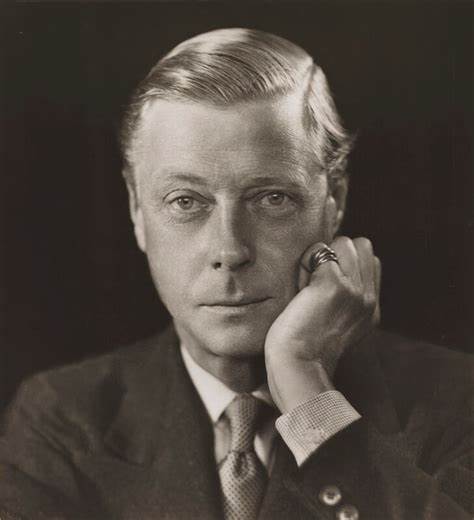
I read an interesting article on-line the other day about the late Duke of Windsor. Born as the heir to the throne of Great Britain, he was trained from an early age. His father, the King, wanted him to learn discipline and honor, so as to be prepared to assume his role. But Edward despised his father’s training. He found his father to be harsh and critical, prim and joyless. And he rebelled. He took little interest in the affairs of state, preferring to focus on his own pleasure. As his father grew older and weaker, Edward was asked to take on more royal duties. He enjoyed making appearances at parties, but despised many of the other tasks– letter writing, or visiting factories or various parts of the Commonwealth. He refused to settle down and marry, until he met Wallis Simpson, who was twice-married, and separated from her second husband. She was also an American citizen.

Edward VIII wanted to defy the laws and traditions of his own nation in order to marry. When this proved to be contentious, he decided to abdicate his throne, marry Mrs. Simpson, and live abroad. Instead, his brother became the next king (George VI), guiding his nation and the commonwealth through the difficult days of the second world war.

For many years, the myth of a king who gave up his throne to be with “the woman I love” has prevailed. But there was more to Edward’s abdication than blighted love. Edward was not incapable of ruling, but he was unfit to rule it well. His lack of dedication to his duties and citizens became evident in the very first crisis. Those who were working with him during his short reign witnessed his lack of care or concern about paperwork, and his selfish insistence on doing what he wanted to do, and not what was expected of him or of benefit to his people. He was a man without discipline and without a clear moral compass https://www.dailymail.co.uk/news/article-417388/Prince-Charmless-A-damning-portrait-Edward-VIII.html.

Photo by nappy on Pexels.com

The Bible is filled with many examples of kings throughout the history of Israel and Judah who also failed to learn discipline or restraint. Their desire to reap the benefits of their position without learning to fulfill their responsibilities led to the moral, and eventually the physical and political collapse of their nations. They did not make a habit of seeking God, or of listening to His prophets. They sneered at good advice, and defied the laws of Moses and the rules God had given for the kings. Some of them worshiped other gods; some even sacrificed their own children to foreign gods or goddesses. They failed to keep the sacred holidays; they failed to read the Word of God; they failed to pray– except as a last resort!

We often perceive prayer as a personal practice– and it is. But how we choose to develop our prayer life may be tied to how we choose to develop the rest of our lives. We don’t need to be rigid and legalistic about it. But we do need to live– and pray– with purpose, if we wish to follow the example of Jesus and grow in our walk with Him. Not only does it impact our life and growth– it impacts our witness and our influence as well. Pursuing prayer in a disciplined way may have a far-reaching impact on our life and the lives of others– even in the generations to come. For more, see the page Why I Keep a Prayer Journal

Blog at WordPress.com.

Up ↑