As Iron Sharpens Iron

As iron sharpens iron, so one person sharpens another.

Proverbs 27:17
Photo by igovar igovar on Pexels.com

Do you have a friend who “sharpens” you? Someone who keeps you honest? Someone who challenges you? Someone who holds you accountable? The Bible has much to say about relationships that we form– and some of it may surprise us. Earlier in Proverbs 27, the writer says, “Better is open rebuke than hidden love.” (v.5 NIV) and, “Faithful are the wounds of a friend, but the kisses of an enemy are deceitful.” (v. 6 NKJV).

Photo by Liza Summer on Pexels.com

I don’t know about you, but I want friends who encourage, friends who make me feel good about myself; friends who make life more pleasant and uncomplicated. I don’t enjoy hearing criticism, or having my beliefs and ideas challenged. I don’t enjoy conflict, and I tend to avoid it whenever possible. However, I also know the truth of verse 6 from experience–I can trust the constructive criticism of a good friend, even when it stings in the moment. A loving friend will take the risk of saying what needs to be said, and not just what I want to hear.

Photo by Tirachard Kumtanom on Pexels.com

There are three points that struck me recently as I came across these verses:

  • “Iron sharpens iron”–nothing gets sharpened by a marshmallow, and an iron blade that is left unsharpened will either lose its edge over time, or rust from disuse. We may not like conflict. But we need to be disciplined, and that means that we need to be held accountable. We need to be challenged and sharpened, or we will grow dull or rusty. God can use the “fire” of circumstances to soften our hard hearts, but He often uses other people to “spark” us into action. Left to my own devices, I can grow rusty and useless. I can feel sorry about a bad or sinful habit– I can confess it, and make plans to change. But I am more likely to grow and develop positive habits and actions if there is someone keeping me honest. I can have good ideas; I can know what the Bible says– but I can also fall into deception, lazy thinking, and pride. A good friend can help keep me “sharp” in both actions and thinking. We are not meant to do life alone, and God does not want “Holy Hermits.” He also does not want us to be so timid and accepting that we fail to sharpen others. It is really hard to risk a friendship by speaking the truth–but NOT speaking is sometimes more damaging to the friendship– and to our friends!
  • “Iron” is what sharpens “Iron”–We need to seek out truth and wisdom, and that’s what we need to offer others, as well. We should not waste time on petty disagreements, trying to “win” every point in an argument, or pointing out every minor fault. We also need to have mutual respect; being willing to listen, willing to let a few sparks fly, and willing to respect another’s strengths as we develop our own. This verse is not about letting someone else dominate you or shut down your voice, just as it is not about dominating or “fixing” someone else by forcing your opinions (even if grounded in the truth) down their throat.
  • “So one person sharpens another.” Notice it doesn’t say whether the person is a believer, a dear, personal friend, or a relative. Any person can “sharpen” us. I may disagree with another person– a coworker, a peer, a neighbor–and still respect that their ideas, their words, even their criticism.
Photo by SHVETS production on Pexels.com

How does this tie into our pursuit of prayer? Conflict and testing can make us better or bitter–in this analogy, it can make us humble or it can make us brittle. A humble person will be shaped and sharpened. A brittle person will snap or break.

Photo by Pavel Danilyuk on Pexels.com

When I am challenged or criticized, do I take it to God or do I take it to heart? Do I ask God to reveal truth or have I already decided what I want to believe? Not all criticism is constructive; not all challenges are meant to sharpen us. Do I react in anger? Do I become sullen? Do I crumble into a puddle of doubt? Or do I see it as an opportunity to become sharper, to change course, or to refine my thinking? Conflict and criticism do not happen in a vacuum–God is as close as a prayer, and willing to give wisdom, discernment, and strength!

How do I react to the other person? Do I become bitter toward them? Do I seek for ways to repay them with criticism or prove myself to them? Do I pray for THEM to change, without looking at my own responsibility? Do I appreciate the risk they may have taken to speak up? (Or do I appreciate the reasons they may have for feeling or thinking as they do, even if I am convinced they are in error?) Can I offer thanks to God for the way He may be using that person to sharpen me–even if that is not their intent? Can I pray for God to bless and strengthen them, even if we don’t agree?

Photo by Jopwell on Pexels.com

This is all easier to write than to put into practice. But I can say from experience that God has often used the most unlikely people to “sharpen” me in unlikely ways and unlikely moments, and I am so grateful for the “faithful” (and temporary!) wounds of friends. I am also grateful for others who challenge me to defend the Faith, and who open their hearts to me– even when we clash sometimes.

Chariots of Iron

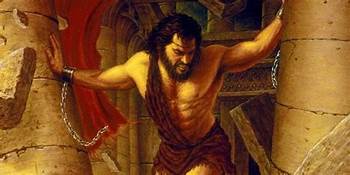
I was reading from the book of Judges today, and a curious phrase jumped out at me. The entire book of Judges is filled with the failure of the people of Israel to fully claim their promised inheritance from God. Generation after generation passes, with a cycle of sin, enslavement, and deliverance as God raises up various judges and heroes, like Gideon, Deborah, or Samson.

Already in chapter one, there is a hint of the trouble to come. The book begins with several successful battles after the death of Joshua. The people of Israel consult the Lord, who fights with them in several key battles. But in verse 19, it says: “The Lord was with the men of Judah. They took possession of the hill country, but they were unable to drive the people from the plains, because they had iron chariots.”

Say what? The Lord was with the men of Judah– the LORD! They had taken possession of the hill country– rough terrain that would have been filled with natural barriers, rocky fortresses, and literal “uphill battles.” They had destroyed massive cities like Jericho less than a generation before. They had defeated armies far larger and better positioned. They had defeated giants! And now, suddenly, they are “unable” to drive the people from the plains– because the enemy had chariots of iron?

Photo by van4er ivan on Pexels.com

https://www.biblestudytools.com/commentaries/gills-exposition-of-the-bible/judges-1-19.html I think this commentary says it well. The chariots of iron became the excuse for the Israelites’ unwillingness to obey; to trust in God’s strength instead of their own. After all, it wasn’t that long before in their history when God had drowned the entire Egyptian army, including all its chariots, in the Red Sea.

I don’t think it was about the chariots of iron. I think it was about the plains. I think sometimes it can be more difficult to fight on “the plains.” When God sends us on an “impossible” mission, we must face our own fears and acknowledge our weaknesses– we KNOW we cannot do it in our own power. But when we face an enemy on “equal footing,” we are tempted to trust in our own resources– the toughness of our armor, the skill of our generals, the speed of our horses, and the superiority of our weapons. We hope and expect God to fight for us where we cannot hope to win alone, but we don’t ask for God’s help or protection in areas where we believe our own strength should be sufficient. Israel had a fine army– seasoned veterans of battle. If they HAD iron chariots of their own, victory might have been expected– with or without God’s divine intervention. But victory eluded them, because they didn’t finish the fight!

Photo by Sora Shimazaki on Pexels.com

We do the same thing today–we fail to march into battle because the enemy has “chariots of iron.” Maybe they have more social status, more political or economic power then we have. Perhaps we see that they have the means to make our lives painful “on the plains.” We see their arrogance, and their wealth and success, and we let ourselves be intimidated. We know that God has promised never to leave us or forsake us, but He has not given us chariots of iron to match those of the enemy. We don’t pray for the courage to face their chariots, or the wisdom to trust that the battle belongs to the Lord. Instead, we make excuses for not fighting the battle at all.

The rest of the book of Judges is filled with war, slavery, corruption, death, and evil. The very last verse sums it up: “In those days Israel had no king; everyone did as he saw fit.” (Judges 21:25)

Photo by Ian Panelo on Pexels.com

Lord, help me to be courageous, and humble. May I always trust in You above all–especially above chariots of iron, and weapons of mankind.

Iron Sharpens Iron

Proverbs 27:17 New Living Translation (NLT)

17 As iron sharpens iron,
so a friend sharpens a friend.

I’m not really sure why this single verse, this single idea, has been rattling around in my mind lately, but I’ve taken a week off from doing the blog, trying to regroup and refocus, and yet this is the phrase that keeps coming back.  So here’s what I’ve been thinking:

Iron –God uses a lot of imagery, analogy, parable, and metaphor throughout the Bible.  What does this image suggest?  Iron is hard.  Iron is used for tools and (in Bible times) weapons.  Iron is strong.  Iron is forged in the fire.  Iron being sharpened can bring out sparks.  Iron crafted by a master blacksmith can be forged, shaped, smoothed, hardened, and, yes, sharpened.

leaves ladder green looking up
Photo by Jeremy Levin on Pexels.com

God calls us to be useful– light, salt, vessels, iron, hands–we have purpose; we have work to do during our time on earth.  Sometimes, that work calls for us to be steadfast, immovable– like iron.  But iron that is not being used can become brittle, or rusty, and lose its edge.

fence railing security barrier
Photo by Pixabay on Pexels.com

“Iron sharpens iron“– We don’t always use iron to sharpen iron– sometimes we use honing stones or grinding wheels or even strops.   But we don’t use cheese to sharpen iron– it won’t work.  We don’t sharpen it with paper or “positive energy” or a block of wood.  How are we staying “sharp”?  Do I make an effort to sharpen my skills, my knowledge, my service, my body, mind, and spirit?  Am I using the right method and materials to stay sharp?

Who or what do I turn to when I want sharpening?  Do I have friends who keep me accountable (and vice versa)?  Do I even WANT to stay sharpened and ready for service?  Or do I serve without guarding my edge until it becomes dull and useless?

Iron sharpens iron– but not always.  Sometimes iron blunts iron.  Sometimes it cuts away at it.  Sharpening is not accomplished by just banging pieces of iron together randomly.  There are circumstances, habits, people, or activities that try to chip away at my surface, that try to crush or bend or destroy.  There are others that are not made of iron; they cannot help me stay strong and sharp.  I need to be deliberate and careful about what and who I include in the sharpening process.  I also need to be as deliberate and as careful about who I “sharpen”.  We are here to live, and work, and build relationships together.  But I need to learn when and how to “sharpen” others in my life.  Otherwise, I can cause great damage to others and to my own soul.

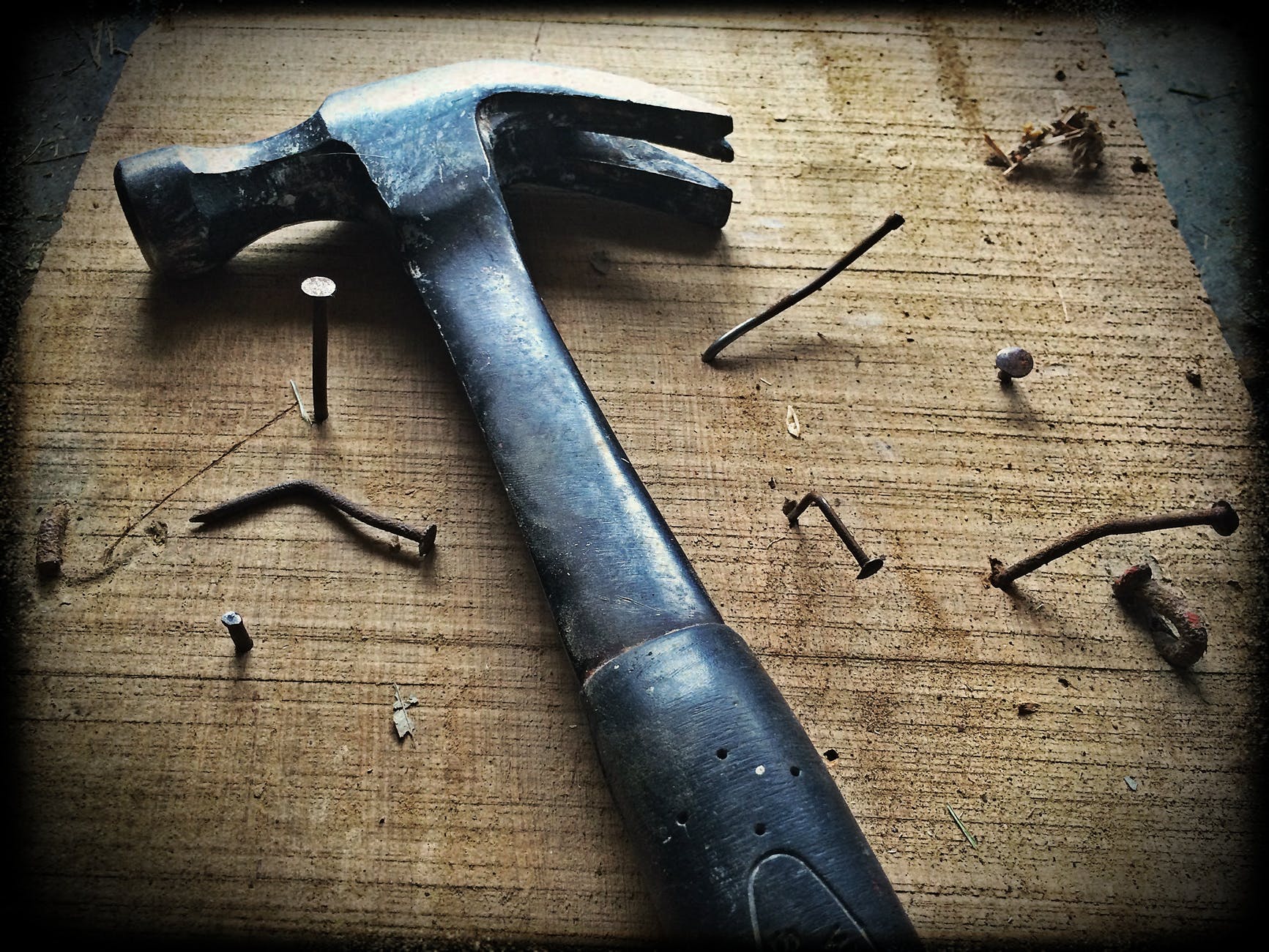
black claw hammer on brown wooden plank
Photo by Pixabay on Pexels.com

What can I do to keep sharpened and help others stay sharp?

  • Pray.  I don’t have answers, I don’t have the power to stay sharp on my own.  But God is the one who can give us wisdom, power, and send us all we need (2 Peter 1:3)  Also, seek out a prayer partner or prayer group.
  • Get involved in Bible Study– seek out a Bible Study group or an on-line resource where you can ask questions, have meaningful discussions, and share insights.

black steel frame on wall
Photo by Alizee Marchand on Pexels.com

  • Seek out “iron” friends– friends who will hold you accountable, who will offer support, but also share their own struggles.  We all have friends who fill one or the other of these roles, but seek out friends who are not merely takers or givers, but true brothers and sisters in the faith.

black chain
Photo by lalesh aldarwish on Pexels.com

  • Don’t run away from challenges, “tough” questions, and earnest discussions–that doesn’t mean that we need to get pulled into senseless arguments, either; but we are disciples— that’s the same root word as discipline!  We need to come out of our comfortable corners and exercise our faith.

antique armor black and white chrome
Photo by Mikes Photos on Pexels.com

As iron sharpens iron, so a friend sharpens a friend— such a short verse, but it’s packed with wisdom and promise.

Blog at WordPress.com.

Up ↑