Solitary Prayer?

So often when I pray, I do so in isolation, and I think of it as a solitary activity.  I am communicating with God– often silently–it is a private conversation.  Or is it?

At any given moment on any given day, millions of prayers are ascending to Heaven.  Consider the arithmetic of prayer– millions of prayers, millions of pray-ers, and God is part of each one–twice the number of participants.  But God is triune– so now there are four participants in every “personal” prayer, and four participants for every one in a group prayer!  It’s mind-blowing to think of all the spiritual investment that is happening through prayer at this very instant around the world.  And in heaven?  Our prayers ascend; God likens our prayers to incense– a pleasing aroma.  If I light a scented candle, or burn incense, the aroma is not personal– it permeates the air, penetrates my clothing, clings to my hair, lingers and touches on all who are nearby.  This doesn’t diminish the intimacy of prayer, but transcends it, and transforms it.  God is relational– from the intimacy of private prayer to the glory of his kingdom– he wants us to belong, to share, and to love.  Love doesn’t happen in a vacuum.  It is not a solitary activity, nor one in which anyone is “just a number.”

I think we are often deceived and intimidated by numbers and statistics.  We sometimes feel very small and powerless and alone.  We measure our prayers by their duration or the number of our words, or how small our perceived influence.  We pray alone or in a tiny group, or seem to get swallowed in a crowd, and we think our prayers travel a linear path to God’s ears and they are ended.  May our eyes be opened to the reality that we are never alone, never helpless, and never unimportant to God–that our prayers, like incense, linger, radiate, and echo as they ascend.

fog-dawn-landscape-morgenstimmung-163323.jpeg

God uses the small and humble things in life to confound those who think they are wise and powerful and important.  He is the God who changes our suffering into sufficiency, and our abiding into abundance.  He multiplies our faith, and increases our joy; he divides our sorrows and cancels out our sin.  He hears our every sigh.  He dries our every tear.  He knows our every thought.  He inhabits the praises of his people– let that sink in as we pray today.


 

The Weight of Prayer

Have you ever carried a burden that just got heavier each minute? Some pressing need, or a load of guilt and shame, or an unresolved issue that has been hanging over you for years with no relief. Sometimes, prayer is very heavy. It is a sacrifice, and a burden to keep praying for an unsaved loved one, or to fully confess the shame you have carried for years. Your needs (or the needs of loved ones) can push down on your spirit and make it difficult to even want to pray. Pain, grief, or persecution can cause you to shrivel up inside and even though you want to pray, you just can’t seem to find the words.

But oh! The relief of carrying our burdens to the throne of Grace! God may not give us immediate relief from the burdens of pain and suffering, but He will come alongside and shoulder a God-sized portion of our load. He has promised this. Jesus Himself said, “Come to me, all you who are weary and burdened, and I will give you rest. Take my yoke upon you and learn from me, for I am gentle and humble in heart, and you will find rest for your souls.  For my yoke is easy and my burden is light.” (Matthew 11:28-30 NIV)

Not only will God come alongside us as a result of prayer, His Spirit will help us in our weakness and inability to express our deepest emotions. “Likewise the Spirit helps us in our weakness. For we do not know what to pray for as we ought, but the Spirit himself intercedes for us with groanings too deep for words. And he who searches hearts knows what is the mind of the Spirit, because the Spirit intercedes for the saints according to the will of God.” (Romans 8: 26-7 ESV)

I have found this to be true through experience. And I have also found great relief when I can share my burdens with other Christians and know that they are praying for me and for my loved ones. One of the greatest burdens we can bear is that of isolation and hopelessness. Finding a trusted group of fellow believers can ease the pain of bearing such burdens alone. Often, Christian friends can offer limited practical help for immediate needs or provide counseling and wisdom in our next steps. Two words of warning– no group of friends, even Christian friends, can substitute for God. Friendship should not substitute for prayer and Godly wisdom. And true friends will always point you to God rather than trying to fix everything in their own power and time frame. A true friend will not only share the “weight” of your burden, but also the “wait” for God’s answer! Secondly, “sharing” is not the same as rehearsing the same guilty secrets over and over for attention, shock value, or entertainment. It is not gossiping about the same horrible boss or nosy neighbor you can’t seem to forgive or lamenting over all the things you might have done differently as a parent (or spouse or co-worker) last week.

Prayer is deep. It is heavy. And it is powerful. But it can also be freeing, removing the burden of worry, shame, guilt, and isolation. We may enter prayer with groaning and exit with praise! God inhabits our prayers! He is with us in the groaning and in the struggle. He sends us friends and “angels unaware.” And He remains with us in victorious celebration. He provides comfort, strength, and peace as we lay our burdens down. He provides companionship, help, and hope as He shares the weight of whatever we bring to Him.

Don’t “wait” to share your burdens. Let God do the heavy lifting!

Prayer in the Cyber Age

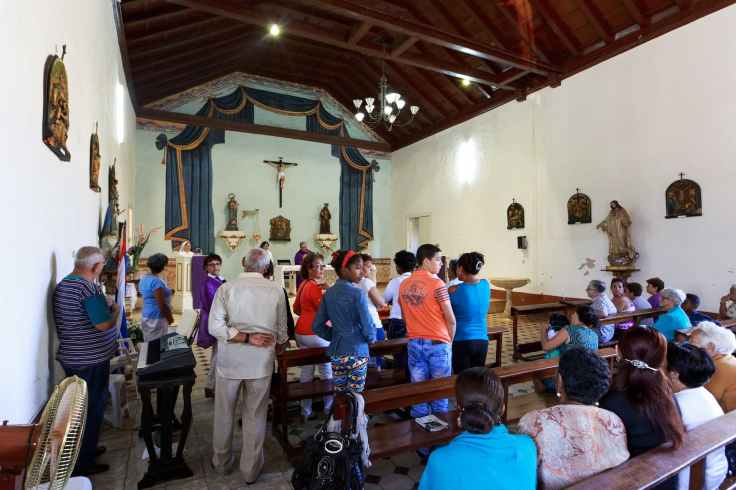
I attend a weekly prayer meeting at our church. A small group of us meets one morning a week to share prayer concerns, pray for our pastors and church workers, missionaries, community members in need, etc. It usually lasts just about an hour. On a “good day,” we have about seven people.

I grew up in a small rural area, and our little country church had a weekly Wednesday evening prayer service. On a “slow night,” we might have seven people. Sometimes, we had thirty or more (nearly half the church congregation)! They lasted about an hour and a half. When I was in college, we had groups that met once a week for prayer. It wasn’t always the same group, but it met at the same time, and, again, we sometimes had as many as thirty in attendance– for prayer. Often, we met in a dorm room, so it was cramped, and many of us were sitting or kneeling on the floor. Once, we had a fire drill, and my feet had “fallen asleep” and I had to be helped as we walked to the exit!

I don’t say this to disparage our current small group, but to point out some of the differences between life in the 1970s, 1980s and today. My current church has activities every Wednesday evening, and much larger attendance than the little country church ever attained. And prayer is still a small part of the Wednesday evening programming. Prayer is encouraged in small groups, individually, and we pray during service. But sustained time set aside for prayer– what the old hymn refers to as “Sweet Hour of Prayer”–in a group setting is becoming more of a rarity.

There are many reasons for it– some good, some not so good.

On the “good” side, it must be noted that corporate prayer today has expanded far beyond the traditional in-person prayer meeting. Prayer can be skyped, group-chatted, zoomed, and conference-called. Prayer can be “hosted” in one location, with satellite groups around the world praying in real time together. In such ways, thousands, and even millions of people can be joined in prayer. This is an amazing development!

And, along with such developments, prayer has become far more global, and far more immediate. I can receive a text or e-mail notifying me of a prayer request from nearly anywhere in the world, and know that I am joining with a host of other Christians when I stop and take a few moments to pray right then.

So what’s the “downside” of cyber prayer?

Speaking as one who has lived the experience of meeting with the same people at a dedicated time over many years specifically to pray, I have observed the following benefits:

In-person prayer meetings offer a more intimate time of fellowship, compassion, and service. I’m not just seeing other people on a screen, reading a text message, or even filling an auditorium seat as part of a huge “movement”– I’m sitting in a circle, breathing the same air, hearing the same hum of the furnace or fluorescent lights, the sound of others breathing, sighing, or even crying quietly around me. Sometimes, I’m holding another person’s hand, or giving them a hug. I am not just among fellow believers, I’m with family. We get to know one another in a deeper way. I know their families, their personal struggles and victories. I learn the rhythm of their prayers, and the issues closest to their hearts– and they know mine! And that can be a scary thing at first– building the kind of trust that intimate fellowship demands. But it pays off a thousand-fold!

In-person prayer meetings are also focused in a different way. Cyber prayer usually focuses on a specific need– sometimes an immediate, or even temporary issue. In-person prayer focuses on the long term discipline of praying. I have prayed with groups over years for lost relatives or unresolved health issues. And while that may seem depressing to read about, in practice it teaches patience, and deepens faith. As a group, we see God’s answers develop according to HIS timing and HIS plan. Sometimes, we see issues resolved quickly; other times, we see how God strengthens us in our trials; and still other times we see God do surprising and miraculous things just as we’ve almost given up hope. And there are some answers we may never “see.” But, primarily, we are not praying for an outcome– we are praying as a pursuit of Christian living; developing a life of prayer, faith, and obedience. We spend much of our time in prayer lifting up requests, but we also spend much of our time in praise, worship, adoration, confession, and thanksgiving– because prayer is a holistic pursuit.

Which brings me to another benefit, one that may not seem obvious at first. Meeting consistently and weekly for prayer is a habit. It builds a character of faithfulness and true compassion like very little else I’ve encountered. God can “show up” wherever two or three are gathered (see Matthew 18:20), and because God is beyond time and space, He can be present in a church meeting room, in cyberspace, or in outer space! But we are temporal. We have to learn patience, hope, and faithfulness. We learn to be trustworthy of the feelings and confidences of others by sharing our hearts. We learn to serve by the practice of serving those around us over an extended period of time. We learn patience by waiting on the Lord, stopping our busy, deadline-driven, goal-oriented lifestyle to make time for the development of our faith.

Finally, in a post-COVID society, sustained, regular, corporate prayer is also sustained, regular, corporate fellowship. We live in an increasingly isolated society. With more people on the earth than ever before, we are more lonely, depressed, anxious, and self-absorbed than ever before. Even in Church! Many people attend service regularly, but still feel unconnected and uninvolved. And others get “involved” in every activity, often burning themselves out trying to “outdo” themselves (or others). Activities that promise fellowship can sometimes fall “flat” in the face of social expectations. We attend, hoping to “get something” out of an experience. We want to be entertained, challenged, encouraged, uplifted, etc. But often, our expectations are not met. We don’t feel included, or we feel overwhelmed. We imagine we are being compared to others (or we do the comparing!), and feel that we fall short. We don’t know enough, do enough, are not “enough.” And we give up. We give up on the church, on other Christians, on God.

Committing to attend a weekly prayer meeting pulls us “out of ourselves.” We learn to pray for the needs of others. We learn to share our own needs and allow others to pray for us. We learn to be transparent and authentic. We learn to forgive.

Prayer is amazing– in any form. Communicating with the God of the Universe is an unspeakably miraculous opportunity, made possible BY God, THROUGH God, for OUR benefit. Prayer in the cyber age is diverse, global, immediate, and effective. But let’s consider the blessing of old-fashioned Prayer Meetings, and not forsake the practice of meeting together (see Hebrews 10:25) , in person, with no other goal than to spend a sweet hour in prayer!

Close to the Broken Hearted

As I write this, I am keenly aware that one year ago, I was at a graveside, saying farewell to my mother. Grieving comes in waves. I rejoice that she is in heaven, and I rejoice that she had a good, long life, and that she didn’t suffer very long at the end. But there is still an ache– wanting to share a memory or a laugh and knowing she isn’t here; questions I didn’t know I had, but now she can’t answer them; just missing her voice and her smile. My father has been gone for 25 years, and the same ache still hits at odd moments.

Sometimes, grieving brings us closer to God. At other times, we can let our grief drive us away from God. But God doesn’t move. He is ever-present. And He reminds us that He is “close to the broken hearted” (Psalm 34:18). When we are grieving, that is a blessed reminder. Grief tends to isolate us. “No one understands…” “Laugh, and the whole world laughs with you; cry, and you cry alone.” We see the “rest of the world” enjoying life, seemingly untouched by sorrow, and we feel abandoned twice over.

As Christians, we are called to follow Jesus’ example, and be close to the broken hearted. We should be the ones ready with a hug, a listening ear, and a shoulder to cry on. We should be the ones who, like the friends of Job (before they offered ill-advised ‘counsel’) are willing to sit with our suffering friends for days at a time, offering the comfort of solidarity and ‘presence.’

My family was blessed with a host of Christian friends and family who comforted us in the days and weeks after Mom’s passing. They still ask. They still share memories. They still pray for us. And in return, we do the same. God does not want any of us to suffer alone.

And this is also true for those who suffer a broken heart for other reasons– divorce, the loss of a home to fire or flood, the loss of a job, a wayward son or daughter– it is important for us to draw strength from others, and offer strength in our turn. But the source of our strength is Jesus, who suffered on our behalf, and rose victorious over death and separation. When “no one” understands, He DOES. When the world leaves us grieving alone, He is THERE. And when we see someone else grieving and suffering, and we don’t know what to do– He gives us the strength and the compassion to reach beyond our own resources and offer comfort.

On our own, we can be like Job’s friends– after awhile, we try to offer solutions, explanations, even judgment about another’s grief. “It’s time to move on.” “Just get over it.” “Well, if only you had…” None of these are helpful. Jesus never said any of those things to the people He came to comfort. Instead, He encouraged them to look to Him as the “resurrection and the life.” (see John 11:25).

Today, let us do the same. There are hurting people all around us. Let’s be an encouragement to others to embrace life– even when we are broken hearted.

Praying for Time

When I was a late teen, and into my early twenties, I loved English pop music, including the duo, Wham! Their music was bubbly, upbeat (mostly), and easy to sing along to. I listened along, sang along, watched their videos, and danced along. When the duo broke up, I was eager to follow the rise of singer/songwriter George Michael, whose first two solo albums I bought and listened to, as well. But the tone of his solo music was different. There were danceable, singable tunes, but they were darker and more cynical. And many of the songs were less about enjoying life and more about social commentary, confusion, and even despair. The songs were well-crafted, but they were haunting, rather than enjoyable or uplifting. They spoke of sadness, depression, and world-weariness.

One of the songs that has haunted me for years was from his second album, “Listen Without Prejudice.” In it, he talks about greed, poverty, apathy, and a loss of innocence. It’s called “Praying for Time,” but the tone of the song suggests that time has all but run out.

And yet…

One of the ideas that still shines through the words of the song is that prayer–specifically praying for time–may be the only hope that we can still cling to. And in a time of darkness and hopelessness, prayer can reach beyond “wounded skies” to a God whose Grace extends even to His children who have “slipped out the back door.”

There is something about the idea of time as a gift from God that stays in the soul, long after most hope is gone. I think it is why we are so driven by the concept of time and time “running out” as we hustle through our busy lives. I think it is why we spend time avoiding “down time” and “alone time” and the quiet time we should take to reflect, meditate, and yes, even time to pray. And I think, too, that it is why we recognize that wasted time is a sin– that there is a purpose in our time on Earth that transcends having “fun” or living for our own selfish aims. George Michael often used “spiritual” words and phrases for his songs– often with a cynical twist, pointing out some of the hypocrisy he saw around him (and occasionally, within himself).

These are the days of the open hand
They will not be the last
Look around now
These are the days of the beggars and the choosers

This is the year of the hungry man
Whose place is in the past
Hand in hand with ignorance
And legitimate excuses

The rich declare themselves poor
And most of us are not sure
If we have too much
But we’ll take our chances
‘Cause God’s stopped keeping score

I guess somewhere along the way
He must have let us all out to play
Turned his back and all God’s children
Crept out the back door

And it’s hard to love, there’s so much to hate
Hanging on to hope
When there is no hope to speak of
And the wounded skies above say it’s much, much too late
Well, maybe we should all be praying for time

These are the days of the empty hand
Oh, you hold on to what you can
And charity is a coat you wear twice a year

This is the year of the guilty man
Your television takes a stand
And you find that what was over there is over here

So you scream from behind your door
Say, “What’s mine is mine and not yours”
I may have too much but I’ll take my chances
‘Cause God’s stopped keeping score

And you cling to the things they sold you
Did you cover your eyes when they told you
That he can’t come back
‘Cause he has no children to come back for

It’s hard to love, there’s so much to hate
Hanging on to hope when there is no hope to speak of
And the wounded skies above say it’s much too late
So maybe we should all be praying for time

“Praying for Time” George Michael, Listen Without Prejudice, 1990 (lyrics taken from Lyrics.com)

In an interview, George Michael analyzes his own lyrics:

While he mentions “He” and “God,” it is clearly humanity he blames for the apathy and selfishness, greed and scandal, the “empty hand” and “wounded skies” mentioned in the song. And his repetition of “all God’s Children” and its counterpart, “no children to come back for,” is aimed at US– people who “slipped out the back door,” moving away from God and embracing our own wickedness. WE have entered this time of hopelessness and despair. WE have crafted it in our own ignorance, and then in our own pride and stubbornness. But we can still pray for time– time to repent, time to return, time to reach out to others with compassion and hope. What the song just barely misses is that prayer can open so much more than just time. Prayer can bring renewal, justice, redemption, and eternal hope! God hasn’t stopped “keeping score,” by any means. But He is holding back the wrath and judgment we all deserve, giving us time to seek Him! Most of all, we can pray, not with desperation, but with confidence– even in times of confusion and distress, because we have an Advocate, Jesus Christ, who hears all our prayers– desperate, confused, ashamed, angry, hopeful, offered with no more than a mustard seed’s faith.

George Michael, like all of us, lived in a fallen world. He was looking at the world, and seeing injustice, greed, apathy, corruption, violence, and the ravages of Sin. His own life was plagued with sorrow, tragedy, pain, injustice, drug addiction, betrayal, and the effects of Sin– both his own and others’. I don’t know if he ever found peace and hope in this life. I hope so. His gifted life ended early and tragically. But his song lives on with a warning, and a hint of promise, too.

We SHOULD all be praying for time– time to change. Time to repent, and seek God’s wisdom. Time to reach out to a darkened world with more than despair and dark analysis. To reach out with the Hope of Christ, who brings Redemption, Justice, and MERCY! We should be praying for time to meditate on the Goodness of God, as well as time to see the needs of others. We should be praying for wisdom to share our resources, and to multiply the good we can do– things that only God’s power can really accomplish. We should be praying for connection– restored relationships, and renewed fellowship with the Father. We should be praying for time to pray! Not just a desperate kind of prayer that this song suggests, but a lifelong pursuit of prayer that connects us to the Source of Hope, Joy, Peace, Power, and Love.

This year, while I don’t often listen to George Michael’s music anymore, I will be “praying for time.” And I will be investing more time in prayer! I hope you will join me in the time God has gifted us with this year!

For more analysis of the song and its relation to prayer see the following:

Go Into Your Closet to Pray

At least once each month this year, I want to post some practical tips on strengthening our pursuit of prayer. Today, I want to re-post an entry about making intimate space for prayer.

Prayer is a very personal pursuit. Yes, there is group prayer, and corporate prayer– and they are important and valid. But most of our prayer takes place alone; just pouring our heart out to the Father. There is no “rule” for where or how to pray, but Jesus did say that prayer should not be done for show. In fact, He advised that when we pray, we should go into our closets (or inner room, or away by ourselves) and lock the door! Why would He give such advice? I don’t have a full answer, but I can think of several advantages of “secret” prayer:

  • If you are alone and isolated, you are less likely to be interrupted. No phones, no text messages, e-mails, or drop-in visitors. Just you and God, intimate and focused.
  • A closet or inner room is not just free of interruptions, it is free of distractions– looking out of the window, hearing traffic noises, etc. So many times, we try to multi-task during prayer. Sometimes it is unintentional; other times, we feel guilty when we are not “doing” something. It’s not “wrong” to pray while we are cleaning, or driving (except don’t close your eyes!), or listening to music. But it is more likely that we will lose our focus. Even keeping a prayer list or journal can become a distraction– we’re more focused on “checking off” items on our list than communicating with our Loving Father.
  • A small , private, designated space can sometimes alter our perspective. God is Spirit– He can fill vast spaces, and His presence can go anywhere. But we are creatures of time and space; when I am in a small room, I feel my own smallness; it is easier to “be still” and to be humbled.
  • A closet is a room with purpose–it is where we keep things that we need, and store things we don’t want to lose. Praying in a designated “spot”– whether it is an actual closet or a corner of your bedroom, or a special chair or desk–can act as an anchor for our emotions and energy. “This is the spot where I pray” can set a mood and even become a cue to our bodies that it is time to meditate; to “be still and know” (see Psalm 46:10) that we are in God’s presence.
  • As Jesus noted, God knows what is done in secret. We have a human tendency to need affirmation and admiration. God will affirm, encourage, and even reward us for what we do– including what we pray– but it is tempting to seek human admiration, instead. This doesn’t just refer to the actual praying, but our need to announce our actions and prayers to the world. Once again, it isn’t “wrong” to let others know you are praying for them– in fact, it can be a great encouragement! But it IS wrong to make that our focus. Are you praying for the victims of a crisis or war– Great! Keep doing it! But be very careful about posting it on FB and announcing it to everyone in an effort to look “better” in their eyes. Are you praying for someone dealing with cancer or depression– Great! But are you doing more announcing than actual praying? Are you doing anything else to encourage and help the person in question?
Photo by Luis Quintero on Pexels.com

“Be careful not to practice your righteousness in front of others to be seen by them. If you do, you will have no reward from your Father in heaven.“So when you give to the needy, do not announce it with trumpets, as the hypocrites do in the synagogues and on the streets, to be honored by others. Truly I tell you, they have received their reward in full. But when you give to the needy, do not let your left hand know what your right hand is doing, so that your giving may be in secret. Then your Father, who sees what is done in secret, will reward you. And when you pray, do not be like the hypocrites, for they love to pray standing in the synagogues and on the street corners to be seen by others. Truly I tell you, they have received their reward in full. But when you pray, go into your room, close the door and pray to your Father, who is unseen. Then your Father, who sees what is done in secret, will reward you. And when you pray, do not keep on babbling like pagans, for they think they will be heard because of their many words. Do not be like them, for your Father knows what you need before you ask him.

Matthew 6:1-8 NIV (emphasis added)

This passage immediately preceded the example of “The Lord’s Prayer.” Jesus modeled for us, not just what words to pray, but how to think about prayer. For many of His followers, this was radical and new thinking. They were used to gathering for prayer. They were used to prayer being limited to rituals and practiced at festivals and worship services. The great patriarchs of the faith prayed as individuals, the priests prayed– long elaborate, and intimidating prayers. Jesus was removing the intimidation of history and tradition, and encouraging people to return to the kind of personal relationship that God intended for us from the beginning– the kind that would be possible with His own defeat of Sin and Death!

Even though I have this intimate access to the Father, and even though I write about it, I still need to be reminded of the importance of seeking God’s face and His approval above that of anyone or anything else. I hope you will also be encouraged to set some time aside today to spend in intimate communication with the One who loves you best!

An Encouraging Word

It can be a dog-eat-dog kind of world out there.  Every day, I hear of people who are facing difficult and trying circumstances– health issues, loss of a job or home, loss of a family member or close friend, depression, oppression, harassment, rebellious or estranged children, abuse, academic failures, exhaustion from being provider, caregiver, etc.– even just daily stress.  It can really take a toll.  But it becomes even more difficult when we isolate ourselves.

When I get stressed, I tend to withdraw.  I don’t want others to think of me as a failure, or to think less of me in my struggles.  But this is one of the worst things I can do.  First, it means more worry and stress because I’m bearing the burden alone!  Second, it forces me to cover up my level of anxiety or depression be pretending that things are fine when they aren’t.  That would all be bad enough, but it gets worse.  Isolating means my focus turns inward– my problems become bigger, not smaller;  I’m so close to the problem, I’m not able to “look outside the box” for solutions, because my box keeps closing in on me.  I can’t see beyond my circumstances to understand if they are temporary, or if they necessitate some life changes on the other side of whatever crisis I’m dealing with.  And, worst of all, the only voice I listen to is my own, rehearsing and reminding me of the difficulties or failures I’m facing. What opportunities do I miss, not only to hear an encouraging word, but to share one with someone else?!

pexels-photo-936048.jpeg

We all need an encouraging word now and then; a voice telling us that we are not alone; that all is not lost; that there is hope.  I have been blessed with wonderful family, friends, and neighbors who are great about encouraging me, even when I try to shut them out or pretend that everything is grand.  Sometimes that encouragement comes through conversation; sometimes a card or text message or a shared piece of scripture; sometimes it comes through prayer.  I may not even know who prayed, or what words they used until days or weeks later, but their faithfulness in praying has become a lifeline when I feel isolated and overwhelmed.

This does not negate my need to pray and ask God for wisdom, healing, or strength for myself, nor does it suggest that God doesn’t answer my prayers.  Instead, it shows a pattern– God often answers our prayers by incorporating and using those around us.  God’s goodness and his love are shown best in teamwork.  We run the race to win, but we race together as teammates, not competitors.  We share sorrows, struggles, and joys. We come alongside; we lift others up, and they lift us up in return.

Encouragement does so much, we sometimes underestimate its power.  In a world of sniping, criticism, name-calling, and finger-pointing, encouragement does the following:

  • It lets someone know that they are seen and heard– that they are being noticed, thought of, and valued.  This shouldn’t be uncommon, but in a world where we are connected to so many be technology, and to so few face-to-face, it is HUGE!
  • It give us perspective to realize that we are not alone in our problems and not unique in facing difficulties.
  • It reminds us that hope and help are gifts to be shared, not something we must earn.
  • It gives us a purpose and a mission to be part of God’s redemptive work– Jesus gave encouragement and hope to those who needed it most, not to those who “deserved” it.

It can be a dog-eat-dog world out there, but we are not dogs.  We are children of the King.  Let’s send out some encouraging words today!

A word fitly spoken is like apples of gold in a setting of silver. (Proverbs 25:11 (ESV)

pexels-photo-416443.jpeg

Also see James 5:13-16 on praying for one another.

Rejoice With Those Who Rejoice…

Love must be sincere. Hate what is evil; cling to what is good. 10 Be devoted to one another in love. Honor one another above yourselves. 11 Never be lacking in zeal, but keep your spiritual fervor, serving the Lord. 12 Be joyful in hope, patient in affliction, faithful in prayer. 13 Share with the Lord’s people who are in need. Practice hospitality.14 Bless those who persecute you; bless and do not curse. 15 Rejoice with those who rejoice; mourn with those who mourn. 16 Live in harmony with one another. Do not be proud, but be willing to associate with people of low position. Do not be conceited.

Romans 12:9-16
Photo by Pavel Danilyuk on Pexels.com

My mother died a couple of weeks ago. It is a season of mourning for me. And I know many others who have recently lost loved ones– husbands, fathers, mothers, and children. It is very easy for me to mourn with those who mourn right now. My heart aches with empathy. I know that mourning feels like, even if I don’t understand the exact nature of another person’s grieving. We are called upon to mourn with those who mourn. We want to share the burden of grief– to come alongside, to show support and sympathy. It is not just a “Christian” reaction to share sorrow. Yet, as Christians, we are commanded to truly participate in the grieving process with our sisters and brothers as they mourn. It is more than a simple expression of sorrow, or a kind word at the funeral home. It may involve “checking in” with someone weeks later, to see how they are coping with grief. It may be providing practical assistance– meals, help with funeral arrangements, etc.. Often, it involves speaking words of remembrance– providing the comfort of hearing familiar memories, and keeping loved ones “alive.” Even though we know our loved ones are “home,” or “in a better place,” or “at peace,” there is something chilling about their absence, and more so when they seem to be forgotten by those around us. Most of all, we can share our steadfast love and encouragement through dark days, through prayer, visits, listening, and providing hospitality.

Photo by Pavel Danilyuk on Pexels.com

We chose to have a friend read Romans 12:9-21 at Mom’s funeral. It summed up so much of who she was and what she had tried to instill in us as her children. And I was intrigued anew by verse 15: “Rejoice with those who rejoice; mourn with those who mourn.” It always seems like the first part of the verse should be the easiest, and the last phrase more difficult– more bitter. But in reality, I find it can be almost the opposite.

I don’t much feel like rejoicing lately. I’m not trying to be morose, but grieving is a long and painful process. There are moments of happy memories, and even relief that Mom no longer has to suffer. There is also reason for hope in the resurrection of the dead, and eternal life with Jesus. But the daily reality right now is of loss. Painful, heart-wrenching separation. It hits in quiet, unexpected moments with paralyzing, mind-fogging numbness. And I don’t much feel like being surrounded by the noise and gaiety of celebration. My laughter sometimes rings hollow, and my tears are often close at hand.

But God’s word says that I am to rejoice with those who rejoice. I am to help them celebrate their blessings, just as they are to comfort me in my sorrow. And this is part of God’s perfect plan! Bitterness and isolation can come if we choose to stay away from the happiness of others, or refuse to acknowledge our own grief. We can become resentful, even angry, as we listen to laughter from a distance, or compare our grief to someone else’s joy. Life is sure to bring both into our path at some point in our journey. There is no escape from grief, and no guarantee of ease and delight around every corner. God Himself is close to the brokenhearted (Psalm 34:18), and yet He calls us to make a joyful noise (Psalm 100:1). Even Jesus attended feasts and funerals. He wept (John 11:35), and He cried out in anguish from the Cross (Matthew 27:46). But He also rejoiced with those He healed, and with His disciples as they traveled, ate, and talked together.

Photo by Design Killer on Pexels.com

There is healing in laughter. There is refreshment in rejoicing. And even in our grief, we need to allow for moments of shared praise and congratulations for those who are in a season of blessing. It is equally true that we should not allow our rejoicing to blind us to the suffering of others. We need both–sorrow makes us slow down a bit, contemplate, and prioritize; joy heals and gives us energy to keep running the race.

Photo by ANTONI SHKRABA production on Pexels.com

Today, my prayer is that God would open my eyes to the blessings of others, and the joy that He brings in all situations! And that He would refresh my soul to bring comfort to others who are grieving, and additional joy to those who are rejoicing.

Paying for the Privilege

I read a most astonishing article some time ago. Wealthy white American women are paying up to $2,500 for a meal and a gut-wrenching session about how racist and bigoted they are. https://www.theguardian.com/world/2020/feb/03/race-to-dinner-party-racism-women?fbclid=IwAR12AvWdTyht5RV0vfBfZ5XUEnA4441GU8efLSX8xtdfePI2R9KEesCipI8 Over a fancy dinner, they discuss how their privilege has (arguably) caused them to ignore and/or deny the needs and rights of others, based largely on prejudices and fear.

Photo by bruce mars on Pexels.com

I won’t waste space to analyze all that I think is wrong with this scenario– but I will say the following:

  • $2,500 is a lot of money for most Americans, let alone many others around the world It’s more than most people spend in a month for groceries, utilities, and more, let alone one meal.
  • Talk is (according to the old phrase) cheap.
  • If having difficult talks over a plate of overpriced pasta and wine could really solve major problems, I’m shocked that we still have so many problems in the world!

I’m dismayed by this article. I hope that some good comes from these efforts, but I don’t expect such tactics to end racism, bigotry, or ignorance. These women are paying for a privilege on top of all their other privileges– the right to feel righteous and “woke” to lingering problems that have never personally touched them. It would not occur to them to invite 10 women who don’t look like them, don’t live like them, don’t speak like them, and don’t dress like them to come and share their dinner. They would not share their hospitality, their fine china, or their fancy dessert with a working-class woman with olive skin and an accent, or a single mother fighting to make ends meet and losing the battle– of any skin color. They might give another $2,500 to a homeless shelter or soup kitchen across town– they would not befriend anyone who needed those services, however.

Photo by Levent on Pexels.com

Most importantly, they are likely to believe that by “owning” their prejudices for an hour, they are absolved of their responsibility to “love their neighbor as themselves.” They can be comfortable in the belief that their feelings “do them credit” and make them better than others who “are in denial” about their “subconscious biases” and “micro-aggressions” toward the people with whom they interact (or routinely ignore). They may take high-minded actions to force the government to “deal with” people less fortunate than they, but they will take no steps to get involved personally with the families who suffer from injustice and poverty just outside the gates of their exclusive communities.

But another more insidious problem with the article is the way I can choose to respond to it. Articles like this are designed (on some level) to create anger, division, and a sense of disgust toward those who are considered “privileged.” I look at the hypocrisy outlined in this article, and I may assume that “privileged” rich white people are all alike. I may assume that the “problem” is their affluence and their indifference– that if they could be “made to” care more, or made to pay “their fair share”, poverty would disappear, and with it, prejudice and other issues that separate the “privileged” from the “rest of us.”

Photo by Steven Arenas on Pexels.com

But poverty, prejudice, injustice, and other issues are symptoms of a much greater problem– Sin. And Sin is a problem that can never be solved by sitting down over a meal or writing a large check or even learning empathy with others who suffer. In one very large sense, we all are “paying a price” for Sin. We live in a broken world, where Sin and its effects are felt by all. Even wealthy, healthy, “privileged” people suffer heartache, betrayal, loneliness, confusion, addiction, and loss. None of us has the “privilege” of being untouched by Sin.

And while each of us can and should be active in helping to mitigate the effects of Sin, we cannot eliminate them. We can never “pay” enough to make Sin and its consequences “go away.” Only the shed blood of Jesus Christ can do that. The real “privilege” in life is not great wealth, or social standing. It isn’t comfort and the ability to shell out a month’s wages for a single uncomfortable meal. It isn’t the temporary feeling of being more “virtuous” than one’s neighbor–and that brings me to reflect on my own actions and beliefs.

What “privileges” do I take for granted? What makes me feel “virtuous?” What makes me feel guilty or ashamed, that I would “pay” to have someone else make me feel “enlightened?” Jesus doesn’t call me to “feel” virtuous. He calls me to follow Him and become more virtuous. He has already paid far more than a month’s wages (or even a lifetime’s wages) to redeem me from Sin’s curse, and allow me to live with peace and joy– no matter my financial or social circumstances! I have the very real “privilege” of knowing Him! And so can anyone else who puts their trust in Him. Through Him, we have riches that cannot be sold, bought, lost, or traded. But they can be shared! I cannot rid the world of poverty, prejudice, greed, injustice, or death. But I can help others find strength, hope, relief, and joy in their journey, as I point them to the Savior. I can’t give a thousand dollars, but I can give a few dollars to a local food bank, or volunteer time to help others. I can share food or water or clothes with someone who is in need just down the street. I can listen to someone who needs a friend, and I can offer to serve where someone needs a helping hand. I can also give the benefit of a doubt instead of harsh judgment– even to those who seem hypocritical or “unenlightened” in their earthly “privilege.”

Lord, my prayer today is that I would pour out compassion– even on the ladies in this article–and on all who need it most. Your heart is that all of us would live in peace and lovingkindness. Help me to see my neighbors as you see them–ALL my neighbors. All the time.

Photo by Kamille Sampaio on Pexels.com

The real privilege is not of wealth or comfort. The real privilege is to learn to love and be loved as Jesus loves– freely, sacrificially, whole-heartedly and without limit. May we celebrate in that privilege today.

You’ll Never Pray Alone!

I attend a mid-week prayer meeting. Sometimes we have a dozen or two in attendance. The other day, we had just five. But God shows up every week! There is a mystical, spiritual quality in communal prayer– voices raised in praise, thanksgiving, and intercession; voices raised in agreement, in harmony, and in support. We spend nearly an hour in prayer; some stay after to pray longer, some stay silent for most or all of the hour, just listening and giving spiritual support by their presence. We also spend some time reading scripture, sharing updates on missionaries and community outreach programs, or updates on requests from previous weeks. And, in listening to others pray, we can “hear” their hearts and get to know them a little better. But this is not meant as a social hour. We are there for one purpose– to pray. It is a commitment to pray faithfully, to pray consistently, and to pray humbly and gratefully.

Photo by Tima Miroshnichenko on Pexels.com

We are blessed to have the opportunity to gather publicly and freely to pray. But what about those who cannot? Not everyone has the freedom in their weekly schedule to attend our prayer meeting (or other meetings that might be scheduled throughout the community). Not everyone lives in an area where public prayer is safe and encouraged. Some people are shut in. Some face persecution for their faith– public gatherings increase the risk of violence and arrest.

Photo by SHVETS production on Pexels.com

Most prayers happen in seclusion and isolation. And sometimes, this can lead us to believe that personal prayer is a small thing. One silent prayer in a room somewhere in Michigan may seem tiny and frail. It can seem puny and ineffective. And praying in isolation or under threat can feel even smaller and lonelier. We trust that God hears us, but we can feel so weak, so ineffectual. We long for support and communion. Praying in a group “feels” stronger, and more “important,” surrounded by fellow believers and hearing the voices chiming in with praise and heartfelt requests.

I value and appreciate meeting and praying with other believers, but most of my prayers are personal– said in silence in my own home. I pray by myself, often with my Prayer Journal in front of me; sometimes, just lying in bed, or sitting at my workspace. Yet, I never pray alone! Jesus, in The Lord’s Prayer, taught His disciples to pray to “Our Father.” But He must have known that they would also pray personal prayers. He did not teach them to say “My Father,” or “My God.” Surely, when we are alone, we can use those terms (as Jesus Himself did in the Garden of Gethsemane). But I think Jesus was acknowledging that God “inhabits the praise of His people” (Psalm 22:3)– and that when we pray, we are mystically and spiritually joined with God– Father, Son, and Spirit– and also with the family of other believers. And their prayers join with ours. When I pray, alone in a darkened room or closet, I may be physically separated from believers in Pakistan or Colombia, but I am spiritually linked with them (and they with me) in ways I don’t fully comprehend. I can’t hear their prayers; I can’t understand their language, and I don’t know their needs. Nor do they know mine. But God knows them all, and knits them all together in ways that bring Glory and Honor to Him! Praying with our Wednesday group (or any time I pray with other believers) helps me better feel this connection, but it goes beyond what we experience in corporate prayer. None of my “puny” prayers is lost in the fugue of a hundred thousand other prayers prayed in that moment– instead, they blend in with other silent cries and unspoken expressions of praise from all over the globe. They rise up like the notes of a never-ending symphony!

Photo by cottonbro on Pexels.com

Prayer is so much more powerful and deeper than we imagine! Today, let’s pray–together–knowing that whatever our situation or circumstance, we will never pray alone!

Blog at WordPress.com.

Up ↑