Praying Scripture

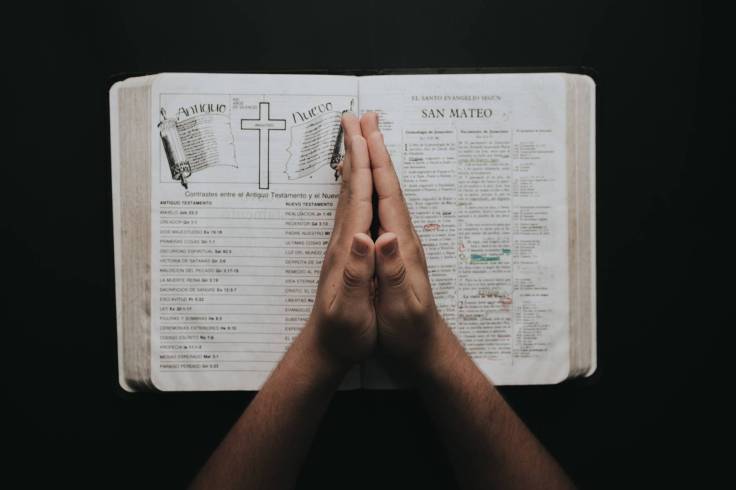
This is not a great secret or a new discovery, but a reminder that we can “pray” the Scriptures. Sometimes, we do this in corporate prayer, as in a congregation reciting “The Lord’s Prayer” together. But often, it is when we are reading God’s word, or a particular verse haunts our memory that we echo the words in our prayer life. There are so many benefits from this:

Photo by Luis Quintero on Pexels.com
  • We are joining in a great tradition– much of Scripture records the prayers of the patriarchs and of Jesus Himself. When we echo those words, we affirm them–both to God and to ourselves.
  • We are praying in the light of the truth–God’s own words on our lips can keep us from trying to put our words in God’s voice!
  • We are deepening our understanding and experience of Scripture– making it personal, rather than just a learning exercise or a daily duty.
  • We are deepening our experience of Prayer– it is more than just me talking to God. It is me agreeing with God’s Word, and God’s Word literally speaking through me.
  • We are reminded of what prayer can do– many of the prayers of Scripture are followed by answers, from prophecies to miracles to movements of the Holy Spirit.
  • We are reminded that God answers prayer that is consistent with His will– not all Biblical prayers were answered in the ways that their petitioners hoped or expected!

The Bible is full of wonderful examples of prayers. Here are just a few to get started:

  • Abraham’s prayer for God to spare Sodom in Genesis 18 (v. 23-32).
  • Moses praying for God to forgive Israel’s sin and disbelief in Exodus 32 (v. 31-32)
  • Moses praying for a successor to lead Israel into the Promised Land (Numbers 27:16-17)
  • Gideon’s prayer for guidance in Judges 6
  • Manoah’s prayer for help in raising his son Samson in Judges 13
  • David’s prayer in 2 Samuel 7 (v.18-29)
  • Elijah’s prayer for God to send fire from Heaven in 1 Kings 18 (v.36-37)
  • Several of the Psalms, including 3, 51, 90, 102, 103, 105, and many others.
  • Hezekiah’s prayer for God to save Israel from their enemies in Isaiah 37 ( v.16-20)
  • The prayer of Jebez in 1 Chronicles 4:10
  • Habakkuk’s prayer for revival in Habakkuk 3: 2-19
  • Jesus’ prayer in Matthew 11:25
  • Jesus’ prayer for His disciples (John 17)
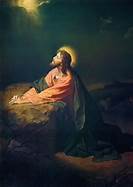
  • Jesus’ prayer in the Garden of Gethsemane (Matthew 26:39-44)
  • Jesus’ prayer from the cross in Luke 23:34
  • Stephen’s prayer in Acts 7:59-60
  • Prayer of worship in Heaven in Revelation 5:13

https://christian.net/resources/the-top-most-powerful-prayers-in-the-bible/

In addition, Bible passages that describe the Character and Majesty of God the Father, the Son, and the Holy Spirit can be used as prayers of worship and adoration. Bible stories and events can be lifted up in worship of God’s power and faithfulness through the ages. Jesus’ teachings (such as the Beatitudes) can be lifted up as the desire of our hearts, and as requests for the strength and wisdom to follow Him.

Photo by cottonbro on Pexels.com

Now unto him that is able to keep you from falling, and to present you faultless before the presence of his glory with exceeding joy, To the only wise God our Saviour, be glory and majesty, dominion and power, both now and ever. Amen.

Jude 1:24-25

The LORD God Almighty Is His Name

He who forms the mountains, who creates the wind, and who reveals his thoughts to mankind, who turns dawn to darkness, and treads on the heights of the earth— the LORD God Almighty is his name.

Amos 4:13 NIV (via biblestudytools.com)
Photo by Quang Nguyen Vinh on Pexels.com

To whom do you pray? I know many people who address their prayers to “Our Father.” Others pray to the Name of Jesus, or to “Abba,” or even through a saint. I’ve heard some even use terms like “Daddy God,” or “The Man Upstairs.” But the One who hears our prayers, the Triune God of the Universe, is altogether Holy, Righteous, Sovereign, and Supreme. We forget that or diminish that to our peril.

Photo by Tima Miroshnichenko on Pexels.com

That doesn’t mean that we cannot draw near to our Creator– in fact, He wants us to call on Him and commune with Him. But He is more than just another someone we can talk to. He sees us– and He sees through us! We may be able to “fool” our friends and even our family with a false smile or half-attentive listening, but God is not fooled by our appearance or our shallow actions.

Photo by Dids on Pexels.com

The people of Israel, during the time of Amos’s writing, had formed a bad habit of “fake” worship. They prided themselves on their rituals– morning sacrifices, tithes, offerings, etc. They were religious– on the surface. But their lives were filled with greed, selfishness, corruption, pride, and apathy. They not only knew there was injustice all around them, they were willing participants!

They had pushed a loving and merciful God to His limits. He had sent plagues, famines, war, and other disasters to humble His people and shake them out of their sinful stupor. Hard times can bring people together; disasters can cause them to turn their eyes to Heaven; to ask for help, and to offer help to their neighbors. But these stubborn people used hard times to take advantage of those who were already in trouble– the rich watched in comfort and disdain as their countrymen starved. They cheated and hoarded while others were dying.

Photo by George Webster on Pexels.com

Sadly, the Israelites of Amos’s time are not so very different from people in our own time and countries. God’s warnings and pleadings don’t sound out of place in 21st century America. Or Europe. Or anywhere else. We have a form of worship– people who brag about their Mega-churches with worship orchestras, bistros, indoor playgrounds for the kids, light shows, and more; people who attend every “Christian” concert that comes to town, or attend retreats and seminars. And there’s nothing overtly “wrong” about such worship. But it has to translate into WORTH-SHIP–recognizing that God is not just another superstar; that His House is not just a place to be entertained or meet other “nice” people. That His Word is not just a bunch of stories about “other” people who messed up, with a list of suggestions on how to live a “better life now.”

Photo by Karolina Grabowska on Pexels.com

He who forms the mountains, who creates the wind, and who reveals his thoughts to mankind, who turns dawn to darkness, and treads on the heights of the earth— the LORD God Almighty is his name.” May we never forget or take for granted WHO God really is. And may we always recognize His Worth and Majesty. May we be quick to listen and obey Him, and quick to repent when we go astray. That’s what He was asking through Amos and the other prophets– that’s what He asks of us today.

Praying for Happiness

A while ago, I was following a thread on Facebook. It was about good parenting, and the idea being discussed was about what a good parent would do to ensure their child’s happiness. Several of the people on the thread agreed that happiness was the highest priority, and that they would do anything to ensure that their child was happy.

Photo by Trung Nguyen on Pexels.com

I disagreed, but I felt it was better not to argue as part of the thread. I never raised any children of my own, and threads on social media tend to pull out our gut reactions, rather than our studied ones. At first glance, it seems natural and good to want the people we love to be happy. I certainly don’t want my family and loved ones to be miserable! But is happiness the very best I can wish for– pray for? So often in life, true and lasting happiness is a process that involves going through struggles and periods of frustration and even failure. I don’t enjoy seeing loved ones struggling, but I want them to learn the life lessons that will help them become all they were designed to be.

I think of the life of Samson (Judges 13-16). Samson was set apart from birth to be a Nazarite. During his childhood, his parents followed the rules set aside for such a designation. The Biblical account makes much of the rule about never cutting his hair, but there were other rules his parents likely followed as he was growing up, such as keeping him away from grapes, wine, wine vinegar, or any other fermented drink, and keeping him away from defilement by dead bodies. It’s never easy to be “different” when you’re growing up. I’m sure Samson had many questions, and moments of unhappiness as a child. But somewhere along the way, his parents seem to have made Samson’s happiness more important than his character development.

Photo by fabio.tsu on Pexels.com

Samson grew to be petulant and spoiled. He seemed to think he was entitled to whatever whim took his fancy. Now the Bible is clear that some of Samson’s desires were part of God’s plan to confront the Philistines, but Samson’s parents put up only a token resistance when he told them he wanted to marry a Philistine woman. At the wedding feast, Samson posed a riddle which exposed his lack of respect for his Nazarite vows. Not only had Samson killed a lion; he had come back later and eaten honey taken from the lion’s carcass– a defilement that broke his vow. Later, of course, he would use the unclean jawbone of an ass to kill a thousand Philistines in a single incident. Samson could have made an offering and renewed his vow, but we have no record that he ever did.

Photo by Pixabay on Pexels.com

The most famous story of Samson is his infamous liaison with a prostitute named Delilah. Though she does little to hide her intention to learn the secret of his strength and betray him to his enemies, Samson toys with her, lies to her, and finally reveals his sacred secret. Once his hair is cut, Samson loses his great strength and is captured by the Philistines and tortured. Only when he is blind, imprisoned, and shamed does Samson seek the Lord and ask for God’s blessing.

Photo by Sinitta Leunen on Pexels.com

Samson pursued a life of pleasure, and gave full vent to his lust, anger, and other strong emotions. I’m sure there were many moments of happiness in his life, but there were also moments of pain, tragedy, betrayal, and shame.

I think the story of Samson is full of lessons for us today. One of those lessons is that even when we are not faithful, God can still use us for His good purposes. God used Samson to judge the nation of Israel, and to bring punishment on the Philistines for their cruelty toward them. God could have disqualified Samson for having broken his vows time and time again, but God used even Samson’s weakness to highlight His strength.

But another lesson, I think is that God showcased exactly what can happen when we place happiness, pleasure, and ease ahead of everything else. Samson caused his own unhappiness and torture. There is no record of Samson bringing happiness to anyone else– only shame, tears, violence, and retribution. God caused Samson to be a model of all that the book of Judges is about– at the end of the book, there is a significant verse, “In those days, Israel had no king: everyone did as he saw fit.”

Photo by August de Richelieu on Pexels.com

I don’t want my family and friends to be “happy” at the expense of their character, or at the expense of others. I pray that they develop Love, Joy, Peace, Patience, Kindness, Goodness, Faithfulness, Gentleness, and Self-Control (Galatians 5:22-23). In the end, this will bring them a level of happiness that surpasses anything the world can offer.

Jesus Died

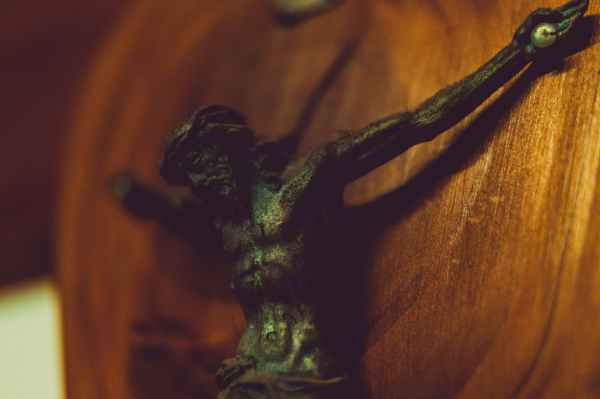
On this Good Friday, it may seem redundant and unnecessary to point this out, but Jesus died. As the world around us faces a global pandemic, we are forced to face our own mortality. People are dying from COVID-19– people we know; people we know about; people we have never met. Their deaths are more than just statistics. They represent personal loss to all their friends, family, and people in their communities. Jesus’ death was more than just another execution– more than just another dead body to be disposed of before the start of the Sabbath.

Jesus. Died. Emmanuel– God with us– died. Ceased to live. Bled out and stopped breathing. His body was cold and lifeless, wrapped in burial cloths and laid in a tomb. This was not just like sleeping, or missing a heartbeat. He was gone. This is not normally cause for celebration– this was not a “Good” Friday.

Photo by Pixabay on Pexels.com

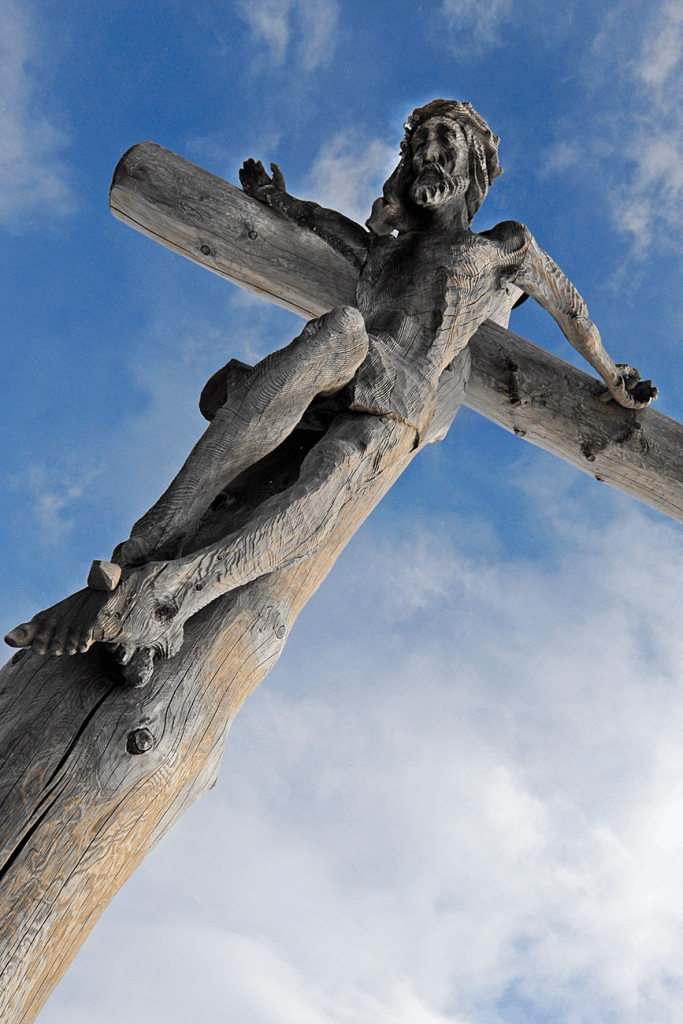
Jesus was not the only religious leader to die at the hands of enemies or rivals. The fact that his followers would commemorate or memorialize his death is not unusual or incomprehensible. But Jesus wasn’t just assassinated. He was condemned to die as a criminal. His death wasn’t just shocking or violent– it was humiliating, vile, excruciatingly painful, and involved public ridicule and anguish. There is nothing glamorous or brave or victorious about a cross. Christians who wear cross necklaces or t-shirts with blood-covered spikes might just as well wear handcuffs or ankle bracelets, or a picture of Jesus in an electric chair to show their devotion to a man who died as a criminal. Even though Pilate declared that he could find nothing wrong, he still allowed the conviction and death sentence to stand. Jesus didn’t win against his enemies– he lost, and he lost everything.

Photo by ahmed adly on Pexels.com

In our rush to celebrate Easter, and the “rest of the story,” sometimes we lose sight of the cross. Jesus– creator of the universe, perfect in the eyes of the law, beloved by God the Father–died a cruel, humiliating, senseless death. Those who are dying today of COVID-19 are struggling for their next breath, exactly as Jesus did so long ago. Jesus did not just “give up,” he didn’t just go into a coma as a gesture, knowing he would wake up in three days anyway, so why struggle for that next breath, or push through that cramp in his arm or leg, or let the sweat and blood from his forehead run into his eyes, unable to wipe them away or keep the flies from landing around his nose or ears… Jesus died– He heaved and strove and agonized until his heart and lungs and muscles could do no more.

We talk about Jesus as the “Lamb of God, who takes away the sin of the world” (John 1:29). Earlier in Israel’s history, God rescued the entire nation of Israel from their slavery to the Egyptians. He caused the angel of death to visit all of Egypt and kill all the first-born throughout the land. (https://www.biblegateway.com/passage/?search=Exodus+12&version=ESV)

All of Passover is a foreshadowing and visual representation of what was to happen at the crucifixion. Jesus became the sacrificial lamb, whose life would be given, and his blood be used, to save us from death and destruction, and allow us to be free. His body was broken, just like the bread of the Passover, to give us life.

Just as the lamb’s blood was placed on the sides of the door posts, Jesus’ blood stained the two ends of the cross where his hands were nailed. It stained the top and bottom of the cross where his head and feet bled, just as the lamb’s blood was placed on the top of the door frame and dripped to the ground beneath.

Photo by Harrison Haines on Pexels.com

Jesus became a metaphysical “doorway”, painted with blood, through which we can enter into a place of safety, forgiveness, and promise. But only by going through the door– only by trusting fully in the work of Jesus’ death (and resurrection)– that we can be saved.

It wasn’t merely the act of painting the lamb’s blood on a door that saved anyone– it involved going into the house, and obeying the word of the Lord. It was wrapped up in preparing for a journey in which they would leave behind their slavery and old way of life, and walk through uncharted territory, led by God’s spirit, to a land of promise they had never seen. No Egyptian, by merely smearing blood on the doorposts or wrestling with the angel of death, or wearing a mask or staying behind locked doors, could defeat the plague. No Israelite could ignore God’s instructions, and roam the streets, trusting the the blood on the doorposts would cover him three blocks away. Death–and life– came on God’s terms. Wearing a cross necklace and “looking the part” won’t substitute for true faith that results in repentance, obedience, and discipleship.

Jesus died. And he rose again! But he didn’t do it so we could sail through life on our own terms. He came to show us that God can take our slavery, our sin, our failure, our sickness and sorrow, even our death– even senseless, humiliating, forsaken death– and give victory, life, and peace to those who follow Him.

And THAT makes this a very Good Friday, indeed!

Five Smooth Stones

God’s ways are not our ways. God often turns our expectations on their heads– choosing Abraham and Sarah to become parents at an advanced age; choosing Moses, reluctant, disgraced, and hot-tempered, to shepherd close to a million refugees across the wilderness; choosing David, young and poorly armed to defeat the mighty giant, Goliath; choosing to send His Messiah as an infant, the son of a teenage girl stranded miles from home in a cattle shed…

Not only that, but God chooses to include cryptic and seemingly random details in many of the stories we read in the Bible. When Abraham and Sarah received news that they would become parents, Sarah laughed. Such a small detail, but God called attention to it, even giving the name Isaac (Laughter) to this promised son. When God called Moses, He didn’t just include the details of the burning bush and the miraculous signs, He chose to include Moses’s excuses and objections, and a curious command to Moses to remove his shoes.

Photo by Pixabay on Pexels.com

Recently, I found a short discussion about the “five smooth stones” David used to defeat Goliath. https://www.biblegateway.com/passage/?search=1+Samuel+17%3A26-50&version=MSG Some teachers spend time talking about the number of stones– why five? Did David doubt God’s power and provision? Can we attach significance or apply principles to each stone? But someone commented (I’m sorry, I lost the reference, or I would attach a link) on the fact that the stones were smooth–I’d never really noticed that detail before. David chose five smooth stones from the brook, not five heavy rocks, not sharp-edged stones of flint, not round balls made of iron– five smooth stones. The smooth stones in the brook may seem like a strange choice to us if we are not used to using a sling, but to David, such stones meant greater accuracy and speed. Five such stones would have been about a handful– easy to carry, load, and fire in rapid succession, if necessary.

I would like to suggest that there are some principles here that apply to both prayer and Christian living, especially involving how we can pray for and interact with the “giants” and “enemies” in our lives:

  • First, understand the reality of the “Giant”—Goliath was huge; bigger than any single warrior in Israel. But he wasn’t bigger than God. Goliath was also hampered by his heavy armor, his size, and his arrogance. David was offered armor and weapons similar to Goliath’s, but David’s greatest weapon was his understanding that Goliath was no match for the God of Angel Armies! We often make the mistake of magnifying our enemies. We see their size, their shining armor, and heavy weaponry. We forget that God is the maker of smooth stones!
Photo by Pixabay on Pexels.com
  • Second, actions really do speak louder than words. Goliath inspired fear; he taunted the army of Israel. Yet he never landed a blow against David. Goliath scoffed, bullied, and talked a good game, but David paired his words with action. Goliath demanded that David (or any other warrior) “Come down to me..” He had a javelin and a spear, but he never used either one. I find it interesting that many “enemies” of the Church behave the same way. They want to challenge the followers of Christ in debates; they publish books and articles filled with arrogant words, accusations, and complex arguments. It is tempting to respond in kind– to get into a war of words; to match their arrogance with our self-righteous assertions. What if we fought their words with action, instead of spending so much of our time answering and defending ourselves against empty arguments and accusations. We will not “win” any culture wars; we will not “win” the hearts and minds of the next generation; we will not “defend” morality by using bigger, better, or more persuasive words, or by having better armor and sharper weapons than our enemies. We need smooth stones from the brook–small acts of kindness and humility and grace that defy all the logic and brute force of those who trust in their own understanding.
Photo by Pixabay on Pexels.com
  • Third, accuracy is better than power. Goliath had one spear–and it was impressive–” His spear shaft was like a weaver’s rod, and its iron point weighed six hundred shekels.” (verse 7). Still, Goliath had a javelin, a sword, and several pounds of armor. David had no armor, one shepherd’s staff, and his sling and five smooth stones. But he only used one stone! It was accurate and true; it was sufficient, and it won the battle! Sin likes to flaunt it’s power–shiny armor, impressive weapons.. But if we are “true”–if we hold fast to the truth and follow the words and example of Jesus Christ–if we are faithful in our everyday walk with Christ, it is sufficient.
    There is an amazing climax in the movie, Star Wars (episode 4, A New Hope), where the young Luke Skywalker is sent with a group of fighters on a seemingly impossible task– destroy the “indestructible” Death Star! There is only one weakness–one small target. Luke’s small fighter plane is old and outdated; he and his fellow soldiers are under attack, and the pressure is on. But Luke’s accurate shot leads to victory. It is a modern retelling of the story of David and Goliath (with several space-age gadgets and extra plot twists).
    How many of our interactions with others get “sidetracked” by anger, envy, bitterness, and pride, to the point that we no longer reflect Christ accurately? How often do we consistently pray to stay “true” to God’s word, rather than praying for more powerful opportunities or platforms?
Photo by Arthur Brognoli on Pexels.com
  • Fourth, know your strengths and weaknesses (and those of your enemy). David knew that his strength was, first and foremost, in God. And David’s passion for God’s honor gave him focus and commitment beyond all that was found among the skilled soldiers of either side. He knew that fancy weapons and armor could not improve his skill with the sling, and that his skill had been tested in battle before.
    But David also knew better than to aim the stone at Goliaths’s breastplate, shield, or greaves. Goliath’s weakness was in his head! His first weakness was in thinking that his power was enough to defy the God of Israel’s army. But he also left his head unprotected from attack. Some scholars have even suggested that Goliath may have had very poor eyesight– that he was a fierce warrior in hand-to-hand combat, but literally could not see the stone coming at his forehead. Perhaps all his blustering and taunting was, in part, to distract from his very real vulnerability.
    I am reminded that this is also true of many of the “giants” we face. Their weakness is in their head and in their vision–they trust in their own understanding and in human arguments, or in their “vision” of who God is, or “isn’t”, or “should be”. They rely on what they can comprehend and control. They wave their swords and rattle their shields; they have gleaming armor and they “talk a good game”. They have locked away their hearts and bodies, often hiding painful scars and deep hurts.
    Goliath was a giant–but he wasn’t a god. He was once a little boy (or maybe never a “little” boy, but a young boy..). David was a young man (probably in his mid-to-late teens), who was a simple shepherd.
    How do we see ourselves? How do we see others around us? Do we know our weaknesses? Do we see the vulnerability in those who would threaten us?
Photo by Sharefaith on Pexels.com
  • Last, God’s “weapons” are not like those of the world. Five smooth stones do not look like weapons. In fact, five smooth stones from the brook may have looked charming and harmless and even comforting in David’s hand. Four of those stones may have gone back into the brook, to be polished some more by the current, or carried out to the sea.
    Christ’s followers have armor and weapons, but they are spiritual in nature. We are to put on the “whole armor of God” (https://www.biblegateway.com/passage/?search=Ephesians+6%3A11-18&version=ESV, including the “sword of the Spirit”, which is the word of God. Truth, Righteousness, Peace, Good News, Faith, Salvation– This is how we prepare for battle! And we are to pray at all times! Imagine dropping the weapons of sarcasm and self-righteous posturing, and picking up a smooth stone of grace!
    God calls us to use unconventional “weapons”– not to kill or destroy those around us, but to demolish lies, tear down walls of hatred, and defend the helpless. Has God placed you in a situation where you need to pick up “five smooth stones” today?

The “God of Jacob”– not “Jacob’s God”

For a blog about prayer, I’ve been spending a lot of time doing Bible study on the character of Jacob. But I think there is a huge connection. The stories in the Bible are powerful and important, not because of the human characters, but because, in them, we see how God interacts with a variety of His created people. And that can help us as we come to God in prayer.

Photo by Thorn Yang on Pexels.com

When we begin to understand that the “heroes” of the Bible are often ordinary people who encounter Almighty God, we see that little has changed in the course of history. God still chooses to bless and challenge ordinary people– for their own good, and as a witness to others.

Photo by Julian Jagtenberg on Pexels.com

In today’s world, we often reverse the importance of the characters in our own stories. Christians talk about “my God” or “our God”, as though God belongs to us or serves us. But the Bible doesn’t speak in those terms. God is not “Jacob’s God” or “Solomon’s God” or “Queen Esther’s God,” or even “Israel’s God.” Instead, He is the God of Abraham, Isaac, and Jacob– the God of Israel. He is pre-eminent. God exists, rules, creates, and acts on His own terms, not ours. And He exists, rules, and acts universally. No person, group, or nation can claim that God blesses them because of who they are or what they have done. Thus, there is no African God or Caucasian God or Chen Family God, or Jean’s God, or Muscovite God, etc. There is only One God– but He wants to be the intimate and personal God of every person on the African continent, and in Moscow, and everyone named Shirley, Clarence, Chen, Smith, Martinez, or Klein. He invites each of us into a personal relationship, but He remains Holy and Unchanging and Sovereign.

Photo by Nicholas Githiri on Pexels.com

The very same God who wrestled with Jacob wants to be your best friend. He also wants to be your King and Lord of your life. When we pray to “the God of Jacob”– we are not praying to “Jacob’s God”. We are praying to the very passionate lover of our soul. He just happens to be the same God who loved Jacob enough to take him through a series of adventures many centuries ago; the same God who promised never to leave him; the same God who blessed him and preserved him and made him the father of a great nation. Just think of what He’s waiting to do for and through you!

Jacob Meets– His Maker

It is fascinating to study the life of Jacob. His story is rich with contradiction and confrontation. But it is also a magnificent story of God’s grace, protection, and redemption.

We’ve spent a lot of time discussing Jacob’s relationship with Laban, his uncle/father-in-law, and a man who made Jacob’s lies and duplicity look like child’s play. (See https://pursuingprayer.blog/2019/07/01/jacob-meets-his-match-part-one/ and https://pursuingprayer.blog/2019/07/03/jacob-meets-his-match-part-two/ ). While Jacob learned a lot from this stormy relationship, God was not finished putting Jacob to the test. As Jacob moved his family away from Laban, bringing them to their new home in Canaan, he encountered his estranged brother, Esau. (See https://pursuingprayer.blog/2019/06/28/jacob-the-brother-of-esau/). But, just before the encounter, Jacob encountered someone else. https://www.biblegateway.com/passage/?search=Genesis+32%3A22-32&version=ESV He wrestled all night with “a man”, and he refused to let go until he received a blessing. “The man” touched his hip joint, so it was wrenched out of its socket, and gave him a new name, Israel. When Jacob asked the man’s name, he returned with a strange question: “Why do you ask my name?” He never answered Jacob’s question, but he didn’t need to. Jacob acknowledges that he wrestled with God– he met him, spoke to him, and grappled with him face-to-face– and his life was not only spared, but blessed!

I love this story of Jacob, and it gives me a great deal of hope for many reasons:

  • Jacob got a new name. This is significant throughout the entire Bible. Whenever someone gets a new name, it indicates that he/she has a new nature, a new future, a new relationship with God. Jacob was named for all the worst of his character attributes– he literally came out of the womb grabbing his brother’s heel, and his name means “heel-grabber” and “cheat”. But his new name, Israel, turns all of that on its head–Jacob “grabbed” hold of God and would not let go! He “struggled” with God, and God promised to be with him in all his struggles; to protect him, to bless him, to be on his side. When we come to Christ in faith, we may not get a new name, but we get a new nature, and a new relationship with God. Christ promises to be our advocate– he will struggle with us, uphold us, strengthen us, and bless us–all we need to do is grab hold of the grace that is offered!
  • God met with Jacob where he was– literally and figuratively. Sometimes, we meet someone who “struggles”– with every thing and everyone. Jacob had contentious relationships with nearly everyone in his life. He was accused, abused, cheated, hated, passed over, fought over, lied to, and aggravated. God didn’t come to him in glory and splendor– he came and wrestled with Jacob–down and dirty, gritty and unannounced. And when Jacob hung on and kept fighting, God let him. He even “cheated” by putting his hip socket out of joint to end the match. God could have showed up and overwhelmed Jacob with his glorious presence. He could have visited him as he did Abraham–stopping by for a meal and a visit. He could even have appeared in another dream. But he knew Jacob from the inside-out– he knew Jacob’s character and temperament; he knew Jacob’s fears and deepest needs. He grappled with a grappler, twisting and turning in sweaty combat. And when it was over, Jacob KNEW his God. He knew that God would not let go– would not send him away, would not let him sneak away in the middle of the night, would not destroy him. Instead, this God would hold him, struggle WITH him, and bless him afterward. I think we often forget that God is not just Holy and Awesome; he is not just a God who loves in a vague and universal way. God is very personal and intimate. He will engage with our doubts, our fears, our high-spirited, strong-willed natures, and he will embrace us with all the fierceness of death–even death on a cross.
  • God’s timing doesn’t always make sense, but it is always perfect. Jacob was leaving horrible situation, on the eve of a difficult confrontation with his brother, and, ultimately, on a difficult journey to reconciliation with his father. God didn’t need to give Jacob a pep talk, or a list of do’s and don’t’s. He gave him a new name and a new blessing to replace the past hurts and inspire Jacob to build a new life. Jacob was able to face his brother and father with renewed confidence that God would see him through.
  • Finally, it is in this story that God literally becomes “the God of Jacob” in a personal and profound sense. God still longs to be the God of __________”– fill in the blank with your own name! If you have been wrestling with God or against God, or just avoiding God, let this be the day that you receive the blessing of God’s grace. It’s yours for the asking. And likely, it will be less painful than Jacob’s encounter!
Photo by Public Domain Pictures on Pexels.com

Jacob the Brother of Esau

The Biblical story of Jacob and Esau has long baffled readers and scholars alike. I don’t pretend to have the answers to some of the tough questions it poses, but I’d like to take a close look at some of them.

Esau and Jacob were twins–the only sons of their parents–born just minutes apart. Yet their personalities, their destinies, and their relationships with God and others could not have been more different.

We spent the last post covering some of Jacob’s character flaws– his early years involved scheming and “cheating” this twin of his. Jacob’s life and actions are the focus of the story, after all. He is the one God chose to establish the nation he promised to Jacob’s father and grandfather. But why Jacob and not Esau?

In many ways, this story echoes that of the very first brothers in the Bible. God chose Abel’s sacrifice over his brother’s. We are not given an obvious reason why Cain’s sacrifice was unacceptable– or why Abel’s was. In this case, God does not give Rebecca a reason why her boys would fight throughout their lives or why the elder son would serve his younger brother. At one point, the Bible even says that God “loved” Jacob and “hated” Esau! So we are left with a big question–Does God play favorites? Does He give His favor capriciously? If so, why bother to worship, serve, and obey Him if, in the end, He has already chosen who will be blessed?

We may never have a full explanation of God’s ways– we are told that they are not our ways; that they are higher and wiser than our ways–but there are several things I want to consider that may shed some light.

  • God is timeless. He lives beyond the boundaries of linear time, and he sees the end from the beginning. As we read through the story of Jacob, we see his progression, and the changes he makes as he matures and as he encounters the great God of his fathers as it unfolds in time. His beginning shows little promise, but God already sees Jacob as Israel, as the father of twelve tribes of people, as the ancestor of Moses, of King David, and of the coming Messiah. He sees all of this before Jacob is even born! It is part of His eternal plan that Jacob, the cheater, the underdog, the “lesser” brother should become all of these things.
  • God sees inside the human heart. Esau’s character is not fully shown in this Biblical story, but we get a few clues: 1) Esau despised his birthright– he was flippant about his inheritance, trading it for a bowl of stew. 2) Esau took foreign wives who caused his parents distress–this detail may almost escape the modern reader. We do not tend to live with our extended family, but it was (and in some cases still is) common to the society in which Isaac lived. Esau did not consider his parents when bringing foreign women into the family. They had different customs and different gods. And Esau didn’t learn from the first two wives..when Rebecca commented on the Hittite women, Esau married a daughter of Ishmael, a woman likely to resent her father’s rival (remember Ishmael was banished on account of his resentment of Isaac!) 3) Esau plotted his brother’s death. His anger and resentment over the lost blessing caused him to plot murder. Jacob was sent away, not only to find an acceptable wife, but to keep him safe from his brother’s vengeance. Even though the two brothers later met in peace (Genesis 33), the meeting was filled with tension and the brothers were never close. 4) There is not one indication in the Bible that Esau ever sought the God of his fathers—no mention of him praying, offering a sacrifice, or acknowledging God. In fact, the sons and descendants of Esau (Edom) would attack and fight with the nation of Israel for centuries to come, finally being conquered and forced to serve the descendants of Jacob. https://www.jewishvirtuallibrary.org/the-edomites
  • God does not “love” or “hate” in the same way that we do. God’s love is universal and eternal. God loves even those who reject, mock, and hate him. So when God says, “Jacob have I loved, and Esau I have hated”, He is not talking about his feelings for individuals (see https://www.biblegateway.com/passage/?search=Malachi+1%3A1-5&version=NIV and https://www.biblegateway.com/passage/?search=Romans+9%3A6-16&version=MEV). Rather, He is talking about how He shows mercy. Jacob and Esau were real people, and God blessed both of them, and built both of them into great nations. But God showed mercy and favor on Israel for keeping his commandments, while destroying the nation of Edom because of its continuing wickedness. (God eventually showed wrath on the nation of Israel as well, sending its people into exile because of their unfaithfulness!) Even in their destruction, both nations retained a remnant and their peoples exist to this day.
Photo by Pixabay on Pexels.com
  • God did not abandon Esau. When Jacob finally reconnects with his older brother, Esau is the head of a mighty army. Esau’s sons became the heads of tribes and kings of Edom. God allowed Esau to prosper and grow strong. But Esau never sought God; Edom never showed humility, wisdom, or reverence–only arrogance, might, and hatred. God shows mercy to those who don’t deserve it, and grace to those who desire it, but He will not allow injustice and arrogance to go unchecked forever.
  • God’s grace is a gift–Jacob didn’t deserve to be favored; but neither did Esau, or Isaac, or Abraham. Nor do any of us. https://www.biblegateway.com/passage/?search=Romans+3%3A9-18&version=ESV Not one of us has earned God’s blessing. God chooses to love us even in our sin, and chooses to give us the Grace to return and receive His blessing!
Photo by Reafon Gates on Pexels.com

Praise be to the God of Jacob!

Praying to the God of Jacob

Throughout the Bible there are stories of people –sometimes rather ordinary and even deeply flawed people–who end up in extraordinary and miraculous situations. I spent some time exploring Hannah, and her journey through barrenness and into motherhood. I’d like to go back several generations to look at the intriguing character of Jacob.

(For the story of the early life of Jacob, see https://www.biblegateway.com/passage/?search=Genesis+25%3A19-34%2CGenesis+27%3A1-28%3A9&version=NIV )

Photo by Pixabay on Pexels.com

Jacob often appears as an adjunct character– son of Isaac, and grandson of the patriarch Abraham, he seems to be something of a mis-step in God’s promise to build a nation and bless the world. Jacob seems to bumble through life– the second son, living in the shadow of a heroic older brother; a cheap con-artist, whose deception rips his family in two; a sly cheat who finally meets his match in a dishonest and conniving father-in-law; a beleaguered husband and father, juggling two feuding sisters, their two servants, a dozen warring sons, a tragic daughter… It would be easy to confuse this Bible story with a modern TV sitcom or reality show about dysfunctional family life.

Photo by Daria Shevtsova on Pexels.com

Yet…
Jacob, like his grandfather, Abraham, saw God face to face, even wrestling with him on one occasion. God gave Jacob the vision of a stairway leading to Heaven; God gave Jacob his blessing, independent of the one from Isaac; he chose Jacob over Esau to carry on the line of patriarchs; God gave Jacob a new name– Israel– which became fixed as the name of God’s people. Generations later, King David prayed to and worshiped “the God of Jacob” as a refuge. Jesus even referred to His Father as the “God of Abraham, Isaac, and Jacob.”

What makes Jacob stand out? Why does nearly half of the book of Genesis cover the years of Jacob’s life? I want to spend some time in the coming days to look a bit closer at this flawed man, how God revealed aspects of His own character in his dealings with Jacob, and how knowing Jacob better can help us as we pray to “his” God (and ours).

Who was Hannah?

The Bible is an amazing book. It is a single narrative, but it is made up of several stories; even several different types of literature. There are stories that seem straightforward; others are clearly meant as parables or metaphors; still others are prophetic visions. Hannah’s story fits the first category. Hannah is to be understood as a real person living in a real time and place in history. She is also representative of a particular situation–she is childless in a society where a woman’s value is measured in her ability to bear children. She is loved by her husband, but taunted and harassed by her husband’s other wife. She is consumed by grief and frustration. In our own time, she would likely be diagnosed as clinically depressed.

I don’t know about anyone else, but I have a tendency to see Hannah through the rosy lenses of her eventual triumph. I know the end of the story. I indulge her grief, because she “prays her way through it”, and gets the happy ending I think we all long for.

But Hannah’s story isn’t just about the outcome, and it isn’t a parable meant to show that earnest prayer will always result in getting what we desire. Hannah’s happy ending is not a guarantee or a promise for anyone else who suffers from grief or infertility (or both).

Photo by Thorn Yang on Pexels.com

So, I’d like to take a closer look at Hannah– not as one of the “heroines” of the Bible, but as a woman in distress. And I’d like to focus on the others in her story. God doesn’t waste details, even if we don’t always understand why they are included. I think there are several hidden lessons in this story, and they reside in details we often skim or throw aside in the pursuit of the very real truth that God answers prayer.

So, to prepare for this journey, here is the text of Hannah’s tale:


1 Samuel 1 New International Version (NIV)
The Birth of Samuel
There was a certain man from Ramathaim, a Zuphite from the hill country of Ephraim, whose name was Elkanah son of Jeroham, the son of Elihu, the son of Tohu, the son of Zuph, an Ephraimite. He had two wives; one was called Hannah and the other Peninnah. Peninnah had children, but Hannah had none.
Year after year this man went up from his town to worship and sacrifice to the Lord Almighty at Shiloh, where Hophni and Phinehas, the two sons of Eli, were priests of the Lord. Whenever the day came for Elkanah to sacrifice, he would give portions of the meat to his wife Peninnah and to all her sons and daughters. But to Hannah he gave a double portion because he loved her, and the Lord had closed her womb. Because the Lord had closed Hannah’s womb, her rival kept provoking her in order to irritate her. This went on year after year. Whenever Hannah went up to the house of the Lord, her rival provoked her till she wept and would not eat. Her husband Elkanah would say to her, “Hannah, why are you weeping? Why don’t you eat? Why are you downhearted? Don’t I mean more to you than ten sons?”
Once when they had finished eating and drinking in Shiloh, Hannah stood up. Now Eli the priest was sitting on his chair by the doorpost of the Lord’s house. 10 In her deep anguish Hannah prayed to the Lord, weeping bitterly. 11 And she made a vow, saying, “Lord Almighty, if you will only look on your servant’s misery and remember me, and not forget your servant but give her a son, then I will give him to the Lord for all the days of his life, and no razor will ever be used on his head.”
12 As she kept on praying to the Lord, Eli observed her mouth. 13 Hannah was praying in her heart, and her lips were moving but her voice was not heard. Eli thought she was drunk 14 and said to her, “How long are you going to stay drunk? Put away your wine.”
15 “Not so, my lord,” Hannah replied, “I am a woman who is deeply troubled. I have not been drinking wine or beer; I was pouring out my soul to the Lord. 16 Do not take your servant for a wicked woman; I have been praying here out of my great anguish and grief.”
17 Eli answered, “Go in peace, and may the God of Israel grant you what you have asked of him.”
18 She said, “May your servant find favor in your eyes.” Then she went her way and ate something, and her face was no longer downcast.
19 Early the next morning they arose and worshiped before the Lord and then went back to their home at Ramah. Elkanah made love to his wife Hannah, and the Lord remembered her. 20 So in the course of time Hannah became pregnant and gave birth to a son. She named him Samuel, saying, “Because I asked the Lord for him.”

Taken from biblegateway.com

Lord, help us to read this story with new eyes. Help us to see how you work even in difficult circumstances and with imperfect people to bring hope and wisdom and salvation to a fallen world.

Next time: Hannah and Her Husband

Blog at WordPress.com.

Up ↑