Declaration of Dependence

Today, America marks the 249th anniversary of the signing of the Declaration of Independence. In it, colonial leaders listed several reasons why they no longer held allegiance to the British Crown. Many of their reasons involved abuses by the King or by Parliament in relating to their colonial citizens. Taxation without representation; passing unjust laws; requiring people to quarter (feed and house) soldiers who often harmed and cheated them; refusing to hold the soldiers accountable for their offenses– even murder; refusing to allow the colonials to trade with other nations, etc. But there was something more.

We hold these truths to be self-evident, that all men are created equal, that they are endowed by their Creator with certain unalienable Rights, that among these are Life, Liberty and the pursuit of Happiness.–That to secure these rights, Governments are instituted among Men, deriving their just powers from the consent of the governed, –That whenever any Form of Government becomes destructive of these ends, it is the Right of the People to alter or to abolish it, and to institute new Government, laying its foundation on such principles and organizing its powers in such form, as to them shall seem most likely to effect their Safety and Happiness.

In drafting and ratifying these words, the founders of the United States did something unique. They did not just establish an independent government; they established a model for both independence and dependence IN government. Government is not independent of certain inalienable rights, nor of the Creator of those rights. Governments are not the highest authority in the land. Governments are instituted and derive their power, not by their own actions and decisions, but from the consent of the governed. Governments DEPEND on their ability and willingness to serve the people.

Of course, there are wicked and improper governments, and Britain’s rule in 1776 was not the worst example of tyranny or despotism the world had ever seen. The United States has not always lived up to the ideals and principles of the Declaration of Independence. Less than a century after the Declaration was adopted, the United States was engulfed in a war that tested its ideals. The nation was divided by the issue of slavery. Nearly half of the states still practiced slavery, meaning that hundreds of thousands of people were being treated far worse than the “rebellious” colonists of previous generations. Our nation as a whole was not delivering on its promised declaration that “all men are created equal” or that they were endowed by their creator with rights to “life, liberty and the pursuit of happiness”.
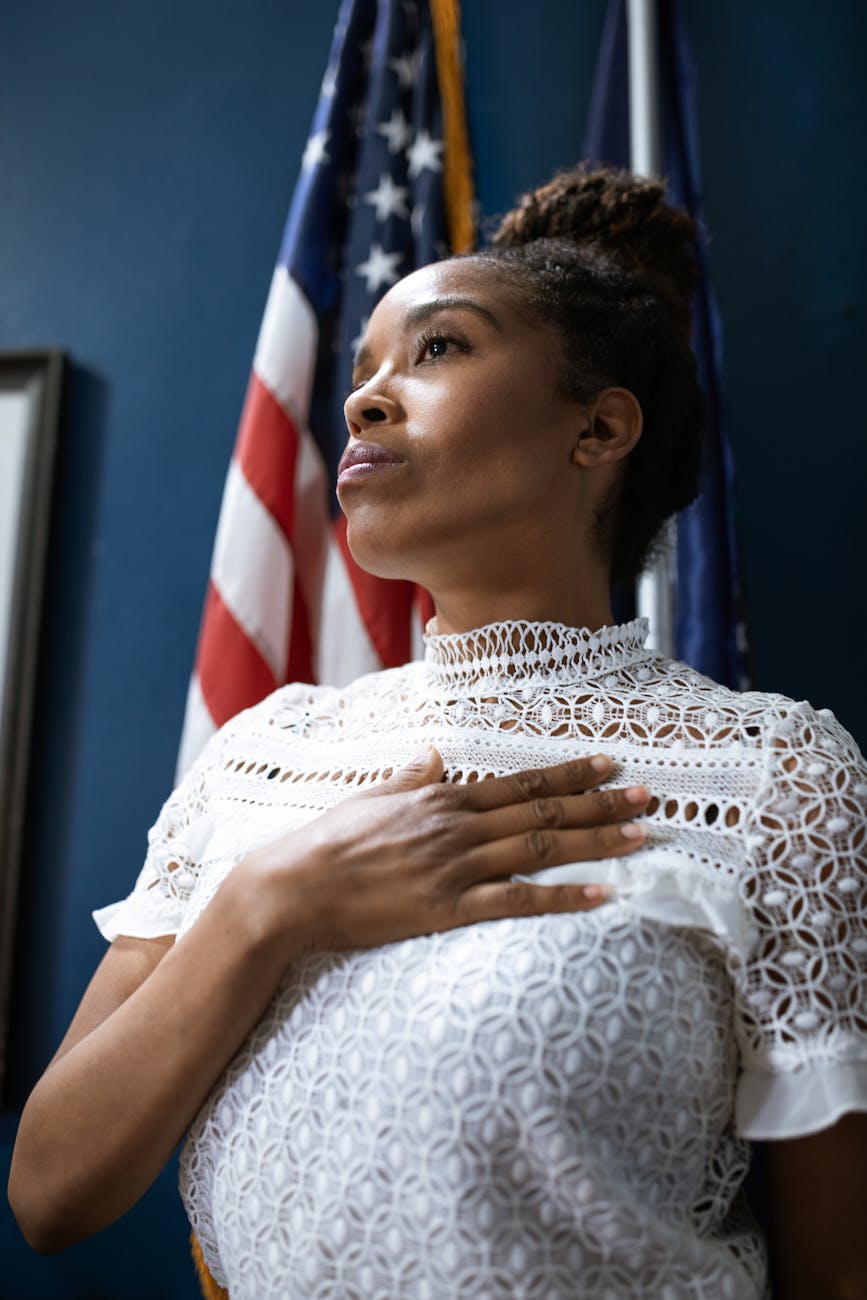
But when our nation has remembered its Dependence– our need for God and our need to care for the safety and opportunity for those under our jurisdiction–remarkable things have happened. The union was “saved.” Voting rights were not just extended but enshrined in our Constitution. Americans joined the fight in Europe and around the world on more than one occasion to secure rights for people who were being oppressed, tortured, and even exterminated. The “Promise of America” draws people from diverse nations and cultures and stands as a model for the rest of the world.

Sadly, today, many here in the United States want Independence from America. Our culture has devalued life, exchanged liberty for conformity, and traded the pursuit of happiness for indulgence and selfishness. We want to be independent of responsibility– to our families, to our neighbors, to our nation, and to God. We do not want a government that protects those rights that are endowed; instead, we want a government to give us assumed “rights” that are really permissions to defy God’s laws. We want to be free to redefine morality, escape the consequences of our own poor choices, and feel virtuous without pursuing virtue.

What will happen to our country if this trend continues? On the eve of celebrating our 250th year, we may be on the brink of falling apart. Issues like abortion, immigration, health care mandates, and transgenderism threaten to divide our country, just as slavery did over 150 years ago. Americans are divided on political, economic, religious, and cultural issues. We can’t seem to agree on what we mean by “rights, ” “freedom,” or “pursuit of happiness.” We can’t even seem to define what a “woman” is or decide how many genders to fight for. Everyone wants to speak out, but no one seems willing to listen– except to find another point of disagreement. We are no longer “united” states– we are warring factions in a series of culture wars.

But what happens when American Christians declare our Dependence on God and on His Word? Many around us have declared their independence from God’s laws–even to the point of denying His existence. Many people live in a self-imposed despotism; they are enthralled by a false “freedom” from morality, reverence, and even common sense. But Christians– wherever they live– are called to submit to the authority of Christ above all. We depend on Him– not on our customs, not on our history, not even on the words of the Declaration of Independence. And we are to lean on God, not on our own understanding or our superior morality or our ability to shout louder than the next person! Our Freedom comes through Christ alone!

True “freedom” comes from dependence, not independence. When we depend on Christ’s finished work on the Cross, we are free from the weight of Sin and the power of Death. When we depend on God’s wisdom, we find understanding. When we depend on God’s guidance and discipline, we gain freedom from guilt and shame. When we depend on God’s power to channel our emotions and energy, we find purpose and joy.

Today, I declare my utter dependence on God– on the Salvation He provided through Jesus Christ, and on the power of His Holy Spirit to lead me through this life. I am glad to be an American, but my ultimate citizenship is in Heaven. The “promise of America” is a good thing: the promise of Heaven is glorious and life-changing!

Journaling Prayer

Full disclosure– I’m not any type of expert on either prayer or journal writing.  But I do keep a prayer log of sorts, and I want to share how that works for me, and why I think it is helpful.

My prayer “journal” is actually a set of four standard notebooks I picked up on sale about two and a half years ago at an office supply store.  Each notebook has 100 pages.  I have labeled each page with a day (February 12, for example) at the top– three months to each notebook.  Below the date, I list people I know who are celebrating birthdays or anniversaries that day, as well as people who died on that day.  Below that, I save space for urgent prayer requests as I become aware of them.  To the side, I list a place (a country, city, or community) to pray for that day.  In the front cover or each notebook, I have a list of focus areas to pray for each day of the week, as well– things like family, leaders and authority figures, cultural issues, missions, etc.  The back side of each page is left to record answers, results, and updates.

The journal/notebook approach is not meant to lock my prayer life into a fixed routine; it is not a checklist of what I must pray for each day (and nothing else or added to everything else).  I don’t take the notebook with me everywhere– instead, I have a small notepad in my purse to jot down thoughts or requests. Sometimes, I record these in the larger notebook later, but not always.  I review the journal once a day, but I pray throughout the day– sometimes raising the names and places in the journal, other times people or situations as they come to my heart or mind.  The point is not to make an unnecessary burden of prayer.  The point is to remind me that prayer is a pursuit–an ongoing discipline as well as an intimate pouring out of my heart to God.

I’ve come to delight in turning the pages to see:

  • who is having a birthday/anniversary today– who might be encouraged with a FB post, a call or card or e-mail message
  • where in the world can I lift up people I may or may not know?  There are enough days in the year to pray for every country in the world, every U.S. state, and several major world cities or local communities–and while my list is in alphabetical order, I could have organized by geographic location, or simply listed random places for each day.  Some days, the places are familiar; other days I am inspired to look up information on places like Burkina Faso or find out more about West Virginia…
  • what was I praying about a year ago? Often, I find that my prayers have fallen into a particular pattern– and maybe I need to redirect my focus. Have I been mostly coming to God with burdens, or do my prayers reflect a heart of worship? Humility? Dependence on Him?
  • how faithful God has been over the years! Maybe there’s a burden that I’ve been praying about over many months or years, but far more often, I have forgotten the “urgent” need I was praying about just a few months ago–God answered in ways I did not anticipate. And those requests that are still “unanswered?” God HAS an answer. I just don’t know it yet.


Does the journal make me a better person or a better pray-er?  Well, prayer isn’t a competition, so while I would hope that it helps me develop perseverance, compassion, faithfulness, hope, trust, and wisdom in the practice and pursuit of prayer, it doesn’t make me or my prayer life “better” than someone else’s.  It is, however, a tool that is helping me chart the progress in this pursuit, and so I recommend it based on that experience.

If you feel (like I did for so many years) that your prayer life is haphazard and you want to grow in prayer, I encourage you to start with a simple journal– you don’t have to write out every thought or every request.  You don’t have to have a plan for every day.  But keep a remembrance of your prayer life –even a single item each day for a week, or a month–to look back on, and to move you forward.

For more detailed information, see my page about prayer journaling. Or do a search for “prayer journals.” You may find a system that works better for you– not because prayer needs to be systematic, but because prayer is a journey, and every journey can benefit from a journal!


What If?

As I am writing this, people in my country are voting or preparing to vote in a Presidential election.  Many of them are voting in fear, confusion, or anger, and asking, “What if my candidate/cause/political party doesn’t ‘win’ today?”  “What if I voted for the ‘wrong’ policies or people?”  “What does the future hold?”

These are not uncommon or unrealistic questions, but they are questions that can waste our time and sap our energy in hypothetical posturing.  The writer of Ecclesiastes says:

alone beach calm dawn

Ecclesiastes 11:1-6 King James Version (KJV)

11 Cast thy bread upon the waters: for thou shalt find it after many days. Give a portion to seven, and also to eight; for thou knowest not what evil shall be upon the earth. If the clouds be full of rain, they empty themselves upon the earth: and if the tree fall toward the south, or toward the north, in the place where the tree falleth, there it shall be. He that observeth the wind shall not sow; and he that regardeth the clouds shall not reap. As thou knowest not what is the way of the spirit, nor how the bones do grow in the womb of her that is with child: even so thou knowest not the works of God who maketh all. In the morning sow thy seed, and in the evening withhold not thine hand: for thou knowest not whether shall prosper, either this or that, or whether they both shall be alike good. 

woman wearing grey long sleeved top photography

It is not wrong to wonder about the future, but we cannot be sure that our actions will always produce the results we long for– especially when we have little control over other people’s actions and consequences.  The first two verses of this passage warn us not to “put all of our eggs in one basket”.  As free citizens in a democratic republic, we shouldn’t put our trust in any one political party, platform, or politician.  Nor should we live in a social or political “echo chamber”, listening only to the views and ideas with which we feel most comfortable, or least challenged.  However, we should look at the long-term consequences of proposals and the reasons behind them before we promote change just for the sake of it.

The third verse reminds us that some changes and events are beyond our knowledge or control.  It’s not that our vote “doesn’t make a difference” or that we’re on “the wrong side of history”– it may mean that history has taken a detour surrounding a certain issue.  It may mean that God is allowing for something we have not imagined (as He did in the days of Habakkuk). Get some great “Insight” into the Book of Habakkuk here.

aerial photo of buildings and roads

But there is more wisdom to come in verses 4-6.  Waiting for certainty of outcome, or being distracted by our circumstances or every “wind of change” can lead us to miss the very real opportunities for present action.  God has given us everything we need (see 2 Peter 1:3-5) for godly living and godly decision-making.  That doesn’t mean that our decisions will always reflect popular “wisdom”; it doesn’t even mean that our decisions will be the same as all other fellow believers and followers of Christ.  It DOES mean that we can make our decisions without fear.  God knows us– He understands your heart and mind better than anyone; He knows why people who agree on spiritual matters may not agree on politics.  But more than that, God KNOWS the future!  He knows all the things that we merely guess at.  So we should act in the present with the best information we have, and leave the rest to the God who knows best.

girl wearing blue denim dress shirt

Modern politics relies heavily on conjecture– polls, predictions, pledges, projections, plans, and campaign promises.  But God is still sovereign over all nations, governments, and peoples.  Instead of asking, “What if..” we should be asking of God, “What now?!”   And we need to be ready to listen and obey!  Let’s pray today for the wisdom to listen more, act with confidence, and trust our future to the one who has already seen it!

Unspoken

What does it mean when someone says they have an “unspoken” prayer request? If you are new to Christianity or to prayer, this can seem confusing. Aren’t we supposed to present our requests to the Father? Aren’t we supposed to pray for one another? How can we ask someone to pray for us, and then hold back on giving a reason? Is that “cheating” somehow?

There are several reasons why someone may ask for “unspoken” prayer, and there is no reason why we should not pray just as fervently for an unspoken request. So why would someone be reluctant or even unable to speak their request?

  • Sometimes, they are passing along a request from another. Someone has shared a burden, and it seems too large for just one or two people. But the original request was not shared publicly, nor did the sharer give permission to share details in a group. It is important to honor the other person’s attempt to avoid gossip and oversharing.
  • Sometimes, the request involves a delicate personal situation– an unsaved spouse, an aging parent facing financial difficulties, etc.– and the details of a request might cause unnecessary pain or shame to another, or strain an already tenuous relationship.
  • Sometimes, the person asking for prayer cannot put their request into words. They know there is a problem, but they may not fully understand what they need or even want. Sometimes, a sudden change throws them into turmoil. Other times, an unrecognized problem has been looming, and they are taken by surprise. Sometimes, there are multiple issues and layers of issues that can’t be explained easily.
  • Sometimes, the person is ashamed of asking. They may feel like a failure for even asking. It may be an issue they thought they had overcome, and they are reluctant to admit that it isn’t resolved. They may not be ready to confess a secret sin, but they know they need help.

Whatever the reason, we should always be willing to pray, especially when asked to do so. But how can I pray for someone who won’t or can’t tell me what they need? 

In many ways it is the same– If I know that “Sue” is battling cancer, I am still praying to the same God as I am for “Janet” who can’t tell me about her recent diagnosis or her ongoing battle with a wayward teenage daughter. Yes, I can be more specific in my prayer for Sue, but I can still lift up Janet as someone who needs God’s care, protection, and encouragement. I can acknowledge that God loves both women, and that God is the only one who can meet their needs. I can praise God that HE knows all; that He is sovereign over all, and that He cares about Sue and Janet (and Me) far more than I can understand. 

What are some practical guidelines when praying for “unspoken” requests?

  • Honor the other person’s privacy. Don’t try to drag a confession or sordid details from someone who is already struggling to share their need for prayer. Your “need to know” all the details is less than another person’s need for earnest encouragement, compassion, and support.
  • Concentrate on the basics— don’t try to “guess” at specifics. Pray for their general health, well-being, growth, encouragement, and strength to persevere. If you know of an ongoing situation, don’t get bogged down on praying for just that issue. Use this opportunity to uphold your friend or neighbor, brother or sister in loving prayer, not intense scrutiny.

  • Do not cast judgment. It is NOT your place to decide whether or not the other person “should” be more open or share more details. It is NOT your place to decide whether or not the other person “really” needs your prayer. We all know people who “overshare,” and we all know people who seem addicted to drama. We all know other people who never open up or seem independent and self-contained. Their “unspoken” requests are still “real” requests– even if they are making the third one this week. Lift up your sister or brother with love, not exasperation or comparison with anyone else. Remember, you would not want someone else dissecting your life trying to decide if your prayer requests are “worth” their time.
  • Thank God for the opportunity to join God in loving others! If someone is asking for your prayer, it generally means that they respect and trust you to respond. God is giving you a unique and wonderful opportunity to join in His work! Prayer of this type is not a burden or an obligation. It should be a joyful experience.
  • Follow up. Let the other person know that you are praying for them. If possible, pray with them, remembering that this is not an opportunity to pry, poke, or condescend, but to uplift, encourage, and invite God to act! If you get the opportunity to do so, check in with the other person in a few days or a week, to let them know you are still praying.
  • Use this opportunity to build your relationship. ”In what other ways can I be praying for you?” ”Is there anything I can do for you?” Don’t make a fuss. They may (even probably will) say no. Don’t pry about details, but offer practical assistance, as well as prayer, whenever possible.

I try to use this model whenever I get an “unspoken” request– whether in person, as part of a prayer chain, or scrolling through social media. EVERY request is an opportunity. EVERY request deserves my eager and faithful response.

Two or More

10 If one falls, the other pulls him up; but if a man falls when he is alone, he’s in trouble.11 Also, on a cold night, two under the same blanket gain warmth from each other, but how can one be warm alone? 12 And one standing alone can be attacked and defeated, but two can stand back-to-back and conquer; three is even better, for a triple-braided cord is not easily broken.

Ecclesiastes 4:10-12

At least once each month this year, I want to write about practical ways to develop our Pursuit of Prayer. Today, I want to focus on seeking out a partner or prayer group.

There are many benefits of adding corporate or communal prayer to our lives. Most of our prayers will take place between just ourselves and God. We may pray during our quiet time, early in the morning, or just before bedtime. Our prayers may be short or long; full of joy or sorrow; silent or even mumbled. But when we pray with at least one other person, the following should happen:

  • We should be more focused. It may sound shallow or presumptuous, but praying aloud in front of a “human” audience has a tendency to keep us focused on the words we use and the thoughts we are sharing. And, while we can fall victim to the temptation to show off our eloquence, or say what we think others want to hear, we can also be sharpened by the reality that God AND others are listening! Have you ever “caught” yourself praying without really “hearing” your own thoughts? Sometimes, prayers can become rote or stale. We can pray on “automatic pilot”– repeating requests or phrases without really meaning them. Praying aloud in front of others won’t necessarily stop that from happening, but it should make us more focused.
  • We should learn from the prayers of others. Listening to others pray gives us insight into THEIR thoughts and hearts. It can also give us insight into how others communicate with the Father. Sometimes others have knowledge of issues and requests of which I am unaware or unburdened. Sometimes, they have a different way of relating to the Father– not “better,” but different in perspective or experience. I have been startled, convicted, encouraged, and emboldened by listening to the prayers of my brothers and sisters in Christ. And there is a “flip-side” to this, namely
  • We should allow others to learn from our prayers. I know many people who feel their prayers are somehow “inferior.” They use simple words, or their words don’t flow smoothly. They are ashamed to pray in public. And yet, thousands have been inspired and humbled by so-called “simple” prayers. They teach faith and humility; trust and caring; and even courage and strength. If everyone’s prayers were the same, or if everyone’s prayers were about their own abilities or eloquence, they would lose much of their power– because prayer is not about US; it is about God working THROUGH us.
  • We can agree in prayer. As one of us prays aloud, the other(s) can pray along silently in agreement. This may seem like a simple truth, or a trivial point, but it is not. Prayer, like the rest of our life, is meant to be done in communion with others–we are not meant to be solitary and self-sufficient. There is exponential power in communal prayer, as we come together in agreement on various issues. It is one of the reasons that so many revival experiences begin with a small group of people who pray fervently. This isn’t just a metaphysical phenomenon. Hearing others pray about the things weighing on my heart encourages me to keep praying when I am alone again. Hearing others pray with the same heart encourages my faith and resolve. Hearing others agree in prayer may even plant a seed that wasn’t there before. Conversely, hearing others pray may cause me to reevaluate my own thinking, or help us better hear faulty thinking and disagreement over certain issues, causing us to seek resolution and truth over long-held but unquestioned beliefs. Praying aloud can help bring us closer toward unity!

  • Our prayers become more powerful. “Where two or three are gathered…” Matthew 18:20 says that where two or three are gathered together in my (Jesus’) name, he will there in the midst of them. This verse is often taken out of context. It does NOT mean that Jesus will ONLY be with groups of two or more. Jesus promises never to leave or forsake ANYONE who puts their trust in Him. Others have taken this promise (along with its preceding verse) to mean that where two or three people pray together, Jesus is obligated to give them whatever they ask for. This is also misleading. Jesus is with us, not to give us a particular outcome or answer, but to guide us into truth and faith. It means that Jesus is with each person, AND with everyone who gathers together in HIS name. His presence is magnified; His power is magnified (if such a thing is possible…) Just as in the passage in Ecclesiastes, the power of a united group– even a small group of two or three PLUS JESUS– cannot be over-emphasized. Remember the story of Shadrach, Meshach, and Abednego? Satan does not worry when Christians gather together to protest or complain. It warms his heart to see a small group of Christians come together to gossip, boast, or argue. But he shudders when Christians meet together in Faith to pray! It is much more difficult for him to distract, distort, and discourage us when we pray together–for each other, with each other, beside each other!
  • We become more accountable. This happens best when we meet regularly for prayer with another/others. It doesn’t have to be daily or even weekly, but when we meet consistently, we challenge one another to be faithful, active, and accountable in our prayers and in our living. I pray more often alone when I pray more often with a friend or group! I pray with more focus and purpose. I pray more intentionally.

If you don’t have a regular prayer partner or prayer group, I encourage you to seek out a friend or a group of people who will meet regularly. Even if it is not a “Prayer” group– it may be a Bible Study group, a group of friends meeting for lunch once a month, or a neighbor who carpools or commutes with you. Make prayer part of your friendship or group on a regular basis.

Paying for the Privilege

I read a most astonishing article some time ago. Wealthy white American women are paying up to $2,500 for a meal and a gut-wrenching session about how racist and bigoted they are. https://www.theguardian.com/world/2020/feb/03/race-to-dinner-party-racism-women?fbclid=IwAR12AvWdTyht5RV0vfBfZ5XUEnA4441GU8efLSX8xtdfePI2R9KEesCipI8 Over a fancy dinner, they discuss how their privilege has (arguably) caused them to ignore and/or deny the needs and rights of others, based largely on prejudices and fear.

Photo by bruce mars on Pexels.com

I won’t waste space to analyze all that I think is wrong with this scenario– but I will say the following:

  • $2,500 is a lot of money for most Americans, let alone many others around the world It’s more than most people spend in a month for groceries, utilities, and more, let alone one meal.
  • Talk is (according to the old phrase) cheap.
  • If having difficult talks over a plate of overpriced pasta and wine could really solve major problems, I’m shocked that we still have so many problems in the world!

I’m dismayed by this article. I hope that some good comes from these efforts, but I don’t expect such tactics to end racism, bigotry, or ignorance. These women are paying for a privilege on top of all their other privileges– the right to feel righteous and “woke” to lingering problems that have never personally touched them. It would not occur to them to invite 10 women who don’t look like them, don’t live like them, don’t speak like them, and don’t dress like them to come and share their dinner. They would not share their hospitality, their fine china, or their fancy dessert with a working-class woman with olive skin and an accent, or a single mother fighting to make ends meet and losing the battle– of any skin color. They might give another $2,500 to a homeless shelter or soup kitchen across town– they would not befriend anyone who needed those services, however.

Photo by Levent on Pexels.com

Most importantly, they are likely to believe that by “owning” their prejudices for an hour, they are absolved of their responsibility to “love their neighbor as themselves.” They can be comfortable in the belief that their feelings “do them credit” and make them better than others who “are in denial” about their “subconscious biases” and “micro-aggressions” toward the people with whom they interact (or routinely ignore). They may take high-minded actions to force the government to “deal with” people less fortunate than they, but they will take no steps to get involved personally with the families who suffer from injustice and poverty just outside the gates of their exclusive communities.

But another more insidious problem with the article is the way I can choose to respond to it. Articles like this are designed (on some level) to create anger, division, and a sense of disgust toward those who are considered “privileged.” I look at the hypocrisy outlined in this article, and I may assume that “privileged” rich white people are all alike. I may assume that the “problem” is their affluence and their indifference– that if they could be “made to” care more, or made to pay “their fair share”, poverty would disappear, and with it, prejudice and other issues that separate the “privileged” from the “rest of us.”

Photo by Steven Arenas on Pexels.com

But poverty, prejudice, injustice, and other issues are symptoms of a much greater problem– Sin. And Sin is a problem that can never be solved by sitting down over a meal or writing a large check or even learning empathy with others who suffer. In one very large sense, we all are “paying a price” for Sin. We live in a broken world, where Sin and its effects are felt by all. Even wealthy, healthy, “privileged” people suffer heartache, betrayal, loneliness, confusion, addiction, and loss. None of us has the “privilege” of being untouched by Sin.

And while each of us can and should be active in helping to mitigate the effects of Sin, we cannot eliminate them. We can never “pay” enough to make Sin and its consequences “go away.” Only the shed blood of Jesus Christ can do that. The real “privilege” in life is not great wealth, or social standing. It isn’t comfort and the ability to shell out a month’s wages for a single uncomfortable meal. It isn’t the temporary feeling of being more “virtuous” than one’s neighbor–and that brings me to reflect on my own actions and beliefs.

What “privileges” do I take for granted? What makes me feel “virtuous?” What makes me feel guilty or ashamed, that I would “pay” to have someone else make me feel “enlightened?” Jesus doesn’t call me to “feel” virtuous. He calls me to follow Him and become more virtuous. He has already paid far more than a month’s wages (or even a lifetime’s wages) to redeem me from Sin’s curse, and allow me to live with peace and joy– no matter my financial or social circumstances! I have the very real “privilege” of knowing Him! And so can anyone else who puts their trust in Him. Through Him, we have riches that cannot be sold, bought, lost, or traded. But they can be shared! I cannot rid the world of poverty, prejudice, greed, injustice, or death. But I can help others find strength, hope, relief, and joy in their journey, as I point them to the Savior. I can’t give a thousand dollars, but I can give a few dollars to a local food bank, or volunteer time to help others. I can share food or water or clothes with someone who is in need just down the street. I can listen to someone who needs a friend, and I can offer to serve where someone needs a helping hand. I can also give the benefit of a doubt instead of harsh judgment– even to those who seem hypocritical or “unenlightened” in their earthly “privilege.”

Lord, my prayer today is that I would pour out compassion– even on the ladies in this article–and on all who need it most. Your heart is that all of us would live in peace and lovingkindness. Help me to see my neighbors as you see them–ALL my neighbors. All the time.

Photo by Kamille Sampaio on Pexels.com

The real privilege is not of wealth or comfort. The real privilege is to learn to love and be loved as Jesus loves– freely, sacrificially, whole-heartedly and without limit. May we celebrate in that privilege today.

Blog at WordPress.com.

Up ↑