From Fiery Furnace to “The Dew of Heaven”

God is all-powerful. He is sovereign over all the universe for all eternity. He is the King of Kings and the Lord of Lords. Yet, in His majesty, He is merciful; unwilling that any should perish.

In the book if Daniel, we encountered the familiar story of Shadrach, Meshach, and Abednego, who were thrown into a fiery furnace for failing to bow down to a giant statue commissioned by King Nebuchadnezzar. The mighty king of Babylon was an absolute ruler, and failure to obey one of his decrees could result in death. That it did not end in death for the three young men baffled and impressed their king. But it didn’t change him.

The very next story in the book of Daniel is one that is less familiar– it is another curious interjection into a book of (seemingly) disjointed stories. In chapter three, Daniel narrates his friends’ story, in which he is curiously absent. In chapter four, Nebuchadnezzar is the narrator, Daniel is one of the characters, and his three friends are never mentioned. (Because Nebuchadnezzar is narrating, he uses Daniel’s Babylonian name, Belteshazzar.)

The chapter begins almost as a mirror image of chapter 2, except the writing style is very different–more formalized, and written more as a proclamation. (https://biblia.com/bible/esv/Dan%204) Nebuchadnezzar is being troubled by a recurring dream. Once again, he calls in all the astrologers, sorcerers, etc., to interpret the dream. However (whether because Nebuchadnezzar is narrating, or because he has learned a little self-control), this time there are no threats involved, and when the lesser wise men fail, Nebuchadnezzar himself sends for Daniel, confident that Daniel can provide an answer. Nebuchadnezzar actually flatters Daniel as he asks for an interpretation, but Daniel is still cautious. This dream is more disturbing than the first, because it is more personal and immediate. God is warning Nebuchadnezzar directly that his pride has gotten out of control and God is about to step in a pronounce judgment on it. God will teach Nebuchadnezzar about humility by causing him to lose everything, including his mind!

Daniel carefully gives Nebuchadnezzar the interpretation and the warning from God, and adds his own wish that his king might escape punishment by humbling himself before the Almighty God. But in a year’s time, Nebuchadnezzar forgets. In the very act of praising himself, Nebuchadnezzar hears the voice of God, who drives him away from his kingdom, from society, and from rationality. For seven years, Nebuchadnezzar lives as a beast, eating grass, roaming outdoors, and covered with “the dew of heaven”. At the end of that time, he comes to his senses and is restored to his mighty kingdom a wiser, humbler, and grateful monarch.

What a contrast between these two rulers! Nebuchadnezzar demanded total loyalty and obedience. When it wasn’t given, the reaction was instant fury and a sentence of death. God is the One who ultimately deserves our total loyalty and obedience. When it isn’t given, the sentence is death (Romans 6:23a). But God, who has the complete authority to pronounce the death sentence, is more interested in deliverance than in destruction. Make no mistake, God will punish Sin; God will destroy those who persist in evil and rebel against Him. But God’s heart is reconciliation and redemption. God did not kill Nebuchadnezzar; He didn’t strike out at him in fury and cast him immediately into the fiery furnace of Hell–though He had the power and authority to do so. God had given Nebuchadnezzar his life, his power and his kingdom. He took it away. And then he restored it. God took away Nebuchadnezzar’s ability to reason– and he restored that too. And while Nebuchadnezzar was living as a brute beast– in the middle of his punishment– he was covered with “the dew of heaven.”

Curiously, this phrase, “the dew of heaven” is used all the way back in the book of Genesis. It is used by Isaac as he blesses his son Jacob (disguised as Esau). https://www.biblegateway.com/passage/?search=Genesis+27%3A+27-29&version=ESV Even as Jacob was practicing deception that would have dire consequences, God’s blessing was being poured out on him by his father. And centuries later, in his midst of punishment, Nebuchadnezzar was blessed by God, who provided for his needs, and ended up giving back all that had been lost because of Nebuchadnezzar’s pride.

God punishes– He punishes those He loves! He teaches, humbles, and disciplines. But He is not in the business of destruction. He was with Nebuchadnezzar throughout his period of madness and humiliation, ready to restore (and even increase) all that he had lost.

May we honor this God of grace and mercy– his mercies are greater than his wrath, and his grace is greater than all our sin! Nebuchadnezzar finally learned to praise, worship, honor, and obey the “Most High God.” May we do the same.


Be Still and Know…

Psalm 46
For the director of music. Of the Sons of Korah. According to alamoth. A song.
God is our refuge and strength,
    an ever-present help in trouble.
Therefore we will not fear, though the earth give way
    and the mountains fall into the heart of the sea,
though its waters roar and foam
    and the mountains quake with their surging.
There is a river whose streams make glad the city of God,
    the holy place where the Most High dwells.
God is within her, she will not fall;
    God will help her at break of day.
Nations are in uproar, kingdoms fall;
    he lifts his voice, the earth melts.
The Lord Almighty is with us;
    the God of Jacob is our fortress.
Come and see what the Lord has done,
    the desolations he has brought on the earth.
He makes wars cease
    to the ends of the earth.
He breaks the bow and shatters the spear;
    he burns the shields with fire.
10 He says, “Be still, and know that I am God;
    I will be exalted among the nations,
    I will be exalted in the earth.”
11 The Lord Almighty is with us;
    the God of Jacob is our fortress.

When I am tempted to fret or worry, I like to read through Psalm 46. I love the way the psalmists use hyperbole to shrink fear and maximize faith– God is an “ever-present help”, we will not fear, “though the earth give way, and the mountains fall into the heart of the sea”, “He lifts his voice, the earth melts!” And I love that the phrase is repeated– “The Lord Almighty is with us; the God of Jacob is our fortress.”

There is so much to unpack in just 11 verses of psalm! But I want to stick to two that always stand out to me.

First, the phrase, “the God of Jacob.” God is the God of Abraham, Isaac, and Jacob. He is the God of Moses, the God of Israel, the God of David…His titles are many. But in this case, He is the God of Jacob. NOT the God of Israel– even though God changed His name. No, He is the God of Jacob– the “heel grabber,” the son who stole his brother’s blessing and tricked his brother out of his birthright– the same Jacob who fled his homeland and worked for twenty years for his duplicitous uncle Laban. This is not the God of the victorious, but the God of those who have had to learn the hard way. He is the God of the one who has acted unjustly, and the God of one who has been treated unjustly. He is the God of the one who wrestles and demands a blessing, the God of the second son, the disappointed husband, and the grieving father. THAT is the God who is with US when we are in trouble and feeling overwhelmed by our own past mistakes, or our own inadequacies, or our unfair circumstances.

Secondly, the phrase “be still and know that I am God.” This same God who wrestled with Jacob, who blessed him in dramatic fashion, was the God who was with him through all the long and lonely night watches as a shepherd. Jacob, with his two wives, their two servants, and all thirteen or more of his children (12 sons and at least one daughter, Dinah)–spent a lot of his time surrounded by noises, nagging, responsibilities, and discord. Yet he took time to ‘be still.” And, though it took many years, and often came “the hard way,” Jacob did learn to “know” his God. He learned to trust that God would protect him, guide him, and bless him– and the generations that would follow him!

I am so grateful for this Psalm to remind me of God’s everlasting presence, His power to save and protect, and His sufficiency for every circumstance in my life. I’m so glad that the “God of Jacob” is the same God who sees me, loves me, and rescues me. I’m humbled to know that I don’t have to be clever enough or brave enough, or “righteous” enough to earn God’s help. I’m glad that the Lord Almighty is always with me. (see Hebrews 13:5) However, I still struggle to “be still and know…” I want to know by doing; by studying and making things happen. But to know God– to really know Him– I have to be still, to wait in silence and anticipation, to trust in what I cannot see and cannot do in my own power. I have to know Him as the Almighty, Omnipotent, Sovereign God that He is, rather than a God of my own imagination or the God I hear about or read about from someone else.


What a mighty God! The God of Jacob is MY fortress! And in stillness, meditation, and trust, I can KNOW Him!

Do I Serve or “Deserve?”

It struck me just the other day how similar these two words are in English. To serve is to work for; to perform a duty; to labor on behalf of someone else. A servant performs duties for a master; a worker serves his or her employer; I serve my customers as they visit my shop. To “deserve” is to work in such a way, or to show such qualities as to merit reward (or punishment).

Much of our Christian life here on earth is centered around service. I serve at church; “I serve a risen Savior;” even this blog is a way of serving– sharing the Gospel and what I continue to learn about prayer. Praying for others is a way of serving them.

But much of our culture centers around what we “deserve.” Even our service is often qualified and judged as being more or less worthy than other service. If I serve on a board of directors, it is considered more worthy, more deserving of respect, than if I serve as a janitor, a junior clerk, or a night watchman. If I serve in a public capacity as an elected official or an ambassador, I am considered more deserving than if I serve as a humble citizen. We see some positions as deserving of more money, more power, more respect, and more worth.

But that is NOT the way God sees our service. God gives good gifts, not because we “deserve” them, but because it is His nature to give. God sends the sunshine and the rain to everyone, regardless of whether they have “earned” a sunny day or “deserve” lovely flowers to grow in their garden. Similarly, when God allows for natural disasters, they affect both “good” and “bad” people in a region. Occasionally, God will show His divine favor by sparing a group, as He did with the Israelites in Egypt. The Egyptians were victims of ten plagues, while the Israelites, living in the land of Goshen, were spared. But that wasn’t because the Israelites “deserved” to be spared, nor that every Egyptian was “deserving” of punishment. Rather, the horror of slavery and oppression of the Israelites caused God to show His righteousness and His power to save those who were being unjustly treated. (A lesson our world has yet to fully learn!) And God promised Abraham, Isaac, and Jacob that He would be with their descendants forever, saving them from those who would oppress them. But in daily life around us, innocent people often struggle, while “bad” people seem to prosper. Why doesn’t God give us what we “deserve?”

What we “deserve” in this life is the consequence of our sin and rebellion against God’s holiness–and that is DEATH. A God without any mercy would simply allow for those consequences to take effect without any opportunity to repent or to experience His Blessing. God does NOT give us what we “deserve” here on earth. However, He notices our “service”– our desire and capacity to do good–at every level. He does not give higher value to those who serve in positions of power or authority– in fact, Jesus taught just the opposite:

25 But Jesus called them to him and said, “You know that the rulers of the Gentiles lord it over them, and their great ones exercise authority over them. 26 It shall not be so among you. But whoever would be great among you must be your servant,27 and whoever would be first among you must be your slave,  28 even as the Son of Man came not to be served but to serve, and to give his life as a ransom for many.” Matthew 20:25-28 ESV

Prayer often seems like a humble service– we often pray alone or in small groups. Very few people are praised for being “prayer warriors,” and many pray without anyone even knowing about it. Except God knows. He hears and He delights in our prayers. We don’t pray in order to “earn” God’s favor, or anyone else’s approval. But we pray to a God who gives us far more than we “deserve.” And we serve a God who delights in even the humble acts we do for others. A God who has promised us Eternal life with Him in Heaven! Not as a reward for our service; not based on our worthiness or self-righteousness, but based on the worthiness of Jesus! Heaven is our reward for His great sacrifice. We don’t “deserve” it, but we can rejoice in it, even as we serve quietly and humbly here on earth.

The Work is “Donne”

Wilt Thou forgive that sin where I begun,
Which is my sin, though it were done before?
Wilt Thou forgive those sins through which I run,
And do them still, though still I do deplore?
When Thou hast done, Thou hast not done,
For I have more.
Wilt Thou forgive that sin by which I have won
Others to sin? and made my sin their door?
Wilt Thou forgive that sin which I did shun
A year or two, but wallowed in a score?
When Thou hast done, Thou hast not done,
For I have more.
I have a sin of fear, that when I have spun
My last thread, I shall perish on the shore;
Swear by Thyself that at my death Thy Sun
Shall sine as it shines now, and heretofore;
And, having done that, Thou hast done,
I have no more.

A Hymn to God the Father John Donne, 1623
John Donne

I enjoy studying the poetry of John Donne. https://www.biography.com/writer/john-donne Even though he lived 400 years ago, he wrote about very timeless and personal topics. Donne lived during a time of religious tumult and persecution. Born into a Catholic family, he later converted to Anglicanism and became a powerful preacher, as well as a poet, and lawyer. Throughout his life, he wrestled with deep theological questions of sin, guilt, redemption, and death. Yet he did so with wit, humor, and passion. The poem above, written during a long illness and near the end of his life, is filled with puns on his last name, Donne. Would God’s redemptive work ever be “done” in “Donne?” He struggles with the knowledge that his sins, having been forgiven, must be forgiven again and again. Does God never say, “Enough! I am done!?” What about stubborn sinful habits? What about sins that have led others to sin? What about last-minute, unconfessed sins?

Photo by Teona Swift on Pexels.com

The real question is, “How sufficient is God’s Grace?” Does God sprinkle out Grace sparingly on each sinful act, or does Christ’s blood cover All? Do our stubborn, habitual acts of rebellion pile up to a point where God cannot forgive? Having forgiven us once, twice, seventy times seven– is there a limit to His willingness to pour out Mercy? Theologically, the Bible is clear. The answer is a resounding, “NO.” God will not withhold His Grace from those who have sought it. God will never be “Done” with “Donne.” Nor will He be “done” with any of us who have chosen to follow Him. But in his all-too-human logic, Donne jokingly suggests that though God “hast” done/Donne, He “hast not” done/Donne. In other words, while Donne “belongs” to God– he has confessed his sins, and eagerly seeks to follow Christ, he still wrestles with fears that his small sinful acts prove that God does not fully “have” him– that He still lives separated from God.

Photo by Sinitta Leunen on Pexels.com

But the final sin of the poem is fear– fear that somehow, at the last, Death will prevail, and Donne will “perish on the shore,” rather than be taken into Heaven. He pleads that Christ’s blood (“Thy Sun/Son”) will be sufficient; that God’s promise of eternal life will indeed hold true, and that the work of salvation is indeed “done.” In the end, the poet hopes that “Thou hast Donne.” And he must trust that God’s promises will hold, for “I have no more.” Donne cannot stop death, he cannot do anything to save himself from sin, but he can be “done” with worry and trust in “Thy Sun/Son.”

Photo by Samuel Theo Manat Silitonga on Pexels.com

I am strangely encouraged by Donne’s poem. We all have moments of questioning and niggling doubts. And even though we “Know” the truth, our fears and emotions can play tricks on our mind. But Donne, even while putting such doubts and fears on paper, takes them to the Source of Hope. This is not a poem of accusation or despair. It is an honest and passionate desire to hear God’s calm assurance. And it is part of a long tradition that runs through the Bible. Jacob literally wrestled with an angel of the Lord (Gensis 32), Moses argued with God about going back to Egypt (Exodus 4), David questioned God (Psalm 10); even Jesus asked God, “Why have you forsaken me?” (Matthew 27). But in our doubts and questions, God’s still, small voice echoes, “I will never leave you nor forsake you.” (Hebrews 13:5), “My Grace is sufficient for you.” (2 Corinthians 12:9), and “Neither height nor depth, nor anything else in all creation, will be able to separate us from the love of God that is in Christ Jesus our Lord.” (Romans 8:39).

Photo by S Migaj on Pexels.com

God’s work is ongoing, but it is also “done”– it is complete, whole, sufficient, and eternal. And even if we occasionally wonder and even question, we can choose to rest in His promises. Just as the poet concluded, if God “hast” done/Donne, “I have no more”– he needed to have no other fear of sin or sin of fear. And through Donne’s poetry, God’s assurance is being passed on– the work continues to be “Donne!”

Photo by Nicholas Githiri on Pexels.com

Daring to Dream

I’ve been reading about Joseph in Genesis. He was the favored son of Jacob (Israel), and he was a dreamer. His dreams were spectacularly unpopular with his older brothers, and got him into a world (or a well) of trouble. (See Genesis 37)

Joseph’s dreams were sent to him from God…they weren’t just wishes or imaginings. But they were grand. Joseph had a dream that all his brothers (represented by bales of wheat) bowed down to him. Later, he dreamed that his entire family would bow down to him. He was just 17, and full of the arrogance of youth. His jealous brothers were so outraged, they plotted to kill him. When an easier opportunity arose, they sold him into slavery, instead. (See Genesis 39-45)

Joseph’s dreams seemed to mock him when he arrived in Egypt as a slave. And after spending years building up a sterling reputation with his master, his dreams were dashed again. Falsely accused and unable to defend himself, Joseph ended up in prison. Who would ever bow down before a convict and a slave?

Photo by Jimmy Chan on Pexels.com

Joseph could have become bitter and angry. He could have given in to the frustration of serving those who were willing to let him do all the work and take on all the responsibility, while they got all the credit. But Joseph dared to dream– not the dreams of an arrogant 17-year-old, but the dreams of an honest and God-fearing man. He dreamed that his actions and attitudes mattered– even as a slave; even as a prisoner. He dreamed that God could and would rescue him and vindicate him. He dreamed that God had a purpose for his life– one that depended on Joseph being the best man he could be.

The Bible never records Joseph having visions and dreams in Egypt. But because Joseph had experienced grand dreams as a youth, he was sensitive to the dreams of others. He could have ignored the dreams of Pharaoh’s cup bearer and baker in prison. He could have sneered and laughed at their dreams. He could have told them all about his much grander dreams of old. Instead, he was ready to ask for God’s wisdom to help others interpret THEIR dreams. And in doing so, God gave Joseph the miracle of a dream fulfilled. Along the way, Joseph received life lessons in patience, humility, responsibility, management, integrity, and leadership. Joseph’s brothers–coming to seek grain!– bowed down to him, just as he had once dreamed they would. But they didn’t bow to him as a kid brother; they bowed before Pharaoh’s agent and the second-most powerful man in the entire known world. They bowed before a men who held the kind of power none of them had ever dreamed of. They bowed before a man they might have killed– except for God’s plan. Joseph was sent ahead, trained in the art of management, and perfectly placed to save thousands of lives.

Photo by The Lazy Artist Gallery on Pexels.com

Sometimes our lives seem like a waste– all our dreams have been shattered, either by circumstances or by our own bad choices. But God can take our most cherished dreams and redirect them into something amazing. He has a purpose for your life. It may not seem grand, like Joseph’s youthful dreams, but in God’s hands, it may have an enormous impact. Some days, it may seem like we’re living through a nightmare, but God writes the ending– and He’s already there!

Photo by Andrea Piacquadio on Pexels.com

The Lord is My Shepherd

Psalm 100:3 Christian Standard Bible (CSB):

Acknowledge that the Lord is God.
He made us, and we are his—
his people, the sheep of his pasture.

Psalm 23 New King James Version (NKJV)
The Lord the Shepherd of His People
A Psalm of David.
23 The Lord is my shepherd;
I shall not [a]want.
He makes me to lie down in [b]green pastures;
He leads me beside the [c]still waters.
He restores my soul;
He leads me in the paths of righteousness
For His name’s sake.
Yea, though I walk through the valley of the shadow of death,
I will fear no evil;
For You are with me;
Your rod and Your staff, they comfort me.
You prepare a table before me in the presence of my enemies;
You anoint my head with oil;
My cup runs over.
Surely goodness and mercy shall follow me
All the days of my life;
And I will [d]dwell in the house of the Lord
[e]Forever.
Footnotes:
Psalm 23:1 lack
Psalm 23:2 Lit. pastures of tender grass
Psalm 23:2 Lit. waters of rest
Psalm 23:6 So with LXX, Syr., Tg., Vg.; MT return
Psalm 23:6 Or To the end of my days, lit. For length of days

http://www.biblegateway.com

The Bible is filled with imagery of sheep and shepherds. Growing up, I lived in the countryside, but we never raised sheep, and I had little experience with livestock of any kind. We had one neighbor who had sheep, however, and he shared a lot of insight into why we should pay attention to what sheep can teach us about ourselves, and our God.

Photo by Trinity Kubassek on Pexels.com

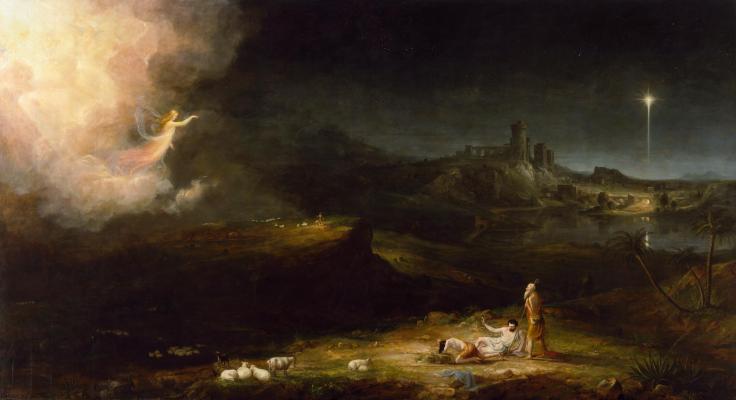
Not only does God use the imagery of sheep and shepherds, He uses examples throughout the Bible of actual sheep and shepherds. Abraham, Isaac, Jacob, the sons of Jacob, David, and the prophet Amos– all were shepherds. When the Messiah was born, the first announcement went to shepherds in the fields, keeping night-watch over their flocks!

Jesus used stories of sheep and shepherds in his parables, as well. There is a lot to understand, and I am not qualified to teach anyone about shepherding, but there are several wonderful principles that don’t require a lot of in-depth knowledge:

  • Sheep NEED a shepherd. There are breeds of mountain sheep that live independently, but the Bible stories speak of domesticated sheep…they are “high maintenance” animals– they need food and water, shelter, protection, and a lot of guidance and supervision! We NEED God–He understands our situations, our weaknesses, and our strengths, far better than we do. He knows the future; He has a plan, and He provides all that we need. We may not see the road ahead–we may not see the green pasture or the still waters where He wants to lead us–but He IS the WAY, the truth, and the life (John 14:6), and we can trust Him to get us there.
Photo by Chama on Pexels.com
  • Sheep need to be sheared. Left unsheared, the sheep’s wool will become matted, filthy, and a potential source of danger and disease. The sheep cannot get rid of its wool on its own. However, once the old wool is sheared off, the sheep is clean, and new wool can grow. Not only does God provide for our immediate needs, He provides for our renewal and growth–physical, emotional, and spiritual growth. Sometimes, that means we need to be “sheared” of habits, people, or situations that have become “matted”, and filthy. We haven’t even noticed the change, and we don’t see the danger. God wants to free us from the “baggage” we accumulate, and help us experience new growth.
  • Sheep depend on others to stay safe, healthy, and fed–there may be “lone wolves”, but there are no “lone sheep”. God will bring us into “flocks”. We learn to eat together, travel together, rest together, live together, and follow our shepherd’s voice together. Trying to be a “lone sheep” makes for a lot of trouble!
Photo by Ekrulila on Pexels.com
  • Shepherds make great sacrifices to care for their sheep– they provide, protect, rescue, heal, guide, and clean their sheep. A good shepherd is watchful, faithful, caring, and gentle, even as s/he must be strong, brave, and fiercely protective, risking their lives (or even giving their lives) for their flocks. Jesus, our Good Shepherd, knows each one of us intimately– He knows how to heal and guide us. He wants us to recognize His voice above all others, and to stay close to Him. He died to redeem you and me!
Photo by Magda Ehlers on Pexels.com

May we trust our Good Shepherd today, and every day. May we spend time acknowledging Him as our loving and faithful Shepherd, and call out to Him– in praise, in adoration, in supplication, and in loving gratitude.

The “God of Jacob”– not “Jacob’s God”

For a blog about prayer, I’ve been spending a lot of time doing Bible study on the character of Jacob. But I think there is a huge connection. The stories in the Bible are powerful and important, not because of the human characters, but because, in them, we see how God interacts with a variety of His created people. And that can help us as we come to God in prayer.

Photo by Thorn Yang on Pexels.com

When we begin to understand that the “heroes” of the Bible are often ordinary people who encounter Almighty God, we see that little has changed in the course of history. God still chooses to bless and challenge ordinary people– for their own good, and as a witness to others.

Photo by Julian Jagtenberg on Pexels.com

In today’s world, we often reverse the importance of the characters in our own stories. Christians talk about “my God” or “our God”, as though God belongs to us or serves us. But the Bible doesn’t speak in those terms. God is not “Jacob’s God” or “Solomon’s God” or “Queen Esther’s God,” or even “Israel’s God.” Instead, He is the God of Abraham, Isaac, and Jacob– the God of Israel. He is pre-eminent. God exists, rules, creates, and acts on His own terms, not ours. And He exists, rules, and acts universally. No person, group, or nation can claim that God blesses them because of who they are or what they have done. Thus, there is no African God or Caucasian God or Chen Family God, or Jean’s God, or Muscovite God, etc. There is only One God– but He wants to be the intimate and personal God of every person on the African continent, and in Moscow, and everyone named Shirley, Clarence, Chen, Smith, Martinez, or Klein. He invites each of us into a personal relationship, but He remains Holy and Unchanging and Sovereign.

Photo by Nicholas Githiri on Pexels.com

The very same God who wrestled with Jacob wants to be your best friend. He also wants to be your King and Lord of your life. When we pray to “the God of Jacob”– we are not praying to “Jacob’s God”. We are praying to the very passionate lover of our soul. He just happens to be the same God who loved Jacob enough to take him through a series of adventures many centuries ago; the same God who promised never to leave him; the same God who blessed him and preserved him and made him the father of a great nation. Just think of what He’s waiting to do for and through you!

Jacob’s (Third) Dysfunctional Family

The Bible is not a series of stories about super heroes, though it is often taught that way in Sunday School. Instead, it is the story of ordinary, flawed and hurting people who encounter a Holy and Majestic God. Jacob is one such person, and nearly half of the book of Genesis revolves around Jacob’s families– his parents and brother, his father-in-law’s household, and his own wives and children, extending to his grandchildren and even great-grandchildren.

Jacob grew into a man of great integrity and wisdom–a man of power and influence, wealth and consequence. But he was far from perfect, and his family caused him no end of headaches and heartaches. From the bickering and rivalry of his wives and their servants, to the violent clashes of his many sons, Jacob knew very little peace.

Photo by Pixabay on Pexels.com

It is important to note that, while the “God of Jacob” protected him, blessed him, and gave him a new name, He did not make life smooth and comfortable for him. We are not given great insight into Jacob’s parenting style, but we know that he had a favorite son, Joseph, and that his favoritism caused resentment among the others . Unlike his own father, though, Jacob interacted with all his sons, giving them each responsibilities and training them to work together. On his deathbed, he had blessings for each son that tied in to his strengths and weaknesses. We know that Jacob was highly respected by his sons, and that in the end, they did not disperse and lose contact with each other, but lived together in the land of Goshen in Egypt– even after the time of the famine that drove them there.

Even in a family of blessing, there will always be some level of dysfunction, struggle, hardship, and pain. Favoritism, discord, envy, resentment, unforgiveness– it all starts in families among flawed people living in a fallen world.

Photo by Craig Adderley on Pexels.com

So often, we try to present ourselves and our families “in our Sunday best”– we want people to be impressed by our show of piety or “good manners” or “problem-free” family life. We pretend that we never argue, never harbor bitterness, never have tantrums or meltdowns or sarcastic “episodes”. God is not looking for picture perfect families…He is looking for families who are honestly and earnestly seeking Him.

Surely, after his encounter with God, Jacob changed. He was a better man than before. But he was never the “perfect dad”, the “perfect husband”, or the “perfect man.” And his family wasn’t a model of decorum and harmony. But God did not turn his back on this dysfunctional family. He did not disown Jacob or cancel all the blessings He had promised. Instead, he solidified the promise he had made to Jacob’s grandfather and father, creating in Jacob’s sons the twelve tribes that would make up the nation of Israel. Just as Jacob’s family wasn’t perfect, the nation of Israel was never perfect– it still isn’t. But God has chosen to pour out His grace on imperfect people throughout history– it’s His specialty!

If you are experiencing disharmony or even angry clashes with family members– take heart and hope from reading about Jacob’s trials and triumphs. Remember to take your pain, resentment, hurt and worry to “the God of Jacob.” God was with Jacob through all his many struggles, including the heartaches of “losing” his favorite son, losing his beloved wives, suffering during the famine in Canaan, having to move to Egypt in his old age, and watching his sons struggle with their own families and trials. Out of each struggle, God brought renewal, hope, rescue, and promise. And remember, God will not abandon you (or your children) because your family experiences disharmony or you have wayward family members. Others may pass judgment on appearances, but God sees the heart– He’s in the business of fixing that which is dysfunctional– not promoting those who hide behind a “perfect” facade.

Photo by Trinity Kubassek on Pexels.com

Jacob’s family was not perfect– but they were perfectly poised to show God’s power, protection, and grace!

Jacob Meets– His Maker

It is fascinating to study the life of Jacob. His story is rich with contradiction and confrontation. But it is also a magnificent story of God’s grace, protection, and redemption.

We’ve spent a lot of time discussing Jacob’s relationship with Laban, his uncle/father-in-law, and a man who made Jacob’s lies and duplicity look like child’s play. (See https://pursuingprayer.blog/2019/07/01/jacob-meets-his-match-part-one/ and https://pursuingprayer.blog/2019/07/03/jacob-meets-his-match-part-two/ ). While Jacob learned a lot from this stormy relationship, God was not finished putting Jacob to the test. As Jacob moved his family away from Laban, bringing them to their new home in Canaan, he encountered his estranged brother, Esau. (See https://pursuingprayer.blog/2019/06/28/jacob-the-brother-of-esau/). But, just before the encounter, Jacob encountered someone else. https://www.biblegateway.com/passage/?search=Genesis+32%3A22-32&version=ESV He wrestled all night with “a man”, and he refused to let go until he received a blessing. “The man” touched his hip joint, so it was wrenched out of its socket, and gave him a new name, Israel. When Jacob asked the man’s name, he returned with a strange question: “Why do you ask my name?” He never answered Jacob’s question, but he didn’t need to. Jacob acknowledges that he wrestled with God– he met him, spoke to him, and grappled with him face-to-face– and his life was not only spared, but blessed!

I love this story of Jacob, and it gives me a great deal of hope for many reasons:

  • Jacob got a new name. This is significant throughout the entire Bible. Whenever someone gets a new name, it indicates that he/she has a new nature, a new future, a new relationship with God. Jacob was named for all the worst of his character attributes– he literally came out of the womb grabbing his brother’s heel, and his name means “heel-grabber” and “cheat”. But his new name, Israel, turns all of that on its head–Jacob “grabbed” hold of God and would not let go! He “struggled” with God, and God promised to be with him in all his struggles; to protect him, to bless him, to be on his side. When we come to Christ in faith, we may not get a new name, but we get a new nature, and a new relationship with God. Christ promises to be our advocate– he will struggle with us, uphold us, strengthen us, and bless us–all we need to do is grab hold of the grace that is offered!
  • God met with Jacob where he was– literally and figuratively. Sometimes, we meet someone who “struggles”– with every thing and everyone. Jacob had contentious relationships with nearly everyone in his life. He was accused, abused, cheated, hated, passed over, fought over, lied to, and aggravated. God didn’t come to him in glory and splendor– he came and wrestled with Jacob–down and dirty, gritty and unannounced. And when Jacob hung on and kept fighting, God let him. He even “cheated” by putting his hip socket out of joint to end the match. God could have showed up and overwhelmed Jacob with his glorious presence. He could have visited him as he did Abraham–stopping by for a meal and a visit. He could even have appeared in another dream. But he knew Jacob from the inside-out– he knew Jacob’s character and temperament; he knew Jacob’s fears and deepest needs. He grappled with a grappler, twisting and turning in sweaty combat. And when it was over, Jacob KNEW his God. He knew that God would not let go– would not send him away, would not let him sneak away in the middle of the night, would not destroy him. Instead, this God would hold him, struggle WITH him, and bless him afterward. I think we often forget that God is not just Holy and Awesome; he is not just a God who loves in a vague and universal way. God is very personal and intimate. He will engage with our doubts, our fears, our high-spirited, strong-willed natures, and he will embrace us with all the fierceness of death–even death on a cross.
  • God’s timing doesn’t always make sense, but it is always perfect. Jacob was leaving horrible situation, on the eve of a difficult confrontation with his brother, and, ultimately, on a difficult journey to reconciliation with his father. God didn’t need to give Jacob a pep talk, or a list of do’s and don’t’s. He gave him a new name and a new blessing to replace the past hurts and inspire Jacob to build a new life. Jacob was able to face his brother and father with renewed confidence that God would see him through.
  • Finally, it is in this story that God literally becomes “the God of Jacob” in a personal and profound sense. God still longs to be the God of __________”– fill in the blank with your own name! If you have been wrestling with God or against God, or just avoiding God, let this be the day that you receive the blessing of God’s grace. It’s yours for the asking. And likely, it will be less painful than Jacob’s encounter!
Photo by Public Domain Pictures on Pexels.com

Jacob Meets His Match–Part two

In the last post, we looked at how Jacob worked for 20 years for his corrupt father-in-law. Jacob has changed from the scheming young man who cheated his brother, lied to his father, and was sent away for his own safety. But that’s not the end of the story…

After 20 years of keeping Laban’s flocks, establishing his family, playing referee to his squabbling wives, and dealing with Laban’s greedy and capricious nature, Jacob is ready to leave. But we have a couple of curious incidents yet to explore in this relationship. In Genesis, chapter 30 https://www.biblegateway.com/passage/?search=Genesis+30%3A25-43&version=NIV we are given a detailed plan by Jacob to develop and increase his flocks. Jacob outlines part of his plan to Laban, and Laban agrees. Jacob’s flocks will be speckled and spotted, while Laban’s will be “pure.” On the surface, it looks like Laban is getting the better end of the bargain, and, as Jacob points out, there will be no way he can “cheat” by claiming Laban’s animals as his. But Jacob’s plan has a couple of twists and turns.

Photo by Quang Nguyen Vinh on Pexels.com

As Jacob follows his plan, he ends up with the strongest and best of the flocks, while Laban’s flocks are weaker. Once again, Jacob uses a clever scheme to advance at the expense of someone close to him. At the beginning of chapter 31, we see the result– Laban and his sons are angry and resentful– they feel they have been cheated, and plan to retaliate. Jacob leaves in the middle of the night with his wives, children, and livestock, planning to return to his father in Canaan. Jacob explains to his wives that his “plan” was inspired by a dream in which God told him what to do to increase his flocks and then told him to return home. https://www.biblegateway.com/passage/?search=Genesis+31%3A4-13&version=NIV

But is Jacob telling the truth? Has he really changed, or is this just another case of Jacob using his wits to get what he wants?

The Bible doesn’t give us direct confirmation, but indirectly, the story seems to back up Jacob’s statements. Though the Bible says that Jacob “deceived” his father-in-law by sneaking away in the night, and not telling him that he was going, it never says that he deceived Laban by separating the flock as he did, or by preparing to return to Canaan. Furthermore, when Laban pursues Jacob, God warns him in a dream to say nothing to Jacob (advice he quotes, but doesn’t actually take)! Laban also confessed (back in chapter 30) that, via divination, he has learned that he was blessed on account of Jacob.

Why am I taking time to dissect this relationship between Jacob and Laban a second time? What else can we learn from this story?

I think there is a great lesson about deception, and how it often backfires. But just as powerful, I think there is a lesson about how God looks beyond our actions to see our heart.

Photo by Pixabay on Pexels.com

Laban was not only Jacob’s father-in-law– he was also Jacob’s uncle. They shared similar character traits– both were ambitious, clever, and driven to take advantage of any “edge” that might be to their advantage. God did not “choose” Jacob because of any of this– but neither did he condemn him for any of it. Instead, God appeared to Jacob, and Jacob responded in awe, worship, and obedience. God didn’t change Jacob’s nature; his drive to succeed, his innovation, his ambition. But he did change Jacob’s heart–Jacob didn’t leave his uncle in ruins, in spite of the treatment he and his family (Laban’s own daughters and grandchildren!) had received. Jacob used his cleverness to build a strong flock, but he also used it to prove to his uncle that he was not the liar or thief he had been labeled back in Canaan. Jacob listened to God in formulating his plans– both his clever plan to build the flock, and the plan to return home.

Laban, on the other hand, had seen the hand of God at work blessing him on account of Jacob. Years before, he had seen the hand of God leading his sister, Rebekah to be Isaac’s wife. He had seen how God had blessed his daughters. He even saw that his ill-treatment of Jacob, Leah, and Rachel led to a loss of God’s blessing. But at no time is there any evidence that Laban ever acknowledged God, worshiped Him, thanked Him, or obeyed Him. https://www.biblegateway.com/passage/?search=Genesis+31%3A14-55&version=NIV

Photo by Pixabay on Pexels.com

In their final encounter, Laban accuses Jacob of theft and duplicity– Jacob confesses that he fears Laban, but then, he gives him a blistering rebuke. Laban’s response is a feeble argument that all Jacob has belongs (or should belong) to him– Laban! “All you see is MINE” (emphasis added). He also claims (even after God tells him to say nothing to Jacob) that he has the power to hurt Jacob. Laban is a controlling user– a bully and a manipulator. Laban is a powerful man who is ruthless in using that power to get what he wants. But all that power is not enough to challenge God– the same God who blessed Laban because of Jacob; the same God who warned him not to act against Jacob. The real power does not belong to Laban or to Jacob. Jacob has been learning this lesson–Laban never will. The most he learns is that Jacob will no longer be under his control and submit to his corrupt authority.

Perhaps you have been in a relationship with someone who is controlling and manipulative. Perhaps they have convinced you that they have all the power to keep you enslaved to their manipulation. There are two essential truths you need to remember:

  • God sees you. He sees the injustices done to you– and your response to them. He sees your heart– even when it is breaking under the weight of oppression. He asks that you trust HIS power and HIS timing as you are going through this deep valley. Abusers thrive on clever lies– that you can’t make it without them; that no one else will help you, love you, believe you…; that their actions are in your best interest…even going so far as saying that they are making sacrifices for you and that you “owe” them. Don’t let their lies overwhelm God’s truth–
  • God desires you to submit to HIM. Even when the road is tough and we don’t understand circumstances, God is making a way for you, just as He did for Jacob. God allowed Jacob to grow his flocks in spite of Laban’s crooked ways– He allowed Jacob to be both the agent of Laban’s success and the instrument of Laban’s downfall. Submission to God does NOT mean abject submission to an abuser or a manipulator. If God has shown you a way of escape (even running away without warning) or shown you a way to flourish under harsh circumstances– listen and obey!

And keep praying to the “God of Jacob!”

Blog at WordPress.com.

Up ↑