The “Fake” Good News

I keep hearing about, and seeing reports of “Fake” News.  Even the term “Fake” News is somewhat misleading–is it news?  Is it False News?  Is it “fake” because it never happened, or because it has been exaggerated or taken out of context?  Or because it doesn’t say what I want it to say?  How do I know what is “real” news anymore?

The biggest problem with “Fake” news is that it “feels” real, true, and important.  In reality, it may be none of those things.  Yet there if often a kernel of fact, or a dusting of truth that makes it hard to disprove or dispel.  And, if it had already been accepted as legitimate news by thousands, it’s even harder to stop it from being spread.

But the more insidious problem with “fake” news is the time wasted trying to sort truth from fiction, and plain fact from exaggeration and distortion.  If my friend sends me an article, or a video, or a photo, I may accept it as true on the strength of my friendship.  But what if they’re just passing it on from another source?  What if I see it from a recognized news source?  Do I dare question it?  And if so, where do I turn to verify it?  There are several fact-checking websites, but even they have biases that cause them to weigh facts differently in various situations.  Whatever assumptions we used to hold about “neutral” reporting have been proved wrong.  We are being conditioned to trust none of what we hear and less than half of what we see!

pexels-photo-256868.jpeg

What about the “Good” News that Christians carry into the world?  Is it like the “Fake” news we see on TV or read about on our tablets?  And if someone challenges our faith in God’s word, how can we prove that the Gospel is not “Fake”, and that our Faith is not just more hype with smoke and mirrors?  If we are pursuing prayer, shouldn’t we be confident that our prayers are not in vain and that our faith is sound?

The claim of “Fake” news makes an assumption that there is such a thing as “True” news.  Similarly, saying the Gospel is “Fake” assumes that there is an alternate truth.  But the real burden of proof is on those who want to push for the alternative.  The truths of the Bible have been time-tested, and shown to be real.  The challenges I hear most often are to the exceptions, not the rule.  I don’t hear anyone saying that “Thou shalt not steal” is a “fake” morality.  Instead, I hear that, “Christianity is fake because I know Christians who cheat and steal.”  I don’t hear people claim that “it is not morally wrong to kill.”  Instead I hear them justify exceptions.  “I’m not promoting abortion as a good thing.  I don’t think it’s right to kill another human being, but this is just a fetus, and anyway, I’m just protecting a woman’s right to her own body.”  “I don’t think it’s ethical to force someone to stay alive if they are in pain and they want to die.”  “You can’t go around just killing anybody, but I think it would be better for everyone else if ___________________ (insert the name of a group– Down’s Syndrome children, Jews, Sunnis, Hutu/Tutsi) didn’t exist.”  “I don’t believe the morals found in the Bible are wrong.  I just don’t think you need to believe the rest of it to “be moral.”

People point to single passages, single verses, even single words to “prove” that the Bible is racist, sexist,  intolerant, and promotes violence.  The Bible includes many examples of people NOT following God’s laws, and yes, the results are grisly.  And there are difficult passages when God calls for a wicked city to be destroyed completely.  Critics are not wrong to point out that the Bible is not about perfect people behaving perfectly.  And the same Loving God who frees the slaves from Egypt is the God who destroys Jericho, and Sodom and Gomorrah.  Taken out of context, these few examples may seem to cast doubt on the authority of God’s word.  Yet the same critics who pound away at the same few examples in the Bible discount hundreds of instances of  historical events that highlight human sacrifice, genocide, mass infanticide, slavery, torture, and all sorts of other evil that occurred without the Bible’s influence.  Moreover, I hear a lot about claims against “Christians” who fought in the Crusades or owned slaves–I hear a lot less about Christians who worked to end slavery and the slave trade, or Christians who founded universities, charitable institutions, or brought revivals that sparked decades of social progress throughout countries and continents.

pexels-photo-305530.jpeg mlkjr

I don’t hear many people claim that there was no such person as Abraham, or King David, or Solomon, or Nebuchadnezzar, or Pontius Pilate or Caesar Augustus.  But they want to deny the historical reality of Adam and Eve, Jesus of Nazareth, and the Apostle Paul, who are found in the same Bible.  Why?  Because if Adam and Eve are real, there must be a creation and a creator.  If Jesus really lived and said the things that are attributed to him, we must deal with the claim that he was Messiah.  If the Apostle Paul really lived and wrote his letters to the churches of Asia Minor, we must deal with his claim that he encountered the risen Christ and his life was dramatically and eternally changed.

However, there is a “Fake” gospel– Good news that doesn’t match the Biblical account–a “Fake” Christ that only said or did or “would do” what we want him to say or do; a Christ that isn’t holy or righteous, but just loves us because it’s the “zen” thing to do; a Christ who is without power to save or to sanctify; a Christ who is without mercy and loves only those who look the part or say the right things.  How do you spot a “Fake” Christ and a “Fake” Gospel?  Get to know the real ones of the Bible.  You’ll soon be able to spot an “imposter.”

“Fake” News will always fail the test of time and the challenges of real evidence.  Good News will transcend the test of time and the challenges of faulty evidence.

person-clinic-cross-religion-54333.jpeg

Christ Has Died, Christ Is Risen, Christ Will Come Again!  THAT’s the Good News!


“To Love Thee More Dearly…”

How can I love Jesus more than I already do?  If I can love him more, does that mean that I don’t love Him enough?  That I don’t really love Him as much as I think I do?  That I love Him the wrong way?  How can I “love thee more dearly…day by day”

I want to explore the second prayer in the folk rock song “Day by Day” from the musical “Godspell” (see my last post).  When I write about pursuing prayer, this is a major focus of the pursuit– to develop my love for Jesus.  But there’s more to it than just spending more time, or even “better” time in prayer.

silhouettes of couple kissing against sunset

I love my husband, and that love grows over the years– not because we are in an eternal “honeymoon” period, where life is rosy and all I know about him is the wonderful image I’ve built up–but because in living with him, working with him, even struggling with him, I learn to value who he really is.  I learn about qualities I never knew he had.  I learn to trust him and respect his judgment; I learn about the deepest part of his heart that he only shares with those closest to him.  And even though I learn about his faults, I see him desiring to be the best that he can be.  In his turn, my husband does the same with me– learning my strengths and weaknesses.  Together we learn how to work together to strengthen and support each other.  We even learn how to argue better!

But we all know marriages (and no marriage is immune) where doubt, distrust, disdain, and despair creep in.  The very qualities that attracted us in the beginning become sore spots that tear us apart.  The joy is swallowed up in little hurts that go unresolved; little misunderstandings that grow into lengthy silences and slammed doors.  Struggles that should bring us together cause us to run to separate corners.  Our feelings change, our hopes are dashed, and our relationship crumbles

woman and man sitting on brown wooden bench

Relationships require trust–if I say that I love God, but I don’t trust Him, I’m not being honest with myself.  If I pray to Him, but I don’t really think He’s listening; if I read His word but make excuses for my continued disobedience–I don’t really love Him.  I may idolize Him, even worship Him.  But I don’t really love Him.

adults couple couple walking grass

Unlike a marriage partner, family member, or close friend, God’s love for us never changes.  We never have to pray that Jesus should love US more dearly.  It’s impossible.  The same love that spoke the universe into being and designed you to be the awesome and unique person you are, is the same love that stretched out his arms so they could be nailed to the cross– the same love that calls out to you no matter what you’ve done or who you are and offers you peace, joy, and rest.  Loving Jesus isn’t a matter of measuring how I feel about Him from day to day, but spending each day learning to know Him better for who He is and not just what He has done or what He can do for me.  The prayer should be for me to really learn better how to honor Him, how to trust Him, how to obey Him, praise Him, listen to Him, and walk close to him.

More about this last one next time…

Epiphany!

I’m late writing this post today. The new year is unfolding faster than I had planned, and I come to this day unprepared.

But that’s kind of the idea behind Epiphany. We focus so much on preparation during the Advent and Christmas season that the season which follows can be lost in the shuffle of “getting back to normal.” Even at the historical birth of Christ, there was a real focus on everyone “getting back to normal” after the hustle and bustle of the census and the travel-weariness it generated. Very few people were focused on “Christmas” because Jesus was still considered one small child in a land of thousands of others. There were no Christmas traditions, no trees to un-decorate, no gift wrapping to put away for next year, no leftover cookies to finish eating. And then, twelve days after the glorious events of Christmas Eve and Christmas Day we celebrate Epiphany.

Also known as Kings’ Day, or Twelfth Night, this is the date we celebrate the arrival of the Magi (Kings or Wise Men) who traveled to Bethlehem to see the newborn King of the Jews. They did not arrive at the same time as the shepherds, and the account in Matthew has them visiting Mary, Joseph, and the Baby in a house. We must assume that Joseph found better accommodations for his family as the rush of census-taking waned, and yet he wanted somewhere safe to stay while the baby was still so small. The Magi came unannounced, unexpected, and “late” in the story.

The word “Epiphany” means a revelation or manifestation of something supernatural. The shepherds had gone through an epiphany when the angels appeared to them in the fields and told them to go to the manger on Christmas Eve. But the Magi, who had been following the star for months, finally had their Epiphany upon seeing the young child several days or even weeks after His birth. We don’t know that it was actually on the twelfth day after Jesus’ birth, but at some point, the Magi arrived at their destination and saw God in the Flesh! And their lives would never “get back to normal!” And their visit was a revelation to Mary and Joseph as well. The Kings brought expensive gifts of Gold, Frankincense, and Myrrh. They also brought the revelation they had received about the threat of Herod and the need to leave Bethlehem. If Mary and Joseph thought the worst was over, they were shocked into action by the warning of the Magi.

And yet, we celebrate this moment in time, this further revelation that a tiny baby was going to change everything. This knowledge that the Wise Men of Old held, and we can hold today– an encounter with Jesus is a revelation of the supernatural–this baby is GOD in the FLESH, GOD with US, GOD living AMONG us, GOD dying FOR us, GOD who will RETURN to REIGN over us. Nothing will ever be “normal” after such an encounter!

And I hope that can be said for all who read this– that we have encountered the Messiah; the Holy Son of God and Son of Man–and we have been forever changed! There is no end to the season of wonder and delight; there is no need for bright lights and tinsel-topped greenery, and no need to put away the joyful trappings of what His arrival really means.

Epiphany should “sneak up” on us– any day, anywhere–it should amaze us and surprise us with Holy wonder as we encounter the reality of “Emmanuel–God with Us!” And it should cause us to respond with prayers. Not only joyful prayers and prayers of thanksgiving, but prayers in our weariness, prayers in our anticipation of days to come and trials to face. Just like the Wise Men, we may have a long and even difficult journey in 2025. But at the end of it we will encounter God– not as a sweet baby in the manger but as our Lord, as well as our constant companion, our champion, and our heart’s desire!

“Fruit-ful” Prayers

Our church has been presenting a series of sermons on being a BLESSing to our neighbors. BLESS is an acronym for Begin with Prayer; Listen with Care; Eat Together; Serve like Jesus; and Share Stories. We were challenged the first week to choose four close neighbors. We were to pray for them, and if we didn’t know them well, to reach out and make contact. This has been a true challenge for David and I, because we live in an apartment above our shop. Most of our neighbors are not residential, but commercial! Nevertheless, we decided on a couple of commercial “neighbors” and a couple of non-traditional “neighbors.” We started praying– praying for opportunities to get to know our neighbors a little better, and praying for their health, well-being, etc. We’re getting to know some of the workers at the two commercial locations, and getting to know our chosen “families” a little better. We’ve been more intentional about stopping to visit or chat, and making sure we listen and respond sincerely– this is not just a short-term “project” but an opportunity to build closer relationships. And we’ve been praying for opportunities to develop closer friendships.

So this week was the sermon I’ve been dreading– “Eat together.” You might wonder why this is so fearsome–doesn’t everyone like to eat? And I love meeting over a nice meal. I love to cook, as well. The problem? Our apartment is tiny and upstairs– NOT conducive to inviting people over for a warm, comfortable meal shared around a large table. We have two mismatched chairs around a small table in our tiny kitchen, and two more mismatched armchairs in the living room. No couches, no designated dining room, no space to “entertain” guests. I want to serve others. I want to grow friendships. But I’m not a hostess. Not in a cracker-box-sized apartment upstairs. I know this seems petty– I’ve known amazing hostesses who live in shacks and invite guests to sit on a dirt floor. I know. But I still struggle with the idea of entertaining others in my current circumstances.

I knew it was coming– we looked at all the examples in the Bible of good and even sacred things happening around the table and/or involving food– Passover Seders, Communion, the Wedding Feast of the Lamb (among others)… “But Lord,” I prayed, “I can’t invite the entire staff next door to my home for a meal. And some of the “residential” neighbors we are praying for are elderly and can’t manage the stairs to our apartment even if we had the room to host a meal. And it’s too expensive to invite some of the families or staff to a restaurant. How are we going to be able to bless others and “Eat” together?”

But God isn’t bound by conventional ideas– even when it comes to hospitality. At the end of the service, we were surprised by an announcement from our pastor– one of the families in our church owns a fruit farm. Last year, they had a bumper crop of apples, and they donated several bags of the apples to the church. There were enough apples for each family to take several bags to “BLESS” our neighbors! No meal to fix. No apologizing for the smallness and shabbiness of our living space. But a chance to share FOOD with my neighbors and bless them with wonderful apples! Thank you, God!

David and I wasted no time– we delivered most of the apples yesterday afternoon! And we had so many apples, we were able to bless more than just the four locations we had decided on earlier in the series. We were able to bless at least 13 different families/ businesses with at least one full bag of apples! We blessed families with small children, a retired couple; a single person on a fixed income; an extended family of four generations; we blessed people who go to another church; we blessed people who don’t attend church at all. We blessed the staffs at a couple of local businesses, and shared laughter (and concerns) with several friends, old and new.

Not everyone wanted the free apples. One family turned down our offer. Some people are suspicious of free gifts; some are too proud to accept food as a gift; some are simply not interested, or too busy. It is the same with the Good News. Some people do not want what we have to offer in Christ. Some are suspicious; some are too proud or even too ashamed to believe that God has Good News for them. Some are too caught up in their problems or their ambitions. We must not be discouraged, though. God has not given us such a precious gift without also giving us the opportunity share it with others. And we will see how God continues to work in mysterious ways. Some people were surprised and confused by the concept of “apples of blessing.” They wondered what we might ask for in return. We smiled and said there were no strings attached– we just wanted to share our blessing with them! Some people took more apples than we had planned to give them– that’s ok, too. Others wanted to bless us in return– we received over two dozen eggs in gratitude for a couple of bags of apples! Today, I’ll be delivering the last few bags to businesses that were closed yesterday (to share with their staff). I’m excited to share this gift–and I’m reminded of how good it is to share the free gift of the Gospel!

God didn’t change the circumstances of our apartment. I worried that I would be asked to host an elaborate meal, or that I would miss out on blessing others because of our circumstances. But in God’s economy, we can show hospitality, love, generosity, and compassion on the street. We can share food in a way that opens up opportunities to make memories, share stories, communicate prayer requests and concerns, serve others’ needs, and make new friends. There are dozens of ways we can open our hearts and our lives to our neighbors, serve them, and pray for them…

We kept one bag of apples– maybe someone in our neighborhood would like a pan of apple crisp! And now, David and I have a few extra eggs! Anyone interested?

What We Keep…

I’ve been posting a lot lately about going through my Mom’s “stuff.” Mom was a saver– a pack rat– a hoarder, really. She kept boxes and piles of useless things. But she also kept things that have value to those she left behind. My siblings and I have found old photographs, momentos, letters, documents, etc., that bring the past alive again..not just our past, but our family roots going back generations.

My mother with her mom and younger sister c. 1944

What prompts us to keep such memories; to hold tightly to faded papers, worn objects, shadows of days gone by? Sometimes, it is an unhealthy focus on past memories– good and bad– that keep us in the grip of “glory days” or old and festering wounds. But there IS a value to keeping a record of the past.

When I was young, we had dozens of books around the house, including Bible Story books. The stories of Abraham and Sarah, Isaac, Moses, Samson and Samuel, King David, Queen Esther, Elijah, and then Jesus, his disciples, the Apostle Paul…they were mesmerizing– and very instructive! God didn’t just give us Ten Commandments and a list of rules to follow. He left us with a rich tapestry of stories of real people, and their very real adventures. He has given us Parables, and Psalms, Prophets and Promises– the Bible is a living book that speaks to each new generation with timeless truths. I learned about the Faithfulness of God, His Holiness, and His Mercy in those pages.

The stories and photos that get passed down in families can also be instructive. I now have a baby picture of the grandfather I never got to meet, as well as a photo of him as a young man, and another candid shot of him wearing a milk bucket on his head (He was a dairy farmer)! I can see and sense his humor and love of family in new ways, and appreciate the way his life and early death helped shaped my own dad’s life. I have letters my great-grandparents wrote to each other when they were first married and starting their family. I have some of Mom’s letters when she was struggling as a single mother on a limited income. Many of these items I will keep–not only as a reminder of the past that shaped me, but to pass on to future generations. Other photos, letters, and objects have been given to certain other family members– it is part of the legacy THEY will pass on. Still other items I will let go– they have served their purpose and other items will take their place.

The little country church I attended as a child.

It has been tempting, with the amount of “stuff” that my Mom kept, to just throw everything out. Much of it has to be cleaned off, sorted, identified– and room must be found to keep it! So I also have to look around at what I have been hanging on to, and ask, “Why?” What lessons to I want to pass on? What objects tell an instructive story about my life? What impact will I have on others in the years to come?

One of the most difficult things to go through are the photos and letters my Mother kept. She kept nearly every letter and greeting card she ever received. They meant that much to her. Not the actual cards and paper– the thoughts, the love and connection–the people they represent were her greatest treasures on this earth. And I can’t keep them all. I don’t have space, and many of the people are strangers to me– her elementary classmates, co-workers from years gone by, great-aunts–people long since dead and, with my mom’s passing, forgotten by most. But I will keep some, because they are a testament to Mom’s love of others– her deep and abiding love for everyone who touched her life, and allowed her to touch theirs. I have thrown out, recycled, or given away many of Mom’s clothes and books, and I’m working to give away the thousands of unused greeting cards she had stockpiled but never sent. But most of all, I will keep the stories– stories of God’s faithfulness in her life; stories of how He worked in and through her life to touch hundreds of others; stories of how God’s Love blooms in the simple acts of kindness and baby steps of Faith; in the ordinary joys and tears and minor miracles of daily life.

And I will hold tightly to the stories of my childhood– of Moses and the Burning Bush; of Jesus the Good Shepherd; of David trusting God to face Goliath; of the women finding an empty tomb on the first Easter Morning. One of the pictures I inherited is a print of Jesus on the Road to Emmaus. Two men are walking along, talking to a third man. Such a simple act. Such an ordinary occurrence. But this is no ordinary walk– the man in the middle is the Risen Christ–the One who conquered death to bring eternal life to the two unsuspecting travelers. The print hangs on my wall now. The print itself is not of much material value– but the story! That is worth my life– to keep, to share, to cherish, to proclaim to those yet to come!
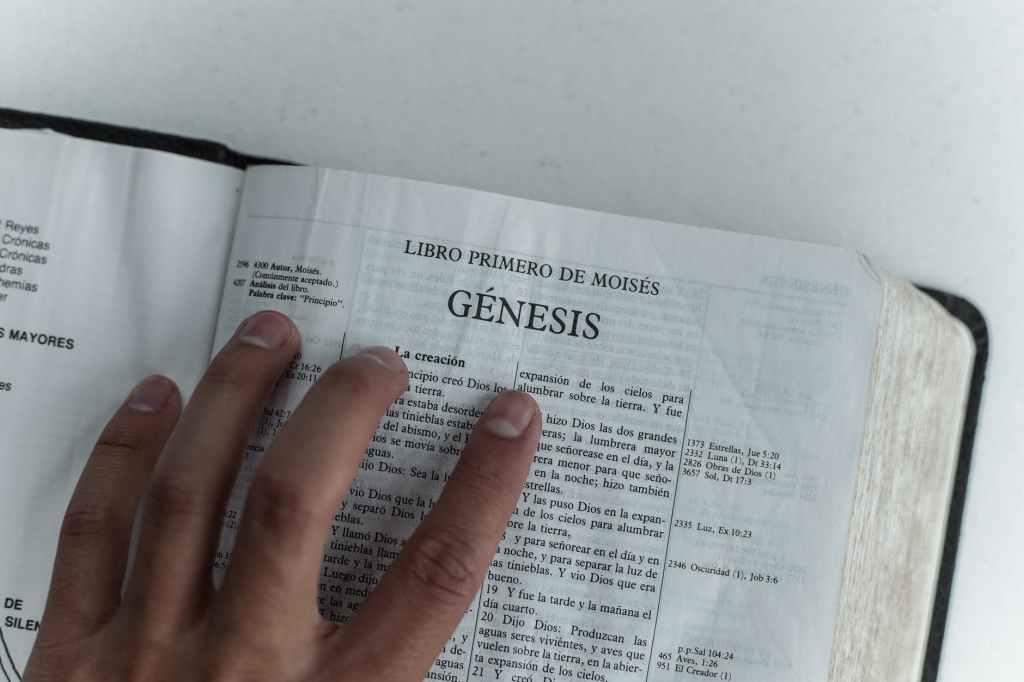
Where Do Prayers Go?

Do you ever pray “directional” prayers? Some people pray TO something or TOWARD something. It may be positioning yourself to pray toward the east or toward the rising sun, or even toward a particular holy place. Some people pray to the moon or stars or a statue or image of a person. Some people pray rather aimlessly into the sky or the ceiling or the floor.

Does it matter? What does the Bible say?

In Exodus, when God gave Moses the Ten Commandments, He said, “Thou shalt not make unto thee any graven image.” In other words, no carved images of any animal or person that takes the place of God. For some people, this extends to icons and statues of Jesus; for others, it means only idols from other religious traditions.

However, later in Israel’s history, when King Solomon dedicated the first Temple, he prayed that when people prayed toward the Temple in Jerusalem, that God would hear from heaven and intervene. For many, this edict still holds true– they focus many, if not all their prayers toward the city of Jerusalem. Others specifically pray to the “Wailing Wall”– the last part of the Temple that still stands. Tradition states that the Spirit of God “dwelt” in the Temple– therefore to pray to the Temple was to pray to the God who lived there.

Jesus did not command His followers to pray toward the Temple itself, but rather to pray directly to “Our Father, which art in Heaven.” Throughout the Bible, the image of prayer is linked with the image of smoke or incense– rising toward Heaven. Jesus sometimes is described as looking up toward Heaven as He prayed. But other times He bowed or knelt as He prayed.

So what are we to conclude? Which is the “correct” direction for our prayers?

There is no conclusive answer in the Bible. And I think this is because God is Omnipresent. He is everywhere at once, so that we can pray anywhere, facing any direction, without a fixed focus point. There is only one direction that is “wrong.” And that is when our heart is facing away from (in rebellion to) God. We can pray aimlessly to nothing and no one, or to something that we know is NOT the One True God–to creation itself or to an invisible but remote “Force.” But the Bible IS clear that we are to pray to God alone– Father, Son, and Holy Spirit– and directly and personally to Him. We do not need a personal altar in order to be heard; we do not need to be facing an icon or a building or the rising sun or an imaginary point in the stratosphere. God Himself, through Christ– will accept and respond to our prayers. God will hear us from anywhere, in any position or circumstance. Altars and images and icons may represent Christ and His Holiness– they can be helpful tools in reminding us of who we are in relation to Him–but they must never become replacements for His Spiritual Presence.

Our prayers end up– through whatever mysterious and wandering way– finding their true destination, which is the heart of God Himself, when we seek Him sincerely and whole-heartedly. In much the same way, God’s answers to us will find their way through His Holy Spirit, no matter where we are or what direction we are facing.

Photo by cottonbro on Pexels.com

God transcends space and time, and can be found by those who seek Him from the ends of the earth. I am greatly comforted by this truth. My Father is in Heaven– and right beside me, and dwelling within me! He is always listening, and always available.

Of Yeast, Mites, and Mustard Seeds

God is interested in the little things. We praise Him for his glory, majesty, and power–rightly so–but He is also the God of atoms, and quiet moments, and insect wings and snowflakes.

animal antenna biology black background
Photo by Egor Kamelev on Pexels.com

God celebrates with us in our smallest victories–biting our tongue instead of bragging, shaving a minute off our 5K run, not burning the dinner rolls, remembering to put gas in the car for my spouse.  He also sees our smallest sins–when no one else is looking; when no one else knows our motives or inner struggle– God sees every detail, every motive. God hears our prayers– not just our big urgent prayers, but our whispered secret prayers; our quick cries for help; our relieved sighs of gratitude; our shameful confessions.

photo of woman looking at the mirror
Photo by bruce mars on Pexels.com

God often uses yeast as a metaphor for sin–just a tiny bit can ruin everything.  One tiny act– a fib, passing along a rumor, snubbing a neighbor at the store, watching “soft” porn on TV, hanging out with the “fun” crowd and taking dangerous risks, gambling “for fun” with money you promise to pay back later, drinking a little too much just a little too often, spending more time with that co-worker who “understands” your marital woes better than anyone…Most of us don’t set out to become addicts, thieves, adulterers, bullies, sexual predators, rage-aholics, embezzlers, or compulsive liars.  But Jesus warns us that big sins start small: “murder” really starts with disdain and anger and hate (Matthew 5:21-22);  adultery begins with lust; and the love of money (greed) is the root of all kinds of evil (1 Timothy 6:10).  Selfishness, pride, envy, rebellion– they lurk in little lies and delayed obedience and easy justification we allow in our daily lives.

But God is not only watching us under a microscope, waiting to catch us in some small act of sin.  In fact, that is not His primary desire in watching us.  God is searching  eagerly for signs of obedience, faith, goodness, love, and kindness.

circle clean clear drop
Photo by Pixabay on Pexels.com

Jesus used parables about small things– a lost coin, a mustard seed, a pearl, a speck of dust, the eye of a needle, a narrow door/gate, a lily of the field– to illustrate joy, faith, self-control, obedience, trust, and even the kingdom of God.  Small things are important, sometimes even glorious, in God’s eyes.  Even some of Jesus’ miracles started with small, humble, simple things– water, five loaves and two fish, a few quiet words, a few tears.

Photo by Andrea Piacquadio on Pexels.com

Today, I want to pray that I will see God moving– not just in grand gestures and eloquent sermons (though I love to see Him move in those ways, too!)–but in the small moments.  I pray that I will be sensitive, not to the world’s crushing words of hatred and deception, but to the still small voice of encouragement; to the hopeful smile of a stranger; to the rushing wind that lifts dust mites to glory in the sun; to the unshed tears of a widowed friend.  I want to plant the mustard seed of faith and watch how God will grow it.  I want to be that cheerful giver of my last coins in gratitude for the riches of Grace that cost me nothing but cost my Savior everything.

Name Above All Names

We live in a wonderfully diverse world, filled with unique individuals. One thing that defines us to our families, neighbors, and friends, is our name. Names can be tricky–some are difficult to pronounce, or spell. Some names are shortened or changed to form “nicknames.” Others are changed by circumstances, like adoption or marriage. Some names are common to several people, or shared as “namesakes” of others, or shared between generations, calling for additions, like “Jr.,” or “the elder” or “the fourth.” Some people reject the name they were given at birth, preferring to use an alias, or going through a legal process to change it. Some names have become symbolic, or stereotyped, famous, or infamous, or iconic.

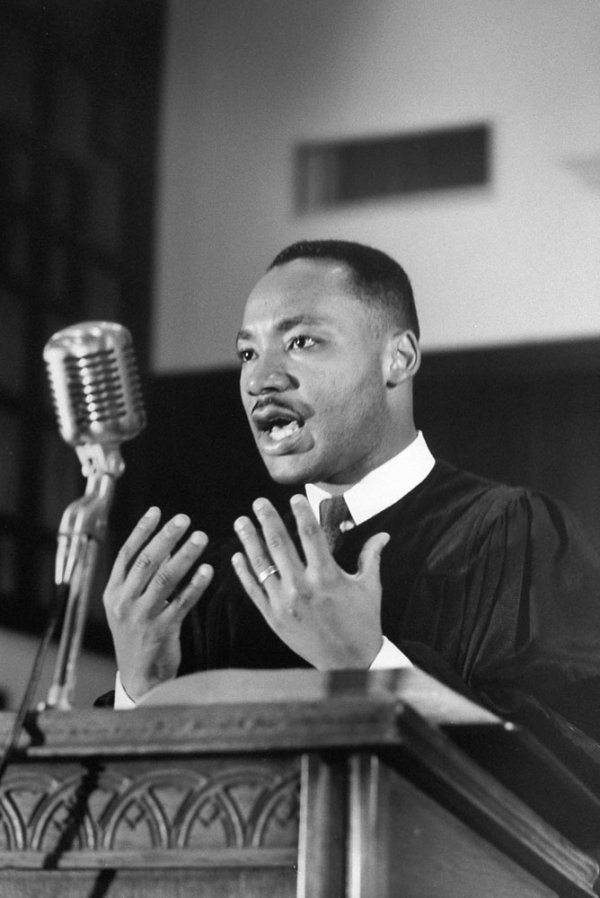
Civil Rights activist Rev. Dr. Martin Luther King Jr. gesturing during sermon at Ebenezer Baptist Church. (Photo by Donald Uhrbrock//Time Life Pictures/Getty Images)

Even though many of us may share a common first name, or surname, (or even both), our name still represents who we are–it becomes a symbolic representation of all that makes us unique– our personality, our history, and our character. And it’s not just people who carry names. We name rivers and mountains, cities, houses, farms, cars, products, pets, works of art…the list goes on. It is deep in the human soul to name things. This is a God-given desire. All the way back in the second chapter of Genesis, God brought all the beasts of the air and land to Adam, to see what name he would give them. Adam and Eve chose the names for their sons– names with very personal meanings. Names are important and carry power; they should never be taken lightly.

Photo by Life of Wu on Pexels.com

God recognizes each one of us by name. The prophets Isaiah and Jeremiah both refer to God calling them before they were even born! Before the great judge Samuel even knew how to recognize God’s voice, God called him by name. God often changes names– Abram to Abraham, Jacob to Israel, Saul of Tarsus to Paul, the disciple Simon to Peter (or Cephas). One reason God changes names is to show His power to transform people and give them, not just a new name, but a renewed nature and spirit.

Photo by 3Motional Studio on Pexels.com

And when we talk to God, whose very name is sacred, He allows us to call on Him through the Name He gave to Himself/His Son– Jesus. There are many boys and men who carry this name, but when we pray in the name of Jesus, we are referring to the one and only Begotten Son of God the Father; the Jesus of the Trinity; Jesus the Virgin-born Messiah. HIS name is above all other names. There is power in every ordinary name, but THIS name carries eternal, sovereign, immeasurable power. It encompasses His holiness, His compassion, His wisdom, His goodness, His faithfulness, and His Love. There is no other name by which we are saved; no other name by which we can be made new. It is not a name to be taken lightly or in vain. It is a name to be honored, cherished, and exalted. JESUS. The name above all names!

Photo by Patricia McCarty on Pexels.com

Our Father…

I have known some excellent fathers– including my own father and my husband. Fathers who do their best to provide for, pray for, protect, and prepare their families. Fathers who show patience, perseverance, wisdom, and selflessness.

But I know this isn’t the case for everyone. I have also known some wicked fathers– fathers who are physically, verbally, and mentally abusive toward their wives and children. Fathers who abandon their responsibilities, and leave behind a legacy of need, chaos, anger, and despair.

Photo by Pixabay on Pexels.com

Throughout the Bible, God is portrayed as a Father. Not as a “man”– Jesus took on flesh and became a man– but the Triune God exists as Father, Son, and Spirit. God has all the characteristics of a perfect father. God also embodies all the characteristics of a good mother. But there is something about Fatherhood that God particularly wants us to learn and understand.

Photo by Pixabay on Pexels.com

When God chose Abram for His special covenant, Abram’s name meant “exalted father.” But Abram was childless. God chose someone whose name had no meaning (or an ironic meaning), and changed it– not a lot–he added an “ah”, so that Abraham’s name meant “father of many” or “father of multitudes.” I don’t think it was any accident that God chose a man named “Abram,” or that He changed his name only slightly. God chose Abraham, not because he was a father, but so that he could become a father– to many! It was as a father (to Isaac, but also to Ishmael and all his other sons and descendants) that Abraham was exalted and revered.

Photo by Luis Quintero on Pexels.com

But Abraham was not a perfect father– far from it! God gave us the story of Abraham, and drew attention to Abraham to help us learn the importance of GOD as our Father. Abraham was willing to give up his heir– the son of God’s promise– because Abraham was a “son” of God before he was a father to Isaac. https://www.biblegateway.com/passage/?search=Genesis+22&version=NIV

Even though I have known some excellent fathers, I know of only one who is perfect. And He isn’t someone else’s father, that I should be envious, or discouraged. He isn’t only “my” father, that I should be smug. He isn’t my father by birth, that I should make little of His sacrifices or His promises– they are not given out of duty or a sense of genetic obligation. He is OUR Father– He invites all of us to become His children. He lavishes love and grace, sheds tears and aches, sacrifices and pursues, rejoices and grieves– for and with every soul.

Photo by Josh Willink on Pexels.com

When Jesus taught His disciples to pray, He wasn’t giving them a rote prayer to memorize, but a pattern. https://www.crosswalk.com/faith/prayer/the-lords-prayer-be-encouraged-and-strengthened.html If you look through the Gospels at Jesus’ other prayers you will see it–He always begins by addressing His Father. For the group of disciples, He began with “Our Father.” Jesus, who could have claimed sole son-ship, made it clear that He (as Son with the Father and Spirit) desires this amazing relationship– more than power, more than honor, more than life! And God the Father is not a man or a mere mortal– He is Holy, Perfect, Eternally Loving and Eternally Sovereign!

Photo by Lgh_9 on Pexels.com

What a wonderful thought for Father’s Day this year– no matter what kind of earthly father(s) we have known!

Hot Dogs and Eutychus..

There is a curious story in the Bible about the Apostle Paul and a young man named Eutychus. https://www.gotquestions.org/Eutychus-in-the-Bible.html. The story is found in Acts 20:7-12, and involves a young man listening to the Apostle Paul. As Paul talks on into the night, the young man, sitting in the third story window, falls asleep, falls out of the window, and plummets to his death. Luke, who authored the the gospel which bears his name and the book of Acts, was a doctor, and an eyewitness of this event. He clearly states that Eutychus died from his fall. But Paul runs outside and brings Eutychus back to life, returning inside to finish his talk and eat with the crowd– who are amazed and relieved to have their friend alive and well.

Photo by Mark Neal on Pexels.com

Luke’s story doesn’t say whether or not Eutychus was alone in the third story window, or leaning against a wide window frame or perched precariously before he fell into “a deep sleep.” I have always imagined him perched comfortably leaning against the side of a wide and open window frame, one leg drawn up and the other dangling as he listened to Paul speak. As the night wore on, he may have slouched a bit, or even turned to lean his whole back against the frame, pulling both legs up onto the wide ledge. My mental picture may be completely wrong, but I don’t think of him hugging a narrow space and sitting tense and clinging before sleep claimed him.

Photo by Suliman Sallehi on Pexels.com

A few days ago, I referenced an old hymn knows as “The Solid Rock” or “On Christ the Solid Rock I Stand. ” One of the lines of the hymn states, “I dare not trust the sweetest frame, but wholly lean on Jesus’ Name.” But the flip side of this is that Jesus IS the solid rock and the “frame” on which we can both stand and rest secure.

Photo by Pixabay on Pexels.com

I was reminded today of another old hymn; one that I heard as a child and did not understand at all. Have you ever heard a new song, and completely mis-heard the lyrics? As a young child, I often heard hymns sung that were old to the adults but “new” to me. This was one of them. I paid little attention to the first verse, but the chorus!?! I was sure the congregation was singing, “Wienies (the word my grandparents sometimes used for hot dogs)! Wienies! Wienies on the everlasting arms…” It sounded like a righteous chorus of hot dog vendors at a baseball game. I giggled and snorted, and my grandmother, who was standing next to me, quietly leaned over and asked what I found so funny. When I explained it to her, she too began to giggle a little, and we shared a (quieter) giggle and smiles throughout the rest of the hymn. (Sacrilegious, I know, but it seemed very funny to a five-year-old.) Later, my grandmother lovingly explained the hymn–turning a “silly” song into a wonderful testament of God’s tender, loving care that touches me to this day.

I don’t recommend to anyone that they trust themselves to a window frame, a third story balcony, a too-comfortable seat at the theater, or to hot dogs eaten in bleacher seats at the baseball game. God doesn’t call us to get comfortable! Even if we are listening, and trying to follow Jesus, we may still fall– literally, like Eutychus, or figuratively. We may misunderstand, or get confused or weary and lose our focus. We may put ourselves at risk by leaning on the wrong frame.

Photo by Ece AK on Pexels.com

God could have kept Eutychus from falling from that third story window, but I believe He meant for that story to come down through the ages. It is not just a miracle, and a testament to the power of God and given to the Apostle Paul. It is a great reminder that even when we are trying to listen and follow God, we can still end up trusting in the wrong things and “falling asleep”. But no matter how far we fall, or how broken or “dead” we may seem to be, God sees us, cares for us, and wants to give us new life! We can rest “safe and secure from all alarms” when we remain in (or return to) the reassuring, everlasting arms of our Savior.

Some days, I feel like Eutychus– lying broken and useless three stories below where I began. Other times, I feel like a confused hot dog vendor, calling out to God for “Wienies”, when I really need Wisdom and Grace. But God is faithful to bring me back time after time, wrapping me in his amazing “Everlasting Arms”:

Blog at WordPress.com.

Up ↑