Today is March 16. In my area of the world, we abbreviate it as 3/16/26, or just 3/16. So it reminds me of the most quoted verse in the Bible– John 3:16– “For God so loved the world, that he gave his only Son, that whoever believes in him should not perish but have eternal life.” (ESV) This verse is so famous and so quoted, that many times, people just skip the actual verse and just use the reference. In fact, if you just see a poster or sign of reference that says 3:16, it almost always means this verse.
Recently, I saw a short video of a person complaining about seeing such a reference on their soft-drink cup at the fast food chain In-N-Out Burger. The chain prints “John 3:16” on the inside of the bottom of their cups. They’re known for it. They don’t print out the entire verse, just the reference. It’s not blatant or over-bearing– just a modest note on the bottom of their cups. But this person wanted none of it. They started out by liking the food, but they were offended by this tiny reference to a Bible verse. “Keep your John 3:16,” they sneered. “I don’t want your John 3:16.” Apparently, it left a bad taste in their mouth just to see any reference to the Bible. They felt judged and oppressed, I guess.
But John 3:16 is not about judgment. It’s all about Love! For God SO LOVED the WORLD–take a minute to reflect on that. God, the Holy One, who created the world, only to have mankind reject Him over and over again, didn’t destroy it. He didn’t turn His back on the world. He didn’t leave us as a footnote and move on. Instead, He GAVE His ONLY begotten SON. He didn’t come up with a cheap plan for salvation that was just adequate to cover our worst sins and leave us enslaved to our old guilt and shame. He didn’t send a half-hearted emissary to show us what Heaven and Holiness were like. He sent His SON– the heir of the Universe–to live among us, show us how to love and live and worship. And that Son GAVE all of Himself as a sacrifice– not for a select few, but for WHOSOEVER would trust in Him and submit to His Lordship!
WHOSOEVER believes in Him will not perish, but have ETERNAL LIFE! How does that offend and oppress? The message of John 3:16 sums up the whole Gospel of Christ. It is NOT judgment, but Salvation. It is not oppression, but freedom from Sin and Death!
So today, I am thrilled to celebrate 3:16! It is a message of hope, joy, renewal, abundance, purpose, power, and LOVE!
I heard a phrase, an idiom, recently..one I hadn’t heard in many years: “I’m as good as dead.” It is an odd phrase, but English is filled with similarly odd sayings, like, “good as gold”, “good as finished”, or “a miss is as good as a mile.” “As good as” in each case signifies being close to, or similar too, without being the same; nearly or akin to being. A child who is “good as gold” is one whose behavior is nearly faultless, whose actions and demeanor shine like gold. Someone who is “as good as dead” is someone who is either in very poor health or in dire trouble and expects to die soon. “A miss is as good as a mile” refers to the idea that a miss, whether narrow or wide, is still a miss–an inch or a mile makes no difference. A puzzle of 1000 pieces, minus one, is still incomplete; missing one’s train by a minute or an hour still leaves one at the depot.
In hearing this phrase, “as good as dead,” I was arrested by the juxtaposition of “good” and “dead.” There is nothing good about death or dying, yet we don’t say, “I’m as bad as dead.” We compare being close to anything as being “good as..”
I think there is an important spiritual and psychological reason. Deep in our soul, we have a desire to be “good.” To be whole, and righteous, and complete. And we also know that we are not whole; not really “good” as we now are. We long to be “as good as” our aspirations; as good as…God. We long to be close to God, and to His Goodness. We spend our lives comparing and measuring and striving to be better, and closer to His perfection. And sometimes, we feel comparatively “good.” Other times, our goodness only seems to measure up to failure and death. https://www.theidioms.com/a-miss-is-as-good-as-a-mile/
But we cannot be “as good as dead” any more than we can be “as good as gold” or as good as God. Because “a miss is a good as a mile.” Being almost as good as God (even if such a thing were possible) will never be enough to save us from the wages of sin, which is death. By the same token, being “almost dead” cannot separate us from God’s love, or His gift of everlasting life!
In the Gospels (Matthew, Mark and Luke), there is a short story of a young man who struggles with this concept. https://www.biblegateway.com/passage/?search=Mark+10%3A17-27&version=NASB The young man asks Jesus, “Good teacher, what shall I do to inherit eternal life?” In asking the question, the young man already reveals a certain lack of understanding. An inheritance is not something that can be earned; it is a gift that can only be received by an heir after someone’s death. It can be accepted or rejected or divided between many heirs. There may be stipulations or conditions– and this may be what the young man meant to find out–but inheritance is determined by the giver, not the conditions of the person or persons expecting to receive an inheritance. Secondly, the man assumes that whatever is required, he can accomplish it easily. He expects, in fact, the beginning of the answer Jesus gives him. But Jesus doesn’t begin with the answer. He cuts directly to the heart of the question: “Why do you call me ‘Good?’ No one is good except God alone.” (Mark 10:18) At the heart of this man’s question is the desire to become “Good” like God– to earn eternal life– to be complete and whole through his own actions. This young man doesn’t want to be challenged. He wants to be justified, lauded, and congratulated on his own wisdom and performance. And Jesus starts by giving him the answer he expects. He lists several commandments– five things NOT to do, and one general principle (honor your parents). One can almost hear the sigh of relief from the young man. “I’m ‘as good as’ guaranteed to get into heaven!”
But that’s when Jesus speaks again. He doesn’t offer a lengthy list of impossible feats; no pilgrimages or vows of silence, no special diets (not even a reminder to follow the Jewish dietary restrictions), no pledge to give more money to the Temple, or lead a rebellion against the Romans. Instead, He gives a single challenge– sell what you own and give it to the poor, and you will have treasure in Heaven– followed by an offer to follow Him.
Jesus did not offer this challenge as a kind of “gotcha” to the man’s initial question. In fact, the Gospel of Mark says that Jesus felt a love for him as He responded, and a great sadness when the man walked away. But “a miss is a good as a mile.” The young man wanted to know what he could do to be (or if what he had already done was) “good enough” to achieve eternal life. He had done all the things he expected would be enough. He had compared his life and actions with others around him. But he had missed the heart of the matter– inheritance. Heaven isn’t “achieved;” it is a gift of inheritance. It can only be given, not earned. And as an “inheritance,” it can only be given because someone else has died (Jesus!). When the young man walked away, he was depressed and discouraged– “as good as dead.” Not because there was no way for him to have eternal life, but because he had not “hit” the target; he would not do the one thing Jesus asked of him– he could not trust Jesus enough to “follow” the “good” teacher.
The disciples, too, missed the point at first. Jesus had not given the young ruler a simple task in earthly terms. But it wasn’t the action that was difficult; it was the heart attitude. The young man wanted something– he wanted the respect of the “good” teacher (not a relationship with Him), the acclaim of all those surrounding him, the honor and prestige his wealth had brought him, AND eternal life– because he was “as good as perfect” in his own eyes. He did not want eternal life more than any of these other things, but in addition to all of them, and by his own efforts.
Lord, forgive me for the times that I have wanted to earn eternal life for myself. Help me to seek you with all my heart, so that I may not miss the blessings you have for me by even the narrowest margin. And thank you, thank you(!) that in those times when I do stray and miss the point, I am not “as good as dead”, but you are always gracious and loving in showing me how to “follow you” and live!
In the Parable of the Good Samaritan (see Luke 10:25-37), an expert in the law asks Jesus, “What must I do to be saved?” Jesus, as he so often does, answers with a question of his own. “What is written in the law? How do you read it?” Of course, the expert in the law answers with confidence, and Jesus commends him for his answer. But the law expert isn’t mollified by Jesus’s affirmation. The law is clear, but it is not necessarily specific. “Love the Lord your God with all your heart and with all your soul, and with all your strength, and with all your mind.” That seems pretty clear. But the rest– “Love your neighbor as yourself”– Just who IS my neighbor?
Jesus answers with the famous parable about a man who is beaten and left for dead on the side of a dangerous road. Two religious leaders see him, but each refuses to help. Instead, a Samaritan (despised by the Jews) offers help and compassion, beyond what the law would dictate. Thus, the expert in the law must conclude that a “neighbor” is one who shows mercy and kindness to those whose path he crosses.
In another instance, Jesus talks about enemies:
“You have heard that it was said, ‘Love your neighbor and hate your enemy.’ But I tell you, love your enemies and pray for those who persecute you,that you may be children of your Father in heaven. He causes his sun to rise on the evil and the good and sends rain on the righteous and the unrighteous.” Matthew 5:43-45 (NIV)
So, who is my enemy? If my neighbor is anyone who crosses my path, who is left to hate? Jesus IS more specific here. He commands us to pray for those who persecute us; that God causes the sun and rain (and other good and life-giving things) to happen for both the evil and the good; both the righteous and the unrighteous benefit from His mercy. God loves sinners so much that Jesus came to die for them! Jesus met a lot of needy people. He also met some nasty characters who never sought His forgiveness or His help. Yet He did not march in protest against oppression by Roman soldiers. He did not campaign to have the hypocritical Pharisees removed from their positions of power. He did not advocate stealing from the greedy tax collectors to pay for welfare programs. He allowed Himself to be arrested and even (unfairly) convicted and sentenced to death on a cross. His “enemies” were allowed to win a battle. But Jesus Christ has won the war. And when the war is over, there are no “enemies” left to fight!
There is a lot of talk today about enemies, and how they should be treated. We see enemies among our own neighbors who disagree with us politically, or who practice a different religion (or none at all). We see enemies in those who taunt us, or those who live more lavishly, or those whose position in life causes us to think of them as unfairly privileged, or unworthy of certain benefits. And, in many regions of the world, we see as enemies those who are causing war or inciting violence and damage against another nation. These are battles, indeed, but they are battles that, in God’s eyes, have already been won!
Jesus commands us to pray–even for those we may view as enemies! And we are to show mercy and love toward those who view US as the enemy! Not smug self-righteousness, or cold indifference. Not vengeful action or hateful rhetoric. Not name-calling or “cancelling,” “doxing,” or “ghosting” people. We are to pray for their well-being. We are to love them as we love ourselves!
In our own power, we cannot do this. It goes against our nature. We want to be “right.” We want to “win” our battles. We want to see justice done– NOW! We want to be able to dismiss and condemn those who are unrighteous. We want to see them pay. We want to be proved and justified. We want them to be found wanting in comparison with our own righteousness.
We do have a very real enemy– one who does not deserve our love or prayer. But it is not a person. Our enemy is Sin. Our “enemies” are godless spirits– of rebellion against God, of pride, of greed and rage and chaos. People may display behaviors and cling to false teachings; their actions may threaten us, horrify us, or disgust us. But there is a priceless soul involved– a soul who is in slavery to Sin. There is no person on earth who was not created in God’s image, or who is so far from God’s love and forgiveness that we are allowed to condemn. Therefore, there is no person for whom we cannot pray or show love.
Let me be very clear, however. There are certain actions that require us to stand up for truth and justice. Condoning dangerous, violent, unjust, evil actions– worse yet, promoting or participating in such actions in the name of kindness, empathy, “social justice,” equity, vengeance, or solidarity with a particular group–is not loving. We may defend the vulnerable, prosecute the violators of law, or work to remove ourselves from relationships that are abusive or oppressive, while still praying for our oppressors, persecutors, or self-described enemies. We may still show them forgiveness, work toward peace, and even treat them with respect without compromising our own dignity and adherence to the truth. We may (and should) continue to pray for justice. We may pray that the true enemy’s plans will be frustrated and ineffective, and that healing and righteousness will prevail.
Praying for our “enemies” is hard work. It requires us to be humble. It requires us to remember that we, too, are sinners saved by Grace, and not by our own actions or beliefs, but by God’s intervention and design. It requires us to see that our enemy is also our neighbor.
God, grant me the loving eyes to see others as You see them, and the wisdom to see my actions as others experience them.
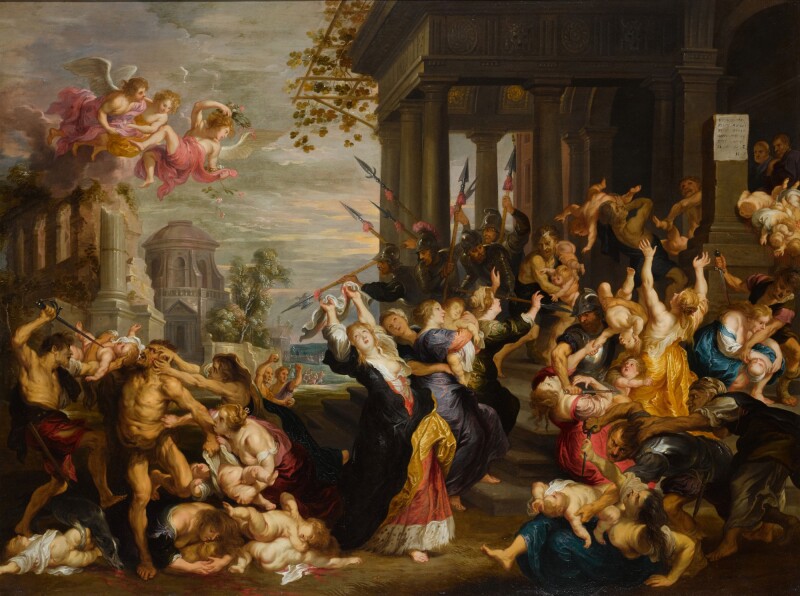
I’ve been exploring some of the themes related to the Advent. But what happened afterwards? There is a curious and violent story related to the visit of the Wise Men– before they found Mary and Joseph and the Baby Jesus, they visited the palace of the ruling King of the Jews, Herod. Herod was intensely curious about the baby– when and where the prophets said Messiah should be born. But unlike the worshipful wise men, Herod wanted to destroy this heaven-sent King; one who could pose a threat to his own power and rule.
Jesus escaped Herod’s plot. Joseph had been warned in a dream, and had taken Mary and Jesus to Egypt for safety. The Wise Men, also warned in a dream, had failed to report back to Herod the information he wanted. In his anger and fear, Herod ordered the slaughter of all the baby boys in the region, up to two years old. This “Slaughter of the Innocents,” as the event is known, seems to come in direct repudiation of the message of the angels at Christ’s birth. There was no peace in Bethlehem as soldiers dragged innocent babies from their mothers’ arms and killed them. There was wailing and anguish, instead.
How could a loving and wise God allow this to happen? It was no unforeseen accident, either. This event had been predicted by the prophets hundreds of years before it happened, just the same as the prophecies about Jesus’ birth. God could have sent angels to protect Jesus from this slaughter; He could have confounded Herod’s plans and stopped the soldiers from reaching Bethlehem; He could have struck Herod dead before the plot could be carried out…so why did He let it all happen?
I don’t have any definitive answers. But I can share some opinions, based on what I’ve learned of God’s character. I don’t think God was in any way indifferent to the suffering and injustice of this tragedy. But I think there are a few lessons we can take from this strange and disturbing incident:
First, Jesus came to share a very human fate. Jesus was not spared the indignity of being born in a cattle shed and laid in a manger. His life was not supernaturally easy or safe or comfortable. It was God’s perfect will that Jesus was vulnerable to attack, and in need of protection– even when it meant fleeing His home.
At the same time, He WAS fully God, and as such, posed a danger to men like Herod. Jesus, even from birth, had an authority greater than any king or emperor who ever lived. But He did not come to earth to exercise that power over other people. Instead, He came to serve and to pour out His life for others. It was not His mission to overthrow the existing government, or to challenge rulers like Herod. It was His mission to fulfill the Law, set an example of obedience, preach the Gospel, and offer Himself as atonement for Sin.
Herod had the earthly power to do good or evil as a ruler. He had the unique opportunity to join the Wise Men in worshiping the arrival of God’s chosen one– an event that had been anticipated for hundreds of years. Yes, God could have forced Herod to bow before the Newborn King, but Herod could also have chosen wisdom over fear. We have the same opportunity to welcome Jesus as our Savior– or to wage war against Him. Jesus invites us to follow Him, but He doesn’t stop us from making the same destructive choices that Herod made.
Jesus did not come to bring a worldly peace, but an eternal “Peace that passes understanding.” Even now, after His death and resurrection, there is still war and slaughter, crime and injustice in our world. But, because of all Jesus did, and is doing in and through those who follow Him, we see that tragedies can be redeemed; hope can survive where there seems to be no hope; and death is not the final victor. I don’t understand why these particular families had to face the tragic consequences of Herod’s rage and fear and ambition. But I understand that God is bigger than Herod; and more powerful than all the chaos and pain that he caused.
The world is not at peace today. Innocent people– even babies–are hurt and killed in our world. God knows. He aches for our grief and pain. But He also knows His plans. He knows how the story ends– He knows all that has happened, and all that is happening, and all that will happen. Even in the glory of Christmas, He wants us to know that reality. Someday, Jesus will return in all of His authority and power. He won’t just end the reign of evil rulers like Herod– He will render their legacies useless. He will redeem injustices– even genocide and slaughter–and wipe out even the memory of their grief and terror.
The story of “The Little Drummer Boy” is nowhere in the Bible. It is very unlikely that such an event ever took place. Yet it has become a classic Christmas song. I think it is easy for us to identify with the singer– a poor boy who wants to honor the Baby Jesus, but has no gift to offer. What he does have– a drum and the ability to play it– he offers gladly. He asks permission of Mary and she nods her consent. But the highlight of the song is when the Baby Jesus smiles His approval.
At Christmas, we welcome a Christmas card-picture perfect stylized Baby Jesus, who smiles, never cries, charms all the animals of the stable, and merits the singing of angels choirs among the heavens. But we have a tendency to leave Him in the manger, where He can be a tiny miracle; a gift from God, bringing hope of peace on earth, and teaching us to give gifts and celebrate life.
Somewhere along the way, our picture of Jesus tends to change. The adult Jesus is kind, wise, compassionate, and even passionate– but He is a man of sorrows. This is not “wrong” theology– the Bible describes Him as a man of sorrows; one who was despised and rejected by His own people, and condemned to die by those He came to save (see Isaiah 53). But we don’t tend to think of Jesus smiling, His eyes crinkled in a grin, dimples appearing as He delights in sharing time with us. Yet this is also Biblical (see Zephaniah 3:17).
What an amazing image– Jesus, a radiant smile on His face as He listens to our prayers; a grin of delight as we speak words of encouragement to our family members and joyful greetings to those we meet throughout the day! Jesus smiling as we take out the garbage (without grumbling!); Jesus laughing along with us as we share treasured memories (or make new ones) with our kids; Jesus listening to our confession and responding with a warm smile of forgiveness and compassion; Jesus smiling as we sing along (maybe even a little off-tune) with one of our favorite songs on the radio, or tap our fingers on the steering wheel, or bob our head along with the rhythm, oblivious to onlookers!
We pray to the very Lord of the Universe– but He is not a stern and joyless God. Jesus wept while He was on earth (John 11:35)–but He also laughed, and ate, and hugged, and sang, and ran, and danced for joy! And He is no less joyful in Heaven as He watches over us. He delights in our smallest triumphs. He cheers us on in our battles every bit as enthusiastically as a fan cheering on his favorite sportsperson. And when we stumble, He is there with the kind of smile that welcomes us to get up and fall into His arms.
There is only one thing we must do to experience His radiant and glorious smile– “Come!”
When I was very young, I liked to believe that my parents were perfect– at least as close to perfect as people could be. When I was a teen, I realized that my parents were NOT perfect. In fact, it seemed that I knew much better than they did, and much more as well! With time, I’ve come to realize that they did the very best they could with what they had and what they knew. They were never perfect, but they were good parents, and I’m very thankful for them.
Jesus had imperfect human parents. Mary, though chosen by God to bear the Savior of the World, was not chosen because she was already perfect. But she was willing, and she was obedient. She did not become perfectly righteous in her own obedience, though. Jesus was HER Savior, too! Mary and Joseph did the best they could with what they had and with what they knew. But they still managed to “misplace” their own son at least once that we know of (see Luke 2:41-52). Such an incident today might be grounds for Jesus to be removed from his home and placed in foster care. Jesus had very good earthly parents, but even they made mistakes.
But Jesus also had a Heavenly (and perfect) Father– God. Jesus was both the Son of God and the Son of Man– completely Divine, and completely human.
As we travel through the Advent season, it is good to remember that the same Jesus who called on His perfect Father, is the same Jesus who taught us to pray, “Our Father.” Not all of us have had “nearly” perfect human parents, but ALL of us can call on a perfect Father in Heaven. Jesus came to earth, not just to die for our sins, but to show us how to relate to this Divine and Holy Father. We can call on Him in our need; we can call on Him with our sorrows and agonies, as Jesus did in the Garden; we can call on Him when we are alone; we can call on Him in a crowd; we can listen and obey His voice; we can please Him! We can trust in God’s faithfulness through every moment of every day, every step in our journey, and every valley we must face.
Jesus wasn’t created, as we were– He was “begotten” of the Father–“born of” the Father, in the way we are born of our parents’ DNA. (see John 3:16, John 1:18, and Psalm 2:7) And this relationship is eternally existing– “Ere the Worlds began to be” and throughout all of time. It is not a relationship that can ever be dissolved or altered. Jesus will never “become the parent,” nor will God cease to be the Father. Though He is equal in divinity and power, and equally worthy of our praise, Jesus will always act in accordance with the Father’s will– never against it or in His own separate motivation.
It is difficult to understand, that Jesus always exists, yet He was “born” at a particular time in history and “lived” only 33 years as “one of us.” We see time as being linear– everything has a “season” or a time of beginning and end. Not so with Jesus. As a human, He had an experience of “life” similar to ours– days and nights, weeks and months, festivals and birthdays, growth spurts and hormones, toothaches and hugs and laughing so hard His sides ached.
The Advent of the Christ was not the “beginning” of the Christ–only His arrival at that particular experience in time as we know it. Yet this arrival was so unique, so miraculous, so spectacular, that all of our human time is divided into “before” and “after” that single event. We don’t divide time by human achievement (i.e. Before the moon landing/after the moon landing or before the invention of the printing press, etc.) or by natural phenomena (before the last Ice Age or after the eruption of Vesuvius). Time centers on the single act of God’s begotten son arriving as a helpless baby in the middle of an otherwise ordinary night.
Mary and Joseph were mere mortals, ordinary human parents entrusted with fostering and caring for the very incarnation of their Divine Creator. They were imperfect. But they were guided, empowered, and held fast by the very God growing up as a child in their midst.
And when they “misplaced” their son? He was, as expected, not “lost,” but merely visiting His “Father’s house.” He could not have been safer. They need never have worried or felt ashamed.
This season can be difficult for families– some of us have hurtful memories of our childhood with imperfect parents. Some of us are overwhelmed by guilt or frustration as the imperfect parents of our own children. May this season bring us renewed hope and joy in our unshakeable, unbreakable relationship to our perfect Heavenly Father, through the gift of His only Begotten Son. We can rejoice and feel secure– Evermore and Evermore!
One of the great classic Christmas carols, “The First Noel,” describes the night of Christ’s birth as a “cold winter’s night, that was so deep.”
It is dreamy and dramatic to think of Jesus coming into a cold, dark, dreary (and even snowy) world, bringing angels, glorious stars, kings bearing expensive gifts, and joyous songs.
We tend to look at Advent as a time of darkness and silence, in anticipation of the coming light and the Gospel. The idea that the world before the Birth of the Savior was cold continues the pattern of absence. Darkness does not exist independently. Neither does silence or cold. Each is the absence of something else– Light, sound, warmth–and it can only be known by the degree to which its opposite is reduced, distant, or absent. In contrast, the light, sound, or warmth is made more evident in contrast with its opposite–we may not notice a slight difference in lighting on a sunny day, or a slight difference in temperature; but a candle in a dark room, or a whisper in a silent auditorium has a dramatic effect.
We don’t actually know the exact date of Jesus’ birth, and while December falls during winter, that doesn’t always mean a cold night in every part of the world. If shepherds were watching their flocks in fields just outside of Bethlehem, it is not likely that the temperatures were below freezing, or that there was snow and ice all around. The Middle East is not known for icy winters, after all. Nighttime generally brings colder temperatures, and it may be close to freezing by the middle of the night if you have no fire or protection from the wind, but a “cold winter’s night” is more likely to be found in Minnesota or Finland, not in Bethlehem, and usually in the middle of winter– January– rather than the beginning of the season.
However, just like the darkness and silence, the cold of that first Christmas was spiritual in nature. (https://www.biblegateway.com/passage/?search=John+1%3A9-12&version=ESV). Jesus entered a frigid world– a world of closed-off people, suspicious, oppressed, angry, sick, and world-weary. Hatred can be cold, but colder still is apathy and disdain and hopelessness. The world of Advent is a world desperate for the light and heat and sound of God’s love– not because God is absent, but because people have moved so far away from Him. The light becomes dimmer, the songs become a series of indistinct noises, and the cold and damp of night creep into our souls. Today, even with the hope and light of the Gospel story, we take our focus off of the true light of the world, and the true source of warmth and love, and too often focus on the lesser warmth of a new jacket, or the glittering lights of a shopping center, or the strident sounds of greed and envy.
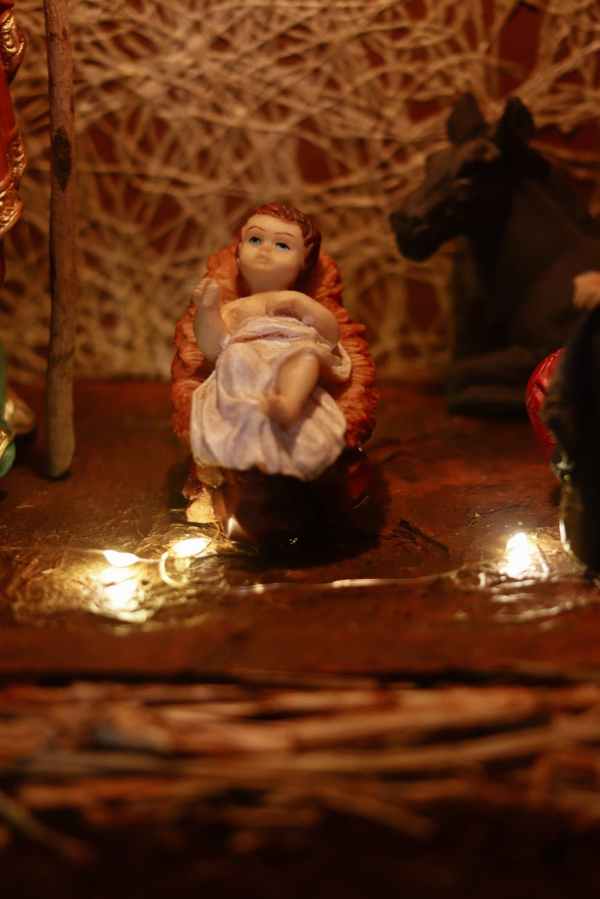
Jesus may not have come in the cold of midwinter. But He came into a world of cold hearts as a helpless baby in a strange and unwelcoming land. And he was wrapped in rags and placed in a feeding trough– the warmest place that could be found. But even in this tiny, shivering baby, there was the warmth of Pure Love. And it was felt by all who came in contact with Him– shepherds rejoiced, Mary pondered, Wise Men knelt in adoration.
I love seeing candles and firesides at Christmas time– I love coming into a warm house, full of laughter and love, or singing carols on a cold night, and being invited inside to share the warmth. I love fellowship at church, and sharing a hug and a smile with those I meet. Imagine the warmth of God with us–All of the warmth and life of being wrapped in the arms of Grace, and held by the nail-scarred hands, never to be cold or alone ever again. Can you feel it? Can you anticipate it? Imagine passing that on to someone who has never known such warmth…on a cold winter’s night…
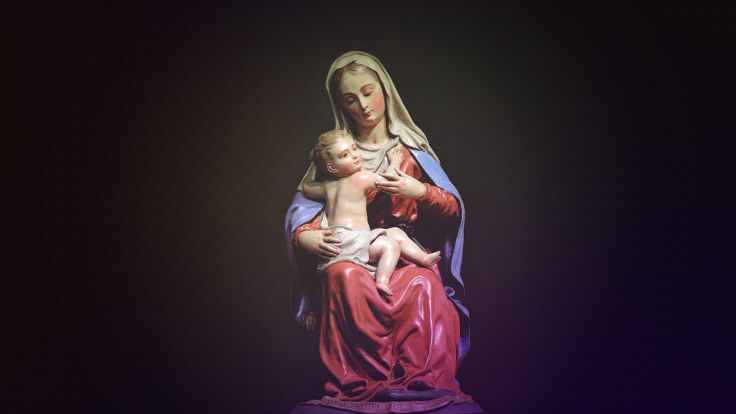
What Child is this who, laid to rest On Mary’s lap is sleeping? Whom angels greet with anthems sweet, While shepherds watch are keeping? This, this is Christ the King, Whom shepherds guard and angels sing; Haste, haste, to bring Him laud, The Babe, the Son of Mary. Why lies He in such mean estate, Where ox and ass are feeding? Good Christians, fear, for sinners here The silent Word is pleading. Nails, spear shall pierce Him through, The cross be borne for me, for you; Hail, hail the Word made flesh, The Babe, the Son of Mary. So bring Him incense, gold, and myrrh, Come peasant, king to own Him; The King of kings salvation brings, Let loving hearts enthrone Him. Raise, raise a song on high, The virgin sings her lullaby; Joy, joy for Christ is born, The Babe, the Son of Mary.
Words by William C. Dix
No other name in all history elicits such differing and intense responses. Jesus, the son of Mary Jesus, the Son of God Jesus, the Son of Man Jesus, the Son of David Jesus, the Christ Jesus, the Messiah
Who is this child– ruler of the universe, Laid in a feeding stall, In a simple stable, In a small town, In a captive land? Son of a carpenter (illegitimate, by some accounts), In the royal line of David (but so far removed as to be of no account).
Yet angel hosts sing “Gloria!” Kings and philosophers travel from distant lands for just a glimpse, Bringing priceless treasures and humbled hearts, While the beleaguered puppet king of a conquered people Prepares to destroy him.
Will he rise to take his place in Herod’s palace? Will he lead a revolt to free his people from Rome? Will he bring together rival factions among the priesthood? Will he … Die in agony, betrayed and scorned?
This, this is Christ the King; The Lamb of God. Savior and Sacrifice. “The Silent Word”, Pleading, Healing, Bleeding, Ascending. Even in his humble life and Ignominious death He rose to change the world– Stopping time and dividing it into All that came before and All that has happened since.
This is Christ the King Bruised for our sins, Betrayed by our selfishness Cheapened by our compromise and corruption.
Bring him incense, gold, and myrrh; He is more than our tinsel, jingle bells, and platinum charge cards. He is the King– He is the babe– the son of Mary. He is the King who will return in all of His Glory! He is the Christ!
We live in a weary world– weary of war, weary of chaos, weary of worry, and weary of sin and its consequences. From the time the alarm rings to the time we finally lay down our weary heads, we are bombarded by stress, misunderstandings, distractions, disappointments, questions, harsh words, harsh images, demands, doubts– I’m tired just listing them…
Even so, we are surrounded by promises (mostly false) of peace and rest, satisfaction and success. “Buy this!” “Try that!” “New!” “Improved!” The voices call out, offering temporary bliss, or temporary escape from the weariness all around. “Jingle Bells!” “Happy Holidays!” “Tidings of Comfort and Joy!” It is tempting to let Christmas become just like all the other worldly distractions–shiny, loud, stressful and fleeting, full of promise, but leaving us empty and cold in the end.
But Christmas IS different, because it doesn’t celebrate what the world has to offer. The celebration includes lights and bells, songs and gifts, food and friends and family– but at its heart, Christmas celebrates something “out of this world!” Jesus came to a weary world long ago, and no matter how weary the world was, or is, or will be, Jesus brought all the hope and healing of Heaven in the small package of a tiny infant child in a crowded town in a conquered land.
On that Holy Night, God crashed the party– He did more than watch from a distance, more than speak from the skies above or send angel messengers–He arrived, actively participating in the struggle, the bone-weariness, the hunger and thirst and chill and stress of living among His fallen and fractured creation.
And the weary world rejoices–can you hear it? Above the bustling noise of people shouting, and car horns blaring, and advertising slogans, and piped-in Christmas songs…Can you feel it–beyond the comfort of a warm blanket and hot cocoa, beyond the hugs of friends or the smiles of strangers or gifts from loved ones? Can you see it–beyond the glare of city lights, undimmed by the darkness of hatred and greed?
The lights and songs will fade away, but the Love, Joy, and Peace of God that came to the world that first Christmas is for all time!
“Fall on your knees! Oh, hear the angel voices, ‘O Night Divine. O Night, when Christ was born. O Holy Night!'”
It is Advent season. We celebrate in four weeks an event that was anticipated for four hundred years! For four centuries, the people of Israel waited for the coming Messiah without ever hearing a word from God. Oh, there were prophecies– some stretching back centuries– that promised he would arrive. But when?!
Imagine praying earnestly for an event that would not happen for another three or four hundred years? Imagine praying into silence for an entire lifetime for an event that even your great-grandchildren would never witness?
We live in a fast world. Fast food, high-speed internet, overnight delivery of packages, instant communication, bullet trains– we have lost the skill of waiting. Yet Advent celebrates the waiting, the anticipation of a birth so amazing and so consequential, that we look back over 2,000 years in wonder!
The birth of Emmanuel was worth the wait. “God With Us” came into the world “at just the right time.” (Galatians 4:4). He was not a moment too early or too late to fulfill all the prophecies and bring Salvation to mankind. Those who prayed faithfully over the centuries may not have lived to see the fulfillment, but they put their hope and trust in the prophets and in the God they served.
We are in another Advent season– we await the return of Christ! We have no way of knowing the exact hour or day (or year or even century) of His return. But with the same wonder and hope of those faithful men and women of old, we should pray for His coming again! We should share the glorious story of His first coming. We should celebrate and worship the Faithfulness of God. He keeps all His promises “at just the right time.”
And as we wait, we must not give up hope or lose our passion for the Mission that Christ left with us. “Go, and make disciples of all nations” (Matthew 28:19-20). As wonderful as Christ’s birth was, it pales in comparison to His triumphant return to judge and rule the earth. May we look back in wonder and forward in joy as we celebrate this season.






































 Pursuing Prayer