The God of All Comfort

Blessed be the God and Father of our Lord Jesus Christ, the Father of mercies and God of all comfort, who comforts us in all our affliction, so that we may be able to comfort those who are in any affliction, with the comfort with which we ourselves are comforted by God. For as we share abundantly in Christ’s sufferings, so through Christ we share abundantly in comfort too. (2 Corinthians 1:3-5 ESV)

What is Comfort? If you trace the origins of the word back to Latin, it comes from the same root as forte or fortify (fort, or fortare). The idea is one of strengthening, encouraging, giving courage and vigor. The prefix, com-, means jointly, or together. Comfort is what gives us strength as we come together. So, when I say that I am comfortable lying inert in an easy chair all by myself, I am actually missing the real gift of comfort.

Comfort is not the absence of pain or suffering. We cannot give comfort to someone who is enjoying a trouble-free life. In fact, when Jesus spoke to the crowds during His ministry on earth, He often made some people very ‘un’-comfortable by jolting them out of their self-righteousness and self-importance. Jesus did not lead a ‘comfortable’ life of ease and plenty; instead, He lived a life of comforting those in distress– the sick, the outcasts, the guilty, those who had little hope and even less strength. He went without many of the conveniences and securities we take for granted– a house, steady income, status, luxuries, a bank account, a college degree–He didn’t treat Himself to the perks of being a Rabbi or take vacations at a resort on the Sea of Galilee– instead, He spent some of His ministry calming the stormy waters and comforting His terrified disciples! (See Mark 4)

When we pray for someone to be comforted, we long to see them strengthened and encouraged. But sometimes, we also desire that God would make their life easy and free of problems. This is natural– no one likes to suffer– but the promise of comfort is NOT to make our life easy and full of constant happiness. The point of comfort is to help us strengthen each other, cheer each other on, encourage one another, and thrive together, no matter our circumstances.

Comfort, strength, encouragement– they are meaningless to someone who never has had to struggle. But to anyone who has felt alone and abandoned IN their struggles, comfort is a priceless gift– one that God gives us in abundance so that we can pass it on. It is exactly what Jesus practiced during His earthly ministry– He traveled dusty roads, enduring hardship and discomfort to bring healing and hope to thousands and gave His very life ‘a ransom for many.’ (Matthew 20:28 KJV)

Who could use your gift of comfort and encouragement today? Say a prayer of comfort– thanking God for the times He has given you strength and courage– and practice giving that comfort to someone else! Send a note, lend a hand, make a phone call, visit, give a smile to a stranger– it doesn’t take a lot– but make the most of every opportunity to strengthen those around you.
Revolutionary Thoughts

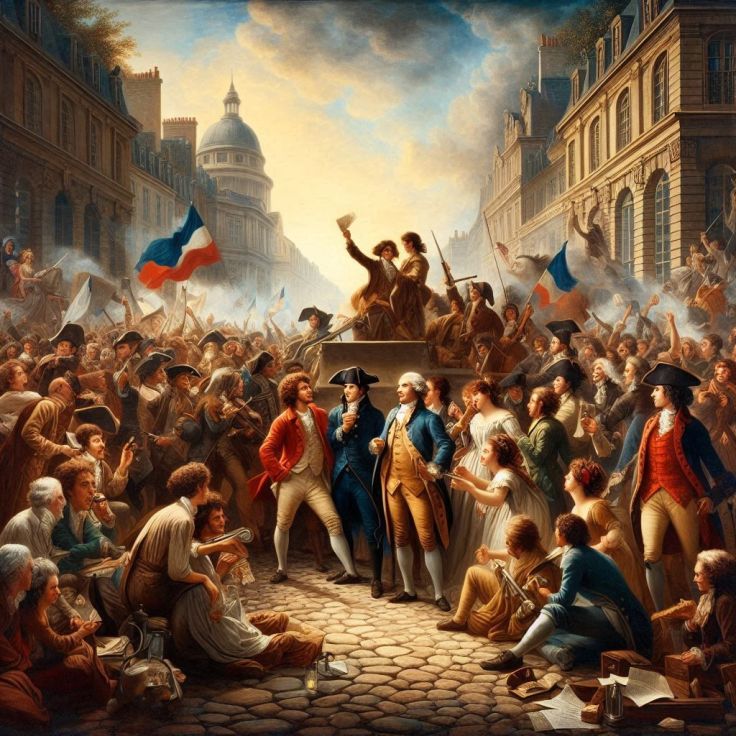
Yesterday was Bastille Day. We don’t celebrate Bastille Day in America, but we should reflect on it. On July 14, 1789, many citizens of Paris stormed the ancient fortress of the Bastille, seizing its munitions and freeing its prisoners. It marked the beginning of the French Revolution, and the end of the ruling monarchy there.

The French Revolution was an indirect result of the success of the American Revolution, which raged just a decade before. The French admired the Americans, and dreamed of throwing off the repressive monarchy and ruling class and creating a new republic with Liberty, Equality, and Brotherhood for all.

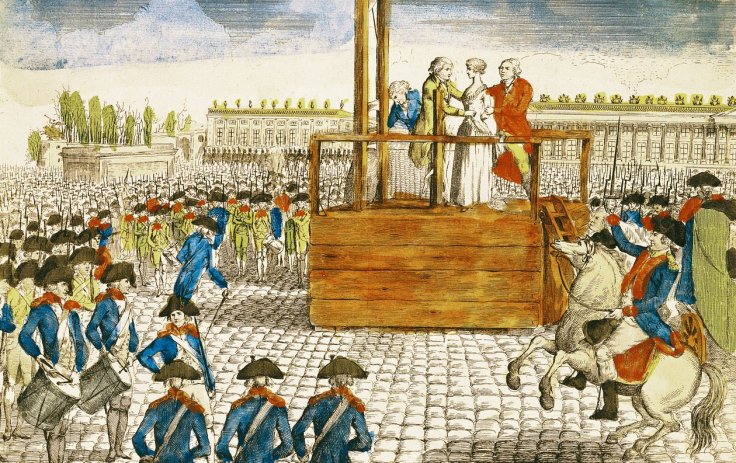
But the French Revolution became known over time, not primarily because of its success, but because of its excess. The French Revolution is remembered for its murder of the royal family, the extensive use of the guillotine to execute aristocrats and opponents, for the rise of cruel and vindictive leadership, and a general bloodbath in around the capital city of Paris. While the French still celebrate Bastille Day, they tend to downplay the immediate aftermath of their “freedom”.

The American Revolution certainly wasn’t without bloodshed and power struggles, and by 1789, the fledgling nation was still ironing out its Constitution and dealing with rebellious outbreaks. But the French Revolution led to the rise of dictators, including Napoleon, keeping France in a state of almost perpetual warfare and internal power struggles for the next 50 years. So what made the difference?

Well, I’m not an acknowledged expert, though I have studied this period of history, but I think there are at least three differences that are worth noting:

  • The American Colonies were not trying to overthrow the entire British Government or demolish the monarchy. They were thousands of miles away from the seat of government that controlled them, and they were breaking away from an existing nation, not pulling it down from the inside. There were many aspects of the British Parliamentary government that the Americans respected and even copied. And they already had colonial governments and structures in place, though their power had been limited under British Rule. They were not trying to destroy Britain– just kick them out of the Americas! The French, however, were ready to destroy over a thousand years of French Monarchy in their own backyard. The French aristocracy wasn’t oppressing them from thousands of miles away– in fact the French Colonials in Canada and the West Indies often had more freedom than their citizen counterparts living just outside of Paris.
  • Second, the American Revolution was about justice, not revenge. The Declaration of Independence outlined specific injustices that had been either ignored or perpetuated by the British Government and the King– often in direct contradiction to their own founding principles. The Revolution, though bloody, was considered a necessary evil to correct those injustices, and the resulting Constitution was created to address ongoing injustices in the newly formed United States. In France, the arrests and trials of the nobility were not enough to satisfy the thirst for revenge against those who had been oppressed. Those who rose to power succumbed to its lure and desired more authority and wealth. What started out as a noble dream turned into a chaotic nightmare as innocent idealists were punished, not for crimes they had committed, but for threatening the new balance of power.
  • Finally (and controversially, perhaps), I would argue that the American Revolution was bathed in Prayer in ways the French Revolution was not. I don’t mean to suggest either that American patriots were all Christians or were all prayer warriors, nor that the French were evil or morally bankrupt. But if one reads the documents of the founders of The United States and those of the leaders of the French Revolution, there is a striking difference in the way they reference God and Prayer. France– and Europe in general– had experience the Age of Enlightenment. And while those ideas (both good and bad) spanned the Atlantic, the Americans had maintained a culture of reverence for God and dependence on Prayer in their daily lives that had diminished in “the old world.”

Revolutions can change (or build) a nation. Rebellions can sometimes lead to change for the better. But without prayer, insight, humility, and dependence on God, cries for “Liberty” can unleash chaos and revenge, before any real change can come about.

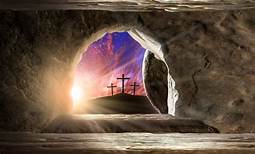
Lastly, I want to remember another “storming of the fortress” that happened long before either the American or the French Revolution– nearly 2000 years ago, Christ stormed the gates of Hell, after being crucified. This was not a Revolution in the same sense as the wars of the 18th century, but a revolution in the way we related to the tyranny of Sin. Christ single-handedly broke the curse of Sin and Death, so that we can live in freedom! We have Liberty to walk with God, washed clean of the guilt and weight of Sin, and free of the sting of Death. We can live in the Freedom to do what is right and good, noble and true.

In our daily lives, we must also be careful in our freedom. We must not become complacent about evil and injustice, nor so comfortable with our liberty that we forget the price Jesus paid for it. We must take a stand against injustice and evil, but we must also call out in prayer and remember that justice is not the same as revenge or power. It belongs, ultimately, in the hands of God. May the French celebrate their republic and the freedom it has brought them. May they also give thanks to God for preserving it for 247 years, in spite of challenges and threats. May those of us who live in freedom continue to depend on God for wisdom in using it to make the world a better place for all.

For God So Loved…

Today is March 16. In my area of the world, we abbreviate it as 3/16/26, or just 3/16. So it reminds me of the most quoted verse in the Bible– John 3:16– “For God so loved the world, that he gave his only Son, that whoever believes in him should not perish but have eternal life.” (ESV) This verse is so famous and so quoted, that many times, people just skip the actual verse and just use the reference. In fact, if you just see a poster or sign of reference that says 3:16, it almost always means this verse.

Recently, I saw a short video of a person complaining about seeing such a reference on their soft-drink cup at the fast food chain In-N-Out Burger. The chain prints “John 3:16” on the inside of the bottom of their cups. They’re known for it. They don’t print out the entire verse, just the reference. It’s not blatant or over-bearing– just a modest note on the bottom of their cups. But this person wanted none of it. They started out by liking the food, but they were offended by this tiny reference to a Bible verse. “Keep your John 3:16,” they sneered. “I don’t want your John 3:16.” Apparently, it left a bad taste in their mouth just to see any reference to the Bible. They felt judged and oppressed, I guess.

But John 3:16 is not about judgment. It’s all about Love! For God SO LOVED the WORLD–take a minute to reflect on that. God, the Holy One, who created the world, only to have mankind reject Him over and over again, didn’t destroy it. He didn’t turn His back on the world. He didn’t leave us as a footnote and move on. Instead, He GAVE His ONLY begotten SON. He didn’t come up with a cheap plan for salvation that was just adequate to cover our worst sins and leave us enslaved to our old guilt and shame. He didn’t send a half-hearted emissary to show us what Heaven and Holiness were like. He sent His SON– the heir of the Universe–to live among us, show us how to love and live and worship. And that Son GAVE all of Himself as a sacrifice– not for a select few, but for WHOSOEVER would trust in Him and submit to His Lordship!

WHOSOEVER believes in Him will not perish, but have ETERNAL LIFE! How does that offend and oppress? The message of John 3:16 sums up the whole Gospel of Christ. It is NOT judgment, but Salvation. It is not oppression, but freedom from Sin and Death!

So today, I am thrilled to celebrate 3:16! It is a message of hope, joy, renewal, abundance, purpose, power, and LOVE!

When God “Remembers No More…”

In my last post, I discussed what it means (or doesn’t mean) when the Bible says that “God remembered…” God is not forgetful. He is omniscient, meaning that He knows everything, all the time. When God “remembers,” the Bible is usually talking about God’s timing. God “remembers” His promises– meaning that the time has come for God’s promises to be fulfilled. The reminder isn’t for God– it is for US. We need to trust that God will fulfill ALL of His promises in His time, not ours.

So what does it mean when God says, “ “For I will forgive their wickedness and will remember their sins no more.” Hebrews 8:12? Or “And no longer shall each one teach his neighbor and each his brother, saying, ‘Know the Lord,’ for they shall all know me, from the least of them to the greatest, declares the Lord. For I will forgive their iniquity, and I will remember their sin no more.” Jeremiah 31:34 ? (emphasis added)

How can a God who knows everything and remembers everything say that He will NOT remember? Once again, God does not forget. But He does choose what He will call to mind– what He will hold against us, or what He will hold in our favor. And, just as God remembers His promises, He promises to “forget” our sins and remove them “as far as the east is from the west” Psalm 103:12.

God’s perfect justice demands that He should remember every wrong, every injustice, every sin–and punish them. God will never leave one of His precious children as an eternal victim. Every martyr, every victim of theft, abuse, betrayal, slander, and injury will someday be vindicated, healed, and made whole. But God can, more perfectly than any human being, remember and correct the injustice without attaching all of the punishment to guilty party. Instead, He sees the Blood of Christ as the complete and entire payment for our sins! God has promised that the Blood of Christ has fully atoned for Sin. Our response of Faith allows us to claim that promise and move forward in New Life. Not just Eternal Life, but newness and abundance of Life today. Just as God can “remember (our) sins no more,” so we too can turn away from them.

There is great comfort in remembering that God always remembers His promises. There is also great comfort in knowing that God will NOT remember all of our failures and rebellious thoughts and actions. His forgiveness is not conditional on our level of guilt or our attempt to make atonement. It is complete, even to the point of wiping clear the very memory of our past sins! And Christ’s finished work on the cross also guarantees that every hurt and injustice we have suffered will also be made right–in His perfect way and time.

But there is a further comfort– WE can rest in the promise that our guilt and shame can stay in the past. We do not have to continually ask for God’s forgiveness for the sins we committed years ago, nor do we have to continually live in the guilt of knowing we have fallen short of the Glory of God. We do not have to live as constant victims of someone else’s sin. We do not have to rehearse our failures, justify our scars, or live as second-class Christians, feeling that we are not “as good” as others, since we are all saved by Faith, and not by our own works of goodness (see Ephesians 2:8-9).

Being a Christian is not a matter of what we’ve done (or what has been done to us) in the past. It is walking a new road, following Christ’s example and resting in His assurances. It is allowing the Holy Spirit to guide us on the road ahead, not letting our accuser (Satan) drag us back to our former paths. We will still remember our old actions, the pain of what we have suffered, the pain we have caused others. But we need not live in those memories. We can be ecstatically grateful for God’s promise to “remember (our) sins no more!”

Jehovah Jireh– The God Who Provides

Often when I am praying, I’m asking for something– “Bless this food,” “bring healing to _______,” “help the victims of (insert recent natural disaster) to find shelter, food, water, etc.,”..

God is a provider. He is the owner of everything, yet He chooses to share good things with us. He provides for the birds of the air and the flowers of the field. He provides for insects and elephants. He provides water and sunlight for all the plants– whether in the rain forest or the desert. He provides air for us to breathe and provides plants to recycle what we breathe out. He provides for the orphan and the widow, the homeless and the dispossessed. And for those who seem to “have it all”– God is the ultimate source of their riches, too.

In the book of Job, we meet a man who seemed to “have it all.” He was wealthy, healthy, respected, and surrounded by family. And when it all disappeared in a flash, his response was very telling. He said, ” Naked I came from my mother’s womb, and naked I will leave this life. The Lord gives, and the Lord takes away. Blessed be the name of the Lord.” (Job 1:21 CSB). Job had learned that in good times or bad, God was his provider. And Job’s faith in God’s provision and His faithfulness gave him hope, even in the worst of his troubles.

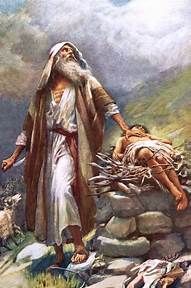
The first time we hear of Jehovah (or Yahweh) Jireh is in the story of Abraham and Isaac and the sacrifice at Mount Moriah. God asks Abraham to take his son– the son of the promise; the son for whom he had waited so long– and give him as a sacrifice. Nowhere else in the Bible does God ask for a human sacrifice– in fact, God says He detests the practices of the nations and religions who sacrifice their children to Molech or other gods. Yet, when Abraham obeys, in spite of whatever fear or horror is conjured up by the command, God stops him and provides a ram as an alternate sacrifice. Abraham names Him Jehovah Jireh– the LORD who will provide–as a result of that experience. (See Genesis 22)

But Jehovah Jireh means more than just God providing what we need in the moment or what we ask for in prayer. It also means, “the LORD who perceives, or experiences.” God does not just stand removed from our situation and write a blank check for us to cash when or how we see fit. God is with us (Emmanuel) and sees our deepest and most profound needs. He also sees our daily and even seemingly silly needs. He knows, He cares, and He provides good gifts. God did not send Abraham and Isaac alone on their perilous mission. He was right there, ready to step in and provide what was needed. What an amazing turn-around for Abraham. He went from anguish to absolute joy in those precious moments, and learned to know God in a personal, experiential, and powerful way.

Sometimes, we lose sight of that. Sometimes, it seems as though God is far away and indifferent, or even cruel. When Job accepted the loss of his wealth, his health, his status, and all of his children, it was not easy for him to say, “Blessed be the name of the LORD.” God had taken away nearly everything– in fact, the only things Job had left were some unhelpful finger-pointing friends and a complaining wife! But God restored everything that Job had lost, and then some! God does take away. And it hurts. He doesn’t stop us from experiencing heartache and grief. But even then, He is Jehovah Jireh– the LORD who experiences; the LORD who perceives. He does not leave us without hope or comfort, if we seek His face. As the Psalmist says: “The nights of crying your eyes out give way to days of laughter.” (Psalm 30: 5b The Message)

The story of Abraham and Isaac; the story of Job and his losses– each points us to another truth about how God is our provider. He provided His own Son to be our sacrifice– to pay the debt for our Sin, and to give us Eternal Life (see John 3:16). God experienced all the anguish and loss of death so that we would only have to taste it once. Jesus lost everything to gain our redemption. And He rose victorious over death, so we can have hope and joy in this life and in the life to come!

Recently, I was worried about finances– not because we had no money, but we had unexpected bills. I asked the LORD to provide, knowing that He could, but expecting that we would have to raid our “rainy day” fund to get through the week. But God had an amazing surprise– an unexpected gift of $100! Just when we needed it. God could have provided ten dollars, or a thousand dollars. He could have allowed us to dip into the “rainy day” fund and provided some unexpected money the following week. But I believe God saw, not just our monetary need, but my need to be reminded of His loving care and faithfulness. God knew what we needed. He provided what we needed. And He shared in our experience of dependence on Him and joy in His creative answer.

I don’t know where I will be today or tomorrow. I don’t know what needs are on the horizon. And I don’t know how or what God will provide. He may not provide healing for a disease, but strength for the fight. He may not provide a cash gift for our material needs, but He may provide opportunities to trade with neighbors or earn extra money when we need it next. Whatever God chooses to do– whatever He gives or takes away– He is my provider of abundant life. “Blessed be the Name of the LORD!”

(For more about this Name of God, see https://www.christianity.com/wiki/god/what-does-it-mean-that-god-is-jehovah-jireh.html)

Lamb of God

Abraham put the wood on Isaac’s shoulder, but he carried the hot coals and the knife. As the two of them walked along, Isaac said, “Father, we have the coals and the wood, but where is the lamb for the sacrifice?”
“My son,” Abraham answered, “God will provide the lamb.”
(Genesis 22:6-8 Contemporary English Version)

The next day John saw Jesus coming toward him and said, “Look, the Lamb of God, who takes away the sin of the world!  (John 1:29 NIV)

After this I looked, and there before me was a great multitude that no one could count, from every nation, tribe, people and language, standing before the throne and before the Lamb. They were wearing white robes and were holding palm branches in their hands. 10 And they cried out in a loud voice:
“Salvation belongs to our God,
who sits on the throne,
and to the Lamb.”
(Revelation 7:9-10 NIV)

In my last post, I spoke of Jesus being “The Good Shepherd.” But He is also the Lamb– the Lamb of God, who takes away the sin of the world! This image may seem to contrast with the previous Names of God– names full of authority, power, might, wisdom, and strength. A lamb is powerless and has no authority. So, what can this name possibly tell us about God?

From the beginning, God used a lamb to represent innocence and sacrifice. Cain and Abel brought sacrifices to God– Cain brought crops he had grown; Abel brought a lamb. God was pleased with Abel’s sacrifice, more than Cain’s. The Bible doesn’t spell out exactly why, but I think the context of the rest of the Bible gives us a clue. When God gave His laws and regulations to the nation of Israel, He specified that the sacrifice for sin, for guilt, for peace, and for worship were to be animals–pure and innocent– their blood the factor that would bring atonement and peace. The innocent lambs would be killed, their blood poured out on the ground, their meat sacrificed on the altar, and the rest of their bodies (skin, bones, offal, etc.,) taken outside of the camp and destroyed. Vegetables, bread, herbs, wine– these could all be offered as free-will offerings, but they were not to be used for sacrifice. And the lambs (or other animals) had to be spotless and free of disease or disfigurement– perfect.

Sin is death– it doesn’t just bring disruption– it is fatal. Because God is HOLY, He cannot dismiss Sin with a shrug and say, “humans will be humans…”, or “it’s ok this once…” or “at least you learned your lesson.” But because the world is infected with Sin, even lambs and goats are not good enough to fully remove the stain and sentence of Sin. Only Holiness could do that.

Jesus is the Lamb of God. Just as Abel offered a lamb for a sacrifice; just as Abraham was ready and willing to offer his beloved son of the promise, God offered His only begotten Son as the only possible perfect sacrifice for Sin. Jesus came as a helpless, powerless babe. He lived a humble and obedient life of service and sacrifice. And He became the ultimate Sacrifice on the Cross.

Jesus is also the victorious Lamb of Revelation, worthy of all praise and adoration! God’s Might and Power are equaled only by His Grace and Lovingkindness. He is both Shepherd and warrior– fiercely protective of His people– and the sacrificial Servant Lamb who humbly serves both God and mankind. He is NOT a lamb without power or authority. But He willingly lays aside all the trappings of authority in order to teach us how to obey and follow Him.

He is God ALMIGHTY, and Ruler of All– but He is also gentle and humble. I do not pray to a God who is far off, aloof, distant, or unfeeling. I pray to the Lamb of God who was wounded for me, who willingly offered to become the sacrifice for my sins, and who died the death I deserved. And I pray to the Lamb who rose victorious, making what should have been the darkest day of history Good Friday!

Almighty!

I’ve been looking at the Names of God lately. In my last post, I meditated on “Adonai”– The LORD. God has the ultimate authority over all things. He is the Master; the King; the Ruler; the One LORD of All.

Today, I want to explore a related Name– Almighty. It is often used in conjunction with LORD. God is the LORD ALMIGHTY. Whereas LORD refers to God’s ultimate authority, Almighty refers to His Absolute Ability. He is all-powerful, all-wise– able to do exceedingly, abundantly, above all that we could ever ask or imagine (see Ephesians 3:20). There is literally nothing that God cannot do. There are many things He WILL not do– He will never leave or forsake those who are His; He will never be untrue to His own Word or break His promises; He will never change His nature or be untrue to it– but He CAN do whatever He wants.

And this is where we sometimes fail to grasp the fullness of His name, Almighty. We know that He is Mighty; that He is mightier than we are, at least. But He is the source of Everything! He is mightier than Nature–He spoke all of it into being! He is mightier than Time– He is unbound by time or age or deterioration. He is mightier than Sin and Death– He proved that through the death and resurrection of Jesus Christ! He is mightier than the dark emptiness of space– He holds the entire Universe in His Hands!

And that brings me to the subconscious wonder of the name, Almighty. God is not JUST all-powerful and eternally capable. His Almighty nature is GOOD! All of His power is regulated and matched by Mercy and Grace! He has the authority (as LORD) and the power (as the Almighty) to be a terrible enemy. In fact, Job speaks of this repeatedly when he feels that God is punishing him unfairly (see Job 27). I can’t argue against God and win; I can’t grapple with God and defeat Him (Jacob tried that in Genesis 32). I am powerless against God– physically, mentally, spiritually–I cannot “win” against God by fighting, arguing, cajoling, bargaining, or using any weapon. There is no army, no spirit, no power that can budge God from His plans.

But God is NOT my enemy or my rival! Only Sin and my own rebellion and pride can make me an enemy of God. In fact, He wants a relationship with me; He wants me to live in peace and harmony with Him! He has moved Heaven and Earth to reconcile me to Himself through the death and resurrection of Jesus Christ! He is like a mama bear or a lioness with their cubs, jealously guarding me from Sin and Death. He is my Father, my protector, my provider, and my Shepherd– the ALMIGHTY! And yet He cares about the smallest details of my life– He numbers the hairs on my head and keeps track of any injustice that has ever been done to me (or by me!) to be settled and made perfect on the Day of Judgment.

What a humbling thought! What a joyous reality! The Almighty LOVES ME! He LOVES YOU! And His Love is all-powerful and eternal. The ALMIGHTY IS LOVE! How can I not praise Him! How can I not see Him in every moment!

Adonai–LORD

I’m choosing to focus for a few posts on the Names of God– titles, descriptions of His Character–that we can (and should) use in thinking about and praying to God. Today, I want to look at the term LORD, or Adonai, and what it signifies.

In English, we use the word “lord” to refer to someone who has power or authority over something– think “Lord of the Rings” or “lord and master”– someone with the power to control. In Hebrew, the word “Adonai” also means “Lord”, but in the plural form, denoting special respect or reverence. In the Bible, when we see LORD (in all capitals), it refers to the ONE who has power over all things– THE LORD, or MY LORD. (For a more detailed explanation, see https://www.christianity.com/wiki/god/what-does-adonai-mean.html)

There is an interesting passage in Jesus’ Sermon on the Mount in which Jesus uses the term “Lord.” He warns that not all those who use the phrase, “Lord, Lord” will enter the Kingdom of Heaven.

21 “Not all who sound religious are really godly people. They may refer to me as ‘Lord,’ but still won’t get to heaven. For the decisive question is whether they obey my Father in heaven. 22 At the Judgment many will tell me, ‘Lord, Lord, we told others about you and used your name to cast out demons and to do many other great miracles.’ 23 But I will reply, ‘You have never been mine. Go away, for your deeds are evil.’ (Matthew 7:21-23 The Living Bible)

We can use the name “Lord” and still not understand how fully Sovereign and Holy He is. When we acknowledge Jesus as “Lord”, we may simply mean that we think of Jesus (and the Father) as a “Lord” over certain aspects of our lives– He controls the weather, or we can pray to Him to change our present circumstances or make someone else do what we can’t make them do. But Jesus is not just a “Lord.” He is THE LORD–He is Adonai. This name (when printed in all caps) is often used as a substitute for the given Holy Name of God (Yahweh or YHWH). It IS who He IS– the One LORD over all creation. The One who is the Master of ALL. If we call Him, “Lord,” but ignore what He says, and only turn to Him as a last resort, or use His name only to sound Righteous, we are literally taking His Name in Vain and breaking the third Commandment!

What amazes me is that THE LORD of the universe wants to hear from me! He has no need of a relationship with me; there is absolutely nothing that I can bring to Him– even my obedience is only an acknowledgement of who He already IS, and the power He already has over me. He CAN make me obey Him; He has the power to circumvent my will and impose His will upon it. Yet, He chooses to ask me to follow Him; He not only tells me to obey Him, He tells me why and how! And He gives me the power (through His Holy Spirit) to do it!

God is ADONAI– He is THE LORD! And He is patient, compassionate, and humble. When Jesus came, lived among us, and died on the cross, it wasn’t because any of us deserved His substitutionary sacrifice for our Sin. It was an extension of His nature AS “LORD.” And isn’t that worth a prayer of worship today!

TGIF!

Many people look forward to Friday. For students and many workers, it marks the end of the working week and heralds the weekend. For many, it may also be payday! Fridays represent accomplishment; completion of work done, reward for recent efforts; a measure of our success. We chant “T.G.I.F.”– “Thank God it’s Friday.” But we might just as easily say, “Thank God it’s Finished!”

We’re in the Lenten season, leading up to Easter, and, of course, Good Friday. Much more significant than any ordinary Friday, Good Friday is the day we remember the Crucifixion of Jesus Christ. It was on that day that Jesus Himself cried, “It Is Finished!” just before He took his last breath.

On that first “Good Friday” there seemed to be little reason for celebration. Jesus had been found guilty in a hasty, overnight trial, by the Jewish Sanhedrin for saying that He was the Son of God– Blasphemy if one is NOT God, but simple truth if one is the promised Messiah! The Roman Governor, Pontius Pilate, after examining Jesus’ claims and trying to literally “wash his hands” of the case, turns Jesus over to be crucified by the angry mobs whipped up by the Jewish leaders. And Jesus is beaten, tortured, taunted, and nailed to a cross to die a gruesome, public death. “It is finished!” For Jesus’ followers, this meant defeat, fear, and gloom, rather than accomplishment or celebration.

But Jesus knew better. Even though His death was filled with suffering and humiliation, it was the culmination of His life on earth. And it was the necessary final scene before the next Act– the Acts of the Apostles–the coming of power and hope by the release of the Holy Spirit to indwell those who had put their faith in Jesus AS the Messiah! And so it is today. We have great cause to celebrate Good Friday. Without the Pain of the Cross, there would be no Glory of the Resurrection or Promise of Eternal Life!

Even though this Friday is not Good Friday, we can spend today reflecting on the life of Jesus– the incredible example He gave of how we are to trust in God, love others as God loves, and cherish life–both now and through eternity, as God’s gift. And we can be thankful that, because of Jesus, “IT IS FINISHED!”– the battle against Sin and Death is over. We can live abundant lives, without the fear of eternal death, and we can look beyond the curse of Sin to the Glory of Restoration and Renewal.

Thank God it’s Friday!

Free to Forgive

“Forgive us our trespasses as we forgive those who trespass against us.” (Matthew 6:12)

Imagine being a prisoner and being told that you were free to leave! Now imagine someone refusing to leave their prison cell, and choosing to stay locked up! Why would anyone do such a thing? And yet, there are stories of prisoners who have been freed– some of them found innocent of the crimes for which they were being held–who cannot seem to adjust to freedom.

For some, the issue is legal. Even though they have been exonerated, or have served out their sentence, they still face legal consequences–even if their conviction was overturned, or their sentence fulfilled, they still wear the tag of “convicted felon.” Their record, even if legally overturned, still hangs over their head when they apply for jobs, try to register to vote, or attempt to establish credit. For most, however, the issue is psychological. They still wear the imaginary label, “guilty.” “Not fit for freedom.” “Incorrigible.” And often, society does nothing to remove those labels, but rather reinforces the idea that once found guilty, a person can never redeem their life or legacy.

As Christians, we have been given a full pardon for our sins– regardless of whether we have spent time in a physical prison or not. We are free! But we can continue to live as though we are in prison– and worse, we can continue to put ourselves in a prison of unforgiveness toward others.

“If we confess our sins, He is faithful and just to forgive us our sins, and to cleanse us from all unrighteousness.” (1 John 1:9) God does not keep us in a prison of guilt and shame. He is faithful to forgive us, redeem us, and renew our mind and spirit. But part of that cleansing involves letting go of our “right” to hold grudges and cling to old hurts and bitterness toward others. God is faithful to forgive US; He is also faithful to act with justice on our behalf. In forgiving others, we are not denying the justice we deserve. And in forgiving us, God does not deny justice to those whom we have hurt!

God wants to give us true freedom– freedom from guilt and freedom from the burden of injustice. HIS shoulders are big enough to offer both– perfect freedom, and perfect justice. We are allowed to be free of both burdens when we trust God to take care of it all. And we are allowed to walk out of the prison of guilt, shame, bitterness, anger, vengeance, pride, self-righteousness, and self-loathing.

Let’s face it– we have all sinned. All of us have said or done things that have hurt others. We may not know the extent of the damage our words and actions have done, just as others may not be aware of how they have hurt us. And “hurting” people often hurt others in reaction. Jesus paid the price for our sins when He offered Himself on Calvary. His sacrifice stops the cycle of “unavenged” hurt.

Sin still continues to hurt us. Forgiveness doesn’t seek to pretend that what happened never happened, or that it didn’t matter, or that our hurt isn’t real and tragic. But forgiveness allows us to walk out of the prison of living with the label “victim” or “convict” that Sin slaps on our forehead or in our heart. It allows us to breathe the free air of God’s grace and the hope of a joyful, productive, courageous future!

Blog at WordPress.com.

Up ↑