Receiving Back the Dead

25 Jesus said to her, “I am the resurrection and the life. The one who believes in me, even if he dies, will live. 26 Everyone who lives and believes in me will never die. Do you believe this?”

John 11:25-26 (CSB)
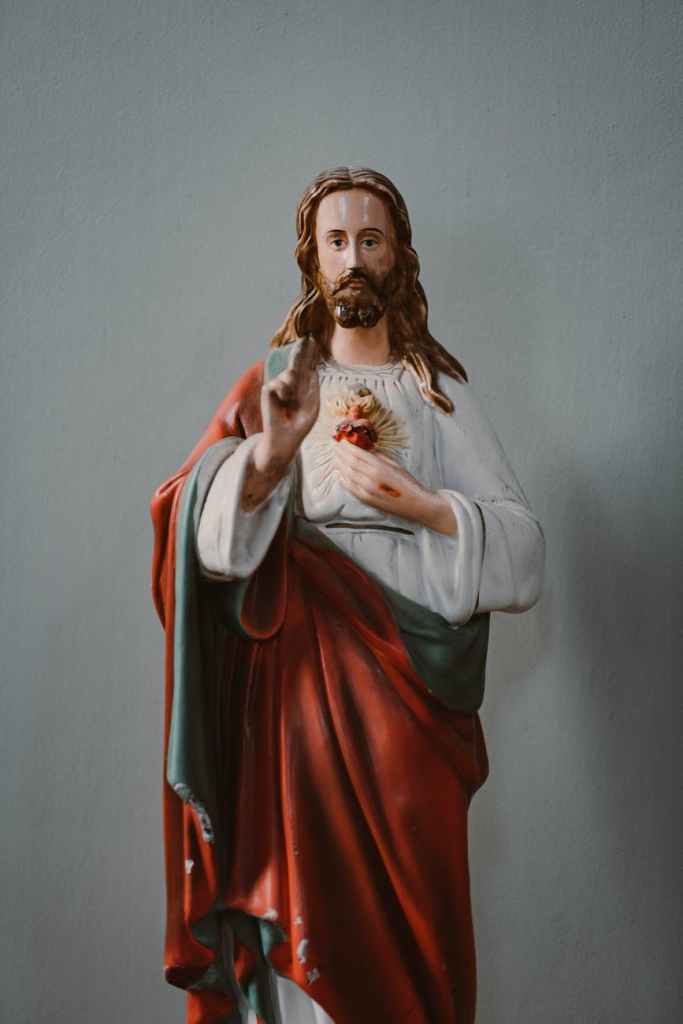
Photo by cottonbro on Pexels.com

Jesus knew Lazarus was already dead when He set out for Bethany. He knew of the illness in time to save His friend. Yet He delayed. By the time He arrived, Lazarus had been dead four days, and was already buried. What comfort could He offer the grieving sisters? What could He say to explain His delay and seeming unconcern?

This year, we lost a lot of friends, neighbors and family members. Many others were suffering. We prayed for them all– we prayed for healing; we prayed for miracles. And God performed some miracles– people who were on life support and people with “incurable” cancer were released from the hospital and pronounced “healed.” But others died, even with all our prayers. And even more died suddenly before we could even seek God’s favor and healing.

Photo by Tima Miroshnichenko on Pexels.com

We mourn the loss of these loved ones. We miss their presence at gatherings; we miss their laughter, their wisdom, their “life” in our midst. But we do not mourn like those without hope. (1 Thessalonians 4:13) Death cannot separate us from God, nor can it separate us from any of His family.

Photo by Andrea Piacquadio on Pexels.com

This is more than just “keeping” someone alive in our memory. There is a sure hope that we will be reunited– that we will “receive back” those who have passed on (and others will receive us after our own deaths). What does this mean? I don’t expect those who have died this past year to be resurrected in their old physical bodies or walk out of the grave as Lazarus did. But I have the assurance that they are “alive” in spirit, and that we are all part of God’s eternal plan to be together with Him forever.

Photo by Suzy Hazelwood on Pexels.com

That’s an amazing promise for the future, but it also impacts the present as I face my current grief. I don’t just remember loved ones “as they were.” I can look forward to knowing them “as they will be.” The many wonderful memories I have of our time here will be eclipsed by the wonderful moments to come! And it gets even better–those who died when I was young; those who died before I was even born–we will be “reunited” as well.

This brings up another question– what about those who are not “saved?” We grieve now for them, but won’t we be missing them for eternity? I can’t give a definitive answer to that question, but I can say that there is a comfort that transcends all that we know in this life. God can redeem our memories and our emotions, including grief. Jesus came to defeat Death and Sin. His work of redemption continues, but the Victory is already won. If you are struggling with grief in this season, I pray that God will help you “receive back” your dead– that your heart would be at peace as you remember and give thanks for the moments you shared. Let God’s promises and His comfort flood your heart. And remember that God’s compassion is to share your grief as well as your joy. Jesus wept when He came to Bethany– even though He knew that Lazarus would live again! He comforted Martha and Mary in their grief BEFORE He raised Lazarus. He can do the same for each of us.

The Work is “Donne”

Wilt Thou forgive that sin where I begun,
Which is my sin, though it were done before?
Wilt Thou forgive those sins through which I run,
And do them still, though still I do deplore?
When Thou hast done, Thou hast not done,
For I have more.
Wilt Thou forgive that sin by which I have won
Others to sin? and made my sin their door?
Wilt Thou forgive that sin which I did shun
A year or two, but wallowed in a score?
When Thou hast done, Thou hast not done,
For I have more.
I have a sin of fear, that when I have spun
My last thread, I shall perish on the shore;
Swear by Thyself that at my death Thy Sun
Shall sine as it shines now, and heretofore;
And, having done that, Thou hast done,
I have no more.

A Hymn to God the Father John Donne, 1623
John Donne

I enjoy studying the poetry of John Donne. https://www.biography.com/writer/john-donne Even though he lived 400 years ago, he wrote about very timeless and personal topics. Donne lived during a time of religious tumult and persecution. Born into a Catholic family, he later converted to Anglicanism and became a powerful preacher, as well as a poet, and lawyer. Throughout his life, he wrestled with deep theological questions of sin, guilt, redemption, and death. Yet he did so with wit, humor, and passion. The poem above, written during a long illness and near the end of his life, is filled with puns on his last name, Donne. Would God’s redemptive work ever be “done” in “Donne?” He struggles with the knowledge that his sins, having been forgiven, must be forgiven again and again. Does God never say, “Enough! I am done!?” What about stubborn sinful habits? What about sins that have led others to sin? What about last-minute, unconfessed sins?

Photo by Teona Swift on Pexels.com

The real question is, “How sufficient is God’s Grace?” Does God sprinkle out Grace sparingly on each sinful act, or does Christ’s blood cover All? Do our stubborn, habitual acts of rebellion pile up to a point where God cannot forgive? Having forgiven us once, twice, seventy times seven– is there a limit to His willingness to pour out Mercy? Theologically, the Bible is clear. The answer is a resounding, “NO.” God will not withhold His Grace from those who have sought it. God will never be “Done” with “Donne.” Nor will He be “done” with any of us who have chosen to follow Him. But in his all-too-human logic, Donne jokingly suggests that though God “hast” done/Donne, He “hast not” done/Donne. In other words, while Donne “belongs” to God– he has confessed his sins, and eagerly seeks to follow Christ, he still wrestles with fears that his small sinful acts prove that God does not fully “have” him– that He still lives separated from God.

Photo by Sinitta Leunen on Pexels.com

But the final sin of the poem is fear– fear that somehow, at the last, Death will prevail, and Donne will “perish on the shore,” rather than be taken into Heaven. He pleads that Christ’s blood (“Thy Sun/Son”) will be sufficient; that God’s promise of eternal life will indeed hold true, and that the work of salvation is indeed “done.” In the end, the poet hopes that “Thou hast Donne.” And he must trust that God’s promises will hold, for “I have no more.” Donne cannot stop death, he cannot do anything to save himself from sin, but he can be “done” with worry and trust in “Thy Sun/Son.”

Photo by Samuel Theo Manat Silitonga on Pexels.com

I am strangely encouraged by Donne’s poem. We all have moments of questioning and niggling doubts. And even though we “Know” the truth, our fears and emotions can play tricks on our mind. But Donne, even while putting such doubts and fears on paper, takes them to the Source of Hope. This is not a poem of accusation or despair. It is an honest and passionate desire to hear God’s calm assurance. And it is part of a long tradition that runs through the Bible. Jacob literally wrestled with an angel of the Lord (Gensis 32), Moses argued with God about going back to Egypt (Exodus 4), David questioned God (Psalm 10); even Jesus asked God, “Why have you forsaken me?” (Matthew 27). But in our doubts and questions, God’s still, small voice echoes, “I will never leave you nor forsake you.” (Hebrews 13:5), “My Grace is sufficient for you.” (2 Corinthians 12:9), and “Neither height nor depth, nor anything else in all creation, will be able to separate us from the love of God that is in Christ Jesus our Lord.” (Romans 8:39).

Photo by S Migaj on Pexels.com

God’s work is ongoing, but it is also “done”– it is complete, whole, sufficient, and eternal. And even if we occasionally wonder and even question, we can choose to rest in His promises. Just as the poet concluded, if God “hast” done/Donne, “I have no more”– he needed to have no other fear of sin or sin of fear. And through Donne’s poetry, God’s assurance is being passed on– the work continues to be “Donne!”

Photo by Nicholas Githiri on Pexels.com

Blog at WordPress.com.

Up ↑