This Little Light of Mine…

Last Friday night, my husband and I watched fireworks in honor of Independence Day. They were spectacular– bright flashes of light, followed by loud, thunderous booms–red, green, blue, purple, orange, gold, and white. Some sizzled and screamed as they threw their light across the darkened backdrop of the night. Others were almost silent; just a “whizz” and a “poof.” Some were so bright, they lit up the whole sky, showing clouds and smoke trails.

Photo by Benjamin Lehman on Pexels.com

Fireworks are exciting and flashy. But I wouldn’t want to live in a world of continual fireworks. While their light is bright and exciting, it is not steady, and it is quickly swallowed up again by night’s darkness. We don’t even light fireworks during the day, because their light is not brighter or better than the sun.

Photo by Nathan Cowley on Pexels.com

Sometimes, I try to be a “Christian” fireworks display–I try to be flashy and impressive, or sizzle, scream, and boom. That’s not entirely a bad thing– after all, we are to let out light shine, so that people can see our good works and glorify our Father in Heaven (see Matthew 5:14-16). But we should be careful. Jesus never called us to be like fireworks; He spoke of our “light” being more like a lamp or a candle.

Photo by icon0.com on Pexels.com

Some thoughts to remember:

  • We are to let our light shine for a purpose greater than display. Our lives should be a reflection of the true Light of the World. Jesus was not flashy and bombastic. He was humble, gentle, and kind. People were not amazed and impressed by Jesus’ appearance. And He didn’t draw attention to many of His miracles– He often healed people “on the road” as He traveled between towns; some of His most spectacular miracles, like walking on water, were done in front of only His closest disciples. Jesus didn’t lead others by clever arguments and flashy displays– He led by example and service.
  • Lamps and candles are steady sources of light. Our lives should not be momentary flashes of brightness, followed by clouds of smoke and a return to darkness for those around us. A quiet life of integrity may not be flashy, but it can, over a lifetime, inspire others and leave a lasting legacy that shines far longer and brighter than any fireworks display.
  • Occasionally, God will put us in a place where our light can shine a little brighter or sizzle for a bit– for His Glory. We should not be afraid to sparkle. But we must not let ourselves “burn out.” And when we see others shine in this way, we should not be envious or try to quench the Spirit; however, we must continue to reflect God’s glory, rather than trying to bask in another person’s glow.
  • Far greater than any fireworks display is the promise of God’s glory, revealed in the fullness of time– an eternal display of pure light, with no darkness to follow!
  • Our “little light” is not insignificant– it is God’s purpose. It pleases Him to see us glow, not explode!
Photo by Paulo Mu00e1rcio Dos Santos on Pexels.com

Lord, help me to shine in ways that point others to You. Help me to reflect Your gentle, faithful, and righteous light, Your Love, and Your Grace as I travel through a dark world. Amen.

Static

This past weekend, my husband and I participated in “Field Day.” It is an annual Amateur Radio contest, in which operators have 24 hours to make as many unique “contacts” as possible within the U.S. and Canada, using low power and simulating “field” conditions (many operators and clubs literally set up with tents in fields and use only solar or battery power for their radio equipment).

Photo by Gratisography on Pexels.com

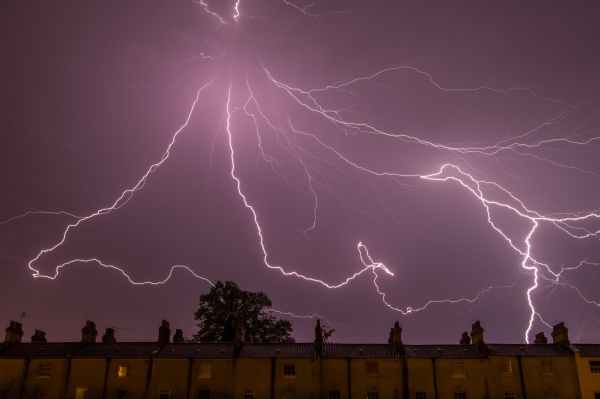
Field Day can be a lot of fun, but it can also be very frustrating. Depending on where and how you set up, the weather conditions, and other random factors, you may end up with very few contacts, and a lot of static! Radio static comes from three main sources– natural electromagnetic atmospheric noise, such as lightning, high winds, and solar pulses; radio frequency interference, when the radio equipment picks up pulses from nearby electrical devices, including TVs, other radios, or even power lines; and thermal noise coming from within the radio device itself.

Photo by cottonbro on Pexels.com

We chose to set up for Field Day at our radio store, which is located in town, just beneath our apartment. We have several antennas set up on the roof, along with a solar panel and battery, which can power all of our radio equipment. So we met the basic requirements for Field Day, operating the radios on Solar and Solar Battery power, without extra amplifiers and power boosts. We set up two stations, and we were able to make contacts through voice transmission or by Morse Code. But we were not exposed to the weather and discomfort of a tent in the field– we had a refrigerator stocked with food, we had air conditioning and comfy chairs, and we were able to sneak upstairs for a nap in our own bed, if we felt tired.

Photo by Ketut Subiyanto on Pexels.com

Atmospheric conditions were not so good this year for Field Day– not in Michigan, at any rate. We had a series of extreme storm cells coming through, with torrential rains, thunder and lighting, and a tornado watch, which spanned the first six hours of the contest. We were lucky not to have a tornado touch down, but other areas were not as lucky…

Photo by Ralph W. lambrecht on Pexels.com

Staying in town also provided some complications– we are surrounded by power lines, neighbors with electronic equipment, street traffic, including cars with loud stereo systems and radios, and our own electronic and radio devices– cell phones, air conditioners, computers, etc.

Photo by Jonas Ferlin on Pexels.com

Finally, we had an ongoing issue with our two radios. If we were using certain frequencies, the two radios interfered with each other. As I was listening to one radio, my husband would try tuning his radio. Suddenly, the noise of his radio could be heard over the sound of other transmissions.

All of this made for a somewhat frustrating contest, but it reminded me of some important aspects of prayer:

  • Prayer can be “choked out” by atmospheric conditions. If we are not “tuned in” to God’s presence, the noise of other worries, interests, concerns, and even “good” things can cause static. Life struggles, changes in our routine, or the “high winds” of adversity can seem louder than the faithfulness and compassion of the One who never changes and never leaves us. This is one reason we are to make prayer more than a habit or routine– it is to be a lifestyle and a blessed and constant pursuit– regardless of our circumstances or feelings at a given moment.
  • Prayer can also be derailed by “frequency interference.” If we don’t spend time in deep prayer and meditation with God, listening to His Word, or making ourselves accountable to Him, we will be susceptible to interference from other voices, other philosophies, and other “static” influences. Jesus’ prayer life included many times of retreat and separation from the crowds and stress of His ministry; not because He didn’t love others, but because He loved and honored God more.
  • Finally, prayer can get lost in the “internal” static of our wayward hearts. The heat of anger, bitterness, selfishness, pride, greed, and lust can keep us from meaningful communication and communion with our Father. Often, we struggle with prayer, because we are hanging on to the “static” of our own desires and fears. King David wrote: “Search me, O God, and know my heart; test me and know my anxious thoughts. Point out anything in me that offends you, and lead me along the path of everlasting life.” (Psalm 139:23-24, New Living Translation, via bible.com)
Photo by Luis Quintero on Pexels.com

Field Day is over for another year. We were somewhat disappointed in our performance, but, in the end, it is just a contest– an opportunity to learn and grow in our hobby. While we enjoy being amateur radio operators, and we feel it is an important and worthwhile hobby, it pales in comparison to growing in our Faith and our pursuit of praying and obeying Jesus Christ!

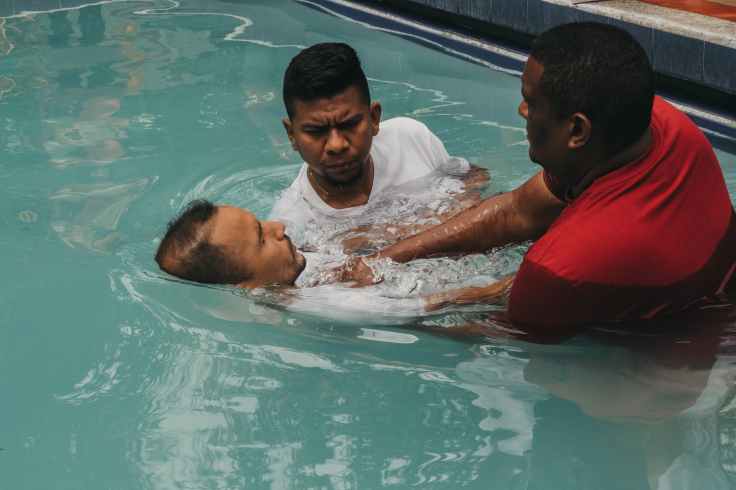
In the middle of our contest this year, we had a singular opportunity– to leave the contest for a few hours and visit a local church where my niece and two of my nephews were getting baptized. It would mean fewer contacts for the contest, at a time when the atmospheric conditions were the best they had been for several hours. After a dismal evening, we could have chosen to focus on our own pursuits. We didn’t have to witness the baptism to rejoice in it. They would have been no “less” baptized, and they had other family and friends there to see it. And going there didn’t make us “better” or more righteous people. But we chose to shut down our contesting activities, pick up my Mom, and join in the happiness of watching three precious young people publicly declare their choice to follow Jesus. And they were among others who made that decision– others whose joy and radiance also filled the church that day.

Photo by Transformation Films on Pexels.com

Field Day is about listening through the static, reaching out, and making contact with others. Yesterday, I was reminded that there is a much more important “Field Day.”

Do you not say, ‘There are still four months, and then comes the harvest’? Behold, I tell you, raise your eyes and observe the fields, that they are white for harvest.

John 4:35 (NASB, via biblehub.com)
Photo by Anna Shvets on Pexels.com

What static is preventing us from making “contact” with those who need to hear the Good News? What static is preventing us from hearing God’s voice? What static is keeping us from seeing the “fields” ready for harvest?

“Ever Hearing”

Have you ever tried to have a conversation with someone who just pretended to listen? They nod or make a sympathetic face, but clearly they have no idea what you are saying. Maybe they nodded at the wrong time, or even interrupted you with some comment that was completely off-topic.

Photo by Ketut Subiyanto on Pexels.com

God not only hears what we say to Him, He understands better than WE do!

That is not the case with us. We can be “Ever Hearing” but “Never Understanding,” just like the people of Israel during the ministry of the prophet Isaiah. (see Isaiah 6: 9-13) Isaiah brought warnings and prophetic judgments from God–calls for repentance and warnings of impending punishments. He spent years delivering the same message to hundreds of people. They heard his message, but they did not listen, understand, or repent. Jesus, in Mark 4:12 alludes to this passage in Isaiah– clearly, the people of his day were equally “deaf” to the truth, even though thousands came to hear Jesus speak

Photo by Matheus Bertelli on Pexels.com

Jesus’ brother James, in his epistle, rephrases the same idea– “But be doers of the word, and not hearers only, deceiving yourselves.” (James 1:22 ESV) Just because we have believed the Good News does not make us immune to hearing without listening, understanding, and obeying.

Photo by Ksenia Chernaya on Pexels.com

We have thousands of Bible study books, websites, videos, broadcasts and webcasts, blogs, and live meetings–and, for many of us, they are free and easy to access. There are billboards, memes, t-shirts, Christian radio stations, and more, sharing scripture, testimonies, cartoons, songs, prayers, and more, 24 hours a day in almost every corner of the world and in most of the world’s languages.

Photo by Laura Stanley on Pexels.com

But sometimes, the very prevalence of such material causes us to take it for granted; and our hearts and minds become numb to the glory of God’s wisdom and the urgency of His warnings. We hear that God is sovereign– and we say that we believe–but we act as though we know better than God how the world “should” be. We hear that God is gracious and merciful– and we sing praises for His mercy toward us– but we have no mercy for others who fall short of our expectations. We hear that God is close to the broken-hearted (Psalm 34:18), but we act as though God favors the proud and self-sufficient.

Why would God command Isaiah to continue preaching to those who refuse to listen and obey? And why would Jesus follow in Isaiah’s footsteps– relying on parables and teaching the masses who misunderstood His Gospel?

Scholars have different theories, but I think there are two main reasons:

  • We know from examples and from experience that the same message that falls on “deaf”ears over many years can suddenly “click.” God know this better than anyone. He is patient and humble. God’s message doesn’t change, but sometimes, it takes a while to “seep in” to the heart and mind. Someone who is “ever hearing” may be processing more of the message than we know. God’s spirit whispers, and His truth can be drowned out, but it cannot be silenced. It is important for us to continue to speak, to write, and to LIVE the truth– not just for others, but to make sure we are still listening, understanding, and obeying the truth.
  • God IS truth. And God may whisper, but He will not be silent. God is mysterious, but not absent, or cold, or withdrawn. In Romans 1: 18-32, Paul says that God has revealed all of His invisible qualities in all of nature throughout all of time. We cannot say that we NEVER saw the glory of a sunset, or heard the power of thunder, or felt the warm kiss of the sun, or in some other way experienced the loving and majestic reality of God. We CHOOSE to ignore or rebel against God’s ever-present, all-gracious love.
Photo by ROMAN ODINTSOV on Pexels.com

What glories will we see, hear, and experience today? Will we be “ever hearing” but “never understanding” “how wide, and long and high and deep” (Ephesians 3:17-19) is the Love of Christ? I hope we will take every opportunity to listen, understand, and obey His call today!

“It Is Finished!” Isn’t it?

Just before Jesus took His last breath on the cross, He called out, “It is finished!” Theology teaches us that His statement reflects the completion of His mission– to defeat the power of Sin and Death, and pay the redemption price for all who will call on His name. The ultimate victory has been declared; the ultimate battle won!

Photo by Pixabay on Pexels.com

The past two weeks, I have wanted to say, “It is Finished!”– as I struggle with a hundred different tasks that never seem to end. I missed my self-imposed deadline to publish a blog entry on Monday; I stared at a pile of extra dishes in my sink and a growing mountain of laundry as I added “extra” tasks to my weekly list. My work here is not finished; my mission is not complete.

Photo by MART PRODUCTION on Pexels.com

But Jesus’ words remind me– It IS finished! My “mission” is not to wash every dish, make every deadline, “fix” every small problem that arises, or answer every question. My mission is to follow Jesus. He didn’t heal every leper, end poverty, sweep away the armies of Rome, or even convince the Pharisees to repent. Because THAT wasn’t His ultimate mission.

Photo by Mumtahina Tanni on Pexels.com

That does not give me an excuse not to do the dishes or try to make sure I post this by my next deadline. But it gives me Grace to keep going– not in my own strength or achievement, but in dependence on God’s power, timing, and mercy. His Grace is sufficient!

Photo by RODNAE Productions on Pexels.com

This is true of our prayer life as well. God doesn’t “grade” us on each prayer, or each day’s efforts; rather, He waits, patiently and lovingly, to hear us call on Him and listen for His voice in return. The “judgment” has already been given–Jesus’ work on our behalf has been accepted and declared “complete.” His Kingdom has come; His will is being done, even if our prayers seem small or inadequate for the mission.

There are some tasks that we will never see “finished” during our lifetime or through our limited efforts. But we can work and pray heartily and confidently in the knowledge that we will see it “finished” in God’s perfect timing. And we can rejoice in the privilege of working toward that end– even our smallest efforts and weakest moments are woven into the story of Eternity!

Laughing With the Sinners

There is a line in a song by Billy Joel (Only the Good Die Young) which reads, “I’d rather laugh with the sinners than cry with the saints. The sinners are much more fun.”

There is a myth about sin– that sin is fun and obedience is drudgery. Sinners laugh and live carefree, happy lives, while “saints” lead gloomy lives filled with tears, worry, and anguish. Heaven will be filled with sour-faced do-gooders playing harps, while Hell will be an eternal party.

Photo by Julia Larson on Pexels.com

Nothing could be further from reality. While sin gives momentary pleasure and temporary laughter, it also leads to devastating pain and haunting regret. Broken families, lost relationships, stress, and guilt are just some of the consequences of sin. The idea that “I’m not hurting anybody– I’m just doing what makes me happy” is a false comfort.

Photo by Victoria Borodinova on Pexels.com

Similarly, while obedience may require us to make sacrifices or suffer momentarily, it also leads to great reward–discipline, wisdom, integrity, and a legacy of hope and help. The idea that “I’m missing out on the fun” is also a false one. “Saints” may cry, but often their tears are for the misfortunes of others!

Unfortunately, the common stereotype of sinners laughing while saints cry or, more often, sit in judgment, is based on observation. I have known some very sour Christians. They may not be crying, but they frequently make others around them cry! They nag, scold, wag their fingers, consign their neighbors and family members to Hell, and act as though they are too good for everyone else. When challenged about their negative attitude, sometimes they suggest that they are just “waiting for Heaven.” Others plead a genuine concern for others, and they worry that the laughter they hear now will turn to mourning in the future.

Photo by Paul Theodor Oja on Pexels.com

But I have also known joyful Christians– laughing, singing, encouraging others, whistling while they work, even laughing in the face of suffering and persecution! They, too, are “waiting for Heaven.” But in the meantime, they are celebrating their new and abundant life in Christ. Their attitude and actions attract others, and reflect the love, joy, peace, and hope that transcends the mere “happiness” of a moment’s sinful pleasure.

Photo by Akshar Dave on Pexels.com

The Bible says much about the value of both laughter and tears; of joyous celebration and sober reflection. In the end, ALL of us are “sinners”–no one is righteous on her/his own. Jesus, when He walked the earth and interacted with people, wept and celebrated with them. The Pharisees reprimanded Jesus and His disciples for their “feasting” and spending time with prostitutes and tax collectors. And yet, Jesus had harsh words about sin and Hell, and often spent time alone and in anguish of heart.

Photo by Andrea Piacquadio on Pexels.com

The crying of saints is not, in itself, of any more value than the laughter of sinners. But laughter and happiness in the moment cannot save us from the sting of death or the yawning emptiness of an eternity without God. And that is no laughing matter! Unfortunately, the song is based on an empty myth. Death comes to all of us, young or old, “good” or “bad,” gloomy or exuberant in life. What makes the difference is not our laughter or tears, or even our efforts to obey or live “good” lives– what makes a difference is GRACE and FAITH. And I’d rather live with the redeemed than die with the defiant!

Praying the Perimeter

I love puzzles–jigsaw puzzles, crossword puzzles, Sudoku, logic puzzles, etc.

This may seem like a strange way to begin a blog on prayer, but stick with me…

Photo by Pixabay on Pexels.com

Puzzles can be fun, but they can also be very frustrating, especially if you approach them with no strategy. If you dump 1,000 pieces of a jigsaw puzzle on a table, and begin by trying to find any two pieces that fit, you may be able to eventually solve the puzzle, but it makes more sense to look for the “edge” and “corner” pieces first, and build a framework. Depending on the puzzle picture, you may also be able to work on colors or patterns that stand out– sky/clouds, a patch of red or blue, a dog in the foreground, etc.

Photo by Magda Ehlers on Pexels.com

The same is true of word and logic puzzles. There is usually a strategy when you approach each puzzle that can help make it easier and more rewarding. Words have patterns of letters– vowels and consonants; logic puzzles depend on deduction– narrowing down the possible by eliminating the impossible. Sudoku, and its cousin, Kakuro, involve simple math and numbers 1-9 in changing patterns. Start with the strategy, and you will find even the most challenging puzzles a little less challenging.

Photo by Dziana Hasanbekava on Pexels.com

Some puzzles seem impossible; and some are beyond my ability to solve, even with the best of strategies. That’s life. We don’t know all the answers, and we can’t always “see” the solution, or make all the pieces fit.

Sometimes, our lives seem like a challenging puzzle. Nothing seems to “fit” a pattern or make sense, and we end up lost and frustrated. Our most basic need is to trust God. But God does not leave us without a strategy. Prayer (along with reading God’s word and keeping in fellowship with other Christians) is part of an excellent strategy. Just like putting the “edge” pieces together in a jigsaw puzzle, praying “the perimeter” of our problems can put them in the proper frame.

What does that mean? Jesus gave us a perfect example in “The Lord’s Prayer.” When His disciples asked Him how they should pray, He started with the “frame.” “Our Father, who art in Heaven, hallowed be Thy Name.” God should be at the center of our life and trust, but He also needs to be the “edge” and framework of our life. There is no problem or worry that is outside of His control and awareness, no need that He cannot meet, and no problem that can take Him by surprise or leave Him frustrated and “stumped.”

Photo by Pixabay on Pexels.com

“Thy Kingdom come, Thy will be done in earth as it is in Heaven.” God already has the right strategy, and solution for our need. We can’t see it; we may not have a clue how to pay our bills, or deal with that devastating diagnosis, or make peace with our enemy–we may never find “the solution” on our own or in our short lifetime. But God sees the entire picture, and He has the power to make all the pieces “fit”– in His time and in His perfect will.

Photo by Levent Simsek on Pexels.com

“Give us this day, our daily bread, and forgive us our trespasses as we forgive those who trespass against us.” Sometimes our “puzzles” seem too big because we try to tackle everything at once, or we try to tackle things from the wrong end. God’s strategy is to rest in Him daily, letting tomorrow’s troubles wait for tomorrow, and letting go of yesterday’s struggles. That doesn’t mean that we don’t make plans or budgets, or that we don’t take responsibility for our health, or the mistakes we’ve made. But it means that we stop focusing on what we can’t control, and focus on the present. Instead of worrying, I can be thankful for what I have right now. Instead of focusing on what others think of me, or the threat they pose, I can concentrate on my own attitude and actions, making sure that I am practicing trust and obedience. Instead of getting angry when things don’t make sense, I can rest, knowing that God knows the end from the beginning.

Photo by Element5 Digital on Pexels.com

“And lead us not into temptation, but deliver us from evil.” God is our “Good Shepherd” (See Psalm 23 and John 10). He “leads us beside the still waters” and “makes us lie down in green pastures.” “He restores my soul.” (Psalm 23:3a) If we let God determine our “edges” and boundaries, we will still have to travel through troubled times and valleys “of the shadow of death.” But we need not fear evil, when we trust that God will deliver us. We need not fear the shadows and uncertainties within the boundaries of God’s will. And even when we have taken the wrong path, and “messed up” the puzzle we are in, God is in the business of redemption and restoration! He will deliver us– if we confess and seek His solution. He will wipe away the “wrong” answers and rearrange the pieces of our life, so that we can find wholeness.

Photo by Miguel u00c1. Padriu00f1u00e1n on Pexels.com

When we develop the pursuit of prayer– daily meeting with God, acknowledging who He is, and seeking His wisdom and grace– we will meet the challenges of life with the right strategy. We will still face the frustration of not knowing all the answers, or not seeing the whole picture. We will still have to deal with struggles, shadows, grief, and pain. But we will have a stronger “framework” and a God-given strategy to help.

Where Two or Three Are Gathered…

Something curious has been happening to “The Church” in the age of COVID. In many areas, public gatherings have been limited or even prohibited, leaving local churches scrambling to re-invent their worship services and other programs. For a few weeks last summer, my local church was “closed” to the public, but sermons and worship songs were filmed and sent out as podcasts. Families could stay at home and still “come to church.” Since our congregation is made up of many large families and many elderly couples who are at high risk for getting or spreading COVID, this seemed like a safe alternative. However, for those who are single or just a couple living alone, we were encouraged to find another couple or family and “do church together.” (My husband and I watched the podcasts, but we didn’t gather with any other couples.) I knew of several small churches that continued to have “regular” live services– with congregations of fewer than 50, and plenty of space, they could meet the state guidelines. Others had “Zoom” services, or live streaming services for their sermons and a small praise team. David and I visited a couple of small churches, and, as our church opened up for limited seating, we happily attended in person. The larger the congregation, the more difficult it has been to have “live” church. Many are still struggling to find a “safe” alternative for congregational worship.

Photo by Josh Sorenson on Pexels.com

Most of the churches in my area are currently open and trying to “get back to normal.” But something is still different. My husband and I went to Easter Service this year, and it felt really good to worship with familiar faces, even if they were still behind masks. There weren’t as many hugs or handshakes, and not as much “fellowship” before or after the service. The Joy of Easter was mingled with caution; the joy of seeing others was mixed with the fear that some familiar faces were still “missing.” We waved at familiar faces, and we sang familiar songs. But for me, at least, it seemed that we were still isolated from others. We “showed up” for church; we didn’t really “gather together.” I don’t know that anyone else felt what I did– and I don’t think this was any “lack” in our local congregation. But I think it will take some time and effort to reclaim “togetherness” in the sense that we used to take for granted at church.

Photo by Mary Taylor on Pexels.com

As I reflect on all this, I feel a sense of sadness and loss. And yet, I also sense a wonderful opportunity to rebuild and redefine our church community; one that remains close, not based on familiarity or shared worship style or similarity of situation or culture, but IN CHRIST! “Where two or three are gathered”…(see Matthew 18:20) We often use this verse as a promise of God’s presence whenever we have a service or a fellowship meeting. But the verse reads, “For where two or three are GATHERED IN MY NAME, there am I among them.”(ESV– emphasis added). This seems obvious, but I think we have a great opportunity to reflect and re-think what it means to “gather” in Christ’s name.

Photo by Andrea Piacquadio on Pexels.com

We have amazing opportunities to “gather” via social media, live streaming, digital sharing, etc., with brothers and sisters around the world. We have the opportunity to develop friendships and relationships around the world, and worship with thousands of others simultaneously. And that’s wonderful. But Jesus’s promise is not made to mega-gatherings of believers “showing up” for a worship “experience.” Jesus promised to be where “two or three” are gathered in His name. And that doesn’t just mean that we need to get involved in a small group Bible study or “plug in” to a small fellowship group– though both are great opportunities.

But what happens when Jesus shows up at the grocery store when you run into your neighbor and share a prayer request, or at the restaurant, when your family says grace, inspiring others to do the same? What happens when “IN MY NAME” becomes a bigger part of our everyday life? What happens when that friend on social media becomes a prayer partner, instead of someone who just “likes” our jokes and photos? What happens when we make an effort to gather with a few neighbors for Bible study– even if we all go to different churches for worship?

Photo by Anna Tarazevich on Pexels.com

Two are better than one, because they have a good reward for their toil. 10 For if they fall, one will lift up his fellow. But woe to him who is alone when he falls and has not another to lift him up! 11 Again, if two lie together, they keep warm, but how can one keep warm alone? 12 And though a man might prevail against one who is alone, two will withstand him—a threefold cord is not quickly broken.

Ecclesiastes 4:9-12 (ESV via biblegateway.com)
Photo by Helena Lopes on Pexels.com

I confess that COVID has shown me how much I’ve been living life and pursuing prayer in a bubble. I need to “gather” and interact one-on-one and in small groups with other believers. How much of Christ’s presence have I halved by hoarding it to myself or searching for Him in the church pews–how much more I can pursue relationships that include and invite Jesus to be “among” us, rather than just “with me.”

Presumptuous Prayers

The Pharisee and the Tax Collector

He also told this parable to some who trusted in themselves that they were righteous, and treated others with contempt: 10 “Two men went up into the temple to pray, one a Pharisee and the other a tax collector. 11 The Pharisee, standing by himself, prayed thus: ‘God, I thank you that I am not like other men, extortioners, unjust, adulterers, or even like this tax collector. 12 I fast twice a week; I give tithes of all that I get.’ 13 But the tax collector, standing far off, would not even lift up his eyes to heaven, but beat his breast, saying, ‘God, be merciful to me, a sinner!’ 14 I tell you, this man went down to his house justified, rather than the other. For everyone who exalts himself will be humbled, but the one who humbles himself will be exalted.”

Luke 18:9-14 ESV (via biblegateway.com)
Photo by sobhan joodi on Pexels.com

“Father, help my neighbor see her sin. Change her heart, Lord Jesus.”

“Heavenly Father, I know it is not your will that I face this diagnosis of cancer. Help the doctors to see their mistake.”

“God, this job opening is a perfect opportunity– I claim this job in Your Name.”

Photo by Luis Quintero on Pexels.com

I’m not saying that the above examples are all about presumption, especially taken out of context, but I think it is easy to fall into a dangerous habit of thinking that our will must also be God’s will, and not the other way around. What if God is waiting for me to reach out in Love to my “sinful” neighbor? What if it is MY heart that needs to be changed? What if God’s plan for my life includes cancer– or a miraculous healing from it? What if my response to cancer is an opportunity to show God’s peace? What if God has a better job, or better timing for that job?

I actually had that experience. When I was first out of college, I applied for many teaching positions– nothing was open the first year, and I ended up working at a public relations firm as a proofreader. I was laid off nine months later– just in time to apply for teaching positions again. The “perfect” job came up at my old high school, where they needed an English teacher. I interviewed well, and thought I had the job. But they went with a teacher who had more experience. So I signed up to do substitute work– not what I wanted, but it paid for my room and board, and not much else. It was late January when I got the call. The other teacher had been chronically ill, and they needed me to “substitute” for the rest of the year, with a possibility of a contract the next year. When I arrived, the classes were in chaos. The students were unruly and way behind in their studies. It wasn’t the “perfect” job– it was difficult. But I prayed– agonizing, humbling, needy prayers. I stayed at that position another seven years. Any I prayed through every day. But what if I had gotten the job at the first try? Would my prayers have been as pure, or would they have been laced with presumption?

Photo by Katerina Holmes on Pexels.com

I pray every day. I read God’s word every day. But I am in need– every day– of God’s mercy, His wisdom, and His Holy Spirit to guide my thoughts. Too often, I presume when I pray– that God will do what I want, that He will see things from my perspective, that He will not ask me to go through hardship or disappointment, or pain.

Our prayers don’t need to be as arrogant as that of the Pharisee in this parable to hold certain prideful presumptions.

Photo by Ian Panelo on Pexels.com

“Lord, be merciful to me, a sinner! Give me strength to face the day ahead, grace to share Your Love with those around me, and eyes to see Your hands at work. Thank you for Your salvation, for Your promises, and for Your faithfulness. Amen.”

Insult to Injury

Have you had “one of those” days lately? Nothing seems to go according to plan, and as the day goes on, it just seems to go from bad to worse. Something (or someone) comes along and adds insult to injury.

Photo by Andrea Piacquadio on Pexels.com

Next week, the Church will be remembering what seemed like the last week in the ministry of Jesus Christ on earth. First comes “Palm” Sunday, commemorating Jesus’ triumphal entry into Jerusalem. Shouts of “Hosanna!” and crowds of people cheering and waving palm branches–it was as though Jesus was a rock star or a prince of Israel. But just a few short days later, he was arrested, and convicted in a corrupt “trial” by the religious officials. The same crowds who cheered him on were screaming for his death, waving fists instead of palm branches. Pilate, to please the crowd, sentenced an innocent Messiah to one of the most brutal deaths imaginable– public, excruciating, humiliating, torturous crucifixion.

Jesus didn’t just suffer death. He was mocked, insulted, deserted by his friends, lied about and lied to by those he should have been able to trust, stripped naked and whipped, and branded as a criminal as his “fate.” In such a short time, to be so crushed and betrayed, brutalized and humiliated–none of my “bad days” can compare to what Jesus went through. His injuries were horrific; the insults and betrayals were worse. Yet He bore them all. He died in anguish; broken, bruised, beaten, and abandoned.

Photo by Francesco Paggiaro on Pexels.com

And He could have chosen differently. He was perfectly innocent, perfectly authorized to defend Himself, capable of calling all the Hosts of Heaven to testify on His behalf, and perfectly powerful enough to come down off the cross at any time and send all of His accusers and tormenters to oblivion! That Friday wasn’t just “one of those” days. It was not something that took Him by surprise, nor was it something He “deserved.” He chose to go through that day…it was part of His perfect plan. That day. That death. That stunning humiliation and “defeat.”

But Holy Week doesn’t end in insult, injury, defeat, or despair–because God’s ways are perfect, Jesus turned everything to Glory! We will celebrate next Friday– “Good” Friday– because only God can triumph over death, and transform horror into hope, despair into deliverance, and shame into salvation.

Even on “one of those” days, we can find peace and practice praise as we pray to the one who took “one of those” days and turned it into the greatest miracle!

Praying in Perspective

I love optical illusions and “trompe l’oeil” drawings and paintings– artwork that either forces the eye to see things as though they are three-dimensional, or fools the eye into seeing something completely different if you look at it from a different angle or perspective. A duck turns into a rabbit, or a hairy face turns into an ape, or a vase turns into two faces…it is not enough to take a quick glance– you are “drawn” into looking deeper, and studying the art from many angles.

What if we approached prayer this way? Sometimes, I pray from a very fixed perspective– my own desires or in my own wisdom– instead of giving my thoughts and worries entirely over to an all-knowing and all-wise God. What if God wants me to see the situation from a different perspective– HIS?!

Photo by Paul Basel on Pexels.com

Instead of instant healing from an injury, what if God wants me to work harder to maintain my overall health as I recover? Instead of mission work in East Asia, maybe God needs me to work in East L.A. (or vice versa). Instead of my child having the “perfect” job, what if God’s plan is for her to be challenged and unsettled for years before finding the most fulfilling career?

Photo by Pixabay on Pexels.com

Jesus gave us excellent examples of praying with the proper perspective. “Thy kingdom come. Thy will be done on earth as it is in heaven. Give us this day our daily bread. And forgive us our debts, as we forgive our debtors.” (Matthew 6:10-12) “..yet not my will, but Thine be done.” (Luke 22:42).

I tend to pray “two-dimensional” prayers. Lord, help me to pray with Your eternal perspective!

Blog at WordPress.com.

Up ↑