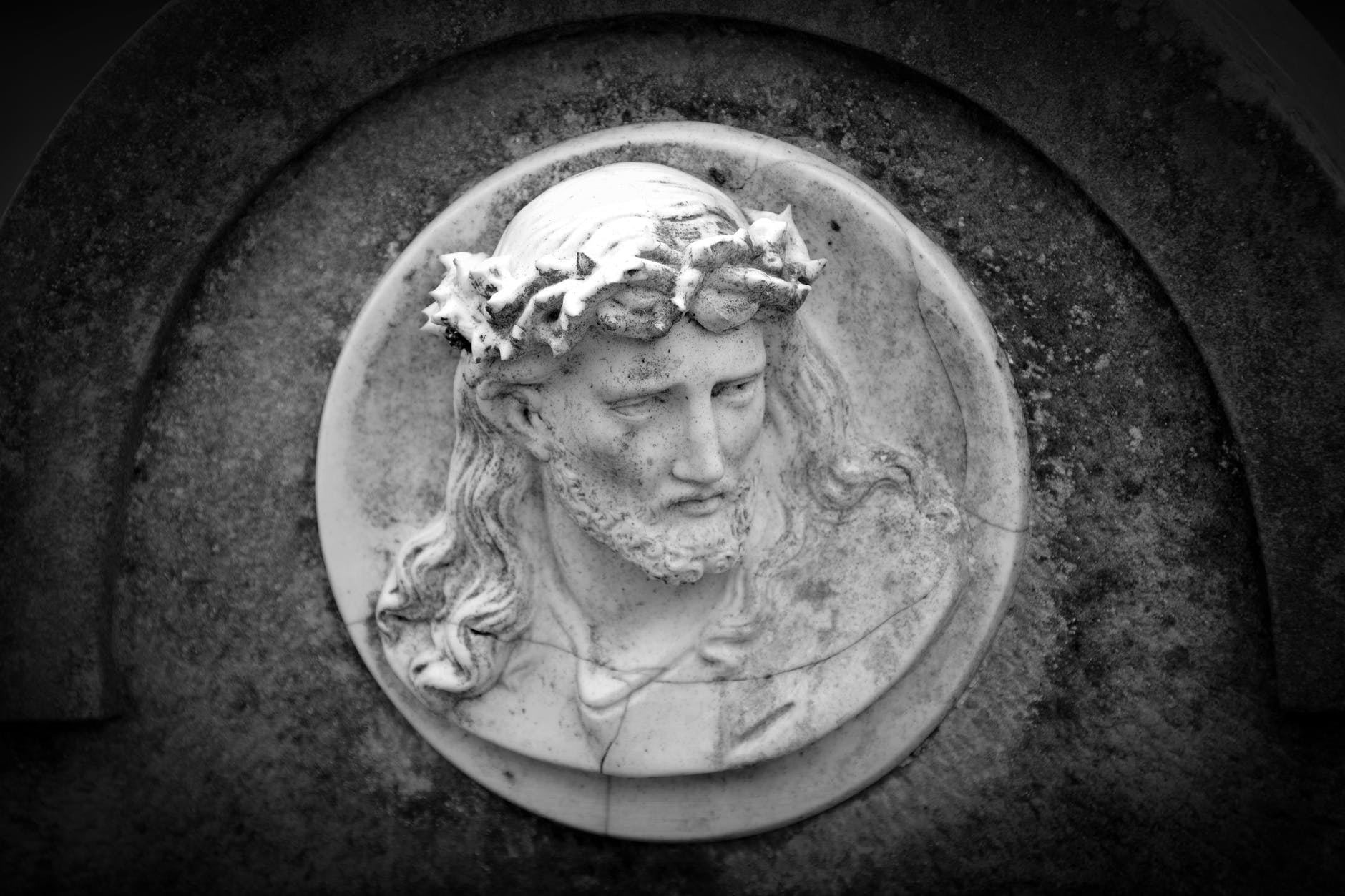
We’ve been experiencing a heat wave. The temperatures are high, but the humidity makes it feel even hotter. People are doing whatever they can to avoid the heat– everything from driving around to stay in the air-conditioned car, wearing loose fitting clothes, wearing wide-brimmed hats for extra shade, drinking lots of cold water, or staying indoors with fans. Others have no alternative– they must walk in the heat, work in the heat, or try to find whatever shelter or shade is available, even if it offers only relief from the harshest rays of the sun.
Today, we are getting rain– blessed relief– cool drops of water and lower temperatures, along with clouds to hide the sun’s piercing rays. Even so, the rain has come with wind and even some flooding and storm damage. Even our “relief” poses some danger! So there is limited relief from the heat, but once the rain front passes, the temperature may rise, and the humidity will once again make the air steamy and oppressive.
Watching how people work and plan and worry about avoiding the heat of summer reminds me of how we work and plan and worry about avoiding another kind of “heat”– accountability and judgment. Hell is described as a “place of eternal torment”, a “lake of fire,” and a “blazing furnace.” People will do almost anything to avoid such a place. They try to pretend it doesn’t exist; they create “air-conditioned” philosophies and religions that block the reality of judgment and punishment; they worry and work and plot ways to escape their fate.
Jesus clearly taught that Hell is real, and that it is a place of darkness, suffering, gnashing of teeth, and despair. Someday there will be a “heat wave,” as all those who have rejected God’s offer of forgiveness and His Sovereignty face His judgment and righteous wrath. There will be no rain to bring relief or refreshment; no shade or cooling breeze of grace– only the unbearable oppression of guilt, shame, and self-torment that comes from being outside of God’s loving care.
There is a way to “avoid the heat” of God’s wrath– He offers complete restoration and eternal life for those who turn from sin and follow Him. Jesus, through His life, ministry, death, and resurrection, made it possible for us to live in God’s presence– His Light, His Glory, and His Love– in joyful eternity. We do not have to worry and work and plot how to “avoid the heat.” We need only put our trust in the one who sends the heat and wind and rain in their seasons, and whose Grace shades us from His wrath.
Part of this trust is being able to call out to God in our times of “heat”– whether from guilt or oppression–and ask for His blessed relief. Sometimes, we need to call on His Grace and forgiveness. Sometimes, we need to call on His promises– not to remind Him, but to remind ourselves that our “heat” is temporary, and His relief is eternally effective. This week, our “relief” from the heat came in the form of rain storms. We might be tempted to complain about the manner of God’s response to our cries for help in the moment. But we must remember that the storms and the heat waves of this life are temporary– the fires of Hell, and the blessings of Heaven are eternal.
I’ve been posting a lot lately about going through my Mom’s “stuff.” Mom was a saver– a pack rat– a hoarder, really. She kept boxes and piles of useless things. But she also kept things that have value to those she left behind. My siblings and I have found old photographs, momentos, letters, documents, etc., that bring the past alive again..not just our past, but our family roots going back generations.
My mother with her mom and younger sister c. 1944
What prompts us to keep such memories; to hold tightly to faded papers, worn objects, shadows of days gone by? Sometimes, it is an unhealthy focus on past memories– good and bad– that keep us in the grip of “glory days” or old and festering wounds. But there IS a value to keeping a record of the past.
When I was young, we had dozens of books around the house, including Bible Story books. The stories of Abraham and Sarah, Isaac, Moses, Samson and Samuel, King David, Queen Esther, Elijah, and then Jesus, his disciples, the Apostle Paul…they were mesmerizing– and very instructive! God didn’t just give us Ten Commandments and a list of rules to follow. He left us with a rich tapestry of stories of real people, and their very real adventures. He has given us Parables, and Psalms, Prophets and Promises– the Bible is a living book that speaks to each new generation with timeless truths. I learned about the Faithfulness of God, His Holiness, and His Mercy in those pages.
The stories and photos that get passed down in families can also be instructive. I now have a baby picture of the grandfather I never got to meet, as well as a photo of him as a young man, and another candid shot of him wearing a milk bucket on his head (He was a dairy farmer)! I can see and sense his humor and love of family in new ways, and appreciate the way his life and early death helped shaped my own dad’s life. I have letters my great-grandparents wrote to each other when they were first married and starting their family. I have some of Mom’s letters when she was struggling as a single mother on a limited income. Many of these items I will keep–not only as a reminder of the past that shaped me, but to pass on to future generations. Other photos, letters, and objects have been given to certain other family members– it is part of the legacy THEY will pass on. Still other items I will let go– they have served their purpose and other items will take their place.
The little country church I attended as a child.
It has been tempting, with the amount of “stuff” that my Mom kept, to just throw everything out. Much of it has to be cleaned off, sorted, identified– and room must be found to keep it! So I also have to look around at what I have been hanging on to, and ask, “Why?” What lessons to I want to pass on? What objects tell an instructive story about my life? What impact will I have on others in the years to come?
One of the most difficult things to go through are the photos and letters my Mother kept. She kept nearly every letter and greeting card she ever received. They meant that much to her. Not the actual cards and paper– the thoughts, the love and connection–the people they represent were her greatest treasures on this earth. And I can’t keep them all. I don’t have space, and many of the people are strangers to me– her elementary classmates, co-workers from years gone by, great-aunts–people long since dead and, with my mom’s passing, forgotten by most. But I will keep some, because they are a testament to Mom’s love of others– her deep and abiding love for everyone who touched her life, and allowed her to touch theirs. I have thrown out, recycled, or given away many of Mom’s clothes and books, and I’m working to give away the thousands of unused greeting cards she had stockpiled but never sent. But most of all, I will keep the stories– stories of God’s faithfulness in her life; stories of how He worked in and through her life to touch hundreds of others; stories of how God’s Love blooms in the simple acts of kindness and baby steps of Faith; in the ordinary joys and tears and minor miracles of daily life.
And I will hold tightly to the stories of my childhood– of Moses and the Burning Bush; of Jesus the Good Shepherd; of David trusting God to face Goliath; of the women finding an empty tomb on the first Easter Morning. One of the pictures I inherited is a print of Jesus on the Road to Emmaus. Two men are walking along, talking to a third man. Such a simple act. Such an ordinary occurrence. But this is no ordinary walk– the man in the middle is the Risen Christ–the One who conquered death to bring eternal life to the two unsuspecting travelers. The print hangs on my wall now. The print itself is not of much material value– but the story! That is worth my life– to keep, to share, to cherish, to proclaim to those yet to come!
22 “The eye is the lamp of the body. So, if your eye is healthy, your whole body will be full of light,23 but if your eye is bad, your whole body will be full of darkness. If then the light in you is darkness, how great is the darkness!
Both the scripture text and the children’s song above are often used in the context of watching pornography or violent images, and their negative effects. It is true that if we fill our sight with negative and sinful images, we will be impacted negatively. We become desensitized to violence and evil; we become addicted to images that shock or excite us.
But I think there is more going on in this text, and I think it has a bearing on our prayer life. What we choose to see also involves what we choose NOT to see. We talk a lot about what we shouldn’t be watching or seeing, but there are some things– even unpleasant things– that we MUST see if we are to be the light of the world. Not only must we see such things, we must shine a light on them and cause others to see them. Injustice, corruption, dishonesty– we must be careful to see them for what they are. And we must see them clearly to pray about them wisely.
We live in a world of optical illusions, and it can be very difficult to see clearly. But that is what we are called to do. If our eyes are good/healthy, we will let in the light of truth, so that shadows and illusions will become stand out. If our eyes are bad/unhealthy, the shadows and illusions will trick us. We will see only what can be seen in a glance, and miss the bigger picture. And we will pray, not with an eye toward the bigger picture, but narrowed in on our own limited vision of the world around us.
John the Baptist had excellent “vision.” As he was out in the hot sun glinting off the Jordan, he looked up to see hundreds of people waiting to be baptized. But his eyes were searching the horizon, seeing all the others, but seeking one face. And when he saw it, he drew everyone’s attention to it– “Behold! The Lamb of God who takes away the sin of the world.” (John 1:29) Our eyes, like those of John, should be looking with purpose and hope.
Throughout the Bible, God looks at people with love and compassion. Several times in the gospels, Jesus looks upon or takes note of people (some of whom are seeking him, and others who know nothing of him) and has compassion on them. Our eyes, like those of our Father, should be looking in love. Love sees things as they really are– it sees sin, pain, disease, betrayal, war, hatred, greed. But love sees beyond to people who need salvation, healing, restoration, peace, compassion, and hope.
I need to give careful consideration to what I allow myself to see– do I see all the negative, hateful, sinful things going on around me? Do I see such things with a sense of purpose and with compassion? Or do I ignore them and turn my gaze inward, shutting out the hurt and need all around me? Do I see all the shadows and illusions and let my own light grow dim? Or do I see the Light of the World, ready to shine (even through me), with hope and redemption? Will I pray with my eyes closed and shuttered, or wide open?
We’ve been cleaning out my Mom’s house for sale, and we came across a couple of shoeboxes of old rocks. I’m not sure which of us kids gathered them up, or when, but at some point, one of us excitedly gathered and saved some “pretty” rocks, thinking they might contain gold or crystals or some other special treasure. And Mom saved them.
I still like rocks– gemstones, geodes, fossils, etc. I like interesting and unusual rocks. My husband and I have several boxes of “pretty” rocks around the house. Some of them we polish and tumble to bring out more of their inner beauty; others we leave in their natural state.
When I was in college and early in my teaching career, it was common for young people to say that something “really rocks!” if they were impressed or excited. Of course, this phrase wasn’t referring to rocks and stones, but to rock and roll music, but the phrase has stuck with me. There is very little about most rocks that would cause me to say that they “Rock!” But that is my point. Jesus thinks a lot about rocks– even ordinary ones.
I was reminded today about some of what Jesus said about rocks and stones:
When he came near the place where the road goes down the Mount of Olives, the whole crowd of disciples began joyfully to praise God in loud voices for all the miracles they had seen: “Blessed is the king who comes in the name of the Lord!” “Peace in heaven and glory in the highest!”| Some of the Pharisees in the crowd said to Jesus, “Teacher, rebuke your disciples!” “I tell you,” he replied, “if they keep quiet, the stones will cry out.” As he approached Jerusalem and saw the city, he wept over it and said, “If you, even you, had only known on this day what would bring you peace—but now it is hidden from your eyes. The days will come upon you when your enemies will build an embankment against you and encircle you and hem you in on every side. They will dash you to the ground, you and the children within your walls. They will not leave one stone on another, because you did not recognize the time of God’s coming to you.”
Luke 19:37-44 NIV (emphasis added)
And do not presume to say to yourselves, ‘We have Abraham as our father,’ for I tell you, God is able from these stones to raise up children for Abraham.
Matthew 3:9 ESV
But all those who come and listen and obey me are like a man who builds a house on a strong foundation laid upon the underlying rock. When the floodwaters rise and break against the house, it stands firm, for it is strongly built.
Luke 6:47-48 The Living Bible (emphasis added)
We spend most of our lives surrounded by rocks, but we rarely take notice. Rocks are generally ugly, hard, and inconvenient. We stumble over them (see many other scripture references!), pile them up, remove them from our gardens and fields, and throw them or kick them out of our way. But Jesus sees rocks just as He does all of His creation. Rocks serve as an enduring foundation for buildings– making them a visual reminder of God’s enduring strength and faithfulness. And did you know that rocks may literally “cry out” in testimony of God’s power?! https://www.templeton.org/news/can-the-rocks-cry-outhttps://www.icr.org/article/stones-cry-out-what-rocks-fossils-say/
As I was thinking of rocks and stones– how common and ordinary they seem– I was also reminded that Jesus relished in using the ubiquitous and ordinary things around us to teach lessons. Seeds, rocks, sheep, trees– all were used in Jesus’ parables to give us practical ways of understanding God’s mysterious nature. And the same is true today. I often learn more about God by interacting with ordinary people and performing humble tasks than I sometimes do at “religious” retreats or doing “holy” work.
There are days when I don’t feel very “successful” in sharing the Gospel message or helping shape disciples for Christ; when I feel like I’m writing to an invisible audience of one or two people, and saying the same things over again. And yet, God called Peter a “Rock” upon which He would build His church– Peter the fisherman; Peter the one who denied Christ three times during His moment of greatest crisis; Peter who had no formal training in theology. And this same Peter calls us “living stones” building up the Church. I am not called on to be sparking like a gem, but I am called on to be like a stone– resting on Jesus the Cornerstone (see 1 Peter 2 :4-8). So God calls me to continue to write, even as I go about my other daily work.
And God can use the “rocks” in our lives– the things we stumble over, the things that seem hard and even useless–to do amazing things. That neighbor who seems stubborn and resistant…that problem that just doesn’t seem to go away… that nagging pain…those voices telling us that we are not enough. God can turn them into “children of Abraham.” God can use them to build us up. God can change hearts of stone into hearts of flesh, overflowing with compassion (see Ezekiel 36:26) God can cause even the rocks to cry out in praise!
And in all that I do, I too want to “cry out”– both in prayer TO God and in testimony ABOUT God. And my testimony is that Jesus ROCKS!
Several years ago, singer and songwriter Billy Joel created some controversy with a song he wrote, called “Only the Good Die Young.” The song was about a young man trying to convince a young catholic girl to give up her virginity. Many were offended by some of the lyrics, and by the general tone of the song, which was sacrilegious; sneering at the notion of sexual purity and waiting for marriage. One of the lines in the song says, “I’d rather laugh with the sinners than cry with the saints..The sinners are much more fun.”
It may seem that way to many– Christians (along with many Jews, Muslims, and others who are sincere and spiritually-minded) seem stern and sober in comparison to free-living, fun-loving heathens. Why should this be so? Shouldn’t those who are closer to God experience more Joy and happiness than those who do not know Him? Why are saints and prophets so often shown crying, wailing, and weeping bitter tears?
The author of Ecclesiastes (assumed to be King Solomon) writes:
Ecclesiastes 7:1-6 (Revised Standard Version)
7 A good name is better than precious ointment; and the day of death, than the day of birth. 2 It is better to go to the house of mourning than to go to the house of feasting; for this is the end of all men, and the living will lay it to heart. 3 Sorrow is better than laughter, for by sadness of countenance the heart is made glad. 4 The heart of the wise is in the house of mourning; but the heart of fools is in the house of mirth. 5 It is better for a man to hear the rebuke of the wise than to hear the song of fools. 6 For as the crackling of thorns under a pot, so is the laughter of the fools; this also is vanity.
This doesn’t mean that God wants His people to be depressed, hopeless, and constantly weeping. But God DOES want us to be aware and to see the world as it really is– fallen, chaotic, filled with needless suffering and injustice. Why? Because He calls us to think about the consequences of our actions, and also to have compassion for those who are hurting. It may be more “fun” to ignore the consequences of sin and to “live it up” if you are young and healthy, but it is not at all true that “only the good die young.” Death comes unexpectedly and randomly– taking both good and evil, both wise and foolish. The difference is that fools get cut off and caught off-guard. The consequences of their actions find them unprepared and filled with regret or bitterness and pain– all of which might have been prevented if they had not ignored reality.
I think the song DOES have a message to Christians–while we shouldn’t be fools chasing after fleeting pleasures that leave a large wake of pain and regret and filling our lives with empty laughter, we should not “die young” in the way of the Pharisees of old. Jesus called them “white-washed tombs” for good reason. Their “goodness” came from self-righteousness and piety. They shunned sinners, and chased others away with their long lists of rules and disdain for anyone who didn’t keep up appearances. Such “saints” never cry– they are more likely to crow about their own “goodness” with dry eyes and closed fists. Jesus attended feasts and parties with the sinners– but his heart was not for the “fun” they were having. It was for them– for their lost souls. Jesus wept! Jesus wept for the loss of his friend Lazarus; he wept over Jerusalem; he even wept tears of blood in the Garden of Gethsemane!
The “Good” have many reasons to cry– millions of innocents suffer needlessly every day–abuse, slavery, genocide, abortion, bigotry, war, starvation, murder, theft, addiction, homelessness, disease, natural disasters, man-made disasters, and more fill our world. People waste time angrily shaking their fists at Heaven or at governments, but so much of the suffering is a direct result of sinful actions on the parts of individuals. In my own country, in my own lifetime, over 50,000,000 babies have been aborted–without legal consequence, but with a terrible consequence on the soul of our nation. If we could shed one tear for each life lost it would equal over 660 gallons of water (here’s how I got that number )– just one tear for each life, and those are only the abortions that have been recorded in the past 45 years in the U.S. If we were to shed a tear for every broken marriage, every rape, every life lost to addiction, suicide, murder, or war, every violent assault, every broken promise, every lie, or every corrupt deed in our world over the past 50 years, we could fill an ocean! The power of tears, or of any running/falling water is so great, it could generate electricity to light the nations! ( Here’s an interesting article on the power of a drop of water!)
I would far rather “cry with the saints.” But more than that, I would rather pray with the saints, and arise from both to work with the saints–the power of tears pales in comparison with the power of God’s mercy and grace!
Do you ever pray “directional” prayers? Some people pray TO something or TOWARD something. It may be positioning yourself to pray toward the east or toward the rising sun, or even toward a particular holy place. Some people pray to the moon or stars or a statue or image of a person. Some people pray rather aimlessly into the sky or the ceiling or the floor.
Does it matter? What does the Bible say?
In Exodus, when God gave Moses the Ten Commandments, He said, “Thou shalt not make unto thee any graven image.” In other words, no carved images of any animal or person that takes the place of God. For some people, this extends to icons and statues of Jesus; for others, it means only idols from other religious traditions.
However, later in Israel’s history, when King Solomon dedicated the first Temple, he prayed that when people prayed toward the Temple in Jerusalem, that God would hear from heaven and intervene. For many, this edict still holds true– they focus many, if not all their prayers toward the city of Jerusalem. Others specifically pray to the “Wailing Wall”– the last part of the Temple that still stands. Tradition states that the Spirit of God “dwelt” in the Temple– therefore to pray to the Temple was to pray to the God who lived there.
Jesus did not command His followers to pray toward the Temple itself, but rather to pray directly to “Our Father, which art in Heaven.” Throughout the Bible, the image of prayer is linked with the image of smoke or incense– rising toward Heaven. Jesus sometimes is described as looking up toward Heaven as He prayed. But other times He bowed or knelt as He prayed.
So what are we to conclude? Which is the “correct” direction for our prayers?
There is no conclusive answer in the Bible. And I think this is because God is Omnipresent. He is everywhere at once, so that we can pray anywhere, facing any direction, without a fixed focus point. There is only one direction that is “wrong.” And that is when our heart is facing away from (in rebellion to) God. We can pray aimlessly to nothing and no one, or to something that we know is NOT the One True God–to creation itself or to an invisible but remote “Force.” But the Bible IS clear that we are to pray to God alone– Father, Son, and Holy Spirit– and directly and personally to Him. We do not need a personal altar in order to be heard; we do not need to be facing an icon or a building or the rising sun or an imaginary point in the stratosphere. God Himself, through Christ– will accept and respond to our prayers. God will hear us from anywhere, in any position or circumstance. Altars and images and icons may represent Christ and His Holiness– they can be helpful tools in reminding us of who we are in relation to Him–but they must never become replacements for His Spiritual Presence.
Our prayers end up– through whatever mysterious and wandering way– finding their true destination, which is the heart of God Himself, when we seek Him sincerely and whole-heartedly. In much the same way, God’s answers to us will find their way through His Holy Spirit, no matter where we are or what direction we are facing.
God transcends space and time, and can be found by those who seek Him from the ends of the earth. I am greatly comforted by this truth. My Father is in Heaven– and right beside me, and dwelling within me! He is always listening, and always available.
I went to a weekly prayer meeting the other day. We started with a reading from scripture. It was just a short passage from Mark (chapter 1, verses 29-39) about Jesus’ early ministry. But I was so excited about the insight we got, that I want to share it here.
29-30 Then, leaving the synagogue, he and his disciples went over to Simon and Andrew’s home, where they found Simon’s mother-in-law sick in bed with a high fever. They told Jesus about her right away. 31 He went to her bedside, and as he took her by the hand and helped her to sit up, the fever suddenly left, and she got up and prepared dinner for them!
32-33 By sunset the courtyard was filled with the sick and demon-possessed, brought to him for healing; and a huge crowd of people from all over the city of Capernaum gathered outside the door to watch. 34 So Jesus healed great numbers of sick folk that evening and ordered many demons to come out of their victims. (But he refused to allow the demons to speak, because they knew who he was.)
35 The next morning he was up long before daybreak and went out alone into the wilderness to pray.
36-37 Later, Simon and the others went out to find him, and told him, “Everyone is asking for you.”
38 But he replied, “We must go on to other towns as well, and give my message to them too, for that is why I came.”
39 So he traveled throughout the province of Galilee, preaching in the synagogues and releasing many from the power of demons.
Mark 1:29-39 The Living Bible
The first thing we noticed was the timing. Jesus had just been at the Synagogue, so this was likely on the Sabbath– the day of rest! Jesus and the disciples walked to the house where Simon Peter and Andrew lived. This would be close to the Synagogue, since travel was curtailed on the Sabbath. But instead of being able to rest, Jesus ended up healing Simon’s mother-in-law. Then people start flooding in, before and after sunset, begging to be healed. After sunset, even more people could come from a farther distance, and many were there just to watch. Jesus worked far into the night, healing and casting out demons.
But look what happens in verse 35. “The next morning, he was up before daybreak and went out alone into the wilderness to pray.” Jesus might have been tempted to sleep in. He might have decided to wake up and find a quiet corner of the house to say a quick prayer for the morning. He might have done many things. But He chose to wake up before dawn, even after an eventful evening, and go off into a solitary place to spend time with His Father.
Prayer was a priority with Jesus. Not sleep. Not comfort. Not convenience.
But later, Simon and the others tracked Him down and asked Him to come back. The response to His healing of the day before had been phenomenal. People were asking for Him, waiting to see more of His miracles and hear more of His teaching! Surely this was success!
But Jesus didn’t come to have a popular ministry. He didn’t come to do command performances and His miracles were not meant primarily to impress and astonish people, or to draw vast crowds. Jesus came to do His Father’s Will. And so He dismissed the opportunity to do an “encore.” Instead, He was focused on His true mission– to preach the Kingdom to the other towns as well. Some of these towns would be eager to hear the message and receive the blessings and healings that Jesus brought. Others would mock Him and urge Him to leave their village or city. But His mission was clear– He would travel where the Father led Him, and preach the message the Father gave Him. Even at the expense of His own popularity; even at the expense of the temporary success of his ministry.
What did Jesus and His Father speak of during that early morning encounter? Did Jesus talk about how tired He was from the day (and night) before? Did He share with the Father the success of His healing, and the great need in that village? What advice did He seek from the Father?
We know only that Jesus got up from Prayer and was immediately obedient to the Father’s Will. Though His trusted friends and companions were encouraging Him to return and repeat the success of yesterday, Jesus walked into the unknown, following the Voice of His Father. “For that is why I came.” Jesus could have done much good by staying put and continuing the success He had on the Sabbath. But that wasn’t why He had come. He didn’t just come to do “good.” He came for much more! Sometimes “good” can be the enemy of the “best.” It takes discipline, humility, and obedience to follow God into the unknown– especially when we are tempted to continue in our own power to do what others deem as “important” and “good.”
What voices are speaking to us today? Have you taken the time today to speak to the Father and seek His direction? Have you submitted yourself to His Will? Are there people “looking for you” to do good; to replicate a good performance from yesterday? What if God is calling you to move on? What if He has something better in mind? Maybe He is calling you to go out into a solitary place, where you can better hear His voice over the noise of the crowds or even the pleas of your friends.
My prayer today is that I will find the discipline to meet with God early, listen intently to His voice above the others, and obey! May I do not just what is “good” in the short-term, but what is “best” in the long-term. Even if “everyone” is looking for me– I want to be looking for God first and foremost! Don’t you?!
What happens when your prayers don’t seem to make any difference? People around you complain that you are passive, even apathetic about critical needs. “People are dying!” “People are suffering, and you want to stop and pray?!”
YES! Buy why do I continue to advocate for prayer in the face of overwhelming injustice and evil? Shouldn’t I be talking about action? Shouldn’t I be posting plans to end injustice or poverty or war? Shouldn’t I be willing to say that sometimes, prayer just isn’t enough?
Well, firstly, I believe that Prayer is far more powerful than most people know. Prayer IS enough, because GOD IS ENOUGH! I can’t stop gun violence, or human trafficking, or an epidemic. I can’t– not with all the resources in the world; not with all the action I can muster; not with any effort or plan or army of willing human helpers. And neither can anyone else. I can march in protest, I can write and call and badger legislators to change laws or enforce the laws we already have. Such actions might make me feel better– they might even have some immediate effect. But they won’t “fix” the continuing and underlying problem of Sin. Only God can do that, and He WILL do it. He may choose to work through human agency to right some wrongs or change the immediate future, but our world is broken, and God’s ultimate plan is bigger than just a convenient patch for Sin’s consequences.
However, I will concede that sometimes prayer, by itself, is not nearly “enough.” Prayer must be paired with Faith. I know many people who say that prayer “doesn’t work,” not because they didn’t pray, or weren’t sincere in their desire or their wish for God to act on their behalf, but because they believe in their desire– their wish or their plan– more than they believe in God’s goodness or His ability to bring good out of whatever struggle we are facing.
This is not a simple concept– that God is eternally good even in the midst of evil and horror– it can be painful beyond words. God may choose to allow the sin of drunk driving to take the life of an innocent person in our family, or leave us permanently paralyzed. Or He may allow war to strip us of all that we own– our home and our freedom. How can we possibly view such circumstances as “good?” Why does God allow for violence and injustice? Why does He allow it to continue– seemingly unabated and unchecked? How can God call Himself “Good” while letting evil touch our lives and the lives of millions innocent people? Praying — and continuing to pray– in such circumstances seems like a mockery of our pain and grief. It seems like God is deaf to our cries– indifferent, or even watching smugly from a distance. Why pray to such a God?
But IS this what God is really like? And why do we believe the worst about Him, rather than trust that His wisdom and Love are actually greater than what we can comprehend or experience in the present? Why do we blame God for the evil we see in others? Why do we ignore our own actions or inaction that often contribute to our situation? Why do we believe that God “owes” us a life without sorrow and pain– even as we see others suffering the consequences of sin– sometimes because of our failures? Why do we insist that God always act in accordance with OUR desires, when we often will not act in accordance with His? Why do we “test” God with prayers in our times of trouble, when we will not trouble Him with our prayers in times of peace and plenty? If anyone should have led a life without sorrow or pain, it should have been Jesus. Jesus prayed all the time– He even taught others how to pray (Matthew 6:9-15). He was completely obedient to His Father. Yet God’s own Son faced heartbreak, betrayal, and a painful, unjust death on the Cross. He wept over the death of a close friend– a death He Himself could have prevented (and later reversed)! (John 11) He was in such deep distress in the Garden of Gethsemane that He sweat blood! (Luke 22:44) God’s plan is not for us to live a life free of trouble, but a life of victory OVER despair and doubt!
Seeking “more” than prayer is often seeking “more” than God–as if we can do better on our own. As though we can out-love, out-give, out-do, and over-power the God of creation;the God of the Cross, and the God of the Resurrection and the Life. Deriding prayer is deriding the God to whom we pray– we minimize His power and His compassion while inflating our own. If God doesn’t exist, one might argue that it doesn’t matter– but then, why waste time deriding what doesn’t exist?! Prayer matters because God DOES exist, and because God matters Trusting God means being willing to wait and accept His will; even if we don’t get the answer we want. God’s ways are not our ways, but that doesn’t mean they are inferior or ineffective. God will not “undo” our circumstances, but He will help us through our circumstances. He won’t take away our grief. But He will shape it into something with purpose– if we let Him.
Finally, there are times when prayer must be paired with action. It IS enough to pray for God to act. But when God prompts US to act, and we do not, our prayers are empty words. Faith may lead us to wait, but it won’t lead us to sit idly by when we have the opportunity to help. Faith may lead me to keep taking the next step– even when I can’t see the way forward. Faith may lead me to let go of a dream I thought would be “enough.” It may lead me into the valley of the shadow of death– in my own life, or on behalf of someone else. I can’t take away someone’s grief at the loss of a child– but I can share in it. I can listen and offer friendship, rather than a quick platitude and a few empty words. I can continue to be there when others fade away. I can’t undo the horrors of war– but I can help care for refugees, and I can work to build peace in my neighborhood, even as I pray. I can take the next step in making someone else’s burden just a little lighter, and making the world a little brighter wherever God gives me the chance. And prayer is one way I can focus on the source of strength, wisdom, and compassion to allow me to do my part better.
The next time you hear someone saying that prayer is “not enough,” remember that no human effort will ever be “enough” to do what only God can do! But prayer taps into the power and grace that is “sufficient” for all our greatest needs.
In my last post, Pursuing Discipline, I spoke of journaling and being consistent in prayer as part of learning discipline. Discipline is an important part of the Christian Walk; one that we don’t always talk about. Discipline is difficult. Discipline is developed over time. And I want to be clear that keeping a Prayer Journal, like other forms of discipline, will take time and effort.

My current prayer journal is the result of years of effort, changes, failures, and baby steps. Several years ago, I found, in a Christian Bookstore, an item called a “Prayer Journal.” It was pre-printed with wonderful facts about different unreached people groups to pray for each week of the year. It was set up in a “planner” format, with each week spread out on a double page, and areas for each day to write in appointments, notes, personal prayer requests, etc. I loved it. But it was specific to that year. As the year was drawing to a close, I went back to the same bookstore, eager to get the next year’s edition. I could not find it.
I thought, “How hard could it be to create my own?” HARD! I did not have the resources to update the information about various countries. I did not like many of the other “planners” I came across. I wasn’t satisfied with apps and on-line planners and calendars. And I wanted to add space for local and personal prayer requests, including all the birthdays and anniversaries of people I know. I wanted a format I could use from year to year, so I wouldn’t have to enter the information over and over again. And I wanted a format where I could see it all, spread out in front of me.
More than twenty years later, I began using the system I currently use– four notebooks for each quarter of the year. Each page is a single day, with the names of people celebrating birthdays, anniversaries, or (in some cases) families mourning the loss of a loved one on that day. In the top corner, I have the name of a country, city, community, or geographical area. These are my daily focus points. In the front of the notebook, I have a reminder of the “Prayer Points”– those topical areas for each day of the week. The bottom half of the page is free for me to add in immediate prayer requests– hospitalizations, those who are traveling or moving, etc.. Each “new” request I add at the bottom gets “tagged” with the year of the request. This way, the journal can be used year after year, until I run out of space for requests, or it wears out! I leave the back of each page for answers. Some days, I go back and look at prayer requests from the previous week and write in the answers or progress. Sometimes, I am reminded to update the request. Sometimes, I see a request from a previous year, and I have not yet written the answer, or there has been an update. In this way, I can help focus my daily prayer time in the morning and/or evening. Of course, I can pray about anything, any time; this is just a way to pursue a more disciplined approach to prayer.
For anyone wanting to use or create a Prayer Journal– please take time to build it prayerfully and deliberately. But also be prepared to “fail.” I went through several notebooks, purchased planners and ready-to-use prayer journals before I found one that works well for me. And even now, there are days when I do not open my journal and use it as it was intended. It is not, after all, a ritual or a code to follow. Prayer is a pursuit– but it is just one part of the pursuit of a closer relationship with God. Disciplined prayer helps me focus on God, helps me understand more of His Character, and helps me build our relationship. Perfect prayer is not the goal, but building on prayer is the objective toward reaching the goal. Part of the building of character and discipline is the journey!
When Jesus’ disciples asked Him to teach them to pray, He did not give them a formula for a prayer journal. He did not give them a system for prayer. He gave them a very simple sample format. But Scripture gives us several other examples of prayers– long and anguished, poetic and joyful, even quick bursts of panic or exasperation. Prayer is far too complex to boil down to a single formula or system.
I hope that what I write here helps you on a journey to discover the complexities of prayer. I hope that you, like me, will draw closer to God as you pursue ways to think about and to practice praying. Your journey, and your journal, will look and function far different from mine. But I hope you find one that helps you grow in discipline, in compassion, in knowledge, and in character. As for me, I will be turning my focus on East Timor, my nephew (who is celebrating his birthday today!), and business and financial issues. And then all the other things on my heart throughout the day! Because God is always listening, and God is always everywhere!
Prayer can take many forms and be many different things. I write about prayer as a pursuit– something done with purpose and with some kind of discipline. Prayer is not meant to be just another discipline in the life of a believer. “Pray without ceasing,” Paul says in 1 Thessalonians 5:17; but this is not meant as an exercise to pursue quantity of prayer over quality, or to spend every waking moment consumed with prayer to the exclusion of all else.
However, we are called to be disciples– and that necessarily entails learning discipline. Any activity taken on without discipline can’t really be called a pursuit. It may be a hobby or an entertainment, but pursuit involves direction, dedication, and focus. And this includes our prayer life.
I want to be very careful in discussing this aspect of prayer, because I believe that there is a real danger of letting the discipline overshadow the purpose of prayer. HOW we pray is never more important than WHY we pray, or to WHOM we pray! But failing to make a plan for prayer can cheat us of the benefits of learning to pray deeply, consistently, and with greater focus.
With this in mind, I want to spend some time each month talking about ways to “grow” a life of prayer. Today, I want to focus on journaling as a way to pursue prayer.
As with any discipline, the key is consistency. That’s why journaling can really help. Keeping a record every day of things to pray about, of reasons for praise, of people or issues to bring before the throne of Grace, can keep us focused. It can also help us chart God’s answers and His work in our lives and the lives of others. I keep four separate notebooks– one for each quarter of the year. But there are wonderful daily journals and notebooks that can work as well. Some come pre-printed with scripture or prayer prompts for each day. Some people use a pocket calendar or calendar app on their phone or computer. The method isn’t as important as having a planned approach.
I recommend having a daily focus that is consistent from week to week. For instance, on Sunday, I focus on The Church– missions, local church congregations, persecuted churches, evangelism effort, etc.. On Monday, I focus on Family and Friends. Tuesday, I pray for the Government– local, state, federal, and leaders of other nations. Wednesday is Community–community services, schools, businesses, neighbors, even roads and parks and utilities! Thursday is Global Day– things like war and drought, natural disasters and diseases. Friday, I focus on business and finances– my own, and others. Saturday is a day to pray about cultural issues, like abortion, marriage, gender issues, etc. That doesn’t mean that I don’t pray about family members on Thursday, or about a school shooting on Sunday. But it means that I pay special attention to those matters on particular days. Here are some reasons why:
God wants to hear from me about everything. But without a plan, I tend to pray about the same few things over and over. I pray about whatever is worrying me in the moment. And only that. God wants me to be aware of all that He is doing. He also wants to remind me that He is LORD of everything; big and small, immediate and long-term, far away or around the corner.
God wants me to be consistent and persistent in praying. But that doesn’t mean praying obsessively. Obsessive prayer can become nagging, doubt-ridden, desperate pleas. God listens to our prayers. And we can trust Him, even when we don’t get immediate answers or relief. We don’t stop praying, but we also don’t stop trusting Him for the next step in the journey. God is bigger than just one aspect of my life– no matter how urgent or overwhelming that aspect may seem today. My focus needs to be on God’s sovereignty, and not just my immediate circumstances.
God works in mysterious ways. I may not feel like praying for my Governor, or my neighbor, but it may be that my faithful prayer today is what God will use to make changes in some other aspect of my life. Praying for what I have on my list, rather than just what pops into my mind may actually remind me of something else, and help me see how God is working in an area I might have missed otherwise!
By practicing this discipline in prayer, I am learning discipline in other areas of my Christian walk.
I read an interesting article on-line the other day about the late Duke of Windsor. Born as the heir to the throne of Great Britain, he was trained from an early age. His father, the King, wanted him to learn discipline and honor, so as to be prepared to assume his role. But Edward despised his father’s training. He found his father to be harsh and critical, prim and joyless. And he rebelled. He took little interest in the affairs of state, preferring to focus on his own pleasure. As his father grew older and weaker, Edward was asked to take on more royal duties. He enjoyed making appearances at parties, but despised many of the other tasks– letter writing, or visiting factories or various parts of the Commonwealth. He refused to settle down and marry, until he met Wallis Simpson, who was twice-married, and separated from her second husband. She was also an American citizen.
Edward VIII wanted to defy the laws and traditions of his own nation in order to marry. When this proved to be contentious, he decided to abdicate his throne, marry Mrs. Simpson, and live abroad. Instead, his brother became the next king (George VI), guiding his nation and the commonwealth through the difficult days of the second world war.
For many years, the myth of a king who gave up his throne to be with “the woman I love” has prevailed. But there was more to Edward’s abdication than blighted love. Edward was not incapable of ruling, but he was unfit to rule it well. His lack of dedication to his duties and citizens became evident in the very first crisis. Those who were working with him during his short reign witnessed his lack of care or concern about paperwork, and his selfish insistence on doing what he wanted to do, and not what was expected of him or of benefit to his people. He was a man without discipline and without a clear moral compass https://www.dailymail.co.uk/news/article-417388/Prince-Charmless-A-damning-portrait-Edward-VIII.html.
The Bible is filled with many examples of kings throughout the history of Israel and Judah who also failed to learn discipline or restraint. Their desire to reap the benefits of their position without learning to fulfill their responsibilities led to the moral, and eventually the physical and political collapse of their nations. They did not make a habit of seeking God, or of listening to His prophets. They sneered at good advice, and defied the laws of Moses and the rules God had given for the kings. Some of them worshiped other gods; some even sacrificed their own children to foreign gods or goddesses. They failed to keep the sacred holidays; they failed to read the Word of God; they failed to pray– except as a last resort!
We often perceive prayer as a personal practice– and it is. But how we choose to develop our prayer life may be tied to how we choose to develop the rest of our lives. We don’t need to be rigid and legalistic about it. But we do need to live– and pray– with purpose, if we wish to follow the example of Jesus and grow in our walk with Him. Not only does it impact our life and growth– it impacts our witness and our influence as well. Pursuing prayer in a disciplined way may have a far-reaching impact on our life and the lives of others– even in the generations to come. For more, see the page Why I Keep a Prayer Journal