My Father’s Heart

I can still remember as a small child of 3 or 4, after my Dad came in from mowing the lawn, climbing up and snuggling close to his chest to listen to the beat of his heart. Dad smelled of new-mown grass and honest sweat, and his heart was beating—thumpity, THUMP-Thump, thumpity THUMP-thump–I could almost feel it beating through his chest. It would start out racing, and gradually slow to a steady Thump-thump Thump-thump.

Looking back, I marvel at my Dad’s patience. Here he was, fresh from working on the lawn, hot, sweat-covered, and exhausted, only to be met with a wiggly child, intent on chattering, and interrupting his precious “relaxation” time. But as I wiggled, Dad’s tender arms would come around me, and both of us would become quiet and just enjoy being together, listening to the beat of his heart. They were precious moments.

My dad worked long hours at a mind-numbingly boring job. He worked for a large pharmaceutical company, but he wasn’t a chemist, or an engineer. He was a “bagger.” His company produced anhydrous citric acid for industrial and commercial use. As the name implies, citric acid is caustic, even in powder form, and Dad had to wear special gloves and shoes, plastic glasses with side shields, and other gear to protect his skin, hair, and eyes from the possibility of burns. He worked, sometimes 16-18 hour shifts (overtime, or time-and-a-half) at a station in a small, hot room. His job was to fit a bag to the end of a chute, push a button, and stand there as 50 or 100 pounds of citric acid filled the bag. He then carefully took the bag off the end of the chute and moved it to another machine, where the top edge would be stitched closed. Finally, he would lift and carry the full bag to a conveyer belt, so it could travel to the shipping room to be loaded on to skids and sent all over the world. Sometimes, he would cover someone else’s shift in the shipping room, loading the bags onto the skids or even loading the skids onto trucks or train cars, but most of the time, he was alone in a drab, overheated, powder-filled room.

I once asked my father how he could stand to do what he did every day. It was hot, heavy, boring, and mostly thankless work. Fit the bag, push a button, move the bag, push a button, move the bag again, and start all over. Always on his feet, always lifting his arms. No one to talk to; nothing to watch or listen to but the machinery around him. But my dad was content. He didn’t find his identity in his work, although he was proud to have a good-paying, steady job. He was thankful for his ability to be consistent and productive. He was proud of his good attendance record and his dedication. But he wasn’t married to his work, and he wasn’t working for money or fame or status. He was a Christian first, and a husband and father next. He was as steady as his heartbeat. Always reliable, even-tempered, trustworthy– solid.

My father worked at the same company for over 28 years (in fact, the company changed names twice while my dad worked there!). When he retired, we threw him a surprise birthday party/retirement party. But Dad’s heart was wearing out. All those years of work were taking their toll Dad spent two years of retirement enjoying some travel and relaxation, but his last two years were spent in and out of the hospital with surgeries and complications, physical limitations, and chronic pain.

Finally, the day came when Dad’s heart broke. He had been in the hospital overnight, and the surgeons had done all they could. They had “zapped” dad with the defibrillator. They had done compressions until his breastbone was broken and each compression was pressing shards of bone into his chest and close to his lungs. One last time, I stood, with my mom and sister, watching Dad’s heartbeat on the monitor. It was steady, but so, so weak. Dad’s once-solid arms were too weak to reach up from the bed; his blue eyes were dim, and he struggled to breathe. We said a last prayer and told Dad that all was ready for him to go Home at last. And his heartbeat faded to a straight line on the monitor.

Dad’s heart was huge in life– steady and strong, patient and solid. His faithfulness gave us all a glimpse of our Father’s heart in Heaven. Dad was a humble man. He was a man who sacrificed the life he could have lived to take on a thankless, boring, demanding job so we could have nice things and opportunities as his children. He also took the job so that, after those long hours, he would have time off during the week, so he could come to some of our school programs, and take family day-trips, and just “hang out” with friends and neighbors in the community. He mowed our lawn, but he also mowed lawns all around the neighborhood– for shut-ins, elderly couples, and those who were sick or didn’t have a mower. His heart was not only strong, it was incredibly tender. Dad cared about the little things…he loved children and animals; he cried for the National Anthem, and at prayer meetings. When I read about Jesus welcoming little children, it made perfect sense, because it is exactly what my own father would have done and said.

Dad wasn’t perfect, of course. He was only human. He made mistakes. And he died. But he made a profound impact on those who knew him, and he lived a life that drew people to Faith and Hope in Jesus. The Bible doesn’t make clear whether or not we will have “hearts” like our present human hearts when we are with the Father in eternity. But I know my Father’s Heart. It’s even better than my Dad’s. Some days, even here on earth, I can hear its steadfast, solid rhythm in the greetings of neighbors, in birdsong, or on the wind. And I can stop wiggling, and just be held in His tender arms.


As In the Days of Noah

We’re getting some rain outside as I write this. Not pouring rain; nor torrential rain; just a steady drizzle. But it looks as though we will get rain for another two days at least. Without stop. Cloudy, wet, chilly, dreary weather.

The news has been dreary, too. War, political upheaval, economic disaster looming, and general unrest. And it isn’t just localized. There is trouble everywhere, and, seemingly, all the time. And yet…events march along as though things are normal– as though the future will be bright tomorrow. There are festivals being planned (some with rain dates, others may be cancelled or lightly attended if the rain continues or worsens); people seem to be in the same hurrying, scurrying rhythm as yesterday. Some complain, or seem a bit oppressed, but most don’t even comment on the catastrophic events unfolding around us. They buy and sell, eat and drink, and rush to and fro like always.

There seems to be a universal weariness– people are tired of bad news, anger, protests, and arguing, but no one seems to want to DO anything positive, unless it is to live in denial of what is actually happening. “Oh, they are just exaggerating.” “That might happen elsewhere, but it will never happen HERE!” “Things will work out– we just need to wait it out.”

It reminds me of the warning of Jesus in Matthew 24:

 For as in those days before the flood they were eating and drinking, marrying and giving in marriage, until the day when Noah entered the ark, 39 and they were unaware until the flood came and swept them all away, so will be the coming of the Son of Man.

Matthew 24:38-39 ESV

While I can listen to or watch bad news unfolding, it hasn’t impacted me directly. I don’t have to worry about bombs coming into my neighborhood (at least, I’m not expecting any today); I haven’t lost my home or a loved one in the past week. I watch the clouds and rain from the safety of a warm, dry apartment. It is easy to become apathetic. And, if I think about any of it, it is easy enough to say a quick prayer for “others” “over there.”

But I’m not building an ark. Jesus’s warning was not to “toss off a quick prayer” as we see signs of danger and await His return. Prayer is important, but it isn’t something to be done lightly. Living for Christ is more than wearing the name “Christ Follower” and a t-shirt or cross necklace. When was the last time I spent an hour in earnest prayer? When was the last time I fasted? When was the last time I felt compelled to act for the cause of Christ?

I’m not surprised that most people walk around angry, or apathetic about the state of the world. But as Christians, we should be working to make a visible difference. And that means our prayers must also be different than the comfortable “good wish” prayers that many of us (and I must include myself) often practice.

In the days of Noah, people were going about their daily lives without any clue of the horrors to come. And yet, there were signs, even then. There was evil everywhere– corruption, fighting, cheating, lies, danger, disease, famine, and oppression. But only Noah was building an Ark. He wasn’t caught up in watching CNN or trolling the internet, but he also wasn’t leading an “ordinary” life. His life stood out, because he listened to God. He was focused on what really mattered– saving those who would enter the Ark and survive the judgment to come. The Ark had room for more people– but they refused the invitation. Maybe they had a dentist appointment scheduled for that day; maybe they didn’t want to miss their “girls day out.” Perhaps they were planning a fishing trip or they were buying a house.

But he said to him, “A man once gave a great banquet and invited many. 17 And at the time for the banquet he sent his servant to say to those who had been invited, ‘Come, for everything is now ready.’ 18 But they all alike began to make excuses. The first said to him, ‘I have bought a field, and I must go out and see it. Please have me excused.’ 19 And another said, ‘I have bought five yoke of oxen, and I go to examine them. Please have me excused.’ 20 And another said, ‘I have married a wife, and therefore I cannot come.’ 21 So the servant came and reported these things to his master. Then the master of the house became angry and said to his servant, ‘Go out quickly to the streets and lanes of the city, and bring in the poor and crippled and blind and lame.’ 22 And the servant said, ‘Sir, what you commanded has been done, and still there is room.’ 23 And the master said to the servant, ‘Go out to the highways and hedges and compel people to come in, that my house may be filled. 24 For I tell you, none of those men who were invited shall taste my banquet.’”

Luke 14:16-35 ESV

Again, Jesus warns that we are to be prepared to drop the “business” of daily living; to be prepared for the Return of Christ. There is a cost involved in being a “Christian” or a “Christ Follower.” We are not to be like those who are walking around with our heads in the clouds, or worse, with our heads filled with apathy or gloom. We are to be salt and light in this dark world. We should be praying for boldness and wisdom to seek out opportunities to serve, to encourage, and to share the Gospel.

“Lord, take over my days and my prayers, that I would not settle for comfort, but seek you with a fervent heart, and seek not to just observe, but to serve!”

Do Be Do Be Do…

I was reading the other day, and thinking about how often we read the Bible with preconceived notions. We sometimes think the Bible is a guide that tells us what to do or not to do. But a good portion of the Bible tells us, not what to do, but how to be. Even the Ten Commandments don’t tell us what to do— rather they tell us what we should NOT do.

God has given each of us free will, and created us with distinct skills and personalities and sets of circumstances. We will not– indeed we cannot– all do the same things. God doesn’t expect it of us. And He does not expect us to earn our salvation by what we do. What He does expect is that we will do those things that bring us closer to Him and closer to the people we were meant to be. His power will take care of the rest.

Photo by Klaus Nielsen on Pexels.com

We have a tendency to get caught up in what we (and what others around us) are doing; we tend to judge and compare and criticize. Instead, we should concentrate on who and what we are becoming:

  • We want to learn–but do we want to be teachable?
  • We want to make money– but do we want to be generous?
  • We want to build a reputation– but do we want to be honest and reliable?
  • We want to have friends– do we want to be available?
  • We want a family–do we want to be intimately known and knowable?
  • We want freedom–do we want to be responsible?
  • We want justice– do we want to be just?
  • We want happiness–do we want to be content with what we have?

Jesus didn’t give His disciples a long “to do” list. He didn’t give them detailed lists of things to do. He gave them “Beatitudes”– “Be” “Attitudes”

Blessed are the poor in spirit, for theirs is the kingdom of heaven.

Blessed are those who mourn, for they shall be comforted.

Blessed are the meek, for they shall inherit the earth.

Blessed are those who hunger and thirst for righteousness, for they shall be filled.

Blessed are the merciful, for they shall obtain mercy.

Blessed are the pure in heart, for they shall see God.

Blessed are the peacemakers, for they shall be called sons of God.

Blessed are those who are persecuted for righteousness’ sake, for theirs is the kingdom of heaven.

Matthew 5:3-12

Of course, much of who we are and who we become depends on what we do. And it is important to do what is right and honorable, just and compassionate. But it’s the “being” that is the goal, not merely the “doing.” God knows we cannot “do” what it takes to be perfectly righteous in our own power. But He will give us the guidance, the strength, and the encouragement to “become” more like Him as we live out the above attitudes.

He Knows MY Name

My first name, Lila, is not unique, but it is uncommon. Last week, when my husband and I got away for a few days for our anniversary, we visited a gift shop. I was excited to see a magnet with my name on it, so I bought it (though we don’t need any more kitchen magnets, and it was more than I would normally spend on such a trinket). My husband, David, on the other hand, has the opposite experience. He can be in a room with 20 people, and if someone calls out, “Hey, Dave,” sometimes three people will answer! He can find trinkets that say, “David,” “Dave,” and “Davey” almost anywhere.

Names can be funny that way. Almost everyone knows how to pronounce my husband’s name. And spell it. It’s a good name, a strong name– that’s one reason it’s so popular. My name is shorter by one letter, but almost no one spells it correctly– I’ve seen it spelled Lyla, Lilah, Laila, Leila, and Lily; and I’ve heard it pronounced Lee-la, Lay-la, Lill-a, as well as just misread completely as Lisa, Lilian, Lina, Lenore, Delilah, Lora, Mila…

Both David and I were named after other members of our families, and we have nieces, nephews, and cousins named David or Lila, as well. Our names have personal and family importance beyond just the normal meanings. Still, somewhere in the world, there are dozens of people who bear the same name (first, middle, and last) as my husband, while there may be one other who bears my same name.

God knows my name. He never misspells it, never mangles the pronunciation or gets me confused with someone else. And he knows “my” David, and never gets him confused with someone else or lumps him in with a group of other “Davids”. God knows why David and I were named as we were, and He knew the family members after whom we were named. He knows the names of our yet-unborn great-great-great grandchildren!

Jesus had twelve disciples. The Bible records that two of them were named James, two were named Simon, and two others were possibly named Judas. Jesus gave one of the “Simons” the new name of Peter’ the other was also known as “Simon the Zealot”. The two James were distinguished as “the elder” and “the younger” or “James the brother of John, and son of Zebedee” and “James the son of Alpheus.” Judas Iscariot was the disciple who betrayed Jesus to the authorities; there was another disciple, who went by the name Jude, or Thaddeus, or Judas the brother of James. Historians know little about “the other Judas”, and even the authors of the Gospels give different lists of names for the twelve disciples, given that some of them went by more than one name. However, Jesus knew each one from before they were even born.

Of course, God knows far more than just our names. He knows our every thought– before we even think it! God “gets” us–for better or worse. He knows our quirks and our capabilities. He knows our deepest shame, and our deepest fear; our greatest accomplishment and our most secret desire. Even more, God knows our future; He knows all that we could be and all that we will become (or fail to become). He knows “what might have been” if we had been born in a different time or place. He knows exactly how our decisions have affected us for good or ill, and how others’ actions have impacted our character.

There are nearly 8 billion people alive on this planet at the current time (7.9 billion estimated as of September 2021). God knows the name and dreams and histories of each and every one! And when we pray, we are not praying to someone whose knowledge of us is limited or determined by our relation to someone He knows “better.” Imagine God having 8 billion kitchen magnets with names on each one–even if there were 100,000,000 of them with the name “David,” God would know exactly which one belonged to “my” David. And God would not confuse mine with any of the millions of similar magnets saying Lily, Lisa, Lylah, Lola, Laura, or even “Lila.”

What an amazing God! What a privilege to call on HIS Name, knowing that He knows us so intimately and loves us so thoroughly!

Heart, Soul, and Mind..

Jesus was asked many trick questions by people who wanted to discredit him during His ministry. One such query involved all the many commands of the law. “Which is the greatest?” With so many commandments, laws, rituals, and traditions, it would be difficult to pick just one. Which is more evil– lying, stealing, murder, idolatry?

But Jesus didn’t skip a beat. 37 Jesus replied: “‘Love the Lord your God with all your heart and with all your soul and with all your mind.’ 9Matthew 22:37 NIV) Jesus was actually quoting from Deuteronomy (Deut. 6:5), when God was giving instructions to the people of Israel before they entered the Promised Land. Of course, Jesus, as part of the Triune Godhead, was actually present for these instructions– in fact, as the WORD of God, He may have been the very one speaking the same words hundreds of years before!

The first three of the Ten Commandments all involve this concept. “Thou shalt have no other gods before Me”–don’t give your soul (your very essence) to someone or something else ahead of Yahweh. “Thou shalt not make unto thee any graven image”–don’t give your heart to worship anyone or anything that is created; instead, worship your Creator. “Thou shalt not take the Name of the Lord your God in vain”–don’t use your mind to devalue and defame the Sovereign Lord.

God is Sovereign. He is Supreme. And He IS Love– it is not just something He chooses to do. Love is part of God’s essence, and it cannot live and thrive without Him.

But this brings up two questions: If God IS Love and He created us, why must he “command” us to love Him? This is one of the great arguments people try to use to deny God’s Sovereignty, His Goodness, even His existence. A Good, Wise, Sovereign, All-powerful God should not need to command love and worship from His creatures, should He? And, if He “commands” love and obedience, how can we truly love Him? We can fear Him, obey Him, be ruled by Him, but none of that sounds like Love.

In theory, such questions seem daunting. But we have dozens of real-life examples of how such commands work. Every nation (and principality, and even every household) has rules and laws directing us how to behave and demanding respect for certain values. “Don’t sass your parents.” “Don’t deface or defile sacred spaces.” “Don’t litter!” We find it distinctly unsettling when we see children treating their parents with disrespect, malice, even abuse. Or when we hear of people whose hatred leads them to burn places of worship, or defile gravestones in a cemetery, or commit treasonous acts that lead to the slaughter of hundreds of innocent neighbors or fellow-countrymen. The planet groans under the strain of people who dump their trash in rivers or streets, or wantonly start wildfires or kill helpless animals.

God does not “command” our love out of weakness. He could DEMAND abject obedience–overrule our will; punish without delay or hope of mercy; force us to act as robots or machines–but He desires us to Love Him freely. His command is for OUR good–when we choose to seek Him, follow Him, Love Him in ever greater measure, we grow to be more like Him–Loving Him teaches us what Love is really all about!

The Law itself, the “command,” is NOT what pleases God or makes us Love Him. God’s purpose is not that we become ritualistic, legalistic, or weak-willed. He wants us to be joyful and live abundant and productive lives. But left to our own devices and our own “wisdom,” we will not achieve any of this. In fact, even with the law and commandments, we will still fall short. God’s love is such that He gave us an impossible command– love Him with our entire heart, soul, and mind– and then, He provided the only Way to make it possible.

Photo by Pixabay on Pexels.com

It IS possible to love God with all our heart, soul, and mind. It doesn’t require that we become hermits or ascetics, wasting away in a cave or mountaintop, starving ourselves and crying out day and night. It does require that we recognize that He is God, and we are not. It requires that we accept His mercy for the times we have strayed. It requires that we seek His counsel, and His correction.

We need to love Him with our heart–draw near to Him in worship and thanksgiving.

We need to love Him with our soul–trust Him to direct our lives, now and in the future.

And we need to love Him with our mind–learn to listen to His words, and to meditate on them; to think more about the things of God, and less about the things of trivial and temporary import.

No More Goodbyes

Today marks 25 years since I said “goodbye” to my father. My mother, sister, and I stood by his bedside at the hospital. The doctors had tried numerous times to re-start his heart. In the process, they had broken his sternum, and each new effort was causing additional pain and putting his lungs in danger of being punctured by bone fragments. His time was running out. We were allowed to come in and say our last words to him, before his worn-out heart finally stopped for good. I held his hand one last time, whispered that I loved him and that I would help take care of Mom. I kissed his forehead, and said a prayer. Mom and my sister did the same.

Earlier this year, I had to say goodbye to Mom as well. My sister and I were with her, and had read her mail aloud to her, as she had fallen into a coma. I was preparing to return home. I said, “goodbye;” I held her hand, kissed her cheek and turned to my sister. When I turned back around, Mom was gone–her oxygen machine was still running, but her heart had stopped beating, and she was peaceful and still. In that moment, I became an orphan.


Death is part of the curse of a fallen world. God is the source of all Life. In a fallen world, we are cut off from our life-source. Our mortal bodies must taste death. It is the consequence of Sin– our sin, and the sins of others. Disease, violence, aging, disasters, grieving, work, abuse– all conspire to drain the life out of our bodies. Life is a gift– we can’t “earn” it, and we can’t “hold on” to it indefinitely. Nor can we hold on to the lives of others–even those we love. Some day, I will lose my sister. Or she will lose me. Some day, I will lose, or be lost to my husband, my brother, my step-children, mother-in-law, grandchildren, cousins, friends, and neighbors.


And, just like leaves on the trees later this month, all of us will grow old, be changed, and fall into decay. Some will fall gently; others will be torn away by the winds of war, or crime, or cancer, or accidents. Some will fall early; others will cling to life until the last moment, but all will eventually die. More goodbyes. More grieving. More death.


But. God is the author of Life, not Death.


Death is not the end for those who have trusted their souls to God. Our bodies must still taste death. We must still say, “Goodbye” to those we love on earth. But our goodbyes are tempered with the promise that the One who conquered Death did so for US. Because Jesus was willing to die and able to rise again, we will also live again. And THIS life will be untainted and eternal. No more goodbyes. No more grieving and separation. No more fear of an unknown future that includes death. No more waiting. No more living without a father. Our Heavenly Father will never leave, never die, never suffer the ravages of age or disease, never fall. In fact, Jesus never said “Goodbye” to His disciples– it wasn’t in His vocabulary! He said that He would “Go to prepare a place…(John 14:2-3)”, and He charged His disciples to “Go into all the world…(Mark 16:15)” But He never said, “Goodbye!”

I had to say, “Goodbye,” to my wonderful parents. And I have the joy of knowing that our “goodbyes” are temporary. That I will see them again, even as I will see my Heavenly Father someday. So, while today holds in it the sadness of watching my Dad suffer in his last minutes of earthly life, it also holds the promise of reunion and restoration. My Dad will never again have to suffer; neither will my Mom. My future probably holds a few more “goodbyes.” But it also holds “Hello!” “Welcome Home!” and “I’m so happy to see you again!”

Photo by Polina Zimmerman on Pexels.com

I thank God for the lives of both my parents– for their testimonies of faith, for their good examples, and for the wisdom, laughter, and love they shared. And I thank God that their deaths were not the end of that love and joy. In fact, it will be even better to share someday what we could never have here on earth–eternal peace and freedom from grief and loss.

Twenty-five years seems like a long time, but it is a drop in the bucket of time, and nothing in light of eternity. That truth brings me great comfort as I face today. I hope you will be encouraged and comforted as well. Heaven is a place with no more “goodbyes.” And that radically changes the way I say “Goodbye” here on earth!

How Firm a Foundation

  1. How firm a foundation, ye saints of the Lord,
    Is laid for your faith in His excellent word!
    What more can He say than to you He hath said—
    To you who for refuge to Jesus have fled?
  2. “Fear not, I am with thee, oh, be not dismayed,
    For I am thy God, and will still give thee aid;
    I’ll strengthen thee, help thee, and cause thee to stand,
    Upheld by My gracious, omnipotent hand.
  3. “When through the deep waters I call thee to go,
    The rivers of sorrow shall not overflow;
    For I will be with thee thy trouble to bless,
    And sanctify to thee thy deepest distress.
  4. “When through fiery trials thy pathway shall lie,
    My grace, all-sufficient, shall be thy supply;
    The flame shall not harm thee; I only design
    Thy dross to consume and thy gold to refine.
  5. “The soul that on Jesus doth lean for repose,
    I will not, I will not, desert to his foes;
    That soul, though all hell should endeavor to shake,
    I’ll never, no never, no never forsake.”
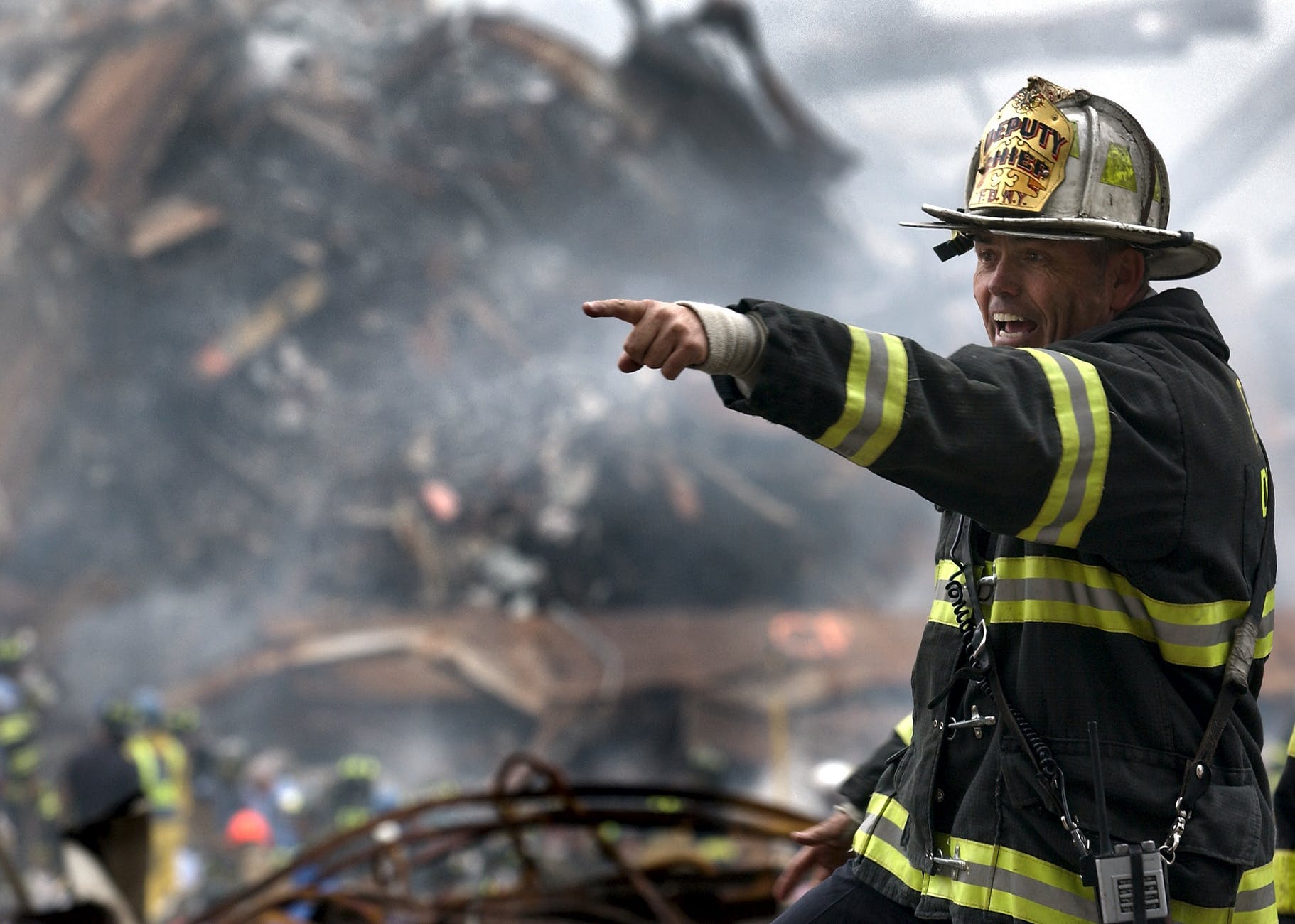
fire fighter wearing black and yellow uniform pointing for something

“How can you believe in a God who lets bad things happen?”
We live in perilous times; dangerous times.  Fires have swept through Canada and Hawaii (and elsewhere); massive heat waves have caused drought and death in many parts of the world; hurricanes have hit California and and the Caribbean, and another threatens Florida even as I write this. Wars rage in Ukraine and elsewhere; crime seems rampant in major cities on every continent. Diseases– even those we considered eradicated or “tamed” are making a comeback. Waste and pollution devastate our oceans, rivers, woodlands, and even the air we breathe. Often, it seems as if God is absent or powerless–sitting on the sidelines and letting bad things happen.  Those of us who claim faith in an omnipotent, loving, and gracious God are mocked and challenged.  How can we believe in the face of such evil, disaster, and injustice?  How can we offer the empty comfort of prayers and assurances?

It can be very difficult to face such challenges– there are no easy answers and “mic-drop” moments for us in this world.  But that doesn’t mean that there are no answers or that our faith is “blind” or without merit.

The Bible is filled with examples of people who followed God in extraordinary circumstances, often in the face of great evil and with little logical expectation of God’s blessing or help.  Abraham traded a wealthy, safe, and honorable life in his native land to live as a stranger and a nomad among foreigners.  Even after God seemed to fulfill the promise of a son, he tested Abraham’s faith, asking him to sacrifice his only son Read the complete story here...  Many people see this story as a horrific example of injustice and cruelty– and if Abraham had been required to go through with the sacrifice, it might seem even more unjust and cruel.  However, there are two points to consider:

  1. God clearly planned to rescue Isaac–there was a ram in the thicket all ready and waiting.  Abraham may not have known God’s purpose in asking such a thing, but he had faith that “God will provide for himself the lamb…”  God may have been “testing” Abraham, but he already knew the outcome.  The “test” was not for God–perhaps not even for Abraham–the test was for Isaac and all who would follow and experience the blessings that came through this amazing act of faith.
  2. The story of Abraham, like so many others, is given to illustrate difficult truths– sometimes about God’s character, or OUR character, or the nature and consequences of Sin.  These stories also often form patterns of allegory, foreshadowing, or illustrations of key principles and events.  Abraham was told to sacrifice his only and very beloved son– a horrible prospect for any father.  But God provided a substitute sacrifice– a lamb– allowing Isaac to live and become the father of many nations.  God’s plan for the salvation of the world was built on the same pattern.  God sent his only and very beloved “son” to be the substitutionary sacrifice for the sins of all mankind– a horrible prospect for a loving Heavenly Father.  And this time, the son willingly gave His life to become the fulfillment of the promise acted out in Abraham’s story.
shallow focus photography of sheep

And, of course, there are hundreds of other stories– throughout the Bible, and throughout history– that demonstrate the blessings that come through radical and even tiny acts of faith in God.

Hebrews, chapter 11 lists several examples.  And a key verse in the chapter points out:

13 These all died in faith, not having received the promises, but having seen them afar off, and were persuaded of them, and embraced them, and confessed that they were strangers and pilgrims on the earth.

Hebrews 11:13 (KJV)

These great examples of faith died without seeing the end results..but the end results are there for US to see!  Faith in humanity– faith in Science– faith in ourselves– these are doomed to end in disappointment.  Not because we don’t believe enough; not because these things are “bad”– but because faith needs an unshakeable, immovable, solid, and eternal foundation.  Our faith in Christ is not a blind faith, an empty faith, or a desperate faith– it is a Faith that is firmly rooted in history, in observable facts, and in revealed truth.  And even in the fiercest storms, the worst of disasters, and the overwhelming flood of hatred and evil in the world, our faith stands firm and sure– not because it is “our faith”, but because it is built on Him who is before and above all things–yesterday, today, and forevermore.

man holding sheep statuette

Our very firm foundation may seem invisible to the world, but that doesn’t change its reality or its power. We pray to the ONE who calms storms, who tears down and builds up kingdoms, and who holds all of eternity, including our future, in His hands. Fires, floods, trials, and terrors cannot overwhelm those who put their trust in Jesus. We may still get wet, singed, singled out, persecuted, and knocked down, but we will never be abandoned or defeated, or forsaken. Even if it seems like God is holding a knife to our neck– remember how the story ends! There is a lamb who has taken our place. God will not put an end to our hope. Even death cannot separate us from His Love and His Purpose for eternity. It’s all there– in His Excellent Word!

Go Into Your Closet to Pray

At least once each month this year, I want to post some practical tips on strengthening our pursuit of prayer. Today, I want to re-post an entry about making intimate space for prayer.

Prayer is a very personal pursuit. Yes, there is group prayer, and corporate prayer– and they are important and valid. But most of our prayer takes place alone; just pouring our heart out to the Father. There is no “rule” for where or how to pray, but Jesus did say that prayer should not be done for show. In fact, He advised that when we pray, we should go into our closets (or inner room, or away by ourselves) and lock the door! Why would He give such advice? I don’t have a full answer, but I can think of several advantages of “secret” prayer:

  • If you are alone and isolated, you are less likely to be interrupted. No phones, no text messages, e-mails, or drop-in visitors. Just you and God, intimate and focused.
  • A closet or inner room is not just free of interruptions, it is free of distractions– looking out of the window, hearing traffic noises, etc. So many times, we try to multi-task during prayer. Sometimes it is unintentional; other times, we feel guilty when we are not “doing” something. It’s not “wrong” to pray while we are cleaning, or driving (except don’t close your eyes!), or listening to music. But it is more likely that we will lose our focus. Even keeping a prayer list or journal can become a distraction– we’re more focused on “checking off” items on our list than communicating with our Loving Father.
  • A small , private, designated space can sometimes alter our perspective. God is Spirit– He can fill vast spaces, and His presence can go anywhere. But we are creatures of time and space; when I am in a small room, I feel my own smallness; it is easier to “be still” and to be humbled.
  • A closet is a room with purpose–it is where we keep things that we need, and store things we don’t want to lose. Praying in a designated “spot”– whether it is an actual closet or a corner of your bedroom, or a special chair or desk–can act as an anchor for our emotions and energy. “This is the spot where I pray” can set a mood and even become a cue to our bodies that it is time to meditate; to “be still and know” (see Psalm 46:10) that we are in God’s presence.
  • As Jesus noted, God knows what is done in secret. We have a human tendency to need affirmation and admiration. God will affirm, encourage, and even reward us for what we do– including what we pray– but it is tempting to seek human admiration, instead. This doesn’t just refer to the actual praying, but our need to announce our actions and prayers to the world. Once again, it isn’t “wrong” to let others know you are praying for them– in fact, it can be a great encouragement! But it IS wrong to make that our focus. Are you praying for the victims of a crisis or war– Great! Keep doing it! But be very careful about posting it on FB and announcing it to everyone in an effort to look “better” in their eyes. Are you praying for someone dealing with cancer or depression– Great! But are you doing more announcing than actual praying? Are you doing anything else to encourage and help the person in question?
Photo by Luis Quintero on Pexels.com

6 “Be careful not to practice your righteousness in front of others to be seen by them. If you do, you will have no reward from your Father in heaven.2 “So when you give to the needy, do not announce it with trumpets, as the hypocrites do in the synagogues and on the streets, to be honored by others. Truly I tell you, they have received their reward in full. 3 But when you give to the needy, do not let your left hand know what your right hand is doing, 4 so that your giving may be in secret. Then your Father, who sees what is done in secret, will reward you. 5 “And when you pray, do not be like the hypocrites, for they love to pray standing in the synagogues and on the street corners to be seen by others. Truly I tell you, they have received their reward in full. 6 But when you pray, go into your room, close the door and pray to your Father, who is unseen. Then your Father, who sees what is done in secret, will reward you. 7 And when you pray, do not keep on babbling like pagans, for they think they will be heard because of their many words. 8 Do not be like them, for your Father knows what you need before you ask him.

Matthew 6:1-8 NIV (emphasis added)

This passage immediately preceded the example of “The Lord’s Prayer.” Jesus modeled for us, not just what words to pray, but how to think about prayer. For many of His followers, this was radical and new thinking. They were used to gathering for prayer. They were used to prayer being limited to rituals and practiced at festivals and worship services. The great patriarchs of the faith prayed as individuals, the priests prayed– long elaborate, and intimidating prayers. Jesus was removing the intimidation of history and tradition, and encouraging people to return to the kind of personal relationship that God intended for us from the beginning– the kind that would be possible with His own defeat of Sin and Death!

Even though I have this intimate access to the Father, and even though I write about it, I still need to be reminded of the importance of seeking God’s face and His approval above that of anyone or anything else. I hope you will also be encouraged to set some time aside today to spend in intimate communication with the One who loves you best!

Avoiding the Heat

We’ve been experiencing a heat wave. The temperatures are high, but the humidity makes it feel even hotter. People are doing whatever they can to avoid the heat– everything from driving around to stay in the air-conditioned car, wearing loose fitting clothes, wearing wide-brimmed hats for extra shade, drinking lots of cold water, or staying indoors with fans. Others have no alternative– they must walk in the heat, work in the heat, or try to find whatever shelter or shade is available, even if it offers only relief from the harshest rays of the sun.

Today, we are getting rain– blessed relief– cool drops of water and lower temperatures, along with clouds to hide the sun’s piercing rays. Even so, the rain has come with wind and even some flooding and storm damage. Even our “relief” poses some danger! So there is limited relief from the heat, but once the rain front passes, the temperature may rise, and the humidity will once again make the air steamy and oppressive.

Watching how people work and plan and worry about avoiding the heat of summer reminds me of how we work and plan and worry about avoiding another kind of “heat”– accountability and judgment. Hell is described as a “place of eternal torment”, a “lake of fire,” and a “blazing furnace.” People will do almost anything to avoid such a place. They try to pretend it doesn’t exist; they create “air-conditioned” philosophies and religions that block the reality of judgment and punishment; they worry and work and plot ways to escape their fate.

Jesus clearly taught that Hell is real, and that it is a place of darkness, suffering, gnashing of teeth, and despair. Someday there will be a “heat wave,” as all those who have rejected God’s offer of forgiveness and His Sovereignty face His judgment and righteous wrath. There will be no rain to bring relief or refreshment; no shade or cooling breeze of grace– only the unbearable oppression of guilt, shame, and self-torment that comes from being outside of God’s loving care.

There is a way to “avoid the heat” of God’s wrath– He offers complete restoration and eternal life for those who turn from sin and follow Him. Jesus, through His life, ministry, death, and resurrection, made it possible for us to live in God’s presence– His Light, His Glory, and His Love– in joyful eternity. We do not have to worry and work and plot how to “avoid the heat.” We need only put our trust in the one who sends the heat and wind and rain in their seasons, and whose Grace shades us from His wrath.

Part of this trust is being able to call out to God in our times of “heat”– whether from guilt or oppression–and ask for His blessed relief. Sometimes, we need to call on His Grace and forgiveness. Sometimes, we need to call on His promises– not to remind Him, but to remind ourselves that our “heat” is temporary, and His relief is eternally effective. This week, our “relief” from the heat came in the form of rain storms. We might be tempted to complain about the manner of God’s response to our cries for help in the moment. But we must remember that the storms and the heat waves of this life are temporary– the fires of Hell, and the blessings of Heaven are eternal.

What We Keep…

I’ve been posting a lot lately about going through my Mom’s “stuff.” Mom was a saver– a pack rat– a hoarder, really. She kept boxes and piles of useless things. But she also kept things that have value to those she left behind. My siblings and I have found old photographs, momentos, letters, documents, etc., that bring the past alive again..not just our past, but our family roots going back generations.

My mother with her mom and younger sister c. 1944

What prompts us to keep such memories; to hold tightly to faded papers, worn objects, shadows of days gone by? Sometimes, it is an unhealthy focus on past memories– good and bad– that keep us in the grip of “glory days” or old and festering wounds. But there IS a value to keeping a record of the past.

When I was young, we had dozens of books around the house, including Bible Story books. The stories of Abraham and Sarah, Isaac, Moses, Samson and Samuel, King David, Queen Esther, Elijah, and then Jesus, his disciples, the Apostle Paul…they were mesmerizing– and very instructive! God didn’t just give us Ten Commandments and a list of rules to follow. He left us with a rich tapestry of stories of real people, and their very real adventures. He has given us Parables, and Psalms, Prophets and Promises– the Bible is a living book that speaks to each new generation with timeless truths. I learned about the Faithfulness of God, His Holiness, and His Mercy in those pages.

The stories and photos that get passed down in families can also be instructive. I now have a baby picture of the grandfather I never got to meet, as well as a photo of him as a young man, and another candid shot of him wearing a milk bucket on his head (He was a dairy farmer)! I can see and sense his humor and love of family in new ways, and appreciate the way his life and early death helped shaped my own dad’s life. I have letters my great-grandparents wrote to each other when they were first married and starting their family. I have some of Mom’s letters when she was struggling as a single mother on a limited income. Many of these items I will keep–not only as a reminder of the past that shaped me, but to pass on to future generations. Other photos, letters, and objects have been given to certain other family members– it is part of the legacy THEY will pass on. Still other items I will let go– they have served their purpose and other items will take their place.

The little country church I attended as a child.

It has been tempting, with the amount of “stuff” that my Mom kept, to just throw everything out. Much of it has to be cleaned off, sorted, identified– and room must be found to keep it! So I also have to look around at what I have been hanging on to, and ask, “Why?” What lessons to I want to pass on? What objects tell an instructive story about my life? What impact will I have on others in the years to come?

One of the most difficult things to go through are the photos and letters my Mother kept. She kept nearly every letter and greeting card she ever received. They meant that much to her. Not the actual cards and paper– the thoughts, the love and connection–the people they represent were her greatest treasures on this earth. And I can’t keep them all. I don’t have space, and many of the people are strangers to me– her elementary classmates, co-workers from years gone by, great-aunts–people long since dead and, with my mom’s passing, forgotten by most. But I will keep some, because they are a testament to Mom’s love of others– her deep and abiding love for everyone who touched her life, and allowed her to touch theirs. I have thrown out, recycled, or given away many of Mom’s clothes and books, and I’m working to give away the thousands of unused greeting cards she had stockpiled but never sent. But most of all, I will keep the stories– stories of God’s faithfulness in her life; stories of how He worked in and through her life to touch hundreds of others; stories of how God’s Love blooms in the simple acts of kindness and baby steps of Faith; in the ordinary joys and tears and minor miracles of daily life.

And I will hold tightly to the stories of my childhood– of Moses and the Burning Bush; of Jesus the Good Shepherd; of David trusting God to face Goliath; of the women finding an empty tomb on the first Easter Morning. One of the pictures I inherited is a print of Jesus on the Road to Emmaus. Two men are walking along, talking to a third man. Such a simple act. Such an ordinary occurrence. But this is no ordinary walk– the man in the middle is the Risen Christ–the One who conquered death to bring eternal life to the two unsuspecting travelers. The print hangs on my wall now. The print itself is not of much material value– but the story! That is worth my life– to keep, to share, to cherish, to proclaim to those yet to come!

Blog at WordPress.com.

Up ↑