…And the Word Was With God…

We get excited about Christmas coming–we put up trees and decorations, and often a manger scene or Creche, with Mary and Joseph and the baby Jesus in the manger. But Jesus didn’t start as a baby. Long before He ever came to Bethlehem, Jesus was one with the Father. He ruled from the heights of Heaven. He saw the first dawn of the first day on Earth. He walked in the Garden with Adam and Eve. He was a witness to all the events leading up to His own birth.

Photo by Pixabay on Pexels.com

We like to picture Jesus as a baby. We like to picture Him as a man. We like to think of Him as a good teacher. And these are all correct. But we miss the full picture if we never imagine Jesus with God before He ascended to Heaven. The Ascension was Jesus returning to His rightful place, after the work of Salvation was accomplished in chronological, Earthly time. Jesus walked with His disciples. He ate with them, He laughed and talked with them. But He spent His earthly life talking and walking and relating with His Father, too. Nothing separated them, until that moment when Jesus became Sin for us so that we could be restored to a relationship with the Father.


Photo by RFA on Pexels.com
Photo by Ivan Samkov on Pexels.com

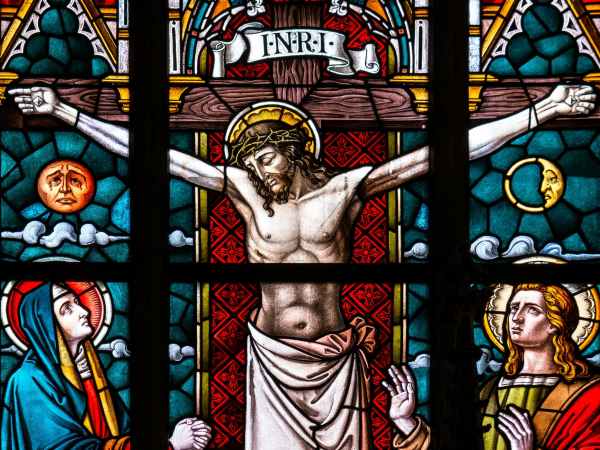
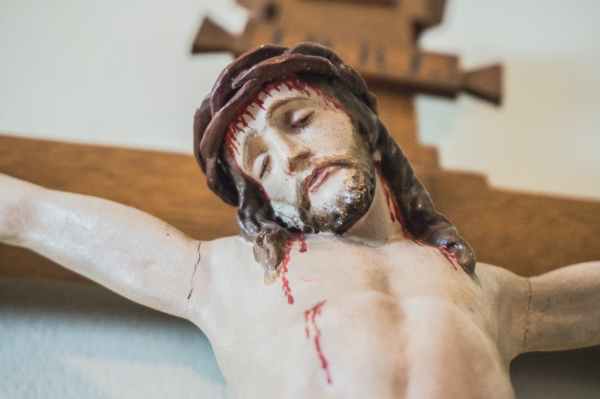
On the Cross, Jesus cried out, “My God, My God, why have you forsaken ME?”(Matthew 27:46 or Mark 15:34). God was not just “sending” His son as an emissary or a benign sacrifice to demonstrate how much He could love us. Jesus came, fully intending to be a living sacrifice. He endured the “imposed” separation of a human body, bound by time and place, separated physically from the glories of Heaven. But this separation– this knowledge of being forsaken, banished to Hell and Death–was what Jesus came to take upon Himself. The one who had eternally existed in loving harmony with the Father and the Spirit, had to be ripped away from Himself, forsaken by the Father and Spirit as one condemned. The one who had lived a perfect life of obedience had to be shunned as one who was unclean and unworthy of life, so that WE could have the right to be adopted as sons and daughters of God. We can be “with God” because He chose to endure the inconceivable pain of the rejection that we deserved. But there is another miracle of the Birth of Jesus that we overlook.

At the moment of Jesus’ birth, He was Emmanuel– God with US. Just by entering into a human existence, God already fulfilled His promise to bring us to Himself. When Jesus ate with His disciples, God was eating with them. When He laughed with them and walked side by side with them, the fullness of God was there. By His death, He continued “with us” to the grave and beyond. There is not a single moment of life –or death– that God, through Jesus, has not experienced and shared with us. In His resurrection, Jesus broke the power of Sin and death to separate us from God. Even the power of God’s justice cannot condemn those who put their trust in the finished work of Jesus, because Jesus has paid the debt in full. There is NOTHING that can ever separate us from God’s love and His loving presence. The Word was with God– and that same Word was with us. That same Word lives with, and in, and through us throughout our days on earth. And, if we have put our faith in this same Emmanuel, we will be “with God” throughout eternity.

Photo by Marcelo Moreira on Pexels.com

I need to meditate on this truth today. Even in the Holiday season, I can feel very separated from God–surrounded by stress and worries; focused on my own struggles and goals; chasing after a temporary joy in the busyness of preparations. Jesus has not forsaken me to return to Heaven– He is no less “with me” for being once again “with God.” No, He doesn’t physically walk beside me and eat with me, or talk audibly to me. But His presence is constant, steady, and promised.

Photo by Alena Shekhovtcova on Pexels.com

The Word– the same Word that spoke galaxies into being; the same Word that conquered Death and Sin–is “with us!” Today. Every moment! We will never have to cry out, “My God, my God, why have You forsaken me?” And we know this because Jesus CAME! He didn’t just “say” it. He gave us “His Word.”

No Greater Love…

This coming Monday we will be celebrating Memorial Day in the U.S. It is a day to remember those who gave their lives in battle, defending our nation, our people, and our way of life over the course of almost 250 years. We decorate the graves of fallen soldiers with flowers and flags and plaques honoring their sacrifices. It is a strange sort of “holiday.” We don’t like to think of wars and battles– we ache for those who are terrorized by wars in the current days. We don’t celebrate war and violence– our highest goal is to achieve and preserve peace and safety. And it can seem somewhat morbid to “celebrate” the fallen soldiers of bygone days.

Photo by RODNAE Productions on Pexels.com

But we are not celebrating their deaths. We are celebrating the causes for which they fought and died. We celebrate freedom, and justice; the rights of individuals to pursue liberty and fulfill their dreams. These are causes worth fighting for, and yes, even dying for. We mourn the loss of life, and we grieve the necessity of fighting and struggling to preserve basic rights. But we are grateful for and humbled by the examples of those who have shown the courage and strength to give their all. We honor these sacrifices when we decorate the graves of fallen soldiers, or hold services and memorials at cemeteries. It is not meant to be a time of joyful celebration, but a time of solemn reflection and humble gratitude.

Photo by Pixabay on Pexels.com

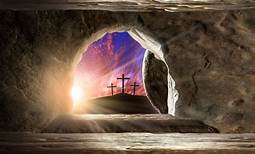
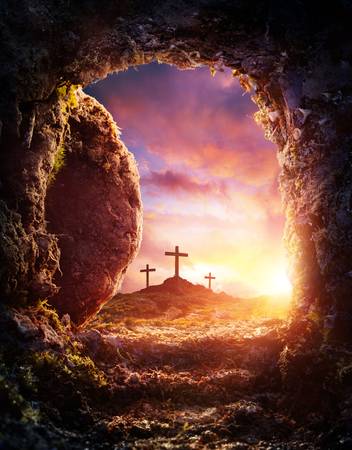
But Memorial Day can also be a time of reflecting on an empty grave– that of Jesus Christ, who gave His all for a cause even greater than liberty and justice in a particular nation or time or for a particular group of people. Jesus gave His life to reconcile an unholy human race with a Holy and Righteous God. He fought against Sin and Death, and conquered them both. And we cannot decorate a grave to honor His sacrifice, because, unlike all the soldiers we honor next week, Jesus did not just preserve a cause or a way of life– He became Life for us. His grave is empty as a symbol of Death’s defeat!

It was Jesus Himself who said, “Greater love has no one than this, that one lay down his life for his friends.” (John 15:13 NASB) Soldiers who lay down their lives often do so to save the lives of their comrades at arms– their friends and fellow warriors– as well as their countrymen and women, their neighbors, and their families. And it isn’t just soldiers who give their lives. Recent news stories tell of teachers, police officers, and other individuals who have sacrificed their lives for the sake of innocent shoppers, students, and neighbors. Such sacrifices are tragic, but they are also heroic, and deserving of our acknowledgement.

We take time to honor those who died for a cause. How much more should we honor the One who died to bring eternal freedom and life to each one of us! And how much more should we be willing to give our lives for the sake His Kingdom! There is no greater love that we can show.

Photo by RODNAE Productions on Pexels.com

For Righteousness’ Sake

Blessed are those who are persecuted for righteousness’ sake,
For theirs is the kingdom of heaven.

Matthew 5:10 (NKJV)
Photo by Meruyert Gonullu on Pexels.com

Yesterday was Easter (in parts of the world)–the celebration of Christ’s resurrection and victory over Sin and Death. We have much to celebrate. But we also have a mission. We have the assurance of eternity in Heaven, but in THIS world, Jesus warned us, “you will have trouble.” (John 16:33). We will be misunderstood, mocked, and persecuted. We will have to face the temporary consequences of living in a fallen world– anger, greed, abuse, violence, betrayal–even bad weather and natural disasters!

In giving the Beatitudes, Jesus turned common expectations upside-down. Blessed are the poor in spirit; blessed are the meek; blessed are those who are persecuted for righteousness’ sake… We don’t consider poverty, powerlessness, suffering and persecution blessings to be desired. Yet Jesus, the One we follow, gladly endured all of these for our sake! Notice that the “blessing” is the same here as in the first of the Beatitudes– “for theirs is the kingdom of heaven.” The Kingdom of Heaven is not reserved for those who are victorious in their own power or through force of will or extraordinary effort. But it is reserved for those who persevere in the face of evil–those who lean, and those who rest, and those who stand IN THE POWER of God.

Notice, too, that we are blessed if we are persecuted “for righteousness’ sake.” There is no blessing for suffering due to our own stubbornness or foolishness. There is no blessing for those who are persecuted for their own pride and judgmental nature and unforgiveness toward themselves or others. (see 1 Peter 3) https://www.biblegateway.com/passage/?search=1+Peter+3%3A8-17&version=CEV

Photo by MART PRODUCTION on Pexels.com

We live in a culture that celebrates “victimhood.” Those who suffer injustice– even perceived of implied injustice–are considered to have a special status. Those who claim to have been offended or hurt by individuals or groups often demand recognition for their “bravery” or retribution for their suffering. This happens even among certain Christians, who claim to be “persecuted,” when they are merely suffering the consequences of their own hubris and self-righteous posturing. This is a monstrous injustice to fellow Christians who are truly suffering persecution “for righteousness’ sake.”


Photo by Cameron Casey on Pexels.com

My prayer today is that I will emulate the example of Christ– that I will serve, humbly, willingly, sacrificially, enduring any persecution that comes as a result, and lifting up fellow Christians who are suffering, as well as their persecutors! For righteousness’ sake– for the sake of the Kingdom of Heaven.

The Measure of Success

My senior year of high school, I was voted “Most Likely to Succeed.” I’m not sure what that meant to most of my classmates, but it was both an honor and a burden to carry. While I was honored by my classmates’ faith in my ability to become some sort of “success,” I was also daunted by the mantle I felt I had to bear. Would I become famous? Wealthy? Important in public affairs or business? My immediate and modest goal was to become a teacher. But I had visions of becoming a well-known author. I also dreamed of becoming a wife and mother; of having a loving, happy family, and a nice home.
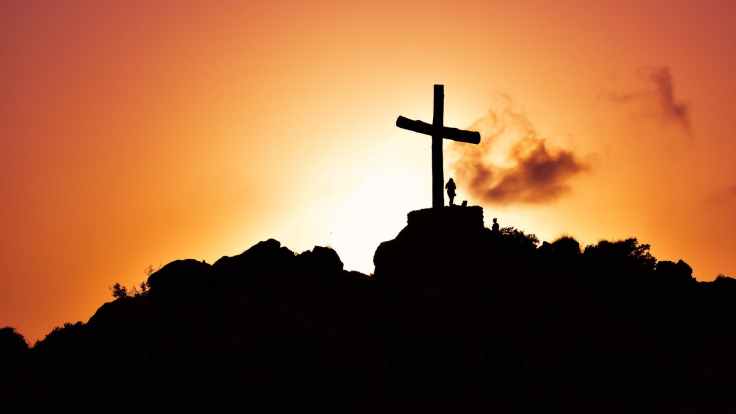
Photo by Scott Webb on Pexels.com

God’s plans are not our plans. God has placed many opportunities in my path– opportunities to serve myself and “get ahead,” and opportunities to serve others. I can say from experience that serving others brings more satisfaction in the long run, but it doesn’t feel like “success” as defined by most of our society. I’ve never achieved what most would consider “success.”

Photo by ROMAN ODINTSOV on Pexels.com

Some days, I feel wistful and even a bit resentful about some of life’s circumstances– children I was never able to have, or jobs I might have pursued with more ambition. But then, I think of all I might have missed– friendships, victories over certain struggles, lessons learned. My life isn’t finished– God may yet give me the opportunity to do “great things.” But already, He has given me the privilege of doing small things for Him over the course of many years. And it is more than enough.

Photo by Pixabay on Pexels.com

One of the greatest measures of true success is to look at the life of Christ. After all, His life, death, and resurrection changed the entire course of history! Time is measured by His arrival on this planet– everything happened either before or after His birth. Billions of people have called themselves “Christians” after Him, and lived their lives in His service. But what did He actually accomplish in human terms? He was not a ruler or political powerhouse. He never owned a house, let alone villas and mansions. He never wrote a book (even though thousands of books have been written about Him). He didn’t invent anything, or found a corporation, or make a monumental scientific discovery. He never led an army. He healed several people, but He didn’t cure cancer or wipe out leprosy, or put an end to blindness. He didn’t rid the world of poverty, hatred, greed, or injustice. At the time of His death, He owned only the clothes on His back– and they were taken from Him! His friends deserted Him as hundreds shouted for Him to be crucified. He was nailed to a cross between two nameless malefactors, and died. He was placed in a borrowed grave. People who had expected great things of this Messiah ended up turning on Him and thinking Him a failure and a blasphemer.

Photo by Francesco Paggiaro on Pexels.com

Jesus did not pursue worldly success. He told parables. He dined with sinners and saints alike. He laughed. He cried. He prayed. Jesus served others, and yet He challenged authorities. He drew crowds, and performed miracles, but He died alone. Jesus did not come to show us how to “get ahead.” He came to show us how to live more abundantly, not more successfully. (See John 10:10)

 So if there is any encouragement in Christ, any comfort from love, any participation in the Spirit, any affection and sympathy, 2 complete my joy by being of the same mind, having the same love, being in full accord and of one mind. 3 Do nothing from selfish ambition or conceit, but in humility count others more significant than yourselves. 4 Let each of you look not only to his own interests, but also to the interests of others. 5 Have this mind among yourselves, which is yours in Christ Jesus,6 who, though he was in the form of God, did not count equality with God a thing to be grasped,7 but emptied himself, by taking the form of a servant, being born in the likeness of men. 8 And being found in human form, he humbled himself by becoming obedient to the point of death, even death on a cross. 9 Therefore God has highly exalted him and bestowed on him the name that is above every name, 10 so that at the name of Jesus every knee should bow, in heaven and on earth and under the earth, 11 and every tongue confess that Jesus Christ is Lord, to the glory of God the Father.

Philippians 2: 1-11
Photo by Ian Panelo on Pexels.com

God can use our worldly success, if we achieve any. But He delights in our humble prayers, our small acts of service, and our obedience. Jesus lived a humble life. He could have done anything He wanted, fulfilled the loftiest of ambitions, and crowned Himself King of the universe. But His success came from the unlikeliest of lives, and the most humiliating death. He lived the perfect and abundant life He offers us.

I don’t live a perfectly humble life. I chafe at my own weakness, sometimes. Yet it is when I stop chasing “success” and perfection that I find it –in Christ.

My prayer today is that someone reading this will be encouraged. If life feels like a series of missed opportunities to find success and fulfillment; if you feel like your life has let you down, and that God cannot use you for some great purpose– take heart! He loves to pour His love and holiness into broken vessels and exalt those who are humble and weary and “not enough.”

Got Jesus?

In the beginning was the Word, and the Word was with God, and the Word was God. He was in the beginning with God. All things were made through him, and without him was not any thing made that was made. In him was life, and the life was the light of men. The light shines in the darkness, and the darkness has not overcome it, 10 He was in the world, and the world was made through him, yet the world did not know him. 11 He came to his own, and his own people did not receive him. 12 But to all who did receive him, who believed in his name, he gave the right to become children of God, 13 who were born, not of blood nor of the will of the flesh nor of the will of man, but of God.14 And the Word became flesh and dwelt among us, and we have seen his glory, glory as of the only Son from the Father, full of grace and truth.

John 1:1-5; 10-14 (ESV)
Photo by James Wheeler on Pexels.com

I memorized this passage as a child. And one part of this passage stands out to me today, because the wording of the verse has not changed, but our cultural reading of it has changed a bit. I remember churches, and evangelists, using the phrases like, “Have you accepted Jesus Christ as your personal Savior (or Lord, or Lord and Savior)?” “Are you ‘born again?'” “Have you asked Jesus into your heart?”

I know in certain circles these phrases are considered “old fashioned”, “evangelical”, and even offensive. Some of us don’t identify as Christians anymore– many of us prefer the term, “Christ-followers.” “Born-again” Christians are seen as hypocritical, overbearing, judgmental, and intolerant– even violent! And there are individuals and groups who give evangelical Christianity a “bad name” by their behavior.

Photo by Alex Green on Pexels.com

Evangelicals have a reputation for putting people’s backs up, and putting people “on the spot.” They want to know, “have you GOT Jesus?” As though Jesus is a product and you either own Him or you’re missing Him. Can you get Jesus at the corner store? Do you “get” Him the same way someone “gets” a virus? Is He infectious? Can you sell Him? Lose Him? Trade Him away?

The Apostle and Gospel writer, John, was an evangelical. He was keenly concerned that His readers, friends, listeners– basically everyone he met, GOT Jesus. He wasn’t trying to sell a product, force a certain doctrine down others’ throats at the end of a sword, or offend those he met. But he DID want to make sure that people didn’t miss out on the GLORY, the incredible WONDER, the eternal GIFT of LIFE that had lived and walked and dwelt among us.

Photo by Kyle Karbowski on Pexels.com

Today, there are many who claim to “follow” Christ– they have great respect for His teachings; they want to live a “good” and even “righteous” life just as Jesus did; they believe He was a great role model. But they haven’t “received” Him. They believe what they have heard about Him; they believe “in” Him, but they don’t believe “in His Name.” Truly becoming a “follower” of Christ is to become a “Christian”– willing to be called by His name and identified with Him. Not just as a wise teacher or a gentle soul, but as a sacrifice–despised and rejected, misunderstood– and obedient even unto death. Not just the physical death of a martyr, but the social death of an outcast, the death of selfish dreams and worldly success through compromise, the loss of relationships, property, status, freedom… John knew all of this first-hand. He was standing by during the trial and crucifixion of Jesus Christ. He watched as his brother and friends were beheaded, tortured, crucified upside-down, and driven into hiding. He spent the end of his life in exile for the privilege of being a “Christian.”

Photo by Gabriela Palai on Pexels.com

Calling oneself a Christian, or a Christ-follower, or “born again,” doesn’t mean anything in and of itself. I can call myself a doctor, or an artist, or a prophet. I may have studied medicine, or created a painting, or made a prediction and be completely hypocritical. I may end up giving a bad name to myself, and causing people to be cautious about other doctors, artists, or prophets. That doesn’t make THEM hypocritical, and it shouldn’t cause them to stop doing what they do well. What matters is not what I say I am, or even what others say about me, but what and who I demonstrate that I am. I want to let my words and actions declare my relationship to Christ. At times, I would like to avoid the ridicule and misunderstandings. I’d like to be able to distance myself from the “bad examples,” but, like John, I long to testify to the GLORY of the one I follow and trust, more than I want to justify my own self at the expense of others. Yes, there are some “fake” Christians, and some who are sincerely wrong in how they attempt to live– and if someone were to catch me in a bad moment on a bad day, and show only that moment to the world, I would be counted among them– but my goal is not to ask if others have a perfect track record, or if they know all the right Bible verses or even if they have the “right” answers. My goal is to ask, ” Have you GOT Jesus?” “Do you KNOW Him– not just about Him?” When you pray, are you praying to an aloof idea or to a personal Savior? If He called you, would you answer, or let it go to voice mail? Would you scroll through and “like” His social media posts, or would you actually DO what He said?

Jesus came. He walked among ordinary people. Crowds “followed” Him, hanging on His parables, excited about His healings, and impressed by His miracles. But very few of them actually became His disciples and “received” Him. But to those who did, like John, He gave them the privilege to be called Children of God– not because they were smarter or wiser or more righteous in their own knowledge or efforts, but because they were made new, “born” again, and transformed by their relationship with Him. May that be so for all of us!

Finished!

God always finishes what He starts. He always completes His tasks, fulfills His promises, and wraps up the loose ends.

As I look back over the past year, I see many tasks that I wish were “finished.” I would like to know that my days of washing dishes, sweeping floors, folding laundry, returning phone messages, etc., were done! Of course, that would mean that my daily life was also finished here on earth! Some tasks here just don’t “end.” I also see many tasks which should be completed, but aren’t–projects started and abandoned, tasks on pause until I can get the right supplies, or tasks left behind because something unexpected and more urgent came along.

Photo by cottonbro on Pexels.com

God is faithful in all things. So it is possible for Jesus to say, “It is finished,” as He breathed His last on the cross– even though we still experience life in a fallen world. His word is trustworthy and true, so we know that the work is/will be accomplished and completed. But God is also faithful in the daily tasks that He does– sunrises, seasons, Mercies that are “new every morning.” He does not abandon the work of forgiving, redeeming, sustaining, or transforming lives.

Photo by Patricia McCarty on Pexels.com

We are NOT God, but we should strive to finish what we start. Part of that is recognizing our human limitations. We may not finish everything we dream of doing today. But we can work to finish each task, and take each step in faith and dependence on the One who does all things well. And we can purpose to run our race with courage and confidence, knowing that God will give us what we need to keep moving ahead.

Photo by Bich Tran on Pexels.com

“Father, today I pray that You would help me to finish those tasks that are necessary– both the daily tasks, and the long-term projects You have for me to do. Help me to be diligent in the things I can do, and to trust You in the things I cannot do on my own. As I look forward to another year, help me to learn from Your example, and to seek Your wisdom each day, from start to “finish!”

Lord, Lord!

21 Not every one that saith unto me, Lord, Lord, shall enter into the kingdom of heaven; but he that doeth the will of my Father who is in heaven. 22 Many will say to me in that day, Lord, Lord, did we not prophesy by thy name, and by thy name cast out demons, and by thy name do many mighty works? 23 And then will I profess unto them, I never knew you: depart from me, ye that work iniquity.

Matthew 7:21-23
Photo by Pixabay on Pexels.com

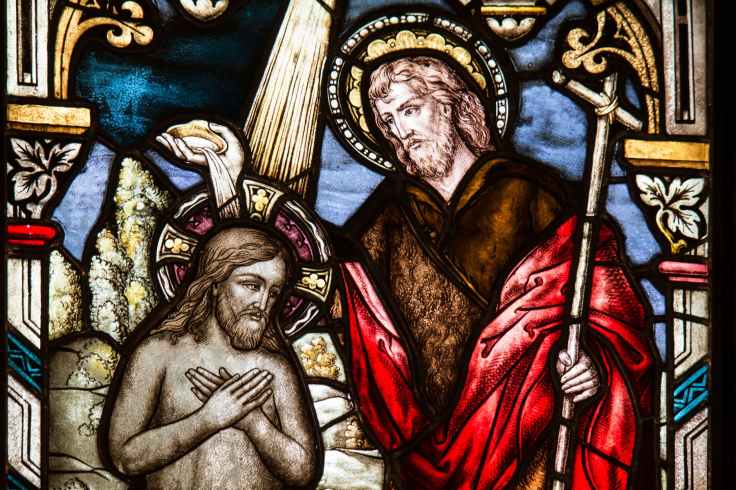
In just the past three weeks, three of my family members and one of my friends have made the decision to be baptized as a public declaration of their decision to live for Christ. All of them (and the others who were baptized at the same times) were baptized by immersion, signifying that they have, spiritually, died to self, been buried, and are raised with Christ to eternal life. This is not a step to be taken lightly, and I have confidence that all four (and more) of those I know are serious in their passion to follow the Lord.

Photo by Ali Arapou011flu on Pexels.com

When I write about prayer as a pursuit, I hope to convey that prayer is part of a larger pursuit of seeking God. And seeking God must include acknowledging Him as Lord above all– especially self. Jesus warned about people who claim to follow Him in word, but do not obey Him. It is, unfortunately, very easy to “speak Christian-ese”: to sound righteous and reverent when we are around others who claim to believe, but justify behaviors that may or may not stem from selfish motives.

There are obvious examples of hypocrisy in our world, but in His famous “Sermon on the Mount,” Jesus warns that many who seem to be doing good deeds, and “talking the talk” will not be part of God’s eternal kingdom. We are not to be seduced into thinking that God will be impressed by charitable giving, memorizing Scripture, or working on the Mission field if we are not willing to repent of our “secret” sins and false attitudes. And it is not for us to point fingers at “other” hypocrites– it is for us to humbly assess whether or not we are truly acting in obedience and submission to our Lord, or satisfying our own selfish desires and hoping for God’s stamp of approval.

Prayer should be a two-way communication. We pray to God, but we also listen for God’s guidance, wisdom, conviction, and encouragement. And we must act in obedience, and confess our disobedience if we want to “keep the slate clean” and keep a close relationship. When we refuse, we are just giving God lip service, and using His name to impress others and deceive ourselves. Others may judge us on appearances, but God sees what is in our heart. And “in that day” (v. 22), He will not let imposters through the gates of Heaven.

Photo by Foss Valentine on Pexels.com

The Good News is that Jesus doesn’t leave us hanging in verse 23. He goes on to say, “Therefore everyone who hears these words of mine and puts them into practice is like a wise man who built his house upon the rock..” (Matthew 7:24) Jesus is our Lord, but also our Savior and our Advocate. When we call on Him AS our true Lord, He is faithful and just to forgive our sins (1 John 1:9), and His divine power has given us everything we need for life and godliness (2 Peter 1:3a)

Photo by Transformation Films on Pexels.com

The act of Baptism alone does not have the power to save us. The practice of prayer alone has no saving power. But the pursuit of a relationship with Christ depends on such acts of obedience, humility, and trust. And the other good deeds that come from that relationship will not only help others, but will please God and strengthen that relationship. Instead of hearing, “I never knew you,” we can hear, “well done!” Not because of what we’ve done, but because of the partnership we’ve developed in God’s work.

Photo by Artem Beliaikin on Pexels.com

May God bless all those who have recently taken the step of Baptism. And may we all continue to pursue that relationship of dying to self, being buried with Him, and rising to new life in Christ!

Nothing But the Blood

As I write this, it is still Sunday evening. This morning, we sang a classic hymn at church– “Nothing But the Blood of Jesus.” It’s an old hymn, and familiar; we often sing such hymns on auto-pilot and without really thinking of the wonderful words and truths coming out of our throats.

Photo by cottonbro on Pexels.com

“What can wash away my sin?– Nothing but the blood of Jesus.” “What can make me whole again?–Nothing but the blood of Jesus.” When I come to God in prayer, confessing my sins, it is not my prayer that makes me clean. Nothing I can say or do will give me right standing before God. I am a sinner, and I fall short of God’s glory. I also trespass against His holiness, and even His mercy. I am guilty, and there is no “magic” prayer that will heal me or exonerate me.

Photo by Michelle Leman on Pexels.com

Yet I come before a Holy God and make my confession. Not because He doesn’t know that I have sinned. Not because my words will save me. I come because I know that the Blood of Jesus Christ has, and will make me whole and justified. I have no need to hide the truth of my condition, or try to make my own justification or sanctification. Christ has done it all.

Photo by Ian Panelo on Pexels.com

Prayers of confession are not for God’s benefit, but for ours. To hide our guilt, or to excuse it, is to despise God’s amazing gift of Grace. When we confess to God, it is not because He wants to humiliate us or cause us additional guilt– though this is often the lie we tell ourselves. God is eager to remove our guilt and to guide us in His righteous ways. But He will not save us against our own will or without our permission. He will not conspire with us to hide our secret sins, or pass the blame on to someone else. To do so would be to submit to OUR will. WE are NOT God, though we sometimes act as though our ways are better than His.

Photo by Pixabay on Pexels.com

I’m so glad that God is God– that His ways are perfect, and that I can trust Him completely. Even when I fall short, I can trust that God has already paid the price to make things right– something I could never do, and something I find too wonderful to fully comprehend.

Nothing but the blood can save me. And anything other than the blood will fail to set me free. My prayers of confession– no matter how polished or pious or piteous– cannot unlock the mystery of salvation and restoration. But they acknowledge the marvelous reality that it IS FINISHED! God’s Grace is sufficient! Hallelujah!

Take My Life..

We have entered the Lenten season, and many of us have made plans to “give up” something for the 40 days leading up to Easter–chocolate, or certain meats, or a certain habit. It is traditional to use this time leading up to Holy Week to focus on preparing our hearts to receive the Gift of salvation that comes from Christ’s resurrection on Easter.

But, in a larger sense, there is nothing we can do to prepare for Grace– it is completely unmerited favor. My willingness to deny my sweet tooth for six weeks cannot make me ready for God to allow His wrath to fall on His Holy Son, so that I can be declared righteous for all eternity. It is no more than a gesture.

Photo by Francesco Paggiaro on Pexels.com

God is not impressed by our Lenten traditions. This doesn’t mean that we should not make the gesture; it doesn’t mean that we cannot grow closer to God by such observances. But we must not place too much reliance on them. Jesus Christ is the Author and Finisher of our faith (Hebrews 12:2). He gave up far more than we can imagine in order to rescue us from all that we deserve. Jesus not only gave up His human life on the Cross, He gave up His throne, His status, His omnipresence, and His omnipotence. He allowed Himself to be subject to human authorities, and He served those He had created.

Photo by Pixabay on Pexels.com

Jesus didn’t just “give up” something on His way to the Cross. He offered everything He was! May we seek to do the same. May we pray, along with Jesus in the Garden, “..not my will, but Yours be done..” (Luke 22:42)

God and Sinners, Reconciled!

Every year, we celebrate the birth of Emmanuel– God With Us. It is amazing to consider the Love of God that brought Him from His Heavenly throne to a lowly manger stall, the King of Glory contained in the tiny body of a sleepy infant.

Photo by nappy on Pexels.com

But we should be careful not to miss the rest of the story. As wonderful as it is to think that God would love His creation enough to visit among us, to “taste” life as a human, the story gets gloriously magnified as Jesus leaves the manger to enter a ministry. Jesus didn’t just live among us, He healed, taught, laughed, formed friendships, and served among people– many of whom scoffed, scorned, and rejected Him and His message.

And His message was this: God wants– in fact He passionately yearns– to restore the relationship WE have broken. Jesus didn’t come to “taste” human life– He came to GIVE His life as a sacrifice for those who didn’t deserve it, to extend forgiveness to those who had no right to ask for it. The Holy and Perfect God became the guilt and shame of Sin, so that we could be reconciled to Him. He accepted the penalty of Death, so that we could be given eternal life.

Photo by Edu Carvalho on Pexels.com

This miracle of reconciliation can be difficult to understand. I sometimes get “stuck” in the weight of my past–I know that Christ offers forgiveness, but I sometimes act as though the penalty hasn’t been removed; only suspended. But that’s not what Jesus taught. Like a leper cured of leprosy, I am clean–no scars, no stains, no relapse–all traces of my disease removed. In this world, I will still feel the sting of the consequences of Sin– betrayal, sickness, injustice, even death. But death is no longer my destiny; it is a temporary rest stop on my way HOME.

Photo by Anna Shvets on Pexels.com

Jesus didn’t come to “taste” human life; He came to “taste” death– and He came to destroy its power, so that we could know true Life, and live it to the fullest!

Joy! Peace! Reconciliation! Eternity! Emmanuel!

Blog at WordPress.com.

Up ↑