We’ve been experiencing a heat wave. The temperatures are high, but the humidity makes it feel even hotter. People are doing whatever they can to avoid the heat– everything from driving around to stay in the air-conditioned car, wearing loose fitting clothes, wearing wide-brimmed hats for extra shade, drinking lots of cold water, or staying indoors with fans. Others have no alternative– they must walk in the heat, work in the heat, or try to find whatever shelter or shade is available, even if it offers only relief from the harshest rays of the sun.
Today, we are getting rain– blessed relief– cool drops of water and lower temperatures, along with clouds to hide the sun’s piercing rays. Even so, the rain has come with wind and even some flooding and storm damage. Even our “relief” poses some danger! So there is limited relief from the heat, but once the rain front passes, the temperature may rise, and the humidity will once again make the air steamy and oppressive.
Watching how people work and plan and worry about avoiding the heat of summer reminds me of how we work and plan and worry about avoiding another kind of “heat”– accountability and judgment. Hell is described as a “place of eternal torment”, a “lake of fire,” and a “blazing furnace.” People will do almost anything to avoid such a place. They try to pretend it doesn’t exist; they create “air-conditioned” philosophies and religions that block the reality of judgment and punishment; they worry and work and plot ways to escape their fate.
Jesus clearly taught that Hell is real, and that it is a place of darkness, suffering, gnashing of teeth, and despair. Someday there will be a “heat wave,” as all those who have rejected God’s offer of forgiveness and His Sovereignty face His judgment and righteous wrath. There will be no rain to bring relief or refreshment; no shade or cooling breeze of grace– only the unbearable oppression of guilt, shame, and self-torment that comes from being outside of God’s loving care.
There is a way to “avoid the heat” of God’s wrath– He offers complete restoration and eternal life for those who turn from sin and follow Him. Jesus, through His life, ministry, death, and resurrection, made it possible for us to live in God’s presence– His Light, His Glory, and His Love– in joyful eternity. We do not have to worry and work and plot how to “avoid the heat.” We need only put our trust in the one who sends the heat and wind and rain in their seasons, and whose Grace shades us from His wrath.
Part of this trust is being able to call out to God in our times of “heat”– whether from guilt or oppression–and ask for His blessed relief. Sometimes, we need to call on His Grace and forgiveness. Sometimes, we need to call on His promises– not to remind Him, but to remind ourselves that our “heat” is temporary, and His relief is eternally effective. This week, our “relief” from the heat came in the form of rain storms. We might be tempted to complain about the manner of God’s response to our cries for help in the moment. But we must remember that the storms and the heat waves of this life are temporary– the fires of Hell, and the blessings of Heaven are eternal.
I’ve been posting a lot lately about going through my Mom’s “stuff.” Mom was a saver– a pack rat– a hoarder, really. She kept boxes and piles of useless things. But she also kept things that have value to those she left behind. My siblings and I have found old photographs, momentos, letters, documents, etc., that bring the past alive again..not just our past, but our family roots going back generations.
My mother with her mom and younger sister c. 1944
What prompts us to keep such memories; to hold tightly to faded papers, worn objects, shadows of days gone by? Sometimes, it is an unhealthy focus on past memories– good and bad– that keep us in the grip of “glory days” or old and festering wounds. But there IS a value to keeping a record of the past.
When I was young, we had dozens of books around the house, including Bible Story books. The stories of Abraham and Sarah, Isaac, Moses, Samson and Samuel, King David, Queen Esther, Elijah, and then Jesus, his disciples, the Apostle Paul…they were mesmerizing– and very instructive! God didn’t just give us Ten Commandments and a list of rules to follow. He left us with a rich tapestry of stories of real people, and their very real adventures. He has given us Parables, and Psalms, Prophets and Promises– the Bible is a living book that speaks to each new generation with timeless truths. I learned about the Faithfulness of God, His Holiness, and His Mercy in those pages.
The stories and photos that get passed down in families can also be instructive. I now have a baby picture of the grandfather I never got to meet, as well as a photo of him as a young man, and another candid shot of him wearing a milk bucket on his head (He was a dairy farmer)! I can see and sense his humor and love of family in new ways, and appreciate the way his life and early death helped shaped my own dad’s life. I have letters my great-grandparents wrote to each other when they were first married and starting their family. I have some of Mom’s letters when she was struggling as a single mother on a limited income. Many of these items I will keep–not only as a reminder of the past that shaped me, but to pass on to future generations. Other photos, letters, and objects have been given to certain other family members– it is part of the legacy THEY will pass on. Still other items I will let go– they have served their purpose and other items will take their place.
The little country church I attended as a child.
It has been tempting, with the amount of “stuff” that my Mom kept, to just throw everything out. Much of it has to be cleaned off, sorted, identified– and room must be found to keep it! So I also have to look around at what I have been hanging on to, and ask, “Why?” What lessons to I want to pass on? What objects tell an instructive story about my life? What impact will I have on others in the years to come?
One of the most difficult things to go through are the photos and letters my Mother kept. She kept nearly every letter and greeting card she ever received. They meant that much to her. Not the actual cards and paper– the thoughts, the love and connection–the people they represent were her greatest treasures on this earth. And I can’t keep them all. I don’t have space, and many of the people are strangers to me– her elementary classmates, co-workers from years gone by, great-aunts–people long since dead and, with my mom’s passing, forgotten by most. But I will keep some, because they are a testament to Mom’s love of others– her deep and abiding love for everyone who touched her life, and allowed her to touch theirs. I have thrown out, recycled, or given away many of Mom’s clothes and books, and I’m working to give away the thousands of unused greeting cards she had stockpiled but never sent. But most of all, I will keep the stories– stories of God’s faithfulness in her life; stories of how He worked in and through her life to touch hundreds of others; stories of how God’s Love blooms in the simple acts of kindness and baby steps of Faith; in the ordinary joys and tears and minor miracles of daily life.
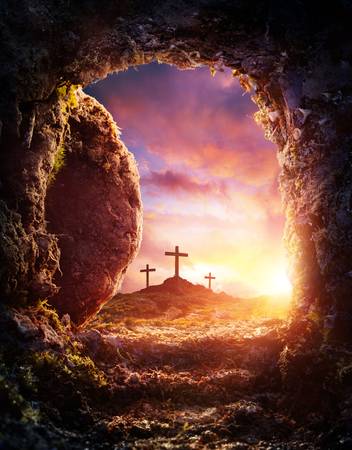
And I will hold tightly to the stories of my childhood– of Moses and the Burning Bush; of Jesus the Good Shepherd; of David trusting God to face Goliath; of the women finding an empty tomb on the first Easter Morning. One of the pictures I inherited is a print of Jesus on the Road to Emmaus. Two men are walking along, talking to a third man. Such a simple act. Such an ordinary occurrence. But this is no ordinary walk– the man in the middle is the Risen Christ–the One who conquered death to bring eternal life to the two unsuspecting travelers. The print hangs on my wall now. The print itself is not of much material value– but the story! That is worth my life– to keep, to share, to cherish, to proclaim to those yet to come!
There is an old joke about a young boy who could hardly wait to go to a local evangelistic service. He begged to go– he counted the days– he thought of little else. Surprised and a little curious, his mother finally asked him why he was so excited. He said, “Mom, they said on the radio that the evangelist is going to be talking about “just a vacation” by faith. I want to go along– especially if he’s taking us to Hawaii!”
Of course, the joke is that the boy misunderstood what he had heard over the radio waves– “Justification” for “Just a vacation.” The evangelist wasn’t promoting travel or taking time off from work, or relaxing on an exotic beach somewhere.
But I think we often make a similar mistake when we talk about Faith. We make it sound like a vacation– a vacation from worry; a vacation from consequences; even a vacation from reason and “justification” for our beliefs. We carry our Faith as a kind of talisman against bad circumstances, or like a “free pass” from worry or responsibility. “If I just believe it, I will receive it!” is a great meme, but we need to believe in Jesus Christ– not just our belief about belief.
Faith goes hand in hand with work. Faith, according to the writer of Hebrews, “is the substance of things hoped for– the evidence of things not seen.” (Hebrews 11:1 emphasis added) Faith is more than just positive or wishful thinking; more than just the power of hoping for the best; more than just acceptance of traditions and platitudes, or falling under the spell of a powerful speaker. It results in changed thinking and a changed lifestyle. Faith is transformative– our new life is evidence of our Faith IN Christ and His Holy Spirit working IN us! We don’t take a “vacation” from our old life or old habits– we change course. Faith isn’t momentary or circumstantial.
Nor is Faith about taking a vacation from responsibilities or hardships. Faith doesn’t magically make pain go away or trials vanish. It doesn’t mean that we don’t have cause to worry, or even to question, “Why?” Instead, Faith wrestles with such questions, and moves ahead, even when we cannot see over the next rise. Faith doesn’t make hard circumstances go away, or painful problems vanish. Hard times are still hard; pain is still pain, even with Faith. But Faith makes the seemingly unbearable, bearable. Faith gives us the endurance and the peace that helps us– with Christ– overcome whatever comes our way (See Philippians 4:12-13)
Faith doesn’t change our circumstances– it changes our perspective. Today is difficult– but today is not the same as forever. Tomorrow’s unknowns might be frightening, but so were yesterday’s trials. God was there with us then; He is with us today, and He has promised to be with us always. Our lack of faith doesn’t negate God’s promises, nor does our Faith cause them. But our Faith has a solid foundation– one that has been put to the test by millions of others over thousands of years and has not been found lacking! God is Faith-ful!
So when I pray today, I am not coming to God with wishful thinking or wondering if God will hear my prayer or be willing to act on my behalf. I trust that God knows my needs, hears my prayers and will answer according to His wisdom. He knows exactly what I need and when I need it– not just what I desire in a particular moment or when I think I would like my circumstances to change–but my true need. Whether or not that includes a vacation!
We’ve been cleaning out my Mom’s house for sale, and we came across a couple of shoeboxes of old rocks. I’m not sure which of us kids gathered them up, or when, but at some point, one of us excitedly gathered and saved some “pretty” rocks, thinking they might contain gold or crystals or some other special treasure. And Mom saved them.
I still like rocks– gemstones, geodes, fossils, etc. I like interesting and unusual rocks. My husband and I have several boxes of “pretty” rocks around the house. Some of them we polish and tumble to bring out more of their inner beauty; others we leave in their natural state.
When I was in college and early in my teaching career, it was common for young people to say that something “really rocks!” if they were impressed or excited. Of course, this phrase wasn’t referring to rocks and stones, but to rock and roll music, but the phrase has stuck with me. There is very little about most rocks that would cause me to say that they “Rock!” But that is my point. Jesus thinks a lot about rocks– even ordinary ones.
I was reminded today about some of what Jesus said about rocks and stones:
When he came near the place where the road goes down the Mount of Olives, the whole crowd of disciples began joyfully to praise God in loud voices for all the miracles they had seen: “Blessed is the king who comes in the name of the Lord!” “Peace in heaven and glory in the highest!”| Some of the Pharisees in the crowd said to Jesus, “Teacher, rebuke your disciples!” “I tell you,” he replied, “if they keep quiet, the stones will cry out.” As he approached Jerusalem and saw the city, he wept over it and said, “If you, even you, had only known on this day what would bring you peace—but now it is hidden from your eyes. The days will come upon you when your enemies will build an embankment against you and encircle you and hem you in on every side. They will dash you to the ground, you and the children within your walls. They will not leave one stone on another, because you did not recognize the time of God’s coming to you.”
Luke 19:37-44 NIV (emphasis added)
And do not presume to say to yourselves, ‘We have Abraham as our father,’ for I tell you, God is able from these stones to raise up children for Abraham.
Matthew 3:9 ESV
But all those who come and listen and obey me are like a man who builds a house on a strong foundation laid upon the underlying rock. When the floodwaters rise and break against the house, it stands firm, for it is strongly built.
Luke 6:47-48 The Living Bible (emphasis added)
We spend most of our lives surrounded by rocks, but we rarely take notice. Rocks are generally ugly, hard, and inconvenient. We stumble over them (see many other scripture references!), pile them up, remove them from our gardens and fields, and throw them or kick them out of our way. But Jesus sees rocks just as He does all of His creation. Rocks serve as an enduring foundation for buildings– making them a visual reminder of God’s enduring strength and faithfulness. And did you know that rocks may literally “cry out” in testimony of God’s power?! https://www.templeton.org/news/can-the-rocks-cry-outhttps://www.icr.org/article/stones-cry-out-what-rocks-fossils-say/
As I was thinking of rocks and stones– how common and ordinary they seem– I was also reminded that Jesus relished in using the ubiquitous and ordinary things around us to teach lessons. Seeds, rocks, sheep, trees– all were used in Jesus’ parables to give us practical ways of understanding God’s mysterious nature. And the same is true today. I often learn more about God by interacting with ordinary people and performing humble tasks than I sometimes do at “religious” retreats or doing “holy” work.
There are days when I don’t feel very “successful” in sharing the Gospel message or helping shape disciples for Christ; when I feel like I’m writing to an invisible audience of one or two people, and saying the same things over again. And yet, God called Peter a “Rock” upon which He would build His church– Peter the fisherman; Peter the one who denied Christ three times during His moment of greatest crisis; Peter who had no formal training in theology. And this same Peter calls us “living stones” building up the Church. I am not called on to be sparking like a gem, but I am called on to be like a stone– resting on Jesus the Cornerstone (see 1 Peter 2 :4-8). So God calls me to continue to write, even as I go about my other daily work.
And God can use the “rocks” in our lives– the things we stumble over, the things that seem hard and even useless–to do amazing things. That neighbor who seems stubborn and resistant…that problem that just doesn’t seem to go away… that nagging pain…those voices telling us that we are not enough. God can turn them into “children of Abraham.” God can use them to build us up. God can change hearts of stone into hearts of flesh, overflowing with compassion (see Ezekiel 36:26) God can cause even the rocks to cry out in praise!
And in all that I do, I too want to “cry out”– both in prayer TO God and in testimony ABOUT God. And my testimony is that Jesus ROCKS!
(Note: This is a post from a couple of years ago…)
My husband and I like to go fishing. We have a small boat, and we take it out on a local lake, and spend many happy hours enjoying nature and casting about for fish. One piece of equipment we keep on the boat is an anchor. It’s a small anchor (for a small boat), but it is heavy and solid. The anchor stays within the boat while we travel, but once we’ve found the spot where we want to fish, out it comes. We “drop anchor”, and tie off the rope. The anchor sinks to the lake bed, where it digs in and holds the boat, keeping it from drifting with the water and the wind. The boat still moves a bit, but the anchor and the rope ensure that the boat will stay close to the spot where the anchor lies.
On calm days, it may seem as if the anchor is hardly necessary. The lake is still, and the boat doesn’t seem to drift at all. On windy days, the boat will be driven by the waves, unless the anchor is dropped and holds firm. But the waves still churn and batter against the sides.
The author of Hebrews compares the hope we have in Christ to an anchor. ” We have this hope as an anchor for the soul, firm and secure.” (Hebrews 6:19a NIV) And as I thought of that, I was reminded of some key things about Hope (and its sister, Faith):
An anchor does no good unless it is IN the boat every time we leave shore. I have seen several anchors on display– in parks or at ports–huge and imposing. But they are useless to any vehicle out in the water. Similarly, we have to have the Hope of Christ IN US–we cannot “borrow” someone else’s hope or faith in moments of testing and suffering. We cannot leave our hope in the boathouse, or hang it up on display on shore, and assume that the waters will stay calm, or that our boat cannot drift.
An anchor is also useless unless there is a rope or chain or line attaching it to the boat. If I say that my Hope is in Christ, but I’m not in relationship WITH Him, the Anchor will still drop and hold, but my boat will be at the mercy of the waves and wind. If I know “about” God, but I have never spent time getting to “know” God, whatever hope I have will be detached and of little use.
An anchor is heavy. It is bulky. It sinks deep and isn’t easy to reposition. That’s how our Faith is meant to be. True faith isn’t lightweight, or convenient, or “cute.” Hope isn’t a balloon or a kite or a parachute. What will keep us from drifting in good times or bad is a faith that is heavy and unshakeable. And our Hope is not airy and wishful, based on wisps and popular philosophy; it is based on God’s eternal nature, and His enduring Word.
An anchor, while important, doesn’t make the boat move. Faith and Hope, by themselves, will not get us to our “fishing spot.” The Christian life isn’t about drifting or just staying still. There are times when we need to move out into deeper waters, or turn the boat around and head for home. For that, we need Love to be the motor, or the sail, or the oars to propel us. And we need the “chart”– God’s word, and the wisdom of the Holy Spirit– to guide us to our destination. Only then can we get the most out of our Anchor and its ability to keep us firmly in the place we need to be.
An anchor, left dragging behind, will actually hinder or stop our movement. We can get so “anchored” on a certain doctrinal argument, or a certain job at church, or a certain tradition, that we fail to move where God would have us go next. Once again, the anchor does no good unless it is IN the boat as we travel. When God calls us to repent, to change, or to move, we have to trust Him enough to bring the anchor aboard and let His Spirit move us to our next destination.
There is much more that can be said about our sure Hope and Faith, but I want to stop and digest this much for now. I pray for wisdom to use the Anchor of Hope properly all my days.
Several years ago, singer and songwriter Billy Joel created some controversy with a song he wrote, called “Only the Good Die Young.” The song was about a young man trying to convince a young catholic girl to give up her virginity. Many were offended by some of the lyrics, and by the general tone of the song, which was sacrilegious; sneering at the notion of sexual purity and waiting for marriage. One of the lines in the song says, “I’d rather laugh with the sinners than cry with the saints..The sinners are much more fun.”
It may seem that way to many– Christians (along with many Jews, Muslims, and others who are sincere and spiritually-minded) seem stern and sober in comparison to free-living, fun-loving heathens. Why should this be so? Shouldn’t those who are closer to God experience more Joy and happiness than those who do not know Him? Why are saints and prophets so often shown crying, wailing, and weeping bitter tears?
The author of Ecclesiastes (assumed to be King Solomon) writes:
Ecclesiastes 7:1-6 (Revised Standard Version)
7 A good name is better than precious ointment; and the day of death, than the day of birth. 2 It is better to go to the house of mourning than to go to the house of feasting; for this is the end of all men, and the living will lay it to heart. 3 Sorrow is better than laughter, for by sadness of countenance the heart is made glad. 4 The heart of the wise is in the house of mourning; but the heart of fools is in the house of mirth. 5 It is better for a man to hear the rebuke of the wise than to hear the song of fools. 6 For as the crackling of thorns under a pot, so is the laughter of the fools; this also is vanity.
This doesn’t mean that God wants His people to be depressed, hopeless, and constantly weeping. But God DOES want us to be aware and to see the world as it really is– fallen, chaotic, filled with needless suffering and injustice. Why? Because He calls us to think about the consequences of our actions, and also to have compassion for those who are hurting. It may be more “fun” to ignore the consequences of sin and to “live it up” if you are young and healthy, but it is not at all true that “only the good die young.” Death comes unexpectedly and randomly– taking both good and evil, both wise and foolish. The difference is that fools get cut off and caught off-guard. The consequences of their actions find them unprepared and filled with regret or bitterness and pain– all of which might have been prevented if they had not ignored reality.
I think the song DOES have a message to Christians–while we shouldn’t be fools chasing after fleeting pleasures that leave a large wake of pain and regret and filling our lives with empty laughter, we should not “die young” in the way of the Pharisees of old. Jesus called them “white-washed tombs” for good reason. Their “goodness” came from self-righteousness and piety. They shunned sinners, and chased others away with their long lists of rules and disdain for anyone who didn’t keep up appearances. Such “saints” never cry– they are more likely to crow about their own “goodness” with dry eyes and closed fists. Jesus attended feasts and parties with the sinners– but his heart was not for the “fun” they were having. It was for them– for their lost souls. Jesus wept! Jesus wept for the loss of his friend Lazarus; he wept over Jerusalem; he even wept tears of blood in the Garden of Gethsemane!
The “Good” have many reasons to cry– millions of innocents suffer needlessly every day–abuse, slavery, genocide, abortion, bigotry, war, starvation, murder, theft, addiction, homelessness, disease, natural disasters, man-made disasters, and more fill our world. People waste time angrily shaking their fists at Heaven or at governments, but so much of the suffering is a direct result of sinful actions on the parts of individuals. In my own country, in my own lifetime, over 50,000,000 babies have been aborted–without legal consequence, but with a terrible consequence on the soul of our nation. If we could shed one tear for each life lost it would equal over 660 gallons of water (here’s how I got that number )– just one tear for each life, and those are only the abortions that have been recorded in the past 45 years in the U.S. If we were to shed a tear for every broken marriage, every rape, every life lost to addiction, suicide, murder, or war, every violent assault, every broken promise, every lie, or every corrupt deed in our world over the past 50 years, we could fill an ocean! The power of tears, or of any running/falling water is so great, it could generate electricity to light the nations! ( Here’s an interesting article on the power of a drop of water!)
I would far rather “cry with the saints.” But more than that, I would rather pray with the saints, and arise from both to work with the saints–the power of tears pales in comparison with the power of God’s mercy and grace!
The month of June is “Anniversary Month” in much of my family. My parents and one set of grandparents were all married on June 1st. My brother and sister both celebrate anniversaries next week, as does my one of my brothers-in-law. Marriage is in trouble in our society– many marriages are ending in divorce, while others are choosing to wait longer before making a commitment or choosing not to marry at all.
We tend to celebrate marriage as being all about feelings of love, but marriage is really about making and keeping promises. Two people stand before witnesses and take sacred oaths to be faithful, to love, honor, and cherish (and yipes! sometimes even to obey) one another for the rest of their lives. And most people who take such oaths do so with honest intent. Why, then, does it seem to be failing so often?
One of the reasons has to do with expectations. We expect the same giddy feelings of delight we have during courtship to carry us dreamily into the future. And we expect that the way we act during courtship will be the norm– the “happily ever after” fairy-tale life of story books and romance novels. We expect that we will always be the same as we are now: young, carefree, beautiful/handsome, and eager to please and be pleased by the boy/girl of our dreams… This is unrealistic. And even when we say we know better, we hang on to unrealistic expectations for our relationships, just as we do for other situations and circumstances. Even our “soulmates” can disappoint us, fail to understand us, suffer failures and setbacks, battle depression or addiction, lose their youth and good health, and even question their feelings for us.
Another related issue is that we usually take vows when we are young and our future looks bright. Circumstances can change; plans can fail. War, disease, financial ruin, the loss or miscarriage of a child or children, forced changes in living arrangements or work schedules– all can put enormous stress on a marriage.
But not all marriages crumble under the weight of unusual or unexpected circumstances. Some seem to erode slowly, even under “good” circumstances. Why?
One reason I’ve seen as I look around is a seeming inability to make and keep small promises. We make big, broad promises at a wedding– “for better or worse, richer or poorer, in sickness and in health..” “’til death us do part…” But we don’t promise to forgive him when he leaves the toilet seat up for the fifth time this week, or wait for her while she tries on every one of the six outfits she can’t decide on for the upcoming class reunion. We don’t promise to compromise on which family we will visit for Christmas each year, or what color we will have in the dining room. We think of marriage as a series of negotiations (which it IS), but ones in which one of us “wins” and the other “loses.” And if we consider that we are the “loser” in enough negotiations, we feel entitled to “break” our little promises.
Almost two years ago, my husband suffered an injury at work. He “punctured” his leg–the injury wasn’t huge, but it was deep, and on the back side of the leg, where he couldn’t see it. He knew it hurt, but thought it would heal up. Instead, it became infected. We had to go to the local wound clinic for several months, but between visits, I had to change the dressings, wash the wound, apply the various antibiotics and salves, redress the wound, etc.. David was still working full time, so the dressings would sometimes get sweaty and dirty on top of everything else. I promised to be faithful “in sickness and in health”– and that included washing out the pus-filled wound and caring for the pus-soaked dressings; it included wrapping his leg every other night for weeks. We went through hundreds of yards of gauze and anti-stick dressings, tubes of several different antibiotic salves, special compression socks, etc. Hundreds of dollars and hours later, his leg is slowly getting back to “normal.” During this same period, I was diagnosed with type 2 Diabetes. David has had to be patient with me as I learn to eat (and cook) differently. He has had to help me with glucose testing, dealing with low-sugar episodes, and put up with mood swings (even more than normal!).
And our health odyssey could be much worse– what about those who have to deal with cancer or dementia? But I think sometimes we minimize the commitment needed for the smaller, chronic conditions. The stress may be smaller, but it piles up, just the same. Our promises need to hold in the daily crises– big and small. And our promises need to hold when there is no crisis– and no adventure, either. Many marriages fall victim to “smooth sailing.” Things settle into a routine, and promises that were made to sustain the marriage in the face of “richer or poorer” fall apart in the settled comfort of middle class complacency. Vows take for “better or worse” fall apart in the “blah” and boredom of “good enough.”
Marriage is designed to be a picture of our relationship with Christ. As Christians, we are the “bride” of Christ! But we may need to review our vows and our commitment. Christ is eternally faithful; are we? In our flesh and our frail humanity, we cannot remain faithful on our own. But where are we? Have we lost our first love? Are we committed to Christ even in the midst of chronic illness or small setbacks? Are we flirting with the world because we have become “bored” with our Christian Walk? Has our joy been eroded by our failure to share our little stresses and secret sins with the Lover of our Soul?
Often, when we take a moment to remember our wedding day, we are reminded of the commitments we made, and the joy we felt on that special day. It can be bittersweet, if we have let circumstances or feelings pull us away from the one we love (or if they have moved away from their commitment). But it can be a wake-up call, as well, reminding us that promises made and promises kept are what leads to long-term joy and security. It can be helpful to take a few moments (or more) every once in awhile to remember when we came to Christ, and be reminded of the commitment we made– and the promises He has kept!
Today is Memorial Day in the United States–a day when we remember all those who have given their lives in service to their fellow countrymen and women. People decorate the gravestones of soldiers who were killed in action, they march in patriotic parades, and they hold memorial services, with military rites, prayers, and speeches.
Not everyone celebrates in the same way. Some just use the day as an excuse to have a pre-summer cookout or swim-party. Some don’t commemorate the day at all. Some people use the day to honor veterans of the armed forces, or even those who risk their lives in emergency services– EMT’s, Firefighters, Police officers, and others. Others use the day to honor their ancestors, regardless of whether they served in the military.
My husband and I fall on this end of the spectrum. We like to pay tribute to those who came before us– to those who left everything behind to start a new life as “pioneers”; those who lived through wars and diseases and struggles; those who left a legacy to our grandparents and parents–a legacy we hope to pass on. But we don’t worship our ancestors; we don’t worship the soldiers who died. We honor them, we remember their sacrifice, but we recognize that they were human, just like us. They may have died in battle or as the result of battle, but they died, just as we will. Their sacrifices may have been heroic; their efforts may have preserved freedom for us, or brought freedom to those who were oppressed. And that is what we honor. That is what we remember.
Jesus Christ was not a soldier. Yet He sacrificed His life for a purpose much greater than the honor of a nation, or the freedom of family and friends. His sacrifice opened a way for us to be reconciled with God– to be declared righteous and Holy, in spite of what we have done (or failed to do). Our best efforts may end in tragic death on a battlefield– or in a hospital bed fighting cancer or AIDS. But our best efforts end in death. His best efforts destroyed the power of Death, and offered hope to all the world.
Memorial Day comes once a year in my country. Other nations have similar days. It is important to remember those who have come before– those who have made sacrifices, and paved the way for future generations to live free. But around the world, Christians have reason to celebrate every day– to remember the death AND resurrection of our Savior that gives us eternal freedom from the sting of Sin and Death.
Before His death, Jesus gave his disciples a rite– a ceremony– to remember His death, and what it would mean in light of His resurrection. We call it Communion or Eucharist– the “body” and “blood” of Christ–consumed and memorialized each time we take it. We don’t hold parades or play Taps or plant flowers. We don’t have pool parties and barbecues. But we reflect with solemnity and gratitude on the sacrifice that conquered the grave once and for all!
10 If one falls, the other pulls him up; but if a man falls when he is alone, he’s in trouble.11 Also, on a cold night, two under the same blanket gain warmth from each other, but how can one be warm alone? 12 And one standing alone can be attacked and defeated, but two can stand back-to-back and conquer; three is even better, for a triple-braided cord is not easily broken.
Ecclesiastes 4:10-12
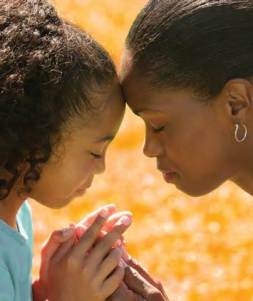
At least once each month this year, I want to write about practical ways to develop our Pursuit of Prayer. Today, I want to focus on seeking out a partner or prayer group.
There are many benefits of adding corporate or communal prayer to our lives. Most of our prayers will take place between just ourselves and God. We may pray during our quiet time, early in the morning, or just before bedtime. Our prayers may be short or long; full of joy or sorrow; silent or even mumbled. But when we pray with at least one other person, the following should happen:
We should be more focused. It may sound shallow or presumptuous, but praying aloud in front of a “human” audience has a tendency to keep us focused on the words we use and the thoughts we are sharing. And, while we can fall victim to the temptation to show off our eloquence, or say what we think others want to hear, we can also be sharpened by the reality that God AND others are listening! Have you ever “caught” yourself praying without really “hearing” your own thoughts? Sometimes, prayers can become rote or stale. We can pray on “automatic pilot”– repeating requests or phrases without really meaning them. Praying aloud in front of others won’t necessarily stop that from happening, but it should make us more focused.
We should learn from the prayers of others. Listening to others pray gives us insight into THEIR thoughts and hearts. It can also give us insight into how others communicate with the Father. Sometimes others have knowledge of issues and requests of which I am unaware or unburdened. Sometimes, they have a different way of relating to the Father– not “better,” but different in perspective or experience. I have been startled, convicted, encouraged, and emboldened by listening to the prayers of my brothers and sisters in Christ. And there is a “flip-side” to this, namely
We should allow others to learn from our prayers. I know many people who feel their prayers are somehow “inferior.” They use simple words, or their words don’t flow smoothly. They are ashamed to pray in public. And yet, thousands have been inspired and humbled by so-called “simple” prayers. They teach faith and humility; trust and caring; and even courage and strength. If everyone’s prayers were the same, or if everyone’s prayers were about their own abilities or eloquence, they would lose much of their power– because prayer is not about US; it is about God working THROUGH us.
We can agree in prayer. As one of us prays aloud, the other(s) can pray along silently in agreement. This may seem like a simple truth, or a trivial point, but it is not. Prayer, like the rest of our life, is meant to be done in communion with others–we are not meant to be solitary and self-sufficient. There is exponential power in communal prayer, as we come together in agreement on various issues. It is one of the reasons that so many revival experiences begin with a small group of people who pray fervently. This isn’t just a metaphysical phenomenon. Hearing others pray about the things weighing on my heart encourages me to keep praying when I am alone again. Hearing others pray with the same heart encourages my faith and resolve. Hearing others agree in prayer may even plant a seed that wasn’t there before. Conversely, hearing others pray may cause me to reevaluate my own thinking, or help us better hear faulty thinking and disagreement over certain issues, causing us to seek resolution and truth over long-held but unquestioned beliefs. Praying aloud can help bring us closer toward unity!
Our prayers become more powerful. “Where two or three are gathered…” Matthew 18:20 says that where two or three are gathered together in my (Jesus’) name, he will there in the midst of them. This verse is often taken out of context. It does NOT mean that Jesus will ONLY be with groups of two or more. Jesus promises never to leave or forsake ANYONE who puts their trust in Him. Others have taken this promise (along with its preceding verse) to mean that where two or three people pray together, Jesus is obligated to give them whatever they ask for. This is also misleading. Jesus is with us, not to give us a particular outcome or answer, but to guide us into truth and faith. It means that Jesus is with each person, AND with everyone who gathers together in HIS name. His presence is magnified; His power is magnified (if such a thing is possible…) Just as in the passage in Ecclesiastes, the power of a united group– even a small group of two or three PLUS JESUS– cannot be over-emphasized. Remember the story of Shadrach, Meshach, and Abednego? Satan does not worry when Christians gather together to protest or complain. It warms his heart to see a small group of Christians come together to gossip, boast, or argue. But he shudders when Christians meet together in Faith to pray! It is much more difficult for him to distract, distort, and discourage us when we pray together–for each other, with each other, beside each other!

We become more accountable. This happens best when we meet regularly for prayer with another/others. It doesn’t have to be daily or even weekly, but when we meet consistently, we challenge one another to be faithful, active, and accountable in our prayers and in our living. I pray more often alone when I pray more often with a friend or group! I pray with more focus and purpose. I pray more intentionally.
If you don’t have a regular prayer partner or prayer group, I encourage you to seek out a friend or a group of people who will meet regularly. Even if it is not a “Prayer” group– it may be a Bible Study group, a group of friends meeting for lunch once a month, or a neighbor who carpools or commutes with you. Make prayer part of your friendship or group on a regular basis.
Today marks 90 years since my mother was born. She didn’t live to see this birthday; she died back at the end of February. But birthdays were important to my mother– hugely important. She never forgot a birthday. Mom was pretty sharp into her later years. She might forget someone’s name–for awhile. She might forget a few details about what happened yesterday or last year, but she didn’t forget to take her medication. She would eventually remember that name she couldn’t come up with earlier in the day. And she had an elaborate system of calendars, date books, and directories to help her remember birthdays.
Mom had a large desk calendar. Each day’s “square” was covered in her handwriting– names, numbers, etc., reminding her of birthdays and anniversaries of her relatives, friends, neighbors, and church family. If she knew your name and birthday, it was on her calendar. If she knew your age, it was on there, as well. If she knew your anniversary, it was there, too. If she knew. your birthday and/or anniversary AND your address, you received a greeting card– and it generally arrived on the exact date! Mom did this for literally hundreds of people each year.
Today hits me hard. Not because Mom made a fuss about her own birthday–even special ones like a 90th. She enjoyed getting a card or gift, or having some cake or ice cream on her birthday, but that’s not what I miss. I miss the absolute joy she had in remembering others, and in being remembered. I can still see the look of childlike glee on her face when she and a friend were both surprised with a birthday party a few years ago. She was delighted for her friend as much as for herself. I can remember her insistence that certain cards be placed in the mailbox on certain days, so that they would not arrive too early or late, but just at the right time for someone’s special day. I remember shopping with her for box after box of greeting cards. Even though she bought “in bulk,” filling a basket or cart with multiple boxes of cards, she was very choosy about them– looking over the designs and the messages inside each box. Often, she had “buyer’s remorse” about a particular box of cards: she wasn’t satisfied with the tone or the greeting. In a box with four different designs, she might send out cards with two of the designs and just leave the others untouched.
Birthdays were important to Mom because individuals were important to her. She wanted every person she knew to feel loved, remembered, and special. Because they ARE! Not just by Mom, but by the God she loved and served.
Mom loved birthdays, including her own. But Mom had another birthday. Mom won’t celebrate another earthly birthday– she won’t get any cards or ice cream today– but she is celebrating her “other” birthday today. She did not knew the exact date, but she was born into eternal life when she accepted Jesus as her savior, and that birthday has no end. It is much more important than her earthly birthday, and fills her (and all who love her) with a greater joy. I can only imagine the gleeful expression on her face at this moment that “was” her birthday, and in every moment since she went “home.” And it’s in large part due to my Mother’s witness and influence that I also have a “second” birthday. I don’t knew its exact date, though I remember it was a beautiful summer day. Later this year, I will celebrate my earthly birthday–and it will be a bit sad without Mom’s card and her smile. But I know that we will someday share much more than a cake with candles, or a greeting card or a wrapped gift.
Mom taught me to appreciate birthdays– and to share the joy of wishing others a “Happy Birthday.” And to anyone celebrating an earthly birthday today, “Happy Birthday!” But I am looking forward to the day that I can share eternity with all those who have a “second birthday” in Christ! I’ll see Mom again, but even that will pale in comparison to experiencing God’s presence and the love He lavishes on His Children!
Just think– God loves you so much that He never forgets your earthly birthday. He not only knows your birthday, He remembers the exact moment of your conception, and every moment since! He knows you and loves you so much that He wants you to have another Birthday into eternal life with Him! And that is better than any earthly birthday card, cake, gift, or party you could ever celebrate! If you have a “second” birthday, even if you don’t know the exact date, I want to wish you a “Happy Birthday” as well– today and every day!