Of Yeast, Mites, and Mustard Seeds

God is interested in the little things. We praise Him for his glory, majesty, and power–rightly so–but He is also the God of atoms, and quiet moments, and insect wings and snowflakes.

animal antenna biology black background
Photo by Egor Kamelev on Pexels.com

God celebrates with us in our smallest victories–biting our tongue instead of bragging, shaving a minute off our 5K run, not burning the dinner rolls, remembering to put gas in the car for my spouse.  He also sees our smallest sins–when no one else is looking; when no one else knows our motives or inner struggle– God sees every detail, every motive. God hears our prayers– not just our big urgent prayers, but our whispered secret prayers; our quick cries for help; our relieved sighs of gratitude; our shameful confessions.

photo of woman looking at the mirror
Photo by bruce mars on Pexels.com

God often uses yeast as a metaphor for sin–just a tiny bit can ruin everything.  One tiny act– a fib, passing along a rumor, snubbing a neighbor at the store, watching “soft” porn on TV, hanging out with the “fun” crowd and taking dangerous risks, gambling “for fun” with money you promise to pay back later, drinking a little too much just a little too often, spending more time with that co-worker who “understands” your marital woes better than anyone…Most of us don’t set out to become addicts, thieves, adulterers, bullies, sexual predators, rage-aholics, embezzlers, or compulsive liars.  But Jesus warns us that big sins start small: “murder” really starts with disdain and anger and hate (Matthew 5:21-22);  adultery begins with lust; and the love of money (greed) is the root of all kinds of evil (1 Timothy 6:10).  Selfishness, pride, envy, rebellion– they lurk in little lies and delayed obedience and easy justification we allow in our daily lives.

But God is not only watching us under a microscope, waiting to catch us in some small act of sin.  In fact, that is not His primary desire in watching us.  God is searching  eagerly for signs of obedience, faith, goodness, love, and kindness.

circle clean clear drop
Photo by Pixabay on Pexels.com

Jesus used parables about small things– a lost coin, a mustard seed, a pearl, a speck of dust, the eye of a needle, a narrow door/gate, a lily of the field– to illustrate joy, faith, self-control, obedience, trust, and even the kingdom of God.  Small things are important, sometimes even glorious, in God’s eyes.  Even some of Jesus’ miracles started with small, humble, simple things– water, five loaves and two fish, a few quiet words, a few tears.

Photo by Andrea Piacquadio on Pexels.com

Today, I want to pray that I will see God moving– not just in grand gestures and eloquent sermons (though I love to see Him move in those ways, too!)–but in the small moments.  I pray that I will be sensitive, not to the world’s crushing words of hatred and deception, but to the still small voice of encouragement; to the hopeful smile of a stranger; to the rushing wind that lifts dust mites to glory in the sun; to the unshed tears of a widowed friend.  I want to plant the mustard seed of faith and watch how God will grow it.  I want to be that cheerful giver of my last coins in gratitude for the riches of Grace that cost me nothing but cost my Savior everything.

Always On the Go

“On the Go..”, “Going, Going, Gone!”, “Get Up and Go”–it seems that we spend a lot of our time either going somewhere or planning to go somewhere. Traveling, commuting, hiking, even walking in place; it seems we can’t stay still and in one place for any length of time.

Photo by Dom J on Pexels.com

Sometimes we’re on the move trying to get to a destination; other times we’re trying to escape from a situation. We go to the store; we go to a party; we go to an amusement park or a movie to escape from home and “normal” life for awhile. We go to the beach or the woods to experience nature; we go to the city to experience more people “on the go!” We go to work; we go back home.

Photo by Lisa Fotios on Pexels.com

Many times in the Bible, God explicitly commanded people to “Go;” Abraham was told to go to a land where God would lead him; Moses was told to go to Pharaoh, and tell him to “Let my people GO!” Jonah was told to go to Ninevah; Ananias was told to go to the house where Saul was staying after his encounter on the road to Damascus. The Disciples were told to “Go into all the world!”

Photo by Valentin Antonucci on Pexels.com

But there is one important exception–Jesus calls us to go into all the world, but He also commands us to “Come!” And unlike a command to Go–first here, then there, then somewhere else–the command to “Come” is full of closure and finality. We will not be forever “on the go” in Heaven. We will be Home. The God who is outside of time and space bids us join Him in the Eternal Everywhere–we cannot “Go” anywhere where He doesn’t exist, but someday, we will live in our ultimate destination– the eternal awareness of His constant, encompassing presence!

Photo by Johannes Plenio on Pexels.com

That’s the great good news of the GOspel. But it comes with a warning. Just as Heaven is an eternal destination, with no more need to “Go” anywhere, so Hell is an eternal destination, with no way of escape. Those in Heaven will have eternal rest– the peace of being where we were meant to be. Those in Hell will be eternally restless–wanting to escape from shame, guilt, and loneliness; wanting to escape to peace, rest, joy, and communion– always wanting to go, but unable to leave.

Photo by Ekrulila on Pexels.com

This compulsion to “go” throughout life is a nagging reminder that we have an ultimate destination. Either we are “going” toward a purpose and a destination, or we are wandering, lost and restless, never reaching the end of the race.

Photo by Emma Bauso on Pexels.com

Today, let’s pause for a moment and evaluate where we are going today. Even a long journey, over rough terrain, can be filled with joyous anticipation. Even a short journey on smooth roads can be filled with stress and regret. Let’s remember our destination, even as we “press on” today.

Sixteen Little Things

If you are reading this blog, you have at least sixteen things for which to be thankful.  Some of them may seem like minor things, but they can form the beginning of a much longer list.

  • First, (and this is NOT one of the smaller things) you are alive to read this.  You woke up this morning (or afternoon, or whenever), and you have an opportunity to be thankful.  Not everyone who was here yesterday can say that!  Life is a precious commodity, and one that should cause us to be grateful.

girl wearing blue denim dress shirt
Photo by nappy on Pexels.com

  • I am (or was a few hours ago– hopefully I still am) alive to write this!  You may or may not be very thankful for this fact, depending on whether or not you agree with me, or enjoy the blog, but I am very grateful…
  • You can see to read this.  Close your eyes and imagine, or just look up from your screen to see all the other wonders within your sight!

close up portrait of human eye
Photo by Skitterphoto on Pexels.com

  • You can access this blog to read it.  We take for granted the availability of information and access to writings, graphics, and sound in the cyber age in which we live, but even 50 years ago it would have been impossible for a private person to share photos, writings, or videos to a global audience in real time.  And the time may come when such sharing is tightly regulated, restricted, or forbidden.  (Indeed, in certain areas, you may taking a risk to view this even now.)
  • You can read this.  Worldwide, the literacy rate is estimated at 86.3% See wikipedia chart here You may think this is a small thing to point out, but in many countries–perhaps even the one you live in–this percentage is much smaller.  And, if you look at historical accounts, literacy rates have exploded in just the last 100 years, especially for women.
    • You may be especially thankful if you are reading this in a second or third language, or if your computer is translating this into your native tongue.
    • You may not be reading this directly– if not, be grateful for whoever is able to read it to you, and is willing to do so.

toddler reading book
Photo by Daria Shevtsova on Pexels.com

  • If you have access to this blog, you probably have access to other modern conveniences — electricity, a cell phone or computer, indoor plumbing, etc.  Even if your access is limited, sporadic, or expensive, it is still something many of our great-great-grandparents did not know.
  • Chances are that you have been the beneficiary of medical advances of which you are not even consciously aware…vaccinations, inoculations, surgery, better nutritional practices, and more– most of us living in the world today have never had to face the ravages of Polio; Smallpox, once a dreaded disease, was deemed to be eradicated within the last 50 years.  It seems like such a small thing to be grateful for something you have never had, until you talk to someone or read about someone who DID have it.
  • You are completely unique and one-of-a-kind!  Even if you are an “identical” sibling, you are not the same as anyone else living or anyone else who has ever lived!  In all the world, throughout all time, there has never been or ever will be anyone exactly like you!

brand trademark cobblestones community denim pants
Photo by Ingo Joseph on Pexels.com

  • Conversely, you are part of a 7+ billion-member global family of humans who share the same commonalities– laughter, tears, hopes, disappointments, bad hair days (or no hair days), love, loss, hunger, and, sometimes, rest.  We all have thoughts and feelings, and a purpose.
  • God LOVES YOU– in fact, He adores you.  He loves you to death– and He died (and rose again) to prove it!  The Father, Son and Holy Spirit look on you and love you–want the best for you throughout all eternity, and want to have a deep and powerfully transformative relationship with you– forever!
  • I am praying for you– perhaps not simultaneous to your reading this, but I pray for readers.  I may not know your name, or where you are, or when you are reading this, but God does, and I’m praying to Him on your behalf.  I’m also praying as I write each entry that God will be glorified and that what I write will glorify Him and help others.

belief bible book business
Photo by Pixabay on Pexels.com

  • God is even more readily accessible than anything I will ever send out– more than anything that can pop up in your news feed, nearer than your next door neighbor.  God is available–whoever you are, however you feel, wherever you may be, whatever your circumstances, and whenever you call.  Every moment of every day is an opportunity to pursue Him and interact with Him through prayer!
  • God is not just accessible, He has revealed Himself– through His creation, through His words, through prophecies, visions, and miracles, through the life and ministry of Jesus, and through the examples and lives of those who follow Him.

man holding sheep statuette
Photo by Pixabay on Pexels.com

  • If you have reached this point, you may be scratching your head…I thought there were sixteen things…what’s left?  Well, if you count the smaller bullet points above, this is number sixteen, and the fact that you are still counting means that you are counting your blessings– that’s a small thing, maybe, but I think it means that you want to be grateful– and THAT is another thing to celebrate!

Fishers of Men

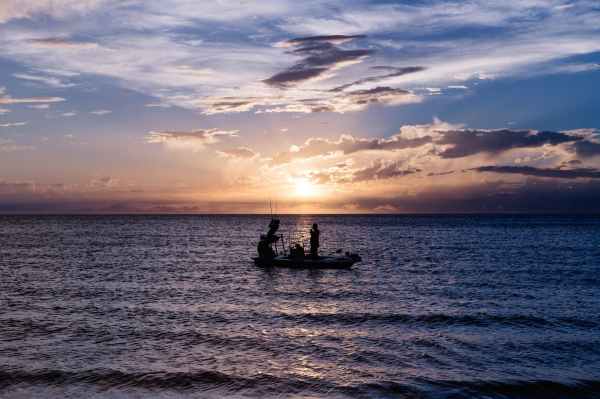
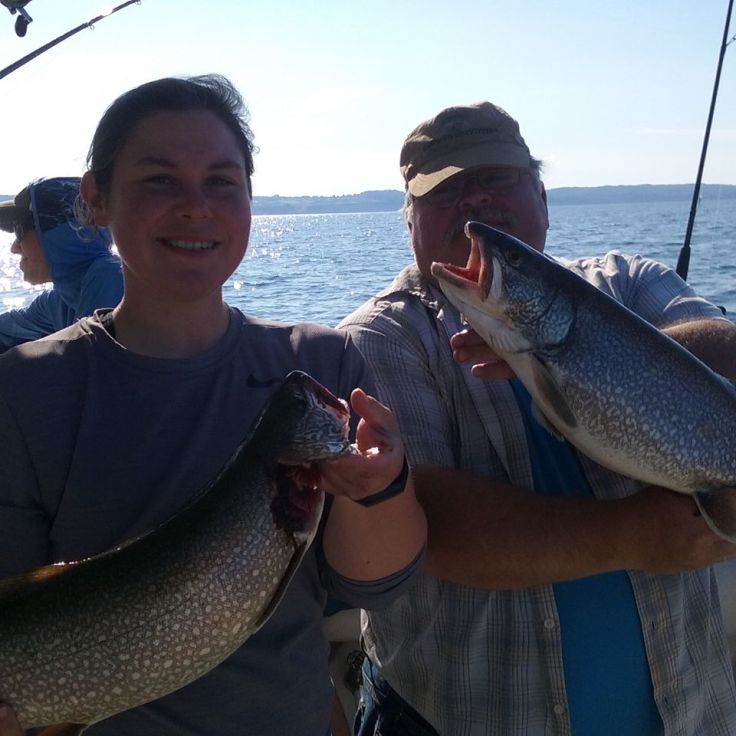
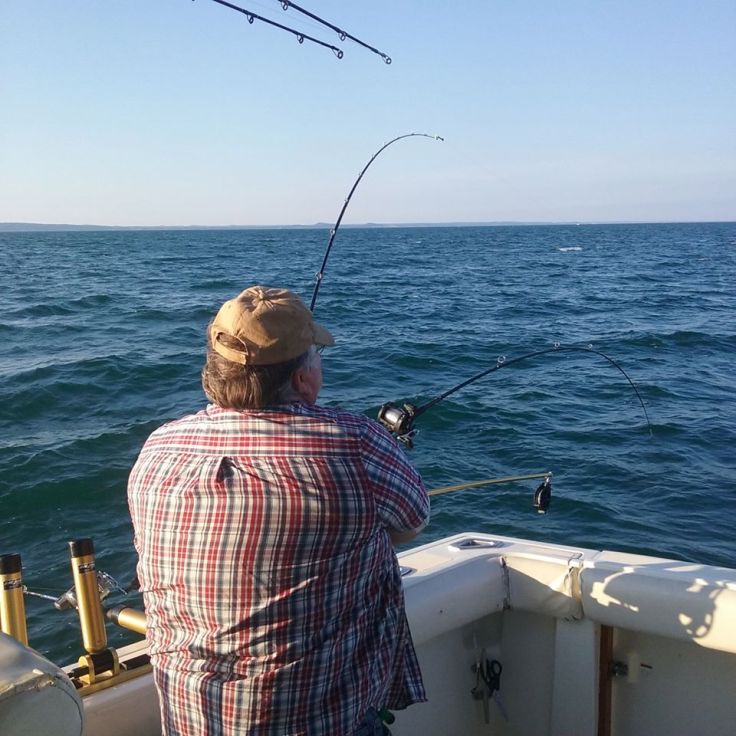
Earlier this week, my husband and I went fishing. As we were enjoying our time on the lake, and catching a few fish, I was reminded of the old song I learned in Sunday School:
“I will make you “fishers of men”…if you follow me.” Jesus said these words to His early followers, who were fishermen by trade (see Matthew 4:19). But what does it mean to be a “fisher of men?”

Photo by Public Domain Pictures on Pexels.com

The primary meaning is that we have a commission– found in Matthew 28:19: “Therefore, go and make disciples of all nations..” We are to go and “catch” men and women, taking them out of the sinful lifestyles we see around us, and bringing them into the Kingdom of God, much as fishermen take fish out of a lake or sea and bring them into the boat. But what practical implications can we take from the practice of fishing, that might help us as we carry out our spiritual commission?

  • First we much go where the “fish” are, and actively work to catch them. I can go to the lake, dip my toes in the water, even get into a boat and go sailing, and never catch a fish. The fish will not jump into my boat, or jump out of the water into a net. I must make an effort. I can follow Christ, and go to church every Sunday, participate in many spiritual activities, even pray every day, but if I never interact with lost and hurting people I am unlikely to become a “fisher of men.”
  • Next, we must recognize that we won’t “catch” all the fish! I know some Christians who become discouraged and depressed if they go out for one day of “evangelizing” and don’t make converts. They give up after one negative or unsuccessful encounter. “I’m not an evangelist.” “I can’t share the gospel– I just don’t have what it takes…” Imagine if fishermen responded that way– “I cast out three times, and never got a fish– I give up!” This is especially discouraging because our Great Commission is not to “convert” everyone; not just to go out and “catch” men and women with a hook or a net, but to make disciples. It is a process, but it comes with risks and no guaranteed “return” on our investment. Some “fish” are not ready to be caught. Some are meant for other fishermen. This should not lead us to be apathetic about lost neighbors or relatives, but it should remind us that we are God’s witnesses, not His SWAT team. Even Jesus didn’t “convert” everyone He met! But He did love them!
  • Third, and closely related, we must expect resistance. It is not natural for most people to respond immediately to the Good News of the Gospel. After all, it involves admitting our need for salvation, and submitting to the will of God. Fish that are taken from the water will die! And we must “die” to our selves and our selfish nature if we are to become Disciples of Christ.
  • Finally (and this is a bit of a stretch of the analogy, but bear with me…), we must have the right bait. This is not to say that the Gospel is inadequate or insufficient for the task. Rather, that we are not meant to hit people over the head with only our words– even when they come from Scripture! We do not create disciples by offering a bare hook. People are hungry– hungry for answers; hungry for hope; hungry for peace; and hungry for love. The Gospel lives in US– WE need to offer more than just the words of the Gospel–we need to LIVE the Gospel! To offer only condemnation or smug arrogance makes a mockery of the very Gospel we are supposed to share. Likewise, we do not create disciples by offering a shiny but “fake” gospel of easy answers and “cheap” grace without truth or repentance. It may hook a few desperate or gullible people for a moment, but once again, it is not our mission to merely “hook” people.
FISHERMAN#3/OK, 5/30/01, 3:52 PM, 8C, 8808×10935 (0+505), 150%, FISH, 1/10 s, R120.4, G94.7, B105.7

David and I enjoy fishing– we enjoy spending time in God’s beautiful nature; we enjoy the quiet and peace; and we enjoy the challenge of finding where the fish are “biting” on a particular morning. And I’m so glad that Jesus gave us such wonderful analogies and word-pictures to help us understand His love for us and His plan for spreading the Good News. Finally, I’m glad that I’ve been taken from the “lake” of sin and given new life by the great “Fisher of Men!” I pray that I can help others find and follow Christ, as well.

Look UP!

(Note: this was originally posted in September of 2019. Please enjoy…)

Psalm 121:1-2 Revised Standard Version (RSV)

121 I lift up my eyes to the hills.
From whence does my help come?
My help comes from the Lord,
    who made heaven and earth.

https://www.biblegateway.com/passage/?search=Psalm+121%3A1-2&version=RSV
Photo by Felix Mittermeier on Pexels.com

Genesis 22:10-14 Common English Bible (CEB)
10 Then Abraham stretched out his hand and took the knife to kill his son as a sacrifice. 11 But the Lord’s messenger called out to Abraham from heaven, “Abraham? Abraham?”
Abraham said, “I’m here.”
12 The messenger said, “Don’t stretch out your hand against the young man, and don’t do anything to him. I now know that you revere God and didn’t hold back your son, your only son, from me.” 13 Abraham looked up and saw a single ram caught by its horns in the dense underbrush. Abraham went over, took the ram, and offered it as an entirely burned offering instead of his son. 14 Abraham named that place “the Lord sees.” That is the reason people today say, “On this mountain the Lord is seen.”

https://www.biblegateway.com/passage/?search=Genesis+22%3A10-14&version=CEB
Photo by Pixabay on Pexels.com

Where to we look when we’re in trouble or need answers? I worked for many years in libraries– we “looked up” all kinds of answers for people. We looked in dictionaries, thumbed through heavy reference books, and scrolled through many websites. But even though we called it “looking up”, we spent most of our time looking down!

Photo by Pixabay on Pexels.com

Many people spend hours looking down at phone screens all day, or looking ahead as they drive down the road. Very few of us spend time looking up to see the clouds, the sunset, the towering buildings or trees on the horizon. And we spend too little time “looking up” to see how God is working in, around, or through our circumstances.

Abraham set off with his son, Isaac, to make a sacrifice. He had made provisions– he brought enough food for three days’ journey (and three days back!). He brought wood, and even fire. But God had asked him to “offer” Isaac as a sacrifice, so he took no ram–but he brought a knife. God’s instructions were ambiguous–He did not tell Abraham that he must kill his son, Isaac, only that he was to take him up the mountain and “offer” him.

The writer of the book of Hebrews references this event:

Hebrews 11:17-19 New International Version (NIV)
17 By faith Abraham, when God tested him, offered Isaac as a sacrifice. He who had embraced the promises was about to sacrifice his one and only son, 18 even though God had said to him, “It is through Isaac that your offspring will be reckoned.”[a] 19 Abraham reasoned that God could even raise the dead, and so in a manner of speaking he did receive Isaac back from death.
Footnotes:
Hebrews 11:18 Gen. 21:12

https://www.biblegateway.com/passage/?search=hebrews+11%3A17-19&version=NIV
Photo by icon0.com on Pexels.com

Abraham had looked up at the mountain; he had “looked up” how many provisions to take along; but at the crucial moment, when he looked up, he finally saw God’s provision. It was never God’s intention that Abraham actually kill his beloved son. It was God’s intention that Abraham (and Isaac) listen and act in faith. And so they did. The ram was already there– waiting for Abraham to look up!

Later, when the Israelites (Abraham’s descendents!) were wandering in the wilderness, they were faced with many trials. God sent pillars of cloud and fire to lead the people as they “looked up” and followed them. When snakes came into the camp, God had Moses make a pole with a brass snake at the top. Anyone suffering from a snake bite could “look up” at the pole and be cured. Jesus referred to this story as an illustration of us own crucifixion–saying that in just the same way, he would be “lifted up.” Those who “look up” in faith to the crucified and resurrected Jesus can be cured of their sin, and given new life! https://www.christianity.com/jesus/is-jesus-god/old-testament-prophecies/jesus-is-like-the-bronze-serpent-moses-lifted-up.html

Photo by Pixabay on Pexels.com

Let’s “look up” today in faith, knowing that God sees our circumstances; knowing that as we act in obedience, God will provide our every need.

Looking For God In the Storm

On Monday night, several strong storms moved through our area. There were also severe storms in other places, like Mexico City, and around Manila– high winds, heavy rains, hail, and flash flooding. Our town did not see much damage, but some nearby towns had many trees down and power outages, followed by near record-high heat.

Often when storms come, we question– “Where is God?” Doesn’t He see our suffering? Why does He allow it? We look for evidence of God’s goodness in spite of the storms in our life. We may even look for evidence of God’s goodness in the aftermath of a storm– “Well, it could’ve been worse..” But in the past couple days, I have seen evidence of people finding God IN the storm. At least a couple of friends were watching the storm approach and/or pass by, and they were able to capture a picture showing lightning striking through a rainbow!! Others have pictures of a glorious red sunset. Both pictures remind us of God’s faithfulness and His promises. God never promised that we would never see storms, but His rainbow reminds us that He will have mercy. A red sunset also speaks to sailors and farmers of better weather to come with a new dawn. God is not absent, waiting to speak after the storm is past. He is right there in the middle of the storm for those who are looking.

Photo by Pixabay on Pexels.com

Another thing I noticed is that several people have become evidence of God’s care in, through, and in the aftermath of the storms. Several people have volunteered to help clean up downed trees, or offered to provide food and water, or even (air-conditioned) shelter for those without power. Many such people have suffered some damage themselves. But their hearts are open to help their neighbors in their time of need.

Photo by Kampus Production on Pexels.com

I don’t recommend that we put ourselves in grave peril to see signs in the raging storms, nor am I trying to shame those who cannot volunteer to help in times of crisis. When storms come, it is wise to take shelter and TRUST that God sees us, knows our greatest needs, and will not leave us without hope. But it is also a great time to look for ways we can both SEE God and SERVE others.

Praying can help us in both ways. We should seek to praise God at all times–even in times of storms and trials. Instead of focusing only on the problems we face, we can be reminded of all the times God has been faithful in the past and remember all the promises He has kept! Instead of focusing on our own losses or pains, we can focus on praying for the needs of others and praying for wisdom in how to be helpful and encouraging. Because God is with us. Always!

Photo by Efigie lima Marcos on Pexels.com

The same mighty power that brings the storm is available to withstand it. God IS present IN the storm, just as He is present before and after. Sometimes, we ignore Him during times of ease and comfort. Sometimes we miss His voice in the raging wind and pounding hail. Sometimes, like Jesus’ disciples, we forget that God controls the winds and waves, and we let fear get the better of us for awhile. We wonder if God is “asleep on the job.” (See Mark 4:35-40) But a single word is enough to calm whatever storm is raging around us.

What a powerful God! What an encouraging reminder.

His Banner Over Me is Love

Tomorrow is Flag Day in the United States– a day in which we honor our nation’s flag and all for which it stands. It is an odd holiday in a sense; most countries have a national day of celebration, but not a whole day just to celebrate their flag. We already have an day to celebrate our Independence, and days to honor the sacrifices of soldiers or the dates of famous military victories in our history. Why should we spend a day honoring our flag. Isn’t that arrogant? Isn’t it taking nationalism a bit too far?

Photo by Brett Sayles on Pexels.com

Flags and banners are important to us. They are a visual representation of an idea or a series of ideas–“America,” perhaps, but also, “Freedom,” “Loyalty,” “Sacrifice,” “Honor,” “Bravery,” etc. We have national flags, state flags, organizational flags, family crests, even sports team flags and mascots. Flags can be used to rally troupes and inspire citizens, signify commitment to a cause or nationality, show pride or loyalty, and represent ideals held by those in a group. Colors, shapes, stripes, animals or plants, stars, shields, letters or single words– all represent something important or noble to those who see them on a flag or banner. And there is no real point to having a flag if you are never going to display it or let it fly high for all to see.

Photo by Jessica Lewis Creative on Pexels.com

In the Song of Solomon (Song of Songs) the bride tells that her lover has brought her to a house of feasting, and that “his banner over me is love.” (Song of Solomon 2:4) The Song is an allegory that can be seen as Christ and His Church. Christ also has a banner–and it is Love–not the romantic love of the Song, but everlasting and limitless love! His Love rallies us, unites us, inspires us, and leads us. When we look for a symbol of who Christ is (and what the Church should be) we use a flag of white with a cross symbol in red on a blue (or sometimes purple) background for the corner. The white represents Christ’s purity, and the pure white robes that will be given to His saints. The blue/purple represents Christ’s majesty and authority. The red of the cross is a reminder of the blood He shed on Calvary’s cross.

Banners and flags are important. But we don’t need a flag or banner to represent Christ’s love– WE are to be His banner for the world. The world should be able to look at us and see a reflection of the limitless and unconditional Love of Christ in the way we speak and interact with others, and the way we live our lives.

Photo by Design Killer on Pexels.com

Today (and tomorrow) when we happen to see a flag, let us remember that we are Christ’s ambassadors– we do more than just absorb God’s love– we are to reflect it, and be living symbols of God’s great love for the World. We should be visible testimonies that God’s love is all-important, and available to all! May that be more than just a prayer– may it be our earnest pursuit every day.

I Stand At the Door and Knock

I was being pestered by telemarketers the other day, and it struck me that God is the exact opposite of a telemarketer. Telemarketers call, generally when it is inconvenient, to sell you a product you did not know you even wanted! They may ask polite questions, but their goal is not to help you– rather, their goal is to sell you their product. They may have your name from a list (they usually slaughter the pronunciation of mine) , but more often than not, they simply call your number at random. They’ve never met you, nor do they intend to develop a long-term relationship with you. They are not interested in your family, your background, or your most pressing needs.

Photo by MART PRODUCTION on Pexels.com

God is not a telemarketer. He isn’t trying to “sell” you anything. He cares deeply and personally about who you are, and what you need. He knows you– even better than you know yourself! And He says, “Behold, I stand at the door, and knock: if any man hear my voice, and open the door, I will come in to him, and will sup with him, and he with me.” (Revelation 3:20) He doesn’t say that He will make an appointment to come to your door at His convenience. He doesn’t say that He will pound on your door and insist that you answer. He doesn’t say that He is there to make you a “limited-time offer you won’t want to miss…” The image in Revelation is that of a close friend who is always as close as your doorstep and waiting to fellowship with you.

Photo by Jack Sparrow on Pexels.com

The wonder of prayer is just that– God is ALWAYS, ALWAYS available and ready to listen, comfort, protect, encourage, forgive, advise, and just “BE” present. He invites Himself, but waits for our response to His gentle knock. He doesn’t walk away in disgust when we pretend we’re not at home. He doesn’t break in to our house, or peer through the window or blow up our voice mail box with frenzied messages.

Sometimes, WE are like the telemarketer– calling on God, insisting that He come to our rescue, or answer our doubts and questions, only to speed off without so much as a “Thank you.” And God still waits on the doorstep, waiting to come in and “sup” with us. So often, we have an agenda; we believe that God must have one, as well– that He wants a certain phrase or certain action, and then He will “go away” again, satisfied that He has “made a sale.” But God wants us to walk with Him in relationship (see Genesis 5:21-24; Genesis 6:8-9; Micah 6:8; Matthew 9:9; John 8:12; John 10:27; 1 Peter 2:21, etc.) In this sense, prayers is not an activity, but a pursuit and a way of life– an ongoing conversation between companions along their journey.

Photo by Alexavier Rylee Cimafranca on Pexels.com

May we enjoy today’s journey and welcome the company of the One who created us, pursued us, redeemed us, and who loves us best!

Two Ears

“We have two ears and one mouth so that we can listen twice as much as we speak!”

Epictetus
Photo by Anna Shvets on Pexels.com
Photo by Lord Pixel on Pexels.com

I write about prayer–how I pray, when I pray, how other people pray, what the Bible says about prayer– but prayer is a two-way street. God desires to hear from us. But He also desires that we should listen. In fact, there is really nothing that we can “tell” God that He doesn’t already know. But there is much that we can learn when our mouth is shut and our eyes and ears are attuned to what God is telling us!

God rarely speaks to us directly, as another human would. God spoke to Moses face-to-face (see Exodus 33), and Jesus spoke directly to hundreds of people during His earthly life and ministry. He also spoke directly to Saul of Tarsus on the road to Damascus, though not face-to-face (see Acts 9). But most of us never hear the actual voice of God. Yet He is constantly sending us messages– if we are listening.

Photo by Ricardo Esquivel on Pexels.com

Often, He sends messages through His word. When we read the Bible, or hear it read aloud, a certain passage or phrase will suddenly stand out, offering comfort, conviction, or insight as we need it. Sometimes, it is the gentle prick of our conscience, or an urgent “sense” that we are to do something (or NOT do something). It may even sound like a voice in our head– our own or someone else’s–urging us to do something out of the ordinary or out of our comfort zone. Sometimes, He speaks to us through the wisdom and insight of someone else–a neighbor, a friend, a family member; sometimes even a stranger–and we get a sense that what we are hearing is “bigger” or more important than just words. And sometimes, God “speaks” through our other senses– in the beauty of a sunset, or the cool breeze at the end of a hot day; through the wordless songs of a bird or a rippling brook; the smell of warm bread–His way of reminding us that He is present, and He is Good.

Photo by Andrea Piacquadio on Pexels.com

We need to listen for such moments and messages. But we also need to listen carefully. Not all “feelings” are from God; not all “wisdom” is inspired. God will NEVER send us messages that are in conflict with His character. He may call us to do things that seem impossible, uncomfortable, “strange,” or even potentially “dangerous,” but He will not tell us to do something that contradicts His own word. God may nudge you to leave a toxic relationship, or move to another city or country to spread the Gospel. He may urge you to speak to a stranger on a bus, or give something away to a friend without knowing why. He may ask you to befriend someone who is homeless, or mentor a child, or volunteer your time in ways or places you never imagined. But God will never suggest (or send someone else to suggest) that you cheat on your spouse, or abuse the trust of a child, or mislead your neighbor, or steal from a stranger– NEVER.

Photo by Eren Li on Pexels.com

It isn’t just that God gave us two ears (and two eyes!) so that we can look and listen twice as much as we speak– we NEED to listen twice as much and twice as closely.

How will I listen today? How will God speak? When will I close my mouth, so that I can open my ears? Will I watch as well as listen? Lord, help me to hear You. Help me to discern your voice above the noise and busyness around me today.

Qualified

Recently, we’ve been dealing with a lot of bureaucratic red tape. There are forms to fill out, forms to gather and certify, appointments to make and meet, and various qualifications. We must file paperwork for our business, for our income taxes, for our vehicles, our health insurance, our banking, –even a fishing license! We have to fill out paperwork to prove who we are, where we were born, where we live, how much money we make (or don’t make!), what we own, how much it is worth, how much we spend, whether or not we are ill (or have been ill, or might become ill!), whether we are legally married, etc.. Some processes are simple, only requiring a few questions and proof of ID, but most are not. Forms to be filled out on-line are often confusing, and there is no one to help explain the terminology. Forms that must be submitted often require supporting evidence that must be gathered from several different agencies and locations, signed, printed on certain paper, notarized, stapled (or NOT stapled), and sent by mail, faxed, delivered in person, or scanned and e-mailed. And if any one of the steps is not followed to the letter, we are not “qualified” to do business, receive payments, be properly licensed, receive medical treatment, etc. Regulations often run to hundreds of pages, and while there are experts who understand all (or most) of the fine details, most of us are overwhelmed by the “red tape” involved in living from day to day. We are not “qualified” to prove we are qualified to exist!

Photo by Sora Shimazaki on Pexels.com

I’m so glad I don’t have to make an appointment and prove that I am qualified to talk to God! The bottom line is that I KNOW I’m not qualified–not in my own power or wisdom or achievements. Instead of trying to prove something so impossible, God invites me to come– just as I am!– to meet with Him. He qualifies me through the shed blood of Christ. Jesus Christ fulfilled every qualification I could not– He lived a perfect life, never breaking God’s just laws, never falling short of God’s standards. And then, He paid the price of my failures by taking the death that should have been mine, and defeating it! All the “red tape” has been handled, all the forms filled out, the I’s dotted and the T’s crossed– my name is written in the Lamb’s Book of Life, with no need for me to re-apply or be approved all over again.

Photo by ANTONI SHKRABA production on Pexels.com

There is only one thing I must do to be “qualified” for a right relationship with God– with all it’s privileges and benefits–I must accept God’s terms for the qualification process. I must accept that I cannot qualify myself; I cannot earn God’s acceptance through my own efforts, I cannot buy my way into His good graces, and I cannot inherit the qualifications from my parents, neighbors, ancestors, or countrymen. I must also accept that Christ’s life, death, and resurrection are sufficient– even extravagant–to meet the requirements. Finally, I must trust that God’s ways are true and right and better than my own. I cannot accept Christ’s qualifications, and still do life “my way.”

Photo by Ivan Samkov on Pexels.com

In this life, it can be very frustrating to get “qualified” to do the things we wish to do. But we can be qualified for eternity through Jesus Christ. We are pre-approved to visit any time, to speak to Him– even pour out our sorrows and frustrations and failures. And there is no need to wait for an appointment!

Photo by Andrea Piacquadio on Pexels.com

Blog at WordPress.com.

Up ↑