Finished!

God always finishes what He starts. He always completes His tasks, fulfills His promises, and wraps up the loose ends.

As I look back over the past year, I see many tasks that I wish were “finished.” I would like to know that my days of washing dishes, sweeping floors, folding laundry, returning phone messages, etc., were done! Of course, that would mean that my daily life was also finished here on earth! Some tasks here just don’t “end.” I also see many tasks which should be completed, but aren’t–projects started and abandoned, tasks on pause until I can get the right supplies, or tasks left behind because something unexpected and more urgent came along.

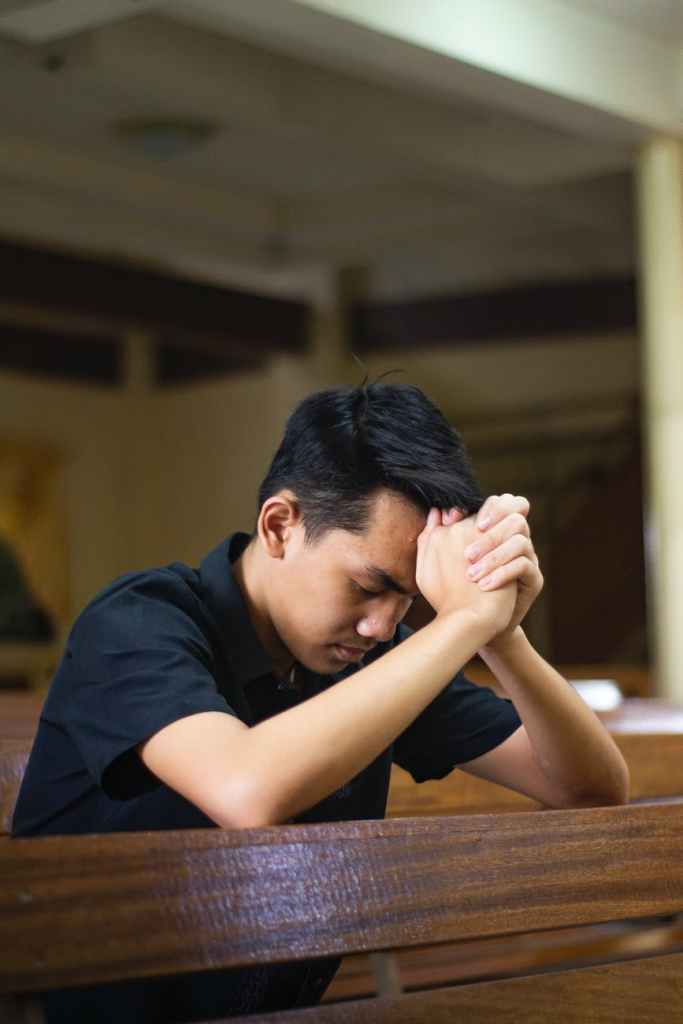
Photo by cottonbro on Pexels.com

God is faithful in all things. So it is possible for Jesus to say, “It is finished,” as He breathed His last on the cross– even though we still experience life in a fallen world. His word is trustworthy and true, so we know that the work is/will be accomplished and completed. But God is also faithful in the daily tasks that He does– sunrises, seasons, Mercies that are “new every morning.” He does not abandon the work of forgiving, redeeming, sustaining, or transforming lives.

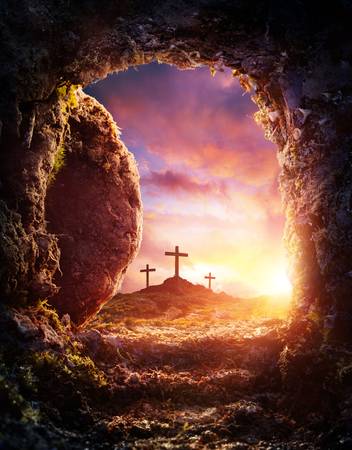
Photo by Patricia McCarty on Pexels.com

We are NOT God, but we should strive to finish what we start. Part of that is recognizing our human limitations. We may not finish everything we dream of doing today. But we can work to finish each task, and take each step in faith and dependence on the One who does all things well. And we can purpose to run our race with courage and confidence, knowing that God will give us what we need to keep moving ahead.

Photo by Bich Tran on Pexels.com

“Father, today I pray that You would help me to finish those tasks that are necessary– both the daily tasks, and the long-term projects You have for me to do. Help me to be diligent in the things I can do, and to trust You in the things I cannot do on my own. As I look forward to another year, help me to learn from Your example, and to seek Your wisdom each day, from start to “finish!”

The Hopes and Fears of All the Years..

My paternal grandmother was born in Shanghai. But not the Shanghai most people think of. Not a great Eastern city of importance, but a tiny settlement called Shanghai (or Shanghai Corners) in southwestern Michigan. It doesn’t have a post office; it’s not even listed on most maps. And it wasn’t named directly after the great Chinese city– it was named after a breed of chicken (most likely the breed now known as Cochin)!

Jesus wasn’t born in Jerusalem. He wasn’t born in Rome or Athens, or New York City or London or Johannesburg or Tokyo. Jesus was born in Bethlehem. It wasn’t as small as Shanghai Corners, Michigan, but it wasn’t a city of great importance, wealth, or industry. And yet, it was the place where history would be reshaped. Our modern calendar divides into what happened before that night in Bethlehem and what came after. More than two thousand years later, no event has been able to displace it as the pivotal event of recorded history.

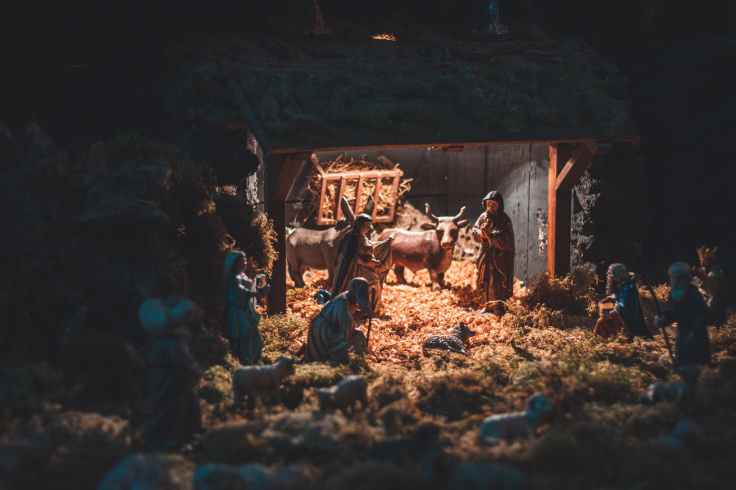
Photo by Burkay Canatar on Pexels.com

And this division wasn’t caused by a revolution, or a series of wars. It wasn’t shaped by disaster or plague, victory or catastrophe. It came silently with the birth of a single baby, wrapped in strips of cloth and placed into a makeshift bed. But all the years revolve around that single birth. All the great triumphs of history– the moon landing, the invention of the printing press, the conquests of Alexander the Great, the building of the Sphinx–all are placed in the context of the arrival of God in human form. God stepped into the limits of human history, and the timeline was permanently altered. Before His appearance, prophets and seers looked forward. After His arrival, history looks back. But His birth is the focal point; the period. The end of the Beginning and the beginning of the End.

Photo by Pixabay on Pexels.com

The hopes of all the ancients–shrouded in mists and wonder– were given flesh and bones. The fears– dark and amorphous– were blinded by the light of His Presence.

What hopes and fears are we carrying today? Our hopes have a name– Jesus; Emmanuel! Our fears have nowhere to hide from His power. And this wondrous gift, while it first arrived in the little town of Bethlehem, reaches around the entire Earth– to Shanghai, and Shanghai Corners; New Delhi, and St. Petersburg; Dallas and Buenos Aires; Cairo and Caraballo; Los Angeles and Lagos; and thousands of small towns in between.

Photo by Nishant Aneja on Pexels.com

“Oh Holy Child of Bethlehem,
Descend to us, we pray;
Cast out our sin, and enter in:
Be born in us today.”

Casting All Your Cares..

Humble yourselves, therefore, under the mighty hand of God so that at the proper time he may exalt you, casting all your anxieties on him, because he cares for you.

1 Peter 5:6-7 (ESV)

I grew up hearing the verses above, especially verse 7– it was a memory verse in Sunday School and Bible School. It was the subject of many a sermon. I have known these verses most of my life. But I started thinking about them differently in the last week or so. The verses haven’t changed. Even in different translations, the familiar words are almost the same..”cast your cares:” “give your worries;” “cast your anxieties…” “ON HIM.” Over the years, those words created an image of me handing over a bundle, or passing off a heavy coat into the waiting arms of Jesus. There is nothing wrong with this image, but I think there is more to this verse.

Photo by Ron Lach on Pexels.com

Peter–the author of this Epistle, was a fisherman. And one of the things I’ve learned being married to a man who loves to fish is that the “cast” is very important. No fisherman simply drops a line or a net into the water at random. Instead, he or she takes aim and hurls the net or line away from themselves and the boat (or dock or fishing platform). A good cast is intentional, directional, and takes commitment. And then, the fisherman, having made the cast, waits. Sometimes, it may take several “casts” before the fisherman gets a good “catch.” But a bad cast– or an impatient caster who can’t wait, but reels in and casts without intention– rarely gets good results.

Photo by Quang Nguyen Vinh on Pexels.com

I’m afraid I’ve learned more about fishing in the past few years than I have about trusting God in a lifetime. All too often, I try to bring my cares and worries to God in pieces and parts, in short bursts and limp tosses. I do not “cast” my cares on Him– I try to hand over those bits I know I can’t handle, and explain away the rest. Or I try to drop my net close to the boat. And if I don’t get an answer on the first “cast,” I give up, and reel all my cares back in, or wear myself out with fruitless prayers about the same worries, as if God didn’t hear or couldn’t understand them the first eight or nine times!

Photo by beytlik on Pexels.com

Casting our cares is more than just “handing” them over to God. We can hurl them, fling them, throw them, and toss them into the sea of His compassion and wisdom. As often as necessary, as desperately as necessary, as committed to getting rid of them as a fisherman is committed to getting a big “catch.” And we can trust that, at the right time, and in the right way, God will send us the “catch”– maybe not what we expected or imagined, but what He knows is best.

Fishing trip (with our daughter and some of our “catch.”)

Peter was a fisherman. After he walked with Jesus, he became a “fisher of men.” He learned how to “cast” all his cares on the one who performed miraculous deeds– walking on water, feeding the five thousand, raising the dead–even helping Peter and his friends catch fish! I’ve learned a lot about fishing. It’s time I learn more about “casting” my cares on my bountiful Father!

We Like Us

Photo by Askar Abayev on Pexels.com

I’ve been very blessed with a large extended family–in-laws, cousins, step-cousins, half-cousins, aunts and uncles, nieces and nephews, second cousins–well over 600! (and counting). I’ve spent a lot of time recently attending family events, and each one has been happy, encouraging, and invigorating. I know that is not always the case in families. Some families argue; some won’t even speak to each other. And there is not perfect harmony, even in the best of human families. We’ve had divorces and divides, too; but mostly, as my one cousin is fond of saying, “We like us.” We like belonging to a family, but even more, we like belonging to our family. As our family grows, it is becoming more diverse, and we like that, too. Many years ago, most of our family members were farmers from a small area in southwestern Michigan. Now, our family includes truck drivers, mechanics, teachers, architects, coaches, doctors, office managers, car salesmen, nurses, dispatchers, accountants, chefs, shopkeepers, ministers, photographers, cosmetologists, pet groomers, medical transcriptionists, cinematographers, artists, dancers, contractors, factory workers, and yes, some farmers, too. We have family members with varying skin tones and ethnic backgrounds, and differing physical and mental abilities. And we LIKE “us.”

Photo by RODNAE Productions on Pexels.com

Jesus likened the Kingdom of Heaven to a family– it is made up of many members, but we are all brothers and sisters “in Christ.” And, like a family, we are supposed to like “us.” More than that, we are supposed to LOVE one another! We are to be there for each other, in good times and bad; in mourning and in rejoicing. “For better, for worse, richer or poorer, in sickness and in health..” It shouldn’t matter if our brothers and sisters live close by or halfway around the world; whether they belong to our local congregation of “that other church across town.” And it SHOULD matter when we see some of our family members being persecuted or facing hardship while others live in comfortable apathy.

Photo by Denniz Futalan on Pexels.com

But Jesus went even further. We are to love those who are not “US.” We are to show love and mercy to those who don’t “belong.” We are to reach out to those who dislike, despise, and even persecute us. The way we treat each other as “family” and the way we treat those “outside” will either attract or repel others, and it will show whether or not we have learned to love as Jesus did.

Photo by Keira Burton on Pexels.com

God “Likes” us. He wants to share life with us –any of us who will respond to His call. And God LOVES us. He treats us with the same compassion and love, regardless of who we are or what we’ve done, or how we’ve responded (or failed to respond) to His outreach.

Photo by kelvin octa on Pexels.com

Clearly, there are those who do not like us; who do not wish us well. And God does not call us to be victims, dupes, and doormats for abusive relatives or strangers. We are to Love– but wisely, and with the strength of God. Liking someone does not obligate us to betray our conscience, or enable abusive and immoral behavior in others. Loving someone may mean setting boundaries where they are needed. But it also may involve tearing down false walls of fear and “inconvenience” that we’ve been using to excuse action.

Photo by Karolina Grabowska on Pexels.com

Who can we reach out to this week, extending the kind of welcome and acceptance we give our family? How can we begin seeing more of “us” in the people we meet, and less of “them?” And, if there are family members (either our birth families, or our church families) with whom we have a broken relationship, are there ways we can make a move to try to mend fences? How can we set wise boundaries, while tearing down false ones? One sure way is to begin praying– pray for those we meet, whether or not we consider them “family.” Pray for those who have hurt us– and those we have hurt. Pray for those who seem different and hard to understand or accept. Pray for God to bless them, encourage them, meet their needs– Pray that God will give us wisdom, opportunities, and strength to reach out.

God of the Impossible

35 On that day, when evening had come, he said to them, “Let us go across to the other side.” 36 And leaving the crowd, they took him with them in the boat, just as he was. And other boats were with him. 37 And a great windstorm arose, and the waves were breaking into the boat, so that the boat was already filling. 38 But he was in the stern, asleep on the cushion. And they woke him and said to him, “Teacher, do you not care that we are perishing?” 39 And he awoke and rebuked the wind and said to the sea, “Peace! Be still!” And the wind ceased, and there was a great calm. 40 He said to them, “Why are you so afraid? Have you still no faith?” 41 And they were filled with great fear and said to one another, “Who then is this, that even the wind and the sea obey him?”

Mark 4:35-41 ESV

I’ve been reading through the Gospels this month, and one of the phrases that has stood out for me this year is “ye of little faith.”(or “you have so little faith!) Jesus uses this phrase to chastise His disciples, as well as the crowds– they claim to want miracles, yet when Jesus does miracles, they seem astonished almost to the point of fear. Or they attempt to “explain them away.”

Photo by Andrea Piacquadio on Pexels.com

We live in a world of possibilities– when we are young, we see possibilities everywhere. “When I grow up…” we imagine ourselves as astronauts, or world leaders, or Olympic champions. As we grow older, our world of possibilities grows narrower. We become cynical (or more aware of our own limitations!) and, while we long to see miracles, we neither expect them nor ask for them. We know some difficult or unexpected things are still possible, but we tend to see more “impossibilities.” “My health will never get better.” “My boss will never listen to me.” “I can’t…”

Photo by Andrea Piacquadio on Pexels.com

One of the biggest roadblocks to becoming a Christian (and to continue to grow in faith) is to accept that NOTHING is impossible for God. We set limits on God’s ability, His willingness, His goodness–we expect to be disappointed, disillusioned, and disheartened. And it becomes a self-fulfilling prophecy– we end up disappointed, disillusioned, and disheartened in others, in ourselves…

Photo by Dimitry Zub on Pexels.com

Yet, God has given us an entire book filled with miracles and impossible events that are meant to show us that He is the God of the Impossible; the God of Miracles. From the beginning, God has demonstrated His willingness to make a way when there seems to be no way. From Noah and the Flood, to Abraham becoming the Father of many nations, to bringing Joseph from a pit to becoming the second-most powerful man in Egypt, to the story of Moses leading the Israelites out of slavery…the stories abound. Whether sending food from heaven, water from a rock, or fire from the sky, God’s power is on display throughout the Old Testament. The crowds following Jesus grew up hearing these stories. But after four hundred years of silence, they seemed to remember what God COULD do, but doubt what God WOULD do for those who call on Him.

Jesus walked on water, healed the sick, turned water into wine, cast out demons, raised the dead, and much more. And still the people wanted “proof.” But we are not so very different. Not only do we have all the stories of the Old Testament; we have all the stories of Jesus’ miracles. Yet we still wonder whether God will hear and/or answer our prayers. And it doesn’t take 400 years of silence to cause us to doubt. Sometimes it is four hours, or four days, or four months of seeming silence.

Photo by Skyler Ewing on Pexels.com

Nothing is impossible with God. There are some things that are not productive; some things that are not part of His plan. Imagine Shadrach, Meshach and Abednego praying that God would not allow them to go into the fiery furnace? That wasn’t the plan. Instead, God chose to do the unexpected, the unthinkable–the impossible. He rescued them IN the fire– caused them to come through without being singed. Imagine those who prayed that Lazarus would recover from his illness. That wasn’t the plan. Instead, Jesus did the impossible– raising Lazarus after four days; after the funeral, after the burial, after all possible hope was gone.

God excels in the impossible. He delights in it. What impossible situation are you facing today? God may not choose to remove the situation. But He can take an impossible situation and turn it into a miraculous victory. Not because we demand “proof” of His divinity or power. But because His plans are bigger and better than what we can comprehend.

Photo by Anna Shvets on Pexels.com

I’ve shared a bit about one of my current struggles. My Mom is in her 88th year, and her health is failing. She is very independent and lives alone. My siblings and I are being “stretched” in trying to help Mom navigate several decisions and several changing conditions. God has not taken away her health issues, or conveniently provided an easy transition or simple answers to our questions. But He has been “with us in the fire.” That doesn’t mean that I understand all that Mom is going through, or how best to help her from moment to moment. And I’m not asking God to provide a dramatic “rescue” for Mom as she navigates this part of her journey. But I trust that God has already seen the end from the beginning– none of the “setbacks” or “unexpected events” we face can take God by surprise or leave Him unprepared to use them for His glory and our ultimate good.

The Thief Comes

10 The thief comes only to steal and kill and destroy. I came that they may have life and have it abundantly. 11 I am the good shepherd. The good shepherd lays down his life for the sheep.

John 10:10-11 (ESV)

I know a very wonderful and kind-hearted woman who put out a table with several items she wanted to give away to anyone in need. She set up the table, taped a sign to the front, reading, “Free”, and went about her day. She returned to find that not only were all the items gone, but so was the table!

Photo by Andrea Piacquadio on Pexels.com

I also know many other people (including my husband and I) who have been victims of theft, shoplifting, pick-pocketing, mugging, etc. The world is full of honest people, but it is also full of thieves. One of the worst things about theft is not the loss of “stuff.” It is the loss of security; the loss of trust; the loss of innocence and faith. Theft is invasive, even when it is non-violent and impersonal, like fraud or shoplifting. Theft is almost never random– a thief “comes.” A thief has a plan, and a target. Thieves tend to choose their targets based on two factors– the risk and the perceived “payoff.” A thief will target a person or place where the risk is worth the prize–if a target is low-risk, a thief may strike even for a small amount. A high-risk target may still attract thieves, but they will not take such a risk without a lot of planning.

Photo by KoolShooters on Pexels.com

Thieves also come unannounced and unexpected. While thieves plan carefully, their victims have little or no warning. Theft is shocking and upsetting. We don’t set aside a time to be robbed, or items that are meant to be stolen. Thieves creep in, or distract and deceive us. It would be very foolish to leave valuables or cash around unattended or unprotected. As my friend found out, even a table left unguarded can be lost.

Most of us take precautions against theft. We lock our doors, put our valuables in a safe or in hiding, and even install security cameras and alarms to alert us to possible theft. We avoid dark alleys and dangerous places. We keep watch.

Photo by Life Of Pix on Pexels.com

We guard our valuables, but how well do we guard our hearts? Jesus compared us to sheep– helpless and vulnerable to predators, including thieves. He warns that the thief– Satan– comes only to steal and kill and destroy. Satan doesn’t want our money or our watch, though– he wants our time, our attention, our desires, and our worship. He wants to steal them, and kill us, and destroy our relationship with the Eternal Lover of our Souls. He wants us to be distracted by worry, greed, fear, pride, addictions, dysfunctional relationships, anger, abuse, emotional entanglements, empty pursuits, and endless doubts and questions.

Photo by Mikhail Nilov on Pexels.com

Satan doesn’t wait for us to seek him out. He doesn’t give us warning about his intentions. But he does come like a thief. He comes to steal our joy, our faith, our innocence, our rest, our security, our gratitude, our focus, our sense of purpose, and our hope. How much of an effort have we taken to stop him? How much effort do we take to guard what is more valuable than our money– our families, our character, our very soul? We wouldn’t walk down a dark alley with a wad of cash– but will we walk into temptation? Will we ignore warnings, believing it just “won’t happen” to us?

Luckily, we have a Good Shepherd. Even when we, like sheep, aren’t paying attention, and don’t see the enemy, God is still there, laying down His life, so that we can have a more abundant, more joy-filled life. The thief will still come– that’s not just an abstract warning, it’s a guarantee. There will be troubles in life that will threaten to steal all that God intends for us to enjoy. And, if we insist on going it alone, we will become victims of theft– our relationships, our character, our futures– we are at great risk. But if we trust in the Shepherd, we will have the best protection. The thief will still come to attack, but he cannot take what is in the Father’s hand– US!

The thief comes– to take; to destroy. The Shepherd comes– to give; eternal and abundant Life!

Plenty of Room…

14 1-4 “Don’t let this rattle you. You trust God, don’t you? Trust me. There is plenty of room for you in my Father’s home. If that weren’t so, would I have told you that I’m on my way to get a room ready for you? And if I’m on my way to get your room ready, I’ll come back and get you so you can live where I live. And you already know the road I’m taking.” Thomas said, “Master, we have no idea where you’re going. How do you expect us to know the road?” 6-7 Jesus said, “I am the Road, also the Truth, also the Life. No one gets to the Father apart from me. If you really knew me, you would know my Father as well. From now on, you do know him. You’ve even seen him!”

John 14:1-6 “The Message”

My mother is fast approaching that time in life where she may no longer be able to live independently. Her health issues and failing eyesight mean she can no longer drive, and her house in the country, while familiar to her, causes her anxiety– What if the furnace breaks down in the winter? What if her pipes freeze? What if she can’t get back and forth to her mailbox, or falls down in the bathroom?

Photo by Anna Shvets on Pexels.com

My siblings and I are facing questions, too. Are any of us able to provide room for Mom to stay with us? Can we provide proper care? Can any of us “be there” when she needs us? Where can she go, if she can’t stay in her own home? How will she manage if she has to go “into care” somewhere? Will they provide for her needs?

Photo by cottonbro on Pexels.com

These are questions that plague us during our lifetime. I remember looking for housing after I left college and got my first job. Where would I stay? Could I afford rent? Would it be safe? Noisy? What about maintenance and utilities? When I got another job– Could I find another place close to my new job? How would I get moved? Would I be able to fit my furniture into the new space? Would I need to buy new appliances? Would the neighbors be friendly?

Photo by Nithin PA on Pexels.com

One day, we will “move” to our eternal home. If we have trusted Christ’s promises, we don’t have to worry about any of those questions. Our new and everlasting home has been prepared especially for us by our Loving Father. There is plenty of room, and it is rent-free! We don’t have to worry about the location, the safety, or the utility of our Heavenly home– it comes with an eternal guarantee.

Photo by Pixabay on Pexels.com

Jesus gave this promise to His disciples during the “Last Supper.” Preparations had been made for them to eat the Passover meal in an “upper room.” Jesus didn’t own a house; He had no apartment or condo or even a hut where He could invite His friends or family to join Him for a meal. “Foxes have holes, and birds of the air have nests, but the Son of Man has nowhere to lay his head.” (Matthew 8:20 ESV) This is the same Jesus who was born in a stable “because there was no room in the inn.” (Luke 2:7) This is the same Jesus who was “in the beginning” creating the whole of the universe.

Photo by Pixabay on Pexels.com

We can trust the promise of Jesus– there is “plenty of room” in God’s Kingdom. There is room for all who come to the Father’s house. No one will have to wonder or worry about heat or light or plumbing. No one will have to wonder about food or clothing, mobility issues or health concerns. No one will have to worry about the neighbors or the neighborhood. All we have to do is follow the “road” laid out by Jesus Christ.

Photo by Pixabay on Pexels.com

Jesus came into a world that had “no room” for Him– a world that rejected Him– so that we could have plenty of room with Him, forever.

Even though we may have decisions to make about finding a temporary “place” for Mom, we can be very sure that God’s already prepared a place for her– better than anything we can plan for or imagine! 

When We All Get To Heaven…

Last week, I attended the funeral of my mom’s cousin. It was a joyful funeral–not only was it a celebration of a life well-lived, and an acknowledgement of God’s grace, but it was a reunion of sorts. Not only were there cousins I hadn’t seen in awhile, but I met people I hadn’t known before, but we were connected through my cousin and through the legacy of a tiny country church and the faithful witness of those who have been blessed there.

Photo by Suzy Hazelwood on Pexels.com

Friends and family spoke of my cousin’s generosity, his quiet and steadfast character, his diligence, and his love for Jesus Christ. We sang together, prayed together, and remembered. And some of the stories shared involved a small country church, once pastored by my cousin’s in-laws, and the site of many confessions of faith, prayer meetings, weddings, funerals, evangelistic services, pot-luck fellowships, Bible Schools, Easter services, Christmas programs, and weekly worship services. It was the church where I was introduced to the gospel. It was the church where I met my husband. It still stands, attended by faithful friends. It has, over the years, sent missionaries to Zambia, Nicaragua, Guatemala, Mexico, and the Philippines. It has supported local rescue missions, and local families in need. It is a tiny country church; I can remember when it had hard wooden pews, no fans or air conditioning in the summer, a damp and leaky basement with the occasional toad or salamander on the stairs, and no indoor bathroom.

Bethel Church

After the funeral, Mom and I went to the fellowship meal at another local church. It was beautiful, with a small cafe, a large sanctuary, two sets of bathrooms, a fellowship hall, and all the modern conveniences– located in an old strip mall. A far cry from the church of my youth, but filled with caring and gracious people who were there to provide food and comfort for the family. I don’t know how many local or foreign missions are served by the congregation there, but I suspect it would look similar to the list above.

Photo by Josh Sorenson on Pexels.com

As we found a seat for the meal, we were joined by a woman I had never met. As we made introductions, we realized two things– we were distantly related, and we had both attended Bethel Church as young children (though separated by a couple of decades). We both had fond memories of that small country church, and the wonderful people there.

Photo by SHVETS production on Pexels.com

Over the next few days, I thought about all the amazing people I have known–family members like my cousin, and this distant cousin I was able to meet; the various families who came and went over the years at Bethel Church and other churches I have attended; missionaries and evangelists, pastors, teachers, and their families; the people I have met through mission trips and conferences–and how many more amazing people I have NEVER met, but whose lives are intertwined because we belong to God’s family.

Photo by Maria Orlova on Pexels.com

Someday, we will all be in the same place at the same time–HOME– with our Loving Father! When we all get to Heaven, what a day of rejoicing that will be! Until then, we are scattered by distance and circumstance. We worship in different ways, different languages, in different types of buildings, in small house churches, cathedrals, arenas, and strip malls. We have different outreach opportunities, different social challenges, different budgets, and different worship styles. But we are connected:

Photo by Binti Malu on Pexels.com

There is one body and one Spirit—just as you were called to the one hope that belongs to your call— one Lord, one faith, one baptism, one God and Father of all, who is over all and through all and in all.

Ephesians 4:4-6 ESV

Heaven will be incredibly diverse; and uniquely cohesive– brought together by a Love that transcends differences, disparity, and even death. And we will meet those whose lives paralleled ours, even if we never met on earth. We will meet those whose faithfulness brought about the little country church where I grew up, and those who planted churches in malls, and jungles, caves, hills, forests, and “underground.” All our amazingly diverse stories will be woven into one eternal “Hallelujah” as we praise the author of them all.

Funerals can be anguished events. But I was blessed last week to remember God’s incredible faithfulness. One of the verses quoted during the service was Psalm 116:15–“Precious in the sight of the Lord is the death of His saints.” Earlier in the same Psalm, the writer has this to say, “I love the Lord, because He has heard my voice and my supplications.  Because He has inclined His ear to me, therefore I will call upon Him as long as I live.” I have seen and experienced God’s faithfulness– through the lives of other saints, through the work of His church, and as He has personally “inclined His ear to me.” May I be faithful to all upon Him for as long as I live. As my cousin was blessed and blessed others, may we hold true to our “One faith” as we await that day when we all get to Heaven!

Armchair Olympians

24 Don’t you know that the runners in a stadium all race, but only one receives the prize? Run in such a way to win the prize. 25 Now everyone who competes exercises self-control in everything. They do it to receive a perishable crown, but we an imperishable crown. 26 So I do not run like one who runs aimlessly or box like one beating the air. 27 Instead, I discipline my body and bring it under strict control, so that after preaching to others, I myself will not be disqualified.

1 Corinthians 9:24-27 CSB

I must confess, I haven’t been watching much of the Olympic games currently taking place in Tokyo. Over the years, I’ve spent hours glued to the television, watching the competitions, gobbling up the emotional stories of various athletes and their struggles to qualify and chase their dreams. In fact, I used to get so involved in watching the Olympics, that I would fall behind in my housework, social obligations, and sleep! It can be very inspiring to watch as various athletes from around the world challenge themselves (and their competitors) to go faster, reach farther, and climb higher. And many of the stories and names have stayed with me over the years.

Photo by Guduru Ajay bhargav on Pexels.com

There is nothing wrong with watching sports, and cheering on those who have worked so hard. And I love the pageantry and good will of the Olympic games, where I find myself cheering for athletes and sports I would never know otherwise–those who have overcome tragedy and incredible obstacles just to participate; those whose achievements have set new standards and inspired others to greater heights. But as Christians, we should consider our OWN level of achievement. Not in a competitive sense, and not in the sense of “earning” God’s salvation or approval, but in the sense of growth and development of self-discipline.

Photo by Leon Ardho on Pexels.com

We admire athletes, not only for their natural abilities, but for their discipline and spirit. They train for years, undergoing rigorous drills, keeping tight schedules, pushing their bodies– often to the point of injury–to get a little more speed or distance or strength. They prepare for the stress of competition and the pressure of expectation. They learn to leave behind the failures and the victories of yesterday as they get ready for tomorrow. We watch them, and we talk about being inspired. But inspired to do what? I have never developed the level of self-discipline to rise every day at 6 a.m. to run or stretch, let alone train for a race or a swimming meet. I briefly flirted with becoming a gymnast after watching Nadia Comaneci score a perfect 10.0 in the Montreal Olympics of 1976, but I quit after only one weekend!

Photo by Anastasiya Gepp on Pexels.com

The Apostle Paul calls us to follow his example and “run the race” as we live for Christ–we are to develop our character and practice spiritual discipline in the same way that an athlete develops her body and practices physical and mental discipline. And our motivation is not a gold medal or a world record that will eventually be broken, but eternal victory over Sin and Death!

Photo by RUN 4 FFWPU on Pexels.com

I’m ashamed to say that I have not always followed this example. I’ve been an “armchair Olympian”– content to watch others do the hard work, and enjoy the vicarious feeling of victory when they cross the finish line. I cheer for those Christians who are called to foreign missions–I’ve even traveled on “short term” mission trips– but I don’t always see my everyday life as a “mission.” But that’s exactly what it is. Jesus didn’t watch the disciples heal the sick or preach about the Kingdom of God as He sat on the sidelines. And He certainly didn’t spend time analyzing and dissecting the “performances” of the prophets and patriarchs of old. He didn’t even tell the disciples to analyze His miracles or study His sermons. He simply said, “Follow Me!” “Walk with Me.” Christianity is not passively cultivating a feeling of victory in Jesus. It is living victoriously THROUGH Jesus.

Photo by Andrea Piacquadio on Pexels.com

Our character won’t be changed by sitting on the couch or in an armchair, watching others do the hard training and running their race. Cheering from the sidelines isn’t going to increase our patience, or develop our faith, or make us more Christlike. Listening to Christian Radio or watching sermons on television won’t automatically translate into a life of integrity and peace. Even reading the Bible, or keeping a prayer journal, or writing a blog about spiritual things won’t teach us humility, gentleness, or love for others. We need to make the effort. And we need to seek the wisdom and discipline of the Holy Spirit– our “coach”– as we follow the example of Christ. It starts with small decisions– daily habits–and learning to be consistent. It also takes a willingness to repent and get back on track when we fail. And we will fail in our own efforts!

Photo by Ric Rodrigues on Pexels.com

We can admire earthly athletes. But we shouldn’t worship them. And we shouldn’t let them become idols that substitute for the kind of work WE need to be doing to learn discipline and faithfulness. I want to reach the finish line, knowing that I’ve run my best race for the King!

Photo by Pixabay on Pexels.com

Freedom and Blueberries

My husband and I went blueberry picking earlier this week. The local blueberries are at the peak of their freshness and flavor. Our friends have a farm, complete with a blueberry patch, where you can buy farm fresh blueberries by the box, or you can pick your own and pay by the pound. We went early in the morning, while the dew was still on the berries. The day promised to be hot and muggy, but not until we had finished our labors among the bushes. We saw butterflies and heard the happy chirping of birds nearby; otherwise, it was quiet and we focused on gently rolling dark, sweet berries into our hands and dropping them into our buckets. We picked a little over 12 pounds of berries (enough for several pies!) in a little over an hour–a good harvest at a leisurely pace.

Photo by Markus Spiske on Pexels.com

I love visiting the blueberry patch. It brings back wonderful memories of visits with my mom and grandma, my sister, my husband, and even my oldest nephews. I love the feel of the berries as I gently pull them off the bush and as they roll into the bucket. I love the feel of the bucket pulling as it fills with fruit. I love measuring out the berries for pies or cobbler or just making sure we have several quarts frozen for later use.

Photo by Adrienne Andersen on Pexels.com

I’ve been picking blueberries for years. I’ve picked from several different farms in several different locations all around the area. Some years, the berries are huge. Other years, they are small and tend toward sour (still good for pies and baked goods, but not as tasty to eat by the handfull!) In all those years, I took for granted the wonderful freedom of being able to enjoy this activity. This year was different.

Photo by Pixabay on Pexels.com
Photo by Polina Tankilevitch on Pexels.com

There were two reasons for the difference. First, this was the year after COVID kept many people from enjoying “normal” activities– even outdoors–throughout most of the world. Even the ability to pick berries was limited by social distancing mandates and fears of catching COVID from other pickers or from touching the same bucket or being in the same weighing area as someone else. This year, I knew what it was NOT to be able to do something I considered to routine.

Secondly, we’ve been talking about freedom lately at church– the freedom we enjoy as citizens of America, but more importantly, the Freedom we enjoy as citizens of God’s Kingdom. As citizens of this country, our friends have the freedom to own their farm and grow whatever crops they choose. They also have the freedom and the opportunity to sell their produce as they see fit– commercially to stores or privately at a farm stand, or as U-Pick. They have the freedom to set their own prices and hours. And we have the freedom to choose from many such farms to purchase delicious, fresh fruit–and even to select the fruit ourselves! I had always accepted this as a “given.” But many people have never had this incredible opportunity, and I am so thankful for the many years I have enjoyed it!

Photo by Anna Shvets on Pexels.com

That’s an amazing thing– and I have spent a lifetime taking it for granted. But even more amazing is the Freedom I have through Christ. I am free to choose my attitude and behavior each day. I am empowered by the Holy Spirit to make the kind of choices I would not make in my own selfish mindset. I am free to live without the painful load of guilt and regret over the past– not because it didn’t happen or doesn’t have consequences, but because it no longer defines who I am or who I can be. Just like picking the plump, juicy blueberries from the bush, I can harvest the Fruit of the Spirit; I can have a life filled with Love, Joy, Peace, Patience, Kindness, Goodness, Faithfulness, Gentleness, and Self-control! (Galatians 5:22-23) Just like being able to store up delicious fruit for the coming months, I can do what is required to please God– to act justly, love mercy, and to walk humbly with (my) God (Micah 6:8 paraphrased). Just like choosing which farm I will visit, I can seek out opportunities to reach out to people near and far with the incredible Gospel of Christ– in word AND in action.

Photo by Daria Shevtsova on Pexels.com

Who knew blueberries could be so powerful and so liberating! Thank you, Father, for blueberries. And thank you for the blessing of Freedom through Jesus Christ!

Blog at WordPress.com.

Up ↑