We had a storm blow through the area the other night. We were under a tornado warning, and a couple of tornadoes did touch down several miles northeast of here. Long before the tornado warning was issued, the weather forecast predicted strong storms with the possibility of hail and/or tornadoes. But even without them, it was easy to sense that “something was in the air.” There was a quality of heaviness in the very air outside. And the sky was an unnatural greenish-gray color, even where it wasn’t dark with storm clouds.
In life, we often get warning signs of impending “storms”–physical symptoms that tell us there may be a problem like infection or disease that needs to be diagnosed; a tense atmosphere at work that suggests big changes may be coming; withdrawal of a family member that alerts us they may be struggling with emotional or mental issues. These “atmospheric disturbances” may be subtle at first. We may choose to ignore them, or dismiss their importance, until we find ourselves in the middle of the storm!
God calls on us to trust Him in any weather or circumstance. We can pray about even the slightest change in our “atmosphere,” whether at home, work, or even internally. And part of God’s wisdom is to send us warnings so that we can not only pray, but take proactive measures. We can reach out to family members, make an appointment with our doctor, be cautious about spending in the weeks and months ahead, seek out help and counseling, etc.
But sensing “atmospheric disturbances” is not all about seeking a remedy or avoiding struggles. Even with advanced warnings, some people last night were unable to avoid damage to their properties or loss of electricity from the storms. Several people were trapped in a shipping warehouse that was hit by one of the tornadoes. Thankfully, no one lost their life; still, it took hours to rescue them all, and some of them went home to no power. But what if– just what if– someone looking up at the sky, or feeling the heaviness in the air, prayed in that moment? What if they prayed for safety– not just for themselves, but for others who would be in the path of the storm? What if someone in that shipping warehouse made plans weeks ago for tornado drills and emergency plans to protect the workers, and made the call for everyone to shelter together?
There are hundreds of stories of dramatic rescues and miraculously saved lives after almost any weather emergency. But how many untold stories are lost in the simple prayers and small corrections that take place when God’s people respond to “atmospheric disturbances” with prayer and wisdom?
And when God chooses to allow storms to come into our lives, how many stories could be told of the presence of God to calm, not the storm, but our own fear of it? God knows, as we cannot, how big the storm will be, how long it will last, and what “damages” we will face. And His Grace is sufficient to give us everything we need to face them all. That doesn’t mean we won’t suffer– damage, loss, grief, frustration– these are part of our life in a fallen world. God won’t always remove these things from our life. But he will NEVER abandon us to face them alone.
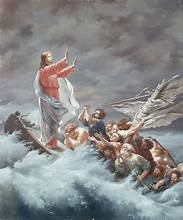
Jesus Christ faced storms in His life. One of them came on the Sea of Gallilee, as Jesus was sleeping in the boat. (See Mark 4: 35-41) A storm came up, and the disciples were terrified. They woke Jesus up, and Jesus calmly rebuked the wind and the waves, and the storm stopped. We often focus on the fact of Jesus being able to control the wind and the waves. But one of the amazing things about this story is that Jesus was IN THE BOAT! His own life was in danger from the storm. The disciples were not alone. Jesus did not let them put out to sea and face the waves, while He was safe on shore.

And so, too, Jesus is WITH US in our storms. We don’t have to wake Him up, and He may not choose to give us a miracle, but He’s right there! He can be trusted, no matter what our circumstances, no matter what dangers or damages we have to face. He knows how the storm ends; He knows how our story ends; He knows when the sun will come out again, just like it did earlier this week, announcing that all will be well.
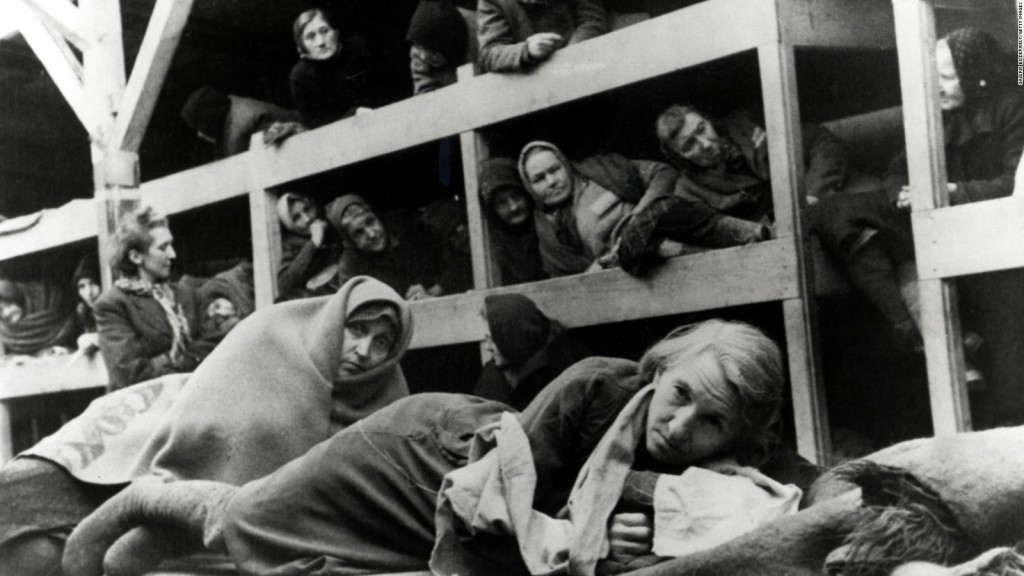
Today is May 8th. Historically, this is known as V-E Day, or Victory in Europe Day. On this day, in 1945, the German forces surrendered, ending World War 2 in Europe. Parades and parties broke out in several cities. People celebrated the end of war and the promise of peace. But the war was NOT over– not for everyone. War continued to rage in the Pacific for several months. Prisoners in concentration camps were still being liberated, many of whom had lost their homes and families. And the devastation across Europe and North Africa would take decades to clean up. Millions were still facing food rationing and homelessness; there were unexploded bombs and land mines, craters and ruins–all was not suddenly peaceful and prosperous.
The events of V-E Day happened years before I was born. But my parents and grandparents remembered it well. And as someone who loves history, I look back on events of the past and ask, “What can I learn from this day?”
Today, I want to look at what “victory” looks like. Not the thrilling victory of winning a race, or the victory of one army over another in a past century, but true “victory”–an end to all war and struggle and pain and uncertainty. What will that look like?!
In my life, I have experienced small victories, and victories that seem large in the moment. Graduation ceremonies, job promotions, signing the papers on a new car or house, saying “yes!” when David proposed, and later celebrating our marriage with friends and relatives at our reception…These were all moments of celebration and victory. But like the victory of V-E Day, there was still work to do, challenges to face, and even difficulties and set-backs that clouded each victory. Even my greatest Victory– coming to faith and knowing my name is written in the Lamb’s Book of Life– is in the “here and now.” I still face trials and temptations in this life, even though I can claim victory over Sin and Death through the work of Jesus Christ. But true “Victory” is in the “not yet.”
It can be tempting, when celebrating our earthly victories, to get caught up in the momentary feelings of success and happiness. But what happens on May 9? What happens after the parade? What happens when we face the next challenge? I find myself too often disappointed with the fleeting nature of my victories in life. And in the disappointment, I lose not only the joy of the victory, but the strength of the promise of victories yet to come!
There is a day coming– one that will make V-E Day pale in comparison! Some day, the forces of Evil will be utterly crushed. It will be total surrender. No occupying forces, no rationing or homelessness, and no more death or destruction for those who have trusted in Christ. Just sweet Victory. In a moment; in the blink of an eye, God will say, “ENOUGH!” The war will end. The suffering will end. The waiting will end. The dead will rise and the living will be changed.
I can only imagine what that day will truly be like. But I can live with the certainty of a coming day of “Victory.” I can know the hope and the joy of each small victory today, as it reminds me that there is much more to come!
Thank you, Jesus, for each small victory today. Thank you for the ultimate Victory that I find in You!
It is Morel season in my home state of Michigan. Morels are mushrooms that only grow in mid-Spring. They are usually found in or near wooded areas, and they are delicious! Thousands of eager hunters search woods, roadsides, forests, orchards, and glades looking for the elusive spores each year. While morels can be “grown,” they are not easy to cultivate. Finding them is like a treasure hunt in all the freshness of spring’s new growth!
Morel mushroom
But there are several look-alike mushrooms– some of which are dangerous and even poisonous– growing now, too. It takes a good eye and some knowledge to tell the difference. False morels may have a similar shape, but they usually are slightly different in color and texture. Some false morels will appear brown, reddish, or even slightly purple, while true morels range from yellow, yellow-gray, or gray-black. False morels may be “puffier” or “spongier” than true morels. And while true morel “caps” attach to their stems, false ones may be detached or flared. It is important to know the difference and to be cautious when collecting the elusive morel.
false morel–gyromitra esculenta
The same is true of morals–there are plenty of people masquerading as men and women of integrity. They are polite, clean, charming; many are even respected members of the community. They may volunteer, give to charities, attend a local church, run for public office, hold a job requiring responsibility and trust. They look and act like honest, kind people. But they may be dangerous– even poisonous. They may even rise to positions in the church, destroying faith and trust among members of their flock, or spreading distrust and confusion among neighbors and even families.
So how do we “spot” the difference? Just as importantly, how do know which type we are!?
There are a few principles in the Bible that we can use to identify “false prophets” and those with “look-alike morals.”
First, we need to study what a true “Christ-follower” should look like. It is vital that we take the time to study for ourselves what the Bible says. Asking “what would Jesus do?” does us no good if we don’t know what He actually did and said! Putting all our trust in a role model or a dynamic leader is like choosing a mushroom because it “looks tasty–it could be a morel…”
Second, we need to look for people who try to “color” or “shade” the truth to look “tastier.” All the way back in the Garden of Eden, Satan used this trick with Eve– twisting God’s words, adding supposedly “hidden” knowledge, and dismissing the severity of God’s warning:
The woman said to the serpent, “We may eat fruit from the trees in the garden, but God did say, ‘You must not eat fruit from the tree that is in the middle of the garden, and you must not touch it, or you will die.’”“You will not certainly die,” the serpent said to the woman. “For God knows that when you eat from it your eyes will be opened, and you will be like God, knowing good and evil.”
Genesis 3:2-5 (NIV)
Closely related to this, we need to look for people who use words to spread division or discontent–including constant critics and complainers. It is tempting to get caught up in arguments about certain traditions, worship styles, external standards, new practices, personal revelation, etc.. But we must avoid such poison, and avoid spreading it! One poisonous mushroom can poison the whole “batch!”
Beware of those who arrogantly claim to have “new knowledge” or “new interpretations”– God does NOT change; nor does His Word. New insights and deeper or personal understanding should stand up under testing. Someone who is not willing to be questioned or asked to explain themselves may have a bad reason for their unwillingness. Just because something is traditional, or “old” doesn’t mean it must change.
Also beware those who are dismissive toward others in the church, whether they are critical of the teaching, the music, certain ministry programs, or individuals who serve. We are commanded to build one another up, not pass judgment based on personal prefrerences.
Look (and listen) closely to make sure we are still “attached” to our stem– the Living Word of God. Many Christians will quote “moral” sayings that are found nowhere in the Bible:
“God helps those who help themselves.”
“The devil made me do it.”
“There are many paths to God.”
“All you need is love.”
“God just wants us to be happy.”
“God will never give you more than you can handle..”
Finally, we need to look at the person’s “fruit.” Someone can have an impressive outward show of morals, yet miss out on “bearing fruit.” Such people may display all the trappings of earthly success, yet they seen to have no peace, or their lives seem joyless or filled with discontent or intemperence. In my own life, am I demonstrating Love, Joy, Peace, Patience, Kindness, Goodness, Faithfulness, Gentleness, and Self-Control? (see Galatians 5:22-23) Am I humble? Or am I impatient, unkind, judgmental, fickle, reckless, complaining, bitter, envious, angry, dissatisfied, greedy, worried, and prone to mock others– especially those in the church?
Beware of false prophets, who come to you in sheep’s clothing but inwardly are ravenous wolves. You will recognize them by their fruits. Are grapes gathered from thorn bushes, or figs from thistles? So, every healthy tree bears good fruit, but the diseased tree bears bad fruit. A healthy tree cannot bear bad fruit, nor can a diseased tree bear good fruit. Every tree that does not bear good fruit is cut down and thrown into the fire. Thus you will recognize them by their fruits.
Matthew 7:15-20 (ESV)
When we find true followers of Christ, we should be able to recognize the treasure of a life redeemed and transformed. While none of us is perfect while we remain in our present bodies, we should be producing a harvest of good fruit that sets us apart from “look-alikes” who are merely outwardly moral.
In the Gospel of John, there is the curious story of Lazarus. Lazarus and his two sisters, Martha and Mary, were good friends of Jesus. There are other stories throughout the gospels of Jesus interacting with this family. But this story appears only in John’s gospel, and it contains some details that raise several questions.
The story begins with an urgent message. Lazarus is gravely ill, and the sisters send word to Jesus to come quickly. Yet Jesus seems to dismiss the message, saying that it is not a sickness that will end in death, and he lingers two days before he decides to begin the journey toward Bethany. There is no sense of panic or urgency in Jesus’s response. And, though it says he loved Mary, Martha, and Lazarus, he seems unmoved by their obvious distress.
When Jesus finally arrives, Lazarus has been dead for four days. The two sisters both mention, with some bitterness, that if Jesus had come sooner, their brother need not have died. Jesus never gets defensive, but he challenges the sisters about their faith. In his exchange with Martha, he says that her brother will rise again. She agrees that he will rise again in the resurrection at the end of time. But Jesus redirects her faith–“I am the resurrection, and the life: he that believeth on me, though he were dead, yet shall he live: And whosoever liveth and believeth in me shall never die. Believest thou this?” (v. 25b-26). Her statement of faith, in spite or her grief and bitterness, prompts her to act. She goes to find her sister and bring her to the Savior, that she might be comforted.
Martha’s faith is small comfort in the circumstances. Her brother is still dead. His body lies rotting in a nearby cave. Her faith is fixed in the distant future, even as the author of Life and Eternity stands next to her. Her belief is wispy– more of a wish or a dream than the solid God-in Flesh standing before her.
Yet Jesus chose to use this seeming defeat as a showcase for His power to give life and resurrection. Many people who saw this were transformed and put their trust in Him. Others saw Jesus’ growing ministry as a threat to their own power and authority. They reacted with fear and even anger, that Jesus would bring the miraculous into their well-ordered normality. The Pharisees, including the chief priest, Caiaphas, determined that Jesus must die in order to “save” them from the Romans. Instead of seeing Him as the agent of their eternal salvation, they saw Him as an obstacle to their limited “freedom” to operate under the Roman oppression.
What is my faith like as I pray today? Do I believe that God “could’ve” or “should’ve” solved a problem in my past? Do I believe that God is not acting fast enough or decisively enough? Do I have a wispy faith that God will make all things right in Heaven, but is uninterested in the “here and now?” Do I believe that God’s answers might upset my life or cause me to “lose” control?
God, as you challenge my faith, help me to declare even my weak and imperfect belief; help me to act on it, and bring others to you for comfort. For in doing, so, I may be preparing the way for an incredible miracle– for revival and renewal; for the glory of Your great Name! And help me to see your answers through eyes of faith, and not fear of the unknown. Help me to trust you for the future I cannot see– a future that is in your capable and loving hands.
My church is offering several fitness challenges this month. I’m working on two of them, walking, and “water.” Walking seems self-explanatory–the challenge is to walk more, with more focus, etc.. We get daily updates with great tips on walking safely, facts on the benefits of walking (as opposed to running or strength-training), and additional challenges for focus, finding a walking partner, and more. My job is largely sedentary, so even though I try to walk around somewhat at work, I enjoy the challenge of finding ways to get more steps/more time spent walking each day.
The “water” challenge seems a bit harder to explain. In fact, when I signed up, I got a message saying something like, “Congratulations! You signed up for the one fitness challenge that doesn’t involve fitness!” But I am finding the water challenge to be both physically and spiritually enriching. The challenge is to drink “enough” water. Seems easy, right? But it turns out that I haven’t been drinking enough water each day. And the effects are subtle, but dangerous– everything from dry skin to constipation; damage to the kidney and liver (who knew?), sluggishness and fatigue, weight gain, “brain fog,” irritability, muscle cramps, and more, https://steptohealth.com/consequences-drinking-little-water/#google_vignette Of course, all of these symptoms can be caused by other factors, but drinking more water can help alleviate many of them without medications or more extreme treatments. It IS possible to drink too MUCH water during the day, but most of us have the opposite problem. Why are we depriving ourselves of something so crucial to our health?
In my case, one of the leading reasons I wasn’t drinking enough water is that I simply wasn’t thirsty. I work indoors in a temperature-controlled environment. I don’t do heavy manual labor. I don’t work up a sweat. And it simply didn’t occur to me to drink at regular intervals. I would drink water or sugary drinks with meals, or when I “felt” thirsty, and when I developed diabetes, I cut out the sugary drinks– without replacing them with the same amount of water!
I have been challenged this month to drink eight ounces of water each hour for eight hours of my day– a total of 64 ounces, or a half-gallon! I make sure at least some of the water contains electrolytes, which help keep me from deficiencies in key minerals like potassium and magnesium (see more info here: https://microsoftstart.msn.com/en-us/health/ask-professionals/in-expert-answers-on-Electrolytes/in-Electrolytes?questionid=9toqf9mo&type=condition&source=bing_expertqna_ac ) It may sound easy, but I have to remind myself to drink, even if I don’t feel thirsty; even if I’m “busy” with something else. At first, there were “uncomfortable” side effects– I had to use the restroom more often, for starters. And I didn’t feel the positive side effects right away. But over two weeks in, I’m seeing some real benefits. I still use the bathroom more frequently during the day, but less frequently at night! I wasn’t expecting that! And I’m developing a rhythm in my water intake that keeps me from feeling “empty” in the mid-afternoons, when I am tempted to snack, which has helped me lose a little weight–by drinking more! Combined with the walking challenge, I am finding myself with more energy and a brighter outlook, especially in the mornings.
So what does all this have to do with Pursuing Prayer?
Well, the Bible talks a lot about water– a LOT– and about thirst. Not just a thirst for water, but a spiritual “thirst.”
Blessed are those who hunger and thirst for righteousness, for they will be filled. (Matthew 5:6)
Behold, the days are coming, declares the Lord GOD, when I will send a famine on the land— not a famine of bread or a thirst for water, but a famine of hearing the words of the LORD. (Amos 8:11)
Just as we can fall into the bad habit of ignoring our body’s need for water, we can ignore our soul’s need for communion with God. We can neglect reading Scripture, or spending time in prayer and meditation, and it can lead to serious side effects.
I don’t always “feel” like praying. I don’t always have a natural “thirst” for reading the Bible (I fell asleep this morning reading in 1 Chronicles…) But when I DON’T take time to read or pray, I have even less “thirst” for it– even though my need is still as great or greater!
We can’t spend all our lives on our knees and ignoring our daily tasks. We can’t always carve out hours or days to spend in meditation and Bible study. There are seasons of life where we will remain “thirsty” for a while. But let’s be vigilant to create habits that help us stay both physically and spiritually healthy.
One of the ways we were challenged in the first week of the month was simply add one glass of water to our routine each day. Even if we weren’t drinking a lot of water, just one glass more would help. Let me offer a similar challenge to pray “one more prayer” each day. If you normally pray in the morning or evening, add a “prayer break” to your afternoon. Treat it just like a coffee break (or water break?!) Add a prayer of thanks as you pull in the drive after the work day or after a trip to the grocery store. Write out a prayer request and tape it to the bathroom mirror to remind you to lift up one extra prayer today.
Let’s get thirsty! After all, Jesus Himself is the “Living Water.” He will satisfy!
One of the prayer models I like to use often is based on the acronym ACTS. ACTS stands for Adoration, Confession, Thanksgiving, and Supplication. I like this model because it is well-rounded. It works like this:
ADORATION–I love to begin prayer by remembering and acknowledging God’s worth, His supremacy, His Holiness, and His majesty. It sharpens my focus on the WHO of prayer, rather than the WHAT of my worries or doubts. And it puts everything in the proper perspective. Sometimes, I come to God by praying a Hymn, or praying a Psalm, or remembering the many names of God.
CONFESSION–Confession is important in prayer, and since I want to concentrate on it, I’ll come back to this element below.
THANKSGIVING– Thanksgiving returns me to remembering what God has already done– for me, for others, throughout history, and just yesterday in my life. Instead of prayer being all about my needs, wants, or concerns, prayer should be an honest conversation with God. And that must include gratitude, because God is truly GOOD! If you ever doubt that, think about the first five minutes of your morning. If you awoke, you are alive (thank you, God!). If you heard your alarm, opened your eyes and saw anything, if you were lying on a bed, in a shelter with a roof, if you were able to sleep through the night without the terrors of war, slavery, starvation, torture, or chronic agonizing pain, you have much for which to be grateful. If you were able to get out of bed on your own, able to eat breakfast, get dressed, and you have a job to go to or a purpose to fulfill in this day, you are among the blessed. To withhold praise and thanksgiving is to miss one of the privileges of life.
SUPPLICATION–Yes, we bring requests to God. And He already knows what we need, what we desire, and what He has planned for us. So supplication is not about making God aware of our needs. But it is another act of acknowledging that God hears and responds to us. Because that’s the kind of God He IS! And because we have spent time Adoring, Confessing (to), and Thanking God, we know that we can present our requests without fear or doubt.
Most of us are fine with Adoring, Thanking, and Saying our requests, but Confession can be tricky– especially in our culture. What are the elements of Confession that trip us up? Mostly, I think, it’s a misunderstanding of what confession is (within the element of prayer) and what it is NOT.
Confession is defined as admitting to guilt, or to a crime or sin or wrongful act. But, even more basically, confession is an admission that we are not the ultimate authority over our lives or the lives of others. As such, we must confess before we can accept God’s atonement for our Sin. If we do not confess our need for God, we cannot accept, understand, or appreciate the depth and nature of His sacrificial Love for us. So when we pray, we must confess, not only God’s Glory in the heavens and the Earth, but His Sovereignty in our lives; His authority over our emotions, our thoughts, and our actions. King David gave us many great examples of confession in his Psalms– and they can be terrific models to use in our own prayers. (See Psalm 6, Psalm 32, Psalm 38, Psalm 51, and others.)
Confession in prayer is not primarily a list of our petty missteps– though we should be willing and able to name them, rather than denying what we’ve said and done–but a daily admission of God’s right to determine how we conduct our thoughts, our habits, our priorities, and our relationships, and acknowledging that God is Merciful, Gracious and Loving– beyond all our failures, mistakes, and even past rebellion. Confession shouldn’t focus so much on what we’ve done, as on how God is able to free us from guilt and shame, and how we intend to move on away from the past. We confess that our ways are not Holy, and in doing so, we underscore that God’s ways ARE Holy, perfect, wise, and good. God already knows our thoughts and actions, but WE need to be reminded of our goal– to run the good race (see Hebrews 12:1, and 1 Timothy 6:12) to follow Christ; to become more like God each day!
Confession is primary to the Christian Life– we confess that ONLY by the work of Jesus (the cross and resurrection) can we be reconciled to God. We cannot pray openly to God if we don’t believe–and confess– that this is true. God is not fooled by sweet talk or glib arguments. We cannot believe that Jesus’ atoning death and resurrection saved us if we don’t believe that it was necessary and good for Him to do so. And besides, confession is good for the soul!
“If we confess our sins, he is faithful and just to forgive us our sins and to cleanse us from all unrighteousness.”
1 John 1:9 (KJV)
Confession has a negative reputation in many Christian circles, and it is misunderstood in others. Just listing our sins or admitting we did something wrong doesn’t have any value without the positive confession that Jesus is “the way, the truth, and the life.” (see John 14:6) In fact, a better definition of Christian confession is this– agreeing with God about who I am (a sinner/imperfect/unable to attain Holiness on my own), and who HE is (perfect/Holy/Sovereign/the One who Loves me absolutely)
When we pray today, I hope we will confess– positively, profoundly, willingly, and whole-heartedly. I hope we will humbly and honestly confess any actions or habits that are interfering with our Christian walk. And I hope we will joyfully confess that Jesus is LORD; that we are trusting in Him to guide us, intercede for us, and give us the power to live more abundantly in this life, and throughout eternity. What a great way to pray!
I love solving things–puzzles, mysteries, codes–I love finding the answer. It’s very satisfying. And I love reading mystery stories–Agatha Christie, Georges Simenon, Dorothy Sayers… But I have very mixed feelings about Sherlock Holmes. Always have had. I loved the intricacy of the mysteries themselves. They seemed impossible; unsolvable. Yet somehow, Holmes always knew the answer. And then, as he calmly explained how “elementary” it was, he would throw out details that no one else could possibly know without three doctorate degrees and a photographic memory.
I recently watched a series of TV episodes about Sherlock Holmes, and it struck me again. However, in our modern age, it is not so very impossible to become an expert on esoteric topics in almost no time. We have the internet, where vast amounts of information is available at the tip of our fingers. We can find facts about nearly everything, everywhere, at any point in history. We can virtually track people, visit places, experience adventures, and yes, even solve mysteries– all without leaving our couch. And while there are numerous dangers of relying on information found in cyberspace, there is no denying the easy availability of it.
One of the things I like about most mysteries is that they show the triumph of good over evil. Mysteries tend to show us, not only the impact of evil in the loss of life or property, the suffering of victims, and the need for vigilance, but the longing for order and knowledge and safety that we hope someone can “solve.” A good mystery story ties up all the “loose ends” and answers all the burning questions– “Who did it?” “How?” “Why?” By the end of the story, we feel victorious and safe and satisfied.
But reading mysteries or solving puzzles can give us a false sense of safety and knowledge. In real life, there are many unsolved puzzles, unanwered questions, and “cold” case crimes with no resolution. We are left asking “Why?” and “How?” about many of the things that have happened in our lives. And the answers are not “elementary”– even for the most intelligent among us.
As an adult, I read (and watch) the Sherlock Holmes mysteries with a different mindset. I know, from past experience, that Sherlock Holmes will always outwit the criminal. And I will probably learn some little-known fact– likely one that I never needed to know–that may be astonishing. But I am more interested in the character of Sherlock Holmes himself, now. Likewise with many of the other detectives I enjoy reading about. Because mysteries involve the triumph of good over evil, they attract writers who study the ongoing fight between the two. Mysteries often involve complex machinations, intricate plots, many-layered characters, and misleading information.
And the detectives are often equally complex and many-layered. Their startling intellect and deductive skills leave us in awe. Yet, they also have human frailties that lead them to overlook key clues or lead them to take risks beyond what we would consider wise. And many of them wrestle with the concept of good and evil–they are often tempted to take the law into their own hands, or to do something illegal in order to bring a criminal to justice. Thus, the reader is left with another mysterious question– just what is “Good” or “Evil?” Are there times when, in order to do “right” we may need to do something that others consider “wrong?” Can two “wrongs” make a “right?”
Some of the best detective characters are almost god-like in their ability to ferret out evil. But they are constrained in their ability to defeat evil. They are, in the end, human. Even Sherlock Holmes, with his arrogant assumptions and dizzying deductions, cannot wipe out evil; cannot keep it from touching and even ruining lives. In fact, as Sherlock Holmes (and others) discovers, intelligence is often a key ingredient of evil. “Stupid” criminals are easy to catch. The great detectives are needed to find the brilliant masterminds of evil; the ones who would otherwise go undetected and unstopped.
The man who created Sherlock Holmes, Sir Arthur Conan Doyle, was an agnostic and, in later life, became a spiritualist. He wrestled with the concepts of good and evil and particularly with the concept of how a “good” God could allow evil to exist. He was skeptical of the existence of the Biblical God, but instead believed in the continuing existence of the human spirit after death. He believed that the battle between good and evil was left to mankind to solve. He, like his famous character’s sidekick, Watson, was a medical doctor. He was a man who worshipped science– a man who valued facts above all. In fact, the stories of Sherlock Holmes offer us what seems to be a triumph, not just of good over evil, but of facts over faith.
Today, we celebrate the triumph of faith and facts over skepticism and arrogance. Jesus, unlike Sherlock Holmes, did not come to the earth to “solve the puzzle of evil” by bringing individual human criminals to justice. He did not brag about His great intellect, though He dazzled the Jewish Priests of His day with His knowledge and understanding of Scripture. Jesus had no fixed address. He did not write treatises or analyze dust samples– He created nature; He had no need for further study! His disciples did not write about Jesus merely because He did miracles. They did not write about Him in order to become rich or famous. Instead, they were martyred and exiled. Jesus did not put an end to the corruption of the priesthood under the Pharisees and Sadducees. He did not break the yoke of the powerful Roman Empire. He died on a wooden cross, hung between two criminals, after being convicted in an illegal trial, and a farce of an appeal to Pilate. He was flogged, taunted, pierced, and buried in a borrowed tomb. He was, by all appearances, defeated by evil and death. He lost– by human standards and appearances.
But faith tells us that God is Good; that Jesus is God; that Good triumphs over evil. And the facts bear out our faith. Yes, Jesus died. It was recorded, affirmed, and witnessed. But that wasn’t the end of the story. He rose again. There is no body in the tomb. There are witnesses to His post-crucifixion appearances. There were witnesses of his ascent into Heaven. His disciples died for their testimony and continued faith in the face of persecution, torture, and threats. And believers over the past two millennia have lived and died in the faith. We are witnesses of His power to redeem, to restore, and renew lives.
The events of Good Friday and Easter present the ultimate mystery. Jesus, Son of God, Messiah– eternal, all-powerful, all-Good– became a sacrifice for us. He allowed Himself to be an innocent victim of Evil for our Good. And in doing so, He didn’t just “solve” a puzzle– He defeated the power of Evil once for all! We don’t have to know more than the enemy. We don’t have to chase down and outwit death. We don’t have to be terrorized by the threat of evil, the weight of our guilt, or the power of the grave. All we have to do to defeat the evil in our lives is to trust in the work of the Risen Savior and follow Him.
A young man walked into a local superstore. He was nondescript: late twenties or early thirties, dark hair, light brown skin, deep brown eyes, clean cut, quiet and friendly-looking. He was alone.
He came in by the pharmacy, and started down the first aisle. He saw a woman staring at a box– a home pregnancy test. She looked fearful, tired, and sad. He started to reach out to put a hand on her shoulder.
“Hey! Where’s your mask?! You can’t be in here without a mask– state mandate. What are you? Some kind of COVID-denying homicidal maniac? Hater! Get out of here!” This from another lady at the end of the aisle. The sad woman disappeared around the corner. Without a word, the man pulled a mask from his pocket and slipped it over his mouth and nose. He continued down the aisle. “I hope you get COVID and die!”– a parting shot from the second woman.
The man turned a corner and approached the brightly-colored Easter display area– candy, plastic eggs, plush bunnies, baskets filled with small toys, and lots of plastic grass. One area boasted crosses–wooden crosses on stakes to put in the yard, filigree crosses to hang on the wall, pewter crosses on chains of various lengths for necklaces, bracelets, key rings… A few wall hangings and lawn banners with sunrises, lilies, cute little chicks, and old country churches. More candy. The larger bags were on sale. To the right, there were adorable clothes for the kids– suits for the little boys, frilly dresses and bonnets for the little girls. Most were 20% off. There were “dress-up” costumes, too–rabbit ears and and flower hats and fairy wings. There was even a chicken outfit with feathers. Off to the end, there were deeply discounted Halloween costumes for 70% off–zombies and vampires, witches and skeletons. A special end-cap held yet more candy.
As the man left the area, he shook his head. He wandered over to the Home Decor and craft area in a fog. There he found framed art. “God Bless America!” “Life is Better at the Lake” “Love Never Fails” “Sleep, Drink, Fish, Repeat” “Faith, Family, Freedom” “These Boots Were Made For Walkin'”, plus several with pictures–Wonder Woman, Harley-Davidson, Captain Morgan, Elvis Presley, and Marilyn Monroe.
He kept going. There were books and magazines–best-sellers, romance series, biographies, horror and self-help books. Magazines filled with gossip and gaming, guns and glamour, gardening, goddesses, and gigabytes. Just for Easter, there was a special display of leather-bound Bibles, next to the Spring Gardening guides and photographic histories of favorite Major League Baseball teams.
The man bypassed the mesmerizing glow of wide-screen TVs and computers, strolled past the sporting goods and garden center, and turned away from the auto and hardware sections. He spent a couple of minutes glancing at the furniture– prefab and chipboard dressers and bookshelves, patio tables made of plastic or resin or metal tubing; floor-model chairs and lamps already scratched and discounted.
As he approached the grocery area, his eyes widened–aisle after aisle of canned goods, packaged dinners, bags of cookies and flavored popcorn, rows of olives and pickles and hot peppers, an entire section for bread and rolls. And the meats! Large banners announced special prices this week on ham and lamb, rolls, potatoes, and special Easter cakes.
As He left the superstore, there was a bench just outside. The man sat down, sank His head into His nail-scarred hands, and shed a tear.
As I edit this, the sun is shining and melting the last of an early spring snow. It’s been a mostly pleasant day, and I’m writing this in anticipation of a pleasant week ahead. This will post on Monday morning– a brand new week, hopefully filled with new opportunities and adventures. Of course, not every day is like this. Some days are dreary, full of stress and anxiety, and filled with challenges and even tragedies. But I have been thinking about a song I learned in childhood, one that has blessed me over the years and helped me on many a dreary day, as well as on days like today.
“I have a song that Jesus gave me, It was sent from heav’n above; There never was a sweeter melody, ‘Tis a melody of love.
I love the Christ who died on Calv’ry, For He washed my sins away; He put within my heart a melody, And I know it’s there to stay.
In my heart there rings a melody, There rings a melody with heaven’s harmony; In my heart there rings a melody, There rings a melody of love.
‘Twill be my endless theme in glory, With the angels I will sing; ‘Twill be a song with glorious harmony, When the courts of heaven ring.
On days like today, it is easy to sing a happy tune– sunlight, shimmering snow and icicles, viewed from my nice cozy perch by the window–but the joyful song that Jesus brings rings through good days and bad; sorrow and stress; triumphs and failures. It is eternal and filled with the limitless Love of God. It is a song of peace that passes all understanding, and a confidence that sees beyond circumstances.
Sometimes, when life seems devoid of light and peace, it has less to do with our actual circumstances, and more to do with our unwillingness to look up from them. Throughout the Old Testament (and even in the New Testament) people would create songs as part of their worship–some songs celebrated God’s provision and protection; others spoke of His character and His faithfulness. But these songs weren’t just for celebration and services of worship– they were used to remind us in good times and bad, that God’s love never changes. The same God who brings victory and miracles will be with us in times of despair. The same God who sees us in our most desperate hour of need is there with us when we are enjoying a beautiful sunset.
Today, I pray that we would take a few moments, find a song or a Psalm, and just sing a prayer to our maker. It doesn’t have to be a peppy song of praise– it may even be a song of yearning or anguish– but let it be a song that rises above our day and finds the ear of the One who loves us better than anyone else. It doesn’t matter if you can’t carry a tune; God listens to the heart! Sing the song that Jesus gives to you today. Your heart will be blessed. And it will bless the very heart of your Maker, as well.
16 Shadrach, Meshach and Abednego replied to him, “King Nebuchadnezzar, we do not need to defend ourselves before you in this matter. 17 If we are thrown into the blazing furnace, the God we serve is able to deliver us from it, and he will deliver us[c] from Your Majesty’s hand. 18 But even if he does not, we want you to know, Your Majesty, that we will not serve your gods or worship the image of gold you have set up.”
Daniel 3:16-18 (NIV)
I hear a lot of American Christians complaining about the “dark days” in which we live. And indeed, they are dark. There is great evil in the world– wars, famines, injustices, hatred, division, greed, and immorality. But, along with complaints, I hear a note of whining. Isn’t God supposed to deliver us from just such evil? Isn’t He supposed to clear the way for us to love one another in peace and harmony? Surely, it can’t be His will for us to be laughed at, spit upon, misunderstood, and treated with contempt?!
The ancient nation of Israel was conquered and sent into exile. Israelites who had abandoned their faith, as well as those who had steadfastly served the Lord, were ripped from their homeland and marched to Babylon. Worship in the Temple of Jerusalem ceased. The Temple itself had been destroyed. There were no tabernacles, no festivals– none of the systems and structures of worship left available to God’s people. Yet some still worshipped– in homes, isolated from their fellow Jews, or in secret groups. They were not surrounded by reminders of when “their” religious beliefs were considered the cultural norm. Nor did they live in a culture that practiced religious “toleration” as we understand it today.
In the book of Daniel, the commitment of s handful of exiles is detailed as it comes in conflict with the oppressive control of the Babylonian (and later the Persian) Empire. Daniel and his three friends are challenged by the pressure to compromise and adapt to their surroundings. They are tempted and bribed by the promise of power in the court– if they can compete with other Babylonians. But they secretly hold fast to their “old” diet, and religious practices. They refuse to eat the rich food of Babylon– or bow to its gods.
In Chapter 3 of Daniel, the three friends, Shadrach, Meshach, and Abednego, refuse to bow to a golden statue of Nebudchadnezzar, the megalomaniac for whom they worked. Even though he had appointed them to high offices, he refused to “coddle” them in their worship of a foreign god. He demanded that they bow to his statue– something God had commanded them NOT to do.
It might have been easy enough to secretly meet in homes and celebrate Passover without alerting those around them. It would have been possible for them to hide scrolls containing the ancient words of their historians and prophets, to be read or studied. But they were being asked to publicly bow to a statue of their King– to acknowledge him as a “god.” And they refused. As court officials, their refusal was not just a minor snub, but a scandalous insult. Yet they stood firm.
Shocked and angered, Nebuchadnezzar, a notoriously cruel and impulsive king, gave them a generous “second chance” to save their careers and lives by obeying his orders. Amazingly, the three did not even spend a moment considering their options. They answered, boldly, courageously, and graciously, that they would not bow down to the statue. And God rescued them from the fiery furnace, so that not even their hair was singed by the flames– even though their captors were killed in the very act of pushing them into the furnace! God not only rescued them– He appeared WITH them in the midst of the flames. This so astonished Nebuchadnezzar, that he ordered them released and proclaimed that no one should say anything against the God of Shadrach, Meshach, and Abednego–an incredible act of religious toleration for that culture and time.
The story of The Fiery Furnace is well-known. I’ve used it before in my posts. But today, I’d like to focus on just one little phrase that stood out to me this week. When brought before Nebuchadnezzar the first time, the three men said, “we do not need to defend ourselves before you in this matter…” (v. 16).
How tempting it might have been to have defended their refusal– to give Nebuchadnezzar a lecture on God’s Law and His past miracles. But they refused to explain or defend their actions. They merely gave testimony of their faith that God COULD save them, and that, “even if He does not..” they were willing to die rather than dishonor Him. And Nebuchadnezzar SAW the proof of their faith in a way that their words and arguments could not have accomplished!
Most of the time, when I hear Christians talking about this story, they focus on the miraculous deliverance of the three men from the flames. The lesson is that God will be with us, no matter what. He can deliver us FROM the flames, but often, He chooses to deliver us THROUGH the flames. And that is a wonderful lesson and a true promise.
But that deliverance should not overshadow the quiet dedication of the three men. Before God joined them in the fire, they were already committed to dying in silence to obey God rather than their earthly king. They stood to lose everything– their lives, their legacy of faith, their service, their families (who might have been left destitute or even subject to punishment)– all of it was riding on their willingness to suffer injustice and torture. We know that God “showed up”– literally– in their defense. And they certainly knew that God COULD save them. But they also acknowledged that “if He does not..” they were still willing to die. And they were willing to do so, not acknowledged as martyred heroes, but as convicted criminals.
Centuries later, Jesus Christ would appear before Pontius Pilate, who asked Him to give a defense. Astonished at Jesus’ refusal to argue and plead for His life, Pilate came to the conclusion that “I find no fault in Him.” (John 19:4) Jesus willingly accepted an unjust sentence of Death, offering no argument or defense, except the Truth. No one came to His rescue. And God did NOT spare His life! The Son of God died as a criminal on a Roman cross, betrayed by Jewish leaders. Yet, Jesus’ obedience; His willingness to die brought US life, and forgiveness and peace!
There are millions of believers in Christ today who must be prepared to face a “fiery furnace” moment–maybe it involves death or torture. Perhaps it only involves being teased or despised by a neighbor or a classmate at school. And we may pray for deliverance–that is natural. But how often do we give up the chance to argue, and justify our diligence, our “right” to worship “our” way? How ready are we to be seen as foolish, or even rebellious to the culture of the day? We long for God to come to our physical rescue– to join us IN the fire– but are we willing to let Him be our defense? Are we willing to be humble in the face of obvious injustice, and let God speak up on our behalf? And what if He does not?
The Apostle Paul also faced this dilemma. Not only were there Greek and Roman officials who thought him a fool, there were Jews– his own people– who were going around defaming him, denouncing him, and spreading lies and rumors. Paul (never one to let a good argument go unargued!) spent much of his time in letters writing out his defense of the Gospel. But, in his own defense, he downplayed his position and his great knowledge of the scripture. He was not defending himself “in these matters”– he was defending the Truth of the Gospel! He also acknowledged that God could use even detractors and tormentors to spread the Gospel. And he often urged fellow believers to live in peace with their unbelieving neighbors, even those who taunted them!
It is tempting in Western Culture, where Christianity has been normalized, to think that when we defend ourselves, we are defending Christianity. But what if, like Shadrach, Meshach, and Abednego, we let God be our defense– in the flames, in the courtroom of public opinion, in our own families? What if we followed Jesus’ example and remained calm and confident, even under duress? What if we lived humble and quiet lives of integrity, ready to submit even to the flames or the cross, serving even those who would stoke the fires or pound the nails? God might just “show up” in ways we never could have imagined! Courage is often seen as boldness and speaking up in our own defense. But, sometimes, it takes greater courage to stand silent and let our actions– even when they are disparaged and misinterpreted– speak as a testimony of God’s power.