It Came Without Ribbons…

In the Dr. Seuss classic, “How the Grinch Stole Christmas!,” the bitter and devious Grinch tries to “steal” Christmas from the village of Whoville. He steals all the things the Whos of the village seem to need in order to celebrate a holiday he hates. He hates their gift exchanges, their feasting, their singing, and their general happiness, all of which serve to remind him of his own loneliness and gloom.

With mounting glee, the Grinch proceeds to pile up his hoard of goodies– presents, decorations, food, anything that could serve to make the holiday cheery and bright. He loads up all his stolen loot and takes it to the top of a mountain, where he plans to dump it. But first, he stops to savor the shock and pain he expects to hear as the Whos discover that their holiday has been ruined. He waits in the cold of a clear dawn to hear wailing and lamenting, but the sound he hears instead is singing…the Whos have come together to sing a hymn of gratitude and peace. There is no lamenting; there is no distress. Instead there is a peaceful acceptance that the new day has brought joy and goodwill that has nothing to do with all the trappings of celebration.

He hadn’t stopped Christmas from coming. It came!
Somehow or other it came just the same.
And the Grinch, with his Grinch-feet ice cold in the snow,
Stood puzzling and puzzling, how could it be so?
It came without ribbons. It came without tags.
It came without packages, boxes or bags.
And he puzzled and puzzled ’till his puzzler was sore.
Then the Grinch thought of something he hadn’t before.
What if Christmas, he thought, doesn’t come from a store.
What if Christmas, perhaps, means a little bit more.

How the Grinch Stole Christmas!–Dr. Seuss
Photo by Susanne Jutzeler on Pexels.com

The first Christmas came without any of the festive trappings we’ve added over the years. There were no groups of cheery carolers; no jingle bells and tinsel; no greeting cards or candy canes. Jesus came in the dead of night, in the midst of chaos and terror, as people were groaning under the oppression of an invading empire, being forced to travel long distances to be counted and taxed by their oppressors. There were no Christmas parties, no brightly decorated trees, no stockings filled with treats, no cookies and cocoa on a cold night. The gifts would come later– and they would be followed by death threats and exile! But Jesus came! He came just the same!

Photo by Jeswin Thomas on Pexels.com

This year, Christmas will come– with or without ribbons or tags. Christmas will come to those who are homeless, and those who are lonely in palaces and mansions. Christmas will come in spite of efforts to erase the holiday from our culture. It will come just like the dawn of each new day– quiet in its wonder and glorious in its simplicity. Christmas doesn’t come wrapped in shiny paper or announced with blaring horns and neon lights. Christmas comes just as Christ came so many years ago–wrapped in rags, laid in a straw bed on a cold, dark night; announced to simple people going about their business, signaled by a single star ignored by most, wondered at by others. Christmas will seep into the hearts and eyes of those with child-like faith and willing to sing when things are darkest.

God chooses to come in simplicity– He creeps like the dawning day; He sighs like a gentle breeze; He comes as a harmless infant, or a wandering teacher and healer. And when our Christmas Day comes without ribbons and boxes or feasting and lights– it will come just the same. Christ will enter darkened hotel rooms and alleys, He will sit beside hospital beds and in makeshift refugee shelters. He will sneak into homes where Christians huddle in secret, and He will knock gently on the doors of the lonely and the lost. Because Christmas DOESN’T come from a store. It doesn’t come from our bounty and our glittering decorations. It comes from the heart– the heart of God, who SO loved the world, that He came! And He will come this year, just the same!

Photo by Josh Willink on Pexels.com

Anticipation…

Yesterday was the first Sunday of Advent. Four weeks later, we will have Christmas Day. For some, the time will pass in a frenzy of shopping and wrapping– the time will fly by! For some, the time will pass in meditation and reflection– it may seem to crawl. For some, the time will pass with no difference from any other time of year. For most of us, there is a sense of anticipation…we are waiting for something: the “Christmas Spirit,” the festivals and events, the time spent with loved ones far and near…

Photo by Any Lane on Pexels.com

Christmas, more than any other day, brings this sense of expectation. We sing songs, listen to stories, reach out to friends and neighbors– all in anticipation of a single day. And sometimes, the anticipation and expectation exceed the realities of the day. We feel disappointed in the gifts, or the weather, or the circumstances. But our anticipation shouldn’t be about the single day on the calendar. Christmas is so much more than just a day, or even just the “spirit” of the day.

Photo by Any Lane on Pexels.com
Photo by Ivan Samkov on Pexels.com

We don’t know the actual, historical day when Christ entered human history as a baby. As the Gospel of John relates– “In the beginning was the Word, and the Word was with God, and the Word WAS God.” (John 1:1) But this Word, this Only Begotten Son of the Father, this second person of the Trinity, DID enter human history as a member of the human race. He came and dwelt among us, His creation. He walked and talked, ate and slept, worked and wept, lived and died as a man. The Lord of All Creation tasted freshly baked bread and felt the first raindrops of Springtime. The King of the Universe wiggled His toes in the sand, and wiped sweat from His brow. The Lamb of God shared belly-laughs with His friends over a shared joke. The Lion of Judah wept over the death of His friend. The Author of Life knew what it was to die, abandoned and betrayed.

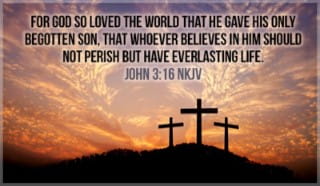
None of this is anticipation for us, as it was for the prophets of old. It is history. Christ has already come. He already lived a life of compassion and grace, wonder and weariness, agony and anticipation, and, most of all, Love. “For God so loved the world that He gave His only begotten Son, that Whosoever believeth in Him should not perish, but have everlasting Life.” John 3:16 Christmas for us is not about anticipating Christ’s arrival. Christmas is the celebration of what that arrival means for us all these years later and forevermore. And we can celebrate all the wonder of Christ on any day of the calendar year. But there IS real anticipation at Christmas– the anticipation of Eternal Life and Christ’s triumphant return. Just like the prophets waited and wondered, we wait in Hope of a glorious reunion.

Christmas, December 25, 2022, may be a disappointing day–it may be dreary, gloomy, lonely, or disappointing in its circumstances. It may bring us bad news, or heartache. But it will also bring us another opportunity to rejoice– to rise above whatever circumstance brings to focus our thoughts forward and upward, where Christ, who once came as a baby, now reigns and rules and waits– anticipating the same reunion that brings us hope and healing.

Photo by Bich Tran on Pexels.com

The Door Will Be Opened…

Ask, Seek, Knock

“Ask and it will be given to you; seek and you will find; knock and the door will be opened to you. For everyone who asks receives; the one who seeks finds; and to the one who knocks, the door will be opened.

“Which of you, if your son asks for bread, will give him a stone? 10 Or if he asks for a fish, will give him a snake? 11 If you, then, though you are evil, know how to give good gifts to your children, how much more will your Father in heaven give good gifts to those who ask him! 12 So in everything, do to others what you would have them do to you, for this sums up the Law and the Prophets.

(Matthew 7:7-12 NIV via biblegateway.com)

Photo by Curtis Adams on Pexels.com

A couple of years ago, I took on a part-time, temporary job with the Census Bureau in which I had to make visits to various households and ask to conduct an interview. I knocked on a lot of doors. Few of them were ever opened. Many of the houses were unoccupied– either the family wasn’t at home, or the home was vacant or even abandoned. At others, there were clearly people at home, but they wouldn’t come to the door. At still others, a person would come to the door, or respond via intercom or speaker, but they would not open up or consent to do the interview. This occurred during the height of the pandemic, so some of the fear and evasion was expected. But even though I was wearing a mask and promised to practice social distancing; even though the interview was less than 10 minutes, and would help their community and country, they would not speak to me or let me step up to or across the threshold. *(For the record, I was not required to actually enter anyone’s home to conduct an interview; most took place across the threshold or through a screen door or even out on the front steps.) A select few, however, were gracious and welcoming. They opened the door, invited me in, offered me a seat, and refreshed my spirit. I knocked on the doors of the wealthy, and those in extreme poverty. I knocked on fancy doors with cyber-security, and doors that were hanging off their hinges. I knocked on the doors of large families, and lonely widows. I knocked on the doors of the dying, and the doors of families with newborns. I knocked on the doors of mobile homes, and lake cottages, and apartments, and old farm houses. Some of the kindest people I found were in so-called “bad” neighborhoods. Some of the people who were the most gracious were those who were in the most pain, and had the least to gain by being kind. Those who were threatening and rude were quick to point out that their time was more valuable than mine– that they were too important, or too comfortable, or too busy to answer a few simple questions. In a couple of cases, I had to leave because I was threatened with harm or faced verbal abuse.

Photo by Jermaine Ulinwa on Pexels.com

My job required me to knock on a lot of doors! And throughout our lives, we will have to “knock” on doors– seek out opportunities, ask for needed help, go to places outside our comfort zone– and many of the doors will remain closed. Others will require that we knock several times, or even return another day to knock and seek entrance. But God will never turn away those who knock at His door. God will never tell us we must stand outside or come back at a more convenient time. He will never have a sign that says “No Trespassing,” or “Keep Out!” In fact the only thing keeping us from entering His Courts is our own refusal to accept His invitation; our own pride or guilty conscience, or resentment and rebellion; our own reluctance to approach the door, let alone knock. We don’t need an appointment, or an official summons to “Come!” The invitation is always open, and the door is not locked.

Photo by Meruyert Gonullu on Pexels.com

God is not “too busy”, and our questions, requests, and praises are not “too small” to get His attention. God is gracious. God is available. God is accessible. And God’s opened door is so much more than an entry to someone’s hallway or front room or kitchen. God opens the doors to His very throne room! He invites us to “Enter His gates with thanksgiving and His courts with praise”! (Psalm 100) He invites us to the wedding feast of the Lamb (Revelations), and to everlasting life (John 3:16).

Photo by Augustinus Martinus Noppu00e9 on Pexels.com

Jesus also “knocks” at the door of our hearts, asking to “come in.” (Revelation 3:20) What does He find? Are we “away from home”– so busy chasing after foolish things that we don’t even inhabit our own hearts? Are we ignoring Him, hoping He’ll go away? Are we telling Him to come back another time, or coming up with excuses why we don’t need to speak with Him? Do we try to chase Him away with our anger or bitterness? Or do we open the door, invite Him in, and offer Him a seat?

Jesus urged His listeners on the Mount to Ask, Seek, and Knock. And then, He challenged them to “do to others what you would have them do to you.” How are we treating those who “knock” at our door? Those who need a friend, or a listening ear? Those who need to hear the truth, and the hope that is in us? Trust me– how we answer that “knock” at our door will leave an impression. It will testify to our true nature.

Photo by Pixabay on Pexels.com

God doesn’t just hear us knocking, He opens the door and gives us all we need for life and godliness (2 Peter 1:3). What are we giving to those who knock on our door?

Go! Tell! Witness! Believe!

15 When the angels went away from them into heaven, the shepherds said to one another, “Let us go over to Bethlehem and see this thing that has happened, which the Lord has made known to us.” 16 And they went with haste and found Mary and Joseph, and the baby lying in a manger. 17 And when they saw it, they made known the saying that had been told them concerning this child.

Luke 2:15-17 (ESV)

Go! Tell It on the Mountain! The ancient prophets foretold it. The Angels brought the news to the shepherds, who told it to their neighbors: Jesus, the Christ, is born! He is here among us! God in the flesh! What amazing and glorious news! This same Jesus told parables, shared prophecies, and spoke the Truth– and taught His disciples to do the same! Through the centuries, witnesses have spoken words of hope, healing, and salvation to the next generation, taking the Word as they spread throughout the world.

Photo by cottonbro on Pexels.com

In the beginning was the Word, and the Word was with God, and the Word was God…And the Word became flesh and dwelt among us, and we have seen his glory, glory as of the only Son from the Father, full of grace and truth.

 
John 1:1; 14
Photo by Pixabay on Pexels.com


“Good Christian, fear, for sinners here the silent Word is pleading..”

What Child is This?

Jesus, who spoke the universe into existence, came into His own creation in silence as a newborn baby. The angels announced His coming; the shepherds spoke of Him; the Wise Men came to honor Him. But His arrival was just the beginning. In His ministry, He would speak words that echo through the centuries– words of hope; words of warning; words of life and salvation. And He challenges us to speak as well– to share the Gospel; to be His witnesses to the uttermost parts of the earth (see Acts 1:8).

Our words matter. Our words have power– power to build up, and power to destroy. We have opportunities each day to speak Truth, Hope, Joy, Peace, Compassion, Love…or to stay silent. And we must be careful to speak the truth– even when it is inconvenient, unpopular, or risky. We must not compromise by speaking pleasant platitudes or ignoring danger. Truth is not always pleasant–Jesus’s words were not always welcomed; not always comforting. But they brought healing where it was most needed, and hope where there was darkness.

Photo by Ivan Samkov on Pexels.com

And more than words must go out into the world– Jesus didn’t sit in a comfortable corner of a bistro waiting for the hurting and hopeless to come to Him and hear His words. He climbed mountains and crossed lakes; He traveled from town to town; He shared meals and participated in the Synagogue services; He touched lepers and spoke to outcasts. Today, we have amazing opportunities to spread the Good News–technology and media; the ability to meet others in person (COVID permitting!) or via Zoom or Skype or even cell phone; and, in many places, the freedom to speak without fear.

Photo by Daria Shevtsova on Pexels.com

 For God so loved the world that he gave his one and only Son, that whoever believes in him shall not perish but have eternal life.

John 3:16 (NIV)
Photo by Min An on Pexels.com

The Word came down at Christmas. Let’s make sure the Word goes out this Christmas– the Savior has arrived! He is Christ, the Lord! Joy! Peace! Hope! Celebration! Go! Tell it on the mountaintops and in the valleys and across the seas!

Three Words

Essential

We’ve been hearing a lot lately about people who are “essential.” In times of crisis, certain skills and services are necessary to preserve or protect life. In times of war, soldiers, medics, makers of tanks and arms, helmets, planes, boots, and armor become essential. In times of famine, farmers, and anyone with reserves of food or water become essential. In times like these, doctors, nurses, EMTs, and those who make or distribute medicines, PPE (personal protective equipment), ventilators, etc., are essential.

Photo by Anna Shvets on Pexels.com

Being “essential” may sound wonderful, but it comes with a heavy price. Doctors and nurses are stretched and stressed, working ridiculously long shifts and scrambling to find ways to arrest the progress of COVID-19 among their patients who test positive. Meanwhile, their neighbors are complaining about being told to stay home and do nothing because their skills, their businesses, and their contributions are considered “non-essential.” Grocers and the cashiers, restaurant owners, farmers, and truckers are risking their lives to keep people supplied with food, only to have people complain about prices and temporary shortages. And any one of their customers could be spreading the virus– not just to them, but to their other customers. Police officers, already putting their lives on the line, are now asked to interact with those who may be carrying and spreading this virus, as well as dealing with an angry and frustrated population chafing under orders to stay home and stay inactive. And those who are “essential” are also vulnerable– tired and frightened and inadequate to meet every need–they are not infallible or indefatigable.

Photo by Alexander Dummer on Pexels.com

There are really only a few things in life that are actually essential–breathing (which is one of the reasons COVID-19 is so scary, because it attacks the lungs), water, food, and basic shelter (protection from excessive heat or cold). And, while many around the world are facing more extreme shortages than others, most of the chafing and complaining has less to do with not having the essentials than with being (or not being) labeled “essential” with very little notice or guidance, and asked to bear the brunt of a crisis they cannot predict or control.

Redundant (non-essential)

For every person who is feeling the pressure of being “essential” in a time like this, there are others who have been labeled “non-essential”– redundant, expendable, “in the way.” “Stay home!” “Stay away!” “Don’t!” Don’t shake hands, or hug, or visit friends or loved ones (unless you can do so via phone or internet). Don’t touch– don’t touch door knobs or counters or surfaces– don’t even touch your own face!

Photo by Engin Akyurt on Pexels.com

The intent of these messages is a positive one–“help stop the spread of this virus”–but the message often gets lost in the tone of fear and panic that accompanies it. “If you don’t (go away, stay away, stop touching, stop asking questions, stop being in the way…) other people, especially ‘essential’ people, will get sick and die.” “If you could just go away, disappear, be quiet, etc., until this crisis dies down…” Feeding your family, keeping your business open, earning a living, using or developing your skills, offering your services or products– none of that is “essential” right now. You have nothing to offer in a time of crisis– you are expendable. Perhaps not forever, but just now– just for a few more days, weeks, months?…

Jesus offers us a shocking view of what is/who is “essential” or “redundant.” In his encounter with the “rich young ruler,” (see https://pursuingprayer.blog/2020/02/07/a-miss-is-as-good-as-a-mile/) Jesus listens as the young man seeks to justify himself. He has done everything he deems “essential” to inherit eternal life. But Jesus challenges him with one “essential”–sell what he has in order to serve the poor and “redundant.”

Jesus had frequent encounters with lepers– the most “redundant” and expendable people of his day. They were contagious, “unclean,” unwanted. And Jesus also encountered those with great power and prestige–priests and rulers, centurions and tax collectors. Many of them were also considered “unclean,” and unwanted! Those for whom Jesus had the sternest warnings were those who refused to accept, respect, or help those they preferred to judge.

Photo by Lukas on Pexels.com

Whosoever-

Jesus, the only One who actually has the right to judge, didn’t come to further the division of people into categories and labels. While he didn’t turn a blind eye to sinful activities, neither did he point fingers. And while he celebrated faith and service when he found it, he didn’t flatter or fawn over those whose service was more “essential” than others’. Instead, Jesus invited “whosoever” to believe in him (John 3:16), to follow him, and to become part of the Kingdom of God. (Revelation 22:17). Someday, He will judge us, and we will be separated. But the one “essential” will be whether or not we have chosen to depend on Him and trust Him for the wisdom and strength to do His will in service to “whosoever” we encounter.

Photo by Streetwindy on Pexels.com

There is no one so “essential” that God is required to accept her/him into the Kingdom. This may be a strange notion to some of us, who have fallen into thinking that we earn our salvation through good works or memorizing doctrinal statements. But NO person is essential in Heaven. And that’s not bad news or meant to condemn–it is simply a reminder that God’s standard is level and fair. We don’t have to strive and stress; we don’t have to have all the right answers, or do all the “right” things– in fact, we can’t.

And there is no one so “redundant” that God cannot accept him/her into the Kingdom. Again, this may be a strange notion, that we cannot “out-sin” God’s salvation. We can’t mess up, wash out, face-plant, or fail such that God cannot redeem, rescue, or revive us. God will never tell us to “stay away,” “wait,” “don’t get too close.” Instead he says, over and over again, “Come!”

Photo by Artem Beliaikin on Pexels.com

Whosoever is struggling with exhaustion, or impossible expectations, panic, fear, sickness, anger, depression, loneliness, hunger, rejection, injustice, confusion, or emptiness– let them come!

Gifting “Outside the Box”

This year has been a difficult one for my family financially. With Christmas coming, there is no money for expensive (or inexpensive) gifts– barely any money for bills. We always like to say that it’s not about the gift, and that “it’s the thought that counts,” but we don’t enjoy putting those words to the test. Like it or not, we have a tendency to equate Christmas with shiny decorations and festive packages– especially for the kids and grandkids.

Photo by Pixabay on Pexels.com

Even the first Christmas featured gifts from the Wise Men of the East– Gold, Frankincense, and Myrrh. But what gifts did the shepherds bring? The Angel hosts? Jesus’s own parents? What they brought– love, worship, Good News of Great Joy– was priceless and just as precious as the physical gifts of the Wise Men.

This Christmas, whatever gifts you choose to give; whatever gestures or actions you perform–let them be done with joy and with a full heart. After all, the REAL gift of Christmas wasn’t wrapped in a box. It was wrapped in flesh and blood, sacrifice and suffering. “For God so Loved the world, that He gave His only Begotten Son…” (John 3:16)

Our gifts matter– small gifts, fancy gifts, hugs, smiles, time spent listening, words of encouragement, even just sitting in silence with someone who is in pain.

Photo by Pixabay on Pexels.com

One of the greatest gifts we can give this season and in the coming year is the gift of prayer. Try this challenge for 2020. Choose a person (not necessarily someone in your family or close circle of friends) and pray for them every day for one month–if you know them well enough, ask them for specific ways that you can pray for them. Write their name and/or their requests somewhere (a calendar or datebook, index card..) where you will see it. At the end of the month, send the person a card or note or text message, or give them a call– let them know you’ve been thinking of them every day and praying for them.

Photo by Matheus Bertelli on Pexels.com

A few warnings:

  • DO NOT use this activity as a form of intimidation, “virtue-signaling”, or with any selfish motive. Be careful not to make this about the other person’s “neediness”– their inability or unwillingness to talk to God on their own; your superior righteousness or religiosity. Pray for their health, their well-being, and any needs that THEY express. Remember, this is a gift, not an intervention. If you are not praying that way, don’t pretend you are actually giving a gift.
  • Be ready to commit. You may even want to begin with one week, instead of a month. But don’t begin until you are ready to finish well. That doesn’t mean if you miss one day you’ve failed. But it does mean that you need to have an intention and a plan.
  • Follow through! It’s one kind of gift to offer to pray– but it’s kind of like giving a child a gift that requires batteries, and not providing the batteries…
  • Beware–gifts like this tend to come with surprises and unexpected obstacles:
    • Your offer of a gift will not always be accepted. Even if it is offered in the best of spirits, some people will find it offensive. You can still pray for them, but don’t expect gratitude or cooperation.
    • Your commitment will be tested– you may find yourself “extra” busy, or suddenly find it difficult to focus and remember your commitment; you may even find yourself tempted to give up for no reason or you may question the value of your gift.
    • Your prayer life may get challenged in unexpected ways– as you pray for someone new, you may be convicted of your own needs, your own unworthiness, your own lack…
    • You may be surprised by the realization that in giving, you also receive. As you pray for someone you don’t know well, you will find yourself developing a heart for them and wanting to know them better. You may find yourself blessed with a new and growing friendship, or a better understanding of needs and experiences you never knew before.
Photo by Daria Shevtsova on Pexels.com

The “if” at the Center of Life

The English word “life” has only four letters, but the central two form another word– “If.” Life is all about making choices–and facing the consequences of those choices. Often we focus on those circumstances over which we seem to have no choice–I didn’t “choose” to be born, to be born female, to be born into the family or community where I grew up. I didn’t choose to be short, I didn’t choose the color of my eyes or skin or hair (though my hair color has changed as I get older!)

Photo by Pixabay on Pexels.com

But those are circumstances– they are not my LIFE. My life is made up of thoughts, feelings, actions, attitudes, decisions, and interactions with others. The color of my eyes, my lack of stature, or my family name does not determine my attitude or my inner beliefs or the way I treat others. Who I am is determined by the choices I make– to be proud, to believe that I am superior (or inferior) to others; to choose hope and courage or to wallow in worry and despondency; to make the most of my time, or to waste it; to envy others or be grateful for all that I have; to obey or defy; to take care of my body or make unhealthy life choices; to be a good steward or be wasteful and destructive; to show love or to withhold kindness; to forgive or to hold a grudge; to seek God for his love and mercy, or to blame God for every challenge I face. Every choice (and its consequences) is woven into the fabric of my earthly life– every reaction to bad circumstances, every investment in future goals, every moment spent “just vegging”, every secret habit I continue to indulge..

Photo by Artem Beliaikin on Pexels.com

The word “if” can hold great promise or regret– we can get lost in speculating, “if only…” or we can try to bargain with ourselves or with God, “if…then.” God gives us life, and He gives us “if”– the freedom to choose how we will react to our circumstances; freedom to choose how we will live our lives; the freedom to seek Him; the freedom to serve Him (or not) with all the unique gifts and passions He planted in each of us.

Life is filled with “ifs”– good and bad. “If’s” are conditional and have consequences. God’s love is not an “If.” It is unconditional, eternal, and immeasurable. Accepting it, however is conditional–it is the greatest “if” in the center of our life!

Lord, help me make good choices– choices that reflect the love and mercy You have shown; choices that bring You honor and glory. Thank you for making the choice to send Your only Son, that whoever (including me) believes in Him should have everlasting life!

God Gave…


For God So Loved the World
16 “For God so loved the world, that he gave his only Son, that whoever believes in him should not perish but have eternal life.


John 3:16 English Standard Version (ESV)
Photo by Sharefaith on Pexels.com

From the very beginning, God has been a giver of good gifts.  He created a beautiful world, teeming with life and joy.  He gave mankind dominion over this beautiful creation, and even when we rebelled and fell short of our calling, God gave us promises of restoration and renewal.  He gave His words and demonstrations of His character and goodness as He interacted with His chosen people.  He took a childless man and promised to make him the father of many nations.  He took His people through the wilderness and provided for their every need– from their heads to their sandal-shod toes.

God’s greatest gift was himself– and He gave everything He had to give.

Photo by Francesco Paggiaro on Pexels.com


14 The Word became flesh and made his dwelling among us. We have seen his glory, the glory of the one and only Son, who came from the Father, full of grace and truth.


John 1:14 New International Version (NIV)


In your relationships with one another, have the same mindset as Christ Jesus:
Who, being in very nature God,
    did not consider equality with God something to be used to his own advantage;
rather, he made himself nothing
    by taking the very nature of a servant,
    being made in human likeness.
And being found in appearance as a man,
    he humbled himself
    by becoming obedient to death—
        even death on a cross!

Philippians 2:5-8
Photo by Pixabay on Pexels.com

Many of us are celebrating Thanksgiving today– but there is great reason to give thanks every day for this indescribable gift!

Photo by Element5 Digital on Pexels.com

Thanksgiving is so much more than turkey dinners or football on TV or shopping.  It is a lifestyle and an attitude that recognizes the God who gives lavishly, lovingly, eternally, and to the very last measure.

Blog at WordPress.com.

Up ↑