I keep a prayer journal. Every day, I have a list of people, places, and issues that prompts me to pray. Of course, I can pray about other things, as well. I can praise God for the day’s blessings, the weather (or provision in spite of the weather); I can confess failings and ask for God’s forgiveness. I can lift up things that are not on “today’s” list. But the list reminds me of so many things– the blessings of family and friends; the richness and vastness of God’s power and sovereignty; His faithfulness over so many years…
In my journal, I also keep a “running tab” of God’s many answers to prayers. Some of the answers bring joy; some bring wonder; some even bring tears. I have prayed for several people battling cancer. Many have gone into remission, but most have eventually died. I prayed for people during COVID. Many recovered– some slowly, some miraculously– but many others died. I have prayed for “little” things, like finding my keys (YES!), or making a sales goal at the store (NO). And some prayers have yet to be answered–I don’t know why or when, but I trust God has heard them all, and that His will and His answers will come– in His good time.
Often, I will look at the front side of the journal page (requests and reminders), and some of the requests are a year or more old. Then, I turn to the back side and look for the answer. Sometimes, in my haste, I have neglected to write the answer, so I will add it, with a small prayer of thanks. Sometimes, I have forgotten the exact outcome. Sometimes, I am encouraged to keep praying for a clear answer or outcome for an ongoing situation. But I am amazed at the number of prayers I have prayed over a year’s time, and how God has provided answers, big and small.
It is sometimes easy to forget the answered prayers amidst the worries of daily life. We are more concerned with the next crisis or the immediate needs before us. But it is helpful to record God’s answers (even the “NOs”) as we receive them. When we “count our blessings,” we can often stand amazed at some of the ways that God has “moved in mysterious ways” to answer things we once thought impossible, or overwhelming in the moment. Looking back, we can sometimes see how, and even why God has allowed us to go through experiences that seemed strange or unwelcome. And we can be reminded that the same God who answered all those prayers is listening to our current requests (and praises!).
God DOES answer prayer. He IS faithful. And when we keep a record of it, it increases our faith for the moments when we are still waiting on His answers!
At least once each month, I want to share some practical thoughts about pursuing a life of prayer. Since we are in the Thanksgiving season, I thought I would share some ideas about giving thanks.
It’s easy enough to say, “Thank You!” when we receive a gift or someone does something special for us. After all, it’s just two small words, and they are (usually) welcome words at that. But what are some practical ways to grow in our expression of thankfulness and gratitude this season?
Of course, we can make a list– “Count Your Blessings”– of all the things we have to be grateful for. But what do we do with the list AFTER we write or type it out? What are some ways to keep a running list of blessings? In what ways can you keep a list visible and interactive? Keep a special journal. Challenge yourself to fill it with all the things you have (tangible and intangible). Keep a whiteboard where the family can add things each week. Can your family fill the white board? Can you fill an entire notebook?
Make thankfulness shareable each day. Thank the cashier at the grocery store. Thank your children when they go above and beyond (and see if it doesn’t happen more often!) with their chores. Thank your parents. Thank your spouse. Thank your pastor. Point out to others when there are things that make you grateful– a beautiful day, a favorite sweater, a good meal at a restaurant (or at home!) It will naturally grow thankfulness in your prayer life if you are growing thankfulness in your other relationships– and vise versa!
Demonstrate thankfulness– practice random acts of kindness. Be an encourager. Give compliments freely. Donate. Volunteer. Take positive action. You might give OTHERS a reason to be thankful, as well.
Seek out gratitude. On days when it seems hard to give thanks, look for it. Look backward– remember better days, and God’s faithfulness in other hard times. Look forward– look at the promises of God for the future. Look sideways– rejoice with those who rejoice. Instead of comparing your lot with others, join in their happiness. Look for ways to be glad for others, just as you would want them to join in your happiness. This is easier to write than to put into practice, but practice will make it easier to do.
Practice starting prayer with praise and thanksgiving. It is so tempting, especially when we are facing trials and an unknown future, to start our prayers ASKING, instead of ADORING. It won’t change your situation, but it will change your attitude when you begin with THANKS!
Break down your big “thank yous” into little ones. “Thank you for my house..” can become “Thank you for the floors and the roof and the bedroom and the kitchen and the dishes in my kitchen and the tub in the bathroom and for running water…” You get the idea. It will amaze you how detailed God is in meeting ALL our needs!
Practice the art of “letting go” of what you do NOT need, and keeping what you will actually use. How much of your clutter can help others? How much stress comes from hanging on to things we no longer need or use? There are many websites and books on this topic; some from a Buddhist perspective, but the idea is valid for all faiths. Jesus said, “Where your treasure is, there will your heart be also.” Matthew 6:21 “Seek first the kingdom of God and His righteousness, and all these things will be added to you.” Matthew 6:33 It is possible to have TOO MUCH to be thankful for! And it is possible to be more thankful for less!
Break the complaining habit! Whenever you find yourself complaining, try to stop and replace your complaint with a thank you for something else in your life. Having a bad hair day? Thank God for comfy shoes! Having a difficult day with a teenage child? Thank God that you survived your own teenage years!
Thanksgiving is so much more than just a holiday. It is a way of life– a pursuit that relates very directly to the pursuit of Prayer!
At least once each month, I want to encourage you with a practical step in pursuing a life of prayer. Today, I want to talk about how you can pray globally.
What does this mean, and how does it look? Well, it means making a concerted effort to pray for different places, people groups, and issues around the world. How you do that may look very different from how I choose to do it, but I’ll give you a peek into my method. You can tool around until you find what works for you.
I mentioned in a previous post that I once found a commercially-produced “Prayer Journal” on sale at a Christian Bookstore. It was a marvelous book with a world mission focus. Each week, there was a short discussion of a different “at-risk” people group. There was information about the region(s), the population, the average life expectancy, the literacy rate, the estimated percentage of Christians (as well as percentages for other religions) in the area, and more. There were suggestions about how to pray for the people/area, and then space to write notes and other prayer requests. I have never again found such a resource in a bookstore, but I decided to make my own journal.
My journal takes up four notebooks– one for each quarter of the year– roughly ninety-two days in each notebook. Each day has a heading with a geographical location: a continent, a nation, a state or province, a city or town, even major rivers, deserts, and oceans. (In addition, I have space for the names of individuals with birthdays or anniversaries, and a space for urgent and immediate prayer requests for that day. In the front of the journal, I have a list of “Prayer Points” for the various days of the week– you can check out my page on Prayer Points here Proactive Prayer Points. The notebooks can be used from year to year, and have space on the back of every page to record answers.)
I don’t have the marvelous demographic information that was in the earlier journal, but I have an almanac or the internet if I want to dig deeper. In putting the notebooks together, I alphabetized all the names of places I wanted to include, narrowed the list down to 365, and assigned one place to each day of the year. Yesterday, I prayed for Fennville, a small town in Michigan where I used to be a student teacher. Today is Fiji, which comes next alphabetically. So I will be praying for Fiji, along with other people, places, and issues on my list. I may not know a lot about Fiji- I know it is an island republic in the South Pacific. I know that many Fijians are Christian, while others are Muslim or Hindu. But God knows everything about this group of islands– He knows if it is the rainy season there now, or if the people are battling sickness or poverty, or if they are in a season of clear skies and abundance!
So WHY do I recommend praying for Fiji (and all the other nations of the world, as well as major cities and even deserts?) Why Global Prayer?
First, it is Biblical, and it is a step in obedience. We are to “go into all the world” to preach the gospel (Mark 16:15). So we should also pray “into all the world”– pray for those who are going to other nations; pray for those who need to hear the Gospel in other nations; pray for those who are going FROM there into all the rest of the world. “For God so loved the WORLD…” (John 3:16). And so should we. Whether we can travel or not; whether we can study all the needs and factors of each nation or area or not, we should remember them in prayer.
Second, it will change your prayer life. I believe it makes my prayer life richer and more effective. Once again, it takes my focus off of me and lifts it to the God who holds the whole world in His Hands. I’m not just praying to “my” Father– I’m praying to “Our” Father. He loves me, and He listens to me, but He is big enough, powerful enough, and compassionate enough for the entire world! Once I acknowledge that, it changes the way I approach prayer.
It also is a great way to learn about the world and about other people and cultures! Imagine meeting someone from Fiji, and being able to say, “I have prayed for your homeland!” Imagine how much joy it can bring to pray for those places that have special meaning to your family and friends. I haven’t traveled the world, but I have met people from many countries. I’m still waiting to meet someone from Fiji, but if I do, I will have even more joy in praying for it next year on this day!
It brings discipline to my prayer life. Sure, I feel an urgency to pray for “hot spots” around the world– wars and famine, political upheaval and natural disasters call to mind certain areas of the world for prayer. But praying for an area without such prompts requires that I have some system in place. And who knows what God’s plans are for any given region on any given day, or what needs may arise that I can’t know about in advance?
So HOW can you pray Globally? I can recommend a few first steps:
Make a list. Maybe start with a single week. List seven locations– nations, cities, even continents or oceans (there are seven continents and “seven seas” after all). Perhaps you want to list places both near and far– local towns or villages AND faraway lands–over the course of a month or even a year.
Set up a system–you may want to use a notebook, planner, or calendar. Or you may want to set up a database. Your system can be set up weekly, monthly, yearly— whatever will work for you.
Be flexible and persistent. It has taken me nearly 20 years to settle on a system that truly works for me. Don’t be afraid to make changes or say “no” to a system just because it works for someone else.
Pray about it!
Resolve to DO IT. Many years, I spent so much time trying to “perfect” my system that I neglected to do the actual prayer! Please don’t let this happen to you. And don’t let guilt or impossible expectations keep you from your pursuit. Even if you take a step backward, forget a day, stumble through a week– Keep going!
Thank God for the opportunity to pray for others. Thank Him for loving the whole world (including you)! Praise Him for being a God who watches over every grain of sand and every drop of water in the oceans, over every bird of the air, and every precious life!
Imagine what can happen in our world if even a few of us are faithful in praying for all of us?! God is giving YOU an opportunity to be involved in HIS work throughout the world. Will you pray for Fiji today? Who can you pray for tomorrow?
Prayer can take many forms and be many different things. I write about prayer as a pursuit– something done with purpose and with some kind of discipline. Prayer is not meant to be just another discipline in the life of a believer. “Pray without ceasing,” Paul says in 1 Thessalonians 5:17; but this is not meant as an exercise to pursue quantity of prayer over quality, or to spend every waking moment consumed with prayer to the exclusion of all else.
However, we are called to be disciples– and that necessarily entails learning discipline. Any activity taken on without discipline can’t really be called a pursuit. It may be a hobby or an entertainment, but pursuit involves direction, dedication, and focus. And this includes our prayer life.
I want to be very careful in discussing this aspect of prayer, because I believe that there is a real danger of letting the discipline overshadow the purpose of prayer. HOW we pray is never more important than WHY we pray, or to WHOM we pray! But failing to make a plan for prayer can cheat us of the benefits of learning to pray deeply, consistently, and with greater focus.
With this in mind, I want to spend some time each month talking about ways to “grow” a life of prayer. Today, I want to focus on journaling as a way to pursue prayer.
As with any discipline, the key is consistency. That’s why journaling can really help. Keeping a record every day of things to pray about, of reasons for praise, of people or issues to bring before the throne of Grace, can keep us focused. It can also help us chart God’s answers and His work in our lives and the lives of others. I keep four separate notebooks– one for each quarter of the year. But there are wonderful daily journals and notebooks that can work as well. Some come pre-printed with scripture or prayer prompts for each day. Some people use a pocket calendar or calendar app on their phone or computer. The method isn’t as important as having a planned approach.
I recommend having a daily focus that is consistent from week to week. For instance, on Sunday, I focus on The Church– missions, local church congregations, persecuted churches, evangelism effort, etc.. On Monday, I focus on Family and Friends. Tuesday, I pray for the Government– local, state, federal, and leaders of other nations. Wednesday is Community–community services, schools, businesses, neighbors, even roads and parks and utilities! Thursday is Global Day– things like war and drought, natural disasters and diseases. Friday, I focus on business and finances– my own, and others. Saturday is a day to pray about cultural issues, like abortion, marriage, gender issues, etc. That doesn’t mean that I don’t pray about family members on Thursday, or about a school shooting on Sunday. But it means that I pay special attention to those matters on particular days. Here are some reasons why:
God wants to hear from me about everything. But without a plan, I tend to pray about the same few things over and over. I pray about whatever is worrying me in the moment. And only that. God wants me to be aware of all that He is doing. He also wants to remind me that He is LORD of everything; big and small, immediate and long-term, far away or around the corner.
God wants me to be consistent and persistent in praying. But that doesn’t mean praying obsessively. Obsessive prayer can become nagging, doubt-ridden, desperate pleas. God listens to our prayers. And we can trust Him, even when we don’t get immediate answers or relief. We don’t stop praying, but we also don’t stop trusting Him for the next step in the journey. God is bigger than just one aspect of my life– no matter how urgent or overwhelming that aspect may seem today. My focus needs to be on God’s sovereignty, and not just my immediate circumstances.
God works in mysterious ways. I may not feel like praying for my Governor, or my neighbor, but it may be that my faithful prayer today is what God will use to make changes in some other aspect of my life. Praying for what I have on my list, rather than just what pops into my mind may actually remind me of something else, and help me see how God is working in an area I might have missed otherwise!
By practicing this discipline in prayer, I am learning discipline in other areas of my Christian walk.
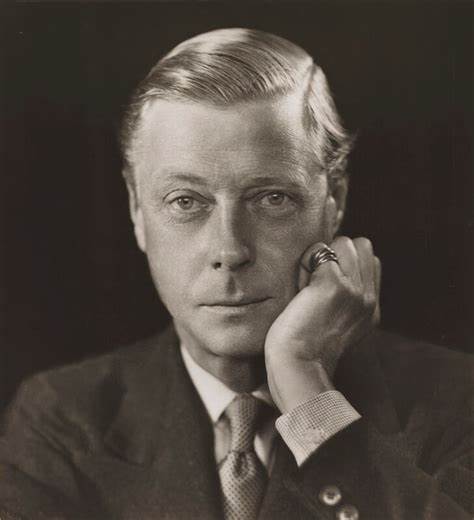
I read an interesting article on-line the other day about the late Duke of Windsor. Born as the heir to the throne of Great Britain, he was trained from an early age. His father, the King, wanted him to learn discipline and honor, so as to be prepared to assume his role. But Edward despised his father’s training. He found his father to be harsh and critical, prim and joyless. And he rebelled. He took little interest in the affairs of state, preferring to focus on his own pleasure. As his father grew older and weaker, Edward was asked to take on more royal duties. He enjoyed making appearances at parties, but despised many of the other tasks– letter writing, or visiting factories or various parts of the Commonwealth. He refused to settle down and marry, until he met Wallis Simpson, who was twice-married, and separated from her second husband. She was also an American citizen.
Edward VIII wanted to defy the laws and traditions of his own nation in order to marry. When this proved to be contentious, he decided to abdicate his throne, marry Mrs. Simpson, and live abroad. Instead, his brother became the next king (George VI), guiding his nation and the commonwealth through the difficult days of the second world war.
For many years, the myth of a king who gave up his throne to be with “the woman I love” has prevailed. But there was more to Edward’s abdication than blighted love. Edward was not incapable of ruling, but he was unfit to rule it well. His lack of dedication to his duties and citizens became evident in the very first crisis. Those who were working with him during his short reign witnessed his lack of care or concern about paperwork, and his selfish insistence on doing what he wanted to do, and not what was expected of him or of benefit to his people. He was a man without discipline and without a clear moral compass https://www.dailymail.co.uk/news/article-417388/Prince-Charmless-A-damning-portrait-Edward-VIII.html.
The Bible is filled with many examples of kings throughout the history of Israel and Judah who also failed to learn discipline or restraint. Their desire to reap the benefits of their position without learning to fulfill their responsibilities led to the moral, and eventually the physical and political collapse of their nations. They did not make a habit of seeking God, or of listening to His prophets. They sneered at good advice, and defied the laws of Moses and the rules God had given for the kings. Some of them worshiped other gods; some even sacrificed their own children to foreign gods or goddesses. They failed to keep the sacred holidays; they failed to read the Word of God; they failed to pray– except as a last resort!
We often perceive prayer as a personal practice– and it is. But how we choose to develop our prayer life may be tied to how we choose to develop the rest of our lives. We don’t need to be rigid and legalistic about it. But we do need to live– and pray– with purpose, if we wish to follow the example of Jesus and grow in our walk with Him. Not only does it impact our life and growth– it impacts our witness and our influence as well. Pursuing prayer in a disciplined way may have a far-reaching impact on our life and the lives of others– even in the generations to come. For more, see the page Why I Keep a Prayer Journal
What does it look like (or feel like) to pursue consistent, fervent prayer? Is it an endless repetition of the same words? Is it mindless pleading, mixed with angst and flowing tears? Is it rehearsing the same requests over and over in an attempt to “get the right words” that will cause God to act?
No. Jesus addressed this very issue in His Sermon on the Mount, and just before He gave us a wonderful example of how we can pray:
7 And when you pray, do not keep on babbling like pagans, for they think they will be heard because of their many words. 8 Do not be like them, for your Father knows what you need before you ask him.
If God already knows our needs, why SHOULD we practice consistent, fervent prayer in the first place? Because God desires to hear our heart cry. When something touches our heart– even though God already feels our sadness, pain, and fear–God wants to SHARE it in personal and intimate detail. What He does not want is for us to use prayer to try to manipulate a particular outcome, or to push our own desires and agenda ahead of His wisdom and sovereign will.
Instead, we should meet with God as our Father, knowing that He knows us, cares for us, and cares about the things that concern us. Consistent, fervent prayer is simply sharing our concerns with a loving God honestly over time.
Whining and “babbling” shows that we don’t trust God’s wisdom. It’s like a toddler, who keeps saying, “Please….pretty please…pretty please with sugar on top…” “But I want it…I REALLY need it… REALLY…”
Saying nothing is no better. It is closing our hearts away from the one who loves us unconditionally. Sometimes, we try to over-spiritualize, saying that because God already knows our needs, we need not mention them again.
We need to find a middle ground. We need to be humble enough to say that we need God’s help and His wisdom, and huble enough to accept that His ways and timing are not the same as ours.
So what DOES it look like? Probably a little different for each person, but I think there are some guidelines:
Consistent prayer means that we pray every day, throughout the day. About everything! Not just obsessively about our worries or needs, but about our joys and sorrows, as well as our questions, wonders, adoration, praise and confessions. Much like speaking with our best friends–the best ones are willing to listen to the same story about our cat even if we’ve told it twice before. They will cry with us next week as we share our continuing frustration with a rebellious teen or our parent’s journey with dementia. The difference is that God has a purpose and a plan in sharing our grief and our weakness beyond anything we can imagine. He is the “God of all Comfort” (2 Corinthians 1:3-5) as well as a God of healing.
Fervent prayer isn’t just anguished prayer or dramatic, emotional prayer. It is intensely humble and full of faith. The Apostle James gives an excellent example in chapter 5 of his epistle: 17 Elijah was a human being, even as we are. He prayed earnestly that it would not rain, and it did not rain on the land for three and a half years. 18 Again he prayed, and the heavens gave rain, and the earth produced its crops. (James 5:17-18 NIV) When Elijah faced the pagan prophets of Baal and Asherah, he prayed fervently, but he left the drama to the others. Elijah chided the prophets of Baal, because they prayed with raving, shouting, dancing, and cutting themselves in an effort to get Baal to hear them. Elijah’s prayer, while simple, was answered immediately and with dramatic effect. This wasn’t just a show of God’s awesome power through His chosen prophet. It was also a clear sign that Elijah was in constant communication with the One True God. He didn’t have to “get God’s attention.” He knew God was right there with Him. (See 1 Kings 18 for the whole story.)
Consistent, fervent prayer is part of a journey, not a destination. The same Elijah who was able to call down fire from Heaven, ran and hid in a cave and prayed to die! God wants us to pursue prayer the same way we pursue righteousness– knowing that God is the source of our wisdom and strength. He wants our anguished prayers as well as our prayers prayed in absolute trust– He wants them all!
I find it helpful in my personal prayer to have a journal. In it, I keep a list of people and places, concerns and requests. Each day of the week, I have a focus point for my prayers, and a list of specific people to lift up, plus a place for immediate and ongoing concerns. This does the following for me:
It allows me to put concerns into perspective. On Mondays, I concentrate on family and friends. That doesn’t mean that I don’t pray for my family on other days, but Mondays are focused on family and friends. On Wednesday, I concentrate on praying for my community. On Thursdays, I pray for global issues. This doesn’t preclude urgent requests or needs, but it keeps me from obsessing about some concerns at the expense of others. And it reminds me that God is the God of my family, AND my community, AND those suffering from a recent earthquake or famine.
A Prayer Journal gives me a place to write out my requests. Sometimes, seeing it in writing reminds me that God already knows– my concerns are written on His heart! No need to use the same words over and over again–but God may want to hear how MY heart has changed since I wrote the request. Maybe I have new information that changes my outlook. Maybe I can see how God is already working in the situation…which brings up another advantage of journaling:
I have a space in my prayer journal for answered prayer. Sometimes, I’m praying for someone from my church with a health issue. I can come back and write out God’s response– maybe He provided miraculous healing; maybe He took them “home.” Maybe He is causing them to travel a long road — giving them opportunities to bear witness to His faithfulness in every situation. Perhaps He is causing their family or caregivers to see Him in a new way!
Finally, a Prayer Journal helps me to be more consistent. I can turn to it every day for prompts and reminders of God’s love and faithfulness. God IS Fervent and Consistent– He is Faithful, and His Love is limitless. And He is the one who can teach me to be the same!
I keep a journal of my daily prayer life. I have found it useful, and I recommend it as you pursue a lifestyle of prayer. Why?
It helps me keep organized and disciplined as I pray. Not everyone needs help in these areas, but I find that I do, and keeping a journal helps. It helps remind me to pray specifically for certain people, issues, locations, etc. That doesn’t mean that I don’t pray “in the moment.” But it means I have a focus when I sit down to start the day or finish the day in prayer.
It provides a place to document God’s answers to prayer. I leave space in my journal, and I go back through and note the ways God has answered prayers for various needs. It is a great reminder of God’s faithfulness and even His attention to detail!
It reminds me how BIG God is–I am amazed at how many different items end up in my journal. I pray for a lot of people each day, and a lot of different situations– needs, praises, confessions, worship, “unspoken” items, continuing issues…God hears them all. He knows them all before I even pray! Yet He delights in hearing them on my lips or in my mind.
It helps me focus on others. Life can be full of “self” distractions–“my” finances, or aches and pains, scattered thoughts, etc.. A prayer journal reminds me that others need prayer, that our lives are intertwined and impact each other, and also that others are praying for me. In that sense, it makes prayer a very unifying and “communal” activity.
It also makes my prayer very personal–conversely, using a journal means that my private thoughts and goals and relationships are in a journal for my eyes (and God’s!) only. I may write down a poem or someone else’s written prayers as well, but I’m not praying someone else’s heart-cry or someone else’s thoughts in place of my own.
Keeping a prayer journal doesn’t make me a “better” prayer than anyone else. It doesn’t impress God or bring me closer to Him because I have a journal of my prayer life. And I don’t recommend it for any of those reasons. But I have found it easier to be more consistent and more confident as I pray. I am not journaling just my words or even my thoughts– I am journaling a relationship.
Do what works best for you–this is YOUR journal, not mine. I keep mine in four simple notebooks– one for each season, one page for each day of the year. But you could use index cards, or a calendar, or your smartphone or computer calendar. Use whatever works– it may take a few tries before you find what works best.
Pray! Ask God to give you wisdom about what to include or how to organize your journal. I use birthdays and anniversaries to remind me to pray for certain people, but I leave plenty of space for “spur of the moment” requests and ongoing issues. I also pray for various geographic regions, but you can organize it around cultural issues, family members, etc. There are even websites and books that can help you learn about various topics or people groups to pray for..
Start simple. You don’t need to have a year-long journal to begin the process. Try journaling for a month first, if that will help you keep with it.
Don’t let the journal become bigger than your prayer life. This is a pitfall I landed in early on. I had the ambition to have a “perfect” prayer journal– and it ended up so convoluted that I wasn’t actually praying! Starting small allows you to build the habit first, and add the discipline of journaling in a more natural way.
Ask for help– just remember that you don’t have to do it “just like” anyone else, and you shouldn’t do it just to impress someone else.
See the attached pages on keeping a prayer journal on this blog..
Pursuing a lifestyle of prayer is a great way to start a new year. And continuing is a great way to look forward in the new year!
Before I get started, I want to assure anyone reading this that there is no disaster in Nebraska (that I know of). No mass shooting, no tornado touchdown, no flooding or extreme drought…as far as I am aware, Nebraska is as it ever was.
But yesterday was my “day” to pray for Nebraska. I keep a journal– a home made set of notebooks with pages for each day of the calendar year. Every day, I pray for a geographical region– a city, state, nation, continent, ocean, etc. I also pray for people who are celebrating a birthday or anniversary (among those known to me), and people facing special circumstances (as I am made aware of them–upcoming surgeries, recent losses of family members, unspoken requests..) Throughout the day, there may be other requests, and there are web sites and other prayer opportunities that don’t make it into my journal. And there may be a day this autumn when Nebraska will feature in my prayers because there IS a disaster, or some other concern arises there.
Keeping a prayer journal doesn’t make me a “better” person. It doesn’t cover every prayer concern, or even every person I know and care for. My mind cannot hold every person, place, and situation that needs prayer on any given day. But a journal is a handy reminder to pray for people and places that are dear to the heart of God– not because they are in crisis (though we should lift up crisis areas, too)–but because He cares for everyone, everywhere, all the time. Keeping a journal doesn’t make me a better person; but it can make me a better pray-er. It reminds me that God is bigger than I can imagine, and His love is more powerful and everlasting than I can comprehend.
Another benefit of keeping a journal is that I have space to write in answers to prayer, questions, random thoughts– and come back to reminders of God’s faithfulness over the seasons and years. Because I use home made notebooks, I keep them for about three years at a time. This also gives me the opportunity to update and make changes. Last time, I added Catalonia to my list of countries, and I’ve added several new birthdays and anniversaries. I’ve also begun keeping track of deaths, because I can pray for those who may be grieving the anniversary of a loved one’s loss.
If you would like more information and suggestions on keeping a prayer journal, there are several suggestions, web sites, pre-printed journals for sale, and I have a page here Prayer Journal with some thoughts.
Now, I have to sign off and pray for the Netherlands!























 Pursuing Prayer