In my pursuit of prayer, I have found it helpful to keep a Prayer Journal. One of the reasons is that I can look back and see what prayer concerns and issues I prayed for weeks, months, or even years ago. I also save space in my journal to go back and fill in how God answered those requests, or what progress has been made in those areas of concern. see also: Proactive Prayer Points
The Bible warns us to be very careful about looking back…the most famous example is the tragedy of Lot’s wife (Genesis 19). In looking back, she lost her chance to rebuild a life after the destruction of Sodom and Gomorrah, and was turned into a pillar of salt. In the book of Exodus, the newly freed Israelites grumbled about their circumstances and looked back with fondness on their lives in Egypt, forgetting their oppression in their homesickness for certain foods (Exodus 16). Spending too much time and energy on the past leaves us with little motivation and energy for the present or future. The past should never become more important to us than moving forward. If we long for the past, if we romanticize it or cling to it, fearing the changes and opportunities to come, we can stagnate, and miss the blessings playing out right before our eyes.
But we should take some time periodically to look back in order to gain perspective. The same Children of Israel who grumbled about leaving Egypt, once they arrived in the Promised Land, were commanded to remember their wandering in the wilderness, and told to teach their children about the past (Deuteronomy 8). Holidays and religious rites were instituted as reminders of the past. But this kind of looking back gives us renewed encouragement, incentive, and momentum to keep going by showing us how far we’ve come, and reminding us of God’s faithfulness.
One of the great benefits of reading through the Bible is that we are reminded of all the times God acted on behalf of His people– from providing for the Israelites in their 40-year desert odyssey, to protecting Christ’s early disciples as they spread the Gospel. God’s faithfulness is demonstrated time and again– for His Glory, and for Our benefit. God was at work then, and He is still at work in our own time! One great old hymn challenges us to “Count (our) blessings– name them one by one. Count (our) many blessings; see what God has done!” It is encouraging and inspiring to call to mind all the times that God has “shown up” in difficult circumstances or protected us from other dire events or losses that we don’t even know about.
I am especially encouraged when I see how God has answered prayer–so often, I’ve forgotten about trials and struggles that have come my way–issues that seemed huge in the moment, but in hindsight look insignificant. Sometimes, God’s answers were immediate and breath-taking. Sometimes, they were subtle and were revealed in several stages. Sometimes, the answers revealed how God was working beyond anything I imagined! Often, the requests reveal how I have grown (or not!) to trust him more or to listen better to those around me.
And, just like that, I also have material to add to today’s prayers– gratitude for prayers answered, hope for new growth, praise for God’s faithfulness, and confession for times I have doubted or looked back in envy or regret.
I love puns– friends from all over the world send me the craziest puns, “punny” images, silly videos, and awful jokes. Except for those that are patently offensive and find their humor at someone else’s expense, I really enjoy them all.
Someone has said that puns are the lowest form of humor, but I disagree. In fact, I often find that puns, like humor in general, can cause us to explore a serious topic in ways we would otherwise avoid. The image above tickled my funny bone, but it also caused me to think. Where is my Joy? Do I bottle it up and hide it down in my cart, or does it bubble up, iridescent and smelling of sunshine (and possibly lemons) from deep down in my heart?
I especially find myself looking for joy in the ordinary tasks of life. I really do not enjoy doing dishes, for example. But I can find joy– not the brand of dish soap, but the real thing!– even in such an ordinary chore. I can find joy as I clean the toilet, as I sort clothes for the wash, as I drive around town to do errands, and as I set aside time to pray for family and friends who are hurting and discouraged.
Prayer is a serious topic, but it shouldn’t be joyless. Even in our troubles, we can be confident that we are loved, cherished, and precious. In our grief and sorrow, we are not overwhelmed (though it often feels as if we are) when we have this kind of joy. It will wash away despair, anger, doubt, and weariness, as it rises up. We pray for so many other things– health, wisdom, forgiveness– we should also pray for Joy. Not the false and fleeting joy of a silly pun, or the veneer of joy that lies and says that “everything is great.” We need the kind of joy that sings through tears, laughs at storms, defies despair, and shakes the rafters!
Many people read about Jesus and conclude that He was a great teacher, but very sober and serious. And the Bible describes Him as a “man of sorrows” and one “acquainted with grief.” (Isaiah 53:3). Yet the Gospels also show Jesus as a man who welcomed children, shared meals with His friends, entered into wedding celebrations, and told His disciples to rejoice in the midst of persecution. Jesus was not a man who took life lightly, but He was a man who felt joy in simple things. He was able to relax in the joyful knowledge that even grief and pain are temporary, and our circumstances do not define our life. And joy is also listed as a fruit of the Spirit (see Galatians 5:22-23–“But the Fruit of the Spirit is Love, Joy Peace, Patience, Kindness, Goodness, Faithfulness, Gentleness, and Self-Control. Against such things, there is no law.”
We need the quiet, blessed assurance that God is in His Heaven and even if all is not well with the world, God still has everything well in hand. Such joy, lodged deep in our heart and soul can keep us from buckling under the weight of loss, the exhaustion of stress, and the threat of chaos. It can fill us with peace and contentment, even as we go through ordinary or even dreary days. We need a new “Dawn” of “Joy” (yes, I had to include another pun). We need to pray for joy. We need to cherish it. And we need to pass it on.
Today is March 16. In my area of the world, we abbreviate it as 3/16/26, or just 3/16. So it reminds me of the most quoted verse in the Bible– John 3:16– “For God so loved the world, that he gave his only Son, that whoever believes in him should not perish but have eternal life.” (ESV) This verse is so famous and so quoted, that many times, people just skip the actual verse and just use the reference. In fact, if you just see a poster or sign of reference that says 3:16, it almost always means this verse.
Recently, I saw a short video of a person complaining about seeing such a reference on their soft-drink cup at the fast food chain In-N-Out Burger. The chain prints “John 3:16” on the inside of the bottom of their cups. They’re known for it. They don’t print out the entire verse, just the reference. It’s not blatant or over-bearing– just a modest note on the bottom of their cups. But this person wanted none of it. They started out by liking the food, but they were offended by this tiny reference to a Bible verse. “Keep your John 3:16,” they sneered. “I don’t want your John 3:16.” Apparently, it left a bad taste in their mouth just to see any reference to the Bible. They felt judged and oppressed, I guess.
But John 3:16 is not about judgment. It’s all about Love! For God SO LOVED the WORLD–take a minute to reflect on that. God, the Holy One, who created the world, only to have mankind reject Him over and over again, didn’t destroy it. He didn’t turn His back on the world. He didn’t leave us as a footnote and move on. Instead, He GAVE His ONLY begotten SON. He didn’t come up with a cheap plan for salvation that was just adequate to cover our worst sins and leave us enslaved to our old guilt and shame. He didn’t send a half-hearted emissary to show us what Heaven and Holiness were like. He sent His SON– the heir of the Universe–to live among us, show us how to love and live and worship. And that Son GAVE all of Himself as a sacrifice– not for a select few, but for WHOSOEVER would trust in Him and submit to His Lordship!
WHOSOEVER believes in Him will not perish, but have ETERNAL LIFE! How does that offend and oppress? The message of John 3:16 sums up the whole Gospel of Christ. It is NOT judgment, but Salvation. It is not oppression, but freedom from Sin and Death!
So today, I am thrilled to celebrate 3:16! It is a message of hope, joy, renewal, abundance, purpose, power, and LOVE!
Wilt thou love God, as He thee? then digest,
My soul, this wholesome meditation,
How God the Spirit, by angels waited on
In Heaven, doth make His Temple in thy breast.
The Father, having begot a Son most blest,
And still begetting (for he ne’er begun),
Hath deigned to choose thee, by adoption,
Coheir to His glory and sabbath’s endless rest;
As a robbed man which by search doth find
His stol’n stuff sold must lose or buy again,
The Son of glory came down, and was slain,
Us whom He had made, and Satan stol’n, to unbind.
‘Twas much that man was made like God before,
But that God should be made like man, much more.
John Donne, Holy Sonnets 1633, No. 11
In the Garden
1 I come to the garden alone,
While the dew is still on the roses;
And the voice I hear, falling on my ear,
The Son of God discloses.
Refrain:
And He walks with me, and He talks with me,
And He tells me I am His own,
And the joy we share as we tarry there,
None other has ever known.
2 He speaks, and the sound of His voice
Is so sweet the birds hush their singing;
And the melody that He gave to me
Within my heart is ringing. [Refrain]
3 I’d stay in the garden with Him
Tho’ the night around me be falling;
But He bids me go; thro’ the voice of woe,
His voice to me is calling. [Refrain]
God does not have a Facebook or X account; he’s not in Pinterest or Snapchat. He doesn’t post selfies or have a blog. But he is the same God that Adam and Eve walked with in the Garden of Eden; the same God who spoke to Moses as a man speaks to his friend. He is the same God who listened to the impassioned Psalms of King David, and the lamentations of Jeremiah. He is the same God who has inspired awe and fear in the hearts of apostles, poets, philosophers, songwriters, and evangelists over the centuries.
When we come before God, it is tempting to see him through the lens of our own times– we want him to be one of our “peeps”, accessible, someone who will answer a text or voice mail, “like” our post or “follow” us as we babble about our hours and days and show pictures of what we had for dinner or what we looked like heading out to the concert. We want him to be about US, instead of us laying down our lives for HIM.
Media– especially social media, can help or hinder our prayer life. We can access all kinds of helpful tools to focus our prayers, link up with prayer partners and groups, listen to inspiring music or peaceful slide shows for meditation… But more often than not, media becomes a distraction or even a substitution for real, serious, personal communication with God.
God is not our virtual friend; he’s not our “Bruh” or “the man upstairs.” He is the Sovereign Ruler of the Universe– every galaxy created at his command, every particle obedient to his whim. And he has given us the privilege to come before him as his adopted and beloved children to lay our hearts before him and receive his wisdom, forgiveness, strength, and joy. “Liking” your friends’ posts with Bible verses, sending a thumbs up or an emoji when someone puts up a picture of Jesus on their wall–if that’s the sum total of what you call worship, God has another name for it– Idolatry.
That may seem really harsh, but Idolatry is ANYTHING that we are worshiping in place of God himself. There’s a reason we don’t have statues of God the Father in temples and churches, synagogues, and chapels around the world. God warned us thousands of years ago about the dangers of creating substitutes. Even things that are meant to remind us of him can become substitutes for worship. That doesn’t mean that the crucifix necklace or the picture of Jesus knocking at the door are automatically evil– but when we stop reaching out to the real God, and focus on a false image, no matter how lovely or touching, we can fall into idolatry. And the distractions of the digital age have been shown to create isolation and depression, and become impediments among our human relationships.. We don’t have meaningful meditation or intimate conversations online with people at the other end– what makes us think that wireless devices will bring us closer to God?
That doesn’t mean that we shouldn’t use technology to enhance our worship–just don’t make it an entertaining substitute for the real thing. You wouldn’t (or at least I hope you don’t) text and catch up on Twitter while having a face-to-face and heart-to-heart talk with your spouse or child. Give God the honor, the time, and the respect he deserves. You don’t have to live like a stone age hunter to get some alone time with God, but it is a great idea to set aside some time to unplug from media and the noise of this world, and plug into the wonder of meeting with God in the Garden.
Trust and obey,
For there’s no other way
To be happy in Jesus,
But to trust and obey.
It bothered me as a child, the part about “No other way.” It seemed narrow-minded and harsh. Surely, I could be happy in Jesus just doing my own good things and singing his praises. Besides, I did trust him, I followed the Ten Commandments, and the Golden Rule, and I was a nice person. So why did I feel that I was missing something?
In all the years I’ve been a follower of Christ, I have learned the importance of trust and obedience. I can’t truly follow someone I don’t trust. I can learn from them, admire them, even try to act like them, but eventually, I will try to take the lead, or let go and walk down a different path. Similarly, I can’t say that I trust someone if I won’t obey them. If they ask me to do something, and I ignore their request, or re-interpret it, or come up with excuses why I won’t do it, it really boils down to one thing: I don’t trust that their request has any merit.
In a broken world, filled with sin and pride and selfishness, there are many reasons NOT to trust or obey certain people. Abusers, users, sadists and sociopaths abound. Such people may suggest that there is “no other way to be happy..” than to trust them and obey them implicitly. So when God asks us to put our trust in an invisible Godhead, it seems terrible, final, and harsh. Is God demanding abject humiliation and mindless adherence to his law? Will we lose ourselves in drudgery and joyless obedience to a harsh taskmaster on the whimsical hope of a happy afterlife?
That is a view that is often peddled, and ridiculed. But I think a closer look at the Bible gives us a different picture. Yes, God is harsh and wrathful against sin and sinners–but so am I! I find myself getting furious over injustices and pain caused by sin in the world–I can only imagine how angry God must be to see the way we lie and cheat and abuse each other, and the untold painful consequences he has witnessed through the years. The only thing holding him back is the power of his Mercy. His anger is swallowed up in patient and unfathomable love that is ready to forgive even the worst offenders. And God’s wrath is pure, unlike mine, which is selective against those who have hurt me, but wants to smooth over my own sins. His love is even more pure– he loves even the worst sinner, and even the most unloveable people (in my flawed estimation). He is unwilling that ANYONE stay lost and enslaved by their sinful past.
Think about it– Jesus, who knew God best (being part of the Godhead himself) never painted his Father as a brute who demanded people to become “useful idiots” just to stroke his ego. He didn’t talk about a harsh and unforgiving God who “hated” sinners. Instead, Jesus healed the sick, raised the dead, gave sight to the blind, and spoke to sinners and outcasts as though they were more important than the religious elite…because that was his heart! But more than that, Jesus showed us what it meant to “Trust and Obey”–he didn’t seek fame or fortune for himself, he never owned a home, or sought public office, and he never ran arouns worrying and fretting that God would leave him in the lurch. Even under the worst circumstances leading up to his arrest and crucifixion, Jesus only spent one hour worrying about what was to come, and in that hour of prayer, he found the peace and strength to say, “not my will, but yours be done (Luke 22:42). In his ministry, he humbly walked the byways and taught those who willingly followed him. He healed and encouraged and saved those who came to him; those who trusted him as he trusted his Father. He did not pat on the back those who claimed to follow his Father, but wouldn’t trust him. Nor did he reward those who claimed to obey God, but hated their neighbors, justified their own self-righteousness, and changed God’s laws to feather their own lifestyles.
Does “Trust and Obey” mean that we might lose our status, our wealth, our comfort, and our lives? Not necessarily, but there is no promise that we will be richer, or healthier, or more popular for following Jesus. He didn’t come to make us comfortable or “better than” someone else. In fact, he warned us that while we are in this world, we will have troubles and sorrows (with or without our faith!) So how can we be “happy in Jesus” if we end up homeless, hated, or sick? How can we talk about being happy in Jesus under awful circumstances? Is this just some brainwashing tactic to make us forget how miserable we are? What’s the “payoff” of Trust and Obey?
The answer involves a choice–Do I trust Jesus when he says that he came to give us, not just life, not even just eternal life, but abundant life? If Jesus isn’t trustworthy; if I am not sure that he can or will make my life MORE than I ever dreamed, MORE than I imagine–even in the midst of otherwise difficult circumstances–then I will never be happy in Jesus. But if I DO trust Jesus, then I can be happy, not because of my circumstances, but because I can trust all that he says about them, and that his grace is more than sufficient to see me through. And I know that whatever trials I may be going through can be turned to good because I trust his power and his goodness.
And true obedience can only follow true trust. If I say that God’s rules aren’t important, or don’t apply to me, then I’m really saying I don’t trust him to know what’s best, or that I don’t trust that He is really Good. The temporary happiness that comes from following my way (even if I think I’m doing it for the right reasons) will give way to resentment against God. How dare he stop me from that one thing that brings me joy– how dare he question my “needs” or call my actions “wrong”. How dare he suggest that His way could be better or more abundant than what I know–even if I suspect that what I know and experience isn’t always the best it could be.
No– the longer I follow Jesus, the more that old song rings true, and not harsh or condemning, but full of wisdom and promise. It is with the faith of a child (not stupid or simplistic, but hopeful and eager), and humble (not abject or reluctant) obedience that we find happiness in Jesus, peace for our souls, and strength to face the trying circumstances of this life.
I Thessalonians 5:16-17: “Be joyful always; pray continually”(NIV)
“Rejoice evermore; pray without ceasing” (KJV)
Two verses; five simple words, but they are among the most misunderstood and misused phrases in the New Testament. Critics of the faith use these verses to paint Christianity as a religion of unrealistic fanatics– “shiny-happy,” posturing adherents who do nothing but offer empty words to a deaf and apathetic deity from sunup to sundown. Christians use them to bash or shame others. Feeling depressed or worried? “Tsk, tsk– we’re supposed to be joyful always!” Struggling with circumstances or doubts? “You’re not praying enough (or not praying the right way, or with the right motive, or not really praying at all).” I’m not sure how saints like this actually live when they’re not busy judging others, but I think these verses are important enough for a closer look and more careful treatment.
Both convey the idea of constant engagement, but common sense tells us that they don’t mean 24/7/365…you cannot express joy or recite prayers in your sleep, and God isn’t asking Christians to go without sleep, or to give up all other normal activities. Nor does he ask us to be false or insincere in either pursuit. We are called to rejoice with those who rejoice, but also to weep (or mourn) with those who weep. We are allowed to be mournful, to be remorseful, to be angry, even. We are called to pray, but not to the exclusion of other activities– eating, talking, working– prayer is no excuse to stop engaging with other people, or to skip out on work that needs to be done. There is a similar idea in the Boy Scout motto– “Always be prepared.” This doesn’t mean staying awake every night, or waiting on edge throughout each day, always expecting an imminent crisis. But it does mean that one should be vigilant, attentive to events and circumstances, and have an attitude of preparedness. I would suggest that we do the same with prayer and joyfulness.
These reminders come at the end of a letter that the Apostle Paul wrote to the Thessalonians, who were mostly new converts–very eager to learn all about Christ and how to follow him. They were hard-working (mostly), and generous, and conscientious. But they were falling into two bad habits–worry, and comparison. In this context, the reminders take on a different shade of meaning. If we are prone to worry, it robs us of all joy. It saps our strength, our enthusiasm, our purpose; it leaves us exhausted and unable to lift our faces, let alone lift up others around us. Similarly, if we are comparing our performance with others, we are wasting energy, losing our focus, and we become disillusioned and ineffective.
Always be joyful–joyful–not giddy or silly or amused, but filled with joy– ready to celebrate small victories, cherish small moments, laugh off small defeats and set-backs, and ready to grit your teeth against the suffering and the darkness, because you know how the story ends. We don’t need to be simplistic or naive to be optimistic and joyful– we just need to plug into the source of joy. And that joy becomes our strength in the midst of trouble and our anchor in the midst of chaos.
Pray without ceasing–be perpetually prepared to turn worry into prayer, triumph into praise, pain into petition, doubt into dialogue, heartbreak into heart-cry, gladness into gratitude, and remorse into restoration. Practice making time for prayer, but don’t limit your time with God to a penciled-in appointment with an agenda and a timer.
Don’t skim these short verses; don’t miss out on the blessings they bring. The practice of “always” in this life is but a shadow of what we will experience of Joy and Communion with God throughout eternity.
Rejoice! Enter His presence with gladness– come early, come often. Sit and stay awhile! Make yourself at home! Now– arise, go forth, and conquer!
1 There was a certain man from Ramathaim, a Zuphite from the hill country of Ephraim, whose name was Elkanah son of Jeroham, the son of Elihu, the son of Tohu, the son of Zuph, an Ephraimite. 2 He had two wives; one was called Hannah and the other Peninnah. Peninnah had children, but Hannah had none.
3Year after year this man went up from his town to worship and sacrifice to the Lord Almighty at Shiloh, where Hophni and Phinehas, the two sons of Eli, were priests of the Lord. 4 Whenever the day came for Elkanah to sacrifice, he would give portions of the meat to his wife Peninnah and to all her sons and daughters. 5 But to Hannah he gave a double portion because he loved her, and the Lord had closed her womb. 6 Because the Lord had closed Hannah’s womb, her rival kept provoking her in order to irritate her. 7 This went on year after year. Whenever Hannah went up to the house of the Lord, her rival provoked her till she wept and would not eat. 8 Her husband Elkanah would say to her, “Hannah, why are you weeping? Why don’t you eat? Why are you downhearted? Don’t I mean more to you than ten sons?”
We don’t normally spend much time studying Samuel’s father, Elkanah. Yet the story of Hannah and Samuel begins with this man. Not only that, but it begins with a lesson in his genealogy and heritage. We learn that Elkanah was from Ramathaim (a town in the hill country of the tribal lands of Ephraim). As a Zuphite, however, Elkanah (and thus his son, Samuel) were also descended from the Kohathites, and were of the Levitical priestly line.
Hannah was one of two wives of Elkanah. We don’t know why Elkanah had two wives, but we know that the other wife, Peninnah, had children; likely several (see verse 4). Hannah, however, was barren– and this was “because the Lord had closed her womb.” There is nothing to indicate that this a result of any sin on the part of Hannah or Elkanah–there is no reason given for God’s decision to keep Hannah from becoming a mother. There is also no reason to believe that Elkanah was angry or disappointed or embarrassed by Hannah’s condition. In the society of that time, a man could divorce his wife for minor offenses; in this society, barrenness would be seen as a major defect, a stigma, and grounds for divorce. Hannah faced the possibility of rejection, abandonment, and condemnation from her husband. Yet Elkanah loved Hannah, and honored her with a double portion for their yearly offering.
Even with a loving and supportive husband, however, Hannah is inconsolable. And it is here that I think many of do a disservice to Elkanah. The Bible tells us that Peninnah taunted Hannah and drove her to tears. When she would not eat, Elkanah asked some basic questions. Why are you weeping? Why don’t you eat? Why are you downhearted? and the one that always makes me cringe– Don’t I mean more to you than ten sons?
These questions always bothered me. It seemed to me that Elkanah was either clueless or in denial about the bitter rivalry going on under his very roof. And his questions seemed to underline his ignorance.
A closer look at the context, however shows that Elkanah may be more a victim of our modern cultural understanding than a victim of any deficiencies as a husband. It says on the day that Elkanah was to sacrifice– an indication that he was inside the tabernacle and on duty –that Peninnah was taunting Hannah. If Elkanah was ignorant of the torment Hannah faced, it may very well be that it was being kept from him by Hannah herself. As a woman, I’m also guilty of expecting that my husband will “pick up” on non-verbal clues, or otherwise intuitively “understand” why I am depressed, or tired, or angry. Husbands, as loving and attentive as they may be, are not mind readers, and I have been guilty of making mine play a frustrating guessing game as he seeks to offer help. Men are also more likely to start by asking questions to “get to the root” of the problem, when we are seeking comfort and understanding, before we seek a solution. Elkanah and Hannah are no different in this respect than most of us today. Hannah is not a superwoman–she cries at the party and won’t eat. Elkanah is not a superman–he can’t “fix” Hannah’s sadness, nor can he feel the total depth of her despair. Finally, Elkanah asks a question that gives us a window into his own secret anguish. “Don’t I mean more to you than ten sons?” I want to rest here for a minute. I think we tend to get caught up in the words, and miss the heart of this plea. What is he really expressing? I don’t think Elkanah is trying to exaggerate his worth, nor is he trying to minimize Hannah’s desperation. But there is a heartfelt cry to be “enough.” So many times, when we face infertility, miscarriage, or the loss of a child, we focus on the mother’s feelings of loss and emptiness. In this story, we look at Hannah as being an outsider in her own family– the wife who “can’t”–the one who is in distress. Elkanah’s question may even seem insensitive and arrogant. Listen to it again, though, and you can hear the broken heart of a man who loves his wife, even as she is pulling away and allowing her grief to consume her. “Don’t I mean more to you?” “Am I not enough to keep you from despair?” Yes, Elkanah has children with Peninnah, but he longs for happiness and fulfillment in his relationship with Hannah. The Bible never says how many children Peninnah had, but it seems clear that in Elkanah’s eyes, Hannah was worth far more than “ten sons.”
I am broken as I think of times when I have been so consumed in my own grief and “neediness” that I have pushed away those who love me most, shutting them out, and making them question their own worth.
How many times have I done the same to the Lover of My Soul?
How many times do I focus on the one thing I don’t have, or the two annoying people in my life, and ignore the blessings God has poured out? When was the last time I made an extra effort to communicate to my husband how much he DOES mean to me, instead of leaving him to wonder? How many tears have I poured out with my face turned away from my Loving Father?
Hannah’s husband asks some leading questions– they lead Hannah to collapse before the only one who can bring healing and joy. Hannah’s prayer comes from a point of being broken– far more than needing a child, Hannah needs the love and understanding her husband longs to give her, and the joy and blessing her Heavenly Father has been waiting to offer.
Elkanah’s heart is to have joy and oneness with Hannah– with or without children. God’s heart is to have a joyful and trusting relationship with you. And with me. Today, I want to be open with God about whatever is breaking my heart– even though He already knows. Hiding my hurt, wallowing in it, and saying to God, “No. You are NOT enough!” will keep me in a downward spiral. Letting God prove that He IS enough is the way forward into healing, joy, and peace.
We know the end of this story– Hannah pours out her heart to God and God responds with compassion and blessing. He opens Hannah’s womb, giving her and her husband a son who will go on to play a key role in Israel’s history and God’s story of redemption. He continues to bless Hannah and Elkanah with other children, and, hopefully, a renewed relationship of joy and commitment.
May our prayer journey today lead us toward the Love of our Good Father– whether from a place of brokenness, need, confusion, joy, frustration, or victory.
Welcome to a New Year! And everything that lies before us is shrouded in mystery. But is that a cause for fear or excitement?
That is the question that weighed heavily on the mind of Ebenezer Scrooge in “A Christmas Carol.” Scrooge carried resentment and bitterness from his past, and isolation, anger, and disdain about the present. And he greatly feared a future he could not manage or define.
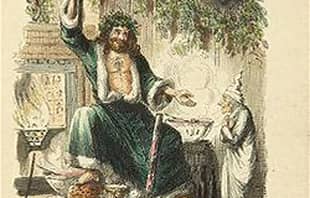
After visits from the Ghost of Christmas Past and the Ghost of Christmas Present, Scrooge was left emotionally off-balance and fearing the worst. Finally, he was visited by the third mysterious spirit, the Ghost of Christmas Yet to Come. He already knew the sad fate of his friend, Jacob Marley. Would this spiritual visitor show Scrooge a dire future already fated, or merely shadows of what might be? And the Ghost delivers strange sights– predators gleefully trading in the belongings of the recently deceased, heartless business acquaintances discussing the funeral arrangements of one of their fellows, and grieving family members in the household of Bob Cratchit. But what was his own fate? Where was Ebenezer Scrooge in the Christmases yet to come?
The answer comes in a cemetery, where Scrooge sees a newly-dug grave and a stone bearing his own name!
Death always seems to come as a surprise, even when we know that we will all die someday. Our own death may haunt us, but usually from a safe distance. It will come someday. Once we are old. Once we are weak, and sick, and ready to rest. Once we have achieved our goals and fulfilled our purposes. But that’s not how death works. It comes in its own time, not ours. It comes, not as an expected closure, but as a rude interruption of our hopes and dreams.
Ebenezer Scrooge, forced to deal with his mortality, and the legacy of his past and present, realizes that life is not what we forge out of our own plans and our strength of will or our hard work. Life is a gift. But life is not a given. Life has a purpose, regardless of the purposes and goals we bring to it. And that purpose has to do with giving and receiving other gifts– generosity, hope, forgiveness, encouragement, time, fellowship, and Love.
This Ghost never speaks to Scrooge with words. Instead, he shows Scrooge a world in which Scrooge has no more chances to give or receive gifts. He has chosen to hoard his wealth, his time, and his heart– and the result is that he will die alone, unmourned, a useless shell of rotting flesh. His fear and bitterness have brought no comfort to anyone, and have left the world a colder, icier, more horrible place.
But there is hope, even in this haunting experience. Scrooge wakes from this night and realizes that he is ALIVE! The Ghost has given him a great gift– the chance to live– the chance to experience connection and hope, joy and creativity, excitement and generosity.
What will this new year bring to US? Can we face an uncertain future with hope? Can we accept the gift of Life– even with its pain and struggle– as a priceless opportunity? Can we reach out to others, even knowing that we will sometimes be rejected, betrayed, and used? Can we strive to make things a little better– in our homes, our communities, our place of work, and in the wider world?
Scrooge did, and so can we! “A Christmas Carol” does not finish with a cold gravestone– even though we must know that Scrooge has to die one day. The story ends with music and light and gaiety, as Scrooge embraces the mystery of his own future and learns to live in hope and charity with those around him.
As we step into the future, may we also embrace the Life that God has given us, the joy of sharing time with others, and the expectation of good gifts that God will continue to give us in the future. As Tiny Tim says, “God bless us, everyone!”
My prayer is that you will experience excitement as we all take the next steps– God’s spirit will light the way; God’s word will be a lamp unto our feet (Psalm 119:105). God’s glorious gift of Christmas– the coming of Christ to be our Emmanuel, our example, and our Savior–will be the carol that we sing as we travel into the unknown!
If you missed my last blog post, I’m looking at the story of A Christmas Carol, by Charles Dickens. It may not seem like a “jolly” Christmas story, or even a “religious” story, but it is “spiritual.” Ebenezer Scrooge is literally haunted by three spirits over the course of Christmas Eve. Last time, I spoke of the Ghost of Christmas Past. Today, I’d like to look at the Ghost of Christmas Present.
I know, Christmas was a few days ago– we’re currently at the cusp of New Year’s Eve, but these few days between Christmas and New Year’s Day can often feel jumbled up and run together. And, traditionally, the Christmas season is not just one day, but twelve days, stretching from December 25 to January 6. So today is still technically part of “Christmas.”
In “A Christmas Carol”, Scrooge is actually visited by four spirits. The first is the ghost of his old friend, Jacob Marley, who offers Scrooge both a dire warning, and a chance of redemption. Scrooge has already been visited by Marley, and by the ghost of Christmas past– a look at the moments and people who have shaped Scrooge’s life up to the present. Scrooge has seen both happiness and tragedy in his life, but the “light of truth” carried by the first ghost has shown how Scrooge has rejected happiness, instead embracing a life of fear, loneliness, and greed.
The next spirit, the Ghost of Christmas Present, focuses less of Scrooge himself, and more on the people he has ignored or rejected. This spirit shows Scrooge what he is missing by hoarding his wealth and isolating himself from the rest of the world. It is a picture that many of us would do well to study!
One of the first stops is the home of Bob Cratchit, Scrooge’s underpaid, put-upon clerk. Scrooge makes use of Bob’s time and skills, without ever showing any interest in him as a person. Scrooge is oblivious to Bob’s existence outside of the counting house. He assumes that Bob has a family, but he has no idea who makes up that family. The Ghost of Christmas Present forces Scrooge to see that Bob and his wife have several children, including a sickly and crippled son named Tiny Tim. Though they have very little money (thanks in part to Bob’s meager wages!), they have plenty of love and happiness. Scrooge fears many things that may happen, while his clerk faces very real fears that “haunt” him every day. Yet Bob does not complain, does not exhibit bitterness, and does not hide away from the world.
Next, the ghost takes Scrooge to see his nephew. Scrooge keeps his nephew at a distance because of his bitterness and fear. But in doing so, he is missing out on his nephew’s kindness, wit, and warm circle of friends. Scrooge has treated his nephew with disdain, fearing that the younger man is jealous of all his riches. But the ghost shows Scrooge that his nephew actually feels sorry for his uncle. Again, Scrooge has great wealth, but his nephew is content, and even very happy with his lower station in life. He loves his wife and enjoys friendships that make him wealthier in many ways than his uncle!
Finally, the ghost of Christmas Present shows Scrooge a sight he would never willingly see– the suffering and neediness of the poor, whom Scrooge has sneeringly consigned to death. Rather than seeing humanity, Scrooge sees only people who might drain him of his wealth– the undeserving poor who “cost more than they are worth.” The ghost reminds Scrooge of an earlier off-handed remark about helping those who would rather die than go to workhouses: “If they’d rather die, then let them do it–and decrease the surplus population!” The ghost warns Scrooge that he should be very careful in declaring who is among the ‘surplus population’. In heaven’s eyes, Ebenezer Scrooge himself might have less worth than ‘the least of these.’
And the King will answer them, ‘Truly, I say to you, as you did it to one of the least of these my brothers, and sisters you did it to me.’“Then he will say to those on his left, ‘Depart from me, you cursed, into the eternal fire prepared for the devil and his angels. For I was hungry and you gave me no food, I was thirsty and you gave me no drink, I was a stranger, and you did not welcome me, naked and you did not clothe me, sick and in prison and you did not visit me.’ Then they also will answer, saying, ‘Lord, when did we see you hungry or thirsty or a stranger or naked or sick or in prison, and did not minister to you?’Then he will answer them, saying, ‘Truly, I say to you, as you did not do it to one of the least of these, you did not do it to me.’ (Matthew 25:40-45 ESV)
Scrooge’s feelings and senses are overwhelmed by what he experiences. The present surrounds him– the sights, the smells, the laughter, the cold of a dark winter’s night, and the heat from a roaring fireplace; the stench of the docks and homeless camps, and the aromas of Christmas dinner; the colors and lights of decorations, toys, and costumes; the ringing of bells, and the singing of Christmas Carols. Once again, Scrooge can hear music and laughter, he can sense the love and compassion, but he can only participate on the periphery. The music haunts him, but it comes from others, not from his own frozen heart.
So, what happens to us in this Christmas present? Do we feel connected to the joy and gratitude, the love and hope of the season? Or are we isolated by worry, frozen in fear, enslaved by anger or greed? Christmas is often a time of great sadness and loneliness. And sometimes, the laughter and the lights seem hollow and fake. Especially in the days just after Christmas, we can feel let down, abandoned by the promise of merriment and fulfillment brought by parties and gifts and feasting and entertainment. Outside, the winter is still cold, the bills keep coming in the mail, and fears and worries cloud our days. Some of our fears are very real– disease, grief, loss, sudden changes in circumstances and relationships–Christmas lights and music alone cannot cut through the fog.
My prayer for today, and for the New Year at our doorstep, is that we would open our ears and eyes and hearts to what is around us– acknowledge that we live in a fallen and often worrisome world, but recognize that there are opportunities all around us, as well. We don’t have to isolate. We don’t have to live in constant fear. Christmas isn’t just a day; it isn’t just a season– Christmas is about Christ coming to dwell with us!
Open your ears! Listen to the music of the season– “Peace on Earth! Good Will to Mankind!” “JOY to the World! The LORD has come!” “Let Heaven and Nature Sing!” “Glory to the Newborn King!” Keep listening to the promises of God’s Word– “Never will I leave you nor forsake you!” “Lo, I am with you always!”
Open your eyes– see the wonderful opportunities to share both joy and sadness with others. Seek out the great opportunities to give and receive help and love and fellowship! See the good things that the LORD has done– the friendships and family in your life; the beauty of nature, the ‘wonder of His Love!’.
Open your heart– Receive the greatest Gift! Redemption; new birth; eternal and abundant Life! Choose life and gratitude and humility. Practice childlike faith, hope, and JOY!
The story of “The Little Drummer Boy” is nowhere in the Bible. It is very unlikely that such an event ever took place. Yet it has become a classic Christmas song. I think it is easy for us to identify with the singer– a poor boy who wants to honor the Baby Jesus, but has no gift to offer. What he does have– a drum and the ability to play it– he offers gladly. He asks permission of Mary and she nods her consent. But the highlight of the song is when the Baby Jesus smiles His approval.
At Christmas, we welcome a Christmas card-picture perfect stylized Baby Jesus, who smiles, never cries, charms all the animals of the stable, and merits the singing of angels choirs among the heavens. But we have a tendency to leave Him in the manger, where He can be a tiny miracle; a gift from God, bringing hope of peace on earth, and teaching us to give gifts and celebrate life.
Somewhere along the way, our picture of Jesus tends to change. The adult Jesus is kind, wise, compassionate, and even passionate– but He is a man of sorrows. This is not “wrong” theology– the Bible describes Him as a man of sorrows; one who was despised and rejected by His own people, and condemned to die by those He came to save (see Isaiah 53). But we don’t tend to think of Jesus smiling, His eyes crinkled in a grin, dimples appearing as He delights in sharing time with us. Yet this is also Biblical (see Zephaniah 3:17).
What an amazing image– Jesus, a radiant smile on His face as He listens to our prayers; a grin of delight as we speak words of encouragement to our family members and joyful greetings to those we meet throughout the day! Jesus smiling as we take out the garbage (without grumbling!); Jesus laughing along with us as we share treasured memories (or make new ones) with our kids; Jesus listening to our confession and responding with a warm smile of forgiveness and compassion; Jesus smiling as we sing along (maybe even a little off-tune) with one of our favorite songs on the radio, or tap our fingers on the steering wheel, or bob our head along with the rhythm, oblivious to onlookers!
We pray to the very Lord of the Universe– but He is not a stern and joyless God. Jesus wept while He was on earth (John 11:35)–but He also laughed, and ate, and hugged, and sang, and ran, and danced for joy! And He is no less joyful in Heaven as He watches over us. He delights in our smallest triumphs. He cheers us on in our battles every bit as enthusiastically as a fan cheering on his favorite sportsperson. And when we stumble, He is there with the kind of smile that welcomes us to get up and fall into His arms.
There is only one thing we must do to experience His radiant and glorious smile– “Come!”































 Pursuing Prayer