I Can’t Do All Things

 I can do all things through Christ which strengtheneth me. (Philippians 4:13 KJV)

I remember memorizing this Bible verse (in the King James version above) as a child. It is one of the most quoted (and, I think, misunderstood) verses I know. Taken out of context, it seems to promise unlimited potential for the Christian. I can… perform miracles, do six impossible things before breakfast, leap over a tall building, bring about world peace, and finish folding the laundry from last week!

The reality is that I can’t do ALL things. There are many things I simply cannot do– even as a Christian. I cannot grow six inches taller or shed 45 pounds overnight. I cannot cure cancer. I cannot bring about world peace. Christ CAN do any of that and more; and He can work through me to accomplish great things– more than I can do in my own power. But if I expect to do whatever I imagine or aspire to– I will be disappointed. Even with God’s Power working in my life.

But God is not only a source of power– He is the source of wisdom and love. And in His wisdom and love, he often limits what He will allow me to do. So, there are supernatural things I cannot do without God’s help and power, and there are seemingly ordinary things I cannot do without God’s permission and grace, because doing those things will go against God’s perfect plan.

I was speaking recently with a friend of mine from church. We were speaking of infertility– a problem we have both experienced. Most of the women I know who experience infertility, barrenness, multiple miscarriages, etc., have to come to terms with the ache of being “abnormal.” We assume that “normal” women can become pregnant and have children. We accept that sometimes a woman will lose a child in the womb. But when it happens over and over again, or when a woman can’t seem to get pregnant, it causes a woman to question her identity and worth. “Am I even a ‘real’ woman?” “What kind of woman can’t do the most basic “womanly” thing– give life?” We also have to come to terms with the fact that God has chosen to allow this in our lives. Does God still love me, or is He angry with me or punishing me for being “not enough”? How can God love me and let me suffer such emptiness?

And we’ve all heard stories– amazing stories in the Bible and elsewhere– of women who DID get pregnant through a miracle. Sarah, Mary, Elizabeth, Rachel, Hannah…In fact, we hear nothing of women who are barren in the old Bible stories…or do we? Anna in Luke chapter 2 is an old widow who lives in the temple. There is no mention of any children, only of her devotion to the Temple and to her God. Dorcas, who was raised from the dead by the Apostle Peter in Acts 9, is praised, not for her motherhood, but for her charitable deeds among her neighbors. Deborah, the prophetess and judge who led the Israelites into battle along with their general Barak, is mentioned as a wife, but not a mother. In ancient societies, very few women were singled out for praise outside of their roles as wives and mothers.

As women, we may question many aspects of our “role” in society. Some of us chafe at the traditional roles we are expected to perform, while others question why their traditional roles seem to be denied. I spent decades questioning why I remained “on the sidelines”– unmarried, lackluster dating opportunities, out of step with other women my age. When I first was diagnosed with Stein-Levinthal syndrome and told that it would almost eliminate any chance that I could become a mother, it was almost a relief. At least I could “congratulate” myself for not disappointing a husband I didn’t have, or go through the pain of watching him question his manhood when no children came, not knowing if the “problem” was his or mine. Other friends of mine question their role as “the weaker sex,” going to great lengths to prove that they don’t need a man in their life, or that they can compete with men for jobs, status, wealth, and power.

But God didn’t just create me to “DO” things. God created me to BE. And He created me to be in relationship with Him. And my experience gives me the opportunity to speak into the lives of other women who are hurting. I have found purpose and comfort, love and abundant joy, challenge and opportunity in the midst of infertility. And now that I’m in my sixties, I find it easier to reconnect with women my age who are empty-nesters, grandmas, widows, and “maiden aunts.” God has allowed us to DO many things.

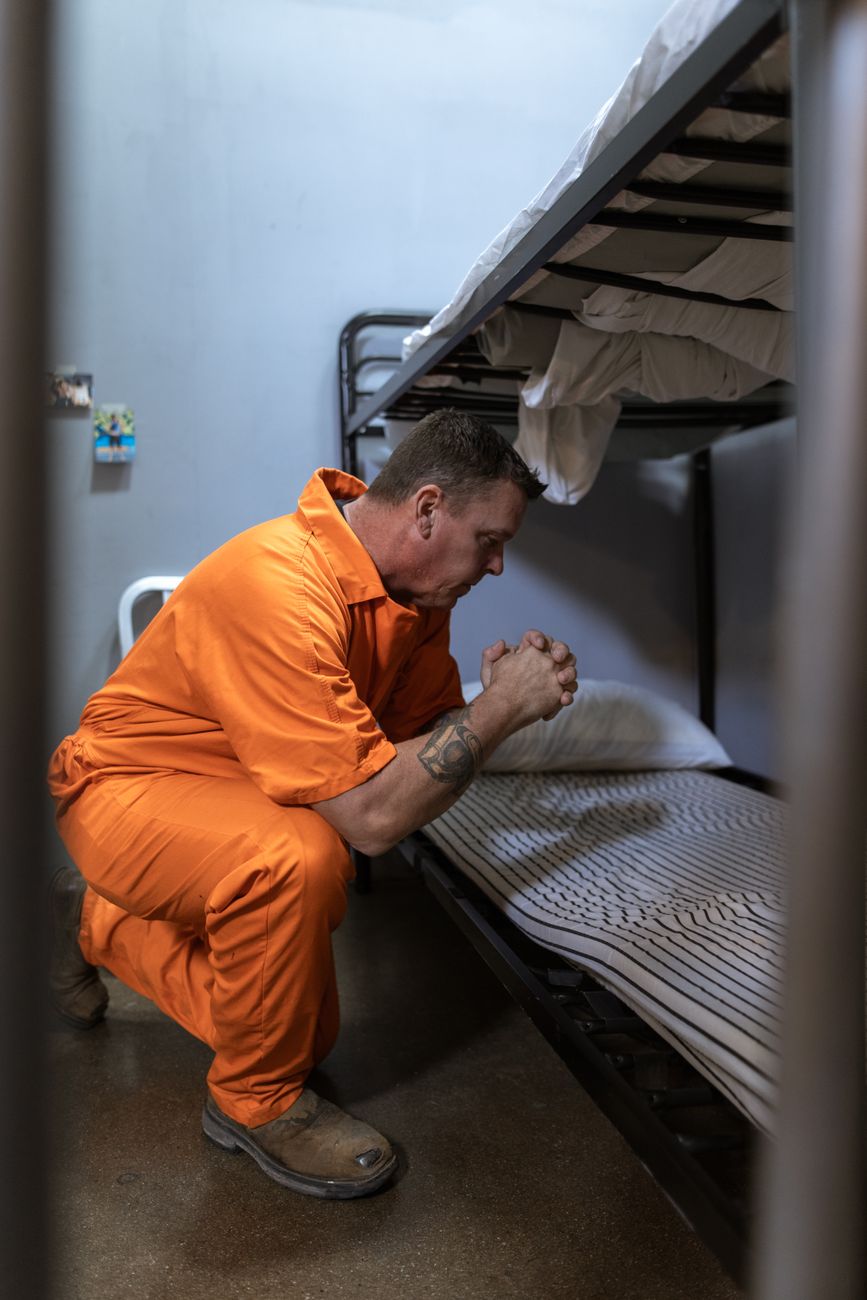
I am struck by the fact that Philippians 4:13 was written by the Apostle Paul. Paul was in prison when he wrote this letter. “I can do all things” did not mean that Paul was able to escape prison walls or the sentence he was under. It didn’t mean that he could compel his friends to stay and attend to his needs. It didn’t mean that he could escape this “thorn in the flesh” that he wrote about in 2 Corinthians or defy the aging process. Paul didn’t mean that he could literally do “all” things. But he was reminding the Philippian believers of all the amazing things that he could and did do in his work as a missionary. He didn’t cheat death altogether, but he cheated it several times, living through beatings and shipwrecks and snakebites. He didn’t escape the thorn in the flesh, but he persevered in spite of it. And remarkably, though Paul never married or had biological children, he built relationships with people like Timothy, whom he considered a son. And He accomplished amazing things for the Kingdom of God!

So, no, I cannot do ALL things– I cannot do some of the miraculous things I want to do. Sometimes, it is even God’s will that I should be prevented from doing such things– even good and “normal” things– in order that God can mold me into a shape and for a purpose that is just right for HIS perfect plan. I may not see it in my lifetime or understand it perfectly. I will still grieve for what “might have been” in my life. But I will continue to experience joy in the journey the God has mapped out for me. And whatever He asks– well, I CAN do that! Not on my own, but beyond what I can imagine!

Perfect Peace

We spent last weekend saying goodbye to my sister-in-law. NOT a final goodbye– more of a “see you later!” Wendy had suffered for years from both rheumatoid arthritis and stage four cancer. Many of her days were spent in agony, back and forth from hospital to home. In the middle of her battle, she had to say goodbye to her husband and navigate widowhood.

Perfect peace does not come from perfect circumstances. It does not come from willpower, or even positive thinking (notice that verse 7 precedes verse 8 in the passage above!) It comes from having your mind “stayed” on the great I AM. Not just thinking about Him in passing, or knowing a vast amount about Him, but keeping your focus and thoughts directed to Him. Peace is a by-product of a close and constant relationship with the one who is the “Prince of Peace” and the author of “shalom.”

We cannot generate perfect peace within ourselves because we are not perfect. We are not Holy, Righteous, or complete. But God is! And Paul’s advice to the Philippian believers above was written, not from peaceful surroundings, but from prison! His advice begins with prayer! Pray about everything! We can pray prayers of supplication (asking for healing, help, wisdom, direction, etc.) WITH thanksgiving– not because our circumstances are wonderful, or even because we expect God to work miracles to change our circumstances. We can thank and praise God from prison, from hospital beds or homeless shelters, refugee camps, storm shelters, blizzards, hurricane-battered houses, or sinking ships. Because God’s promises are faithful and true. They may not look like what we expect, imagine, or even hope for. They will involve pain and suffering because we still live in a broken world. God may bring us out of suffering, or help us avoid suffering, or He may settle in with us through the suffering. In every case, we can fix our eyes on the one who loves us perfectly, the one who has perfect power over every circumstance, perfect wisdom and vision to lead us through, and perfect plans for redemption, healing, hope, and eternal joy!

Wendy wasn’t perfect in this life. Suffering hurts. Pain ravages the body, and preys on the mind. Sleepless nights, loss of appetite, and nausea when one eats– such things cause us to cry out, to lament, and to ask “Why?!” Wendy did all that. But when we choose to focus less on the temporary trials of this life and look beyond to the greater story of redemption and ultimate glory, there is a peace that revives us, refreshes us, and strengthens us beyond what we can imagine. God is trustworthy– We can depend on Him when all around us is chaos and suffering. We can have hope and strength and blessed peace!

And that same peace is available to all of us who grieved for Wendy during her long illness. It sustains us with hope and strength that rises above the questions or doubts, beyond the tears and the memories of the past. We will have the joy of seeing Wendy (and many of our other family and loved ones) perfected. No more suffering; no more questions; no more separation. Perfect. Peace.

My challenge today is to stay focused on what really matters– on WHO is really in control. I pray that whatever you may be going through, that you will also find God’s perfect peace as you look to Him!

I Sing Because I’m Happy

There is a great old hymn– His Eye Is On the Sparrow– and the chorus says:

I sing because I’m Happy,
I sing because I’m Free.
His eye is on the sparrow,
And I know He watches me.

Full lyrics here

It is a great reminder that, as followers of Christ, we always have a reason to be happy and to sing his praises, even when circumstances are confusing or situations are trying.

pexels-photo-145378.jpeg

I love this old song, but sometimes, even though I have reason to be happy, I don’t feel like singing.  The same happens with prayer.  Some days, I’m just not feelin’ it.  It’s not necessarily that I’m miserable or angry.  Sometimes, I’m distracted, or even happy doing self-centered things.

I find it easier to pray when I’m sad or needy– my brokenness brings me closer to God.  When things are going along just fine, I sometimes forget the true source of my joy and strength.  I take for granted that God and I are close, not realizing that I haven’t spoken to him lately, or that I have whispered a quick, shallow prayer, but I haven’t spent much quality time with the lover of my soul.

There is an old Chinese proverb that says: “I don’t sing because I am Happy– I am happy because I sing.”

pexels-photo-462442.jpeg

At first, it may sound like this is a contradiction of the beloved hymn, but really it is a complement.  I sing because I’m happy, but if I sing no matter how I start out feeling, I find myself happier!  I pray because I want to be close to God, but I stay closer to God because I pray.  When I was younger, I used to base my prayer life on how I felt.  It’s yet another reason I now use a prayer journal. Read more about keeping a Prayer Journal  It keeps me disciplined and helps me maintain a stronger prayer life.  We all know that prayer is a key element in building a strong relationship with God and others, but it has to be practiced to be effective.  Other key elements are:

  • Reading the Bible/doing a Bible study
  • Fellowship with other believers
  • Obedience– Actively following God’s example
  • Confession/Forgiveness

Any of these elements can become lackluster and difficult, especially if we aren’t practicing them daily.  And all of the elements will become stronger through practice.  Not only that, but they will blend together better, and the end result is a stronger, healthier, happier you.

And that’s worth singing about!

The Smallest Detail

pexels-photo-121646.jpeg

Have you ever looked at a series of pictures that “zoom” in or out (or both)?  Something that seems “normal” in size suddenly becomes a tiny detail in a much larger picture.  Or one tiny detail grows large enough to show intricacies hitherto unseen.  It is mind-blowing to think of how many details there are in God’s universe–little things that go unnoticed and unappreciated every day.  But not by God.  God knows and cares about every single detail– from the  individual hairs on your head, to the variations and whorls of each of your fingerprints; from the gradations of colors in each moment of each sunrise, to the exact air temperature in each square foot of atmosphere around the world; from the wings of every butterfly to the fins of every fish– nothing escapes his notice or falls through the cracks.

We can pray with confidence that God hears every word we say, and knows the thoughts we can’t even put into words.  I believe God loves to hear all our details.  He loves listening to us, because of his great love for us.  He wants us to hold nothing back.  This is especially true when we pour out our deepest delights and our most pressing burdens.  He wants to share them with us– to double our joy, and shoulder our pain.sea-nature-animals-fish.jpg

I was reminded about God’s attention to detail while reading His word one morning.  I was reading through one of the books of history (II Kings) in which the various kings of Israel and Judah are listed, along with short accounts of “what happened” during their reigns–some kings are given several paragraphs or a couple of chapters;  others merely a sentence or two.  In the midst of all this, there is a curious reference in II Kings 14:25.  King Jeroboam II of Israel is accounted a generally wicked king, but he did restore some of the ancient boundaries of the country, “in accordance with the word of the Lord, the God of Israel, spoken through his servant Jonah, son of Amittai, the prophet from Gath Hepher”– that’s right, THAT Jonah– the one of the giant fish and the adventure in Ninevah (see Paltry Prayer ).  How many times have I read the story of Jonah, and passed right over this reference to him in another book!  The Bible is full of such hidden hints and corroborating details.  I believe that God put them there to remind us of his great attention to detail.  The God who lists genealogies throughout his word— long lists of otherwise forgotten names;  the one who makes a point of listing palace guards and minor officials, and builders and temple workers–this God sees ME!  He sees YOU!  He hears us when we call.  He knows all of our quirks and idiosyncrasies– and loves each unique detail of our makeup.

Praying hands

“Seasoning” Prayer

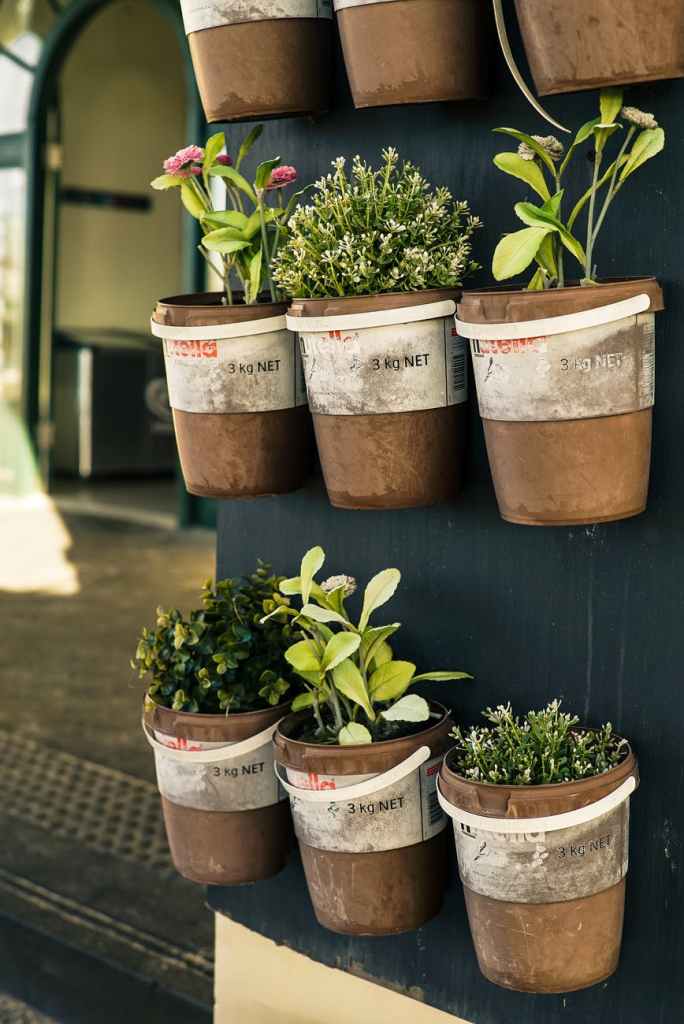
I plant an herb garden every year. This year, it’s been cold, so I started the plants indoors. Recently, my husband finally transplanted our starts into bigger pots, where they will grow through the summer and into the fall. I harvest the herbs for salads and other dishes, but I also dry the herbs for use throughout the winter. The herbs add flavor and texture to our food, and I love having fresh ones available. I was thinking about various herbs and their symbolism. What we plant in our garden; what we use in our cooking; how we “season” our prayer life– it all makes a difference. So here are some tips for “seasoning” our prayers…Make sure to add:

  • Rosemary– for remembrance. Remember and worship God for who He is. Remember His past goodness. Remember His faithfulness. Remember His Great Love. Remember that He sees and hears you; He knows you intimately, and loves you eternally. (Psalm 103:2)
  • Sage– for wisdom. Ask for it. God longs to give you stores of wisdom and guidance. He longs for you to seek His wisdom every day. (James 1:5)
  • Fennel– for praiseworthiness. God is worthy of all our praise and worship. Prayer is just one way of expressing His worthiness and glory! (Psalm 150:6)
  • Mustard seed– for faith. Faith grows exponentially larger and stronger when it is tended. One seed of faith can produce a large plant, which in turn produced hundreds of new seeds. Don’t let the weight of doubt crush that little seed–it really is enough! Not because of the size of your faith, but because of the size of the One in whom it rests. (Hebrews 11)
  • Horseradish/radishes– for bitterness and contrition. A Holy God can only be approached by those whose sins have been forgiven. God offers mercy and grace in abundance– for those who acknowledge their sin and wish to be restored in Grace. Confession and repentance should be a regular part of our prayer life… and this leads to..
  • Hyssop– for cleansing. King David prayed: “Cleanse me with hyssop, and I will be clean; wash me, and I will be whiter than snow…Create in me a pure heart, O God, and renew a steadfast spirit within me.” (Psalm 51: 7, 10) May we seek to have a pure heart and a steadfast spirit. And as we are cleansed, we will have…
  • Parsley– for gratitude and joy. Parsley brightens and garnishes; it brings a finishing touch and its bright green color suggests growth and abundance. Prayer should result in thankfulness and rejoicing as we enter into the very presence of the Giver of All Life. (1 Thessalonians 5:18)
  • Thyme–for, well, time. Take time every day to meet with God. Make both “quality time” and “quantity time” when you can, knowing that God wants to be part of your day, all day, every day.
  • Chives– for usefulness and peace. Chives add flavor and balance when used in cooking. Bring your daily tasks, your goals, even your everyday worries to God in prayer. Pray as you work, as you run, as you do useful things throughout the day. This will lead to peace and purpose.
  • Garlic– for strength and healing. Especially in times when people are experiencing sickness and confusion, prayer brings strength. As we pray for healing– physical, emotional, and spiritual– we cast our cares upon a Loving and Omnipotent God.

For some more interesting symbolic meanings of herbs and flowers, you can visit the following sites:
https://theherbalacademy.com/the-secret-meaning-of-herbs/
https://www.richters.com/show.cgi?page=InfoSheets/d9003.html
and many others.

Love Lifted Me

I love you, Lord, my strength.
The Lord is my rock, my fortress and my deliverer;
    my God is my rock, in whom I take refuge,
    my shield and the horn of my salvation, my stronghold.
I called to the Lord, who is worthy of praise,
    and I have been saved from my enemies.
The cords of death entangled me;
    the torrents of destruction overwhelmed me.
The cords of the grave coiled around me;
    the snares of death confronted me.
In my distress I called to the Lord;
    I cried to my God for help.
From his temple he heard my voice;
    my cry came before him, into his ears.
The earth trembled and quaked,
    and the foundations of the mountains shook;
    they trembled because he was angry.
Smoke rose from his nostrils;
    consuming fire came from his mouth,
    burning coals blazed out of it.
He parted the heavens and came down;
    dark clouds were under his feet.
10 He mounted the cherubim and flew;
    he soared on the wings of the wind.
11 He made darkness his covering, his canopy around him—
    the dark rain clouds of the sky.
12 Out of the brightness of his presence clouds advanced,
    with hailstones and bolts of lightning.
13 The Lord thundered from heaven;
    the voice of the Most High resounded.
14 He shot his arrows and scattered the enemy,
    with great bolts of lightning he routed them.
15 The valleys of the sea were exposed
    and the foundations of the earth laid bare
at your rebuke, Lord,
    at the blast of breath from your nostrils.
16 He reached down from on high and took hold of me;
    he drew me out of deep waters.
17 He rescued me from my powerful enemy,
    from my foes, who were too strong for me.
18 They confronted me in the day of my disaster,
    but the Lord was my support.
19 He brought me out into a spacious place;
    he rescued me because he delighted in me
.

Psalm 18:1-19 NIV (taken from biblegateway.com)

I grew up hearing hymns– lots of them. My mother and grandmother and aunt all played the piano or organ for church and often practiced during the week. My father led the congregational singing sometimes, and my grandfather taught himself to play many musical instruments, and used hymns to become familiar with the chords, notes, and fingerings of the instrument du jour. The congregation at our small church sang with more gusto than musical talent, but we sang during the Sunday morning service, the Sunday evening service, the Wednesday evening service, and at any special occasion.

Two things happened as a result of this: one not-so-good, and one very good thing. The not-so-good thing was that I became somewhat inured to the songs and lyrics– I knew what the songs said, but I didn’t really understand or internalize the truths they contained. However, the very good thing was that the hymns stuck in my memory– years later they came back like the best of friends to comfort me, challenge me, and remind me of sacred realities in the midst of mundane frustrations and worldly confusions.

This old hymn, neglected, out-dated, and seldom sung in our current services, was my lullaby growing up. My mother would sing it over and over as she rocked me to sleep, often running out of verses and words and just humming or filling in with “la, la la, la,” until she reached the chorus.
“Love lifted me. Love lifted me. When nothing else could help, Love lifted me.”

As a young child, I experienced the loving arms of my dear mother lifting me to her lap and rocking me for what seemed like hours until I drifted off to sleep. As a teen, I scoffed at the lyrics a bit–what need had I to be lifted and helped, when I was invincible and young and ready to conquer the world? As an adult, this old hymn came back with power and comfort when my own efforts and life’s stormy circumstances left me with little hope and lots of confusion, doubt, and regret. It reminds me that help and hope can be found even in the raging storms of grief, depression, oppression, and pain. “When nothing else could help…” God could and did! He can and will!

“Love lifted me”–such a simple phrase, and by itself not a solid foundation for hope and victory. In fact, there are many popular songs that speak of love lifting a person up, making one feel buoyant and hopeful, joyful or young. But this song speaks of a different and everlasting, all-powerful love– the Love of Christ. And it doesn’t just lift us up from one pleasant place to another. It reaches down into the depths of sin, despair, and even death to lift us up beyond all hope, beyond any strength or effort we could generate or receive from any other source. And this great Love reaches down to lift me–even me! It does not belong only to the elite, the wealthy, the beautiful people, the gifted or the powerful. In fact, this love is especially close and available to those who have done nothing to deserve it; those who have been bypassed and ignored and left to drown in their own shame and sorrow.

Love. Lifted. Me! My prayer is that this same Love will surround you today, lifting you up, and helping you, just as it helps me and brings me life and hope, to the Glory of Christ our Savior.

“Sam I Am” v. the Great “I AM”

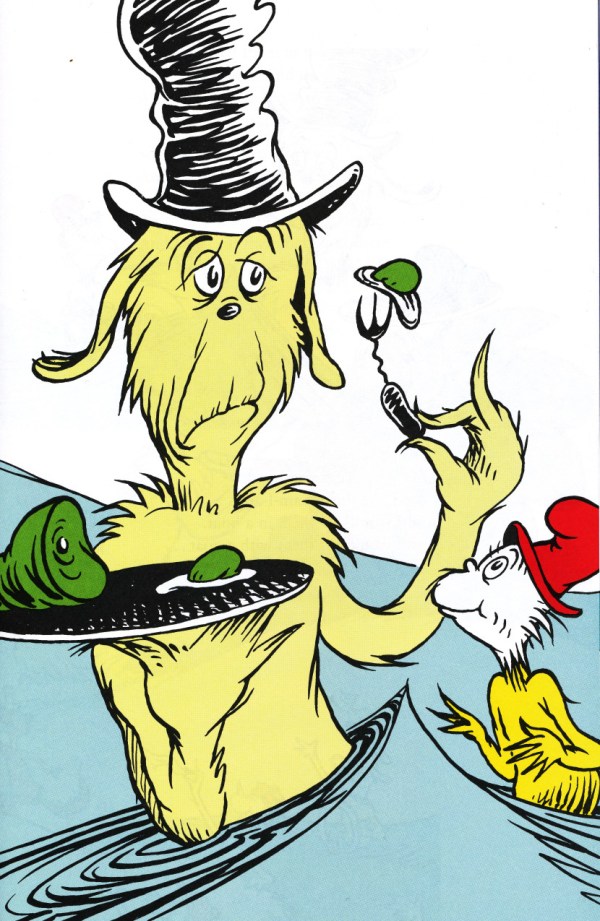
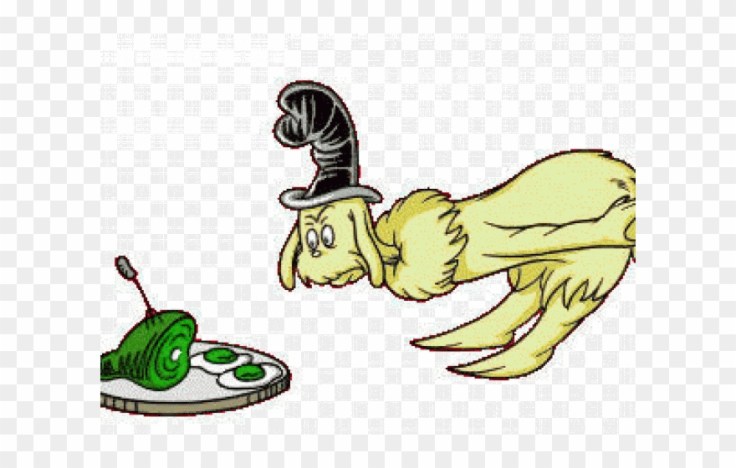
Some time ago, I wrote about the famous Dr. Seuss book, “Green Eggs and Ham.” In it, a character, named Sam (“Sam I am”) encourages the nameless narrator to try a strange dish– ham and eggs that are bright green! After several exchanges in which the narrator insists he will NOT try the dish, Sam’s enthusiasm wears him down and he agrees to try a bite. Surprise– He LOVES green eggs and ham! He spends the rest of the book enthusiastically affirming how much he loves the dish, thanking Sam for insisting that he try them.

We just celebrated Easter. The Resurrection, I would argue, is much more important than trying a new breakfast dish. But how many of us are as enthusiastic as Sam in trying to get our families, friends, and neighbors to “taste” the amazing gift of Eternal Life? Would we witness on a train? In a car? In the rain? Would we witness to a grumpy, resistant person like the narrator of “Green Eggs and Ham?” And if not, why not?

Photo by Anh Nguyen on Pexels.com

And would we pray for the unsaved? In a tree? On a boat? With a goat? In our house? With a mouse? Here or there? Anywhere? What kind of enthusiasm do we show for making disciples? Do we seek to pray for our neighbors? With our neighbors? With those who are struggling with doubts or fears? For those who resist the message of Christ? Does our confidence in the Gospel of Christ equal the confidence of Sam in ham and eggs? Shouldn’t our joy and commitment exceed Sam’s? After all, our “product” is unending, everlasting, unconditional Love from a God who came to earth and died to save each one of us!

Photo by Ron Lach on Pexels.com

2 Corinthians 4:1-9 ESV – The Light of the Gospel – Therefore, – Bible Gateway

We carry the amazing treasure of God’s Power to save, redeem, and reconcile! Let us not get discouraged as we share the good news and as we pray for God to continue His work in a broken world!

Looking Back

pexels-photo-273011.jpeg

In my pursuit of prayer, I have found it helpful to keep a Prayer Journal.  One of the reasons is that I can look back and see what prayer concerns and issues I prayed for weeks, months, or even years ago.  I also save space in my journal to go back and fill in how God answered those requests, or what progress has been made in those areas of concern.  see also: Proactive Prayer Points

The Bible warns us to be very careful about looking back…the most famous example is the tragedy of Lot’s wife (Genesis 19).  In looking back, she lost her chance to rebuild a life after the destruction of Sodom and Gomorrah, and was turned into a pillar of salt.  In the book of Exodus, the newly freed Israelites grumbled about their circumstances and looked back with fondness on their lives in Egypt, forgetting their oppression in their homesickness for certain foods (Exodus 16).  Spending too much time and energy on the past leaves us with little motivation and energy for the present or future.  The past should never become more important to us than moving forward.  If we long for the past, if we romanticize it or cling to it, fearing the changes and opportunities to come, we can stagnate, and miss the blessings playing out right before our eyes.

pexels-photo-191842.jpeg

But we should take some time periodically to look back in order to gain perspective.  The same Children of Israel who grumbled about leaving Egypt, once they arrived in the Promised Land, were commanded to remember their wandering in the wilderness, and told to teach their children about the past (Deuteronomy 8).  Holidays and religious rites were instituted as reminders of the past.  But this kind of looking back gives us renewed encouragement, incentive, and momentum to keep going by showing us how far we’ve come, and reminding us of God’s faithfulness.

One of the great benefits of reading through the Bible is that we are reminded of all the times God acted on behalf of His people– from providing for the Israelites in their 40-year desert odyssey, to protecting Christ’s early disciples as they spread the Gospel. God’s faithfulness is demonstrated time and again– for His Glory, and for Our benefit. God was at work then, and He is still at work in our own time! One great old hymn challenges us to “Count (our) blessings– name them one by one. Count (our) many blessings; see what God has done!” It is encouraging and inspiring to call to mind all the times that God has “shown up” in difficult circumstances or protected us from other dire events or losses that we don’t even know about.

I am especially encouraged when I see how God has answered prayer–so often, I’ve forgotten about trials and struggles that have come my way–issues that seemed huge in the moment, but in hindsight look insignificant.  Sometimes, God’s answers were immediate and breath-taking.  Sometimes, they were subtle and were revealed in several stages.  Sometimes, the answers revealed how God was working beyond anything I imagined!  Often, the requests reveal how I have grown (or not!) to trust him more or to listen better to those around me.

pexels-photo-1007977.jpeg

And, just like that, I also have material to add to today’s prayers– gratitude for prayers answered, hope for new growth, praise for God’s faithfulness, and confession for times I have doubted or looked back in envy or regret.

Where’s the Joy?

I love puns– friends from all over the world send me the craziest puns, “punny” images, silly videos, and awful jokes.  Except for those that are patently offensive and find their humor at someone else’s expense, I really enjoy them all.

clear bubble

Someone has said that puns are the lowest form of humor, but I disagree.  In fact, I often find that puns, like humor in general, can cause us to explore a serious topic in ways we would otherwise avoid.  The image above tickled my funny bone, but it also caused me to think.  Where is my Joy?  Do I bottle it up and hide it down in my cart, or does it bubble up, iridescent and smelling of sunshine (and possibly lemons) from deep down in my heart?

I especially find myself looking for joy in the ordinary tasks of life. I really do not enjoy doing dishes, for example. But I can find joy– not the brand of dish soap, but the real thing!– even in such an ordinary chore. I can find joy as I clean the toilet, as I sort clothes for the wash, as I drive around town to do errands, and as I set aside time to pray for family and friends who are hurting and discouraged.

Prayer is a serious topic, but it shouldn’t be joyless.  Even in our troubles, we can be confident that we are loved, cherished, and precious.  In our grief and sorrow, we are not overwhelmed (though it often feels as if we are) when we have this kind of joy.  It will wash away despair, anger, doubt, and weariness, as it rises up.  We pray for so many other things– health, wisdom, forgiveness– we should also pray for Joy.  Not the false and fleeting joy of a silly pun, or the veneer of joy that lies and says that “everything is great.”  We need the kind of joy that sings through tears, laughs at storms, defies despair, and shakes the rafters! 

Many people read about Jesus and conclude that He was a great teacher, but very sober and serious. And the Bible describes Him as a “man of sorrows” and one “acquainted with grief.” (Isaiah 53:3). Yet the Gospels also show Jesus as a man who welcomed children, shared meals with His friends, entered into wedding celebrations, and told His disciples to rejoice in the midst of persecution. Jesus was not a man who took life lightly, but He was a man who felt joy in simple things. He was able to relax in the joyful knowledge that even grief and pain are temporary, and our circumstances do not define our life. And joy is also listed as a fruit of the Spirit (see Galatians 5:22-23–“But the Fruit of the Spirit is Love, Joy Peace, Patience, Kindness, Goodness, Faithfulness, Gentleness, and Self-Control. Against such things, there is no law.”

We need the quiet, blessed assurance that God is in His Heaven and even if all is not well with the world, God still has everything well in hand. Such joy, lodged deep in our heart and soul can keep us from buckling under the weight of loss, the exhaustion of stress, and the threat of chaos.  It can fill us with peace and contentment, even as we go through ordinary or even dreary days. We need a new “Dawn” of “Joy” (yes, I had to include another pun). We need to pray for joy. We need to cherish it.  And we need to pass it on.

The world could really use it!

For God So Loved…

Today is March 16. In my area of the world, we abbreviate it as 3/16/26, or just 3/16. So it reminds me of the most quoted verse in the Bible– John 3:16– “For God so loved the world, that he gave his only Son, that whoever believes in him should not perish but have eternal life.” (ESV) This verse is so famous and so quoted, that many times, people just skip the actual verse and just use the reference. In fact, if you just see a poster or sign of reference that says 3:16, it almost always means this verse.

Recently, I saw a short video of a person complaining about seeing such a reference on their soft-drink cup at the fast food chain In-N-Out Burger. The chain prints “John 3:16” on the inside of the bottom of their cups. They’re known for it. They don’t print out the entire verse, just the reference. It’s not blatant or over-bearing– just a modest note on the bottom of their cups. But this person wanted none of it. They started out by liking the food, but they were offended by this tiny reference to a Bible verse. “Keep your John 3:16,” they sneered. “I don’t want your John 3:16.” Apparently, it left a bad taste in their mouth just to see any reference to the Bible. They felt judged and oppressed, I guess.

But John 3:16 is not about judgment. It’s all about Love! For God SO LOVED the WORLD–take a minute to reflect on that. God, the Holy One, who created the world, only to have mankind reject Him over and over again, didn’t destroy it. He didn’t turn His back on the world. He didn’t leave us as a footnote and move on. Instead, He GAVE His ONLY begotten SON. He didn’t come up with a cheap plan for salvation that was just adequate to cover our worst sins and leave us enslaved to our old guilt and shame. He didn’t send a half-hearted emissary to show us what Heaven and Holiness were like. He sent His SON– the heir of the Universe–to live among us, show us how to love and live and worship. And that Son GAVE all of Himself as a sacrifice– not for a select few, but for WHOSOEVER would trust in Him and submit to His Lordship!

WHOSOEVER believes in Him will not perish, but have ETERNAL LIFE! How does that offend and oppress? The message of John 3:16 sums up the whole Gospel of Christ. It is NOT judgment, but Salvation. It is not oppression, but freedom from Sin and Death!

So today, I am thrilled to celebrate 3:16! It is a message of hope, joy, renewal, abundance, purpose, power, and LOVE!

Blog at WordPress.com.

Up ↑