When Christmas Wasn’t Merry

I know several people who had a very Merry Christmas this year. Some of them flew to exotic locations and spent Christmas on the beach, or in a big city with lights and dozens of family members. Some of them spent a cozy Christmas in a cabin with roaring fires and glittering snow-covered trees, eating sumptuous meals and unwrapping expensive gifts.

Photo by Pixabay on Pexels.com

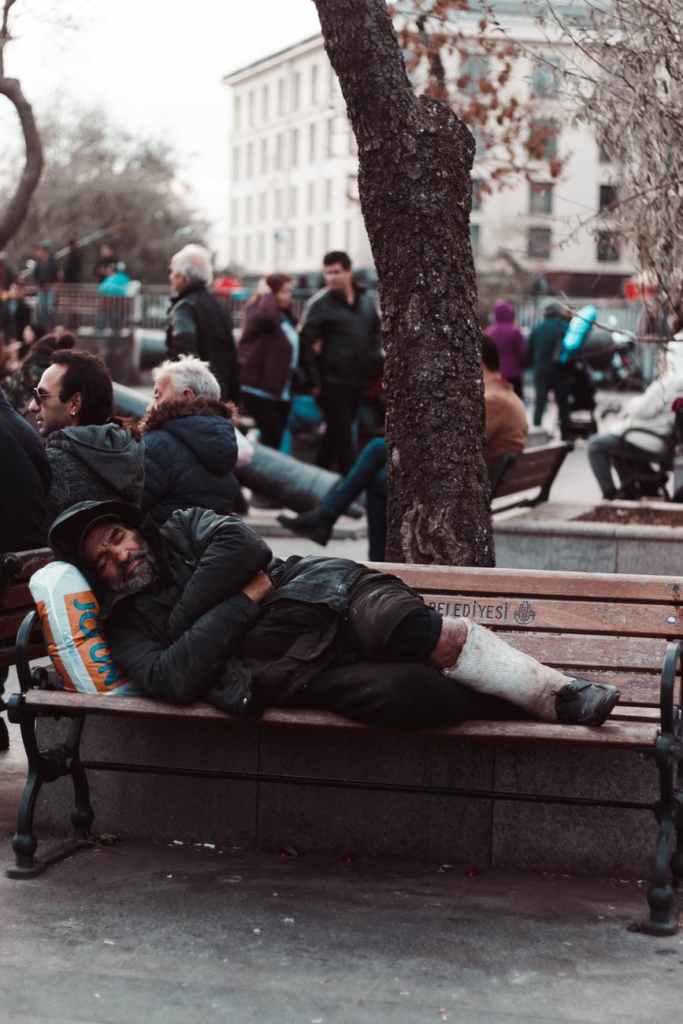
But most of the people I know spent a Christmas that wasn’t “post-card” perfect. Some of them were alone in a small apartment with no presents and no heat. Some were working at a job they hate because they had no other option. Some were grieving loved ones lost in the past months. Some of them are facing economic mountains– debt, job loss, medical bills or taxes they cannot pay, no money for rent or groceries… Some are battling cancer or alcoholism, anger, or fear. Some are estranged from their families, or separated from loved ones because of COVID, or deployment, or divorce. And some are facing persecution, starvation, homelessness, disease, or war.

Photo by Levent on Pexels.com

Christmas comes, whatever our circumstances– and so does the Christ Child. Jesus didn’t come to the earth to bring us all “better” circumstances or worry-free holidays, but to deliver us from eternal death, and equip us to endure the circumstances we face in life. Jesus himself came in chaotic and stressful circumstances, and He came, knowing that He would face rejection, hatred, injustice, and death on a cross.

Photo by Alem Su00e1nchez on Pexels.com

There are millions of people who spent a “Merry” Christmas and missed the whole point. Some of us indulged in a gift-giving frenzy that left others in the cold. Some of us allowed envy, fear, greed, or bitterness to color our Christmas. In the process, many of us lost sight of the true gifts of Christmas– Peace, Joy, and Goodwill. In fact, “His divine power has given us EVERYTHING we need for a godly life through our knowledge of Him who called us by His own glory and goodness.” (2 Peter 1:3)

And these gifts are not temporary, like earthly Christmas gifts. They are always available, and they never break, expire, or grow dim. My prayer for this year(and the year to come) is that we all may find–and share!– these eternal and astounding gifts, this “inheritance that can never perish, spoil, or fade…kept in heaven for you” (1 Peter 1:4)

Photo by Porapak Apichodilok on Pexels.com

Christmas Day may not always be merry in this life, but because of Christmas we can face an eternity that will never disappoint, and we have a living Hope that can carry us through even the darkest hours!

God and Sinners, Reconciled!

Every year, we celebrate the birth of Emmanuel– God With Us. It is amazing to consider the Love of God that brought Him from His Heavenly throne to a lowly manger stall, the King of Glory contained in the tiny body of a sleepy infant.

Photo by nappy on Pexels.com

But we should be careful not to miss the rest of the story. As wonderful as it is to think that God would love His creation enough to visit among us, to “taste” life as a human, the story gets gloriously magnified as Jesus leaves the manger to enter a ministry. Jesus didn’t just live among us, He healed, taught, laughed, formed friendships, and served among people– many of whom scoffed, scorned, and rejected Him and His message.

And His message was this: God wants– in fact He passionately yearns– to restore the relationship WE have broken. Jesus didn’t come to “taste” human life– He came to GIVE His life as a sacrifice for those who didn’t deserve it, to extend forgiveness to those who had no right to ask for it. The Holy and Perfect God became the guilt and shame of Sin, so that we could be reconciled to Him. He accepted the penalty of Death, so that we could be given eternal life.

Photo by Edu Carvalho on Pexels.com

This miracle of reconciliation can be difficult to understand. I sometimes get “stuck” in the weight of my past–I know that Christ offers forgiveness, but I sometimes act as though the penalty hasn’t been removed; only suspended. But that’s not what Jesus taught. Like a leper cured of leprosy, I am clean–no scars, no stains, no relapse–all traces of my disease removed. In this world, I will still feel the sting of the consequences of Sin– betrayal, sickness, injustice, even death. But death is no longer my destiny; it is a temporary rest stop on my way HOME.

Photo by Anna Shvets on Pexels.com

Jesus didn’t come to “taste” human life; He came to “taste” death– and He came to destroy its power, so that we could know true Life, and live it to the fullest!

Joy! Peace! Reconciliation! Eternity! Emmanuel!

I Hate Waiting…

One of my favorite movies is “The Princess Bride.” It’s a quirky movie, based on a novel by William Goldman. It’s part fairy-tale, part satire, part warm and funny love story. In it, one of the characters, Inigo Montoya, is impatiently trying to track down his father’s killer, the vicious Count Rugen. Ironically, to fund his quest for revenge, he takes a job working as a mercenary for Rugen’s mentor, Prince Humperdinck. Part of his job is to kidnap Humperdinck’s fiancee, Princess Buttercup, and kill the mysterious man who is trying to rescue her. When the mysterious masked man climbs the perilous Cliffs of Despair, Inigo waits at the top to challenge him to a duel.

But Inigo is impatient. He calls down to the struggling masked man. “I do not suppose you can hurry things up a bit,” he suggests. He even offers to help the man–“though I do not think you will accept my help, since I am only waiting to kill you..”

Inigo is not cut out to be a vicious mercenary– clearly– because he befriends the masked man before their deadly duel (which doesn’t result in anyone’s death). He even waits–yes, WAITS– for his opponent to get rested and prepared before the duel begins. Inigo may hate to wait, but he has developed the gift of waiting for others when it really counts. (A skill he demonstrates elsewhere in the tale.)

Photo by Ric Rodrigues on Pexels.com

What does any of this have to do with prayer? We are entering a season of Advent. It is a reminder that the whole world waited impatiently for the coming of the Messiah. Centuries of impatience; centuries of expectation, centuries of waiting for a coming Hope.

Photo by Pixabay on Pexels.com

We will spend a few weeks waiting– and it may be made more anxious because of COVID–waiting for presents, or to reunite with family. And we all hate waiting. We are uncomfortable with delayed expectations, and uncertainty in our immediate future. Even with the joyous anticipation that Christmas brings, the period of Advent can be nerve-wracking.

Inigo Montoya spent years anticipating and “waiting” to exact revenge for his father’s death. He hated waiting. But he used that time wisely. In the waiting, he prepared. He studied the art of sword-fighting. He searched far and wide for his quarry. His life revolved around this less-than-holy goal. And, though he “hated” waiting, he waited for decades, never giving up, and finally, achieving his goal. Along the way, he made many mistakes, but he also made friends, and avenged his father’s honor.

Photo by Jeswin Thomas on Pexels.com

This Advent, we “await” the coming of the Christ child. And, as followers of that same Christ, we await His victorious second coming. This is so much better than waiting for revenge. We wait for reconciliation, for restoration, and for renewed life! We have a great hope– the anticipation of Eternal Victory and Joy! How are we preparing? Do we spend our time complaining? Do we give up? Or do we seek diligently, not for a six-fingered man to kill, but for opportunities to spread the Joy and Hope we have found?!

Photo by August de Richelieu on Pexels.com

Who Forgives All Your Sins…

Praise the Lord, my soul;

    all my inmost being, praise his holy name.

Praise the Lord, my soul,

    and forget not all his benefits—

who forgives all your sins

    and heals all your diseases,

who redeems your life from the pit

    and crowns you with love and compassion,

who satisfies your desires with good things

    so that your youth is renewed like the eagle’s.

Psalm 103:1-5 (NIV) via biblegateway.com

https://www.biblegateway.com/passage/?search=Psalm+103&version=NIV

Photo by omar alnahi on Pexels.com

Sin isn’t a popular topic of conversation. Most of us would rather talk of victorious living; of accomplishments, righteous thoughts, life choices that “worked out” to our benefit. If we must talk of wrongs, we prefer to speak of “shortcomings,” or circumstances “forcing” us to make bad choices. We point fingers at those who could have/should have helped us, or warned us, or given us better guidance. We may even acknowledge shame or guilt for choices we’ve made, and speak of atonement, or lessons learned.

Photo by Reafon Gates on Pexels.com

But God has provided for forgiveness–not a denial of our guilt; not a “free pass” for our actions–something beyond our capacity to give or “earn.” God alone is capable of perfect judgment. He never makes excuses; nor does he accept them. He knows every detail of every choice you’ve ever made–the motivations, the circumstances, the alternatives–and He has the power to pronounce eternal judgment AND eternal forgiveness.

Photo by RF._.studio on Pexels.com

We have a tendency to give partial forgiveness, because we do not have God’s perfect knowledge or judgment. We get trapped in a cycle of guilt and shame, or blame and bitterness, because we want to see a perfect justice that is often missing in our fallen world. We tend to forget the benefits of God, instead focusing on the deficiencies of ourselves and our neighbors.

Photo by Andrea Piacquadio on Pexels.com

God forgives ALL our sins–but we must seek that forgiveness and accept it! God heals all our diseases– some of them here and now; others in eternity. God redeems our lives from Hell–something we could never do on our own.
God crowns us (read that again!) with love and compassion. He pours His love all over us– lavishly, unreservedly, undeservedly–and raises us up to eternal life.

Photo by Wildan Zainul Faki on Pexels.com

Why do we fear to confess our sins to such a Loving God? It’s not as though He cannot see or know them. It’s not as though He is powerless or unwilling to forgive them. He wants to remove our sins “as far as the east is from the west” (v. 12) And only He can do this. When we deny or ignore our sins, they are not removed, only suppressed. When we wallow in our guilt and shame, our sin is constantly present in our mind. Only God’s perfect forgiveness can free us to make courageous and compassionate choices, confident in His love and power to heal and guide us in His ways.

Photo by Pixabay on Pexels.com

Sin is ugly. And its power is too great for us to overcome on our own. Its consequences are deadly, and far-reaching– too great for us to make atonement in a lifetime. But its power is broken in the light of Christ’s crucifixion and resurrection. The sentence is commuted. We are reconciled to the God of Holy, Righteous Perfection. The consequences now belong to Christ yoked with us, working in and through us. We cannot perfectly atone for our actions; but we can give the burden of atonement to the One who can– and the One who can give us His power to bring healing.

Photo by Edu Carvalho on Pexels.com

Praise the Lord, O my Soul!

Holy Terror

It’s the end of October, and tomorrow will be Halloween. Stores and houses around the neighborhood are decorated with frightening figures of skeletons, witches, ghosts, and gravestones. Some of my friends love this time of year, and they look forward to binge-watching movies about zombies or vampires– anything scary, spooky, or terrifying.

Photo by Toni Cuenca on Pexels.com

I don’t like Halloween. I don’t like scary movies. But I believe in the value of fright. Life is filled with things–natural and supernatural– that fill us with real fear. And that is as it must be in a fallen world. Sin and death, evil and darkness, fires, earthquakes, violence and plague–they are real and should produce both fear and caution. The Bible is not silent or dismissive of such things. God’s laws warn against evil spirits, calling on the dead, consulting with witches, fortune telling, even giving in to anger, envy, and hatred. God’s laws also provide for hygienic practices to ward off disease and plague.

Photo by Mike on Pexels.com

And yet, the Bible also gives hundreds of warnings against giving in to fear and letting it control our lives. We are to be cautious and wise where fear is concerned. Over all, we are to remember that God is bigger and more powerful than our fears. God can calm storms, put out fires, even conquer disease and death! There is no power, no force, no terror, that can overwhelm God, or touch those under His protection.

Photo by Pixabay on Pexels.com

Terror holds no power in God’s presence. Therefore, if we know God, we can experience no true terror. But where there is no God, terror will reign. It’s like the saying: “No God; No Peace–Know God; Know Peace”. Terror comes with darkness, with chaos, with lawlessness and loneliness.

Photo by Skitterphoto on Pexels.com

There is only one other kind of terror– a Holy Terror. We can be terrified by the awesome Holiness of God. It is altogether more powerful and alien than anything we can even imagine. Even for those who know God, there is the knowledge that God is GOD, and we are not worthy to look on His face or enter into His presence on our own. Normally, when we think of terror, we think of things that are very unholy–evil things; supernatural forces of darkness. Yet Holiness can also inspire terror because it causes us to see our own unworthiness; our own sin and failure. I am reminded of the “face-melt” scene from Raiders of the Lost Ark– Nazis, who have been fearlessly and relentlessly pursuing the Ark of the Covenant, believing that it holds supernatural powers they can use to gain power over life and death, are suddenly and horrifically destroyed when they gaze inside–as they come in contact with the very Glory of God, their terror is absolute, and they are destroyed by its presence.

Photo by samer daboul on Pexels.com

This season, may we celebrate that God, in His awesome and mighty power, constantly reminds us that we can “Know” Him without fear; instead of running, cowering, or melting, we can come to Him with confidence and joy! And in doing so, we can face any other terror, knowing that God is with us, and for us, and even filling us with His peace! We need not be filled with Holy Terror– instead, we can be filled with the Holy Spirit!

Photo by Pixabay on Pexels.com

Miniature Joys

Life is full of “big” things–birth, marriage, death, buying a house, losing a job… But it is also full of small moments– a quiet smile, a child’s laughter, the smell of new rain, a cup of cocoa.

Photo by Pixabay on Pexels.com

Often, we let the “big” things overwhelm us, and we miss the miniature joys all around us. I was reminded of this over the past weekend, as we were able to spend time with various family members– many of whom we had not seen in months because of the pandemic. Of course, some of the “big” topics came up in conversation– COVID-19, riots in cities around the world, frustrating job situations, ongoing health concerns, and so on. But the miniature joyful moments–sharing silly memories and laughter, noticing how much the teens have grown, sharing a meal, hearing familiar voices–these are the things that stay with us and sustain us through the “big” things.

Photo by Biova Nakou on Pexels.com

One of the weekend activities was a birthday party for our granddaughter. It was a smaller gathering, and limited to family members, so there were no young girls for her to play with. All her siblings and cousins are boys, and the grandparents outnumbered the children. We sat outside on the hottest day of the year (so far), and sang “Happy Birthday” and watched her blow out candles on a small cake. And we made a promise to phone our granddaughter on her “actual” birthday two days later.

Photo by Pixabay on Pexels.com

Two days later, we had a busy day– we were running errands, and spending time with my niece and nephew. We had appointments and important phone calls to make, and e-mails to answer. We almost forgot about our promise..but our granddaughter had not. When we stopped our “big” plans, sat down and made the promised phone call, the joy in her voice was enough to light up a hundred candles and shine brighter than the sun. Such a little thing. We had already wished her a happy birthday, given her gifts, and shared her birthday cake. But in keeping our “small” promise, we shared something priceless. There is a bond of trust and love that makes the small moments vitally important in our relationships, and in our own character development.

Photo by Pixabay on Pexels.com

And the same can happen in reverse. In the book of Jonah, God sent a gourd vine. Such a little thing, and Jonah had done little to deserve it. But God sent it just the same. A tiny bit of shade to comfort Jonah in his bitterness while he watched his enemies receiving God’s grace. Several thousands of Ninevites saved from destruction v. Jonah being saved from the heat of the mid-day sun–it seems like a ridiculous comparison. But in his selfishness and anger, Jonah missed the obvious. Yet God still provided–extravagant grace to Nineveh; the grace of a gourd for Jonah. When God caused the gourd vine to be destroyed, Jonah’s reaction was fierce and extreme. He could not find joy in Nineveh’s salvation; he couldn’t sustain joy in God’s gracious gift of the gourd vine. All he could feel was the anger and bitterness. After all, isn’t it possible that some of the very Ninevites who had been spared would have been glad to offer shelter to the prophet who had brought them a timely warning? What kind of joy and healing might Jonah have experienced in the company of his former enemies?

Photo by Pixabay on Pexels.com

Lord, please help me to rejoice in the small moments, and see Your glory in the miniature joys of life. Open my eyes to see past the “big” things in life, because I know that You are bigger than all of them. Thank you for restful moments, and fleeting pleasures; for glimpses of Glory, and poignant snatches of memory; for grins, and sips of cold water on a hot day; for old photographs, and new snapshots; for Your faithfulness, and Your mercies, which are new every morning!

Photo by Shohei Ohara on Pexels.com

“Seasoning” Prayer

Today, my husband was finally able to get out and go to the grocery. He saw that they were unloading some herbs, already started and ready to plant. It got me thinking about various herbs and their symbolism. What we plant in our garden; what we use in our cooking; how we “season” our prayer life– it all makes a difference. So here are some tips for “seasoning” our prayers…Make sure to add:

Photo by Markus Spiske on Pexels.com
  • Rosemary– for remembrance. Remember and worship God for who He is. Remember His past goodness. Remember His faithfulness. Remember His Great Love. Remember that He sees and hears you; He knows you intimately, and loves you eternally.
  • Sage– for wisdom. Ask for it. God longs to give you stores of wisdom and guidance. He longs for you to seek His wisdom every day.
  • Fennel– for praiseworthiness. God is worthy of all our praise and worship. Prayer is just one way of expressing His worthiness and glory!
  • Mustard seed– for faith. Faith grows exponentially larger and stronger when it is tended. One seed of faith can produce a large plant, which in turn produced hundreds of new seeds. Don’t let the weight of doubt crush that little seed–it really is enough! Not because of the size of your faith, but because of the size of the One in whom it rests.
  • Horseradish/radishes– for bitterness and contrition. A Holy God can only be approached by those whose sins have been forgiven. God offers mercy and grace in abundance– for those who acknowledge their sin and wish to be restored in Grace. Confession and repentance should be a regular part of our prayer life… and this leads to..
  • Hyssop– for cleansing. King David prayed: “Cleanse me with hyssop, and I will be clean; wash me, and I will be whiter than snow…Create in me a pure heart, O God, and renew a steadfast spirit within me.” (Psalm 51: 7, 10) May we seek to have a pure heart and a steadfast spirit. And as we are cleansed, we will have…
  • Parsley– for gratitude and joy. Parsley brightens and garnishes; it brings a finishing touch and its bright green color suggests growth and abundance. Prayer should result in thankfulness and rejoicing as we enter into the very presence of the Giver of All Life.
  • Thyme–for, well, time. Take time every day to meet with God. Make both “quality time” and “quantity time” when you can, knowing that God wants to be part of your day, all day, every day.
  • Chives– for usefulness and peace. Chives add flavor and balance when used in cooking. Bring your daily tasks, your goals, even your everyday worries to God in prayer. Pray as you work, as you run, as you do useful things throughout the day. This will lead to peace and purpose.
  • Garlic– for strength and healing. Especially in times when people are experiencing sickness and confusion, prayer brings strength. As we pray for healing– physical, emotional, and spiritual– we cast our cares upon a Loving and Omnipotent God.
Photo by Wendy Wei on Pexels.com

For some more interesting symbolic meanings of herbs and flowers, you can visit the following sites:
https://theherbalacademy.com/the-secret-meaning-of-herbs/
https://www.richters.com/show.cgi?page=InfoSheets/d9003.html
and many others.

Where Can I Hide?

Psalm 139 New King James Version (NKJV)

For the Chief Musician. A Psalm of David.

139 O Lord, You have searched me and known me.
You know my sitting down and my rising up;
You understand my thought afar off.
You [a]comprehend my path and my lying down,
And are acquainted with all my ways.
For there is not a word on my tongue,
But behold, O Lord, You know it altogether.
You have [b]hedged me behind and before,
And laid Your hand upon me.
Such knowledge is too wonderful for me;
It is high, I cannot attain it.

Where can I go from Your Spirit?
Or where can I flee from Your presence?
If I ascend into heaven, You are there;
If I make my bed in [c]hell, behold, You are there.
If I take the wings of the morning,
And dwell in the uttermost parts of the sea,
10 Even there Your hand shall lead me,
And Your right hand shall hold me.
11 If I say, “Surely the darkness shall [d]fall on me,”
Even the night shall be light about me;
12 Indeed, the darkness [e]shall not hide from You,
But the night shines as the day;
The darkness and the light are both alike to You.

13 For You formed my inward parts;
You [f]covered me in my mother’s womb.
14 I will praise You, for [g]I am fearfully and wonderfully made;
Marvelous are Your works,
And that my soul knows very well.
15 My [h]frame was not hidden from You,
When I was made in secret,
And skillfully wrought in the lowest parts of the earth.
16 Your eyes saw my substance, being yet unformed.
And in Your book they all were written,
The days fashioned for me,
When as yet there were none of them.

17 How precious also are Your thoughts to me, O God!
How great is the sum of them!
18 If I should count them, they would be more in number than the sand;
When I awake, I am still with You.

19 Oh, that You would slay the wicked, O God!
Depart from me, therefore, you [i]bloodthirsty men.
20 For they speak against You wickedly;
[j]Your enemies take Your name in vain.
21 Do I not hate them, O Lord, who hate You?
And do I not loathe those who rise up against You?
22 I hate them with [k]perfect hatred;
I count them my enemies.

23 Search me, O God, and know my heart;
Try me, and know my anxieties;
24 And see if there is any wicked way in me,
And lead me in the way everlasting.

We can’t hide from God. We can ignore Him, deny His existence, even rage against Him. But we cannot escape His Spirit. We cannot hide who we are or what we think from Him. And we cannot flee from His goodness or mercy; we cannot run beyond His ability to restore us, heal us, or save us. He knows the worst about us, and He calls us to the very best we can be. Which begs the question– Why would we want to escape from God? Why do we try to hide from Him? What is it about God that would give us a reason to flee?

Photo by EVG photos on Pexels.com

There are many terrifying things in this world–right now, we are faced with a global pandemic; a plague that brings sickness and death. Now THAT is something worth hiding from! Many of us are “sheltering in place,” trying to hide out until it is safer to interact with others. The disease seems to be everywhere–but it really isn’t– it cannot go where there are no hosts to carry the virus. It can be spread wherever we find other people who are infected, or where the virus lingers on surfaces. The disease does not seek us out or come searching for us if we stay put. Unfortunately, “sheltering in place” comes with its own dangers. We cannot survive long in a bubble. We are interdependent. We need food, medicine, fresh air, and interaction with family and friends to survive and thrive. Hiding away from a tiny virus is only effective in the short term. And there are other diseases from which we cannot hide– cancer and heart disease, and even other viruses that are active, but haven’t been traced or identified.

Photo by Nandhu Kumar on Pexels.com

There are other terrors that we try to escape by fleeing– hurricanes, fires, floods, war, etc. And we may escape immediate danger from such terrors–if we have advance warning or if we have the means to escape. But there is no place of absolute safety: no place on earth where such dangers cannot exist. There is no Utopia– no earthly dwelling, community, or settlement where there is only goodness, harmony, peace, and plenty. There is no place to hide, and no place of escape.

Photo by Johannes Plenio on Pexels.com

It is understandable that we should want to hide from danger or flee bad things, even if such escape is impossible in life. But why should we wish to hide from a loving and merciful God? Is He as bad as COVID-19? Is He as threatening as a hurricane or an air raid?

Certainly, He is as powerful (and even more) than any of the dangers we fear. God has the power, and the authority, to judge, punish, and destroy all who live on the planet. He has the power to obliterate all of His creation, and none of us could stop Him or challenge His right to do as He pleases. And if we should challenge God’s authority, we would be wise to want to run away, hide, or escape the consequences of such foolishness.

Photo by Luis Aquino on Pexels.com

Adam and Eve tried this long ago. After they sinned by eating the Fruit of the Knowledge of Good and Evil, they hid from God. And God’s response was not instant obliteration. He didn’t storm through Eden, destroying everything in His righteous anger before torturing Eve, making Adam watch in horror before He killed them both. Nor did God negate His Holiness by changing the consequences of sin. Death DID enter creation– along with disease, pain, guilt, envy, hatred, lying, greed, destruction– they all exist, persist, and continue to plague all of God’s creation to this day.

But God’s first act–His first words to Adam and Eve after their rebellion– was to seek their presence. God came to walk in the Garden; to meet with Adam and Eve. He called out to them, “Where are you?” He wasn’t asking because He didn’t know that they were hiding. He knew where they were, and why. And even in assigning their punishment, God did not throw extra guilt and recrimination at the fallen couple. He didn’t shout, “How could you do this to ME?!” “How dare you!” “I wish I’d never made you!” “You’re worthless. What a waste of time and energy. Get out of my garden! I never want to see you or hear from you again!”

Photo by Josh Willink on Pexels.com

God’s Spirit is always seeking reconciliation, communion, restoration, and love. God is Holy, and God is Merciful. Holiness desires Whole-ness. Mercy desires Peace. God pursues us, not because He wants to infect us or devour us or destroy us– God wants to hold us, heal us, and give us Life.

The danger is not in God’s presence, but in our ability to reject it. God is everywhere, but not everyone will see Him, accept His authority, or welcome His mercy. Some will spend a lifetime hiding and fleeing, only to discover that God will, reluctantly, give them what they want– an eternity without Him. Without Grace, without Love, without Peace, without Wholeness, without Hope.

Photo by Mitja Juraja on Pexels.com

That is a fate far worse than waking up to “shelter in place,” or even suffering through a virus that can separate us from loved ones for weeks, months, or even a short lifetime.

There are many things worth fleeing in life– But we can find joy, hope, and peace in the presence of a Loving and Omnipresent God.

Photo by Simon Matzinger on Pexels.com

Planting Seeds

I live in Michigan, and our state is in the news, because our Governor has issued a new set of restrictions in light of the ongoing COVID-19 outbreak. There is a “Stay Home; Stay Safe” measure restricting travel and “non-essential” business until the end of April. But parts of her new executive order have drawn criticism–especially her restriction of gardening and landscaping activities. Larger stores are not allowed to sell plants and seeds and gardening implements, as they are considered “non-essential” (as opposed to food and medicine purchases). It is still unclear whether or not gardening centers or roadside businesses can still sell plants or seeds if that is their primary business.

Photo by Engin Akyurt on Pexels.com

Thousands of residents are upset about these restrictions, and the slippery logic behind allowing liquor sales, sales of lottery tickets, and recreational marijuana, and allowing access to abortion clinics, while seeming to single out gardening, landscaping, home improvement (we can’t buy paint), and other reasonably “safe” activities, and prohibiting families from being with their loved ones– especially those who are dying of non-COVID-19 related causes.

I am not faulting those who are upset, and I won’t use this space to either fault or defend our governor. These are challenging times, and tempers flare, patience grows thin, and people are not always going to think or act at their best.

Photo by Paul Theodor Oja on Pexels.com

My point is that we– all of us– are sowing seeds during this time. Maybe not vegetable seeds or herbs or flowers, but seeds of discontent, seeds of anger, seeds of bitterness, and seeds of pride. We don’t need soil or seed packets or starter plants to sow a crop of good or bad spiritual produce. We don’t need to visit a store or garden center to bloom where we are planted.

So today, my prayer is that I would plant the following seeds:

Photo by Maggie Zhao on Pexels.com
  • Kindness–Words and deeds that show honor, respect, and love for those around me. Not just my friends, but also those who count themselves my enemies, and those with whom I disagree. Kindness multiplies and brings a fruitful harvest.
  • Joy–Not phony happiness, but true joy– the kind that doesn’t deny hardship, but gives strength in tough times. The kind that grieves with those who grieve, but offers hope and compassion. It is a sweet balm that brings healing and a lingering fragrance.
  • Patience–Waiting is not easy. It is not comfortable. But it is quiet strength that doesn’t give way to panic and anger. Patience is a “hardy” plant for any season.
  • Forgiveness– Forgiveness must be carefully tended in times of distress and uncertainty. We must prune away pride and hurt feelings and the desire for vengeance. Forgiveness is a rare and precious plant.
  • Gratitude/Contentment–I woke up today. That was a blessing. I opened my eyes and saw a roof over my head. I was warm and wrapped in blankets in a bed in a bedroom in my own apartment. I turned on a light, pulled clothes out of my closet, took a shower, and looked in the refrigerator where I had a choice of food to eat. I can breathe without a respirator, I can walk and use my arms and hands. I can speak and listen. Even in the midst of these times– even if I had no home or food, no running water, and I tested positive for COVID-19, or cancer, or MS–God is with me; God loves me; God knows everything about me; God sent His own Son to die for me when I was still a sinner! Gratitude is like a morning glory, declaring beauty, not because of its surroundings, but because that is its nature and its purpose. We can do the same!
  • Faith–I saw a meme the other day that said , “If a tiny virus can do this much damage, imagine what mustard-seed-sized faith can do! There is so much confusion, so much doubt, so much despair right now. But Faith, like a mustard seed, can spread and grow, even under (sometimes especially under) adverse circumstances. And Faith is another strong plant that can withstand the strong hot winds of adversity and weather great storms.
  • Love–Love is like a tomato plant– it just keeps growing and giving and producing. But, like a tomato plant, we need to watch out for blight and worms. True love drives out fear, overcomes, endures…you’ve probably heard all the cliches. But love also involves risk, rejection, and even pain. Make sure you plant your love in good soil and give it the supporting frame of faith in the one who IS Love.
Photo by Kaboompics .com on Pexels.com
  • and finally, Prayer– Prayer is a root vegetable; it grows in good soil and where is can’t always be seen. Prayer can thrive in times of quarantine. It is (or should be) untroubled by what is happening “above ground.” It needs the “living water” of God’s Holy Spirit, and the good soil of faith. Its roots are deep, and it provides nourishment for the soul.

My Cup Runneth Over

“Are you the type of person who sees the glass half-full, or half-empty?” Amateur psychologists like to ask questions like this, to determine if others are optimists or pessimists. But what happens when you realize your cup or glass is really full to overflowing?!

Photo by Bran Sodre on Pexels.com

Often, we look at our lives and circumstances with a pessimistic attitude. “I’m stuck at home during the pandemic– I can’t be with my friends, I can’t visit the gym, I can’t go to work..” We think of our “full” lives just weeks ago, and we miss all the things we took for granted– even the things we were complaining about before! And we worry and panic about tomorrow, or next week, or later today! But this is not God’s view. All that we are “missing” right now, God knows. He knows what we need, what we want, and what is best for us to have (or not have) during these days. Even if we are suffering from COVID-19, or waiting and praying for a loved one who is isolated and struggling, God knows. He listens for every breath– even the labored ones; He knows all that has come before this moment, and all that will happen in the next. If our glass is truly half-empty, we need only ask, and God will give us wisdom, patience, strength, and whatever He knows we need for the next breath; the next step.

Photo by Bia Sousa on Pexels.com

Sometimes, we carry an overly optimistic mindset–taking pride in our half-full glass, and not allowing God to finish filling it. We sit safe in our houses, confident that we will survive any threat and defeat any enemy, especially a tiny virus. We don’t need God’s help; His abundance of wisdom and grace. We’ve got everything covered with our half-full arrogance. But this is also not God’s view. God doesn’t want to fill our cup so that we can be smug and self-satisfied. God wants to fill us to overflowing, so that we can bless others, and see the incredible riches of His mercy and love! Some people look like they are “half-empty” from the outside– they are poor, or tired, or weak– but they are overflowing with God’s love; gushing with grace, lavish with love, exuding excitement, and overflowing with joy. Meanwhile, the optimist who is smug and self-serving, may seal up her “half-full” glass, refusing to share her hope and joy with others who need it.

Photo by Andrea Piacquadio on Pexels.com

God is never stingy with His riches. Paul reminds us that God’s Grace is sufficient https://www.biblegateway.com/passage/?search=2+Corinthians+12%3A6-10&version=NIV, that God can meet all our needs out of His abundance https://www.biblegateway.com/passage/?search=Philippians+4%3A19&version=NIV, and that God is able to do more than we can possibly imagine https://www.biblegateway.com/passage/?search=Ephesians+3%3A20-21&version=KJV; the Apostle James writes that every good and perfect gift is from above https://www.biblegateway.com/passage/?search=James+1%3A17&version=ESV . However, we must be open to accept them, and open to share them with those around us! This is especially true when God’s riches may be hidden by clouds of doubt, worry, and fear.

Photo by Alin Luna on Pexels.com

So today, I need to see, not whether my cup is half-full or half-empty of energy, or money, or health– I need to see where my cup is overflowing with God’s Grace, His Peace, and His Love!

Blog at WordPress.com.

Up ↑