There are a lot of unjust things in this world. And there are a lot of things that seem unjust to us, even when we know they will happen; even when we know they are part of God’s will.
Death seems unjust. So does disease. Poverty seems unjust. Natural disasters seem unjust. Yet they are the just consequence of sin. All have sinned; all must die. Sin causes an imbalance in God’s world– therefore, nature acts in ways that cause disasters and disease. Poverty stems from many sources– greed, laziness, theft– and while some of them may be caused by our own sin, many of the causes stem from the sin of others. And justice is usually beyond our ability to exact.
It is deep in the human heart to cry out for “justice.” But most of the time, we only want what we think is fair or proper from our own outlook. And we want it “NOW!” We want things to be simple and convenient. We want to be justified. We want to be “right” and to be “rewarded” for being so.
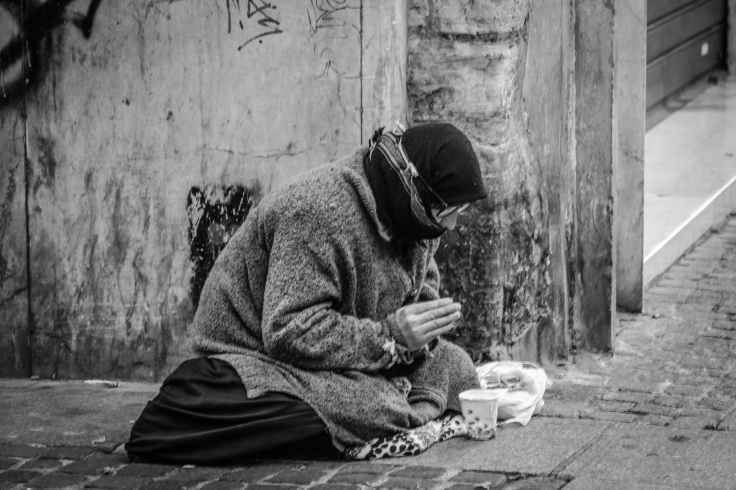
Jesus told an interesting parable in the book of Luke. It concerns a widow who was denied justice by a corrupt judge. Even though her case had merit, he would not hear it. He was not interested in giving her justice. But she persisted. She finally annoyed him so much that he gave her what was rightfully hers.
18 And he told them a parable to the effect that they ought always to pray and not lose heart. 2 He said, “In a certain city there was a judge who neither feared God nor respected man. 3 And there was a widow in that city who kept coming to him and saying, ‘Give me justice against my adversary.’ 4 For a while he refused, but afterward he said to himself, ‘Though I neither fear God nor respect man, 5 yet because this widow keeps bothering me, I will give her justice, so that she will not beat me down by her continual coming.’” 6 And the Lord said, “Hear what the unrighteous judge says. 7 And will not God give justice to his elect, who cry to him day and night? Will he delay long over them? 8 I tell you, he will give justice to them speedily. Nevertheless, when the Son of Man comes, will he find faith on earth?” Luke 18: 1-8 (ESV)
Jesus does not mean to imply that God is like the unjust judge. God does not close His ears to our cries for justice; But He also does not see our situation from our point of view. God WILL allow our loved ones to die. He may hear our prayers for temporary healing, but He will not prevent us from all grief or loss. And we may have to live through disease, poverty, and other circumstances that seem unfair or unjust– at least for a while.
Jesus is reminding his disciples (and US!) that God not only hears our prayers, but He cares about our needs, and He hates injustice even more than we do. God will not just act reluctantly to bring about justice for one widow. God will end the sting of death, the corruption of sin, and the need to cry out for justice once and for all. And even in this life, He can and often will give us miraculous answers to our problems with injustice. But there is a caution at the end of this parable. Do we have faith? I don’t mean the kind of faith that hopes and wishes that everyone in a particular situation will “get what is coming to them.” Nor is He talking about a faith that says, “God helps those who help themselves.” Rather, Jesus is talking about a faith that lifts up a situation to Him, knowing that He– and He alone– WILL keep His promises in His time and in His fashion. The kind of faith that can rest secure in knowing that “HE WILL DO IT!”
Are you trusting for justice today? Are you still waiting? Don’t stop praying. But more importantly, don’t stop believing!
Yesterday and today mark two important milestones in North America. September 16 is Mexican Independence Day, and September 17 is Constitution Day in the United States. On these days, people in our two countries celebrate some of the great things that can be accomplished by “we the people.” The founders of our nations were not perfect, but they fought and worked and came together to make “a more perfect union,” and a brighter future for their citizens.
All around the world, governments are instituted to protect the rights and lives of people– to protect them from danger, to allow them to interact in peace and safety, and to provide for “the general welfare” of all. But governments– even the best–are run by fallible people.
The Bible tells a long and complex story of the ancient nation of Israel. Tracing its origins to a single patriarch (Abraham), the family grew to be a powerful nation, ruled first by priests and judges, and then by a series of kings. The nation split into two distinct countries, before being scattered and sent into exile. The story of the nation is chronicled (literally) in the books of 1 and 2 Samuel, 1 and 2 Kings, and 1 and 2 Chronicles. In the books of the prophets, the same message comes from God again and again–Israel and Judah have both fallen into the same idolatry and corruption that doomed the nations they had conquered in former times. Instead of seeking justice for all the people, and providing order and protection, the leaders had become drunkards, liars, thieves, and murderers. They betrayed their allies, made foolish treaties, oppressed the poor and helpless, and celebrated their own cleverness. “We the People” had devolved into “us versus them.” Worship of God had been replaced by worship of a pantheon of foreign gods–worship that involved ritual prostitution and human sacrifice. Family members and fellow citizens were sold into slavery, robbed and beaten, used and abused, and slaughtered–without remorse or fear of retribution. God’s warnings were followed by His justice and punishment, and the demise of both nations, as well as punishment for their neighbors.
Photo by u0404u0432u0433u0435u043du0456u0439 u0421u0438u043cu043eu043du0435u043du043au043e on Pexels.com
Israel’s story, while very detailed, isn’t unique in history. Instead, it is a case study of what can happen when the people abandon unity and the rule of law for division and corruption. It is what happens when “who we are” becomes more important than “whose” we are; when “we” are more important than anyone else–even God. Israel and Judah continued to be religious right up to the point where they were dragged off to exile. They brought offerings and sacrifices, sang songs, prayed, and memorized scripture. Their leaders assured them that God would protect them and continue to let them prosper as their enemies marched up to the gates of Jerusalem. They had not abandoned the worship of God– they had just added idolatry to it. They worshipped their own prosperity, they worshipped gods and goddesses of the harvest, of war, of wealth, and wisdom. They still thought God was great– but not necessarily Sovereign.
Who or what are we worshipping today? What “new” and additional principles have we added to our own Constitution? To the laws of the land? To our way of being good citizens in our respective countries? To the eternal Word of God? When we hear the phrase, “We the People,” does it bring to mind people who look and live differently than us? Does it bring thoughts of justice and unity? Does it humble us?
King David, the second, and one of the greatest of Israel’s kings wrote: “Know that the Lord, He is God; It is He who has made us, and not we ourselves; We are His people and the sheep of His pasture.” (Psalm 100:3 NKJV) “We the People,” by ourselves, will scatter and fall into destruction, like sheep without a shepherd.
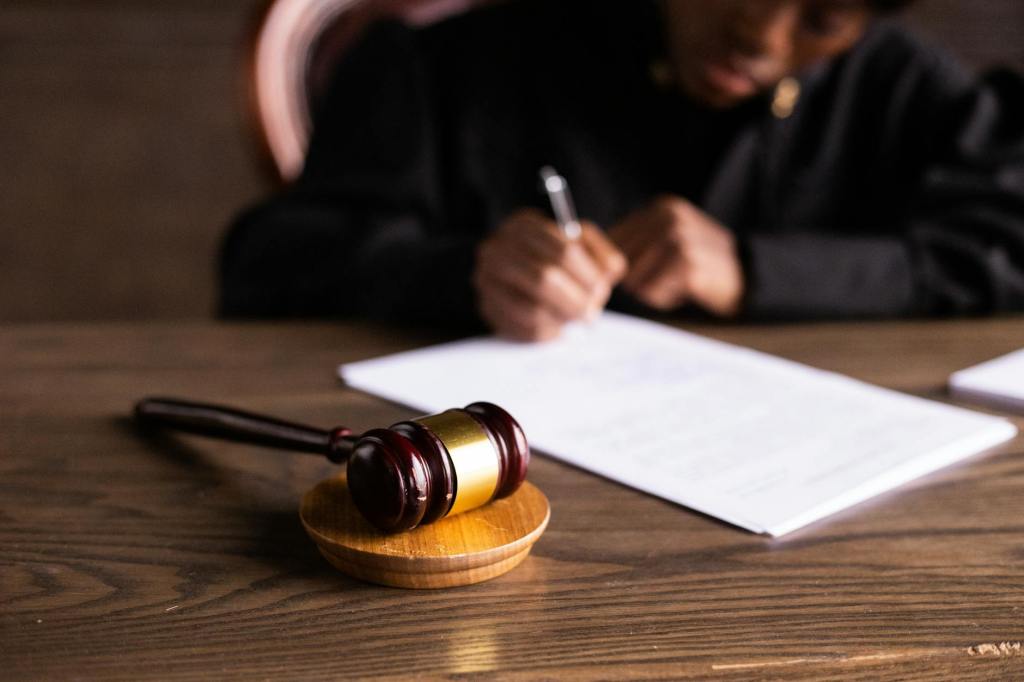
Last week, I was called upon to give testimony in court as a witness to a crime. The crime itself occurred months ago, so I was very nervous, trying to remember the sequence of events, and trying to make sure I didn’t add or leave out important details.
There is a reason the judge asks for “the truth, the whole truth, and nothing but the truth.” It is very easy to exaggerate, to leave out details that may reflect poorly on us or on those we know, or to add commentary or opinion. Even the way a lawyer asks a question can evoke a certain memory or reaction that is more or less than the original event warrants.
As hard as I tried, I couldn’t tell the entire “truth”–not because I lied or withheld evidence, but because I only witnessed a portion of the crime, and because I don’t have total and perfect recall. No one does. Three witnesses may testify and get certain details “wrong” or mix up the sequence of events, or be confused or hazy months after the event. Even seeing the same event from a different perspective can alter one’s testimony. One person hears a conversation clearly, but cannot see one speaker’s facial expressions or gestures. Another sees the event close up, but cannot see what is happening “behind the scene.” One person’s personal biases may come out in the way they give testimony, even if they are unaware of it. While I hope and believe that I told the truth as I witnessed it, my witness alone is not enough to determine the defendant’s guilt or innocence–nor should it be.
The ninth Commandment (in Exodus 20) warns about giving or “bearing” false witness. We usually equate this with lying, but it is more than telling “a whopper.” Bearing false witness includes spreading rumors, “sharing” questionable posts, omitting facts, and even “faking it” until you make it– pretending to be what we are not; hypocrisy, and false appearances.
As a follower of Jesus, I am a full-time witness. This is far more important even than being a witness in a court case. I should always speak and behave as if I am “under oath.” Not just when I know all eyes may be watching; not just when I’m with other “witnesses.” Always. This doesn’t mean that I aggressively volunteer my opinion and beat people over the head with commentary everywhere I go. It doesn’t mean that I smile and say only what I think others want to hear. It means that I speak less than I listen, but when I speak, it is truth–loving, sometimes harsh, spoken with the intent to help, heal, encourage, challenge, and bring justice.
In prayer, it means that I repent of falsehood, pride, envy, anger, and bitterness. It means that I acknowledge God for who He is, and myself for who I am in Him. It means that I ask for wisdom to seek and see truth, and to see through deception and falsehood–even in my own heart and mind. And it means that I thank God for His Truth, which is perfect and victorious. I pray that the Truth will shine in, around, and through my life and my words, and in the lives of others.
Many people will point out when I get it “wrong.” They will point to other Christ-followers, other “witnesses” whose lives may look different from mine, who speak differently, act differently, vote differently, even worship differently than me. And I need to trust that the “whole” truth will come from each of us bearing honest and full witness to what we know and experience of God’s goodness, His power, and His love. I don’t have the “whole” truth– but I am a witness of the one who IS the whole Truth!









 Pursuing Prayer