Today is March 16. In my area of the world, we abbreviate it as 3/16/26, or just 3/16. So it reminds me of the most quoted verse in the Bible– John 3:16– “For God so loved the world, that he gave his only Son, that whoever believes in him should not perish but have eternal life.” (ESV) This verse is so famous and so quoted, that many times, people just skip the actual verse and just use the reference. In fact, if you just see a poster or sign of reference that says 3:16, it almost always means this verse.
Recently, I saw a short video of a person complaining about seeing such a reference on their soft-drink cup at the fast food chain In-N-Out Burger. The chain prints “John 3:16” on the inside of the bottom of their cups. They’re known for it. They don’t print out the entire verse, just the reference. It’s not blatant or over-bearing– just a modest note on the bottom of their cups. But this person wanted none of it. They started out by liking the food, but they were offended by this tiny reference to a Bible verse. “Keep your John 3:16,” they sneered. “I don’t want your John 3:16.” Apparently, it left a bad taste in their mouth just to see any reference to the Bible. They felt judged and oppressed, I guess.
But John 3:16 is not about judgment. It’s all about Love! For God SO LOVED the WORLD–take a minute to reflect on that. God, the Holy One, who created the world, only to have mankind reject Him over and over again, didn’t destroy it. He didn’t turn His back on the world. He didn’t leave us as a footnote and move on. Instead, He GAVE His ONLY begotten SON. He didn’t come up with a cheap plan for salvation that was just adequate to cover our worst sins and leave us enslaved to our old guilt and shame. He didn’t send a half-hearted emissary to show us what Heaven and Holiness were like. He sent His SON– the heir of the Universe–to live among us, show us how to love and live and worship. And that Son GAVE all of Himself as a sacrifice– not for a select few, but for WHOSOEVER would trust in Him and submit to His Lordship!
WHOSOEVER believes in Him will not perish, but have ETERNAL LIFE! How does that offend and oppress? The message of John 3:16 sums up the whole Gospel of Christ. It is NOT judgment, but Salvation. It is not oppression, but freedom from Sin and Death!
So today, I am thrilled to celebrate 3:16! It is a message of hope, joy, renewal, abundance, purpose, power, and LOVE!
The story of Hannah in 1 Samuel is filled with priests. Her husband, Elkanah, is of the priestly class, and regularly goes to Shiloh to offer sacrifices. Chapter one quickly mentions Hophni and Phinehas who were the resident priests there. And of course, there is Eli, their father, the High Priest at that time. Hannah has access to counselors, spiritual guidance, and men whose ancestral calling is to bring people closer to God. Yet none of them can bring Hannah out of her anguish and offer comfort.
Hophni and Phinehas are noticeably absent in this story. The mention of their names calls attention to this absence. They were supposed to be the acting priests, but they don’t interact in any way with the grieving Hannah, or her husband, Elkanah. Further reading reveals that they were very wicked and due to be judged for abusing their priestly role. https://www.biblegateway.com/passage/?search=1+Samuel+2%3A12-36&version=NIV
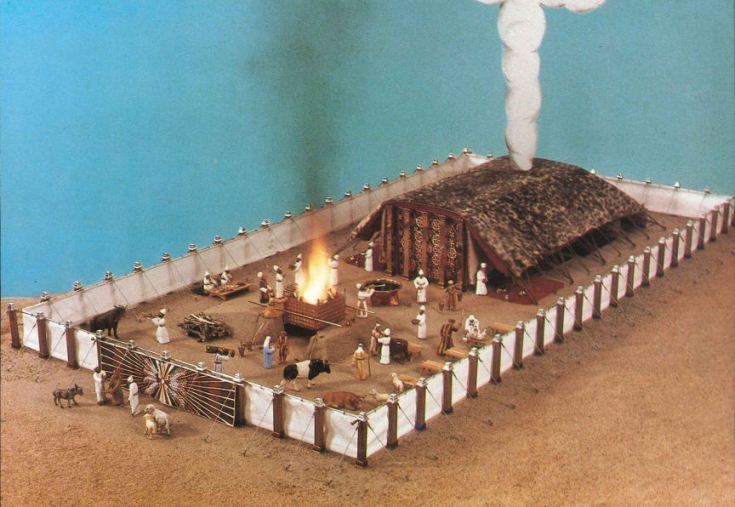
Eli himself is a somewhat indifferent priest. The first mention of him is as the father of the wicked Hophni and Phinehas. Next, we find him sitting in a chair at the doorstep of the tabernacle. He is not serving; he is not overseeing; he is not doing anything. When he first observes Hannah, he jumps to a wrong and judgmental conclusion– that she is drunk and raving. He doesn’t go over to see if he’s right in his assumption. In fact, there is no mention in the passage that he ever rises from his chair. We might gloss over this passage, without grasping the importance of this detail. Nowhere in the long lists of a priest’s duties was there an option of sitting at the door and just watching people go in and out. The priests all had duties– some were in charge of the sacrifice (as Elkanah sometimes was). Others were in charge of the lamps, the incense, the care of the utensils and tools, offering prayers, singing, playing instruments, reading from the books of the law, and keeping the tabernacle clean and in good repair. None of them required sitting. Eli isn’t busy doing the work of the Lord; he is literally sitting down on the job. In short, Eli is not a spiritual giant– he offers a standard blessing after Hannah pleads her case for not being a drunken disturber of the peace, but he doesn’t offer much in the way of true comfort or counseling. His first words to her are to “Go in peace.” The blessing seems to be almost an afterthought. Still, Hannah goes away encouraged, and comes back the next day to worship before returning home.
What can we learn from this encounter and these details in Hannah’s story?
One possible reaction is to become critical and dismissive of the clergy. I think this is the wrong reaction, but I want to address it in this context, because it can keep us from finding help and blessing if we let it. I know countless people who have walked away from the church because of one disappointing encounter with a minister, pastor’s wife, deacon, or fellow parishioner. Eli was not a stellar example of Israel’s priesthood; he was a flawed human. He had rebellious sons, and was likely depressed or anguished over his own troubles. Yet, he was still faithful to turn Hannah’s attention to the One who is always able to bring comfort and strength. Hannah could have chosen to focus on his rude and judgmental assumption about her, but she chose to focus on the hope he was able to offer. I have gotten dismissive, even bad, advice from people in the church. I have been hurt, judged, and ignored by those who are supposed to be serving God. But just as God provides grace to cover our own failures and mis-steps, He asks us to extend forgiveness and grace to those–even those who serve Him.*
Having said that, I think there is a warning here for those who serve the Lord. Eli ends his days in tragic fashion, his family legacy in ruins, because of some of the details we glimpse even in this short passage about Hannah. Eventually, her son, Samuel, will be tasked with the job of delivering the fullness of God’s judgment against Eli and his sons. Eli’s priesthood was not a cushy position of sitting at the door of God’s tabernacle enjoying an afternoon breeze. He was in charge of setting the tone of reverence and worship for the nation. His sons were corrupt; everyone knew it, including Eli, but nothing was done about it. He sat there, and let evil happen around him. Church workers, pastors, and priests who do evil and abuse their positions may get away with it for awhile, but God will not hold them guiltless. Nor will he hold those guiltless who cover up or deny the guilt of those around them. No matter how high the position, no matter how much “good” they have done, unless they repent of their actions, they will face God’s wrath over their evil acts.
Finally, we need to see Hannah’s response. Regardless of how evil the sons of Eli were, or how spineless Eli was as a parent and a High Priest, Hannah found faith– not in the priests– but in the God they served. She had seen the dedication of her husband, Elkanah. He served God with reverence, and he served his family with love and honor. She saw that Eli, even sitting down on the job, was still aware that hope and healing come from the Almighty.
I pray that today, we will be grateful to God for the faithful, imperfect servants he sends into our lives, and for his grace when we or others “sit down” on the job of serving others and showing Him the reverence He deserves.
We’ve been going through the book of Daniel. King Nebuchadnezzar played a prominent role in chapters one through four, but he suddenly disappears from the narrative, and a distant successor, Belshazzar, comes to prominence for the space of a single chapter. https://www.biblegateway.com/passage/?search=Daniel+5&version=ESV
The Book of Daniel is a series of stories, disjointed, and filled with signs and wonders. Many scholars and critics over the years have suggested that these stories cannot be true; that they are legends created centuries later and added as Jewish propaganda. The story of Belshazzar in chapter five was a perfect example, they claimed. There was no written evidence for the kingship of Belshazzar. The last king of Babylon was a man named Nabonidus, so how is it that this story assumes that Belshazzar was the king giving a feast on the very night Darius would invade and conquer the empire? Recent discoveries, however, show that Daniel is more accurate in detail than the ancient historians, who were writing about the “big picture.” (For more explanation, visit this site: https://creation.com/archaeology-belshazzar). Belshazzar would have been the ruler/crown prince/regent of Babylon on that night. Not only that, he would have been young, spoiled, and eager to establish his own authority and prominence. This fits with the actions and reactions of these two men–the fact that Belshazzar would casually raid the storehouses for golden goblets that had been untouched in the days of his more powerful predecessor; that he could only offer Daniel the position of “third highest ruler”; the fact that, while Daniel is not contemptuous, he shows less deference to this “king” than he did to Nebuchadnezzar. In fact, he refers more to the glories of Nebuchadnezzar and the judgments of God than he does to the current state of Babylon or ANY of its other rulers.
There is a huge time gap between the earlier chapters and this one. Nebuchadnezzar’s reign was long; his son and grandson reigned after him (though both their reigns were much shorter). Belshazzar’s father, Nabonidus, reigned for over 15 years before losing the empire. The young Daniel of chapters one and two is now likely to be in his 70s or 80s! He has served faithfully under at least five rulers, but he is still considered an “exile” (see verse 13 of chap. 5), a foreigner, and a captive. In Daniel’s life of faith, service, and prayer, he has seen the “hand of God” working in his life and in the lives of those around him. Daniel has learned to trust in God’s provision, to submit to God’s direction, and to wait expectantly for God’s wisdom.
Belshazzar is terrified of the “Hand of God” as it writes on the wall of his father’s royal palace. He is the son of privilege and mysticism–the Babylonians were known for using signs and wonders to plan campaigns, seek power and wealth, and predict success. Their gods were capricious and full of wrath. But Belshazzar had never been visited by the God of the Universe. He had never taken the time to “number his days”, or consider his ultimate destiny.
Compare the judgment of God against Belshazzar (Mene, Mene, Tekel, Peres–God has numbered the days of your reign and brought it to an end; you have been weighed in the scales and found wanting; your kingdom is divided and given to the Medes and Persians) with this psalm of Moses (Psalm 90) https://www.biblegateway.com/passage/?search=Psalm+90&version=NIV. Two take-away points:
Belshazzar’s days were numbered and he was found wanting. Daniel’s days were numbered, too. Daniel waited years, living as an exile and second-class citizen, serving kings and powers who ignored, or even scorned his God. Daniel’s life was prolonged, yet he continued to serve with no freedom or personal reward in sight. And his trials and oppression are not over yet! (There is a den of lions in Daniel’s future!) But God doesn’t look at our lives in terms of power, success, wealth, health, position, or another outward factor. God sees the small acts of service, the daily discipline of worship, the humble trust and dependence we place in Him. Daniel’s story has not been about accomplishment. Daniel never built anything; he never accumulated anything; he never preached mighty sermons or wrote beautiful songs of worship. And even though God used him to solve riddles, interpret dreams, and prophesy, Daniel had nothing to put on a scale. Yet he was not found wanting, as Belshazzar was.
Daniel was not afraid of the Hand of God because he had learned to number his own days (See Psalm 90: 12-17), and he was able to gain wisdom, satisfaction, peace, and hope in knowing that the Lord God would establish even the smallest works of Daniel’s hands and make him glad for as many days as he had been afflicted. May we pray for, praise, and pursue the Hand of God in our lives today.
The Biblical book of Daniel can be difficult to read. It contains stories, but they don’t seem to tie together. And sprinkled among the stories are visions, dreams, and prophecies. In chapter two, King Nebuchadnezzar threatens all the wise men of Babylon in his fear over a disturbing dream. (https://pursuingprayer.blog/2019/07/17/daniel-prayer-under-pressure/ and https://pursuingprayer.blog/2019/07/19/daniel-prayer-under-pressure-part-2/) At the end of the chapter, Nebuchadnezzar falls prostrate in awe of the God of Daniel, and rewards Daniel with a high position. He even rewards Daniel’s friends who prayed for him.
None of this context seems to carry over into the next chapter. If Nebuchadnezzar listened to Daniel’s interpretation; if he was in awe of the God of Daniel (the God of Israel– the God of Jacob), he forgot it all. The events of chapter three may have happened months or even years after the earlier episode; they may even have happened before(!)– we don’t know. But chapter three feels almost like a wholly disconnected story. Another thing that makes this story perplexing is the absence of the central character of Daniel. His name never appears in the story, and his friends are only given by their Babylonian names (unlike in chapter 2, where both the Hebrew and Babylonian names are given).
The story in Daniel chapter 3 is a familiar one to many children. (https://www.biblegateway.com/passage/?search=Daniel+3&version=MSG) Nebuchadnezzar orders an enormous statue to be built in Babylon. When it is complete, he orders all the administrators of his kingdom– minor rulers, judges, treasurers, advisers–to come to the dedication, where they are to fall prostrate and pay homage to the statue as soon as they hear the music that has been commissioned for the event. This is not a suggestion, it is an order, and anyone who fails to do this will be thrown into a fiery furnace.
Suddenly, there is a group of troublemakers (some translations call them astrologers or fortune tellers, others list them as Chaldeans–a people whose empire predated the Babylonian dynasties and whose culture and religion had produced great scholars and sorcerers). These men come forward with a single purpose– to denounce the Jews. Oddly, they only mention three names– Shadrach, Meshach, and Abednego. They don’t mention Daniel, nor do they mention any of the other Jewish captives who were in service to the king as administrators. Not only are Shadrach, Meshach, and Abednego accused of disobeying the king’s order, they are described as being disrespectful and contemptuous of the king (and the ancient gods of Babylon and Chaldea).
Much is made about the amazing things that happen next–Shadrach, Meshach, and Abednego are called before the king, who gives them a chance to answer the charges and he offers to give them another chance to bow down before the great image. When the three men refuse, Nebuchadnezzar is furious and orders the fire to be made seven times hotter. Men are killed in the process of stoking the flames, but Shadrach, Meshach, and Abednego are thrown in, and begin walking around unfazed. Not only so, but Nebuchadnezzar is astounded to see a fourth figure walking with them, and looking like “a son of the gods.” He calls the three men out, and everyone is astonished to note that they are completely unharmed. Their clothes and hair are not singed or scorched, they are not hot, and they don’t smell of fire.
Just as in the previous story, Nebuchadnezzar’s reaction is emotional and immediate. He gives praise to the God of Shadrach, Meshach, and Abednego, and makes orders that will protect them from future harassment. But there are some interesting undertones in this story that I think we ought to consider, and things we can learn about prayer in the process.
We called Daniel’s dilemma in Chapter two “Prayer under Pressure”. The pressure was not just on Daniel, though he stepped up to face the king. When Shadrach, Meshach, and Abednego prayed with Daniel–when they stood apart with him during their training– when they took a stand to follow the God of Israel in a land of ancient and powerful ‘gods’, they did so knowing that there would be pressure, powerful enemies, and potential persecution. God asks us to be faithful to him, regardless of our circumstances. Nebuchadnezzar had promoted Daniel and his friends to positions of power and privilege. They were grateful to the king, and loyal and devoted to serving him– except when that service called them to dishonor God. Many of us today face the pressure of honoring rulers or leaders who do not acknowledge or serve God; leaders who are corrupt or seem unworthy of our honor. We are to serve faithfully and show respect for their authority unless we are asked to disobey God’s laws or to disown or dishonor God. HE makes rulers to rise and fall. As we will see, Nebuchadnezzar’s power is far more precarious than it looks.
Following God will always bring confrontation and bring false accusations. Jealousy, guilt, envy, greed, anger, and malice will come to those who prosper under any circumstances. How much more to those who prosper at the hand of God? Those who have not schemed, stolen, or crushed others, and yet have been elevated to power, wealth, or honor– such people baffle and frustrate those who are grasping and clawing their way “to the top.” Those who deal in lies and stealth cannot accept truth and integrity. They will seek to twist others’ words, deeds, and reputations– sully names, destroy legacies, start rumors, invent grievances. We can let these little “fires” distract us from the “fiery furnace.” We can spend so much time defending ourselves, retaliating with our own rumors and grievances, or seeking revenge, that we become no better than our enemies. I know this from shameful personal experience. We can destroy ourselves in the struggle to justify ourselves. God doesn’t listen to rumors! God ignores false accusations, because He KNOWS the heart of every person. No matter how hot the “fire” gets, God is with us. He may not put the fire out. He may allow it to get seven times hotter, but He will be with us. If we are trusting Him, we will still have to walk around in the flames, but He will see to it that (ultimately) we are not singed or scorched!
Frequently that attacks we face (see above) are not about us at all. They are about people in rebellion against the God we serve. The men who spoke against Shadrach, Meshach, and Abednego may have had a personal grudge, but the Bible story points out a bigger plot. Daniel’s friends may have “felt the heat”, but the fire was not burning just for them. Daniel, Shadrach, Meshach, and Abednego were recent captives from a conquered nation who rose very quickly to power by openly serving their “foreign” God. The Babylonians (and the Chaldeans before them) had risen to power through violence, intrigue, and reliance on sorcery, sacrifice, and ancient rituals that were abhorrent to the God of Israel. He had allowed them to do so to be the agents of punishment against His own rebellious people. But the power of the Babylonian empire was not of their own making, nor was it greater than God’s power to deliver the remnant of His faithful servants. Many times, we are oppressed by others whose anger and viciousness hide their rebellion against God. They fear those who serve Him, because they fear His justice and His wrath. They hate those who serve Him, because they hate Him. When we pray for deliverance from their schemes and violence, we need to know that God hates injustice; He hurts with us as we suffer; but He wants two things for our tormentors and bullies– 1) to see God’s example of faithfulness in our lives, so they have no excuse for their rejection; and 2) to give them an opportunity to repent and receive mercy. He also wants to do two things for us–1) to refine us and show us how faithful He is; and 2) to use our struggle to encourage and embolden others. Very few people would have noticed that three men out of several thousand disobeyed the king’s command. But because of the opposition they faced, and their total commitment to follow God in the face of it, crowds witnessed their vindication and God’s salvation.
Notice that Nebuchadnezzar, while he acknowledges that God has saved Shadrach, Meshach, and Abednego, does not tear down the statue, humble himself to serve their God, or abandon his arrogance. Twice, God has shown His awesome power to this proud and powerful ruler; twice Nebuchadnezzar has been impressed, even awed– but he hasn’t been changed. Yet!
Where is Daniel? We don’t know. He may have been sent to one of the distant provinces and wasn’t in attendance for the dedication ceremony. He may have had a moment of weakness and joined the others in bowing down to the statue! All we know is that he is absent from one of the great miracles of his day. (He’ll have his own scary confrontation with a different king later in life.) This baffles me, but it also gives me hope. If Daniel DID bow down and worship the statue while his friends were faithful, God obviously forgave him and used him in a mighty way for the rest of his life. If he missed this fiery trial, perhaps God’s mercy was in it. God does not ask all of us to suffer the same trials, or have the same triumphs. God’s plan for each of us is unique. He doesn’t ask all of us to be “spiritual superstars.” He DOES ask each of us to be faithful for the fiery trials that come our way– whether fiery furnaces of persecution, or wildfires of hectic distractions and temptations, or the sudden flames of disaster or tragedy.
Today, as we pray, let us remember to thank God that, even when trials and fires come into our lives, He knows why. He knows how hot they will get. He knows how long we will be in the flames. And He is right there with us, so that we, too, may walk around, unbound and unharmed by the fires meant to destroy us.
It’s been nearly 45 years since I first heard this phrase, but it has resonated with me ever since. Samuel Taylor Coleridge wrote of it over 200 years ago, speaking of how readers interact with literature, especially when it contains fantastical or supernatural elements. Our high school English teacher and drama coach, Mrs. Barr spoke of it not only in the context of literature but in the context of the theater. In fact, in all art, the artist depends on at least some willing suspension of disbelief on the part of his/her audience.
In visual art, we must believe that a few strategic blobs of color, or carefully shaped pieces of marble or wood have captured something timeless and true about a single moment in time– that movement and emotion and life can be held immortal on a canvas or a statue or a tapestry. We must suspend our disbelief that paint, or wood, marble or stone exists only as itself– in the artist’s capable hands, mere matter transcends its ordinary form to touch our very soul. In music, we can hear, in the well-played notes of an instrument, the sounds of birds, the falling rain, the crashing of thunder, the marching of armies, or the buzzing of bees. Music doesn’t just touch our ears, it can touch our souls. Shakespeare also alluded to this in a comical way: “Is it not strange that sheep’s guts should hale souls out of men’s bodies” (Much Ado About Nothing– Act II, Scene 3) We can listen to a symphony without being moved, but in the willing suspension of disbelief, we can be transformed and inspired by notes on a page and breath being blown into wood or brass or fingers or bows being drawn over “sheep’s guts”.
In literature or in the movies, we must suspend our disbelief that mythical creatures, aliens, monsters, and talking animals live among us as a normal occurrence– for the duration of the story…Dragons must be vanquished, Fairy Godmothers must be allowed to help poor Cinderella to the ball, and The Raven must repeat his ominous line, “Nevermore.” Frodo must hide from orcs and Nazgul in order to reach the Fires of Doom and destroy the One Ring. Charlotte must spin her wordy webs and Papa Bear must exclaim, “someone has been sitting in my chair.” As children, we shed our disbelief readily and enter into the story, falling in love (or having nightmares about) imaginary characters. As adults we become cynical, and lose some of our ability to enter into imagination and other-wordly realms.
I was recently reminded of this concept of the willing suspension of disbelief in two different contexts– loss of Faith, and the deception of the internet– including “fact checking” and AI. Very different experiences, but I think they both tie in.
First, in the loss of Faith. I know so many people, family, friends, even strangers, who write passionately about their loss of Faith. Oh, they don’t call it that. They have other terms, other catchphrases– they talk about their “Deconversion” or their “Awakening”. They are too smart, too savvy, too enlightened to give credence to Faith in Jesus, or in any “god” or divine being. After all, they cannot see “Him” or “it”; they cannot prove His existence (they can’t prove His non-existence either, but that’s another story). Believing in God, they claim, is the same as believing in fairy tales.
And yet…Keats once posited, “Beauty is truth, truth beauty– That is all ye know on earth, and all ye need to know” (Ode on a Grecian Urn). Earlier in his poem, he also says, “Heard melodies are sweet, but those unheard are sweeter; therefore, ye soft pipes, play on; not to the sensual ear, but, more endear’d, pipe to the spirit ditties of no tone…” There is an acknowledgement that we do not just exist in a physical plane, but in a world of metaphysical marvels– memory, hope, and yes, even “fairy tales”.
Of course, we know that there is no Cinderella– no “happily ever after” in this world. Life is not a fairy tale story. But our lives ARE stories– we have a beginning and an end. We want to find a purpose, a reason for being who we are, where we are, and even when we are. We search for our “true” identities. We dream dreams and harbor hopes. We battle evil forces– the demanding boss, the annoying neighbors, blizzards and tornadoes, cancer…And we believe very strongly in concepts of justice and injustice, fairness and unfairness, goodness and evil–metaphysical concepts. We long to be understood, accepted, “seen,” and loved (ever after!). And we must suspend our disbelief in the face of evil to search for the good. We must suspend our disbelief in our own worth to make choices that preserve our health and develop our latent talents. Indeed, we must believe and cherish what we do NOT see or have never experienced, or we will be crushed by our (often temporary) realities. When cynicism and disbelief BECOME our belief system, we become the living dead. Oh, we can continue doing “good” things without believing in God; we can espouse a code of “good living”, we can take care of our bodies and emotions within a framework of humanism and self-esteem. But we will not experience the fullness of Truth, or Beauty, or majesty, that lives in Faith.
Loss of Faith represents, what I would call an “unwillingness” to suspend disbelief, or a tendency to cling to only that which can be experienced on a physical plane. But there is another danger– that of an “unwilling” suspension of disbelief–believing things that are deceptive, because they are presented as “truth.” This includes such things as “fake news” on the internet, “fact checkers” who tilt the truth and “throw shade” on inconvenient or uncomfortable truths, and AI-generated stories meant to “create” truth where none exists.
I would like to say that I am immune to such things; that my knowledge and dependence on truth cannot be subjected to manipulation. But that is not always true. I see a touching story on Facebook about a young person who is missing– please spread the word– only to find out that the post is several months out of date. I see a meme that accuses one political big-shot or a celebrity or even a corporation or business of being corrupt, unfair, evil, etc., and I am outraged– until I realize that the original post was generated by a person or group that is completely unknown to me. I don’t know their true experience, or their motivation in spreading this information (or false information). It MAY be true, it MAY be completely false, but it is most likely somewhere in between– not nearly as bad as portrayed, or as every bit as bad as other politicians, celebrities, or companies who aren’t mentioned in the meme or article.
Outrage— especially outrage that is deliberately and manipulatively generated– is the suspension of not just disbelief, but of discernment. We immediately judge. We immediately feel our blood pressure rise, our cheeks flame, and our breathing accelerate. Webecome passionately angry, but we also become instantly indignant and self-righteous. I would never…I cannot tolerate… But what have we done on a smaller scale? Are we SO innocent? Do we have the authority to judge based on a single article or photo?
But it is not just outrage that can be deliberately and manipulatively generated. AI and bad actors on the internet and other media sources can also manipulate our hopes, our disappointments, and our beliefs in what has happened and what is happening around us. Stories appear online that sound authentic, narrated by well-modulated voices (many of which seem familiar), telling us that this event took place and changed someone’s life, or that this celebrity has finally “spilled the dirt” about beloved co-stars who died a couple of decades ago. Others purport to give “wise words” from aging actors or writers or recently dead corporate gurus. We suspend our disbelief, or our suspicions, because we trust the voice or the photoshopped picture. We choose to believe the worst of people we already dislike. We choose to believe only the best of people we like. If a stranger came up to me on the street with a story like this, I would be suspicious. Who are they? Why are they telling me this? Why should I trust them? But we suspend our disbelief if we see it in print with what looks like credible photos and when narrated by what we assume to be a credible voice. If we bother to look at the source, even that seems credible– I may not have heard of this news service, but it has the word “news” in its heading…
We put our Faith in things seen– even if they are false, while we hold truth and beauty to be suspicious, because we have lost the ability to hope and trust in something beyond our own wisdom and personal perceptions.
We need dreamers and artists and writers who see truth and beauty in the universal and metaphysical realities of faith and hope and majesty. And we need people with the discernment to disbelieve what strangers claim to “show” and “tell” us with their clever manipulations.
Both Faith and “the willing suspension of disbelief” depend on the Will. We have to make choices in what we are willing to believe and how far we are willing to search for the truth– both in what we can see, and in what we cannot.
My given name is Lila June. I was named after my great-grandmother, Lila, and my aunt, Ila June. I have never used a nickname or my middle name, but my Aunt June rarely used her given name of Ila. In fact, she used it so seldom that she forgot it. Not literally forgot that it was her name but forgot that anyone might use it to refer to her. She and her husband lived on a series of Army bases, and when she went to the doctor’s office, they used the name on her official paperwork. A nurse would come out and call for Ila to come back to see the doctor. Startled at first, she looked around the waiting room to see who else could possibly have the same unusual name– only to hear the nurse call for Ila Mellinger! SHE was the Ila being called. But it took her a few moments to respond.
I was reminded of my aunt, and her name, this week. On my Facebook feed, there was a short video by a pastor. In the video he was lamenting that, in his view, the modern Christian church is so focused on practical Christian living– on good deeds and kind words; on outreach programs and building projects– that we have lost sight of WHO GOD IS! We serve the church; we serve the community; we serve our own notion of what makes us “good people,” but we do not serve God, because we don’t really know Him.
He was placing much of the blame for this on other pastors and institutional leaders– saying that they were at fault for not teaching the names of God. I’m not sure I totally agree with him. I think there is some merit in what he said, but ultimately, when I stand before the throne of judgment, I’m not going to be asked whether my pastor taught me the names of God. I will not be asked how much I knew ABOUT God. I won’t even be asked whether or not I know God–I will either hear that my name is in the Lamb’s Book of Life, or it isn’t! My pastors might face judgment for how true they were in teaching the Gospel, but my mission is to know God experientially. It is MY job to learn who God is, and to follow Him— to trust and obey Him.
But I DO agree that modern churches spend less time on this subject than I remember in my church growing up. Not because we spent so much time on the list of individual “names” of God, but we spent more time in worshipping God for WHO HE IS, and not for what he’s done for me, or what I can be doing for Him, saying about Him, or “identifying” as a Christian, a Christ-follower, or a Believer (and all the tiny differences in meaning that those terms might have).
Part of that comes from the habit of studying the Bible as a narrative. We used to study the “patriarchs” of the Old Testament, the “red letter” words of Jesus Christ, and the letters and “acts” of the Apostles. In fact, it is no longer politically correct to even use words like “patriarchs,” and out of fashion to teach the Bible as historical fact. But there is a value in studying this way– not because the characters are mostly men, or even because they are “heroes of the Faith.” It is important to study them precisely because they are so flawed and broken and in need of a Savior– just as we are! And as they encountered God or walked with Jesus, they saw Him– and NAMED Him– for all of His attributes.
In the Old Testament, He is Yahweh, Jehovah, the LORD. He is Almighty. He is the God who sees, the God who hears, the God who saves, the God who provides, the God who saves, the All-sufficient One, the Lord (who) is my Shepherd, the Most High God, the One whose name is a Strong Tower, the Everlasting God and the Lord of Hosts, among others. Jesus, the promised Messiah, also has a host of names, including Wonderful Counselor, Mighty God, Everlasting Father, Prince of Peace, Lion of Judah, Son of God, Son of Man, Emmanuel, Light of the World, the Living Word of God, Savior, Master, Redeemer, Rabboni, the Bread of Life, the Living Water, the Lamb of God, the Risen Lord, the Alpha and Omega, and many more. What a rich picture of God we get from His Names!
I also remember the old hymns and worship songs doing a better job of helping us to see the God of the Bible. I know we have modern worship songs that include God’s many names and attributes, but others seem to concentrate, not on who GOD is, but who I AM because of God–I’m forgiven, I’m a Child of God, etc. I miss the old hymns that remind me that God is a Mighty Fortress, He is my Vision, my Blessed Redeemer, the Rock of Ages, whose grace is Amazing, and whose Love is “greater far than tongue or pen could ever tell!”
I don’t want to “forget” any of the many titles and attributes of my Father, His Son, or the Holy Spirit. When I lose track of them, I am less likely to worship, less likely to obey, and less likely to turn to Him first in every situation. As we close in on Easter this year, I want to spend some time looking at some of His many Names. But for today, I want to take a deep breath, and worship the one who is “worthy, O LORD, to receive Glory and Honor and Power” (Revelation 4:11).
Years ago, our high school class read a classic short story by the American author, Herman Melville. Bartleby the Scrivener tells the story of an unusual clerk– one who begins as a good worker, efficient and conscientious, but ends up dying in prison, hopeless, ruined, and broken. His tragic downward spiral begins one day when the lawyer for whom he works asks him to examine a short document. This is a commonplace request, much like asking a writer to proofread her final draft before submitting it to the editor. However, Bartleby responds by saying “I would prefer not to.” The startled lawyer decides not to force the issue, and gives the task to someone else.
Bartleby’s refusal to do what is expected of him escalates until he no longer does ANY work. He refuses to work, refuses to leave the office, and refuses to eat. He isn’t angry or violent, but he remains defiant until the very end.
So it is with us when we are living in sin and rebellion against God. It may start out small– some little habit or attitude. We know it is wrong, but instead of obeying God’s word, we calmly say, “I would prefer not to…” not to tell the truth, not to turn away from porn, not to help my neighbor, not to agree with God about my behavior.
8 The Lord is merciful and gracious, slow to anger and abounding in steadfast love. 9 He will not always chide, nor will he keep his anger forever. 10 He does not deal with us according to our sins, nor repay us according to our iniquities. 11 For as high as the heavens are above the earth, so great is his steadfast love toward those who fear him; 12 as far as the east is from the west, so far does he remove our transgressions from us.
Psalm 103:6-12 (ESV)
God is patient. He is gracious and kind. He does not treat us as our offenses deserve. He gives us the chance to repent. He offers forgiveness. But every time we say to God, “I would prefer not to,” we get a little more like Bartleby– isolating ourselves, wasting our potential to be all that God created us to be, growing more defiant and more rebellious, until we waste away into a prison of our own making, and, finally, death.
One of the things that makes Melville’s story so disturbing is that the narrator keeps trying to explain away Bartleby’s defiance–perhaps he is having trouble with his eyesight and doesn’t want to admit it; perhaps he was traumatized at a previous job; maybe there is a reason for his passive aggression. But in all of his attempts to understand, the narrator cannot save Bartleby from prison and death.
Understanding sin cannot change us. Excusing sin does nothing to stop its consequences (see Romans 6:23). No one killed Bartleby, yet he died because he “would prefer not to” do the things he needed to do to live. His small act of defiance, which starts out singular and almost heroic (after all, who wouldn’t like to tell the boss, “I would prefer not to,” every once in awhile?), sounds innocuous. Such a little thing to refuse. Surely God would not punish us for so small a thing…until one small thing leads to another…and another; a bigger rebellion; a numbing complacency; loss of perspective; a heart of stone; isolation; starvation; imprisonment; death.
What am I refusing to do for God today? What am I refusing to give up? Refusing to admit? Refusing to listen to? Am I excusing myself? Do I tell myself I am not in rebellion because I have been polite in my refusal to obey? Do I comfort myself that my rebellion is really just a matter of “preference,” and will not be consequential? That God’s Holiness is less important than my comfort or convenience?
Many people coast through life in the belief that God is SO merciful and SO loving that He can’t also be Holy and Just– that His commands are really suggestions; that His wrath is mythical; that our own wisdom is sufficient for living a “good” life and pleasing Him. But God isn’t concerned about whether we live a “good” life– He wants us to have an abundant life– filled with joy and peace, love and relationship, both now and forevermore. In fact, He would “prefer not to” punish us. He is not “willing” (i.e. desirous) that any should perish (2 Peter 3:9), but that everyone would some to repentance. That doesn’t mean that He won’t punish those who refuse to obey Him, or those who refuse to turn from their rebellion and trust Him; only that He will continue to give us the opportunity to recognize our need for forgiveness.
10 If you keep my commandments, you will abide in my love, just as I have kept my Father’s commandments and abide in his love. 11 These things I have spoken to you, that my joy may be in you, and that your joy may be full.12 “This is my commandment, that you love one another as I have loved you. 13 Greater love has no one than this, that someone lay down his life for his friends. 14 You are my friends if you do what I command you. 15 No longer do I call you servants, for the servant does not know what his master is doing; but I have called you friends, for all that I have heard from my Father I have made known to you.
John 15:10-15 ESV– taken from biblegateway.com
God has made it possible for us to be more than servants. We don’t have to respond to God as Bartleby responded to his boss– though God has the ultimate authority to demand our loyalty and obedience. Through Jesus, we are sons and daughters and friends! When God gives us commands, like “Love one another,” they are still commands. But His heart is that we should trust that all of His commands are righteous, life-giving, and in our eternal best interest. But some of us are still saying, “I would prefer not to.”
Earlier this week, we celebrated Constitution Day in the United States. It went largely unheralded. The United States Constitution– the document on which all other laws are supposed to be based in this country– is relatively small. It takes about a half-hour to read it through, including all 27 amendments. It takes much longer to understand and make sense of it. One document that helps define and explain the Constitution is the Declaration of Independence.
One of the key phrases in the Declaration is this: “We hold these truths to be self-evident, that all men are created equal, that they are endowed by their Creator with certain unalienable Rights, that among these are Life, Liberty and the pursuit of Happiness.–That to secure these rights, Governments are instituted among Men, deriving their just powers from the consent of the governed, –That whenever any Form of Government becomes destructive of these ends, it is the Right of the People to alter or to abolish it, and to institute new Government, laying its foundation on such principles and organizing its powers in such form, as to them shall seem most likely to effect their Safety and Happiness.”
But looking around today, it seems that not all American hold ANY truths to be self-evident– indeed, many people don’t hold any truths to be true! We like to pay lip-service to one phrase– “All men are created equal…” but even here, we cringe and rephrase it. “It’s not just ‘men’ who are equal– all genders are equal” “Everybody is equal.” But what do we mean by this new phrase? It is self-evident (I would argue) that everyone is NOT equal in all ways. Some of us are taller than others, or healthier or wealthier than others; some of us live longer than others. Some of us work in offices; others work in the wind and rain and snow. Some of us live in large mansions, while others live in motor homes, apartments, hospital rooms, or even homeless shelters. The “Truth” is that we are CREATED equal– we are equally valued by our Creator, and equally entitled to dignity, life, liberty, and the “pursuit of happiness” under the laws of the land. Our laws are not supposed to create an artificial “equality” of outcome or circumstance, but provide for equal protection and opportunities for everyone to live, experience freedom, and pursue their individual purpose and dignity.
And we are losing the self-evident truth that Government should derive its just powers from the consent of the governed– not the arbitrary will of unelected bureaucrats appointed without public consent and answerable to no one.
We have lost the self-evident Truth, and replaced it with clever and complicated ideals.
None of this is new, however. All the way back in the days of ancient Israel, the people lost the self-evident Truth about their nation and its unique covenant with God. The Covenant was simple. It did not take a long time to read through. There were Ten Commandments and several “amendments” of ceremonial and social rules. God gave Moses a list of promises– blessings and curses–if the nation of Israel would (or would not) uphold their portion of the covenant. God would be their ruler, and they would be His People.
But after the death of Moses and his successor, Joshua, the people abandoned the law and the covenant, until chaos reigned, and God invoked many of the curses against His own people. By the end of the book of Judges, we learn that, “..in those days there was no king in Israel; every man did that which was right in his own sight.” (Judges 21:25)
Such conduct led to Israel being invaded, defeated, and oppressed. Worse, they approached their religious leader, Samuel the Priest/Prophet, and asked for a human king in order to be just like the other nations– nations God had called out for being wicked, violent, and unjust. The reign of kings failed, too, and the nation was again invaded, dragged off to exile, and oppressed.
“We hold these truths..” is more than just a phrase in a national document. It is a guideline for justice, peace, and prosperity.
WE– It doesn’t work for the people of any nation to be divided about what constitutes Truth. “My truth,” “Your truth,” and “their truth” can’t live together in harmony.
HOLD– We must be firm in our commitment to the Truth, or we will be swept away by the latest philosophy, moral standard, or faddish practices of the world around us. That doesn’t mean that we can never admit a need for change– that’s what the amendment process is for– but when we keep letting go of standards which have preserved safety and guaranteed opportunity, replacing them with temporary power grabs and loosely defined concessions to the loudest complainers, we are headed for nationwide injustice, violence, and oppression
THESE– There are other “truths” we could have adopted back at the founding of our nation. We could have set up another monarchy. We could have developed an oligarchy, made up of a ruling class. We could have argued that only land-owners were “equal.” That life was not an “unalienable” right. That representative government was inefficient, and therefore not necessary.
TRUTHS– Not suggestions. Not prevailing opinions of the day. TRUTHS. Immutable, unchanging, solid, objective.
And what goes for the United States should be a warning for Christians everywhere. We are citizens of Heaven. There are truths that we should hold to– truths that should be self-evident in the life of every Christian. Jesus is LORD– not just a pal; not just a guru or a good teacher. He is the LORD. God doesn’t change– What He said a thousand years ago about loving God and loving your neighbor still applies today. He hasn’t changed His mind about life, or liberty, or the pursuit of righteousness… He hasn’t become less powerful or less Holy, that we should just do “whatever is right in our own eyes..” God’s Word hasn’t changed–His promises still hold; His warnings are still meant to be heeded; His will is still evident. God’s grace is sufficient! God is HOLY and JUST. And He is full of Mercy and Love. He will forgive; He will empower us to do His will; He will continue to transform us as we follow Him. God is Greater than Government. Whatever system of Government we live under in this life, God’s Kingdom is greater, more just, and everlasting.
These are truths worth holding! No matter what happens to the United States or its Constitution, I will continue to hold to the Truth of the Bible above all. May God in His Grace give us the strength, wisdom, and will to hold fast to what is true, and not just what is “American.”
I like having choices. When I go to a restaurant, I get a menu, with several choices– appetizers, entrees, beverages, desserts. I have choices at the grocery store– brand X cereal or brand Y, different sizes of laundry detergent, which cucumber to put in a produce bag– sometimes even a choice between paper and plastic and reusable bags! I have a choice to buy or rent a house or apartment/condo. I have a choice about the car I drive or the choice not to drive, but to walk or take public transportation. I choose which church to attend, or not to attend at all. I choose when I get up in the morning and when I go to sleep. I choose what to wear each day. I choose to obey the law, including speed limits on the highway and slowing down in school zones, paying whatever taxes are due, and registering for the census, voting, and other civic duties.
Many of these choices seem benign. It doesn’t really matter to anyone else which brand of cereal I buy or when I eat it, or even if I decide not to eat it, but end up throwing it out. It doesn’t matter to most people where I live, or go to church, or what I am wearing. It doesn’t hurt anyone else if I drive a couple of miles faster than the speed limit on a back road somewhere.
But some choices DO matter– they matter a lot. If I choose to drive at high speed through a school zone, I might end up accidentally killing a student or school worker. If I live in a house or apartment I cannot afford, or if I refuse to maintain my house or apartment, I may end up evicted or homeless. If I choose to use drugs– even prescription drugs– in an unwise manner, I may end up in the hospital or in the cemetery! And I may hurt others around me in the process.
I live in a nation that prizes “freedom” and “freedom to choose.” But in the past century, more and more voices are being raised in an effort to make all choices “equal.” And they are not. Many of our “choices” are in direct contradiction to the Word of God, to traditional values, and even to common sense! Our choices have consequences– some benign, and some catastrophic. Voices are shouting about their “right to choose” even as they are also raised in righteous indignation about others’ rights and choices.
I could speak to this for days on end, defending my own choices, and pointing out which “choices” break my heart or offend me. But I feel compelled to point out just three things to consider about individual choices:
How does this choice honor God? I think it is easy to focus on “big” choices when we think of this, but I have been challenged lately to see how even my “easy” and “little” choices honor Him. Does it really matter which brand of cereal I eat in the morning? Probably not. But what about brands and manufacturers that support causes that do not honor God? Most of the time, I am unaware of such considerations. But the money I spend on my favorite sugary breakfast treat may help sponsor evil. And if I am aware of which manufacturers are giving large donations to causes I despise, but I am still buying their products every week, I am helping to sponsor that evil.
How does this choice impact others? We DO have the freedom to choose our actions, but we do NOT have freedom from the consequences of those actions. “My Body, My Choice” looks good on posters and banners, but things like abortion or gender reassignment have an impact beyond a single person. Abortion always ends with the death of a second “body”– one without any choice in the matter. Gender reassignment impacts more than just one person– it impacts their present and future relationships, as well as impacting their future physical health and reproductive system. It is also important to establish whether my choices are made to try to please or influence others. It’s easy to blame others after the fact, citing “peer pressure” or claiming “I didn’t have another choice,” but is that really true, or was one choice just a lot easier or more popular than another? That same group that pressured you make certain choices– will they be there for you afterward? No matter the consequences? Will they still be your friends if you make a different choice?
Does this choice help me grow into a better person? Many of our choices come from wanting to be a happier, wealthier, or more popular person– NOT a healthier, more mature, or wiser person. And most of our choices focus on immediate gratification, rather than long-term growth. Doing something because you have the “right to choose” is not the same as “doing the right thing.” Doing the right thing often involves sacrifice and even a season of suffering. Our present choices–even the small ones– will impact our future circumstances, and our development as an individual. Eating a donut today may be tasty, but eating donuts every day may lead to obesity, diabetes or heart disease, and even a lessening of enjoyment for donuts– they’re no longer a tasty treat, but a habitual threat to my health!
Am I angry and defensive about my “choice?” Years ago, I was stopped for speeding on my way to work. Of course, I had been running a little late, and being stopped made me even later. I had to explain my tardiness to my boss, who dismissed the whole incident with a sly “next time, don’t get caught..” But one of my co-workers self-righteously handed me a two-page pamphlet on the evils of driving over the speed limit. At that time, I was indignant and offended. (I still would be a bit miffed– I don’t agree with either of the reactions I got that day, but that’s another post…) As I have grown older, however, I have come to value the three questions above– and it changes my perspective. I KNOW it’s “wrong” to drive over the speed limit. I know many people do it anyway and get away with it. But the bottom line is this–speeding does not honor God. It does not help anyone else, and could potentially harm someone. And it does not grow my character. I don’t automatically become a “good” person if I DON’T speed– let me be clear about that. But I do grow in character when my choices are made out of a heart that prioritizes God and others over my own selfishness (and procrastination!) When I find myself getting angry and defensive, I need to consider whether or not it is really guilt. If I wasn’t speeding that day, I wouldn’t have had any reason to be angry with my co-worker or ashamed of being “caught.” If someone is angry and defensive about his or her behavior, it is often brought about by guilt, shame, and a rebellious spirit, tired of defending what everyone else (and sometimes their own conscience) tells them is “wrong.”
We make choices every day– some benign, some “good,” some “bad.” Let’s pray for wisdom to make the best choices, confess the “wrong” choices, and offer encouragement and truth, rather than judgment, to those around us.
Today, I’m praying about the “choice” of abortion and its impact on my nation (as well as worldwide). In the 50+ years since Roe v. Wade attempted to make abortion “legal” in all 50 of the United States, over 60 million abortions have been reported in the U.S. during those years.* This figure does not include other nations, unreported (back alley or non-clinical) abortions, or natural miscarriages. Not only does this represent the “choice” to end the lives of over 60 million precious individuals, it represents millions of women (along with men and other family members) who have been impacted by the deceptive offer of “freedom” and the increasing pressure to make this “choice” seem both normal and healthy. For my friends, family, and others who have made this choice– my heart aches for what you have been through, and I rejoice with those of you who have found Grace and renewed hope through Jesus. God loves you– YOU, not your past choices– and welcomes you to choose Him today and every day. For those who have not been in a position to be tempted by this “choice”– I pray that we live with compassion, and that we stand up for and speak up for TRUTH and LIFE– not self-righteousness and fear. * A more conservative estimate still places the number at well over 40 million https://www.pewresearch.org/short-reads/2024/03/25/what-the-data-says-about-abortion-in-the-us/ https://www.statista.com/statistics/185274/number-of-legal-abortions-in-the-us-since-2000/
The Offer of Life or Death
11 Now what I am commanding you today is not too difficult for you or beyond your reach. 12 It is not up in heaven, so that you have to ask, “Who will ascend into heaven to get it and proclaim it to us so we may obey it?” 13 Nor is it beyond the sea, so that you have to ask, “Who will cross the sea to get it and proclaim it to us so we may obey it?” 14 No, the word is very near you; it is in your mouth and in your heart so you may obey it. 15 See, I set before you today life and prosperity, death and destruction. 16 For I command you today to love the Lord your God, to walk in obedience to him, and to keep his commands, decrees and laws; then you will live and increase, and the Lord your God will bless you in the land you are entering to possess. 17 But if your heart turns away and you are not obedient, and if you are drawn away to bow down to other gods and worship them, 18 I declare to you this day that you will certainly be destroyed. You will not live long in the land you are crossing the Jordan to enter and possess. 19 This day I call the heavens and the earth as witnesses against you that I have set before you life and death, blessings and curses. Now choose life, so that you and your children may live 20 and that you may love the Lord your God, listen to his voice, and hold fast to him. For the Lord is your life, and he will give you many years in the land he swore to give to your fathers, Abraham, Isaac and Jacob. Deuteronomy 30: 11-20 (NIV)
2 At dawn he appeared again in the temple courts, where all the people gathered around him, and he sat down to teach them.3 The teachers of the law and the Pharisees brought in a woman caught in adultery. They made her stand before the group4 and said to Jesus, “Teacher, this woman was caught in the act of adultery.5 In the Law Moses commanded us to stone such women.Now what do you say?”6 They were using this question as a trap,in order to have a basis for accusing him. But Jesus bent down and started to write on the ground with his finger.7 When they kept on questioning him, he straightened up and said to them, “Let any one of you who is without sin be the first to throw a stoneat her.”8 Again he stooped down and wrote on the ground. 9 At this, those who heard began to go away one at a time, the older ones first, until only Jesus was left, with the woman still standing there.10 Jesus straightened up and asked her, “Woman, where are they? Has no one condemned you?”| 11 “No one, sir,” she said. “Then neither do I condemn you,”Jesus declared. “Go now and leave your life of sin.” St. John 8:2-11
Social Media can be a wonderful thing– it connects us, and helps us share good news, prayer requests, events, photos, and more. It can help us make new friends, get re-acquainted with old friends, learn new skills, and be more informed.
Sadly, though, social media can also bring out the absolute worst in us. Social media is immediate– we see or hear something, react to it emotionally, and respond without taking time to think. But social media is not really social. It is social only in the “virtual” sense. And that creates problems. There is nothing like being anonymous behind a computer screen to turn us into the biggest bullies, critics, and self-indulgent know-it-alls. Worse, we find it easy to spread vicious gossip, misinformation, and negativity by pressing a single “share” button…we didn’t even say it!
But we DID send it out. And others saw it, heard it, felt it– for better or worse. Even the “good” responses– followers, “likes”, smiling emojis, and such–can feel impersonal or even forced. But what about the comments that reveal contempt, anger, sarcasm, or hatred? Critical, biting, self-righteous, self-gratifying, smug comments and posts.
“Oh, but I would never do that…” Really? I have been guilty of passing along posts (or even creating posts) that drip with sarcasm, or gleefully correct people or groups I feel have said something “wrong”. I’ve even passed along Bible verses with smug captions.
“Well, everyone is a critic.” “I’m only saying what is true.” “Doesn’t the Bible tell us to warn others and speak out against sin?”
There are many “gifts” of the Holy Spirit–teaching, preaching, healing, even prophecy– but nowhere in the Bible does it say we are “gifted” to be critics, nags, or to speak out in contempt, anger, and malice. In fact, the Bible contains several warning against such behavior:
Judging Others 7 “Do not judge, or you too will be judged. 2 For in the same way you judge others, you will be judged, and with the measure you use, it will be measured to you. 3 “Why do you look at the speck of sawdust in your brother’s eye and pay no attention to the plank in your own eye? 4 How can you say to your brother, ‘Let me take the speck out of your eye,’ when all the time there is a plank in your own eye? 5 You hypocrite, first take the plank out of your own eye, and then you will see clearly to remove the speck from your brother’s eye.
Galatians 5:15 But if you bite and devour one another, take care that you are not consumed by one another. Philippians 2:14-16 Do all things without grumbling or disputing; so that you will prove yourselves to be blameless and innocent, children of God above reproach in the midst of a crooked and perverse generation, among whom you appear as lights in the world, holding fast the word of life, so that in the day of Christ I will have reason to glory because I did not run in vain nor toil in vain. James 4:11-12 Do not speak against one another, brethren He who speaks against a brother or judges his brother, speaks against the law and judges the law; but if you judge the law, you are not a doer of the law but a judge of it. There is only one Lawgiver and Judge, the One who is able to save and to destroy; but who are you who judge your neighbor?
This does not mean that we are to stay quiet about evil, or excuse sin. But we are to do so in love, not with contempt for others, or pride in our own understanding.
Moreover, God, who has the right to be critical and pass His perfect, Holy judgment on us, is the very one who offers us Grace and Mercy, encouragement, and hope!
8 Therefore, there is now no condemnation for those who are in Christ Jesus, 2 because through Christ Jesus the law of the Spirit who gives life has set you[a] free from the law of sin and death. 3 For what the law was powerless to do because it was weakened by the flesh,[b] God did by sending his own Son in the likeness of sinful flesh to be a sin offering.[c]And so he condemned sin in the flesh, 4 in order that the righteous requirement of the law might be fully met in us, who do not live according to the flesh but according to the Spirit. (Romans 8:1-4 NIV) https://www.biblegateway.com/passage/?search=Romans+8&version=NIV
God is NOT our critic– He is our Savior, our advocate, our Father.
Lord, may I honor You by my words and deeds today–including my activity on Social Media! May I demonstrate Your love, encouragement, mercy, and goodness today. Amen






























 Pursuing Prayer