Tomorrow, we will celebrate Independence Day, in America. Much will be made of the freedoms we enjoy here. Many are freedoms we take for granted; others are freedoms that have been twisted or abused by our citizens, residents, and visitors.
I am very grateful for the freedoms of America. As a citizen of the U.S., I enjoy Freedom of Speech and Assembly; Freedom of Religious practice; the Right to Bear Arms; the Right to a Jury Trial with representation; the Right to Vote and participate in the democratic process; the freedom to move freely and do business across state lines, and so much more that I take for granted. But I want to be very careful to keep a proper perspective on civil and national freedoms, and citizenship in the United States. My citizenship here comes with many opportunities and freedoms, but it is not perfect. It is also not eternal– my perfect and eternal citizenship is in Heaven.
The founders of the United States, in their Declaration of Independence, listed three “unalienable” rights– “Life, Liberty, and the Pursuit of Happiness.” But they were clear about where those rights come from; not from a government, or a king, but from The Creator. Only God can give “unalienable” rights and freedoms. Governments can topple; Kings can be deposed; Laws and Constitutions can be overturned. The rights and freedoms we will celebrate this week were written on parchment, not stone. Even now, many forces are at work to “redefine” our freedoms; to alter the Constitution and the Bill of Rights– people say they are outdated, or too restrictive (or not restrictive enough!). Many want the government to have more power to define, create, and alter the rights granted in the original Constitution.
When I pray, I don’t pray to a government–even one founded on solid principles and good intentions. As much as I love my country, and support the principles of its founders, I recognize that any government can be corrupted. I may not always enjoy the freedoms I currently cherish. But even a corrupt government cannot take away my freedom in Christ to call on My Creator. I cherish the freedom I have to attend worship service, and to pray with my husband in public, or meet with other believers to share prayer requests openly. But even if those freedoms were curtailed by a corrupt government, I could still commune with God– there is no prison, or dark corner, or hospital bed, or place of exile where God cannot meet with me, hear my heart, and answer my requests.
And it is THIS freedom that I fear I take for granted most of all– that I can freely and confidently approach the very Throne of the Almighty, Sovereign God, and expect to be heard and even welcomed. I don’t have to apply for permission from a priest or the angels to pray. I don’t have to bribe someone to allow me to speak to God. I don’t have to fear that my very act of prayer will cause God to cut me off from His blessings or His presence. The Ruler of the Universe, who has the authority over not only my life and death, but my eternal existence, wants me to seek Him and talk to Him. The one who has the authority to force my obedience wants me to choose to listen to Him and follow Him.
This incredible Freedom is available to every person, regardless of their nationality. As an American, I have the freedom to speak and write, and otherwise tell about and show others about this much greater Freedom. Am I using my civil freedom to point others to eternal Freedom? Am I using this incredible Freedom to seek God’s wisdom and grace to follow Him?
Do you pray fervently? Do you pray faithfully? I confess that sometimes I go through periods of fervent prayer, but it doesn’t always last. And, while my goal is to pray faithfully, I sometimes struggle with daily prayer seeming bland.
Thankfully, God does not demand constant fervor and faithfulness (though He does provide His Spirit to help us with both!) God wants us to come before Him exactly as we are; He KNOWS exactly what we are feeling, and He wants us to experience His presence THROUGH both the peaks and valleys. Experience has taught me that faithfulness in prayer can often lead to renewed fervor. Fervor and ardency can be influenced by our emotions. I pray most fervently when I feel needy, or when I am swept up in joy, or when I am surrounded by others who are riding a particular emotion. But I pray most faithfully when I choose to step out in spite of my emotions or circumstances.
Recently, I was reading in 2 Chronicles about “Good King Asa” of Judah. If you read chronologically through the Bible, you meet King Asa in 1 Kings (briefly in chapter 15), and again in 2 Chronicles (chapters 14-16) Both times, he is classified as a “good” king in Judah, one who “did what was right in the eyes of the Lord.” He reigned for 41 years, and was a champion of reform. He was a fervent and devoted king throughout most of his reign, and was mourned upon his death. But sadly, King Asa ended his reign in rebellion against the God he had so staunchly served for most of his life.
God had blessed Asa with astonishing military victories and years of peace and prosperity. But after 36 years of faithful and fervent service, Asa seems to have turned his back on his faith. Another army threatened to invade Judah, and Asa, instead of turning to God as before, brokered a treaty with another local king for protection. He sent silver and gold from “the treasuries of the House of the Lord” to King Ben-Hadad of Aram for help in repelling the army of King Baasha of Israel (the northern kingdom of the Jews). He bribed Ben-Hadad to break his treaty with Israel, and together, they sacked the fortifications and caused Baasha to back off.
In spite of King Asa’s victory, the Lord sent a prophet to rebuke him. King Asa, who had sought the Lord throughout more than three decades of devoted service, became so angry that he had the prophet thrown in jail. He then began oppressing his own people! Three years later, Asa developed a severe disease in his feet. But instead of calling on God, he consulted only his own court physicians. He suffered for two more years before finally dying. This “Good” King, famous for his passionate pursuit of reform and devotion to God, ended his life embittered, angry, diseased, and despotic.
God still chose to use King Asa for good– Asa’s reforms were a key ingredient in keeping Judah from suffering the fate of neighboring Israel. Asa’s reign was marked by years of peace and prosperity. Many of the faithful Jews living in Israel moved to Judah, where Asa’s reforms meant that could worship freely and fully. In fact, there was such a revival that people took extreme vows to follow God whole-heartedly. What a shame that the leader who inspired such devotion would himself fall victim to greed, pride, and bitterness, and fail to truly experience the blessings he had helped bring about!
I pursue fervent prayer. I want to serve God whole-heartedly, and I want all the joy and peace of a close relationship with Him. But I also want to serve God faithfully, even when I don’t feel the passion I had last week or last month. Because I know that God is both Eternally Fervent and Eternally Faithful!
If you are going through a season where the feelings just aren’t as “strong” as they have been in the past; if you are tempted to coast on the strength of past victories; if you are wondering why your prayer life is flagging, or lacking in the zeal you once had– DON’T GIVE UP! Don’t let your story end up like Asa’s.
We are called to FINISH the race. And yes, we want to race to “win the prize” (1 Corinthians 9:24). But remember that our strength comes from God, not our own desires.
Therefore, since we are surrounded by so great a cloud of witnesses, let us also lay aside every weight, and sin which clings so closely, and let us run with endurance the race that is set before us, looking to Jesus, the founder and perfecter of our faith, who for the joy that was set before him endured the cross, despising the shame, and is seated at the right hand of the throne of God. (Hebrews 12:1-2 ESV)
We don’t have to make a choice between fervor and faithfulness, but let’s not pursue one without the other. Let’s be fervent in the sprinting, and faithful in the long stretches. Let’s finish the race well!
16 Shadrach, Meshach and Abednego replied to him, “King Nebuchadnezzar, we do not need to defend ourselves before you in this matter. 17 If we are thrown into the blazing furnace, the God we serve is able to deliver us from it, and he will deliver us[c] from Your Majesty’s hand. 18 But even if he does not, we want you to know, Your Majesty, that we will not serve your gods or worship the image of gold you have set up.”
Daniel 3:16-18 (NIV)
I hear a lot of American Christians complaining about the “dark days” in which we live. And indeed, they are dark. There is great evil in the world– wars, famines, injustices, hatred, division, greed, and immorality. But, along with complaints, I hear a note of whining. Isn’t God supposed to deliver us from just such evil? Isn’t He supposed to clear the way for us to love one another in peace and harmony? Surely, it can’t be His will for us to be laughed at, spit upon, misunderstood, and treated with contempt?!
The ancient nation of Israel was conquered and sent into exile. Israelites who had abandoned their faith, as well as those who had steadfastly served the Lord, were ripped from their homeland and marched to Babylon. Worship in the Temple of Jerusalem ceased. The Temple itself had been destroyed. There were no tabernacles, no festivals– none of the systems and structures of worship left available to God’s people. Yet some still worshipped– in homes, isolated from their fellow Jews, or in secret groups. They were not surrounded by reminders of when “their” religious beliefs were considered the cultural norm. Nor did they live in a culture that practiced religious “toleration” as we understand it today.
In the book of Daniel, the commitment of s handful of exiles is detailed as it comes in conflict with the oppressive control of the Babylonian (and later the Persian) Empire. Daniel and his three friends are challenged by the pressure to compromise and adapt to their surroundings. They are tempted and bribed by the promise of power in the court– if they can compete with other Babylonians. But they secretly hold fast to their “old” diet, and religious practices. They refuse to eat the rich food of Babylon– or bow to its gods.
In Chapter 3 of Daniel, the three friends, Shadrach, Meshach, and Abednego, refuse to bow to a golden statue of Nebudchadnezzar, the megalomaniac for whom they worked. Even though he had appointed them to high offices, he refused to “coddle” them in their worship of a foreign god. He demanded that they bow to his statue– something God had commanded them NOT to do.
It might have been easy enough to secretly meet in homes and celebrate Passover without alerting those around them. It would have been possible for them to hide scrolls containing the ancient words of their historians and prophets, to be read or studied. But they were being asked to publicly bow to a statue of their King– to acknowledge him as a “god.” And they refused. As court officials, their refusal was not just a minor snub, but a scandalous insult. Yet they stood firm.
Shocked and angered, Nebuchadnezzar, a notoriously cruel and impulsive king, gave them a generous “second chance” to save their careers and lives by obeying his orders. Amazingly, the three did not even spend a moment considering their options. They answered, boldly, courageously, and graciously, that they would not bow down to the statue. And God rescued them from the fiery furnace, so that not even their hair was singed by the flames– even though their captors were killed in the very act of pushing them into the furnace! God not only rescued them– He appeared WITH them in the midst of the flames. This so astonished Nebuchadnezzar, that he ordered them released and proclaimed that no one should say anything against the God of Shadrach, Meshach, and Abednego–an incredible act of religious toleration for that culture and time.
The story of The Fiery Furnace is well-known. I’ve used it before in my posts. But today, I’d like to focus on just one little phrase that stood out to me this week. When brought before Nebuchadnezzar the first time, the three men said, “we do not need to defend ourselves before you in this matter…” (v. 16).
How tempting it might have been to have defended their refusal– to give Nebuchadnezzar a lecture on God’s Law and His past miracles. But they refused to explain or defend their actions. They merely gave testimony of their faith that God COULD save them, and that, “even if He does not..” they were willing to die rather than dishonor Him. And Nebuchadnezzar SAW the proof of their faith in a way that their words and arguments could not have accomplished!
Most of the time, when I hear Christians talking about this story, they focus on the miraculous deliverance of the three men from the flames. The lesson is that God will be with us, no matter what. He can deliver us FROM the flames, but often, He chooses to deliver us THROUGH the flames. And that is a wonderful lesson and a true promise.
But that deliverance should not overshadow the quiet dedication of the three men. Before God joined them in the fire, they were already committed to dying in silence to obey God rather than their earthly king. They stood to lose everything– their lives, their legacy of faith, their service, their families (who might have been left destitute or even subject to punishment)– all of it was riding on their willingness to suffer injustice and torture. We know that God “showed up”– literally– in their defense. And they certainly knew that God COULD save them. But they also acknowledged that “if He does not..” they were still willing to die. And they were willing to do so, not acknowledged as martyred heroes, but as convicted criminals.
Centuries later, Jesus Christ would appear before Pontius Pilate, who asked Him to give a defense. Astonished at Jesus’ refusal to argue and plead for His life, Pilate came to the conclusion that “I find no fault in Him.” (John 19:4) Jesus willingly accepted an unjust sentence of Death, offering no argument or defense, except the Truth. No one came to His rescue. And God did NOT spare His life! The Son of God died as a criminal on a Roman cross, betrayed by Jewish leaders. Yet, Jesus’ obedience; His willingness to die brought US life, and forgiveness and peace!
There are millions of believers in Christ today who must be prepared to face a “fiery furnace” moment–maybe it involves death or torture. Perhaps it only involves being teased or despised by a neighbor or a classmate at school. And we may pray for deliverance–that is natural. But how often do we give up the chance to argue, and justify our diligence, our “right” to worship “our” way? How ready are we to be seen as foolish, or even rebellious to the culture of the day? We long for God to come to our physical rescue– to join us IN the fire– but are we willing to let Him be our defense? Are we willing to be humble in the face of obvious injustice, and let God speak up on our behalf? And what if He does not?
The Apostle Paul also faced this dilemma. Not only were there Greek and Roman officials who thought him a fool, there were Jews– his own people– who were going around defaming him, denouncing him, and spreading lies and rumors. Paul (never one to let a good argument go unargued!) spent much of his time in letters writing out his defense of the Gospel. But, in his own defense, he downplayed his position and his great knowledge of the scripture. He was not defending himself “in these matters”– he was defending the Truth of the Gospel! He also acknowledged that God could use even detractors and tormentors to spread the Gospel. And he often urged fellow believers to live in peace with their unbelieving neighbors, even those who taunted them!
It is tempting in Western Culture, where Christianity has been normalized, to think that when we defend ourselves, we are defending Christianity. But what if, like Shadrach, Meshach, and Abednego, we let God be our defense– in the flames, in the courtroom of public opinion, in our own families? What if we followed Jesus’ example and remained calm and confident, even under duress? What if we lived humble and quiet lives of integrity, ready to submit even to the flames or the cross, serving even those who would stoke the fires or pound the nails? God might just “show up” in ways we never could have imagined! Courage is often seen as boldness and speaking up in our own defense. But, sometimes, it takes greater courage to stand silent and let our actions– even when they are disparaged and misinterpreted– speak as a testimony of God’s power.
The Bible tells a story of Daniel, and when I was a child, I always focused on the dramatic part of the story. Daniel was “set up” by some of his rivals, and he ended up being thrown into a den of lions. But God shut the mouths of the lions, and Daniel was rescued. Indeed, his accusers were later given the same sentence and the lions gobbled them up in short order! (See Daniel 6 https://www.biblegateway.com/passage/?search=Daniel%206&version=NIV) Daniel’s miraculous rescue astounded even the king who had sentenced him! And it has served as a testimony of God’s faithfulness and His power to save those who love Him.
But, as in most Bible stories, there is much more going on behind the scenes. Daniel’s enemies were able to set him up because of his very public habit of praying three times a day to the God of Israel. Morning, noon, and night, Daniel fell to his knees, right in front of his open window, and prayed. We don’t know if his prayers were said aloud, shouted out for all the world to hear, but his habit was visible– it was well-known among his neighbors, friends, and enemies and it was unvarying. Daniel did not brag about his habits, or “force his beliefs” on others. But it was clear that his success and his wisdom were directly related to his devotion to God. Daniel’s enemies could find no other way to bring about his downfall, so they resorted to a trick.
Daniel’s enemies devised a clever scheme. While his habits were well-known among most people, they were not known or respected by the new king. Darius had just taken over the land, after the disastrous regency of Belshazzar (see Daniel 5). He was a wise ruler, and he had appointed 120 satraps (officials) to administer the various regions in this kingdom. Over these 120 officials, he had three special administrators, one of whom was Daniel. But Daniel had so distinguished himself, that Darius planned to put him in charge over all the others– second only to the king. Darius knew that Daniel was a brilliant administrator. But he didn’t know about Daniel’s devotion to God. And so, Daniel’s enemies capitalized on this one aspect of Daniel’s character.
Darius was approached by a group of his officials and convinced into signing an edict making it illegal (and punishable by death!) for anyone, anywhere in the kingdom to pray to any god or human being — except King Darius–for an entire month. Like so many such schemes, the object here had nothing to do with honoring King Darius, stamping out religious extremism, or any of the other so-called “reasons” they gave. And nowhere in the text does it mention that anyone else in the kingdom was “charged” under this new edict. In other words, their sole purpose was to “eliminate the threat” of Daniel being given power over them (and, possibly, their corrupt practices).
How easy it might have been for Daniel to avoid getting “caught” praying during that time. In theory, he could have shut his window. He could have taken thirty days “off,” trusting that God would know the circumstances. He could have simply prayed in a different part of his house– standing up, or walking around– and silently, surreptitiously changed his habit every so slightly. He could even have lied, saying that he was following the new law and praying to the King. But he never offered an excuse or tried to justify his disobedience of the corrupt law.
Why did someone as brilliant as Daniel not take a few simple steps to avoid the lion’s den?
The answer to this question requires a look at the context of Daniel’s life. This incident takes place near the end of Daniel’s life. He was likely in his eighties or nineties! He had been in captivity since he was a teenager. He had been ripped from his homeland, and sent to a place with a completely different language, culture, and religion. And he had served at least four different kings over several decades. He had survived other attempts to force him to compromise, blend in, and be like others around him. He had seen other schemes to corrupt worship of the One True God. He had survived other threats to his life. And through all those years, we have every reason to believe that Daniel’s habit of prayer had grown stronger, not weaker. The same teen who prayed fervently that God would allow him to return to his homeland was still on his knees– every day– praying for deliverance. Even while he faithfully served his captors, he prayed. At no time did Daniel ever experience this deliverance. For all we know of the Bible story, Daniel died in Babylon– still a captive.
But Daniel’s prayers reached Heaven. Later in the book that bears his name, Daniel tells of extraordinary visions he received about Babylon, Israel, and other nations and empires that would arise in the future. Daniel’s faithfulness and devotion serve as examples, even for our own age. But Daniel prayed all those years without seeing his hopes fulfilled in his lifetime.
Do I have the courage and conviction of Daniel? Oh, what we might experience if more of us were “guilty” of praying like Daniel prayed! If someone tried to “set me up” like Daniel’s enemies did– would there be enough evidence to convict me of being a Christian? Would someone be able to “catch” me praying at home every day? Without fear or compromise? Would I give up after a year in captivity? Would I stop praying if I were being laughed at? Arrested? Persecuted?
Do I give up when I don’t get an immediate answer to my prayers? Do I decide it’s just too difficult to keep praying for “my impossible?” For unsaved relatives, or unresolved health problems? For peace in war-torn areas, or relief for famine-ravaged regions?
I love Matthew West’s song about this issue, and I have attached a video. I hope it inspires you as it has inspired me to keep praying– knowing that God has “heard every single word you’re sayin’.”
Let’s resolve to pray like Daniel– Don’t stop! Don’t compromise! Don’t give up!
I am always drawn by the stories in the Bible. Stories of ordinary and extraordinary people used by God– sometimes in spite of themselves–to rescue others, to teach others, to serve as examples, and to show how God wants to interact (or discipline) those He loves.
One such person was a man named Saul, son of Kish. Of all the young men of Israel, God chose Saul to be their first king. This was a mixed blessing for the nation. In asking for a human king, they were saying that the did not want to be “ruled” by God or His prophets. God warned Israel through the prophet Samuel that they might come to regret having a human king. They were rejecting the pattern established by God under Moses, and asking for a system of leadership that matched the surrounding nations. This would make it easier to make treaties, do business, and interact with neighboring countries, but it would also bring some of the same problems (succession, power struggles, greed, etc.) that plagued all the other monarchies and empires around them. The choice of Saul reveals not only God’s character, but the character of Israel. God chose a man from one of the least of the families of the least of the tribes of Israel. Saul’s father, Kish, was a man of some power and wealth, but his family line was one of younger sons of younger sons. God often chooses the “least” among us to lead. He is not a respecter of rank or birth, wealth or experience. However, God also chose Saul as a man who “looked” the part. Saul was “head and shoulders” taller than others. He was good-looking and well-educated. Wasn’t this exactly was Israel wanted in a king?
On the day Samuel called a great assembly to publicly anoint the new king, lots were cast to show God’s choice. Among the 12 tribes of Israel, the tribe of Benjamin was chosen– the youngest of the sons of Jacob, and the smallest of the tribes. A lesser family among the tribe was then selected. Finally, the choice was narrowed down to Saul, son of Kish. But Saul could not be found! A search ensued, and he was eventually found– hiding among the baggage! The tallest man in the kingdom– the one who already had been confirmed as God’s choice– tried to hide from his own coronation! And it was God who revealed Saul’s hiding place and forced him to face his exaltation!
The ongoing story of Saul’s reign as king is filled with both triumph and tragedy. Time and again, Saul tries to “hide” behind excuses. He fails to obey God’s command, but blames his weakness on others. God takes away His favor, and His spirit leaves Saul, who descends into paranoia, anger, and madness.
But today, I want to look at the idea that Saul thought he could hide “among the baggage.” (1 Samuel 10:22) Other translations say he was “among the stuff” or “among the supplies.” Saul did not run away from the assembly altogether; he did not reject his role. Yet he tried to hide from the gravity and responsibility of kingship. In many ways, this shows good qualities of humility and an understanding of his own limitations. Saul’s problem wasn’t that he thought he was “born to be king.” Saul wasn’t born to be king– it was an honor thrust upon him. Saul’s problem was that he wasn’t prepared to let God rule through him. Saul would be the titular King of Israel. But who would be the King over Saul’s own life and heart? Saul, like the nation he ruled, ended up rejecting God’s rule. He tried to follow the letter of the law, and the traditions of his people, but he did not always choose to follow the God who had created them, nor did he humble himself to accept God’s correction.
We may not be chosen for a position of leadership. But what responsibilities are we hiding from today? Are we surrounding ourselves with baggage? Do we hide in the busyness of our hobbies or our job? Do we cover ourselves with “obligations” that leave us drained to no real purpose? How many hours do we spend hiding in chit-chat, or watching television, or shopping, or daydreaming? How many times are we volunteering to work with strangers in order to avoid spending time with difficult relatives or neighbors? How often do we offer up the sacrifice of generic worship instead of the sacrifice of a teachable spirit?
Saul had many gifts, which he used to strengthen his nation and expand its territory. He had the opportunity to do even more great things for God and for Israel. But he is mostly remembered for his failures– his defiance of Samuel’s orders and excuses about disobedience; his ongoing murderous pursuit of his anointed successor, David; his consultation in the dead of night with the witch of Endor; his ignoble death in battle… We too, have opportunities to do great things with God’s help and in His power. We cannot hide forever among the “stuff” of life. God will reveal our hiding places– to others, even if we don’t acknowledge them!
Today, I pray that I will come out from behind the baggage of my everyday activities, and be available for God’s good purposes!
Prayer can take many forms and be many different things. I write about prayer as a pursuit– something done with purpose and with some kind of discipline. Prayer is not meant to be just another discipline in the life of a believer. “Pray without ceasing,” Paul says in 1 Thessalonians 5:17; but this is not meant as an exercise to pursue quantity of prayer over quality, or to spend every waking moment consumed with prayer to the exclusion of all else.
However, we are called to be disciples– and that necessarily entails learning discipline. Any activity taken on without discipline can’t really be called a pursuit. It may be a hobby or an entertainment, but pursuit involves direction, dedication, and focus. And this includes our prayer life.
I want to be very careful in discussing this aspect of prayer, because I believe that there is a real danger of letting the discipline overshadow the purpose of prayer. HOW we pray is never more important than WHY we pray, or to WHOM we pray! But failing to make a plan for prayer can cheat us of the benefits of learning to pray deeply, consistently, and with greater focus.
With this in mind, I want to spend some time each month talking about ways to “grow” a life of prayer. Today, I want to focus on journaling as a way to pursue prayer.
As with any discipline, the key is consistency. That’s why journaling can really help. Keeping a record every day of things to pray about, of reasons for praise, of people or issues to bring before the throne of Grace, can keep us focused. It can also help us chart God’s answers and His work in our lives and the lives of others. I keep four separate notebooks– one for each quarter of the year. But there are wonderful daily journals and notebooks that can work as well. Some come pre-printed with scripture or prayer prompts for each day. Some people use a pocket calendar or calendar app on their phone or computer. The method isn’t as important as having a planned approach.
I recommend having a daily focus that is consistent from week to week. For instance, on Sunday, I focus on The Church– missions, local church congregations, persecuted churches, evangelism effort, etc.. On Monday, I focus on Family and Friends. Tuesday, I pray for the Government– local, state, federal, and leaders of other nations. Wednesday is Community–community services, schools, businesses, neighbors, even roads and parks and utilities! Thursday is Global Day– things like war and drought, natural disasters and diseases. Friday, I focus on business and finances– my own, and others. Saturday is a day to pray about cultural issues, like abortion, marriage, gender issues, etc. That doesn’t mean that I don’t pray about family members on Thursday, or about a school shooting on Sunday. But it means that I pay special attention to those matters on particular days. Here are some reasons why:
God wants to hear from me about everything. But without a plan, I tend to pray about the same few things over and over. I pray about whatever is worrying me in the moment. And only that. God wants me to be aware of all that He is doing. He also wants to remind me that He is LORD of everything; big and small, immediate and long-term, far away or around the corner.
God wants me to be consistent and persistent in praying. But that doesn’t mean praying obsessively. Obsessive prayer can become nagging, doubt-ridden, desperate pleas. God listens to our prayers. And we can trust Him, even when we don’t get immediate answers or relief. We don’t stop praying, but we also don’t stop trusting Him for the next step in the journey. God is bigger than just one aspect of my life– no matter how urgent or overwhelming that aspect may seem today. My focus needs to be on God’s sovereignty, and not just my immediate circumstances.
God works in mysterious ways. I may not feel like praying for my Governor, or my neighbor, but it may be that my faithful prayer today is what God will use to make changes in some other aspect of my life. Praying for what I have on my list, rather than just what pops into my mind may actually remind me of something else, and help me see how God is working in an area I might have missed otherwise!
By practicing this discipline in prayer, I am learning discipline in other areas of my Christian walk.
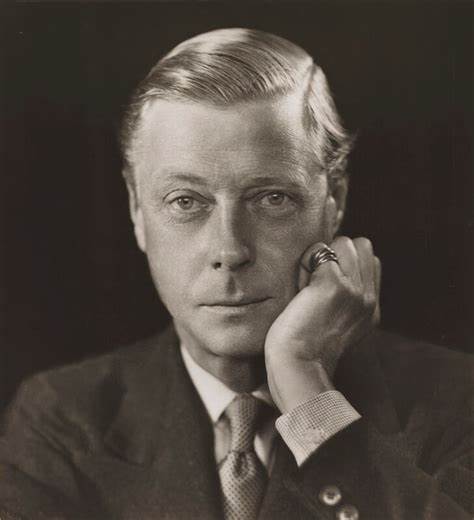
I read an interesting article on-line the other day about the late Duke of Windsor. Born as the heir to the throne of Great Britain, he was trained from an early age. His father, the King, wanted him to learn discipline and honor, so as to be prepared to assume his role. But Edward despised his father’s training. He found his father to be harsh and critical, prim and joyless. And he rebelled. He took little interest in the affairs of state, preferring to focus on his own pleasure. As his father grew older and weaker, Edward was asked to take on more royal duties. He enjoyed making appearances at parties, but despised many of the other tasks– letter writing, or visiting factories or various parts of the Commonwealth. He refused to settle down and marry, until he met Wallis Simpson, who was twice-married, and separated from her second husband. She was also an American citizen.
Edward VIII wanted to defy the laws and traditions of his own nation in order to marry. When this proved to be contentious, he decided to abdicate his throne, marry Mrs. Simpson, and live abroad. Instead, his brother became the next king (George VI), guiding his nation and the commonwealth through the difficult days of the second world war.
For many years, the myth of a king who gave up his throne to be with “the woman I love” has prevailed. But there was more to Edward’s abdication than blighted love. Edward was not incapable of ruling, but he was unfit to rule it well. His lack of dedication to his duties and citizens became evident in the very first crisis. Those who were working with him during his short reign witnessed his lack of care or concern about paperwork, and his selfish insistence on doing what he wanted to do, and not what was expected of him or of benefit to his people. He was a man without discipline and without a clear moral compass https://www.dailymail.co.uk/news/article-417388/Prince-Charmless-A-damning-portrait-Edward-VIII.html.
The Bible is filled with many examples of kings throughout the history of Israel and Judah who also failed to learn discipline or restraint. Their desire to reap the benefits of their position without learning to fulfill their responsibilities led to the moral, and eventually the physical and political collapse of their nations. They did not make a habit of seeking God, or of listening to His prophets. They sneered at good advice, and defied the laws of Moses and the rules God had given for the kings. Some of them worshiped other gods; some even sacrificed their own children to foreign gods or goddesses. They failed to keep the sacred holidays; they failed to read the Word of God; they failed to pray– except as a last resort!
We often perceive prayer as a personal practice– and it is. But how we choose to develop our prayer life may be tied to how we choose to develop the rest of our lives. We don’t need to be rigid and legalistic about it. But we do need to live– and pray– with purpose, if we wish to follow the example of Jesus and grow in our walk with Him. Not only does it impact our life and growth– it impacts our witness and our influence as well. Pursuing prayer in a disciplined way may have a far-reaching impact on our life and the lives of others– even in the generations to come. For more, see the page Why I Keep a Prayer Journal
7 Some trust in chariots and some in horses, but we trust in the name of the Lord our God.
Psalm 20:7 (NIV)
King David wrote this verse..one that I learned at Vacation Bible School as a child. Taken out of context, it reminds us that the Name of the Lord is powerful and trust-worthy. It is better to trust in the Lord than to place our trust in even the might of an army. Military might, political power, wealth, popularity, social influence– all are fickle. God is Sovereign and will do what He says He will do.
In context, David is not just recounting a principle; he is speaking from the experience of being God’s anointed King. In the verse just before this, David says:
6 Now this I know: The Lord gives victory to his anointed. He answers him from his heavenly sanctuary with the victorious power of his right hand.
David knew God’s saving power– he had experienced protection, blessing, and victory from the hand of his Creator. He had also known exile, hardship, and danger.
It is interesting to note that King David did not come up with the image of horses and chariots– God had already spoken to the people of Israel, warning them NOT to put their trust in such things. David was proclaiming his adherence to God’s command several hundred years before:
14 When you have come into the land which the Lord your God gives you and possess it and dwell there and then say, “I will set a king over me just like all the nations that are around me,” 15 you must set a king over you whom the Lord your God will choose. You must select a king over you who is from among your brothers. You may not select a foreigner over you who is not your countryman. 16 What is more, he shall not accumulate horses for himself or cause the people to return to Egypt in order that he accumulate horses, for as the Lord has said to you, “You must not go back that way ever again.” 17 He shall not acquire many wives for himself, lest his heart turn away; nor shall he acquire for himself excess silver and gold.
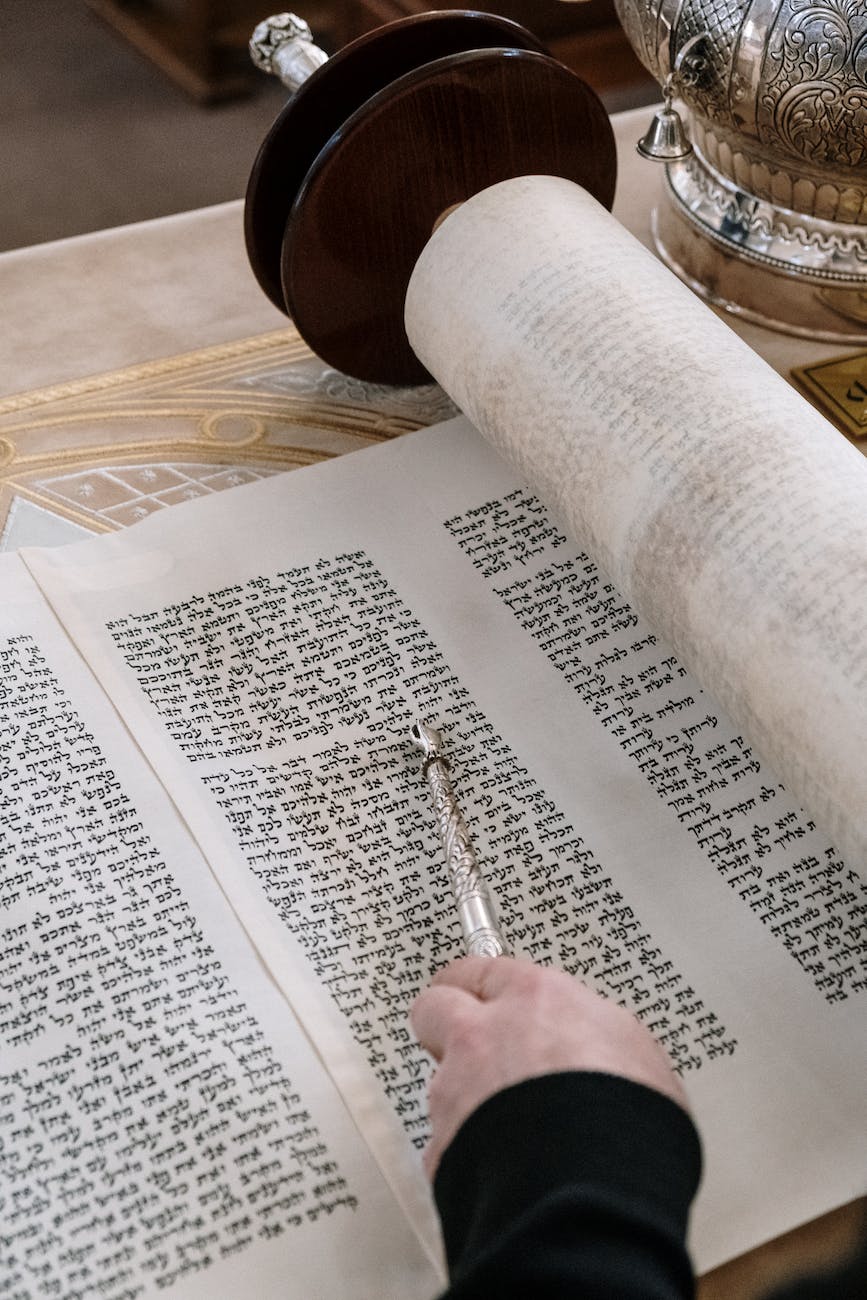
18 It must be, when he sits on the throne of his kingdom, that he shall write a copy of this law for himself on a scroll before the priests, the Levites. 19 It must be with him, and he must read it all the days of his life so that he may learn to fear the Lord his God, and carefully observe all the words of this law and these statutes, and do them, 20 that his heart will not be lifted up above his brothers and so that he may not turn aside from the commandment, to the right or to the left, to the end, so that he may prolong his days in his kingdom, he and his children, in the midst of Israel.
David did NOT adhere to all of God’s commands for a king. He had many wives, and family troubles plagued his house for generations to come. Tragically, his son Solomon, for all his wisdom in other areas, failed in his kingship because he failed to put his full trust in God. He accumulated wives, horses, chariots, and wealth, but he lost the opportunity to establish his father’s house and his family’s dynasty by trusting in the very blessings of wealth and wisdom that God had given to him.
God blessed both King David and King Solomon with peace and prosperity. Neither one followed God absolutely, but David understood something his son never fully grasped. God’s blessings are abundant; they are rich and glorious. God showers blessings upon both the just and the unjust. They are not always a mark of God’s favor– frequently, they become a stumbling block and a substitute for the worship that belongs to God alone. Solomon began his reign by trusting the God of his father, King David. But in the end, he put his trust in his wealth and honor, and turned his back on God.
25 Solomon had four thousand stalls for horses and chariots and twelve thousand horses, and he put them in designated cities and with him in Jerusalem. 26 He ruled over all the kings from the River to the land of the Philistines and to the border of Egypt. 27 So the king made silver in Jerusalem as abundant as stones and cedar as plentiful as sycamore trees in the lowlands of the Shephelah. 28 The horses of Solomon were imported from Egypt and from all other lands.
2 Chronicles 9:25-28 (ESV)
In fact, he did exactly what God had warned against during the days of Moses– importing horses from Egypt. Without context, it seems like such an ordinary thing–kings accumulate might and power, and they import the best this world has to offer. What’s wrong with that? Solomon’s own father had the answer; the answer was written into the laws of Moses(the very ones Solomon was commanded to keep with him at all times!), but Solomon turned away and crossed the line between gratitude for God’s blessings to placing his trust and identity in those very blessings.
Some (people) trust in chariots and some in horses; Some trust in their jobs or their homes; Some trust in governments or politics; Some trust in their bank accounts or their popularity–
I’ve been following the story of Lot– a Biblical character in the book of Genesis, and the nephew of Abram/Abraham. I left off in Genesis 13, where Abram and Lot had to separate their flocks and herds. Abram offered Lot the opportunity to choose the best of the land– and Lot jumped at his opportunity. He chose the well-watered valley along the Jordan river, near the thriving cities of Sodom and Gomorrah, and moved his tents just outside of Sodom.
But the author of Genesis (likely Moses, writing generations later) adds a single sentence that foreshadows events to come: “But the people of this area were extremely wicked and constantly sinned against the Lord.” (Genesis 13:13 NLT via http://www.biblegateway.com). It doesn’t take very long for this small detail to add up to a “lot” of trouble. The fertile Jordan valley may look like a paradise, but there are perils and pitfalls all around. In Genesis 14, we hear of a great war– five regional kings against four– with Sodom and Gomorrah caught in the middle. (https://www.biblegateway.com/passage/?search=Genesis+14%3A1-16&version=NLT) The armies and kings of Sodom and Gomorrah flee the battlefield, and straight into a series of tar pits. The opposing armies loot the cities, taking all the food and supplies. They also kidnap Lot and take all his possessions, because he was “living in Sodom.”
Notice two important details here– Lot is no longer pitching his tents outside the city; he has moved into Sodom. When we make the choice to live “on the outskirts” of evil, thinking we will remain separate and untouched, we are asking for trouble. Lot cannot live in paradise and avoid the evil and war all around him. And he isn’t prepared for the consequences. The war is happening all around him, yet he has made no plan to escape or to fortify his home or property.
Secondly, Lot wasn’t among the army or fighting with the kings– on either side! Lot stood for nothing; fought for nothing; defended nothing. Lot placed all of his hope and faith in blind chance– thinking somehow he would be spared the violence and war happening all around. He seems to have had no concern about his neighbors or their fate. He seems indifferent to their losses, and uncaring of their needs. One might argue that if the neighbors were so wicked, Lot had no obligation to help them, but his level of apathy and inactivity suggest that Lot was both self-centered and inept.
One of Lot’s men manages to escape and bring word of this disaster to Abram, who mobilizes his men, makes a daring night raid on the army of the five kings, rescues Lot and restores all of the stolen property and other kidnapped people. The king/priest of the city of Salem (meaning peace) blesses Abram. The rescued King of Sodom offers Abram all the captured loot in exchange for the people, but Abram refuses. Unlike his nephew, who is enticed by lands and goods and wealth, Abram seeks only peace and goodwill.
This might have been the end of Lot’s troubles; he might have learned a valuable lesson. But he didn’t.







































 Pursuing Prayer