He Knows My Name

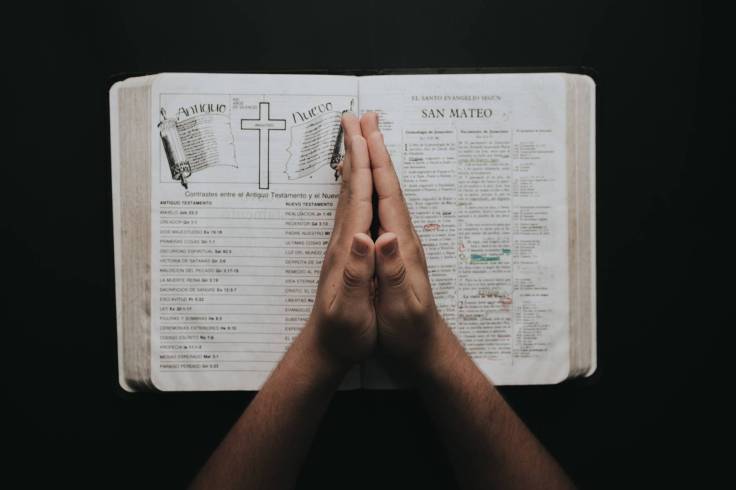
I was reading in the Bible the other day in the first chapters of 1 Chronicles. I must admit I did a lot of skimming, rather than reading everything word for word. There were lists and more lists of names and genealogies, and my eyes started to cross after the first hundred or so– and I like genealogies! Some of the names are familiar ones– Abraham, Judah, David, Saul, Jonathan. Other names meant nothing to me– Malkishua, Ram, Othniel. Most were names of fathers and sons, but there were a few scattered women– Tamar, Zeruiah…And there were references to other books of names about all the Kings of Israel and Judah, listing their deeds and accomplishments–books that might be more interesting than what I was reading!

I felt like I was wasting my morning, reading nothing but names. There was no story here– no spiritual lesson to be gleaned. And yet…

There were hundreds of names in the lists I read. Each one carefully recorded for posterity. The names are in the Biblical account because they MEAN something. Each one represents someone God created. Each one was loved by God, watched over and blessed by God. And even if their stories are not all recorded, or their stories are not all interesting or instructive, they all HAD a story, just like each of us. I get excited when I come across information about one of my ancestral families– the maiden name of a seventh great-grandmother, the birth record of a sibling of one of my ancestors, confirming the names of the parents who are also my ancestors, the death certificate that reveals the date and cause of death for someone I’ve been trying to prove existed. Imagine the size of a book that could contain all the life stories of every person who ever lived!

Everyone has a name. And after 40 years of pursuing the hobby of genealogy, I know that there are some names and stories that history has forgotten– names that I cannot find–families that seem to come to a dead end. But that can never be the case with God. He KNOWS ME by name. More than that, He knows every hair on my head (Luke 12:7). He knows my every thought (Psalm 139: 2-4). More than even THAT, He has my name written in the Lamb’s Book of Life (see Revelation 13:8 and 21:27). My name is not just whispered or even on God’s mind– He has kept an eternal, written record with my name in it. It can’t be erased or burned up or lost on a back shelf somewhere.

Earlier today, our prayer group met, and we prayed for several people on our prayer list. The list is only four pages long and covers only a few people. Some names will be added to the list; other will be subtracted in the coming weeks. But there are several names and concerns we each have that don’t end up on our list. We forget, or we don’t think the concern is “worth” the ink to print, or the request is meant to be private and not printed. And that’s just one small church in our community.

God knows EVERY name! He knows EVERY concern or request, every confession, every praise, every question, every whispered cry for help! Every one, everywhere, through all time!

There is nothing too small, too “boring” or too fleeting in our prayer life. Someday, we may find that all or our prayers have been written on a scroll or in a book in Heaven. Not because God would ever forget, but because God will always remember!

Billions of names, billions of stories. And God will not skip over or omit mine– or yours. He KNOWS your name!

Be Still and Know…

Psalm 46
For the director of music. Of the Sons of Korah. According to alamoth. A song.
God is our refuge and strength,
    an ever-present help in trouble.
Therefore we will not fear, though the earth give way
    and the mountains fall into the heart of the sea,
though its waters roar and foam
    and the mountains quake with their surging.
There is a river whose streams make glad the city of God,
    the holy place where the Most High dwells.
God is within her, she will not fall;
    God will help her at break of day.
Nations are in uproar, kingdoms fall;
    he lifts his voice, the earth melts.
The Lord Almighty is with us;
    the God of Jacob is our fortress.
Come and see what the Lord has done,
    the desolations he has brought on the earth.
He makes wars cease
    to the ends of the earth.
He breaks the bow and shatters the spear;
    he burns the shields with fire.
10 He says, “Be still, and know that I am God;
    I will be exalted among the nations,
    I will be exalted in the earth.”
11 The Lord Almighty is with us;
    the God of Jacob is our fortress.

When I am tempted to fret or worry, I like to read through Psalm 46. I love the way the psalmists use hyperbole to shrink fear and maximize faith– God is an “ever-present help”, we will not fear, “though the earth give way, and the mountains fall into the heart of the sea”, “He lifts his voice, the earth melts!” And I love that the phrase is repeated– “The Lord Almighty is with us; the God of Jacob is our fortress.”

There is so much to unpack in just 11 verses of psalm! But I want to stick to two that always stand out to me.

First, the phrase, “the God of Jacob.” God is the God of Abraham, Isaac, and Jacob. He is the God of Moses, the God of Israel, the God of David…His titles are many. But in this case, He is the God of Jacob. NOT the God of Israel– even though God changed His name. No, He is the God of Jacob– the “heel grabber,” the son who stole his brother’s blessing and tricked his brother out of his birthright– the same Jacob who fled his homeland and worked for twenty years for his duplicitous uncle Laban. This is not the God of the victorious, but the God of those who have had to learn the hard way. He is the God of the one who has acted unjustly, and the God of one who has been treated unjustly. He is the God of the one who wrestles and demands a blessing, the God of the second son, the disappointed husband, and the grieving father. THAT is the God who is with US when we are in trouble and feeling overwhelmed by our own past mistakes, or our own inadequacies, or our unfair circumstances.

Secondly, the phrase “be still and know that I am God.” This same God who wrestled with Jacob, who blessed him in dramatic fashion, was the God who was with him through all the long and lonely night watches as a shepherd. Jacob, with his two wives, their two servants, and all thirteen or more of his children (12 sons and at least one daughter, Dinah)–spent a lot of his time surrounded by noises, nagging, responsibilities, and discord. Yet he took time to ‘be still.” And, though it took many years, and often came “the hard way,” Jacob did learn to “know” his God. He learned to trust that God would protect him, guide him, and bless him– and the generations that would follow him!

I am so grateful for this Psalm to remind me of God’s everlasting presence, His power to save and protect, and His sufficiency for every circumstance in my life. I’m so glad that the “God of Jacob” is the same God who sees me, loves me, and rescues me. I’m humbled to know that I don’t have to be clever enough or brave enough, or “righteous” enough to earn God’s help. I’m glad that the Lord Almighty is always with me. (see Hebrews 13:5) However, I still struggle to “be still and know…” I want to know by doing; by studying and making things happen. But to know God– to really know Him– I have to be still, to wait in silence and anticipation, to trust in what I cannot see and cannot do in my own power. I have to know Him as the Almighty, Omnipotent, Sovereign God that He is, rather than a God of my own imagination or the God I hear about or read about from someone else.

What a mighty God! The God of Jacob is MY fortress! And in stillness, meditation, and trust, I can KNOW Him!

I Don’t Know…

I spent a good portion of my adult life working in positions where my value rested in my ability to impart knowledge and answer questions. As a teacher, my job was to guide students into a base of knowledge about the English language (and especially spoken communication) so that they would be prepared to adequately speak, read, write, explain, defend, and use it. I was expected to know enough about grammar, spelling, connotations of words, nonverbal communication, sound logic (and fallacies to avoid), presentation, tone of voice, etc., to enable students to improve their communication and use language more effectively in their careers, academic endeavors, business dealings, and even in personal relationships. If they had questions about word choices, written or spoken directions, propaganda techniques, advertising tricks, euphemisms, or a hundred other topics, I was expected to have an answer– and one that would shape their ability to succeed.
When I made the transition to working in a public library, my job was to have answers– which books were at the appropriate reading level for various elementary students; where could someone find information about manatees; who wrote the Captain Underpants books (Dav Pilkey); did our library loan out encyclopedia volumes or sets of early reader books; could our library borrow a rare book from another library; what was the capital of Uganda (Kampala); did we have books that might help a child coping with the loss of a pet, or a parent struggling with toilet-training their toddler; where could someone find … the list was endless and extraordinarily varied. My job was to have an answer– or know where to find it.

Photo by Pixabay on Pexels.com


At no time was it expected that I would simply answer “I don’t know.” Even if I didn’t know in the moment, I was expected to search until I found an answer that was sufficient and satisfactory. However, in each case, I found situations where my “answer,” while satisfactory to me, and even to everyone else I had dealt with, was not enough to satisfy the person in front of me. Sometimes, I had misunderstood the question and given an answer to what I heard or assumed I had heard. I needed to listen some more, or ask for clarification before I could answer the question correctly. Sometimes, the other person was looking for an answer that didn’t exist– either they wanted confirmation of a falsehood they believed to be true, or they wanted a single, absolute answer to a question that was complex and open-ended. In rare cases, there were questions for which I could find no satisfactory answer– it doesn’t mean that there was none, but I had not found it, nor had I found someone else who could find it in the time allowed. I might find an answer that was not satisfactory, or I might find seven possible answers, but not one that stood out from the others, or I would find nothing but dead ends.


The Apostle Peter tells each follower of Christ:

15 But in your hearts revere Christ as Lord. Always be prepared to give an answer to everyone who asks you to give the reason for the hope that you have. But do this with gentleness and respect, 16 keeping a clear conscience, so that those who speak maliciously against your good behavior in Christ may be ashamed of their slander.

1 Peter 3:15 & 16 (NIV via biblegateway.com)–emphasis added
Photo by bruce mars on Pexels.com

This does not mean that we must completely satisfy everyone who asks– the curious neighbor who knows nothing of the Bible and has dozens of confusing questions, or the nay-saying agnostic with a single “gotcha” question. Nor must we fight and fuss and pound the Bible until we “win” every theological and metaphysical argument–because we won’t! There are many things about the Bible, about Spiritual matters, etc., for which we will not have absolute or definitive answers–and neither will they! (That’s why they ask, sometimes.) And those things that satisfy our longings, our questions, our doubts– sometimes don’t meet the needs of the one who is asking, not because the answers are deficient, but because we are all different in our needs, and understanding, and experiences.

Photo by Vera Arsic on Pexels.com

Some people will listen to us merely to scoff and try to make us lose heart or make us look foolish. Others are afraid that our answer will make them feel lost or guilty. Some people have been hurt by others who have used the Bible as a cudgel or a whip– bringing shame, judgment, and contention wherever they go. We must not expect that our answers, our arguments, even our favorite scripture verses– that WE are enough to satisfy the questions, the doubts, and the spiritual needs of everyone we meet.

Photo by Akshar Dave on Pexels.com

What we should always have is an answer for the hope that is in us– why have we chosen to believe? Why do we choose to trust when we do not know all the answers? And our answers should be given with gentleness and respect– not arrogance and snide judgment. I don’t have hope because I know answers to tough questions. In order to have that kind of hope, I would need to know all the answers to all the questions– even those I haven’t asked or imagined! I don’t know about the future– I can’t explain why God allows evil (there are compelling arguments for some reasons, but no absolute answer that stops the question)–I don’t know how God’s Spirit moves, or why He drew me to Himself. I cannot “prove” God to someone who is determined to deny Him– not because God doesn’t exist, but because He will not force anyone to accept Him in this life, and especially not because I said a few words based on my limited understanding. My job is not to explain God–only God is big enough and wise enough to do that– but to reflect His character in a changed nature, and to explain what God has done in my life to effect that change. My hope is in the ONE I choose to trust– the ONE who does have the answers! God has not promised to answer all our “what ifs” or our “whys”– but He has promised to answer all our needs, and to BE the answer in every situation, no matter how daunting.

Blog at WordPress.com.

Up ↑