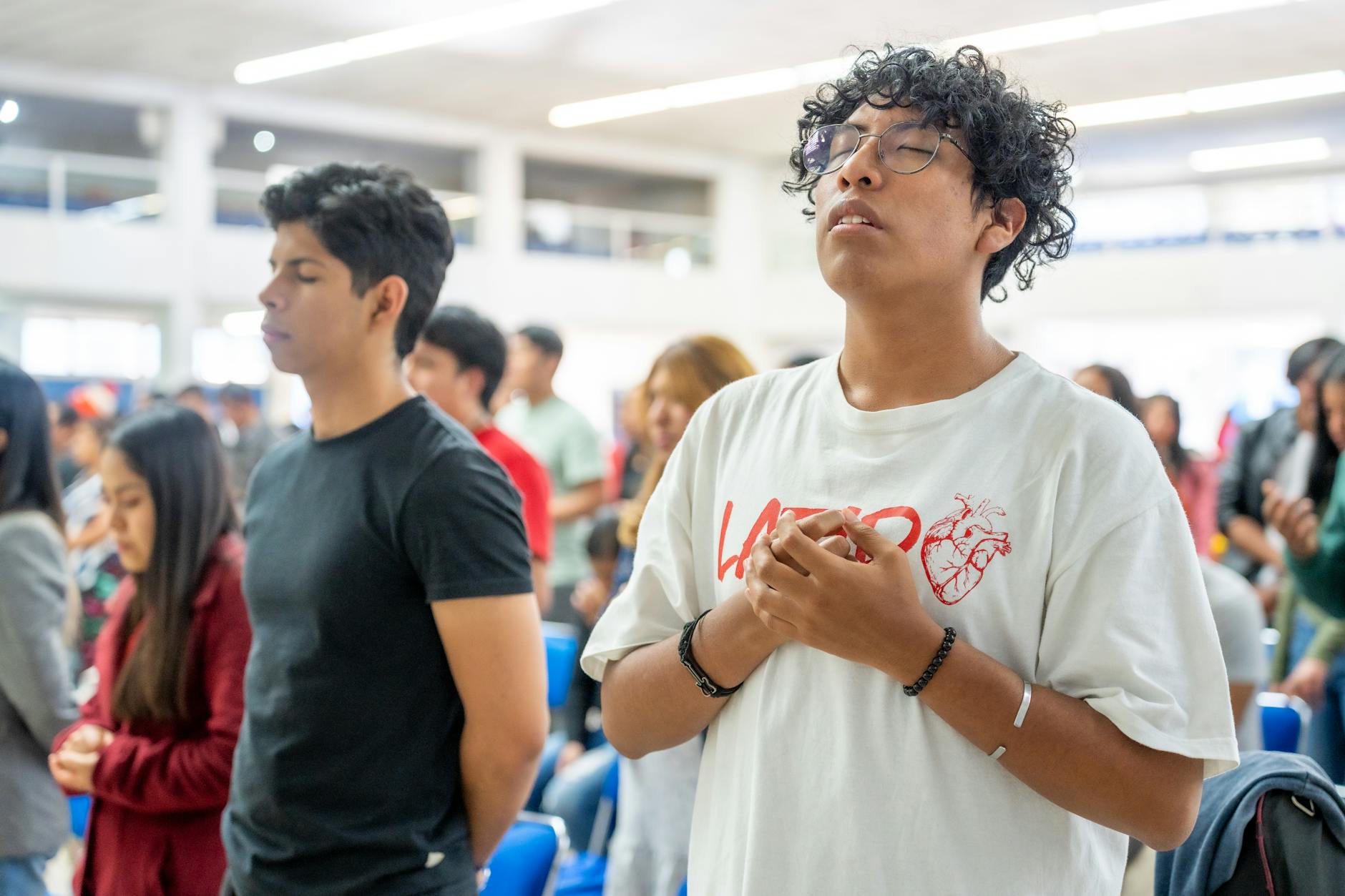
Spoiler Alert!

I love being “in the know”–being part of a great secret and knowing that I got the information first (or at least earlier than someone else).  But I don’t like spoilers– learning about things that I was hoping to discover for myself.  I don’t want to know the ending to that new novel from my favorite author until I read it.  I don’t want to know how the new blockbuster movie ends before I have had a chance to see it.  I don’t want to know that my favorite character in a TV show dies at the end of season three before watching it in all its tragic impact.

There are, however, some “spoilers” that should be shared, and God has given them to us in His word.

  • First and foremost– in the battle of good and evil– God Wins!  The victory has already been won, and the outcome is certain.
  • Second– Christ Messiah will return to earth.  He will come in triumph and glory.  While none of us know the hour or the day of that return, it will come quickly, like a flash.
  • Before Christ’s return, we will face chaos and trouble in this world.  That is also certain, though we have the power to face it and God has the power to turn it to good.
  • We will face death and the judgment of God–those who trust in Jesus Christ will still die; we will still be judged.  Only the blood of Christ, and our faith in his finished work will save us from the wrath our acts deserve.
  • Every knee shall bow, and every tongue confess, that Jesus Christ is Lord to the Glory of the Father (Phil. 2:10-11).
bow down

Knowing these “spoilers” doesn’t ruin our prayer life– instead, that knowledge gives us the power, the passion, and the promise to pray as if our lives depend on it!  Moreover, it should move us to pray and act on these truths in all our dealings with others.  Not to become arrogant about our knowledge, but to be compassionate and forgiving toward those who don’t have it or haven’t accepted it.


Passport Prayers

I get to travel every day.  I journal my prayers in a daily notebook.  Prayer Journal  (click here to get ideas or learn more)  Each day has a heading and four sections– one for birthdays or other “memory days”; one for thematic prayers (generalized themes like “family”, “community”, “global concerns”, “culture”, etc.); one for urgent requests, and one for a region of the world–nations, major cities, local communities.  On busy days, I send a short prayer and try to remember what I know, or imagine what I’d like to know, about that area.  Some days, I have the luxury of time to look up information or history about that area– what is the language, capital city, literacy rate, average age, major religion, geography, economy, etc.

Our world is full of wonder, variety, crisis, and opportunity–I want to add all of this to my pursuit of prayer. It reminds me of several things:

  • I am not the center of the universe– my issues and problems are not unique or exceptional.
  • God has placed me here to interact with others–I can’t reach out and connect with 6 billion others, but I can become more aware of their needs and way of life.
  • The world is a big place–seeing it on the screen via the internet sometimes causes me to forget that.  And as I see how big the world is, I also need to remember that God is even bigger!
  • The world is full of variety.  Not everyone lives or thinks or worships as I do.  Not everyone faces the same circumstances, the same temptations, the same struggles.  Yet God sees and hears each one who calls on him.  He doesn’t have trouble understanding languages and dialects– he doesn’t get culture shock.  He is not an American Jesus, or a Brazilian Jesus, or a Korean Jesus.  He’s not an urban Jesus or a remote mountain village Jesus, or a gated community Jesus.  When we enter eternity, we will share it with amazing brothers and sisters from every corner of creation.  He’s got the whole world in his hands!
ank-cross-spiritual-egypt-161147.jpeg

Many millions of people around the globe have never heard the Gospel– or they’ve heard lies and misrepresentations.  Millions of other believers are being persecuted for believing in Jesus or for sharing the good news of Salvation in His Name. People in every nation, every community, are suffering.

  • We are commanded, as Christians, to “go into all the world” and preach the gospel.  I may not be able to travel to “all the world”, but I can “go” in prayer, sharing on-line, and  learning about needs, as well as in sending out and praying for those who can travel.
  • I am grateful for the opportunities God has given me– to learn about him and worship him in freedom; to travel and participate on short-term mission opportunities; to meet and share with missionaries, travelers, students, foreign workers, and others who share their culture and knowledge and perspectives; and for the global work of the Savior, and my privilege to share in it.

Time to pack my bags– I’m heading to Ireland tomorrow!

Taste and See That the LORD is Good!

“Taste and see that the Lord is good;
    blessed is the one who takes refuge in him.” Psalm 34:8

Do you know God? Do you really KNOW Him? The psalmist (David) could give us a long list of God’s attributes– His Wisdom, Strength, Faithfulness. In fact, there are many psalms which do this. But David is writing this psalm from a place of danger, fear, and need. He is in exile, being stalked by his king and father-in-law, Saul. David is on the run, and his reputation makes him unwelcome in surrounding countries– they do not trust that David “the giant-slayer,” and his retinue of outcast soldiers will bring peace and security. So, David has come up with a strange plan. He pretends to be insane!

David’s reputation is in tatters, his life hangs on a knife’s edge in a region known for warfare and bloodshed. And it is HERE, in these circumstances, that David writes about God’s faithfulness. He doesn’t just recite what he has heard about God’s faithfulness– he testifies from experience.

God has given us His Word so that we may know about Him. But He has given us so much more! God can be known, and he can be KNOWN. He can be experienced, in the same way that we experience friendship, trust, and intimacy with other people. I may know a lot about a figure from history– even Jesus Christ– without ever KNOWING them. But God invites us to have a personal relationship with Him, through Christ, that transcends anything we can learn or memorize about Him.

The Apostle Paul, in Romans, gives us another picture:

“The wrath of God is being revealed from heaven against all the godlessness and wickedness of people, who suppress the truth by their wickedness, 19 since what may be known about God is plain to them, because God has made it plain to them. 20 For since the creation of the world God’s invisible qualities—his eternal power and divine nature—have been clearly seen, being understood from what has been made, so that people are without excuse. 21 For although they knew God, they neither glorified him as God nor gave thanks to him, but their thinking became futile and their foolish hearts were darkened. 22 Although they claimed to be wise, they became fools 23 and exchanged the glory of the immortal God for images made to look like a mortal human being and birds and animals and reptiles.
24 Therefore God gave them over in the sinful desires of their hearts to sexual impurity for the degrading of their bodies with one another. 25 They exchanged the truth about God for a lie, and worshiped and served created things rather than the Creator—who is forever praised. Amen.” Romans 1:18-25 (emphasis added)

God reveals Himself in creation so that we can know His “invisible qualities.” But through the Holy Spirit, He reveals more of Himself to those who follow Christ– those who repent of their sin and seek His Face. We don’t just know a list of facts about God. We “taste” and “see” His goodness. We drink in the Joy of our Salvation (see Psalm 51:12), catch fleeting glimpses of Heaven, and walk in the aroma of Christ’s Holiness. We feel the guiding touch of the Holy Spirit and the healing, strengthening, and comfort He provides. We “hear” His voice of wisdom. Following Christ is a total sensory experience– far greater than just academic knowledge.

And this sustains our faith and our hope as we travel through difficult and challenging times. We may not face exile, betrayal, and persecution, as David did, but we can experience the solid conviction of God’s promises as we “take refuge in Him.” We can enjoy peace and security that transcends our circumstances, and put our trust in the one who is forever faithful and true.

Just a tiny taste can leave a lasting impression– just bit into a spicy jalapeno, a sweet date, or a savory meat pie! It may be impossible to put the experience into words, but your whole body responds to the delight (or the burning heat)! Jesus, in His Revelation to St. John invited us with a metaphor of a meal:

20 Behold, I stand at the door and knock. If anyone hears my voice and opens the door, I will come in to him and eat with him, and he with me. Revelation 3:20 (ESV)

It is good to study and know about Christ, but it is so much better to accept His invitation to “taste and see” a life of fellowship with Him!

Trust and Obey

It’s a song I sang as a child in Sunday School–

Trust and obey,
For there’s no other way
To be happy in Jesus,
But to trust and obey.

It bothered me as a child, the part about “No other way.”  It seemed narrow-minded and harsh.  Surely, I could be happy in Jesus just doing my own good things and singing his praises.  Besides, I did trust him, I followed the Ten Commandments, and the Golden Rule, and I was a nice person.  So why did I feel that I was missing something?

In all the years I’ve been a follower of Christ, I have learned the importance of trust and obedience.  I can’t truly follow someone I don’t trust.  I can learn from them, admire them, even try to act like them, but eventually, I will try to take the lead, or let go and walk down a different path.  Similarly, I can’t say that I trust someone if I won’t obey them.  If they ask me to do something, and I ignore their request, or re-interpret it, or come up with excuses why I won’t do it, it really boils down to one thing: I don’t trust that their request has any merit.

In a broken world, filled with sin and pride and selfishness, there are many reasons NOT to trust or obey certain people.  Abusers, users, sadists and sociopaths abound.  Such people may suggest that there is “no other way to be happy..” than to trust them and obey them implicitly.  So when God asks us to put our trust in an invisible Godhead, it seems terrible, final, and harsh.  Is God demanding abject humiliation and mindless adherence to his law?  Will we lose ourselves in drudgery and joyless obedience to a harsh taskmaster on the whimsical hope of a happy afterlife?

That is a view that is often peddled, and ridiculed.  But I think a closer look at the Bible gives us a different picture.  Yes, God is harsh and wrathful against sin and sinners–but so am I!   I find myself getting furious over injustices and pain caused by sin in the world–I can only imagine how angry God must be to see the way we lie and cheat and abuse each other, and the untold painful consequences he has witnessed through the years.  The only thing holding him back is the power of his Mercy.  His anger is swallowed up in patient and unfathomable love that is ready to forgive even the worst offenders.   And God’s wrath is pure, unlike mine, which is selective against those who have hurt me, but wants to smooth over my own sins.  His love is even more pure– he loves even the worst sinner, and even the most unloveable people (in my flawed estimation).  He is unwilling that ANYONE stay lost and enslaved by their sinful past.

Think about it– Jesus, who knew God best (being part of the Godhead himself) never painted his Father as a brute who demanded people to become “useful idiots” just to stroke his ego.  He didn’t talk about a harsh and unforgiving God who “hated” sinners.  Instead, Jesus healed the sick, raised the dead, gave sight to the blind, and spoke to sinners and outcasts as though they were more important than the religious elite…because that was his heart!  But more than that, Jesus showed us what it meant to “Trust and Obey”–he didn’t seek fame or fortune for himself, he never owned a home, or sought public office, and he never ran arouns worrying and fretting that God would leave him in the lurch.  Even under the worst circumstances leading up to his arrest and crucifixion, Jesus only spent one hour worrying about what was to come, and in that hour of prayer, he found the peace and strength to say, “not my will, but yours be done (Luke 22:42).  In his ministry, he humbly walked the byways and taught those who willingly followed him.  He healed and encouraged and saved those who came to him; those who trusted him as he trusted his Father.  He did not pat on the back those who claimed to follow his Father, but wouldn’t trust him.  Nor did he reward those who claimed to obey God, but hated their neighbors, justified their own self-righteousness, and changed God’s laws to feather their own lifestyles.

Does “Trust and Obey” mean that we might lose our status, our wealth, our comfort, and our lives?  Not necessarily, but there is no promise that we will be richer, or healthier, or more popular for following Jesus.  He didn’t come to make us comfortable or “better than” someone else.  In fact, he warned us that while we are in this world, we will have troubles and sorrows (with or without our faith!)  So how can we be “happy in Jesus” if we end up homeless, hated, or sick?  How can we talk about being happy in Jesus under awful circumstances?  Is this just some brainwashing tactic to make us forget how miserable we are?  What’s the “payoff” of Trust and Obey?

The answer involves a choice–Do I trust Jesus when he says that he came to give us, not just life, not even just eternal life, but abundant life?  If Jesus isn’t trustworthy; if I am not sure that he can or will make my life MORE than I ever dreamed, MORE than I imagine–even in the midst of otherwise difficult circumstances–then I will never be happy in Jesus.  But if I DO trust Jesus, then I can be happy, not because of my circumstances, but because I can trust all that he says about them, and that his grace is more than sufficient to see me through.  And I know that whatever trials I may be going through can be turned to good because I trust his power and his goodness.

And true obedience can only follow true trust.  If I say that God’s rules aren’t important, or don’t apply to me, then I’m really saying I don’t trust him to know what’s best, or that I don’t trust that He is really Good.  The temporary happiness that comes from following my way (even if I think I’m doing it for the right reasons) will give way to resentment against God.  How dare he stop me from that one thing that brings me joy– how dare he question my “needs” or call my actions “wrong”.  How dare he suggest that His way could be better or more abundant than what I know–even if I suspect that what I know and experience isn’t always the best it could be.

pexels-photo-994316.jpeg


No– the longer I follow Jesus, the more that old song rings true, and not harsh or condemning, but full of wisdom and promise.  It is with the faith of a child (not stupid or simplistic, but hopeful and eager), and humble (not abject or reluctant) obedience that we find happiness in Jesus, peace for our souls, and strength to face the trying circumstances of this life.

pexels-photo.jpg

Perfect Peace

I know several people (myself included) who are facing stressful situations on a daily basis– some are fighting cancer, some are caring for aging parents, some have rebellious teens, some have lost jobs or are in danger of losing their home, some are fighting depression or addiction, others have lost close family members–some are facing multiple stressors every day.

Stress is a killer and a thief.  It robs us of energy, time, and focus.  And it isolates us– as we focus on our stressful surroundings, they begin to close in on us, hemming us in and keeping others out.  We long to be stress-free–sitting on a beach or lying in a hammock  or on a chaise without a care in the world– no worries, just peace.  And we pray for it.

borderline-depression-psycholgie-personalities.jpg

But peace isn’t the absence of stressful circumstances.  I once met a man who was, in fact, lying on a chaise by a poolside, a sandy beach less than 100 feet away– palm trees and gentle breezes relieving the searing heat, icy drinks available at a whim.   He had nothing to do but soak in the heat and sea air, relax, and enjoy his day.  He had all the time and money he needed to find perfect peace– but he didn’t have it.  He was bored, and restless, and dissatisfied with life.  He couldn’t lie still, and he found no wonder in all the beauty and peace all around him.

Peace doesn’t come by denying stressful circumstances, or running away from them, either.  Ask the next three people you meet how they are doing, and they will likely answer, “I’m fine.”  We know they’re not really “fine”– they know that we know they’re not “fine,” yet neither of us tells or demands to know the truth.  Stress isn’t contagious, but we avoid sharing it.  I don’t want to hear about your stress, in case it reminds me of my own; you don’t want to share your stress in case I judge you as being weak or whiny.  We learn from others around us that “success sells.”  “Fake it until you make it,” as some would say.

pexels-photo-313690.jpeg

We can’t get peace by any means in our own power– we can’t manufacture it, legislate it, demand it, buy it, trade for it, or wish it into being.  In fact, the more we try to chase after it, the more elusive it becomes.  Peace is a by-product of faith and trust– the result of a relationship in which circumstances are not borne or understood only by us but shared with someone all-wise and all-powerful.  Our circumstances don’t need to disappear, but we must believe that they are not insurmountable or permanent, and that we are not forgotten in the midst of them.

You will keep in perfect peace
    those whose minds are steadfast,
    because they trust in you. (Isaiah 26:3 NIV)

Peace comes from knowing and sharing with the Prince of Peace.  He doesn’t take away our circumstances (though he can, and sometimes will remove some of our stressors–even against our will).  Most of the time, Jesus will take away our blinders, instead.  He will turn our focus away from our own pain, loss, frustration, or confusion, and allow us to see Him working around us, in us, through us, in ways that put things back in perspective.

sosua

The peaceful scene I described above– the beach, the pool, the gentle breezes– I was in the same location and enjoying every minute of it.  This in spite of numerous bug bites, an almost certain case of sunburn, and a very short time before I had to return to the snowy Midwest, and the normal stresses of my ordinary life.  But, while I knew they were waiting for me, I wasn’t concentrating on them.  And even while I enjoyed the beauty of the beach, I wasn’t focused on the sun or the sand, or my tan/burn progress.  I was enjoying the memory of working with rescued children, of meeting amazing foster parents and missionaries, and of seeing what God was doing to heal and bring peace to lives that had been ravaged.  I was seeing in the beauty of my short stay at the resort the promise of what God has in store for me throughout eternity.  THAT will be perfect peace– not shortened by time, not diminished by restlessness or dissatisfaction, or denial.

What if?

What if–
I say the wrong thing, and ruin someone’s day?
Or perhaps I get lost and lose my way?

What if–
I get bad news about my health
Or suddenly lose all my worldly wealth?

What if–
Friends turn to foes this week?
What if I can’t find the peace that I seek?

But

What if–
I take it to the Lord in prayer?
Bring Him every question and care?

What if–
God prevented that unseen wreck;
Stopped me from falling and breaking my neck?

What if–
God saw the looming temptation
And removed me from the situation?

How many times had God stepped in
And quietly saved me from the effects of Sin?

And when He hasn’t–do I really know
If my life would be better if God never said, “No!”

What if–
I trusted and always gave praise
When God’s answers reveal His mysterious ways?

What if–
I ask and seek and knock,
Knowing my God is the Eternal Rock?
Knowing that God hears, and cares, and sees
Much more than I do when I’m down on my knees.

“..casting all your anxieties on him, because he cares for you.” 1 Peter 5:7 (ESV)

Why Ask Why?

I’ve been asking myself “why?” a lot lately in regards to this blog.  Why am I spending my time writing about prayer?  Wouldn’t I be better served to spend my time productively– making something useful, keeping the apartment cleaner, going to the gym–even spending more time in prayer instead of dissecting it and babbling on to an invisible audience?

But the truth is that I began writing this blog in response to another question, a more basic question thrown at me (not personally, but thrown out to all who believe in the power of prayer)–  “WHY?”  They weren’t asking the question because they really wanted to know my reasons for praying; instead, they wanted to make me feel ashamed and embarrassed, to doubt God’s goodness and my faith.  In fact, they weren’t asking “WHY” so much as asking “HOW”.  How can you continue to believe in God and continue praying in light of random shootings, manifest injustices, rampant corruption, and senseless tragedies?  How can you say that God is good, when people continue to get away with evil?  If God exists, where is he, and how can you just sit back and trust in him?

The fact that I DO continue to trust God doesn’t mean I don’t have questions and concerns, and even righteous anger about the state of the world and the tragedies that fill it.  The questions come pouring out, sometimes keeping me awake at night, sometimes catching me at a raw moment– and they are important questions.  To pretend that I never wrestle or struggle with the questions is to say that good and evil, justice and mercy, that God himself– none of it really matters enough to seek an answer.  God forbid!!

But there is a vast difference in asking “Why?” and challenging God by saying “How? or How come?”

pexels-photo-1027931.jpeg

Consider a small child who asks, “Why is the sky blue?”  (Don’t you just love the inquisitiveness of small children?)  “Well…” I can explain that the sky itself isn’t really blue…I can go on to talk about scientific principals– the property of light, refraction through water molecules and dust particles, and more..I can point out that the sky doesn’t always appear blue, etc.  At the end of my long and factual discourse (assuming the child hasn’t already interrupted), s/he is likely to simply shake their head and ask, “But, why?”  WHY?  Because I haven’t really answered the heart of the question.  I explained HOW, not WHY.

Now suppose I don’t feel like being pedantic, and I simply answer “Because.”  You can guess what comes next.  The child will ask, “Because WHY?”  Because “Because” isn’t a sufficiently satisfactory answer.  The child wants more; he/she yearns for more comprehension; more understanding.

As an adult, we find this kind of questioning frustrating and annoying.  I think it is because we have been conditioned to think that questions either have a “How come” explanation that sweeps away much of the wonder and mystery, or a “because” answer that leaves us unsatisfied. We are frustrated by questions to which we already have a pat answer, and we are frustrated by questions to which we have never received a satisfactory answer.

As an adult, I may well ask, “Why is there evil in the world?”  This is an important question; one I should be asking.  Experts can and will give me all kinds of “how” answers– how the brain is wired, how emotions work, how society has failed various groups of people, how political structures create oppression, how religion teaches intolerance, how poor diet or lack of sunny days … there are a million explanation of “how” evil exists or why it persists.  And many of these explanations contradict each other, so they can’t even give a conclusive answer.  But just throwing up my hands, and saying, “just because” does nothing to answer my question OR provide understanding that could help alleviate the effects of evil in the world.  “Because” communicates my powerlessness to comprehend.

BUT

Something amazing happens when I stop merely asking people for answers to these questions and start asking God.  I don’t get a magical, comprehensive, incontrovertible answer to life’s thorny questions.  God doesn’t send me a “cheat sheet” with all the “right” answers.  I’m not suddenly an expert on good and evil or what should be done to eliminate crime and disease and poverty.  I still have to wade through the “how come” explanations and use my limited judgment to decide what course of action I can take to try to make a positive difference.  And I will make some mistakes along the way.  But when GOD says, “Because”, there is an authority, a majesty, and a wisdom that can never be present in my answer.  I say “because,” because I have no more to say; no better answer.  God says, “Because,” because HE IS the answer! And the cause!  And he gives explanations in his word for many of my questions– even if I don’t like the answers!  He doesn’t explain “how come” the sky is blue–even though science can tell me the “how come.” God doesn’t have to explain the blue sky –He causes it to be blue.  “Why is the sky blue?”  God makes it so.  “But why?”  Because He is God and I am not.  God explains “how come” there is evil in the world– it’s called SIN–but he doesn’t leave it there.  “Why?”  Because we have the free will to choose good or evil.  “Why?”  Because God wants willing obedience and loving companionship with us.  “Why?” Because God is love!  “So why does he allow evil to continue?”  Because he has a plan that involves redemption and restoration and renewal.  He is the cause of this plan, he is its author and finisher.  Moreover, he is the cause of my desire to ask “why?”, to seek for a more fulfilling answer, to yearn for a solution to the very evil that prompts my questions.

pexels-photo-490411.jpeg


I won’t stop asking “why.”  Not because I don’t have any answer, or because I don’t know the answer.  It’s just that the answer is so much bigger, so much better, so much MORE than I can handle in the shortness of this lifetime. And it’s important that I not only keep asking the question, but that I keep defending the answer. Because perhaps today, or tomorrow, or every day next week, someone may ask me WHY?


1 Peter 3:14-16 English Standard Version (ESV)

14 But even if you should suffer for righteousness’ sake, you will be blessed. Have no fear of them, nor be troubled, 15 but in your hearts honor Christ the Lord as holy, always being prepared to make a defense to anyone who asks you for a reason for the hope that is in you; yet do it with gentleness and respect, 16 having a good conscience, so that, when you are slandered, those who revile your good behavior in Christ may be put to shame.


Make Every Effort…

3His divine power has given us everything we need for a godly life through our knowledge of him who called us by his own glory and goodness. Through these he has given us his very great and precious promises, so that through them you may participate in the divine nature, having escaped the corruption in the world caused by evil desires. For this very reason, make every effort to add to your faith goodness; and to goodness, knowledge; and to knowledge, self-control; and to self-control, perseverance; and to perseverance, godliness; and to godliness, mutual affection; and to mutual affection, love. For if you possess these qualities in increasing measure, they will keep you from being ineffective and unproductive in your knowledge of our Lord Jesus Christ. But whoever does not have them is nearsighted and blind, forgetting that they have been cleansed from their past sins.
2 Peter 1:3-9

man beside window wearing black jacket

There are a great number of Christians who face discouragement and frustration in their daily life.  Sometimes, this is because they are busy looking at their circumstances and feeling overwhelmed by them.  But sometimes, there is a general discontent; a malaise of lukewarm commitment and lackluster results that can cause once fruitful Christians to wander away from the faith and even disparage their former churches.  “I wasn’t being ‘fed'”… “It just wasn’t working for me”…”I got tired of the persecution (not genuine persecution, but the feeling of being left out or unappreciated) “…”the church just isn’t relevant anymore.”  These are a few of the excuses I have heard from people who were once joyful and eager to share their faith.  I don’t doubt that they experienced Salvation– but they are missing out on sanctification— they have done little to build on the solid rock.  They blame the church, their pastor, other Christians, even God for their lack of spiritual growth.

Yet, in this passage, the Apostle Peter tells us that Christ has given us EVERYTHING we need to live a godly life– not the church, not other Christians, not the experience we get from a worship service– all we need has been given to us through Christ; his death and resurrection; his promises and his example of holy living.

But, like any gift, it must be used to be effective.  A lamp may look good sitting on a table, but if it isn’t plugged in and turned on (or filled with oil and lit), it does little more than gather dust.  Similarly, if I don’t maintain tools or appliances, I can’t expect them to continue to be useful– they will get corroded, filthy, worn, and broken.

Peter urges us to USE the gifts we have been given.  This is not a call to base our salvation on works, or to make a checklist of “good things” to make us a “better” person.  Rather, it is a blue print of building on the gifts we have to become more productive, more secure, more established in our Christian walk– to become the mature people God means for us to be. When we don’t follow this blueprint, Peter warns, something awful happens.  We become nearsighted–we narrow our focus on our own experience and our own resources, rather than utilizing the wonderful gifts God has made available to us.

  • Faith–it starts here.  If we don’t trust in God’s provision, His mercy, and His power, we won’t build on the right foundation.
  • Goodness–Such a deceptively simple word, but it is packed with power.  Post-modernists like to sneer at the idea of goodness.  It seems dull, meek, bland, and insufficient.  At the same time, we want to assure ourselves (and everyone else) that we are, in our own daily life, good…good enough to earn respect, better than someone else down the street, “good” just because…we are not “bad”.  It is difficult to concede that, left to our own devices, we will not achieve goodness automatically– it takes effort to deny our own desires and whims to do the right thing, the just thing, the “good” thing.
  • Knowledge–Sure, I “know” what the Bible says…right?  I already “know” what Jesus would do– that’s why I wear the WWJD bracelet– to remind me of what I already know…How many Christians actually make a daily effort to learn more about Christ?  How many blindly stumble along, confident that what little we know is more than enough?
  • Self Control– Not going around pointing out everyone else’s fault, but working to keep our own anger, bitterness, selfishness, envy, etc., in check.  Actually making the effort and not adopting a false humility that says, “I know I still struggle with ________, but God’s not finished with me yet!”
  • Perseverance–Staying the course, even when it doesn’t “feel” good, or effective.  Trusting that God IS still at work, instead of just using that as an excuse for not making a genuine effort to improve our relationship with Him.  How many of us have missed out on blessings and miracles because we simply threw in the towel one day early, or didn’t climb that last step.

  • Godliness, Mutual Affection, Love–I’ve put these three together, not because they are the same, or because there is nothing to say about each one, but because I think this is where many Christians want to be, without going through the previous steps.  We want to think that we are not only Godly, but God-like in our habits, words, thoughts, etc.  We want to think that because we have a close-knit group of friends at church (our Holy Huddle) that we have mastered Mutual Affection.  And we think that if we love at least the idea of people who are different from us, people who are oppressed or hurting, that we are not “hateful”–we deserve a crown of glory.
arrogant

Unfortunately, I have fallen into the trap of wanting the results and the benefits of Christ’s gifts without making “every effort” they deserve.  Saying “hello” to neighbors on the street or defending “morality” on FB is not the same as taking up my cross.  And it’s not that there’s anything wrong with being friendly or standing up for what’s right– it’s a start.  But like the lamp that isn’t turned on, I’m not sending out light– I’m not fulfilling the whole of my purpose.  And until I make “every effort”, not just the ones that look good or feel good, or seem easiest or most important, I can’t shine in the darkness around me.

 So today, I pray for the wisdom, the humility, and the courage to start, in Faith, to build on what God has already given me, through His Divine Power(!), to grow into a more God-filled, Christ-centered life.

Who’s on First?

Baseball season is off to a great start! I love baseball, and I love word-play, so it’s probably no surprise that I really love the Abbot and Costello routine, “Who’s on First?” (watch here)

The idea behind the famous routine is that Abbot is trying to explain the positions on the baseball team, but the players’ names lead to all sorts of needless confusion.  You don’t really have to know a lot about baseball to be entertained by the comedy routine, but the more you do know, the funnier it gets.  Baseball depends on coordinated team effort– knowing who is playing where can make the difference between spectacular plays and disasters– both offensively and defensively.  But as much as I would love to talk about both baseball and comedy today, I really want to use baseball as a metaphor for prayer.

baseball-substitute-bench-hands-48151.jpeg


Prayer is very personal, especially confessional prayer, but often it is also communal and a coordinated team effort.  Every player (pray-er) wants to play our best, and we are gifted for certain positions on the “team.”  Some of us are great at pop-ups– catching people “in the moment” and praying with them, sharing their burdens and joys with concise sentence prayers.  Some are sluggers– prayer warriors who “knock it out of the park.”  Some are outfielders, patiently persistent in praying for the lost, and ready to chase down a line drive or jump up to make the save.  Some are basemen– praying to keep the enemy from gaining ground, or catchers, defending home base from all attempts to score.  Some are good at bunting–providing the necessary support and sacrifice so that someone else can advance.   And some are master pitchers–crafting prayers that strike out or even shut-out the enemy.  Our coach, our mascot, our general manager and MVP?  The Almighty, Triune God!   He knows our strengths, weaknesses, and how we can improve our performance and standing.  He also wants to help our team become closer and stronger.  After all, baseball is wonderful, but Christian living is even better– it has eternal consequences!

pexels-photo-260998.jpeg

When we ask, in relation to prayer, “Who’s on First,” we need to remember a few things:

  • Always listen to the coach!
  • Remember you are not alone.
  • PRAY to win!
  • Look out for and support your teammates.
  • Each inning is a new beginning– don’t live in the last inning.
  • Don’t let the current score determine your play.
  • Don’t let the other team’s players or their fans take you “off your game.”
  • (Spoiler alert)– We are the champions!

Let’s get suited up and ready to take the field for today’s game…after all, you or I may be on first!

Prayer Requests

As someone who pursues prayer passionately, you might suspect that I hear a lot of prayer requests. And I do. And even so, it’s not enough. I always look for more! I admit to trolling on Facebook for prayer requests; following the church newsletter for prayer requests; and even asking friends if they have any requests when we chat. But what about prayer requests that aren’t exactly requests–

“Oh. It’s really nothing. I’m not worried about it or anything…”
“We’re just going through a rough patch. Nothing to be really concerned about…”
“It’s just something I have to deal with..”
“The doctor says it’s a chronic condition, so it’s just something I have to get used to…”
“I know so many other people who are hurting worse than we are…”

Sometimes, prayers are shortened or even missed because we are looking for prayer requests instead of prayer opportunities. Prayer is an opportunity to talk to God about anything that is on MY mind or in MY heart. Often, it comes in the wisp of a stray thought about someone else. Maybe I haven’t heard from them in weeks (or even years!), but suddenly, they are on my mind. Suddenly, I have an opportunity to pray for them. Do I know what is on their heart or mind? Probably not. But God knows! That schoolmate from fifth grade? Pray for them. So what if I only remember their first name– or their maiden name or their childhood nickname–God knows! That former co-worker who was having a rough time with her teenage son ten years ago? Ten years have passed! I know the son is now an adult. I don’t know if the relationship is better or worse now than it was a decade ago. I don’t even know for sure that the co-worker or her son are still alive. But God knows! My neighbor who seems to be doing fine, but I keep thinking about them, and I don’t know why– God knows! Each one is an opportunity to pray– nothing elaborate or specific– just to lovingly lift them up before God’s throne!

And what about the “actual” requests that I hear or see on-line? Sometimes, there are no details or specifics about “what” I am praying for. But it doesn’t matter. Because God already knows. Even more, He knows the end from the beginning, even if it isn’t exactly what is being requested. I can lift up in prayer situations about which I know very little– because God knows. And for those situations that seem dire or impossible– God knows those, too. And I can lift them up with confidence, even when I have no answers and the problems seem overwhelming.

This sounds easy, but it’s not. It forces me to step away from each request, each situation in which I might try to stake my own “claim.” Yes, I want my friend’s cancer to disappear, or my co-worker and her daughter to have a repaired and healthy relationship. But I don’t have the first clue how to make that happen. I don’t have any answers. I don’t know what GOD has planned in those situations. And while I know what sounds or feels good in the moment, I don’t know what is best in the grand scheme of things. But God knows! He doesn’t want me to solve each problem; He doesn’t need me to offer my “best” suggestion of how He should solve it. All He wants is for me to trust HIM to care for each need. In HIS way, in HIS time, and in the fulness of HIS love!

During Jesus’ ministry here on earth, He prayed many times, but His prayers rarely dwelt on details about specific situations. In fact, in teaching His disciples how to pray, He included the phrase, “THY kingdom come, THY Will be done in earth as it is in Heaven.” (Matthew 6:10) And that is a perfect phrase to exercise, whether I have a specific request, or a flash of memory, or a nagging worry about someone or something.

The same is true when it is my turn to request prayer. There are many times I find myself like the people I quoted above– trying to make light of a situation or avoid actually requesting prayer. It may sound humble and self-deprecating, but there is an element of arrogance in saying “I don’t need prayer for …”(whatever situation). We ALL need prayer. We ALL need to live in the assurance that we can “cast all our cares upon Him, for He cares for us” (1 Peter 5:7 paraphrased). And we need to acknowledge that we should share our cares with others as they share their cares with us. And that we need to allow for God to involve others in the way He cares for us. Asking for prayer is a way of allowing others to share our concerns– and share in our joy of receiving answers to prayer! Requesting others to pray for us is not a weakness. We are not being a burden on others when we allow them to pray for us.

That is not to say that I need to publish every problem and concern on Facebook or in the Church Newsletter! Nor should I try to dictate how or when or what others should pray for me. But it does mean that I must be open to sharing the very real struggles I have with trusted friends, especially if they ask how they can pray for me. Even the “chronic” ones; even the “silly” ones. Because I don’t know how God may use that opportunity in THEIR life; nor do I know how God may use their prayers to bless my life.

But GOD knows!

Blog at WordPress.com.

Up ↑