Praying in the Dark

(This post is an updated version of one that first appeared three years ago, during the COVID pandemic. I have updated a few of the references to reflect the change. There is still a lot of darkness and confusion in the world, but some of the sources have changed a bit.)

The past few days have been a dark place for me. I don’t mean that something horrible has happened, or that my life has been upended. But things seem dim and indistinct. Some things I took for granted turn out to be less than sure. Events have been chaotic and tinged with evil and sadness. The present economy seems far from certain, and rumors swirl around the upcoming elections. Many places around the world are at war, and there is violence, unrest, crime, and uncertainty nearly everywhere. Even traditionally “safe” institutions like the family and the Church are under constant attack. It is difficult to know who or what to trust– everything seems shadowed and indistinct.
I read a novel a while ago, set in the early days of World War II in London. Because of the threat of air raids from Germany, the people were required to “black out” their windows at night, and drive with no headlights. People who had driven or walked around the streets of London with confidence just weeks before were being injured or even killed because they could no longer trust the once familiar streets. Craters and rubble from bombing raids, or hastily built ditches and barricades; hidden dangers filled neighborhoods. And people could not count on streetlights, headlights, or lights in windows to guide them safely home. At the same time, thousands of people, fearing that the Germans would use deadly gas, were carrying around gas masks (just in case!), and leaving them on buses or at pubs or train stations, because they were unused to the extra responsibility. Suddenly, the gas mask they were depending on was lost, and all the extra preparation turned out to be useless, anyway.

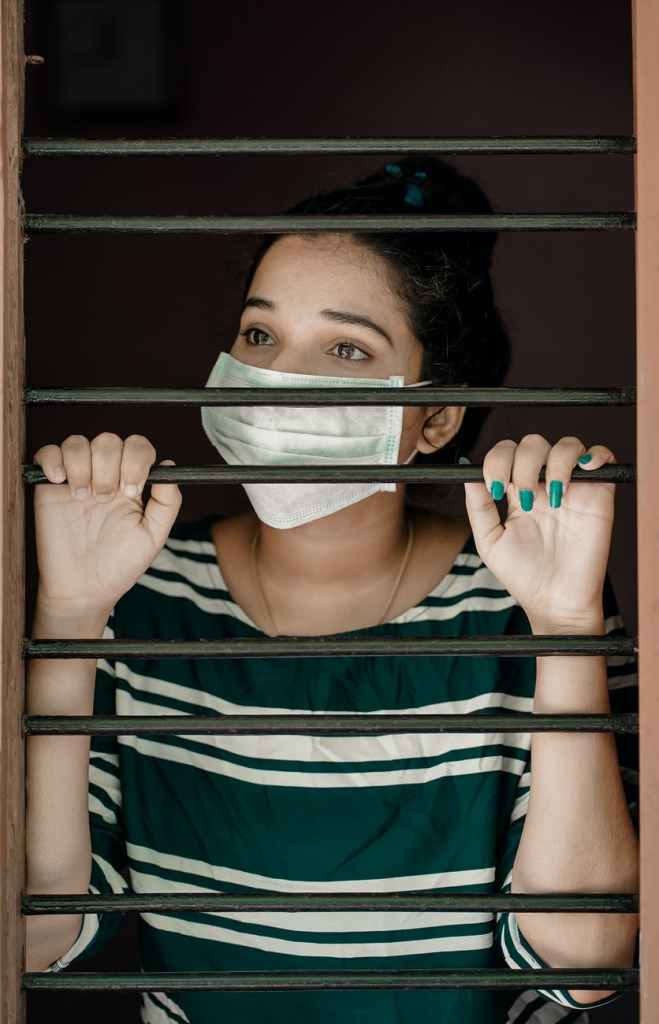
It reminds me how often I would see people just a couple of years ago, getting ready to enter a store, only to return to their car for their required mask. Many people wore them “the wrong way:” others wore them for months longer than necessary. Still others wore the same mask for several days but failed to wash their hands. Some people stayed in their homes for weeks, even when they could have spent some time getting fresh air at a park or one their porch or stoop. Others took great risks going to stores where other customers were sick. And many workers had no choice but to report to work, knowing they would be exposed to COVID. Many people refused to get the vaccines once they became available, while others were demanding that everyone had to get the vaccine or be charged with a crime. No one was sure if they were “safe”– even with masks, vaccines, and other protocols. It was a very dark time.
Hard times and difficult situations can cause us to shift our focus and have to learn new routines–even new vocabulary! At certain times, life almost seems “normal.” At others, we seem to be tossed by every new wave that comes along. It can be easy to lose one’s way in the fog and darkness of chaos and changing times.

The Psalmist and King, David, had words of wisdom for times like these: “Thy word is a lamp unto my feet, and a light unto my path.” (Psalm 119: 105 KJV)

Even when things seem dark and it feels like I’ve lost my way, God is right beside me. If I have no other “light” to see by, God’s word will be enough to guide me on. When I pray– even in the dark–God sees me clearly, and knows the way ahead.
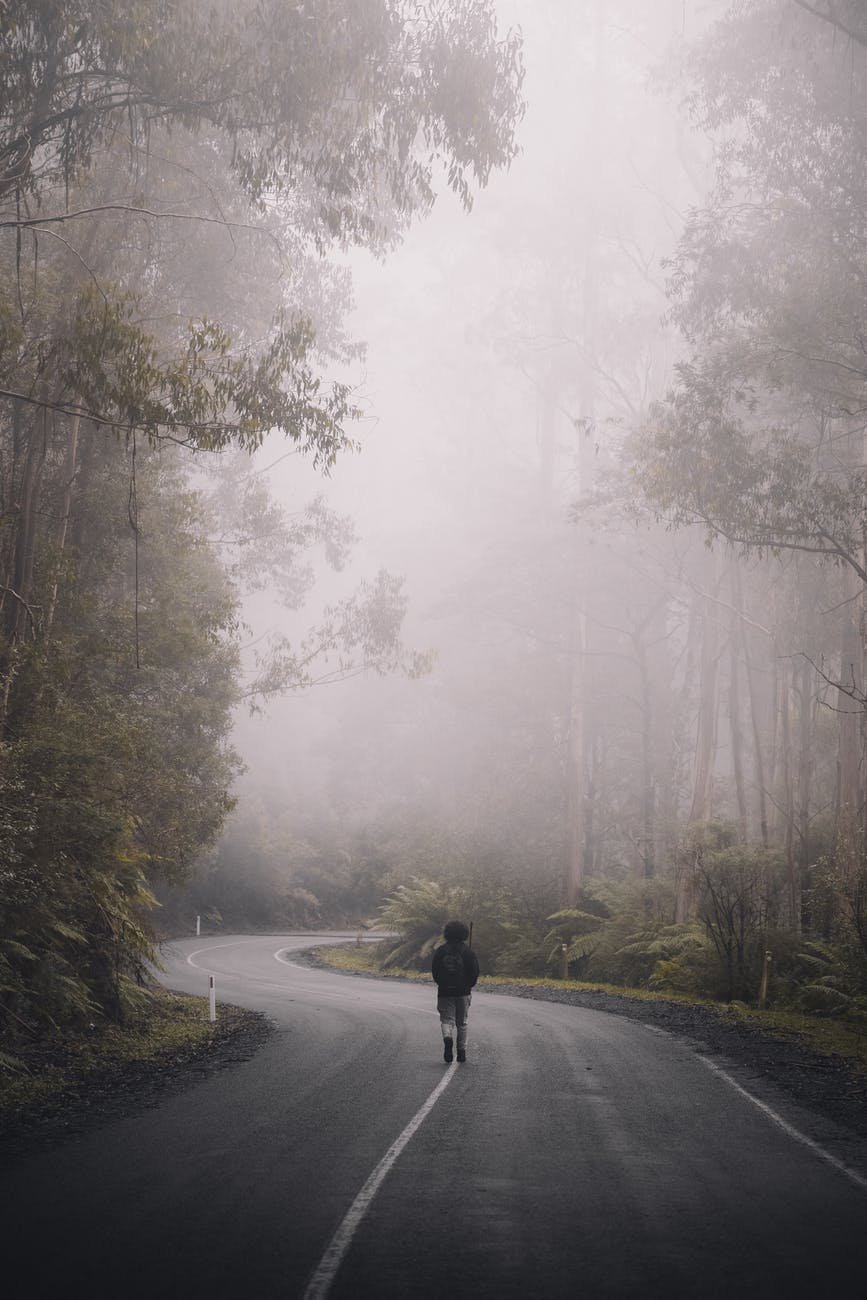
Photo by Pat Whelen on Pexels.com

And I needed to be reminded of that again this week.
Casting Shadows

Today is “Groundhog Day.” Tradition says that on this day, if a large rodent called a groundhog peeks out of its hibernation burrow to see its shadow, there will be six more weeks of winter. For more history about this observation, see https://www.yahoo.com/lifestyle/groundhog-day-five-things-didn-095407401.html?fr=sycsrp_catchall .

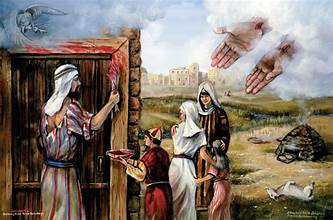
Candlemas, the celebration on which Groundhog Day is founded, is actually the day of the Baby Jesus’ presentation in the Temple (see Luke 2:22-40). Forty days after his birth, every first-born male child in Israel was to be presented at the temple, and a sacrifice was to be made for his redemption. This traces back to the Passover tradition, when the angel of death passed over the houses of the Jewish families who had painted their door frames with blood. Meanwhile, the first born sons (and animals) throughout Egypt were slaughtered. In this way, God showed His Power and His Mercy, leading Israel out of Egypt in triumph, while showing judgment on the Egyptians. (See Exodus 12).

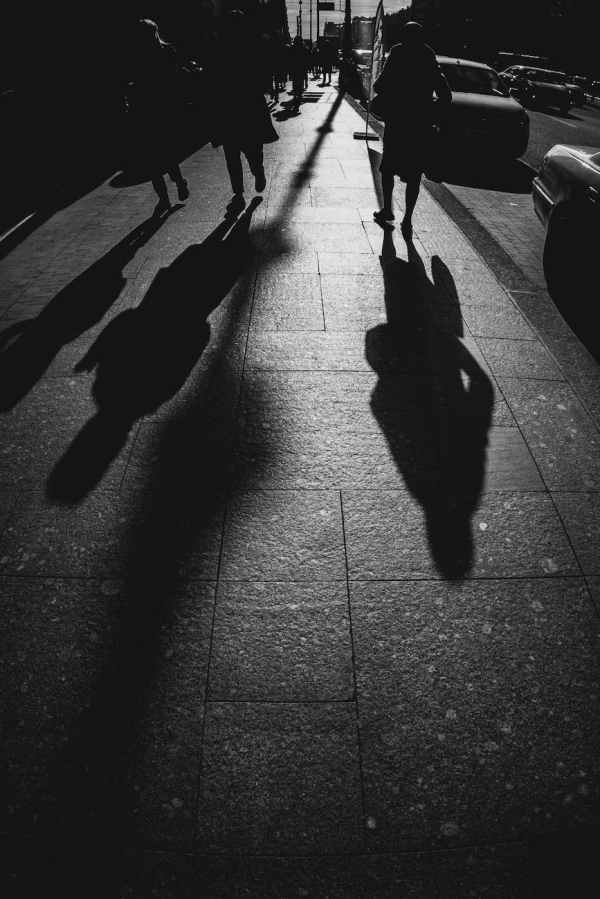
History and tradition cast long shadows. The Jews had been slaves in Egypt for nearly 400 years. A new tradition helped them remember where they had come from and celebrate the promise that God would lead them to their own land. The Jewish people had kept this sacrificial tradition for centuries, reminding them of God’s mercy in saving their sons, and in redeeming them as a people from slavery in Egypt. Christians, realizing that this tradition “foreshadowed” the coming of Christ, adapted it into a new celebration. Christians celebrated Candlemas for centuries, remembering that Jesus was presented as OUR sacrifice, OUR redemption from Death into eternal Life Jesus came to be our Sacrifice, and also our Light. 

But somewhere along the way, pagan beliefs and rituals were woven into the story of this day, until it has become “Groundhog Day.” Instead of the Lamb of God, we celebrate a common rodent. Somewhere in Pennsylvania (Punxsutawney), a small crowd gathers as someone lifts up a frightened groundhog and pronounces a weather prediction (one that is less than 50% accurate!) And everyone is looking for a shadow, instead of celebrating the Light.

The thing about shadows is that you cannot see them when you are looking INTO the light. You have to look away, turn around, look back, to see a shadow. Shadows are cast when something gets between the source of light and a flat surface. History casts shadows. Memories cast shadows. Sin casts a huge shadow. But Jesus is pure light. The Word of Life came to be a “lamp unto (our) feet and a light unto (our) path” (Psalm 119:105 KJV). We are meant to learn from the shadows of the past, but not to walk in them. We are to walk in the light, looking forward to the fulfillment of God’s promises, even as we celebrate the faithfulness of His past actions in the lives of others.

Light casts no shadow. But it banishes the darkness where shadows live. Our choices have consequences. We can turn away from the light, or step in opposition to the light, and cast shadows that may follow for generations–cycles of abuse, isolation, hatred, anger, or regrets. Or we can choose to follow the light, and banish the shadows of the past– bringing peace, repentance, reconciliation, and hope.

Heavenly Father, today, I pray that I will be a reflection of Your light in the world; that my actions would help banish shadows of doubt and despair, and shine with Your truth and hope for others to see. Where there are shadows in my life from the past, may I learn from them and leave them behind as I follow you more closely. Where I have cast shadows in the lives of others, help me to bring light and healing in Your name. Amen.

Behold!

Matthew 6:22-23 English Standard Version (ESV)

22 â€œThe eye is the lamp of the body. So, if your eye is healthy, your whole body will be full of light, 23 but if your eye is bad, your whole body will be full of darkness. If then the light in you is darkness, how great is the darkness!

adult anger art black background
Photo by Pixabay on Pexels.com

O be careful little eyes what you see

O be careful little eyes what you see

There’s a Father up above

And He’s looking down in love

So, be careful little eyes what you see

whole song text here

This little light of mine–I’m gonna let it shine!

black frame sunglasses beside table lamp

Both the scripture text and the children’s song above are often used in the context of watching pornography or violent images, and their negative effects.  It is true that if we fill our sight with negative and sinful images, we will be impacted negatively.  We become desensitized to violence and evil; we become addicted to images that shock or excite us.

But I think there is more going on in this text, and I think it has a bearing on our prayer life.  What we choose to see also involves what we choose NOT to see. We talk a lot about what we shouldn’t be watching or seeing, but there are some things– even unpleasant things– that we MUST see if we are to be the light of the world.  Not only must we see such things, we must shine a light on them and cause others to see them.  Injustice, corruption, dishonesty– we must be careful to see them for what they are. And we must see them clearly to pray about them wisely.

person holding magnifying glass

We live in a world of optical illusions, and it can be very difficult to see clearly.  But that is what we are called to do.  If our eyes are good/healthy, we will let in the light of truth, so that shadows and illusions will become stand out.  If our eyes are bad/unhealthy, the shadows and illusions will trick us.  We will see only what can be seen in a glance, and miss the bigger picture. And we will pray, not with an eye toward the bigger picture, but narrowed in on our own limited vision of the world around us.

John the Baptist had excellent “vision.”  As he was out in the hot sun glinting off the Jordan, he looked up to see hundreds of people waiting to be baptized.  But his eyes were searching the horizon, seeing all the others, but seeking one face.  And when he saw it, he drew everyone’s attention to it– “Behold! The Lamb of God who takes away the sin of the world.”  (John 1:29)  Our eyes, like those of John, should be looking with purpose and hope.

built structure against sunset sky

Throughout the Bible, God looks at people with love and compassion.  Several times in the gospels, Jesus looks upon or takes note of people (some of whom are seeking him, and others who know nothing of him) and has compassion on them.  Our eyes, like those of our Father, should be looking in love.  Love sees things as they really are– it sees sin, pain, disease, betrayal, war, hatred, greed.  But love sees beyond to people who need salvation, healing, restoration, peace, compassion, and hope.

I need to give careful consideration to what I allow myself to see– do I see all the negative, hateful, sinful things going on around me?  Do I see such things with a sense of purpose and with compassion?  Or do I ignore them and turn my gaze inward, shutting out the hurt and need all around me?  Do I see all the shadows and illusions and let my own light grow dim?  Or do I see the Light of the World, ready to shine (even through me), with hope and redemption?  Will I pray with my eyes closed and shuttered, or wide open?

Blog at WordPress.com.

Up ↑